Game review
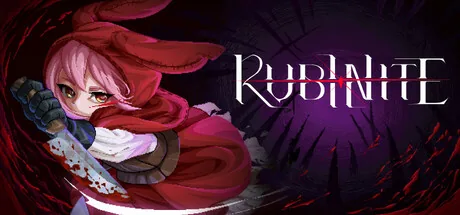
Rubinite
8 / 10
- Developer
- Cup Dog Games, GameWorks Ventures
- Publisher
- Cup Dog Games
- Released
- 22 July 2026
- Platforms
- Windows, macOS
- Genre
- Boss Rush Action RPG
- Monetisation
- Premium, one-off purchase with an optional soundtrack DLC
- Players
- Single-player
The short version
Rubinite is a boss rush that actually understands what makes boss rushes work: every one of its roughly dozen major fights is built around the same core tool, a Focus meter that trades safety for damage, and the game keeps finding new ways to threaten that trade without ever changing the rules on you. The talisman system gives you just enough room to lean into a playstyle between fights, even if it never becomes the deep build sandbox its Soulslike comparisons imply.
What holds it below the very top tier is the back half of its own structure: the game's true ending route asks you to replay most of its content in a single-hit-death state, and while that is a deliberate, well-telegraphed design choice rather than padding, it turns a tight seven- or eight-hour game into something considerably longer for a smaller and more specific audience than the front half earns.
Biggest strengths
- The Focus-and-Mark system makes every strike a decision about risk rather than a reflex, and it never gets replaced or diluted across the whole roster of bosses
- Boss movesets escalate in ways that teach new reads rather than just hitting harder, and multi-phase fights change their rhythm rather than just their numbers
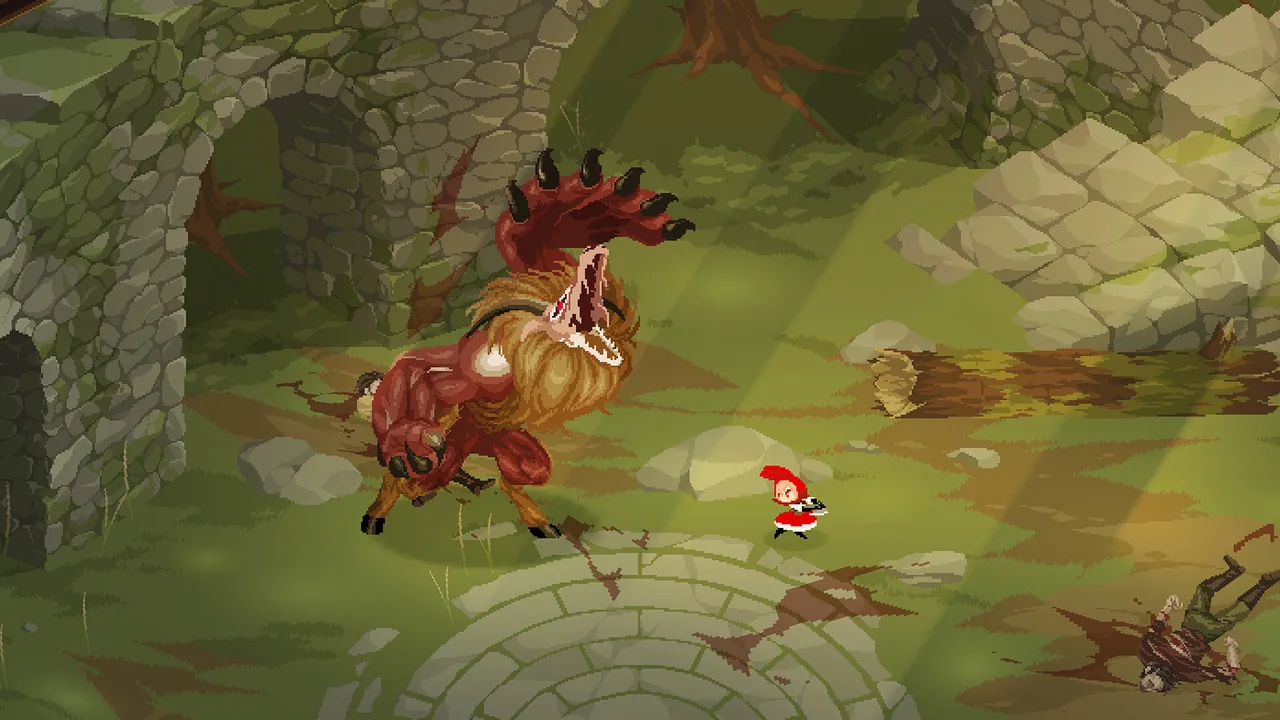
- Pixel art sells scale and menace in a genre usually built around 3D spectacle, and Ruby's own animation set carries a surprising amount of character
Biggest weaknesses
- Several player reports describe hits landing or missing outside what the animation actually shows, which matters far more in a game built around single-hit death states
- The true ending's hitless-replay structure effectively doubles the game by asking for a much harder version of content you've already cleared, rather than offering new content on its own terms
- Talisman variety is real but shallow next to the genre's best build systems — most reviewers converge on a similar handful of strong loadouts rather than finding many equally viable ones
Who it's for: Players who want their Soulslike experience distilled into pure boss encounters without the exploration or narrative pacing wrapped around it, and who don't mind a game that expects a no-hit clear from anyone chasing its real ending.
Our recommendation: Buy it if you want an exceptionally tight, exceptionally hard boss gauntlet with real visual and mechanical identity — just go in knowing the credits roll twice, and the second time is much less forgiving.
8 / 10
Most games that call themselves a "boss rush" mean it loosely — a handful of marquee fights strung along a normal adventure, with the rest of the game there to justify the ticket price. Rubinite means it literally. Strip away the hub, the dialogue scenes and the handful of connecting corridors and what's left is somewhere around a dozen boss arenas, back to back, and almost nothing else. That's either the most honest pitch in the genre or a serious constraint on what the game can be, and Cup Dog Games' debut spends its entire runtime proving it's the former — right up until its second half asks you to do it all again without getting hit, at which point the pitch starts asking a lot more of you than it did at the start.
Focus and Marks: one idea, played all the way through
Everything in Rubinite runs through a single mechanic. Hold a trigger to narrow Ruby's focus onto a boss and a meter fills; when it completes, you plant a Pureblood Mark. Stack up to three marks, then release them with a Strike for damage well beyond what a normal slash does — or lose the whole stack the moment you take a hit while you're building it. That's the entire combat vocabulary, and the reason Rubinite works as well as it does is that the designers never once feel the need to bolt something else onto it. Every boss is a puzzle about when it's safe to look away from dodging and start reading, and the answer changes fight to fight: some bosses punish greedy mark-stacking with unavoidable area attacks, others telegraph long enough that a full three-stack becomes the intended, generous reward for patience. It's been fairly compared to Sekiro's insistence on precision married to a dodge-first structure closer to Bayonetta, and that hybrid feeling — half patience test, half twitch reaction check — is Rubinite's real identity, not the "Soulslike" tag its own store page leans on.
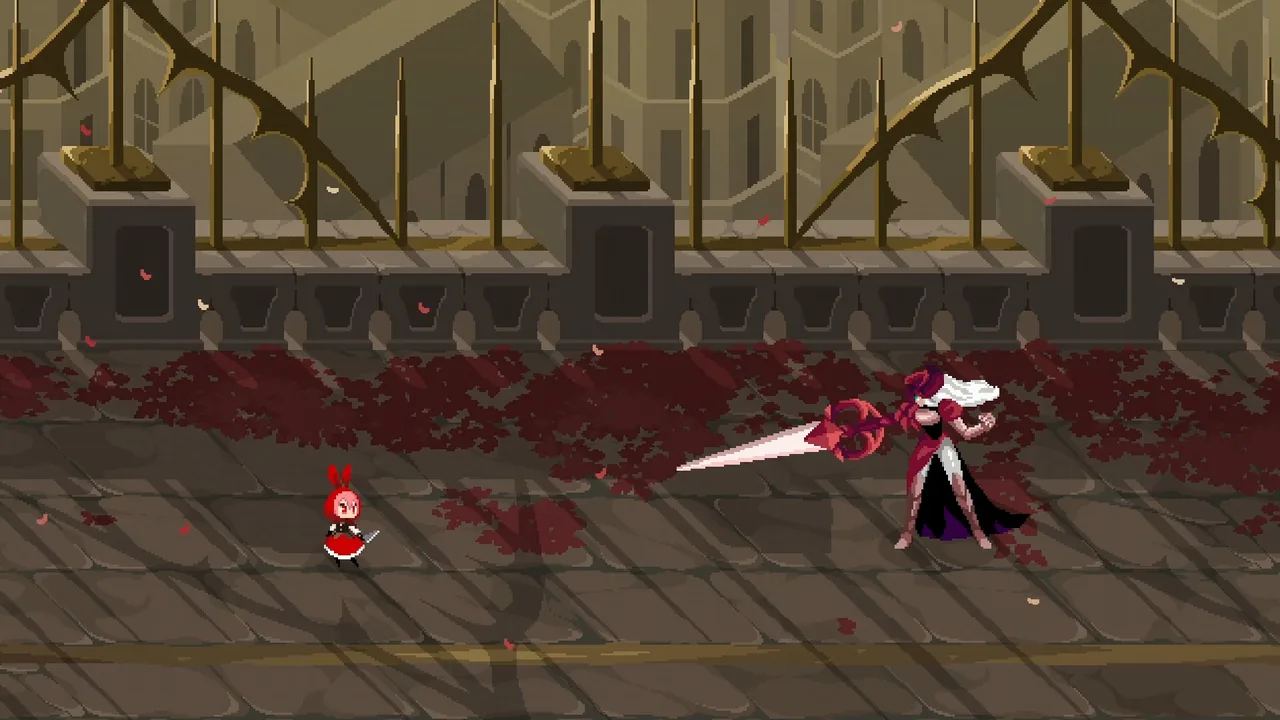
What keeps a dozen fights built on one mechanic from feeling repetitive is how aggressively the boss design varies the pressure around it. A rematch against the recurring rival Faye plays as a duel of matched speed and options; a multi-phase fight against a possessing spirit changes its entire hit-box geometry partway through; a plague-themed boss turns the arena itself into part of the puzzle. Reviewers elsewhere have converged on the same read: the movesets are "highly varied" and most encounters are memorable specifically because you can describe what made each one different, which is the single hardest thing for a boss-rush structure to deliver across a dozen consecutive fights without the game starting to blur together.
Talismans give you a build, not a build system
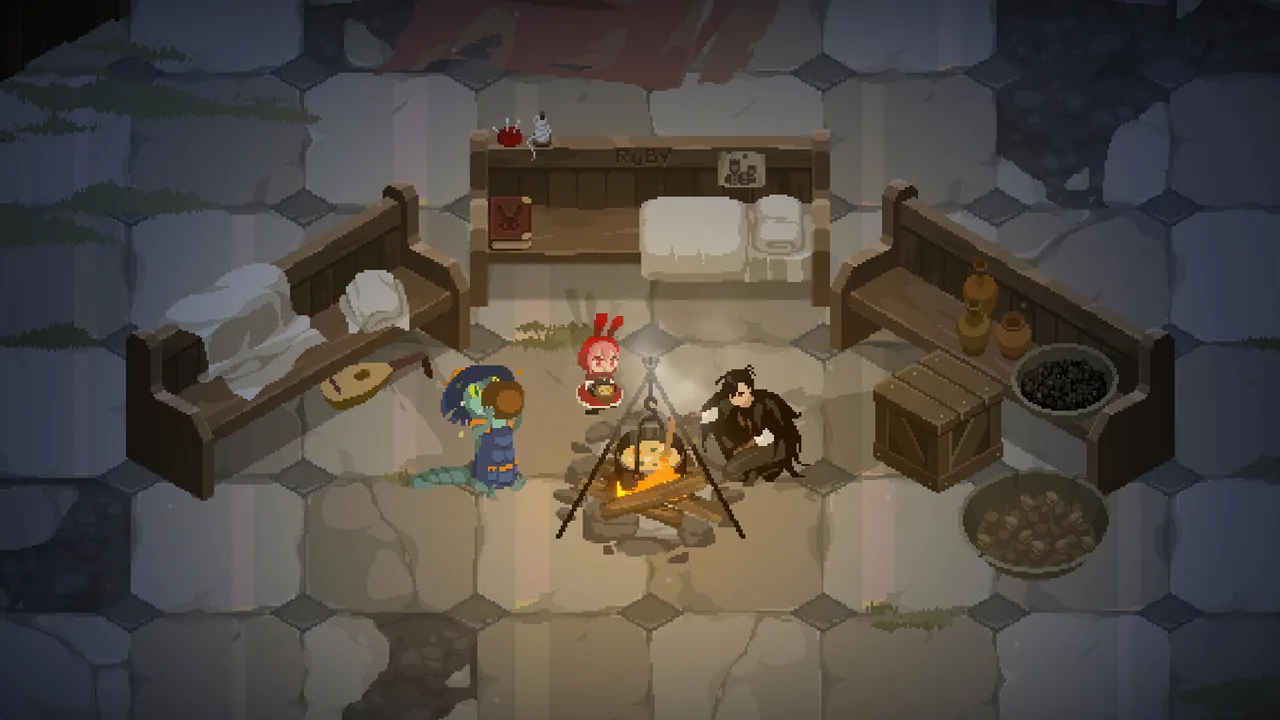
Between fights, Ruby returns to the Cathedral, where absorbed Pureblood from defeated bosses funds talisman slots and a modest skill tree. Talismans carry real tradeoffs rather than pure upside — some sacrifice a slot to grant an extra hit of survivability, others push you toward a faster-but-riskier playstyle by boosting Focus generation at the cost of defense — and picking a loadout before a fight you've been struggling with is a genuine moment of tactical thought rather than a formality. It's the right shape of system for this game: light enough not to distract from the combat's core idea, present enough that going into a rematch with a different talisman set actually changes how a fight plays.
Where it falls short of the genre's best is depth. Most players and critics land on a similar handful of strong combinations rather than a wide field of equally viable ones — one widely echoed piece of player feedback is that a secondary dagger-projectile playstyle feels meaningfully weaker than committing fully to melee marks, which narrows what "building your own combat style," the game's own marketing language, actually delivers in practice. That's a fair trade for a seven-to-eight-hour boss rush, where a Diablo-scale itemisation layer would be overkill, but it means the customisation is best understood as seasoning on top of the Focus system rather than a second pillar holding the game up alongside it.
A hitless second half, and what it costs the pacing
Rubinite's most divisive decision is structural. A first clear of the main story arrives in somewhere around four to nine hours depending on skill, and for a while that looks like the whole experience — a tight, well-paced boss gauntlet with a satisfying ending. It isn't. The story then reveals that ending as incomplete and routes committed players back through most of the same content in Hardcore Mode, where Ruby's health bar is effectively removed: a single hit anywhere in that stretch sends you back to the start of the encounter. Clearing it, alongside a handful of new bosses gated behind it, is the only way to see the game's true ending.
Judged as a design idea on its own, this is coherent and well-signposted — the game is upfront about the difficulty before you commit, and the hitless mode is explicitly framed as "Rubinite in its purest form" rather than sprung on players as a bait and switch. Judged as pacing, it's the review's central reservation. A large share of the player base treats the first ending as the finish line, and the ones who push into Hardcore Mode are doing something closer to a dedicated challenge run than continuing a story campaign — several Steam reviewers who did finish it describe enjoying the discipline it demands while also flatly saying they can't recommend forcing it on everyone who buys the game expecting a single satisfying playthrough. One frequent complaint is sharper still: without a visible enemy health bar during Hardcore attacks, players report losing the information they'd normally use to judge whether they're actually making progress on a boss or just repeatedly dying to the same wall, which turns persistence into guesswork more than it should.
Hitboxes are the other recurring complaint
A meaningful minority of otherwise positive reviews raise the same specific issue: attacks that appear to miss according to their animation connecting anyway, or attacks that look like they connect passing through. In a normal action game that's an annoyance. In a game whose signature late-game mode kills you in a single hit, it's a much bigger deal, because it removes the one thing a hitless run is supposed to reward — a player's ability to read and trust what they see on screen. This doesn't appear to be the dominant experience; the large majority of the roughly 1,665 Steam reviews as of launch week are positive, and most of the hitbox complaints come from players deep into Hardcore attempts rather than the early game. But it's consistent enough across independent reports, rather than a single loud outlier, to be a real mark against a game that otherwise earns its difficulty honestly.
A smaller cluster of reviews describe outright launch bugs unrelated to combat feel — menu freezes, a teleport glitch in the tutorial, dialogue getting stuck — the kind of rough edges a young studio's first premium release often ships with and usually patches out within the first few weeks. Anyone buying at launch rather than a few months from now should expect some of that friction.
Presentation punches well above a first-time studio's weight
Visually, Rubinite is the clearest evidence that Cup Dog Games knows exactly what they're good at. The pixel art carries scale and menace that most studios only manage with 3D — bosses read as genuinely threatening set pieces rather than sprite-scaled versions of regular enemies, and the game leans hard on colour, red in particular, as a storytelling tool rather than pure decoration. Ruby's own animation set gives her real personality across dozens of hours of repeated dodges and strikes, which matters enormously in a game this repetition-dependent. The one recurring visual complaint is angle rather than art: the high top-down camera occasionally obscures a boss's telegraph or start-up frames at exactly the moment precision matters most, which is a legitimate design tension between "grand, cinematic boss arenas" and "read every attack clearly," and the game doesn't fully resolve it.
The music and sound design are competent without becoming a reason to buy the game on their own — functional, well-timed to combat beats, and largely forgotten the moment a fight ends, which is a fair trade in a game this focused on what's happening on screen rather than what's coming through the speakers.
Story told sideways
Rubinite's narrative — Ruby, a princess returning to reclaim a corrupted Scarlet Kingdom from the Bloodstained and the Witch behind them — is more substantial than most boss-rush framing devices bother to be, and the recurring supporting cast gives the between-fight beats genuine warmth rather than pure exposition. The game tells much of it through silent staging and visual implication instead of dialogue, which several critics and players found evocative on a second pass and genuinely hard to follow on the first. That's a deliberate authorial choice rather than a mistake, but it's one the game could afford to relax slightly without losing what makes it distinctive — a couple of the game's most consequential turns land better in hindsight than they do in the moment they're supposed to land.
Final verdict
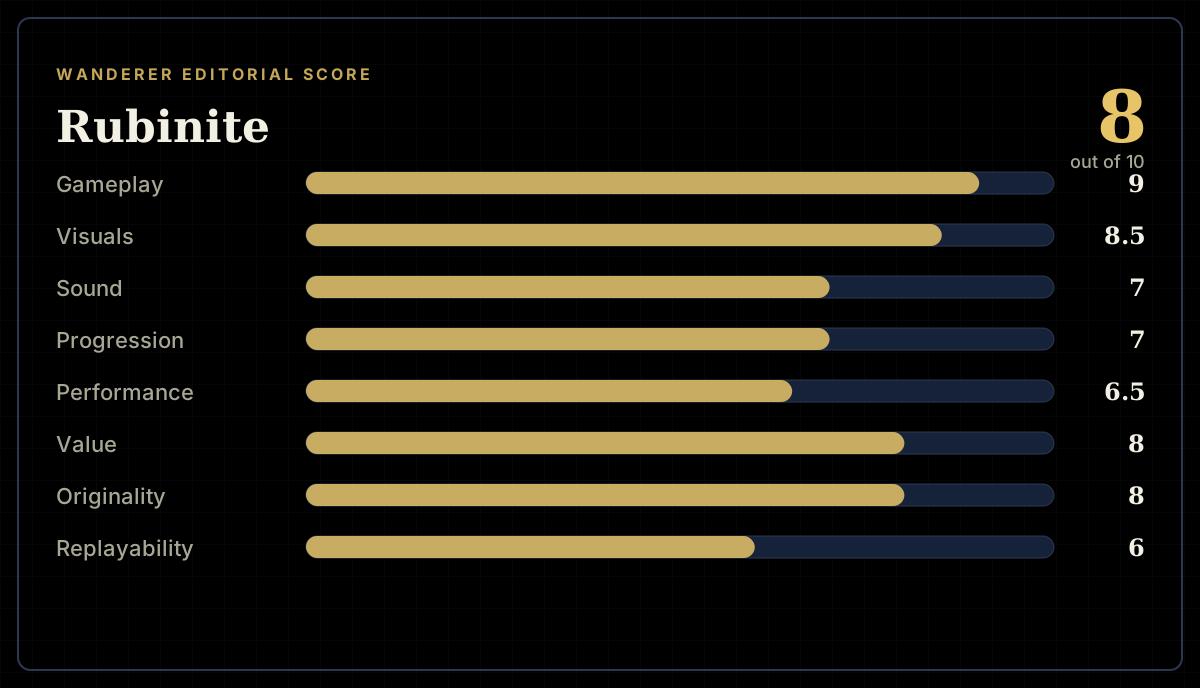
Rubinite earns its 8.0 by doing one thing extremely well and refusing to dilute it: the Focus and Mark system gives every boss fight in the game a consistent, legible core, and a genuinely strong roster of encounters keeps finding new pressure to put on that one idea rather than layering on mechanics that would blur it. The talisman system gives just enough build expression to make returning to a tough fight feel like a fresh decision rather than a grind, and the pixel art proves a first-time studio can make boss encounters feel massive without a 3D budget behind them.
It doesn't reach the very top of the genre because its own structure works against its pacing: a tight, well-judged seven-or-eight-hour boss rush becomes a much longer, much harder commitment for anyone chasing the true ending, and the hitbox inconsistencies a real share of players report are exactly the kind of problem that matters most in a mode built around single-hit death. Buy Rubinite for the first half without hesitation — it's a confident, focused debut that respects the genre it's drawing from. Go into the hitless back half understanding it's a deliberate, much harder second game bolted onto the first one, aimed at a smaller audience than the one the opening hours will have won over.
Price and Steam review figures checked 31 July 2026.
Pros and cons
Pros
- The Focus-and-Mark system makes every strike a decision about risk rather than a reflex, and it never gets replaced or diluted across the whole roster of bosses
- Boss movesets escalate in ways that teach new reads rather than just hitting harder, and multi-phase fights change their rhythm rather than just their numbers
- Pixel art sells scale and menace in a genre usually built around 3D spectacle, and Ruby's own animation set carries a surprising amount of character
- The Cathedral hub and talisman loadouts give you a real reason to reconsider your build before a fight you've been struggling with
- A dark fairy-tale framing gives the boss roster a coherent identity instead of a random gallery of monster designs
Cons
- Several player reports describe hits landing or missing outside what the animation actually shows, which matters far more in a game built around single-hit death states
- The true ending's hitless-replay structure effectively doubles the game by asking for a much harder version of content you've already cleared, rather than offering new content on its own terms
- Talisman variety is real but shallow next to the genre's best build systems — most reviewers converge on a similar handful of strong loadouts rather than finding many equally viable ones
- Story beats lean on silent, cryptic visual staging that several players and critics found hard to follow on a first pass
- A vocal minority of Early Access-adjacent launch bugs — menu freezes, a teleport glitch in the tutorial — mar what should be a clean first impression for a premium release
Screenshots
-
RubiniteImage: Cup Dog Games via Steam -
RubiniteImage: Cup Dog Games via Steam -
RubiniteImage: Cup Dog Games via Steam -
How the review scores each part of the gameWanderer Editorial -
The short versionWanderer Editorial