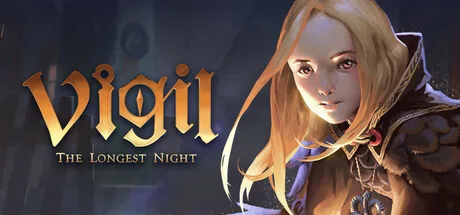
Game review
Vigil: The Longest Night
7 / 10
- Developer
- Glass Heart Games
- Publisher
- Glass Heart Games
- Released
- 14 October 2020
- Platforms
- Windows, Linux, PlayStation 4, Xbox One, Nintendo Switch
- Genre
- Action RPG
- Monetisation
- One-time purchase, no DLC and no in-game store
- Players
- Single-player only
The short version
Vigil: The Longest Night is a debut Metroidvania from Glass Heart Games that borrows Salt and Sanctuary's 2D-Souls combat and Bloodborne's gothic-horror mystery, then wraps both in a hand- painted, genuinely striking art style. It landed well with critics — 75 on Metacritic, 76 on OpenCritic ("Strong") — and Steam's lifetime user score agrees, sitting at Very Positive with 85.9% of 1,432 reviews (checked 13 August 2026). Nearly 20 boss fights, praised across the review corpus as the game's high point, carry a lot of that goodwill.
The 14.1% who don't recommend it converge on specific, reproducible complaints rather than vague dissatisfaction: quest design that can trap you in a failed or missable state without warning, itemization built around multiplicative stat scaling few players say they ever understood, and — most persistently — a map screen multiple reviews describe as functionally broken, a bug still being reported as unfixed in a February 2025 review, more than four years after launch.
Biggest strengths
- Consistently praised, hand-painted gothic art direction that critics and players cite as the game's strongest asset
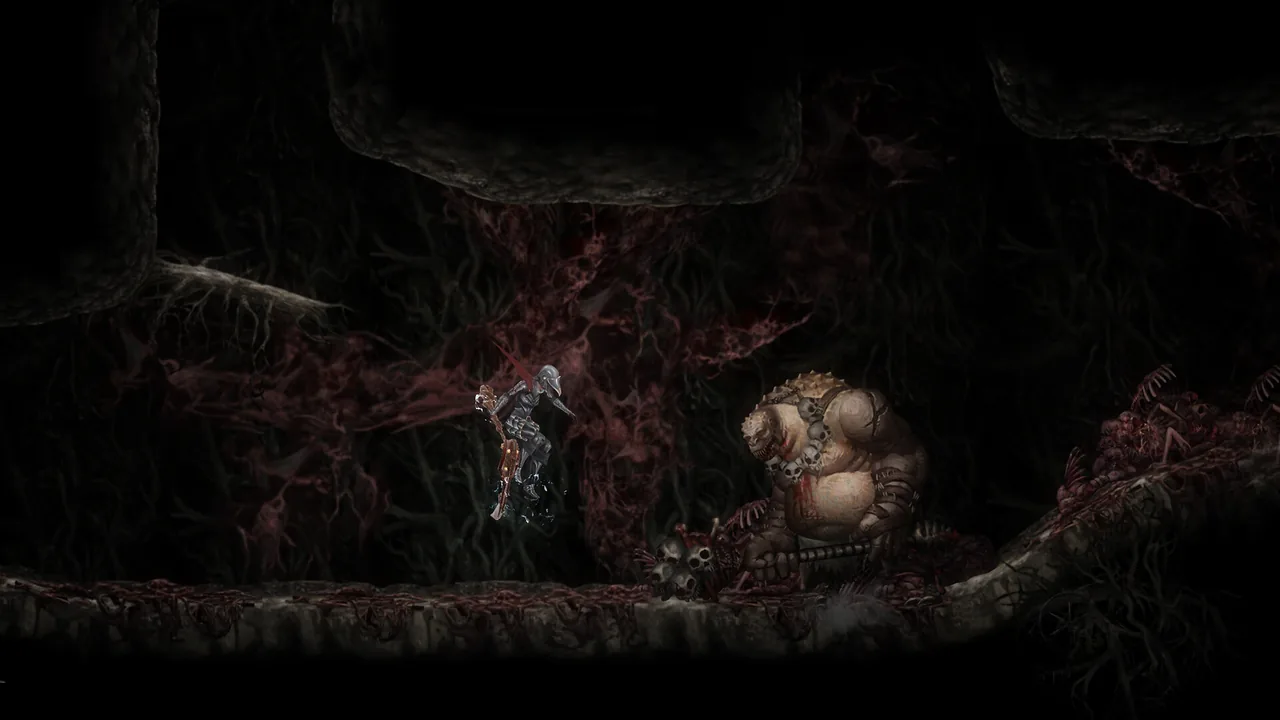
- Nearly 20 boss fights spanning humanoid duels to giant set-pieces, singled out across reviews as the highlight of the whole game
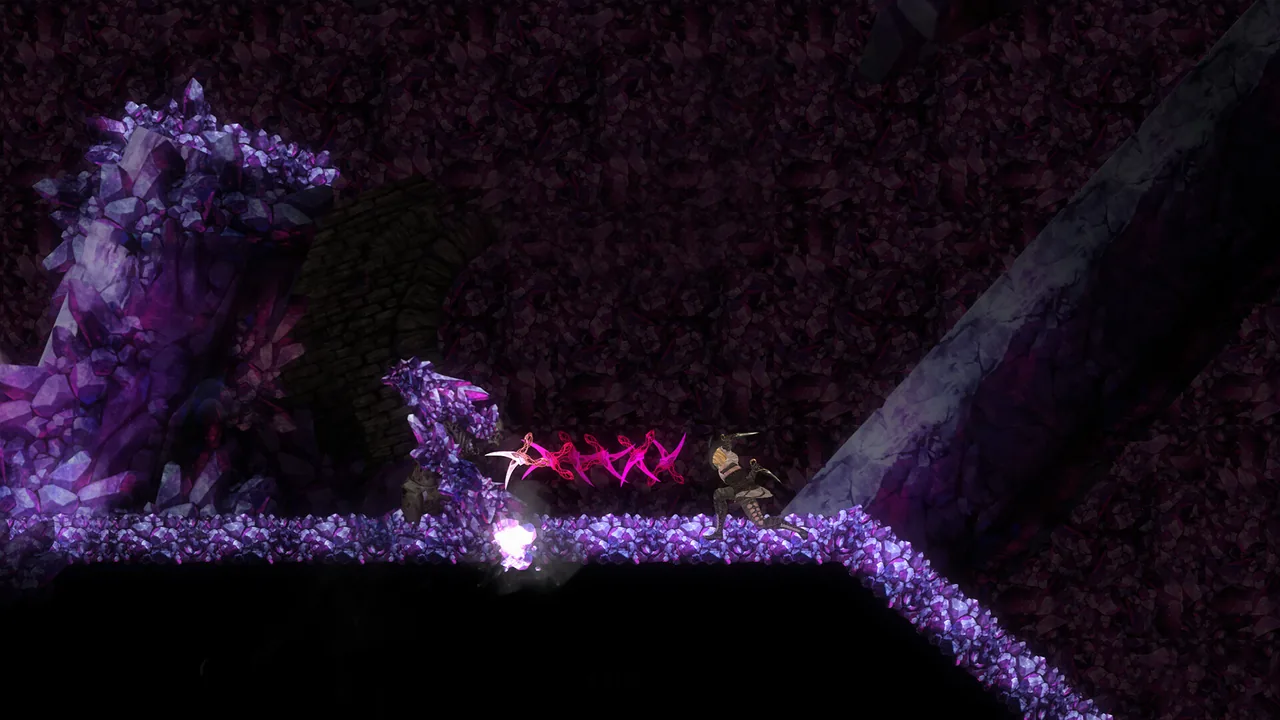
- A genuinely deep weapon and combat-style variety — swords, axes, daggers, bows, unarmed combat and arcane abilities, each with distinct movesets
Biggest weaknesses
- Quest and progression design can trap players in failed, missable or "point of no return" states without warning, forcing awkward restarts on a genre that expects backtracking to work
- Itemization leans on multiplicative stat scaling and duplicate "secret" items that a recurring share of reviewers say they never found a clear way to evaluate
- The map screen is widely reported as broken or unreadable, and a review from February 2025 — over four years after launch — describes the exact same bug as still present
Who it's for: Metroidvania and 2D-Souls fans — Salt and Sanctuary, Hollow Knight, Blasphemous players — who value atmosphere and boss design over a fully polished interface, and who don't mind occasionally consulting a wiki over trusting the game's own UI.
Our recommendation: A confident recommendation for genre fans on sale, and a reasonable one at full price given the low NZ$26.79 ask. Keep a walkthrough or the community wiki within reach for quest-order questions and use the in-game map sparingly — both are widely reported weak points the developer never fully resolved.
7 / 10
A first game that wears its influences well
Vigil: The Longest Night is Glass Heart Games' debut, and it announces its inspirations openly rather than trying to hide them: 2D Souls combat in the vein of Salt and Sanctuary, layered under a gothic-horror mystery plot several reviewers compare directly to Bloodborne. You play Leila, a member of the town of Maye's Vigilant Order, fighting through a world that has lost the light of day while chasing the truth behind her missing sister and the cult-like Shimmer's Faith. It's a familiar recipe for the genre by 2020, but the execution earned real critical respect: 75 on Metacritic, 76 on OpenCritic where it landed in the "Strong" tier from 16 critics, several of whom specifically called it one of the year's overlooked indie releases.
Steam's lifetime user verdict lines up with that: Very Positive, 85.9% of 1,432 reviews as of this writing. For a debut studio's first release, that's a strong showing, and it holds up across the years rather than being a launch-week spike — the negative sample spans every year from 2020 to 2026 in roughly proportionate numbers, which is the profile of a game people are still discovering and mostly liking rather than one whose reputation collapsed after launch.
What earns the praise: art and boss fights
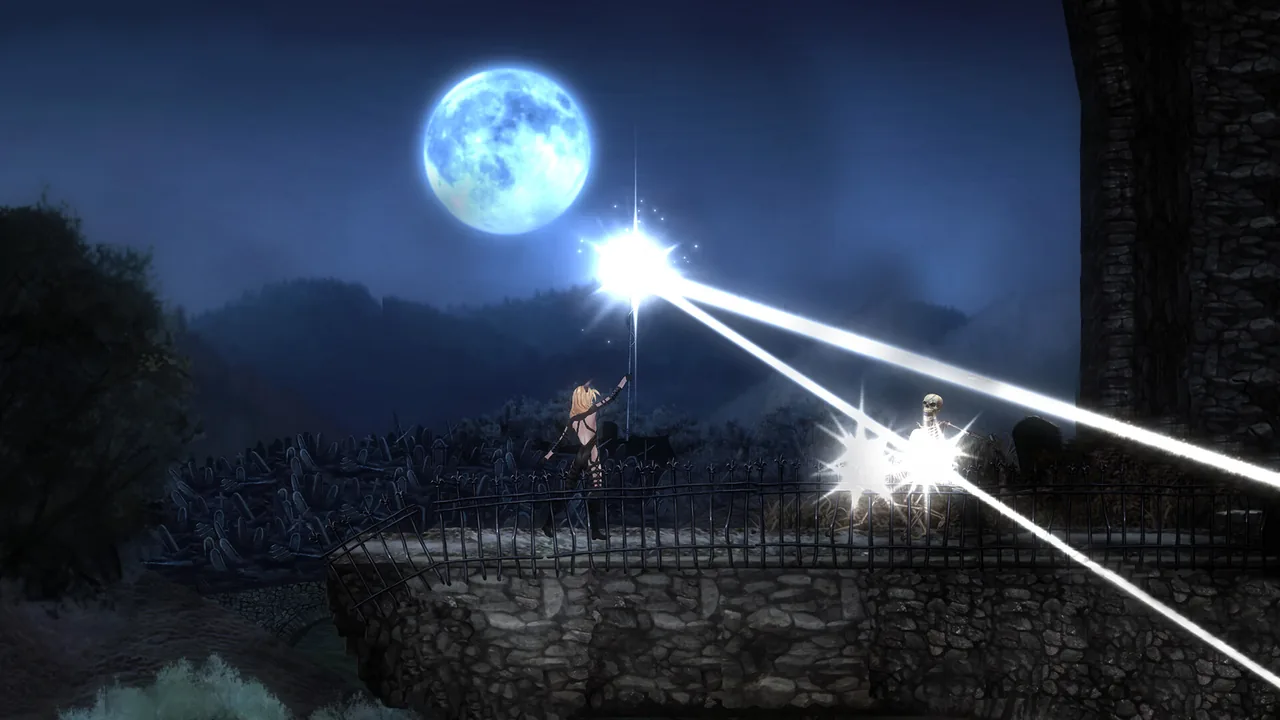
Almost every review, positive or negative, agrees on two things. The hand-painted art direction is genuinely striking — dark, atmospheric, and detailed enough that it's the single most-repeated compliment across the entire review corpus, on both Steam and in critic outlets. And the boss roster, nearly 20 fights ranging from humanoid duelists to gigantic set-piece monsters, is consistently named as the game's high point. "The boss battles were easily the highlight of the game for me, and they are what kept me playing through the game," reads one representative review, and variations of that sentence show up repeatedly even in reviews that ultimately don't recommend the game overall.
The combat framework backing those fights is broad by design: swords, axes, daggers, bows and unarmed styles, each with distinct movesets, layered with arcane abilities and throwable items. Reviewers who clicked with the combat describe genuinely satisfying build variety; the game clearly wants you to find a weapon type that fits your reflexes rather than optimizing toward one obvious best option.
Where it loses people: traps, stats and a map that never got fixed
The negative-review corpus converges on three specific, recurring problems rather than a scattered list of minor gripes, which is worth taking seriously in a game that's otherwise well liked.
The first is progression that can trap you. "Quest that fails you out of nowhere due to you unknowingly entering areas ahead of your 'supposed progression.' Random and unexpected points of no return," reads one of the most-upvoted negative reviews, from a player with over 1,700 hours logged. For a Metroidvania — a genre built on the assumption that backtracking and exploring out of order is not just tolerated but rewarded — quest logic that punishes exactly that instinct is a real structural tension, not a matter of taste.
The second is itemization that reviewers say never clarified itself. Multiple detailed reviews single out multiplicative stat scaling players couldn't parse from the UI, alongside a stream of "secret" reward items several describe as duplicate and effectively worthless. This isn't framed as a difficulty complaint — it's a legibility one: players who wanted to engage with the build system say the game never gave them the information to do so meaningfully.
The third, and the one that speaks most directly to how the game has aged, is the map. "This game is phenomenal until you try to use the map. I can't even begin to recommend a metroidvania game in which the map feature does not work at all. It is a blank black screen with the names of the locations randomly placed throughout the entire abyss of what should be the map," reads a review from February 2025 — more than four years after the game's October 2020 launch, describing the exact same core-interface failure that launch-week reviews were already flagging. "The devs have known about this for years and it has still not been fixed," the same review continues. For a genre where the map is not a nice-to-have but one of the primary tools for navigating a non-linear world, a persistently broken one is a real, ongoing cost to anyone picking the game up today rather than a launch-era rough edge that's since been smoothed over.
Smaller but frequently mentioned issues round it out: clunky dodge responsiveness, a heal button some reviewers say required repeated presses to register mid-fight, and a script with enough typos and grammatical slips that multiple reviews — including largely positive ones — bring it up unprompted.
Verdict
Vigil: The Longest Night is a strong debut let down by exactly the kind of rough edges you'd expect from a first-time studio's first release — except several of the worst ones, the map chief among them, were apparently never fixed. The art is genuinely excellent, the bosses are the real draw, and both critics and the large majority of its Steam audience rate it well years after launch. But the negative-review corpus isn't full of noise — it's three specific, reproducible complaints that a prospective buyer should walk in knowing about, especially the map, which by player accounts has been broken since 2020 and stayed that way.
Wanderer's own interface work leans hard on the assumption that a map or quest log has to be trustworthy before anything else about a game matters — Vigil's own review corpus, spanning five years of player reports about the exact same broken map, is a good illustration of what happens when that trust never gets earned back.
Pros and cons
Pros
- Consistently praised, hand-painted gothic art direction that critics and players cite as the game's strongest asset
- Nearly 20 boss fights spanning humanoid duels to giant set-pieces, singled out across reviews as the highlight of the whole game
- A genuinely deep weapon and combat-style variety — swords, axes, daggers, bows, unarmed combat and arcane abilities, each with distinct movesets
- Strong critical reception (75 Metacritic, 76 OpenCritic "Strong") backed by a Very Positive Steam rating from 1,432 reviews
- A modest, one-time NZ$26.79 price with no DLC or live-service layer to budget around
Cons
- Quest and progression design can trap players in failed, missable or "point of no return" states without warning, forcing awkward restarts on a genre that expects backtracking to work
- Itemization leans on multiplicative stat scaling and duplicate "secret" items that a recurring share of reviewers say they never found a clear way to evaluate
- The map screen is widely reported as broken or unreadable, and a review from February 2025 — over four years after launch — describes the exact same bug as still present
- Noticeable rough edges at launch — clunky dodge responsiveness, unresponsive heal timing, and a script with enough typos and grammatical errors that several reviews mention it unprompted
Screenshots
-
Vigil: The Longest NightImage: Glass Heart Games via Steam -
Vigil: The Longest NightImage: Glass Heart Games via Steam -
Vigil: The Longest NightImage: Glass Heart Games via Steam -
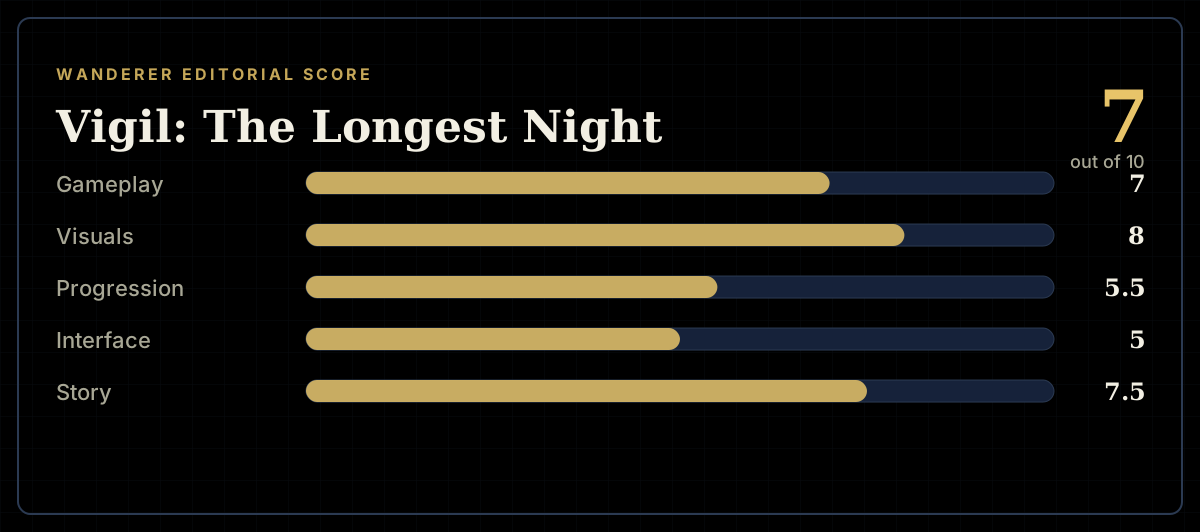
How the review scores each part of the gameWanderer Editorial -
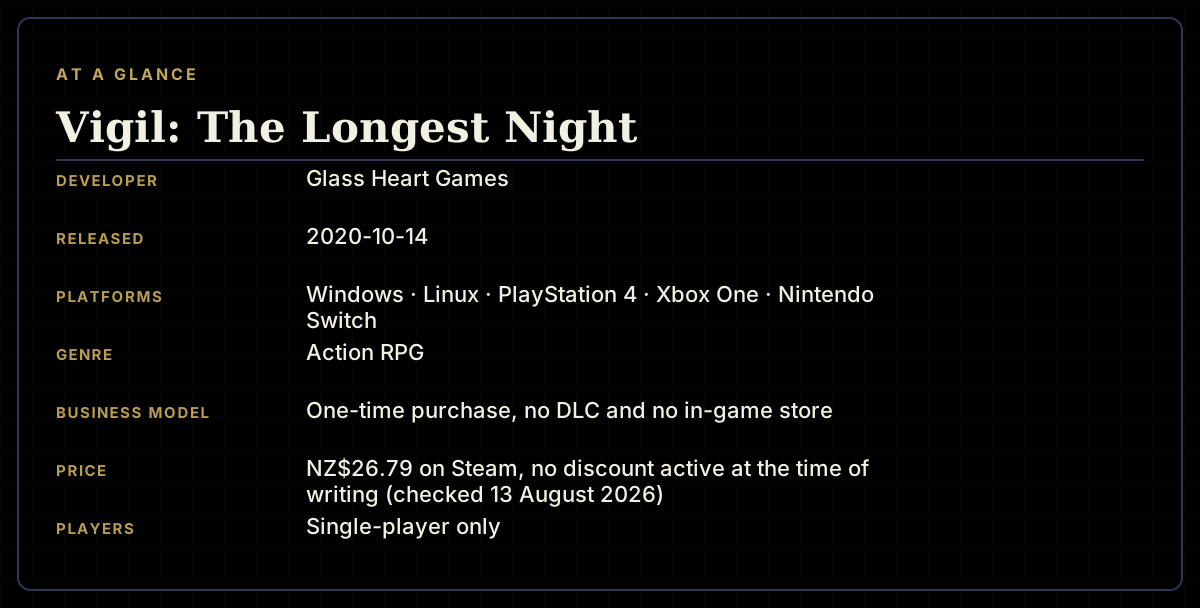
The essentials at a glanceWanderer Editorial -
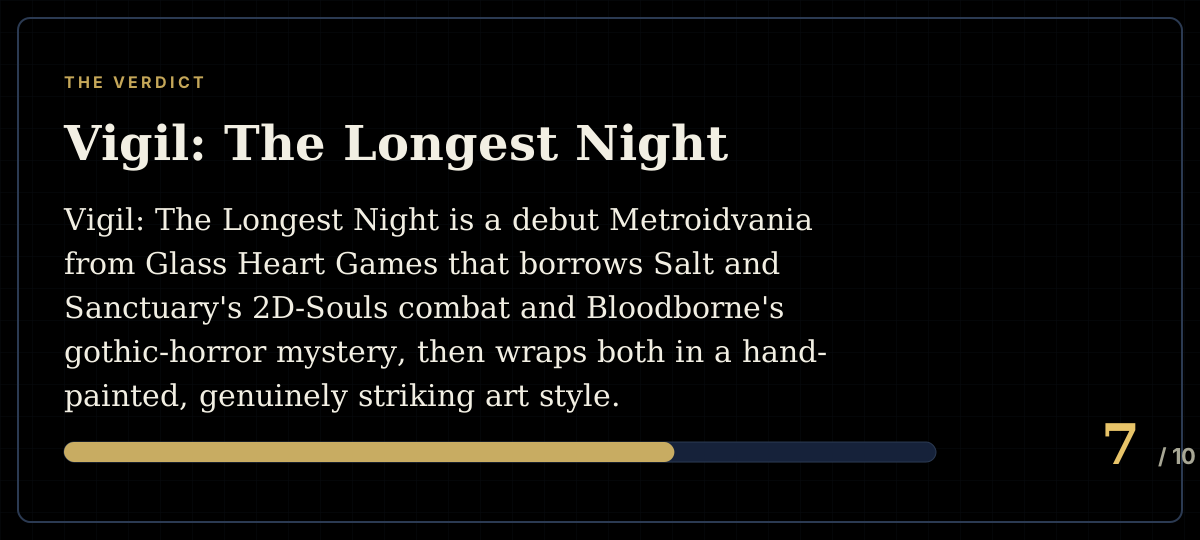
The short versionWanderer Editorial