Game review
Blades of Fire
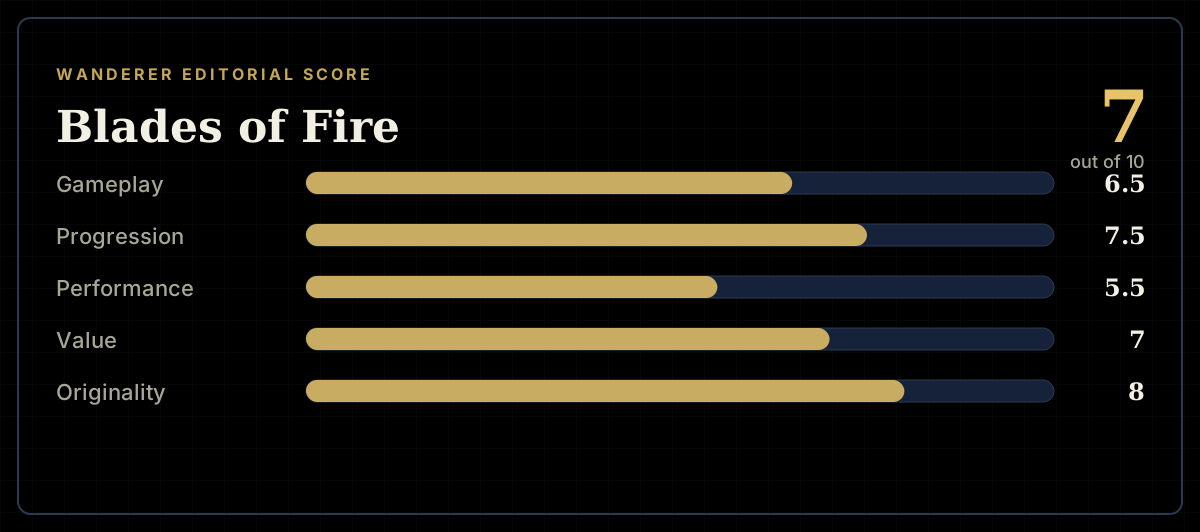
7 / 10
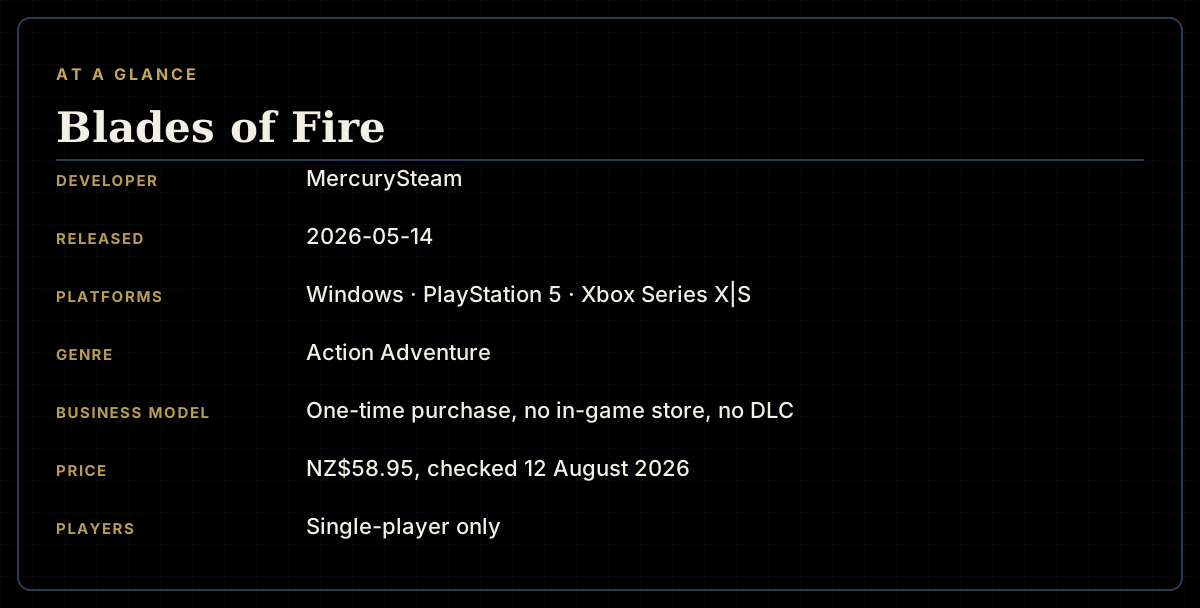
- Developer
- MercurySteam
- Publisher
- 505 Games
- Released
- 14 May 2026
- Platforms
- Windows, PlayStation 5, Xbox Series X|S
- Genre
- Action Adventure
- Monetisation
- One-time purchase, no in-game store, no DLC
- Players
- Single-player only
The short version
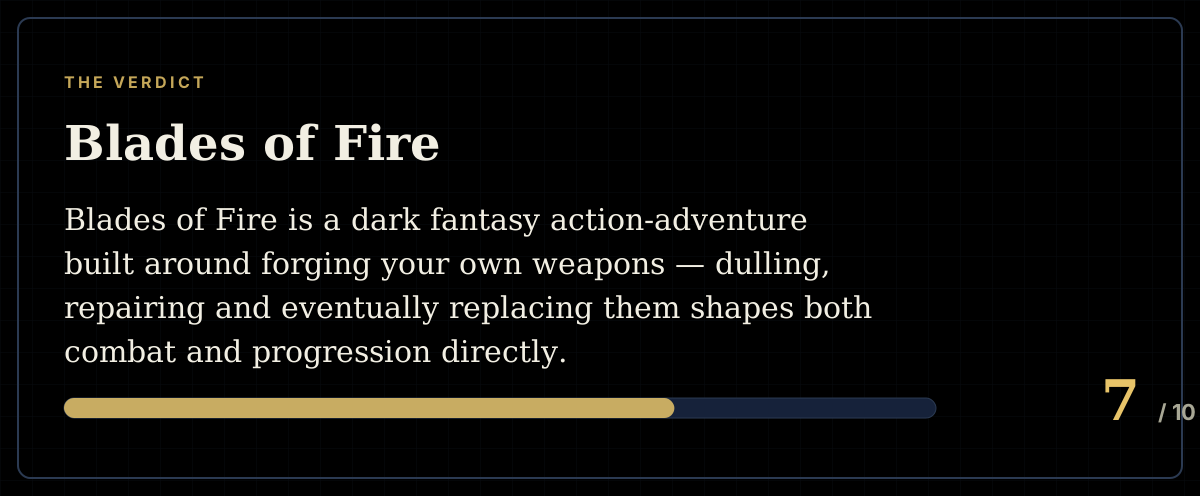
Blades of Fire is a dark fantasy action-adventure built around forging your own weapons — dulling, repairing and eventually replacing them shapes both combat and progression directly. It originally released 22 May 2025 for PlayStation 5, Xbox and an Epic Games Store-exclusive PC version, and reached Steam a year later, on 14 May 2026, alongside "Version 2.0," a substantial simultaneous update across all platforms adding New Game Plus, Photo Mode, a harder Titanium difficulty and DLSS 4 support.
Reading its Steam-era English review sample turns up a genuinely divided but specific reaction. The smithing-and-exploration loop and MercurySteam's decision to build on their own engine rather than a licensed one draw real, repeated praise — several reviewers explicitly credit that choice with giving the game a distinct feel current action games often lack. Combat is the sharper fault line: reviewers split closely on whether its attack-cancel system and weapon-durability layers reward careful play or simply frustrate it, and one specific mid-game escort sequence is disliked with a rare degree of unanimity across otherwise very different reviews.
Biggest strengths
- Weapon forging and repair sits at the centre of both combat and progression rather than being a side activity, and reviewers across the sample specifically praise the smithing loop as satisfying in its own right
- Built on MercurySteam's own engine rather than a licensed one, which multiple reviewers credit directly for giving the game a distinct visual and technical identity relative to genre peers
- Genuine scale and structure to the exploration, with reviewers describing well-sized maps that reward both story-focused and thorough playstyles
Biggest weaknesses
- The attack-cancel system, where taking a hit interrupts an attack even deep into its animation, draws sharp, specific criticism as unbalanced — especially punishing with slower, heavier weapons that are already committed to a long swing
- A specific mid-game escort sequence protecting a vulnerable companion through waves of respawning enemies is criticised with unusual unanimity across the negative sample, described repeatedly as the point where an otherwise-liked game turned into a chore
- Performance and optimisation complaints recur throughout the sample and, based on available patch notes, don't appear to have received a dedicated performance-focused update as of this review, even after Version 2.0 added DLSS 4 support
Who it's for: Fans of deliberate, methodical action-adventure combat and crafting-driven progression who don't need the polish of a AAA blockbuster — reviewers repeatedly compare the overall feel to a PS3/360-era game in the best sense. Less suited to players who want fast, forgiving combat, or anyone who's specifically soured on escort-quest design.
Our recommendation: A genuinely distinctive, worthwhile purchase for action-adventure and Souls-adjacent fans at its current price, especially with Version 2.0's additions factored in — just brace for one specific escort section partway through, and check current performance benchmarks for your own hardware before assuming DLSS 4 support has resolved every optimisation complaint.
7 / 10
Introduction
Blades of Fire has an unusual path to this review. MercurySteam — the studio behind Metroid Dread and the Castlevania: Lords of Shadow series — originally released it on 22 May 2025 for PlayStation 5, Xbox Series X|S, and PC exclusively through the Epic Games Store. It reached Steam a full year later, on 14 May 2026, arriving alongside "Version 2.0," a genuine content update — New Game Plus, Photo Mode, a new Titanium difficulty tier, additional weapon parts and skins, DLSS 4 support, and a Boss Revival mode — that launched simultaneously across every platform, not just as a Steam-exclusive sweetener. One reviewer captured the mood of that arrival bluntly: "Now that the game has been freed from its Epic store prison cell, actual human beings can finally check it out!" This review reads the game's Steam-era reception in full, both because that's the audience newly encountering it and because the version now on offer includes real, substantial new content beyond the base 2025 release.
Forging as the whole point
The game's central conceit is that your weapons aren't static tools — they dull with use, need repair, and eventually wear out entirely, tying maintenance directly into both combat pacing and long-term progression. Reviewers consistently single this system out as the game's strongest idea, even when they have other complaints. One detailed review broke the game into "3 major loops that lead into each other: Exploration, combat and Smithing," describing the smithing loop with clear affection, down to a friend's reaction to watching a weapon get "max starred." Another reviewer framed the studio's choice to build its own engine, rather than license Unreal Engine 5 like so much of the current market, as itself a meaningful selling point: "it doesn't feel like another UE5 cookie-cutter project. The game runs on its own engine, and honestly, that alone already gave it personality for me." That sentiment — a distinctive, slightly rough-edged game with real personality, compared favourably by more than one reviewer to a "PS3/360-era game" in the best sense — is the throughline connecting most of this sample's positive reviews.
Where the combat splits opinion
Combat is where this review's sample disagrees most sharply, and the disagreement is specific rather than vague. The core complaint: taking a hit cancels whatever attack is currently in progress, even deep into a swing's animation, which lands hardest on heavier, slower weapons that commit to long windups. "If you get hit at almost any point during your swing, your attack is cancelled—even when you're already deep into the animation," reads one detailed negative review, arguing this undermines the tactical patience heavier weapons are supposed to reward. A separate, equally detailed reviewer lists a cluster of related systems — weapon dulling, separate from durability, separate from number of repairs remaining, with permanent weapon loss eventually forcing new material farming — as more numerous than they are fun, arguing the game "forces you to use them constantly" rather than letting players opt into as much complexity as they want. Weapon balance draws a related complaint: several reviewers describe piercing weapons as consistently strong while slashing weapons are "nigh useless" regardless of build, an imbalance that undercuts the smithing system's promise of build variety.
None of this is universal. Plenty of reviewers describe the same systems as the source of the game's appeal rather than its friction — one specifically praised using the mouse wheel to mix downward and upward strikes as "very satisfying," and several describe combat as demanding real thought without crossing into unfair. The honest read of this sample is that Blades of Fire's combat asks for a specific kind of patience, and reviewers who brought that patience in tend to love it, while reviewers expecting faster, more forgiving action-game combat tend to bounce off the same systems hard.
The section almost everyone agrees on
If there's one place this review's sample converges regardless of overall verdict, it's a specific mid-game escort sequence in the area Steam's own achievement list names "Crimson Abyss" — commonly referred to by reviewers as the Crimson Fort. The task: protect a vulnerable child companion through an area with a high, repeating enemy spawn rate; get hit, and the child can be knocked away or captured, forcing a restart of the sequence. "It's a long, brutally annoying escort quest to carry a skeleton child to a destination... There is what seems like an unlimited stream of enemies," wrote one reviewer who described loving the game up to that point. Another, more colourfully: "the first 'dungeon' area of the game also be yoshi island escort quest where you have to protect a tiny skeleton child who will fall off your back if you get hit once or twice." This isn't one outlier's complaint — it recurs across reviewers with wildly different overall opinions of the game, several of whom specifically say it's the single section responsible for turning their recommendation negative. As of the patch notes available at review time, this design hasn't been revised — the most recent hotfix addressed save-compatibility, a Forge-related crash with multiple mods loaded, PS5 controller compatibility on Steam, and clearer wording for graphics options, but nothing targeting this specific sequence.
Performance, a year on
Optimisation complaints appear throughout the negative sample and don't read as fully resolved even after Version 2.0's DLSS 4 addition. One reviewer's review, updated roughly two weeks after the Steam launch, noted plainly that "the game has not received a single performance update" in that window, despite marketing efforts continuing in the meantime. Other reviewers report smooth performance on comparable hardware, which — as with several other games this library has covered — suggests inconsistent optimisation across configurations rather than a uniformly broken build. Prospective buyers with borderline hardware should check current benchmarks specific to their setup rather than assume DLSS 4 alone has settled the question.
Final Verdict
Blades of Fire is a genuinely distinctive action-adventure that earned real affection during its original 2025 release and, on the evidence of its Steam-era reviews, mostly keeps that affection a year later — helped by a Version 2.0 update that adds real content rather than treating the Steam launch as a bare port. Its central forging system and its refusal to run on an off-the-shelf engine give it a personality this review's sample repeatedly credits directly. Its combat system asks something specific and divisive of players, its weapon balance has real, named gaps, and one mid-game escort section draws a rare degree of cross-review agreement as the point where patience runs out. None of that erases what the game does well; it does mean this is a recommendation with real, specific caveats attached rather than a clean one. Go in knowing what the Crimson Fort holds, and Blades of Fire has a real chance of becoming the "underrated" game several of its own reviewers already believe it is.
Pros and cons
Pros
- Weapon forging and repair sits at the centre of both combat and progression rather than being a side activity, and reviewers across the sample specifically praise the smithing loop as satisfying in its own right
- Built on MercurySteam's own engine rather than a licensed one, which multiple reviewers credit directly for giving the game a distinct visual and technical identity relative to genre peers
- Genuine scale and structure to the exploration, with reviewers describing well-sized maps that reward both story-focused and thorough playstyles
- Version 2.0, which launched simultaneously with the Steam release, adds New Game Plus, Photo Mode, a harder Titanium difficulty tier, new weapon parts and skins, and a Boss Revival mode — real, substantial content rather than a bare technical port
- Voice acting and art direction draw consistent praise even from reviewers who are otherwise critical of the game's pacing or combat balance
Cons
- The attack-cancel system, where taking a hit interrupts an attack even deep into its animation, draws sharp, specific criticism as unbalanced — especially punishing with slower, heavier weapons that are already committed to a long swing
- A specific mid-game escort sequence protecting a vulnerable companion through waves of respawning enemies is criticised with unusual unanimity across the negative sample, described repeatedly as the point where an otherwise-liked game turned into a chore
- Performance and optimisation complaints recur throughout the sample and, based on available patch notes, don't appear to have received a dedicated performance-focused update as of this review, even after Version 2.0 added DLSS 4 support
- Weapon balance is inconsistent according to several reviewers, with some weapon categories described as consistently outclassed by others regardless of playstyle
- Some interactions, including certain finishing moves, are described as difficult or impossible to execute cleanly with mouse and keyboard, and the game's own Steam listing recommends a gamepad
Screenshots
-
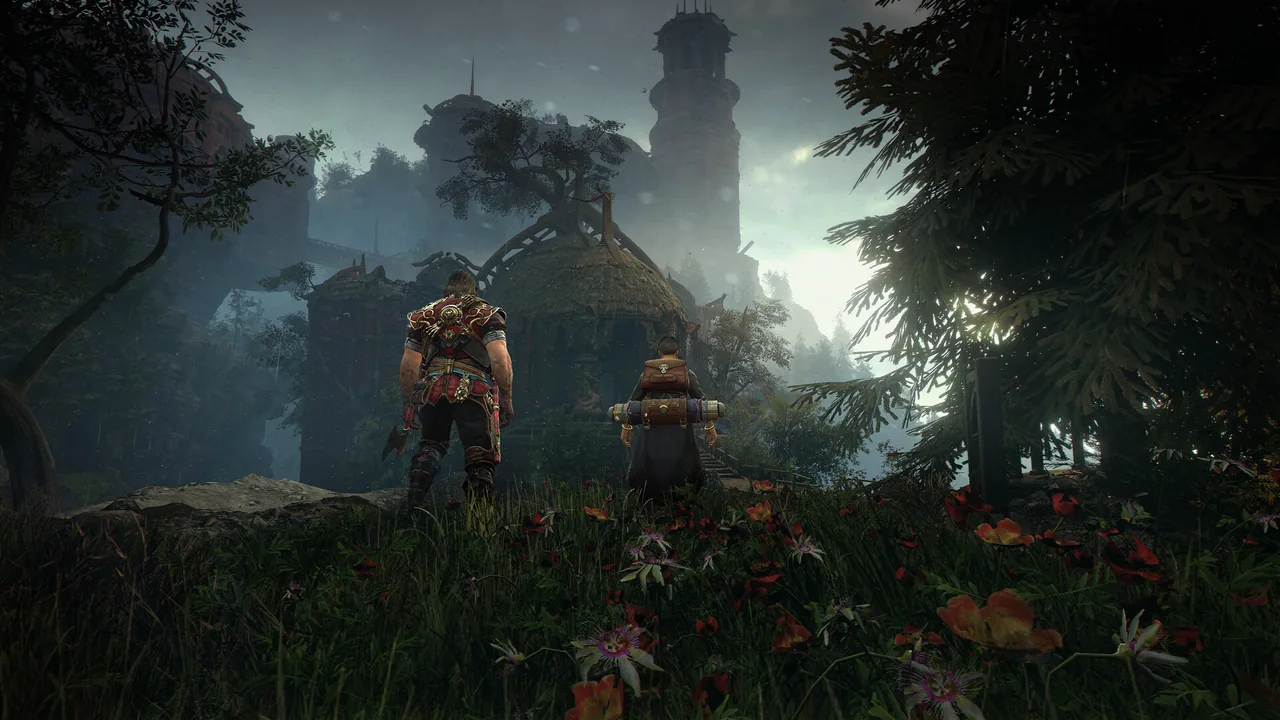
Blades of FireImage: 505 Games via Steam -
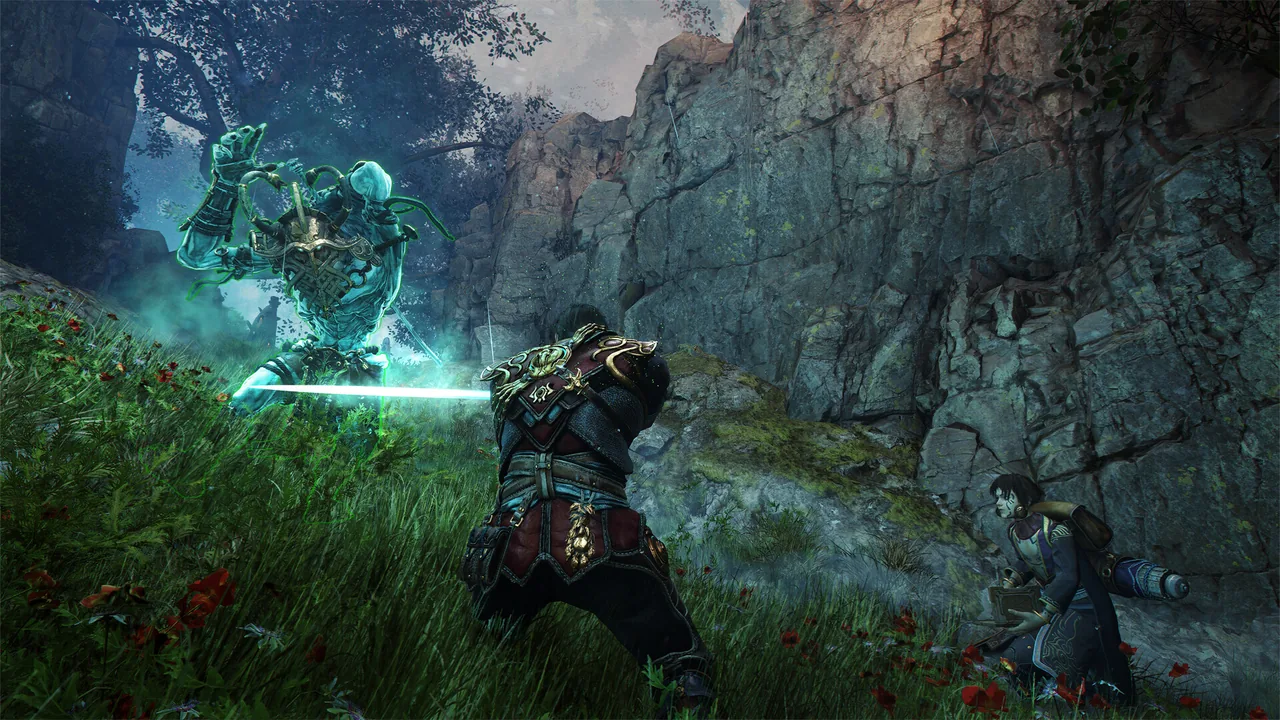
Blades of FireImage: 505 Games via Steam -
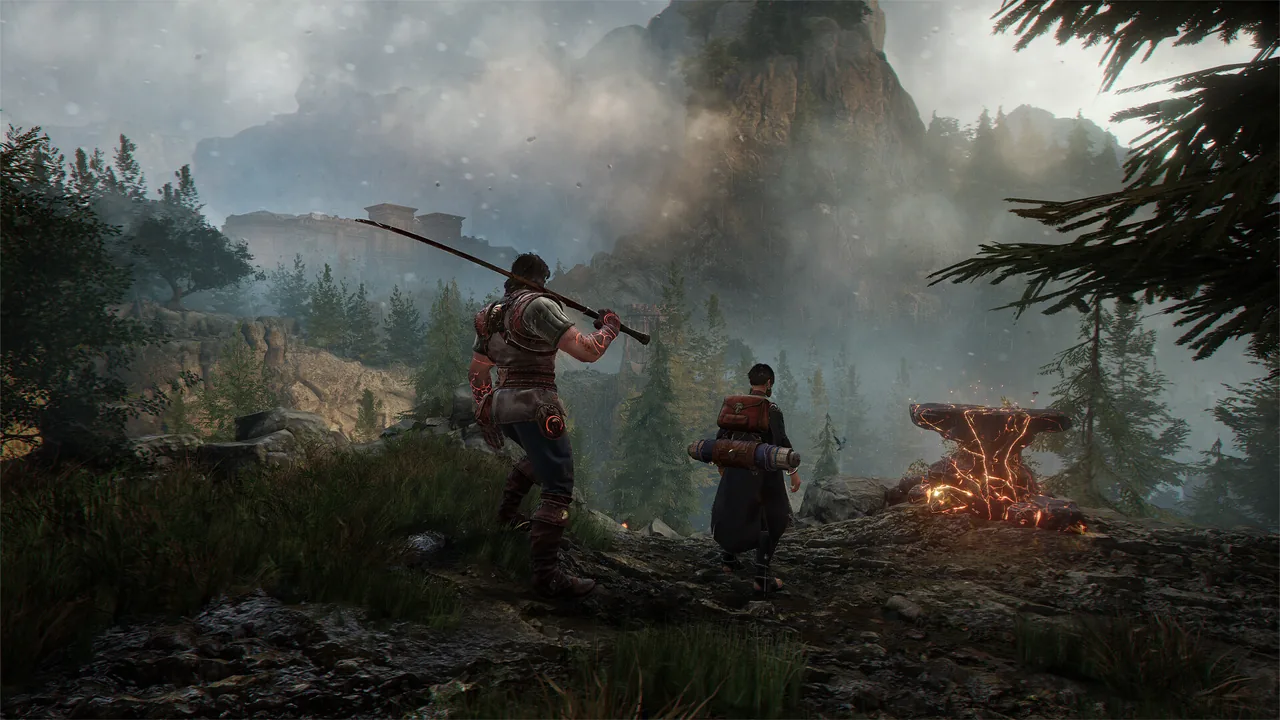
Blades of FireImage: 505 Games via Steam -
How the review scores each part of the gameWanderer Editorial -
The essentials at a glanceWanderer Editorial -
The short versionWanderer Editorial