A Viking survival sandbox that gates its whole progression behind biomes, each one resetting your sense of safety from zero. Five and a half years into Early Access, with a firm 1.0 date finally on the calendar, it's worth asking how much of that reputation still holds.
A side-scrolling farming sim that spent roughly fifteen months in Early Access before its 5 August 2026 graduation to 1.0, pairing Stardew-style crop and relationship systems with vertical platform building, gene-splicing crops, and bullet-hell drone combat against the ruins of a collapsed world.
A minimalist text-based incremental that spends its first act pretending to be nothing at all, then quietly reveals it was building a survival story out of firewood, huts and silence the whole time.
A solo-developed open-world action-adventure RPG stuffed with hand-written dialogue and reality-bending secrets, drawing genuinely rare "hidden gem" praise from reviewers who describe it as what Undertale could have been if Undertale had been more fun to actually play, held back only by simple combat and a navigation system some players find genuinely disorienting.
A Spiritual Successor to Pseudoregalia, Worn Openly Angel Essence launched on July 21, 2026, from solo developer g3bsoft, and it is impossible to talk about the game without first
A landmark, endlessly moddable military sandbox still going strong 13 years on — now facing a fresh, well-documented 2026 backlash after Bohemia Interactive introduced a monthly subscription pass for a game whose community has spent over a decade keeping it alive largely on its own.
A genre-defying puzzle roguelike-lite set in a mysterious manor whose floor plan you draft anew each in-game day, celebrated with a 92 Metascore and widely called one of the most creative puzzle games in years — beloved specifically by players willing to take pages of physical notes, and marked by a real, still-unresolved design tension between its puzzle-solving brain and its randomised, roguelike-lite execution.
A gorgeous, funky Jet Set Radio successor that 97.8% of players love — and whose critics land the same blow every time: it understood that the original was cool without understanding why.
An open-world monster-taming RPG whose fusion system — combining any two monster forms into a unique creature with its own hand-drawn sprite — has become its signature achievement, built by a two-person team and beloved for exactly that kind of ambition.
A genuinely inventive language-deciphering puzzle game, Overwhelmingly Positive and stable, whose beloved core hook is consistently diluted by stealth sections players compare unfavourably to the calm puzzle-solving around them — plus a real EULA controversy that Focus Entertainment has since publicly clarified and amended.
A wordless puzzle-adventure from LIMBO and INSIDE's lead designer, built around a genuinely inventive world-within-world mechanic that Steam's own reviewers rate Very Positive and trending upward, with a real minority arguing the puzzles are too heavily guided and the boss fights undercut everything the rest of the game does well.
A visually spectacular sequel to a beloved mobile-turned-PC crafting RPG that Butterscotch Shenanigans has supported with an unusually relentless year of updates, held back at launch by mobile-first controls and a text-heavy script that its own most detailed critics — many of them the original's biggest fans — argue buried the sequel's real improvements.
A Minecraft-shaped building game with genuine Dragon Quest heart, storytelling and structure — beloved to a degree this lane has rarely documented, with multiple reviewers logging hundreds or even thousands of hours and openly campaigning for a sequel.
A fishing-and-exploration horror hybrid that reviewers rate Overwhelmingly Positive and keep recommending anyway, even while its single loudest, most consistent critique — a spectacular opening that the game never quite develops — shows up inside a striking share of its own five-star reviews.
A solo-developed turn-based RPG with 133 achievements, a monster-catching system and genuinely deep combat — 98.9% positive, and its handful of critics almost all say the same thing: it's the fourth game again.
A thirteen-year-old trucking sim so meditative and beloved it has its own devoted subculture — now navigating a real, escalating backlash from its own longtime fans over a 2024-2025 UI overhaul many say broke what wasn't asking to be fixed.
The second act of the Remake trilogy trades Midgar's corridors for open regions, a deep Synergy-and-Folio combat system and a genuinely excellent card game — then buries a chunk of it under checklist busywork and a PC port that still stutters a year on.
A Flute, A Dark Place, And No Hand-Holding Fugaz, released July 7, 2026 by solo developer and publisher Spheanix, is a $5.99 knowledge-gated puzzle-adventure about a wanderer trapp
The free open world is good enough to carry a full-price game on its own — climbing, gliding and elemental combat form one of the best traversal systems in the genre. What you pay for is everything above the story campaign, and the review is really about where that line sits.
A faithful, expanded rebuild of one of open-world RPG history's most influential games — the 2001 original that reviewers credit as a direct forerunner to The Witcher — that returned to the Colony to Very Positive reception and 500,000 copies sold, undercut at launch by genuine, severe bugs and softlocks that the developer has since addressed through a rapid, transparent patch cadence.
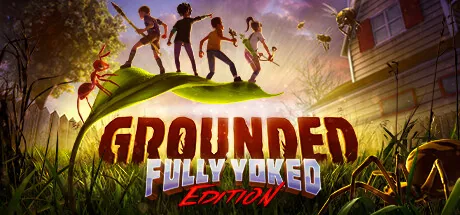
Obsidian shrinks you to the size of an ant and lets that single premise reshape exploration, combat and crafting all at once. Nearly four years after 1.0, the backyard is still one of the smartest survival maps in the genre — even as Obsidian's attention has visibly moved on to the sequel.
A visually striking, mechanically brilliant first-person gravity-walking puzzle game carrying the Draknek and Friends seal of quality, drawing enthusiastic comparisons to Portal, The Witness and Stephen's Sausage Roll, held back by a sharp mid-game difficulty spike one detailed reviewer documents in granular detail and real frustration over how the pre-release demo was handled ahead of launch.
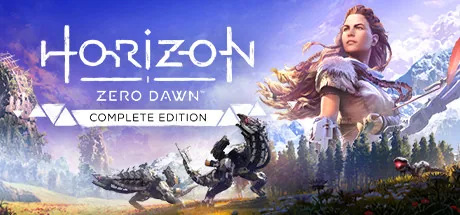
A widely loved open-world action RPG about hunting robotic beasts in a fallen future — whose PC negative sample carries three distinct, well-documented controversies: a 2020 launch plagued by crashes, a fiercely objected-to data-collection agreement with no real opt-out, and a 2024 delisting tied to a PSN account requirement that blocked some regions from buying either version.
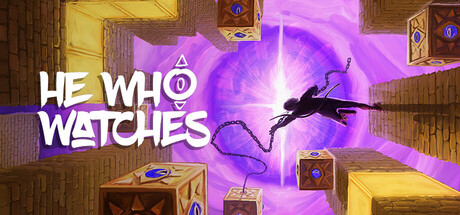
French solo developer Charlie Wagner, a technical game designer with prior credits on Under the Waves and Otherskin, delivers a short, wordless 3D platformer built around a single standout traversal mechanic — a hooked staff used to pole-vault, swing and climb through a crumbling underground megastructure — earning overwhelming praise for its movement feel and atmosphere, tempered by a small but specific minority who found its controls inconsistent and its narrative mystery thinner than its Ico and Lorn's Lure comparisons promise.