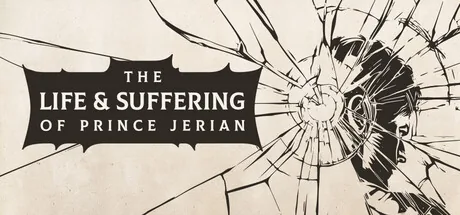
Game review
The Life and Suffering of Prince Jerian
7 / 10
- Developer
- Schisma Games
- Publisher
- 101XP
- Released
- 20 July 2026
- Platforms
- Windows
- Genre
- Narrative RPG
- Monetisation
- Premium, one-off purchase — optional soundtrack, artbook and map add-ons, no in-game purchases
- Players
- Single-player
The short version
Five chapters, six estates, three ideological axes for the Empire and three for Jerian's own soul. Nothing else in this genre tracks the weight of a decision in as much detail, and when the writing and the machinery pull together the game is superb.
The trouble is that the machinery is legible. Enough of the story's turning points sit behind numeric thresholds that careful players stop playing a prince and start playing a spreadsheet, and a handful of the biggest beats arrive whatever you did to stop them. Buy it for the writing and the world; go in knowing the consequence system is more honest about arithmetic than about you.
Biggest strengths
- Six estates tracked for both loyalty and strength, so buying support from a faction that can't enforce anything is a real and costly mistake
- Sanity is a genuinely good idea — acting out of character has a price, and the price is finite
- The Primate role gives the political game a religious axis most court RPGs never bother with
Biggest weaknesses
- Too many story branches sit behind hidden numeric thresholds, which rewards restarting over roleplaying
- Stats now want balance rather than height, so committing hard to a characterisation is mechanically punished
- Several major events land regardless of the effort spent preventing them
Who it's for: Sir Brante players, Crusader Kings roleplayers who wish the drama were written rather than generated, and anyone who reads an RPG for its politics rather than its combat.
Our recommendation: Worth buying at the launch price if branching narrative is your genre. Play the free demo first — it's the opening of the real game and it will tell you within an hour whether the stat-gating will bother you.
7 / 10
There's a moment in most branching RPGs where you stop asking what your character would do and start asking what the game will let you do. Prince Jerian brings that moment forward on purpose. It puts the numbers on screen, tells you the Empire is balanced on them, and dares you to keep roleplaying anyway.
Sometimes that's thrilling. Sometimes it turns a story about a doomed heir into a budgeting exercise. Working out which one you're getting is most of what deciding to buy this game involves.
Jerian is crown prince of the Blessed Arknian Empire, which is broke, factional and losing faith in itself, and he is also the Primate — the man who holds together the Pact between the Twins and everyone living under their law. Five chapters take him from a childhood he doesn't control to a throne he may not survive, and the game never once lets him swing a sword at the problem. This is Schisma Games' first release, made by people who worked on The Life and Suffering of Sir Brante and set in that same pitiless world, and it is aiming considerably higher than its predecessor did.
What the game is actually counting
The scale of the bookkeeping deserves stating plainly, because it's the whole design.
Six estates have opinions about you: the Great Houses, the Distinguished Arknians, the common nobility, the Old Faith clergy, the New Faith clergy, and the bourgeoisie. Each one is tracked for loyalty and for strength, which is the smartest single idea in the game. A faction that adores you but has no power is a warm feeling with no cash value, and one you've deliberately weakened is one whose enthusiasm no longer buys anything. It's possible to spend a whole chapter courting support that turns out to be worthless, and the game will let you do it without a word of warning.
The Empire itself sits on three ideological spectrums — progress against tradition, equality against elitism, law against dogma — and Jerian sits on three of his own: reason against feeling, will against blood, love against law. Three practical skills, management, scholarship and diplomacy, decide whether he can execute what he's decided. Relationships with individuals get their own values. Every year he commits to an Affair, a long project that eats his time; personal ones early, imperial ones from nineteen.
Then there's Sanity, which is the mechanic that makes the whole thing a roleplaying game rather than a management sim. It's a small pool that does not refill. You spend it when Jerian acts against the person you've been building — when the sensible move and the honest one point in different directions and you take the sensible one anyway. Run it to zero and he doesn't survive what that costs him.
That's a properly elegant piece of design. Most RPGs let you pivot your characterisation for free whenever a check demands it. This one prices it, and the price is finite, which means every compromise you make is drawn from the same limited account. Ruling badly and ruling in bad faith are separate failure states here. Very few games in any genre have bothered to distinguish them.
Consequence, and the seams in it
So do choices matter? Mostly, and in a granular way that's rare. The same scene will play out differently depending on who trusts you and what you did two chapters ago. Support given to the New Faith bites you later at exactly the moment the Old Faith would have been useful. Endings are plural and they're reached by accumulation rather than by a menu at the end.
But the system has two seams, and honest buyers should know where they are.
The first is that the thresholds are hidden and the checks are numerous. When a story branch opens only above a certain value, and you can't see the value, the rational response is to save, probe, reload and optimise — and a game about a man imprisoned by his position becomes a game about finding the combination. This is worse here than in Sir Brante, because the stat design has shifted from more is better to balance is better. Committing hard to a characterisation, which is exactly what the Sanity system encourages, leaves you short on the opposite axis when a later scene checks it. Two mechanics that should reinforce each other are quietly pulling in opposite directions, and the players complaining loudest about metagaming have put their finger on something real.
The second is that certain milestones are load-bearing for the plot and will happen anyway. Spend a chapter and a great deal of political capital heading off a piece of legislation and you can still watch it pass. Structurally you can see why — five chapters of narrative built on genuinely open outcomes would be unshippable — but it's the one place where the game's central promise visibly breaks, and it breaks hardest for the players who engaged with it most seriously. There is a specific and unpleasant feeling in realising the branch you fought for was cosmetic, and this game produces it more than once.
The writing, which is mostly doing its job
None of the machinery would matter if the prose were thin, and it isn't. The Empire is written with real conviction: divine law as an administrative fact, faith as a budget line, cruelty that's institutional rather than theatrical. Arguments between factions are constructed so that the people you're inclined to dislike make points you can't easily dismiss. That's difficult writing to do and it's the reason to play this over any number of prettier court dramas.
Two problems stop it landing as hard as it should. Supporting characters rotate — someone will matter enormously for a chapter and then more or less leave the story, which blunts the long emotional arcs a life-spanning game ought to be uniquely good at. And the endings are short. After twenty-plus hours of carefully weighted decisions, the summing-up feels rushed, and a game whose entire pitch is consequence cannot afford a light touch at the exact moment consequence arrives.
Chapter three, The Great Censor, is the game at its best: an unwinnable position, several defensible ways out, and no version of events where nobody pays. If the last chapter hit as hard, this review would end differently.
What you're buying
It's a text game, so it runs on anything — DirectX 9, 8GB of RAM, a few gigabytes of disk. That matters more than it sounds: this is a laptop-on-a-train game, and it's a stable one, which contemporary discussion contrasts favourably with how the predecessor arrived. Eleven languages at launch is genuinely impressive for a script this dense; the soundtrack is original and extensive and does a lot to distinguish scenes that otherwise share a layout. Presentation is the weakest column: static illustration and a fixed interface across five chapters, which after twenty hours starts to feel like reading the same page with different words on it.
US$24.99, discounted 15% to US$21.24 until 3 August 2026, for a first run of fifteen hours upwards and a design that plainly expects several. The soundtrack, artbook and map are separate purchases and none of them are content. There's no premium currency, no season, nothing gated. A free demo covering the opening carries your save into the full game, which is the correct way to sell something this divisive, and you should use it.
Steam sits at Mostly Positive as I write, with no critic aggregate yet. Reading the negative reviews rather than counting them, they're strikingly consistent: almost nobody attacks the writing or the world, and almost everybody who's unhappy is unhappy about arithmetic showing through the fiction. That's a design complaint, not a polish complaint, and design complaints don't get patched out.
Final verdict
Prince Jerian is a serious, ambitious, frequently excellent game that is fighting itself. Its consequence engine is the most detailed in its genre and its Sanity mechanic is the best new idea this kind of RPG has had in years. Its thresholds are also opaque enough to turn thoughtful players into optimisers, its stat maths quietly penalises the strong characterisation it asks for, and its biggest moments occasionally proceed on rails while telling you they don't.
Seven out of ten. Buy it if you read RPGs for their politics and you can make peace with a system that shows its working. If what you want is for the game to believe in your character as much as you do, the friction here will find you early, and it won't let go.
Price, store details and Steam user rating checked 29 July 2026.
Pros and cons
Pros
- Six estates tracked for both loyalty and strength, so buying support from a faction that can't enforce anything is a real and costly mistake
- Sanity is a genuinely good idea — acting out of character has a price, and the price is finite
- The Primate role gives the political game a religious axis most court RPGs never bother with
- Yearly Affairs make long-term investment a decision rather than a menu
- Localised into 11 languages at launch, which is rare for a text-heavy game this size
- Runs on effectively any machine, and it's stable in a way the predecessor wasn't at launch
Cons
- Too many story branches sit behind hidden numeric thresholds, which rewards restarting over roleplaying
- Stats now want balance rather than height, so committing hard to a characterisation is mechanically punished
- Several major events land regardless of the effort spent preventing them
- Supporting characters appear for a chapter and then evaporate
- The endings are thin payoff for a run that can take well over twenty hours
- Static illustration and a fixed layout make five chapters look very similar to each other
Screenshots
-
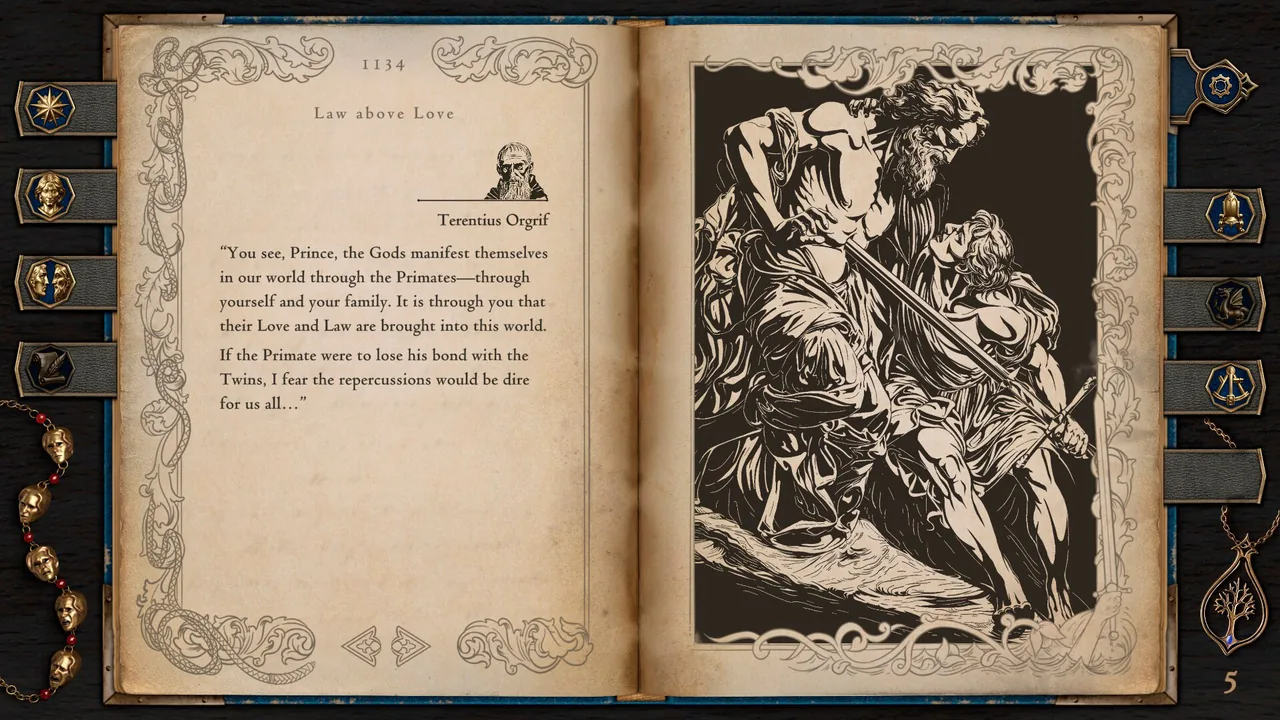
The Life and Suffering of Prince JerianImage: 101XP via Steam -
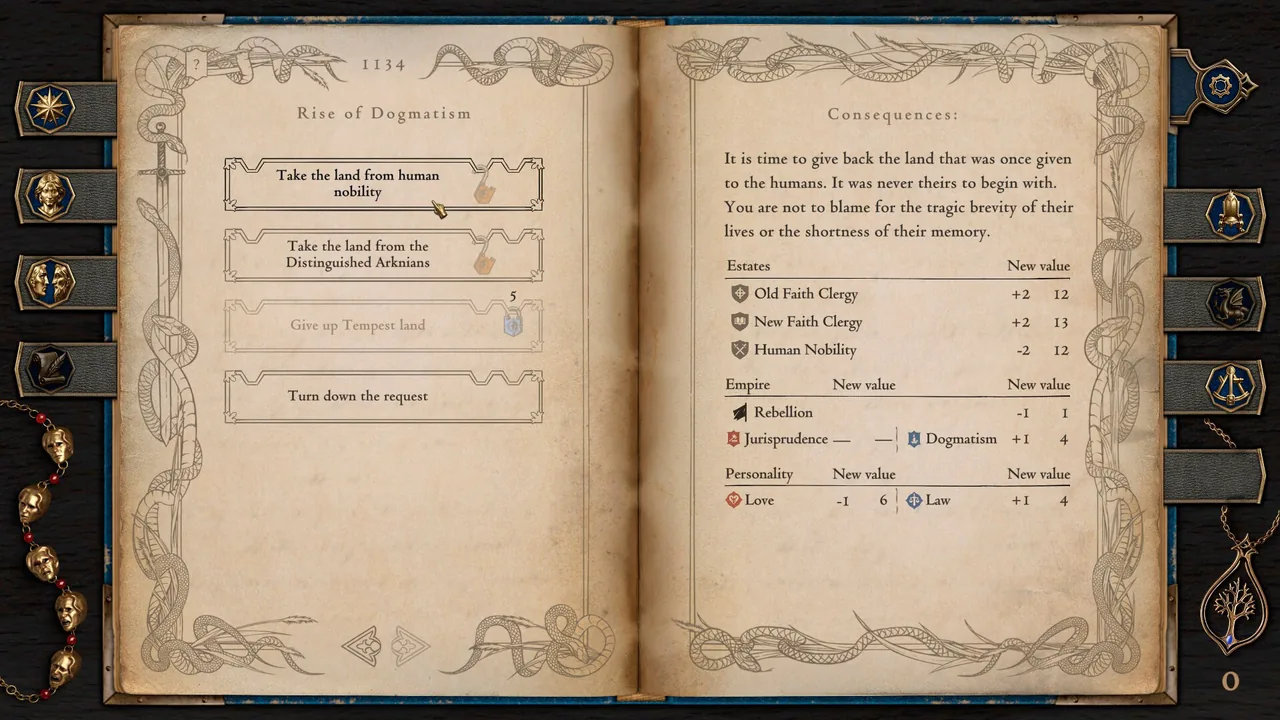
The Life and Suffering of Prince JerianImage: 101XP via Steam -
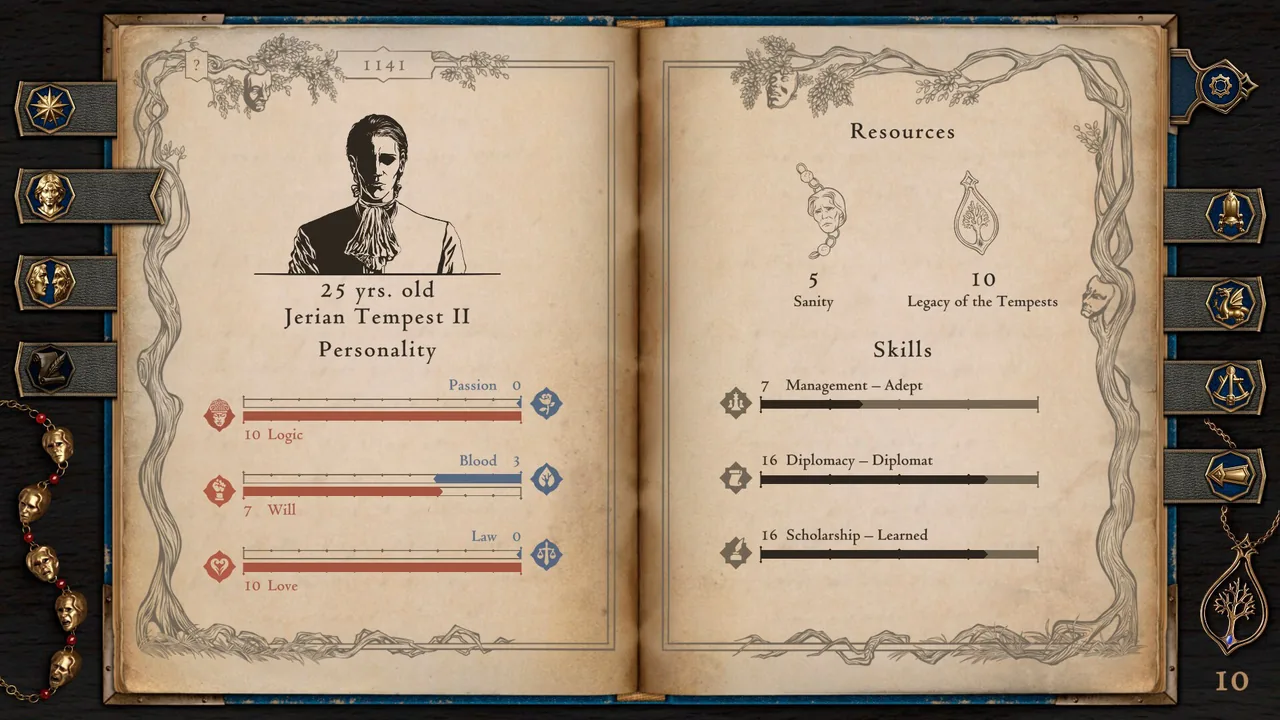
The Life and Suffering of Prince JerianImage: 101XP via Steam -
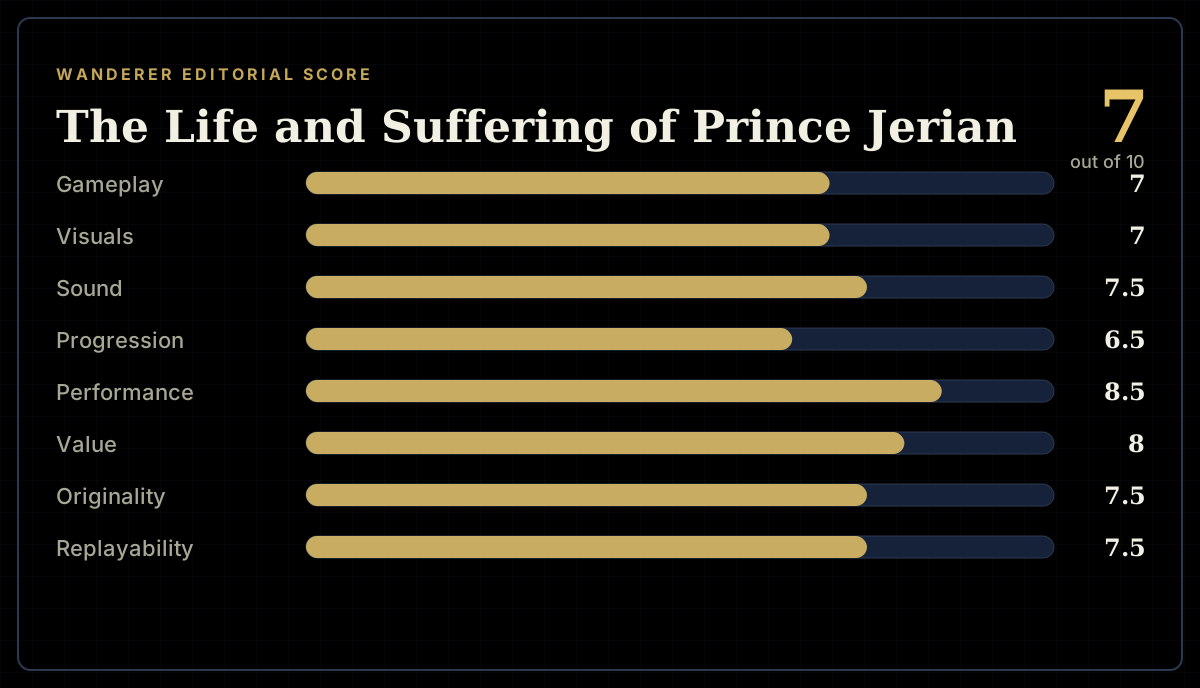
How the review scores each part of the gameWanderer Editorial -
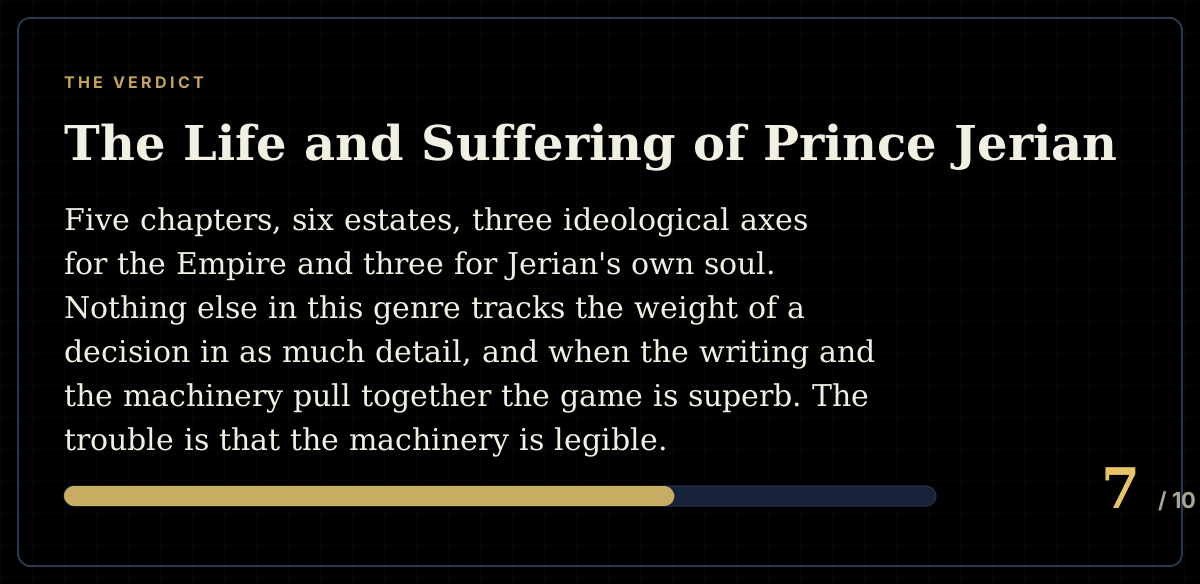
The short versionWanderer Editorial