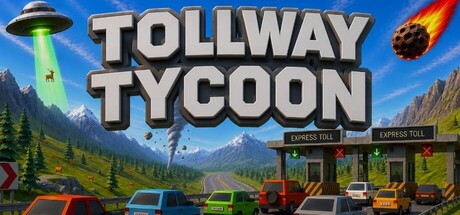
Tollway Tycoon Review
A Toll Booth Empire, One Chaotic Day at a Time Tollway Tycoon entered Early Access on April 29, 2026 from 10ft Games, a small studio pitching a premise that sounds almost too modes
7.5 / 10
Browse by genre
800 Management & Tycoon games reviewed and scored, best first.
800 reviews
A Toll Booth Empire, One Chaotic Day at a Time Tollway Tycoon entered Early Access on April 29, 2026 from 10ft Games, a small studio pitching a premise that sounds almost too modes
7.5 / 10
A free browser incremental that has been running since 2015 — trap creatures, build a war economy out of them, and watch a soft-reset loop of zones, portals and heliums turn into one of the deepest progression systems the genre has ever built.
7.5 / 10
Two Point Studios' museum management sim remains Overwhelmingly Positive across nearly 13,000 Steam reviews, widely credited by longtime series fans as the best entry yet — undercut by a real, remarkably consistent complaint about its "Thieves" mechanic, which recurring reviewers describe as a poorly-tuned frustration distinct from the rest of the game's gentle, decoration- focused design, alongside a real, repetitive "expedition loot-box" content-acquisition loop.
7.5 / 10
A Familiar Cozy Formula, Reshaped Around Sushi Ugoku Sushi Bar released on Steam on July 29, 2026, from developer Rogue Duck Interactive, co-published with Gamersky Games, for $12.
7.5 / 10
A cheap, finite incremental about piloting a ship from Earth to the edge of the observable universe, with an unusually healthy completion rate to back up its warm reception, let down by a user interface that splits into too many screens as it grows and a back stretch several reviewers say outstays its welcome.
7.5 / 10
From Garage Rack To Hyperscaler, One Cable At A Time Uptime: A Cloud Provider Sim is a $14.99 first-person infrastructure sim from solo Australian-style indie outfit RubyRack Games
7.5 / 10
The week's biggest "new release" is actually a year-old Early Access game that just hit 1.0 — and the 1.0 finally brought the co-op everyone was waiting for. It's funny, generous and hugely popular. It's also a management sim that never lets you stop doing the menial jobs yourself.
7.5 / 10
Developer Minakata Dynamics, published by Hooded Horse, delivers an Early Access city builder about mice establishing an industrious colony under the tax-collecting paw of cat overlords, earning enthusiastic, specific praise for its full-z-axis construction, deep production chains and unusually responsive developers from a Very Positive review base, tempered by a repeated complaint about a monotonous mid-game loop and a near-total absence of clear long-term goals.
7.5 / 10
A Continent on the Edge of War Wyrdwic: At the Heart of a New World opens on a familiar kind of fantasy hinge point, a fragile peace shattered by a ruler's death and an heir
7.5 / 10
The most completely simulated economy in games, eight years of free updates, and one recurring problem — in a game about giving orders to AI, the AI is what 61 of its hundred negative reviews complain about.
7.5 / 10
A shipwreck-survival action RPG that turns rescuing NPCs into a settlement-building system and backs it with some of the fastest, most readable real-time combat Nihon Falcom has ever shipped. The PC version carries genuine baggage from a rough 2018 launch and a since-rewritten English script, but the game underneath both has aged well.
7.5 / 10
Scrubbing the Seabed, One Timed Dive at a Time Aqua Scrap: Deep Clean is a cursor-driven incremental game built around a simple, repeatable loop: dive to the ocean floor for a stri
7.4 / 10
A backpack-management horde survivor from Digital Confectioners, built over a year of public playtests and demos before its April 2026 launch, backed by a genuinely active post-release patch cadence including a brand-new playable hero within three months.
7.4 / 10
Orcs, Elves, and a Spreadsheet: Fantasy Football Without the Joystick Brutal Ball Manager 2 is a franchise management simulation built around 8-versus-8 American football, reimagin
7.3 / 10
Dropping Through the Clouds With a Grid Full of Junk Cloudbreaker knows exactly what it's borrowing and isn't shy about it. It's a bullet heaven survivors-like in the V
7.3 / 10
A management-lite slice-of-life game about a thirtysomething punk band that will probably never make it, told through diner shifts, rhythm-game gigs and three meters that never stop draining.
7.3 / 10
A US$5 solo-dev card game about getting obscenely, monstrously rich — Cookie Clicker's number-go-up loop wearing a satirical life-sim's clothes, with real documented flaws (a reset mechanic that still catches players a year after the fix) and none of the monetisation traps this library usually has to warn about.
7.3 / 10
Twin-stick tower defense in the Australian outback "Obliterator-X" mashes together three familiar genres — twin-stick shooting, tower defense, and roguelite base building
7.3 / 10
A five-years-in-the-making sequel to the dwarven action-RPG Regions of Ruin, praised for genuinely improved combat and base building, but weighed down by a sharp, recurring complaint that the campaign ends abruptly and its economy runs out of purpose long before the credits roll.
7.3 / 10
A reverse dungeon crawler where you play the dungeon, not the hero — stock traps, hire monsters and watch a party of "heroes" die across a career measured in in-game weeks. Steam's 1,604 English reviews call it fun but thin, and the three post-launch DLCs are the corpus's single biggest sore point.
7.2 / 10
Read review of Legend of Keepers: Career of a Dungeon Manager
A voxel-art city builder that trades money and disasters for a strict web of building adjacency rules, turning city planning into a genuine spatial puzzle — Very Positive on Steam, with a persistent, well-documented complaint that its achievement-gated progression can trap players on the first map for good.
7.2 / 10
A 13th-century trading-guild idle game built entirely from plain DOM buttons, dropdowns and text fields — and every single one of them was confirmed working correctly by actually founding a base and building a lumbermill through real touch.
7.1 / 10
A standalone XCOM-style strategy sequel that spent years in Early Access before its April 2026 1.0 launch, still shipping near-weekly balance and stability patches months after release.
7.1 / 10
Command Without Combat: A Different Kind of WWI Game Acceptable Losses is the debut Steam release from solo developer Zann Archive, and it takes a deliberately unglamorous angle on
7 / 10