
Game review
Cloudbreaker Review
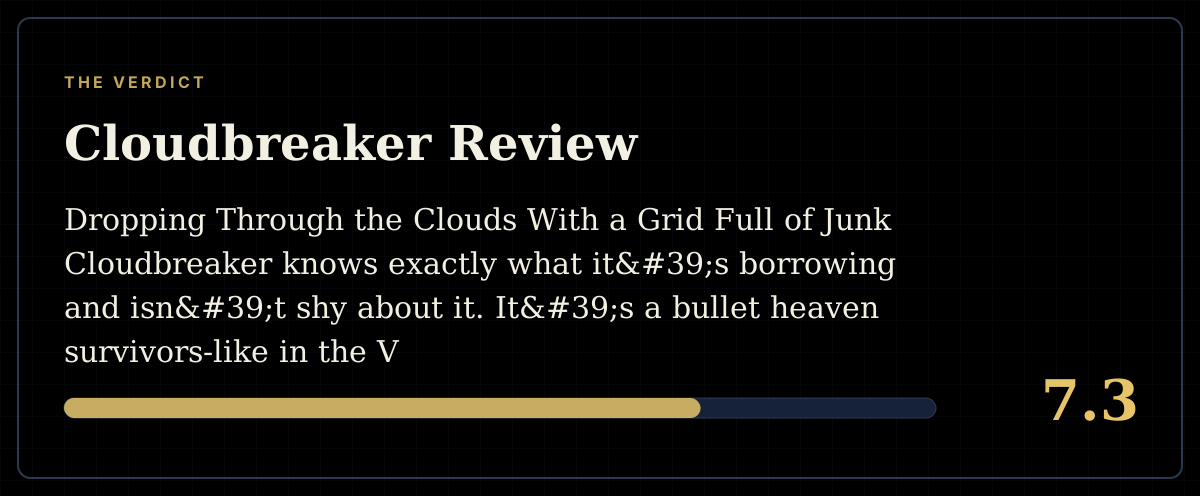
7.3 / 10
- Developer
- Ballast Games
- Publisher
- Ballast Games
- Released
- 15 September 2026
- Platforms
- ["Windows", "Linux"]
- Genre
- Action
Dropping Through the Clouds With a Grid Full of Junk
Cloudbreaker knows exactly what it's borrowing and isn't shy about it. It's a bullet heaven survivors-like in the Vampire Survivors mold — pilot a small craft, get swarmed by hordes of enemies called Biotes, watch the screen fill with bullets and explosions, and try to out-survive the chaos for as long as your build can handle it. Where Cloudbreaker splits off from the pack is in what happens between fights: instead of picking from a menu of upgrades every level, you're managing a literal inventory grid bolted to the side of your airship, slotting rectangular and irregularly shaped Engine Parts into a limited space the way you'd pack a suitcase or solve a game of Tetris.
The setup is simple on paper. You dive down through a "sky-world," a series of descending cloud layers stacked with ruins, scrap, and hostile biotech leftovers from some unspecified past civilization. Defeating Biotes earns Bloil, which your ship converts into Engine Parts, and those parts only do anything once you've found room for them on your grid. Beat the bosses guarding each layer and you punch through to the next one down, chasing whatever is waiting at the bottom. It's a familiar shell around a genuinely different core mechanic, and that combination is doing a lot of the heavy lifting for how well the whole thing works.
Tetris With Teeth: Why the Grid Actually Matters
The inventory grid isn't a gimmick bolted onto a survivors-like for novelty's sake — it's the entire strategic layer of the game, and it's well-built. Every airship has its own grid shape and starting layout, which means the exact same Engine Part behaves completely differently depending on which ship you're flying and what's already occupying the space around it. Parts don't just take up room; they interact with their neighbors, creating synergies that reward deliberate placement over just cramming things in wherever they fit. A railgun next to the right support part hits differently than a railgun crammed into a corner by itself, and figuring out which combinations actually click is most of the fun.
Once a part is placed, it's locked in for the run — there's no shuffling things around mid-dive once you've committed, which forces real decisions instead of endless optimization. Relics complicate the grid further: they're powerful, run-defining finds, but placing one is a one-way choice, since they can't be relocated afterward. That permanence gives even small placement decisions weight that a lot of build-crafting roguelites lack, where you can freely respec your way out of a bad choice. Here, a cramped early-run decision can haunt you three zones later, and that's clearly by design.
Outside of individual runs, permanent upgrade points let you invest in new ships, gear, and even the drop rates of specific part types, letting you steer future runs toward the kind of build you're chasing rather than hoping the RNG cooperates. Weapons carry their own upgrade trees on top of the grid system, adding a second axis of customization that changes how a weapon behaves rather than just how hard it hits. A single dive runs about 20 minutes depending on boss speed, short enough to fit into a "just one more" loop, and there's an Endless Mode once you've cleared the main content for players who want to see exactly how far a maxed-out build can carry them.
A Rough Landing on Steam Deck, and a Release That Still Feels Warm
Cloudbreaker's biggest problems right now are technical rather than design-level, and they're the kind that come from a game leaving its demo phase before its performance work was fully finished. Steam Deck players in particular report the frame rate sagging below 20 FPS once a run stretches past the ten-to-twelve-minute mark, which is a rough experience for a genre that leans on readable bullet patterns and fast reaction time. Given the developer's stated plans for a future Switch 2 version, this is presumably an area getting continued attention, but it's a real problem today, not a hypothetical one.
Crashes are a sharper issue for some players. A handful of reports describe consistent crashes when buying upgrades between runs, and occasional crashes mid-dive that take progress down with them. That's a frustrating thing to run into on a genre where losing a run to a hard crash instead of your own mistakes stings in a very specific way, and it's the kind of stability issue that should have been ironed out before a 1.0 launch rather than after. The interface itself is functional but a little unpolished in places too — the grid is readable once you understand it, but the game doesn't do a lot of hand-holding to explain the deeper interactions between parts, leaving a fair amount of the synergy-hunting to trial, error, and outside reading.
A Genuinely Clever Hook Dragged Down by Launch Rough Edges
What Cloudbreaker gets right, it gets very right. The fusion of bullet heaven combat with a puzzle-grade inventory puzzle isn't just window dressing on a familiar formula — it's a legitimately fresh spin that changes how you think about build-crafting in a genre that's gotten crowded with samey "pick three perks" loops. The art direction backs it up nicely too, leaning on a painterly pixel-art style with layered VFX that looks good whether you're running it in the crisper pixel mode or with the softer default filters, and the soundtrack holds up well across long sessions without becoming grating.
The problem is that the game's launch state hasn't quite caught up to its ambitions. Steam Deck performance issues and upgrade-menu crashes are the kind of thing that should be sorted out during a demo period, not discovered by players after they've paid for the full release, and a couple of players have said outright that this didn't feel fully ready for a 1.0 launch. None of that undermines the core design, which is sturdy and inventive enough to be worth sitting through some jank for, but it does mean the current version is best approached with the expectation of some early-release turbulence rather than a flawless landing.
Verdict
Cloudbreaker takes a well-worn genre and bolts on a genuinely smart new system in the form of its Engine Grid, and the resulting mix of bullet-heaven combat and deliberate, irreversible inventory puzzling is sharp enough to stand out in a crowded field of survivors-likes. The ship variety, relic system, and weapon upgrade trees give it real depth for the price, and the difficulty modifiers and Endless Mode mean there's a decent amount of replay value once the main content is cleared. What holds it back right now is a launch that arrived a little rough around the edges — Steam Deck frame rate problems and crash reports around the upgrade menu are real issues that need patching, not minor nitpicks. If you can tolerate some early jank, the core loop underneath is well worth diving into; if stability is a dealbreaker for you, it might be worth waiting for a patch or two before taking the plunge.
Pros:
- The Engine Grid inventory system is a genuinely fresh, well-designed twist on the bullet-heaven formula
- Strong build variety across different airships, relics, and weapon upgrade trees
- Attractive painterly pixel-art style with solid, non-grating music for long sessions
- Short, tight ~20-minute run length keeps the "one more dive" loop compelling
- Endless Mode and difficulty modifiers add meaningful replay value
Cons:
- Steam Deck performance drops sharply (sub-20 FPS) in longer runs
- Reported crashes around the upgrade menu and mid-run for some players
- Limited in-game guidance on how deeper part synergies actually work
- Some players feel the 1.0 launch arrived before performance issues were fully resolved
Screenshots
-
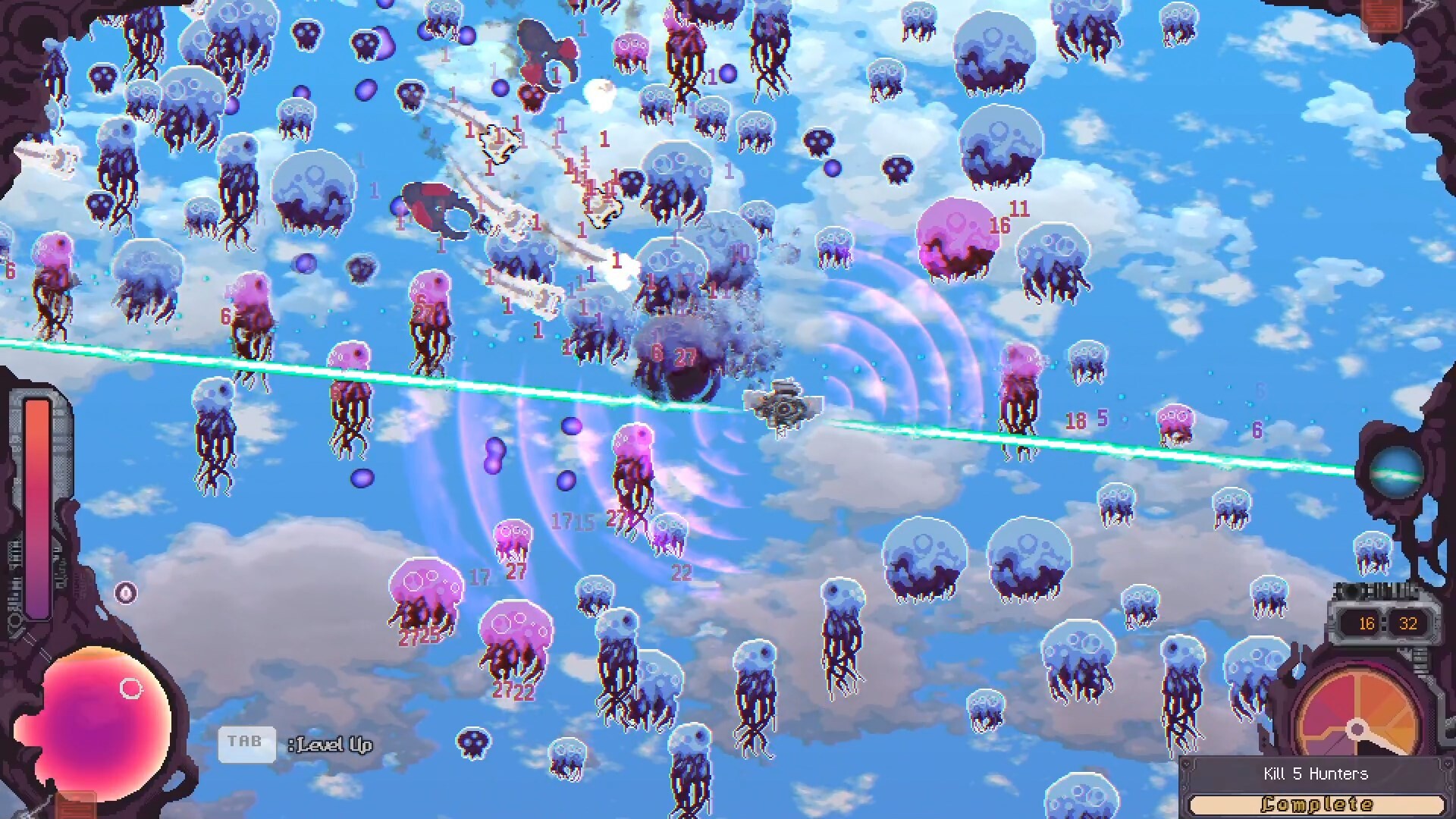
A dive deep into Biote territory, with the swarm closing in from every sideImage: Ballast Games -
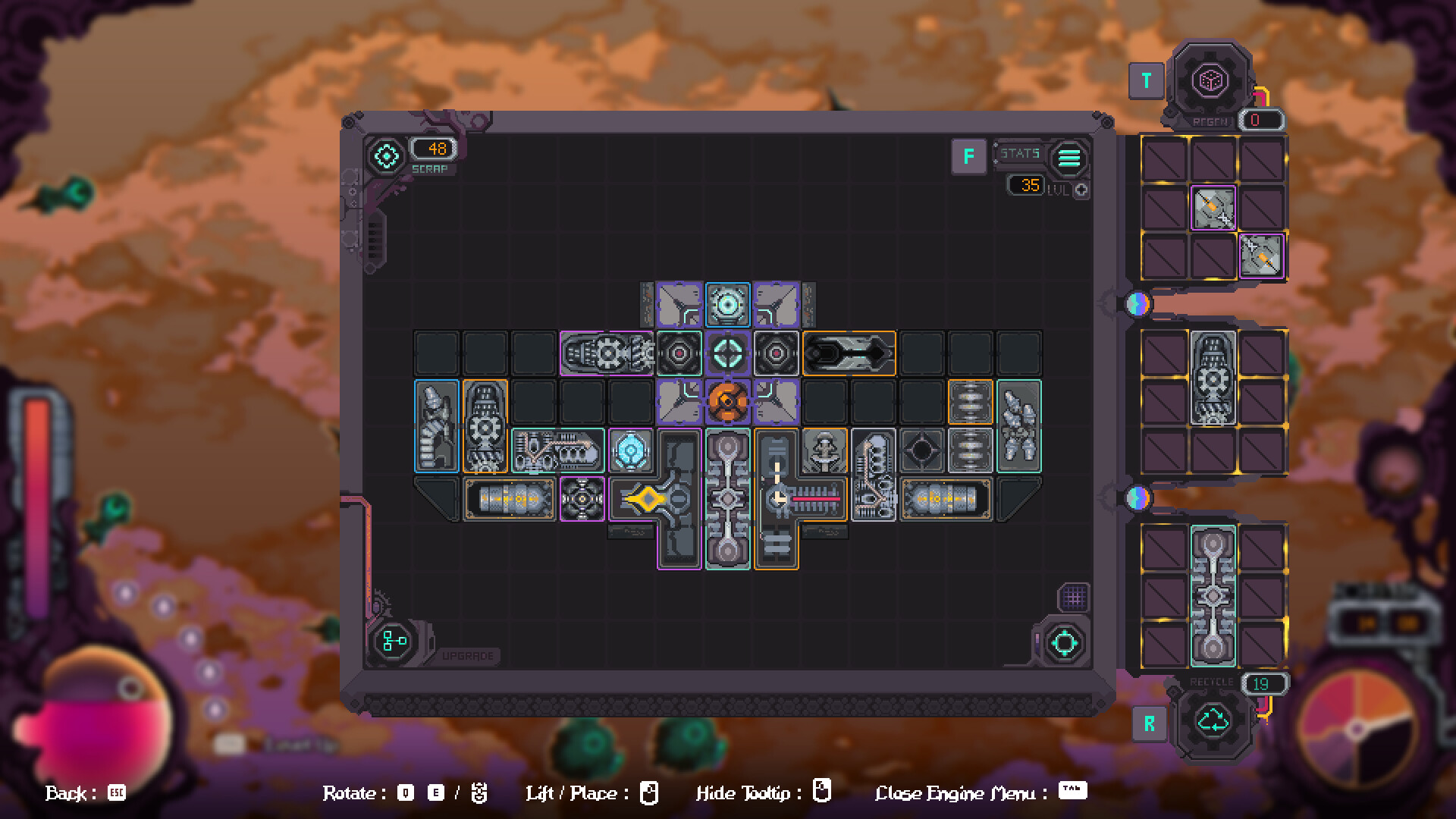
The Engine Grid, where placement and synergy between parts matter as much as raw statsImage: Ballast Games -
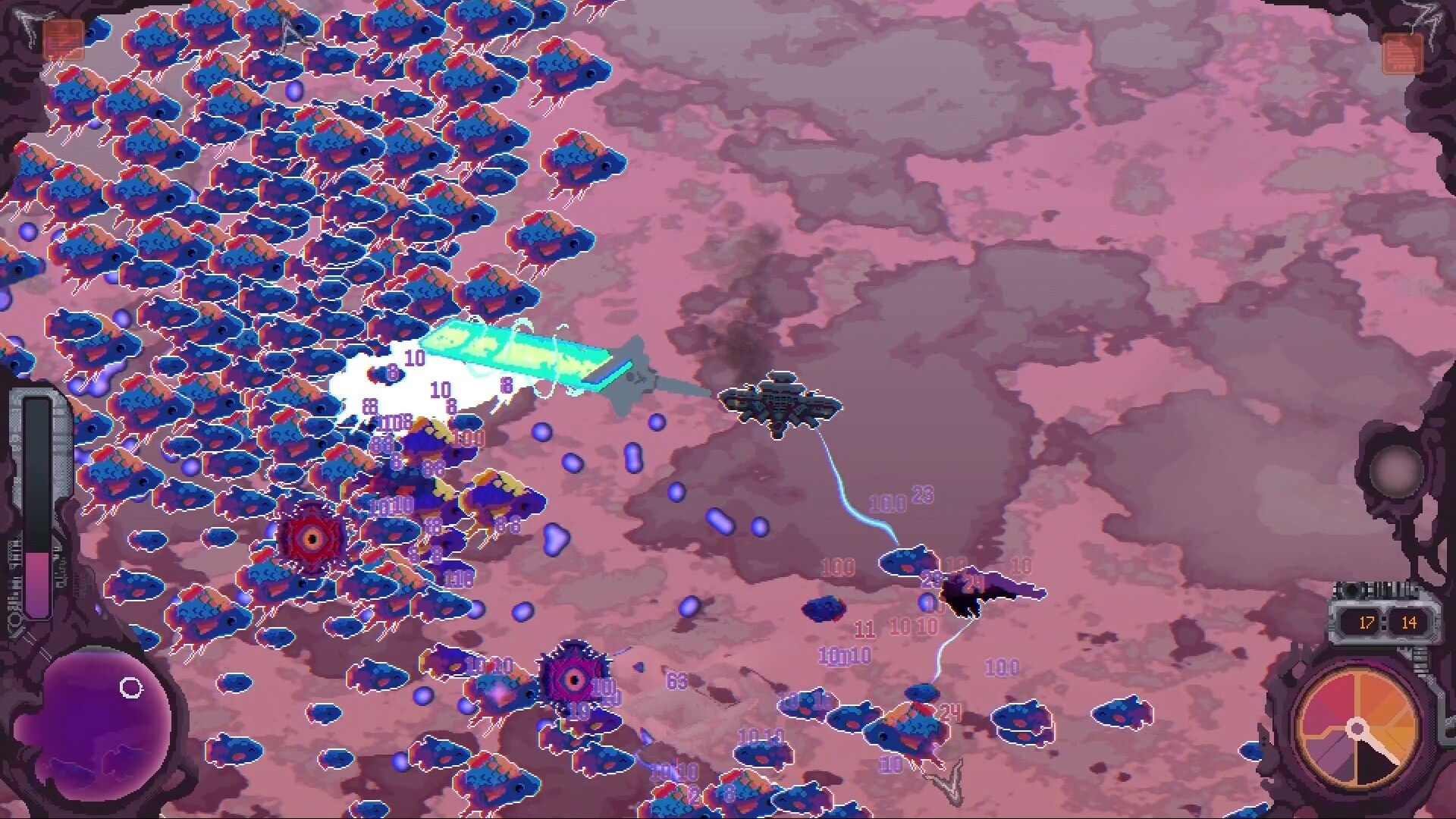
A late-run swarm tests how well a build's synergies hold up under pressureImage: Ballast Games -
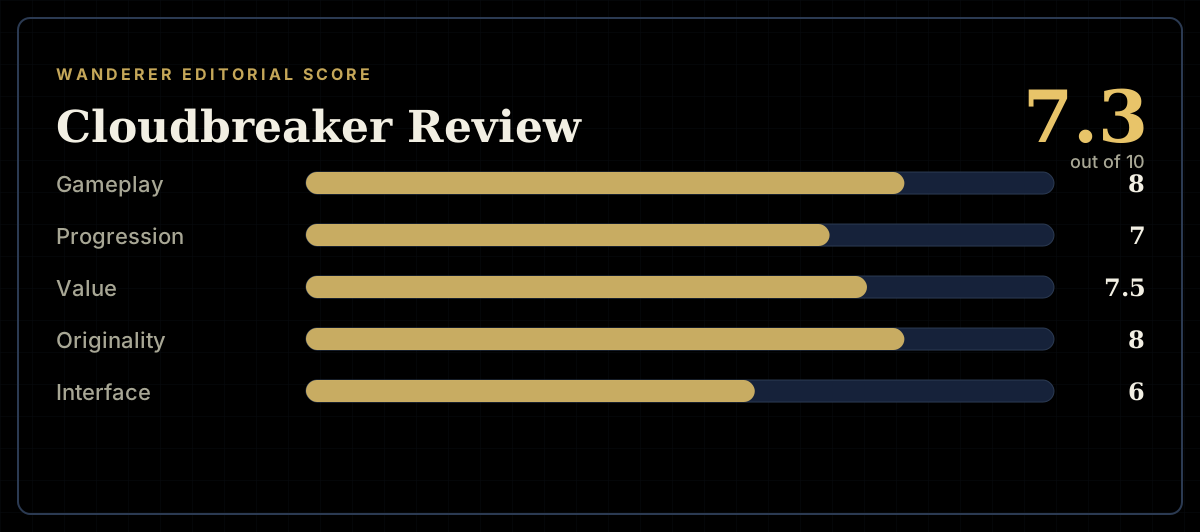
How the review scores each part of the gameWanderer Editorial -
The short versionWanderer Editorial