
Game review
Ys VIII: Lacrimosa of Dana
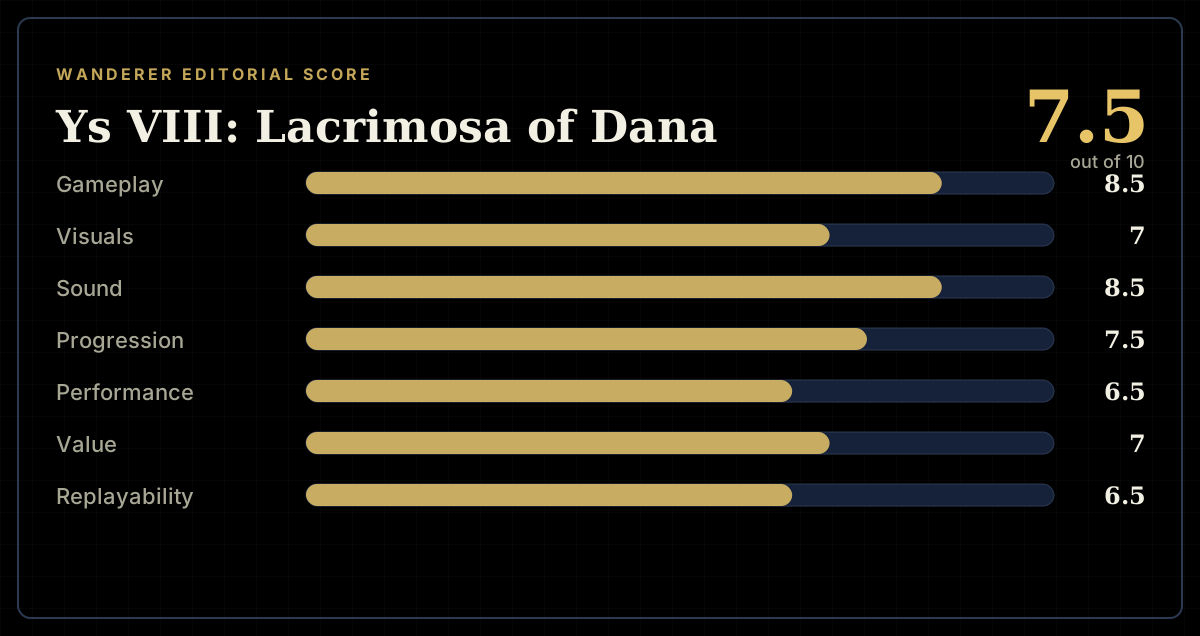
7.5 / 10
- Developer
- Nihon Falcom
- Publisher
- NIS America, Inc.
- Released
- 21 July 2016
- Platforms
- Windows, PlayStation 4, PlayStation 5, PlayStation Vita, Nintendo Switch
- Genre
- Action RPG
- Monetisation
- Premium, one-off purchase. Steam lists 25 pieces of DLC — an HQ texture pack plus a long tail of small cosmetic and crafting-material packs, most priced under NZ$3.50 — none of which gate story content, party members or difficulty.
- Players
- Single-player game at its core. The PC version added an experimental local co-op mode in a January 2020 update, letting a second player join at certain points in the story with a second Xinput controller and the --coop launch option — there is no split screen, no online option, and NIS America has never brought it to a fully supported state.
The short version
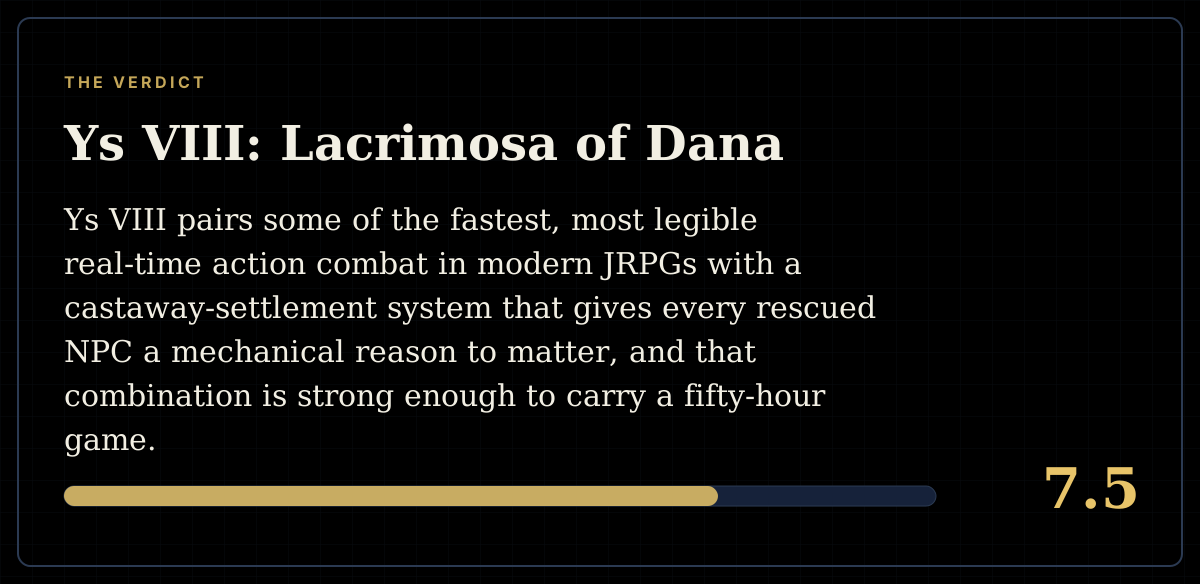
Ys VIII pairs some of the fastest, most legible real-time action combat in modern JRPGs with a castaway-settlement system that gives every rescued NPC a mechanical reason to matter, and that combination is strong enough to carry a fifty-hour game. What holds it back from a higher score is baggage specific to the version being sold today: a Steam release whose Metacritic score still reflects a genuinely broken 2018 launch, a first act that spends too long on village administration before the plot earns its stakes, and a translation history that took NIS America over a year to fully correct.
Biggest strengths
- Real-time combat with instant three-character switching rewards reading an enemy's attack pattern and picking the right weapon type over simply out-levelling it
- The Castaway Village ties every rescued survivor to a visible settlement system, so recruiting NPCs has direct mechanical stakes instead of being a collectible checklist
- Falcom Sound Team jdk's soundtrack is doing serious work across a fifty-hour campaign and rarely lets a set-piece feel unearned
Biggest weaknesses
- The opening ten to fifteen hours front-load village administration well ahead of the plot's real stakes, and it is the single most common complaint in the game's negative Steam reviews
- Passive HP regeneration outside combat turns minor damage into a standing-around timer rather than a resource decision worth managing
- AI-controlled party members are a persistent weak link, and switching characters mid-fight is often about covering for allies who won't dodge rather than genuine tactical choice
Who it's for: Action-RPG and JRPG players who want combat with real mechanical depth rather than stat-check button mashing, and who don't mind a slow-building first act in exchange for a genuinely inventive mid-game hook. Less suited to players who want tight, economical pacing or who were burned by the PC port's 2018 reputation and haven't heard it's since been overhauled.
Our recommendation: Worth buying for the combat and the Castaway Village alone, but go in knowing this is the 2018 PC port with 2020's stability and visual overhaul layered on top, not a fresh remaster — and budget the first ten to fifteen hours as scene-setting rather than the game's real pace.
7.5 / 10
Adol Christin's ship sinks in the first ten minutes of Ys VIII: Lacrimosa of Dana, and the game spends the rest of its runtime making that shipwreck feel like the start of a real settlement rather than a JRPG framing device. Every survivor washed up on the Isle of Seiren gets a name, a skill and a reason to matter to the growing camp Adol builds around them, and that single idea — rescue as infrastructure, not as a cutscene — is doing more to hold this game together than its plot ever quite manages on its own. It's also, in 2026, a game whose Steam listing is still carrying the scar tissue of a launch that genuinely deserved its bad reputation, patched over by an engine overhaul most of its critics never went back to check.
Combat built around switching, not stat-checking
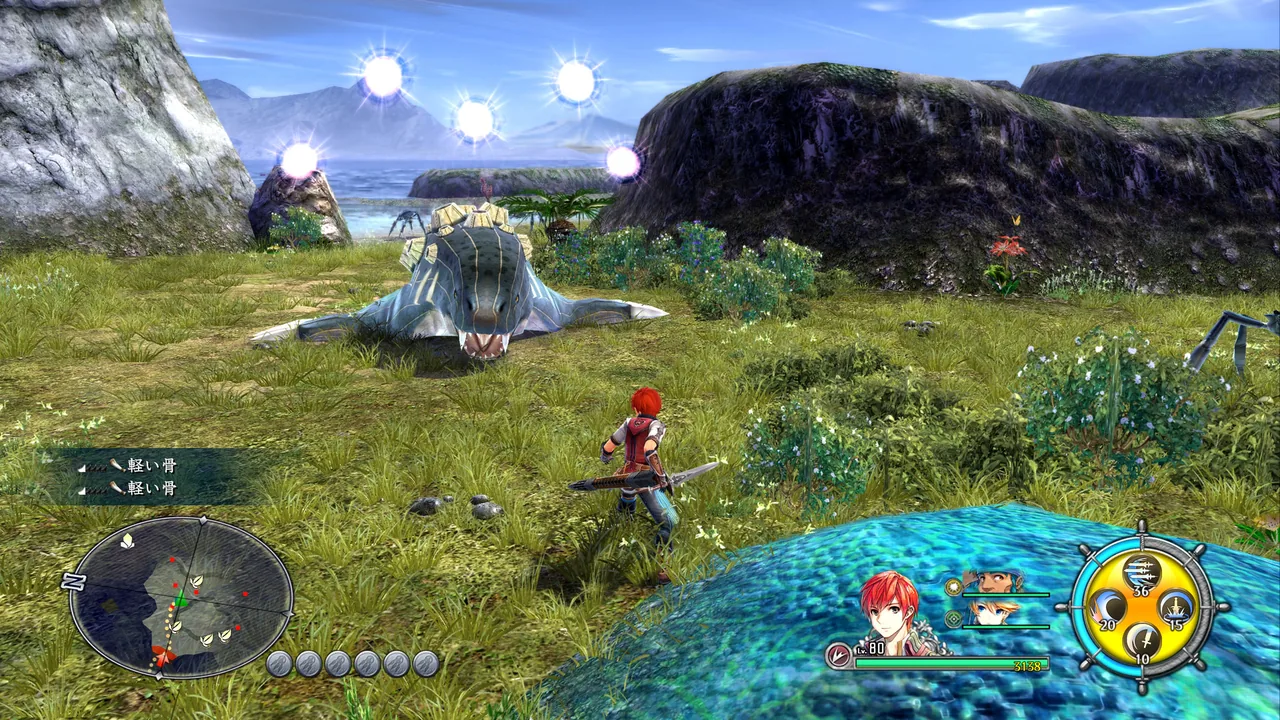
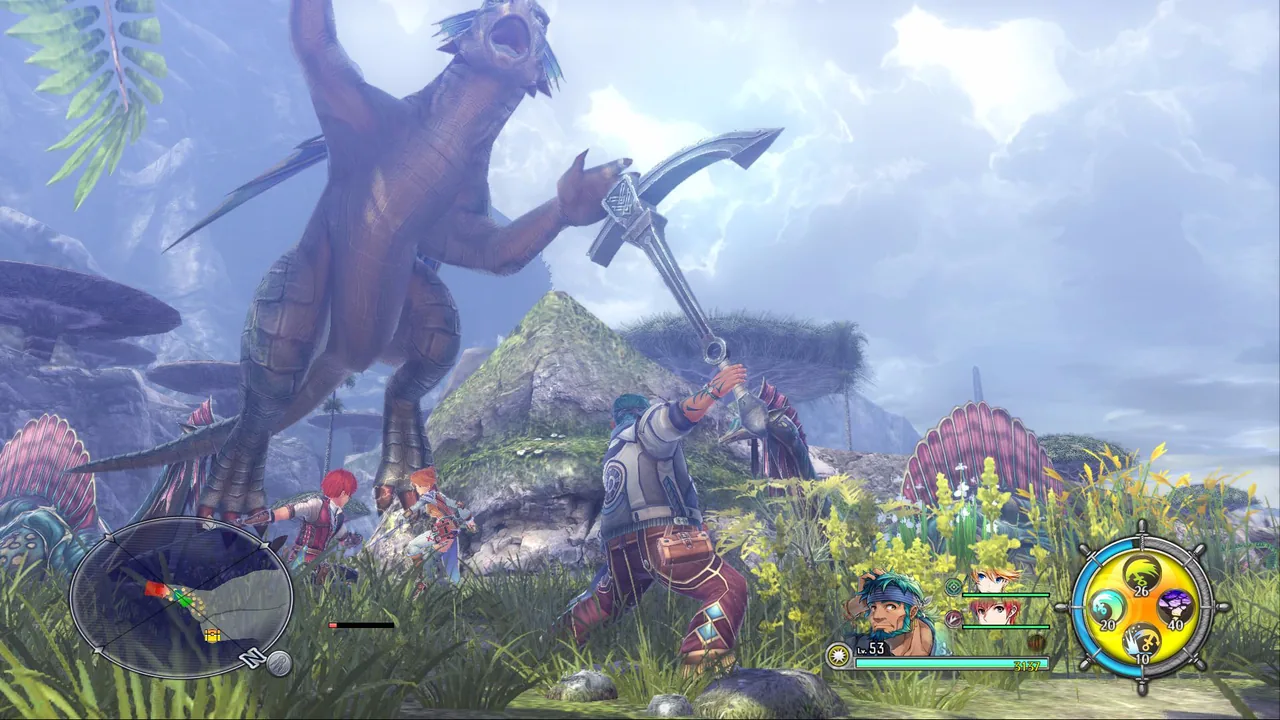
Ys VIII's action combat is the clearest reason to play it. Up to three party members are active at once, and swapping between them is instant — no menu, no animation lock, just a button press that puts a different weapon type in your hand mid-fight. Enemies are colour-coded by which of the game's three weapon categories (slash, pierce, strike) they're weak to, which sounds like a simple rock-paper-scissors gate until it's actually running: bosses shift their exposed weak point mid-fight, so the tactical question is never "which character is strongest" but "which character is right for what this enemy is about to do." Flash Guard and Flash Move — a well-timed block or dodge that briefly slows enemies and opens a punish window — sit on top of that switching system and reward the same thing action games like Bloodborne reward: reading a tell rather than memorising a rotation.
This is the part of the review that matches what critics consistently said about the console versions at launch — the speed and responsiveness of the combat was the headline strength across PS4, Vita and Switch reviews, and none of that changes on PC. What's worth being honest about is where it strains: AI-controlled party members are a real weak point. They take reduced damage to compensate for playing themselves, but they also don't dodge intelligently and rarely use their skill points well, so a meaningful share of mid-fight character switching is less "outsmart this boss" and more "rescue this ally from standing in the fire." It's a persistent friction point in player feedback going back to the original release and nothing about the PC version fixes it.
The Castaway Village makes rescue mechanical
The settlement system — officially the Castaway Village — is Ys VIII's best idea. Every survivor you find while exploring the Isle of Seiren joins a growing camp that runs on a barter economy instead of currency, and each one brings a specific service: weapon reinforcement, cooking, medicine, tailoring. Population milestones unlock new areas of the island to explore, which means finding NPCs isn't a side-quest tangent, it's the thing that opens the map. The village also faces periodic monster raids that put everything you've built at direct risk, turning what could have been a passive hub into something with its own stakes.
It's a smarter version of an idea a lot of open-world and survival games reach for and fumble — give the player's exploration a visible, cumulative output rather than a checklist of collectibles — and it's the mechanic that makes the fifty-hour runtime feel earned rather than padded, at least once it gets going.
Where the pacing actually costs it
That "once it gets going" is doing real work. The most consistent complaint across Ys VIII's negative Steam reviews, from launch through as recently as 2024, is that the game spends its first ten to fifteen hours on village administration and light exploration before the plot introduces anything resembling stakes — one recent review put it bluntly as the game "not starting" until roughly the twenty-hour mark. That's not an unfair read. The Dana sections, which alternate with Adol's present-day exploration and let you play through visions of an ancient civilization, are meant to counterbalance the slow build, but they arrive gradually enough that the first act asks for real patience before it pays it back. Combined with passive out-of-combat HP regeneration — which turns minor damage into waiting around rather than a resource to manage — the opening stretch is the strongest evidence against this game, not the combat and not the technical history.
The localization NIS America had to redo
Ys VIII's Western release carries a documented and unusually severe localization controversy. The English script that shipped in September 2017 on PS4 and Vita was criticised almost immediately for stilted phrasing, inconsistent terminology and outright errors — item and meal descriptions that didn't match what the items actually did, dialogue that flattened characterisation the Japanese script supported. The backlash was serious enough that NIS America's president publicly apologised in October 2017 and committed to a full rewrite rather than a patch. That rewrite landed as a free update on 30 January 2018, replacing large portions of the script, correcting item and skill text, and re-recording a meaningful amount of voiced dialogue under new direction. It's a genuinely rare case of a publisher owning a bad localization publicly and then actually fixing it rather than letting it stand — worth knowing going in, because some older written impressions of "Ys VIII's translation" predate that fix by months, and community discussion even now sometimes debates how completely it was resolved.
The PC port's reputation versus the build you'd actually buy
This is the fact a 2026 buyer most needs straight: Ys VIII on Steam has a Metacritic score in the high 60s, a full fifteen-plus points below the PS4 version, and that number is a fossil of a launch that genuinely earned it. The Windows release, which had already slipped well past its original 2017 target, arrived in April 2018 with frequent crashes — one widely cited player account logged 187 crashes across 46 hours, roughly one every fifteen minutes — alongside a fixed internal resolution, thin graphics options, controller-prompt bugs and settings that didn't reliably save. NIS America patched aggressively in the weeks after launch, but the port's early reputation was already set.
What changed the calculus is a January 2020 update that went well beyond a bug fix: an overhauled rendering pipeline, substantially improved visuals and stability, and the experimental local co-op mode. It's the update most of the port's original criticism never accounted for, because most of the press coverage that shaped Ys VIII's PC reputation was written in 2018. The version sold on Steam today reflects that 2020 work, and the current aggregate — 90% positive across 6,132 reviews, a "Very Positive" rating — is a fairer signal of what you're actually buying than the Metacritic number frozen at launch. It isn't spotless: scattered reports of a specific damage-related glitch still turn up in reviews as recently as 2025, which means "fixed" is closer to "no longer defining" than "resolved outright." Buy this expecting the stability of a mature, several-times- patched release, not a flawless one.
Presentation and sound
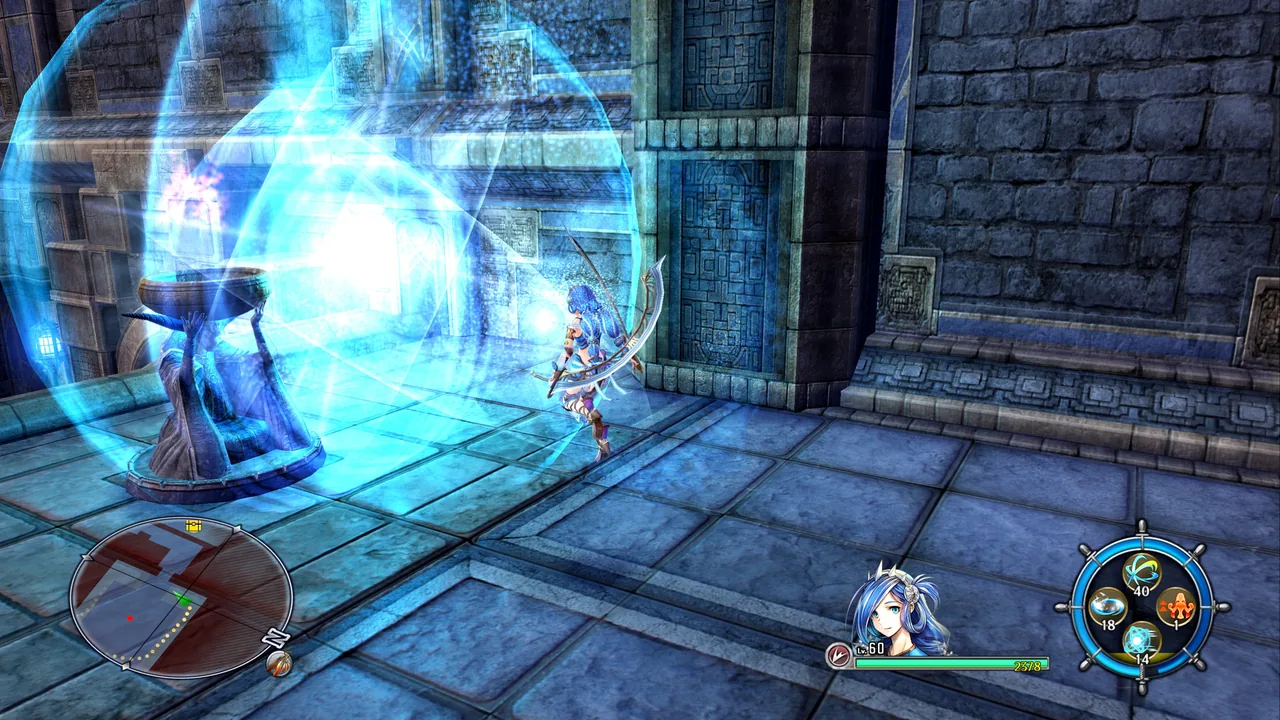
Ys VIII's art direction holds up better in motion than in screenshots — the Isle of Seiren's beaches, ruins and jungle canopy are more varied than the game's dated character models suggest at a glance, and several player reviews specifically call out the models as showing their age next to newer anime-style RPGs. Where the game doesn't need any caveats is the score. Falcom Sound Team jdk has been one of the strongest assets in Falcom's catalogue for two decades, and Ys VIII's soundtrack is a genuine highlight critics agreed on across every platform release — driving combat themes, a surprisingly moving handful of story cues, and exploration music that earns repeat listening outside the game.
Multiplayer barely exists, and that's fine
The local co-op mode added in 2020 deserves exactly one honest paragraph. It requires two Xinput controllers, a --coop launch-option flag, at least two party members recruited, and only works at certain points in the story. There's no split screen — the camera follows the first player and tries to keep the second in frame — and NIS America has always described it as experimental rather than supported. It's a genuine curiosity for one evening with a second controller in the room, not a reason to buy the game, and Ys VIII was never designed as anything other than a single-player experience. Treat the co-op listing on the storefront as a bonus, not a pitch.
Monetisation and value
The premium price of NZ$69.95 is steep for a game whose PC release is now seven years old, even accounting for the 2020 overhaul, and there's no discount active at the time of writing. The DLC list is long — 25 items on Steam — but almost all of it is small cosmetic costumes, accessory sets and crafting-material packs priced under NZ$3.50, none of which touch story content, party access or difficulty. It reads more like a publisher unbundling a handful of pre-order bonuses than anything resembling pay-to-win, and it's easy to ignore entirely. The real value question is whether fifty-plus hours of genuinely strong action combat and one excellent settlement system are worth full price on a game whose presentation no longer leads its genre — and for the right player, they are, but this is a title worth waiting for a sale on rather than one that needs to be bought at launch price today.
Verdict
Seven and a half out of ten. Ys VIII: Lacrimosa of Dana earns that score almost entirely on the strength of its combat and its Castaway Village, both of which remain genuinely distinctive inside a crowded action-RPG field. What keeps it from climbing higher is specific and fair to name: a first act that spends too long on administration before the plot commits to anything, a PC port whose Metacritic score is still paying for a 2018 launch the 2020 update substantially fixed, and a translation history that took NIS America over a year to properly resolve. None of that erases what the game gets right once it's actually running — this is a JRPG whose combat rewards paying attention rather than grinding levels, and that alone makes it worth the patience its opening hours ask for.
Players who like watching a settlement grow in direct response to their own exploration, rather than as a separate management layer bolted onto an RPG, may recognise something familiar in how Wanderer ties its own world to what players actually do in it.
Price, DLC count and platform history checked 3 August 2026.
Pros and cons
Pros
- Real-time combat with instant three-character switching rewards reading an enemy's attack pattern and picking the right weapon type over simply out-levelling it
- The Castaway Village ties every rescued survivor to a visible settlement system, so recruiting NPCs has direct mechanical stakes instead of being a collectible checklist
- Falcom Sound Team jdk's soundtrack is doing serious work across a fifty-hour campaign and rarely lets a set-piece feel unearned
- Exploration is consistently rewarded — off-path terrain usually hides a chest, a recipe or a stranded NPC rather than empty scenery
- The January 2020 update rewrote much of the stability and visual quality that defined the port's rocky debut, and the build sold today is not the build that launched
Cons
- The opening ten to fifteen hours front-load village administration well ahead of the plot's real stakes, and it is the single most common complaint in the game's negative Steam reviews
- Passive HP regeneration outside combat turns minor damage into a standing-around timer rather than a resource decision worth managing
- AI-controlled party members are a persistent weak link, and switching characters mid-fight is often about covering for allies who won't dodge rather than genuine tactical choice
- Scattered reports of a longstanding damage-related glitch still surface in Steam reviews as recently as 2025, seven years after the PC release
- The PC's local co-op is an unsupported, experimental add-on requiring two controllers and a launch-option flag — worth a session, not a real second mode
- NZ$69.95 with no current discount is a premium-tier price for a game whose visual fidelity no longer leads its genre
Screenshots
-
Ys VIII: Lacrimosa of DANAImage: NIS America, Inc. via Steam -
Ys VIII: Lacrimosa of DANAImage: NIS America, Inc. via Steam -
Ys VIII: Lacrimosa of DANAImage: NIS America, Inc. via Steam -
How the review scores each part of the gameWanderer Editorial -
The short versionWanderer Editorial