A $2.99 voice-controlled spell duel that turned a solo developer's Early Access experiment into one of 2025's biggest indie surprises — a year on, the novelty has mostly held, but the update cadence and the mic's grasp of accents have not kept pace.
One of the greatest games ever made, rebuilt shot for shot and shipped at NZ$114.99 with performance problems Konami stopped patching in January — now 60% off, eleven months later, for reasons the review page makes obvious.
Mojang's accessible, co-op-first loot crawler wearing Minecraft's blocky skin over a Diablo-style structure — broadly loved for local and online co-op, and carrying one specific, heavily documented complaint its own Steam reviews won't let go of.
A budget soulslike built around a genuinely inventive hook — inhabit the bodies of dead warriors rather than levelling a character of your own — that's spent five years since launch as a genuinely divisive game, with real, still-current complaints about content thinness and unfixed bugs sitting alongside a devoted fanbase, just days ahead of a sequel's official release.
Hotta Studio's follow-up to Tower of Fantasy trades sci-fi towers for a neon-lit supernatural city, and the open world it built to fill that city is a genuinely bigger achievement than the parry-and-dash combat sitting inside it.
A densely systemic bullet-heaven survivor-like that grew from a simple, focused Early Access hit into something several hundred-hour veterans now describe as buried under its own added complexity — alongside real, current complaints about difficulty balance and performance.
A solo-developed bullet-hell roguelite where every spell comes from a six-sided die — reviewed on its complete 20-review sample, which lands squarely in Enter the Gungeon and Nuclear Throne territory while surfacing one real, repeated onboarding complaint worth knowing about first.
A content-dense, genuinely fun bullet-heaven roguelite with 22-plus characters and hundreds of skills, praised for its scope and exceptionally responsive small developer team — undercut by a real, consistently repeated complaint spanning both its fans and critics: despite the huge nominal variety, most builds converge on the same handful of optimal choices, and the endgame settles into what reviewers repeatedly, vividly call a "dodging simulator."
Shift Up's PS5-exclusive-turned-PC-port lands with genuinely praised combat, striking visuals and one of the strongest PC ports of its console-exclusive generation, undercut by a real, widely repeated "style over substance" complaint about shallow side content and a thin story — one this review can confirm the game's own director has publicly, directly admitted was underdeveloped.
An action RPG that layers levelling on top of levelling — your character, your skills, your weapons and your items all grow independently — and earns real comparisons to Diablo and Last Epoch for its first ten hours, before a near-universally hated grind wall right before the final boss undoes a lot of that goodwill.
A genuinely promising return for a cult-favourite action RPG series, currently sold at full future price for a slice of content that doesn't yet match the ambition of its class system.
A full 3D remake of a 1995 Super Famicom classic that never got an official English release until this and a retro re-issue arrived together in 2019-2020 — faithful to the original's charm and class-change system, but missing the SNES version's local co-op and carrying writing a meaningful share of its own Steam reviews call dated.
MachineGames' 2014 reboot remains Very Positive across more than 61,000 Steam reviews a decade later, widely credited with successfully reviving a dormant franchise through genuinely strong gunplay and an unexpectedly earnest story — undercut for AMD graphics card owners by a severe, reproducible technical incompatibility this review can confirm has gone unresolved in the developer's own communications for well over a decade.
Ubisoft's feudal Japan entry delivers genuinely beautiful visuals and a widely loved shinobi protagonist, undercut by a real, consistently repeated "formula fatigue" complaint — towers, icons, repetition — a verified gap between Ubisoft's public promise of full offline play and what reviewers report experiencing in practice, and a heavily monetised in-game store layered on top of a full NZ$109.95 purchase.
A dark fantasy roguelite dungeon crawler with a distinctive old-school RuneScape look and a genuine risk-everything extraction structure — reviewed on its complete 15-review sample, which reads as a small solo-developer project fighting real launch-week bugs rather than a broken game.
A first-person co-op roguelite where up to four cats sneak past dogs to rescue kittens, spend break-in cash on crossbows and grenades between runs, and try to outlast an escalating house — priced at $2.99 and one day old, with a single user review and no achievement list yet to check its own claims against.
A two-person team's 2D Metroidvania with Souls-like combat, launched into Early Access on 5 August 2026 with a full campaign already playable, an equipment-driven build system, and a planned 6-to-12-month road to 1.0.
A short, stylish drift-racing game about a bomb-strapped monkey mail truck, loved by fans who call its unforgiving handling a fair skill curve and criticized just as forcefully by players who call the same physics broken — with a verified, punishing completion curve and three and a half months of developer silence underneath the debate.
A two-day-old racing game that makes you both the bettor and the horse — buy a Trifecta ticket on a track girl, then run the race yourself to try to cash it in. Thirteen Steam reviews exist so far, all of them Japanese, all of them positive, and most of them call it Uma Musume at home.
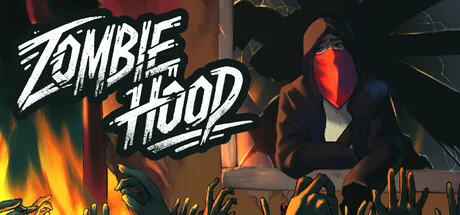
A free, chaotic co-op dig-and-defend game where up to four friends mine for loot by day and fend off zombies by night — reviewed on its complete English review sample, which reads as a genuinely fun prototype whose launch-week bugs a solo developer has been patching almost daily.
BioWare builds its most mechanically confident combat in the series, then spends most of the RPG scaffolding around it — choice continuity, itemization, party structure — to do it, leaving a fun action game wearing a Dragon Age name plenty of longtime fans don't recognise.
A post-Soviet extraction horror shooter where a creature hunts you by your heartbeat — reviewed on its full English review sample, a dated patch that directly addressed the mechanic's loudest complaint, and a real mismatch between its co-op marketing history and its shipped build.
A Sword Art Online action RPG that finally lets you build a hero of your own inside Aincrad, with tight Souls-inflected combat and a genuinely sharp partner-synergy system — undercut by a linear, quest-marker world and a $69.99 asking price that assumes you'll buy back in for the DLC.
A top-down sci-fi survival-crafting game built around two protagonists who trade places at dusk — one built for exploration and building, one built for the enemies that only come out at night — five months into an Early Access build that is still visibly finding its footing.