
Game review
The Spotter: Dig or Die Review: A Genuinely Fresh Twist on Digging Games
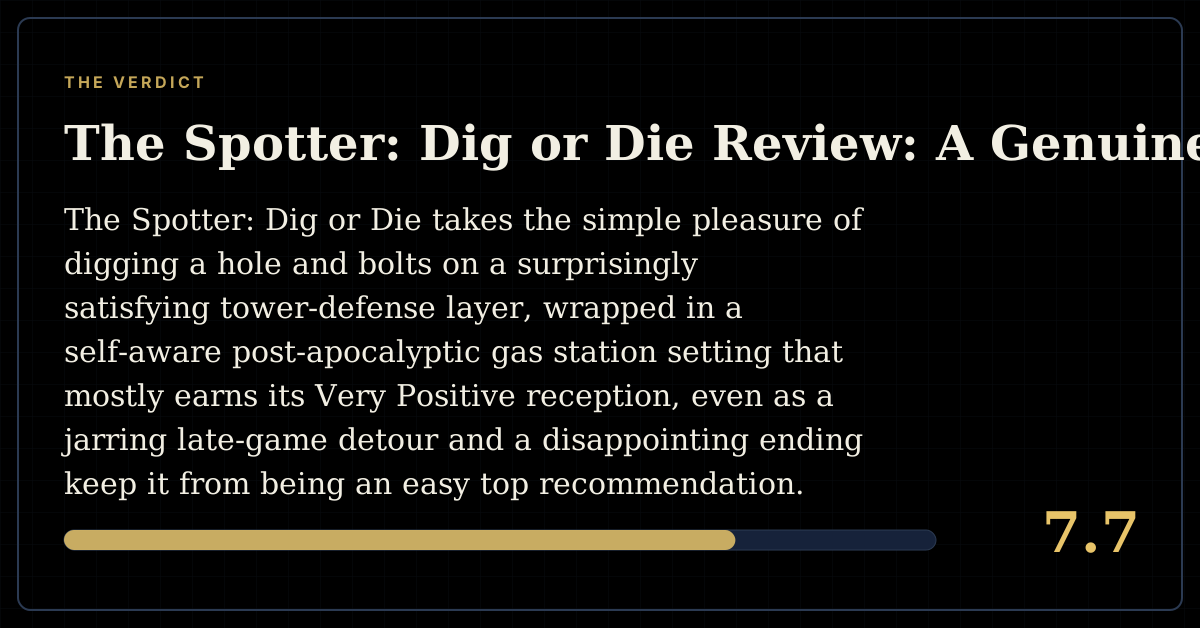
7.7 / 10
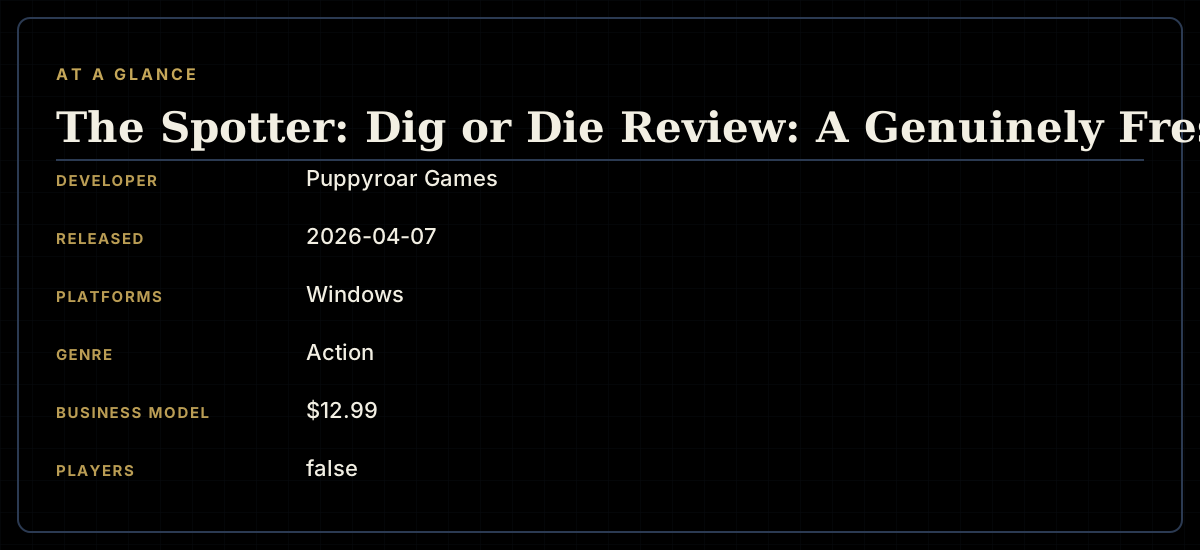
- Developer
- Puppyroar Games
- Publisher
- Forklift Interactive, Gamersky Games
- Released
- 7 April 2026
- Platforms
- Windows
- Genre
- Action
- Monetisation
- $12.99
- Players
- false
The short version
The Spotter: Dig or Die takes the simple pleasure of digging a hole and bolts on a surprisingly satisfying tower-defense layer, wrapped in a self-aware post-apocalyptic gas station setting that mostly earns its Very Positive reception, even as a jarring late-game detour and a disappointing ending keep it from being an easy top recommendation.
Biggest strengths
- A genuinely satisfying day/night structure where the pressure of getting back to base before dark shapes every digging decision you make
- Three independent tech trees for character, turret, and base give real, felt progression without ever feeling bloated
- A roguelike artifact system that rewrites the rules of individual runs and keeps the tower-defense half from ever feeling static
Biggest weaknesses
- A late-game shift into an awkward first-person combat section in a ruined city feels tonally and mechanically disconnected from everything that came before it
- Weapon specializations are locked in for the run, so trying a different turret build means starting over from scratch
- The ending is widely described by players as anticlimactic after a demanding grind toward it
Who it's for: A strong fit for fans of digging games like Motherload or A Game About Digging a Hole who want their loop paired with real tower-defense stakes, and for players who appreciate a roguelike artifact system layered on top of a fairly short, self-contained campaign.
Our recommendation: Buy it
7.7 / 10
The last gas station on Earth needs a bigger shovel
The Spotter: Dig or Die casts you as the unlucky soul manning the worst gas station in Nevada, holding the line against mutant hordes spilling out of the ruins of "Las Veganos" while you wait on a message from the President that might be humanity's last hope. It's a deliberately silly premise, and Puppyroar Games leans into that silliness with genuine confidence, but underneath the post-apocalyptic gag reel is a surprisingly well-constructed hybrid of two genres that don't usually share a game: meditative digging and frantic tower defense.
A day/night loop that actually creates tension
The structure is simple to describe and hard to put down. By day, you descend into the mine beneath your gas station, hauling out resources, discovering roguelike artifacts, and pushing just a little deeper than is probably wise. By night, mutant hordes descend on your base, and you're defending it with automated turrets, traps, and a main gun you can personally jump behind when things get dicey. One reviewer summed up the appeal precisely: "The mining, upgrading, base defense, and gear progression all feed into each other." The genius of the design is how the two halves constantly pressure each other, every extra minute spent digging for one more resource vein is a minute you might not make it back to the surface before the horde arrives, and that tension carries the entire experience.
Three tech trees, and progression that actually matters
Where a lot of hybrid survival games spread their progression thin, The Spotter keeps things focused across three independent tech trees, character, turret, and base, plus a choice of three weapon specializations: the precision Railgun-wielding Hunter, the continuous-beam Suppressor, and the area-denial Artillerist. Reviewers consistently praise how meaningful each upgrade feels. One wrote, "Every upgrade is meaningful and felt," while another specifically credited the developers "for getting the grinding balance right, a problem that plagues so many other indie games." Layered on top is a roguelike artifact system that rewards runs with rule-bending abilities, a controllable kamikaze drone here, a slowing effect on turret shots there, that keeps individual playthroughs from ever feeling identical.
A jarring detour into the ruins of Las Veganos
Where the game stumbles is in its final act, when the loop pivots away from digging and defending into an awkward first-person combat section set in the ruined city. Reviewers who otherwise loved the game single this section out as a genuine low point. One wrote, "I loved this game up until the las vegas portion. That part felt half baked and clunky. It suddenly went from a fun digging game to this awkward FPS that just isn't very fun," and specifically wished for an option to skip it. Combined with an ending several reviewers describe as anticlimactic after a demanding final grind, "you grind up for a grind finale just to get scammed" as one put it, the back half of the campaign doesn't live up to the confident opening hours.
Small frictions that add up
A handful of smaller design choices draw repeated, legitimate criticism. Weapon specializations lock you into a single build for the run, meaning trying the Suppressor after committing to the Hunter means starting an entirely new game, a restriction one reviewer called out directly: "I HATE THAT IN ORDER TO TRY NEW TURRET I HAVE TO START COMPLETELY OVER." A stamina system tied to periodic in-fiction beer breaks frustrates players who just want to keep digging, and late-game performance can dip once enough of the map has been excavated, with one reviewer noting drill speed itself is tied to frame rate. None of these are dealbreakers individually, but together they chip away at an otherwise tightly built loop.
Refreshingly, this isn't another years-long Early Access grind
It's worth calling out something reviewers themselves flagged as notable: The Spotter launched as a complete, premium release rather than spending years in Early Access accumulating incremental content drops. One reviewer put it plainly: "I appreciate the devs not putting the game in Early Access for several years like most people do today, I'm OK with minor issues on launch being fixed within a day of the game coming out." That's a meaningfully different value proposition than a lot of its genre peers, and the developers have continued patching steadily since launch, including a substantial post-launch update, while already discussing more content planned for a future release.
Presentation that punches above its weight
Visually, The Spotter commits fully to its scrappy, junkyard-apocalypse aesthetic, and that consistency does a lot of work. One reviewer contrasted it favorably against "alot of indie asset flips you see now," praising its "great graphics with consistent art direction." The underground itself is rendered with enough variety, buried junk, hidden secrets, distinct biome pockets, that digging never feels like staring at the same brown texture for hours on end, and the nighttime combat encounters are punctuated with enough visual and audio flair, mines detonating, turrets lighting up the dark, that the tower-defense half never feels like an afterthought bolted onto the digging game. Controller support is also fully implemented, including DualSense-specific features, a nice touch for a genre that skews toward mouse-and-keyboard play.
A short, satisfying campaign worth the asking price
Most players report finishing a full run somewhere between five and thirteen hours, which at $12.99 is a reasonable, if not generous, length for the price. Reviewers who came in for a quick, chill digging session and stayed for the tower-defense stakes are broadly satisfied with what they got, even those disappointed by the ending or the late-game detour tend to frame their complaints as "I wanted more of this" rather than "I regret buying it." That's the mark of a genuinely well-built core loop, even if the game around it doesn't quite stick the landing all the way through.
Pros and cons
Pros
- A genuinely satisfying day/night structure where the pressure of getting back to base before dark shapes every digging decision you make
- Three independent tech trees for character, turret, and base give real, felt progression without ever feeling bloated
- A roguelike artifact system that rewrites the rules of individual runs and keeps the tower-defense half from ever feeling static
- A confident, self-aware sense of humor and art style that carries the post-apocalyptic gas station premise further than it has any right to go
Cons
- A late-game shift into an awkward first-person combat section in a ruined city feels tonally and mechanically disconnected from everything that came before it
- Weapon specializations are locked in for the run, so trying a different turret build means starting over from scratch
- The ending is widely described by players as anticlimactic after a demanding grind toward it
- The digging loop leans repetitive in its middle stretch, and a stamina-limiting mechanic frustrates some players more than it adds tension
Screenshots
-
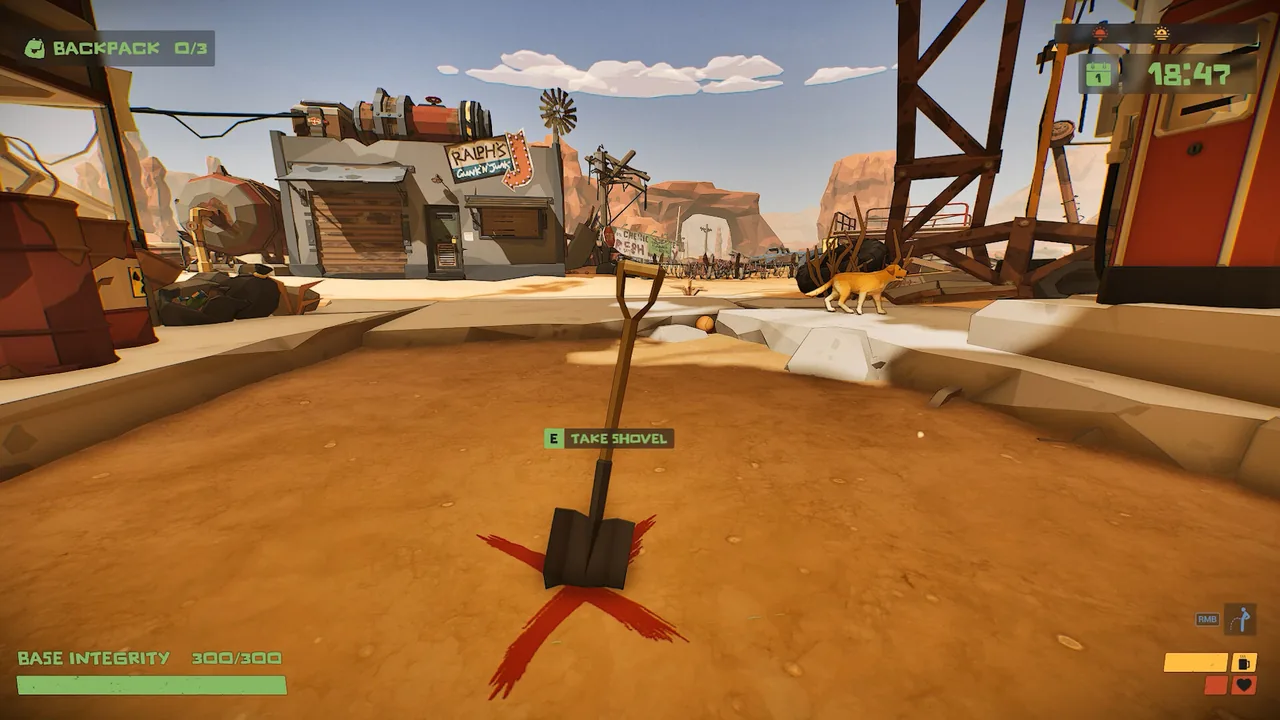
The Spotter: Dig or DieImage: Forklift Interactive via Steam -
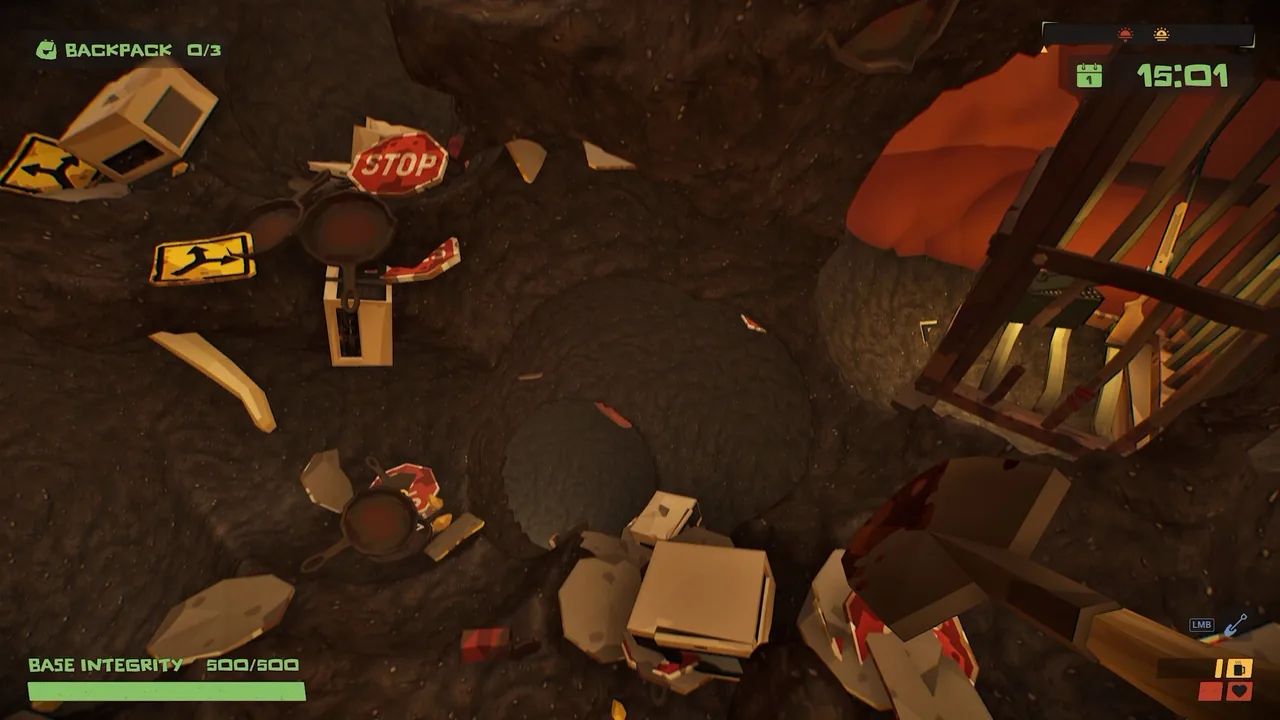
The Spotter: Dig or DieImage: Forklift Interactive via Steam -
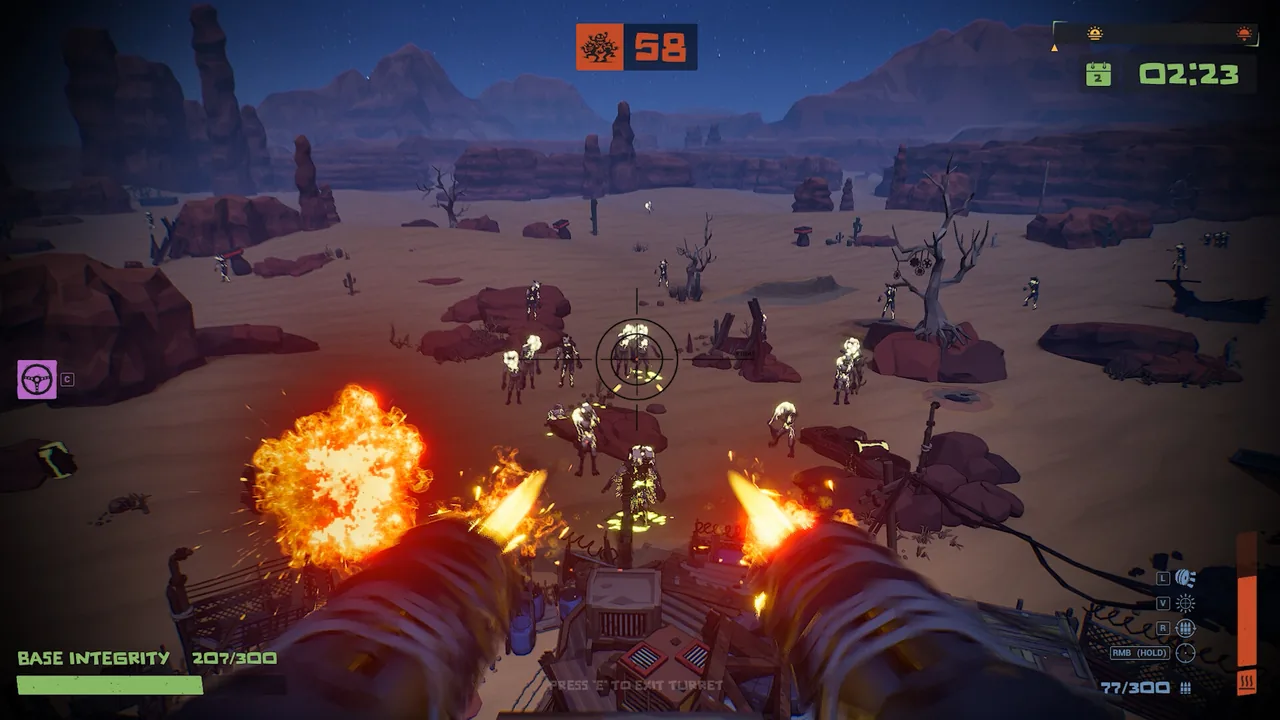
The Spotter: Dig or DieImage: Forklift Interactive via Steam -
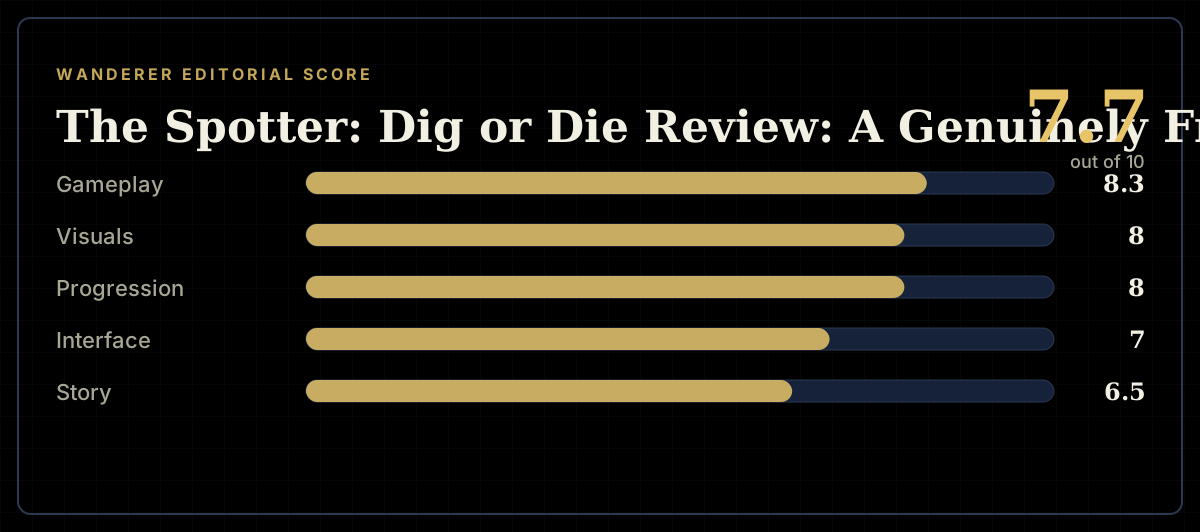
How the review scores each part of the gameWanderer Editorial -
Platform and release detailsWanderer Editorial -
The short versionWanderer Editorial