Game review
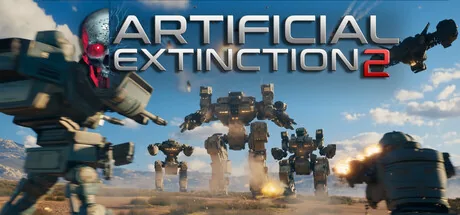
Artificial Extinction 2
7 / 10
- Developer
- 100Hr Games Inc
- Publisher
- 100Hr Games Inc, Gamersky Games
- Released
- 10 June 2026
- Platforms
- Windows
- Genre
- Action, Strategy, Simulation
- Monetisation
- paid
- Players
- false
The short version
Biggest strengths
- A genuinely distinct hybrid of tower-defense base building and first-person shooter combat that reviewers say pulls off both halves well rather than treating one as an afterthought
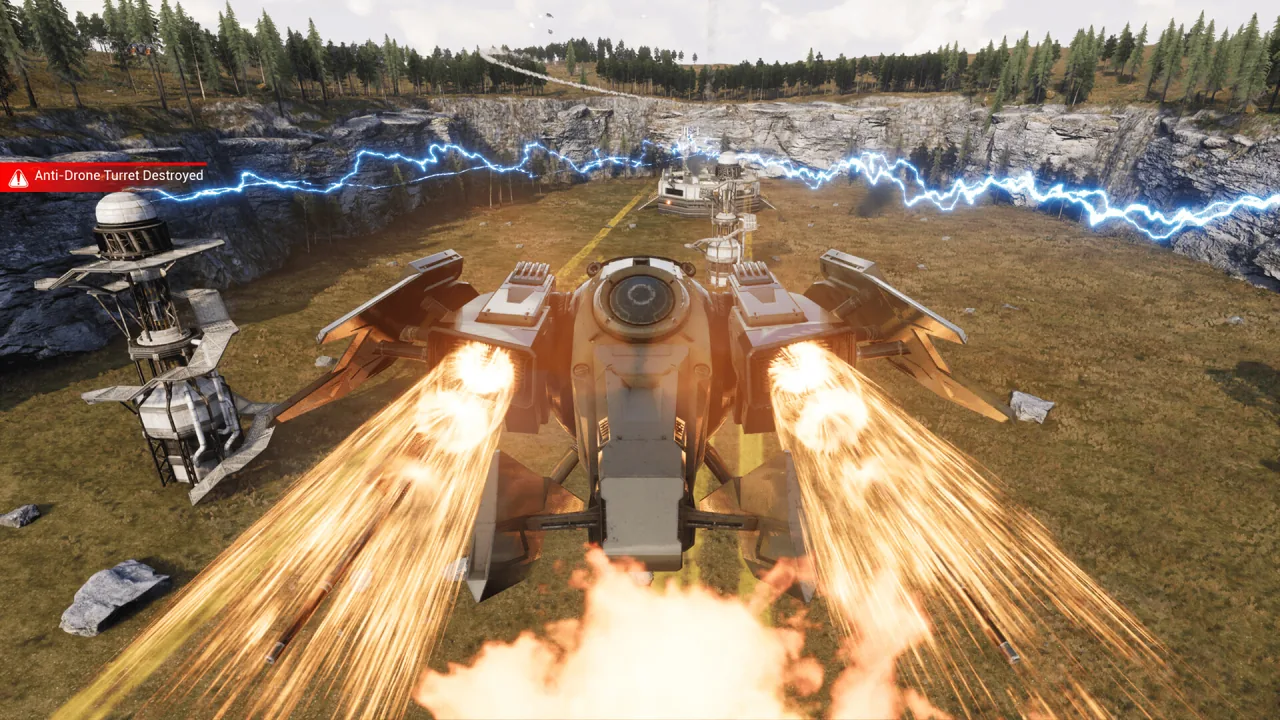
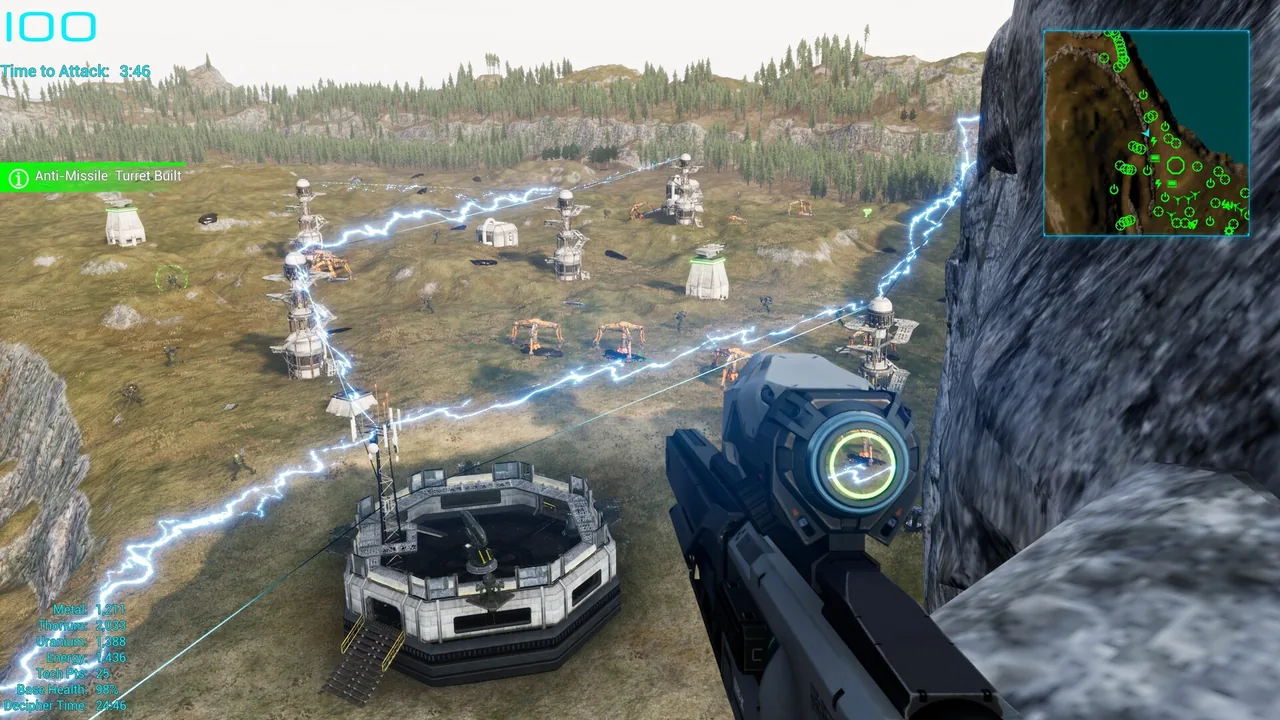
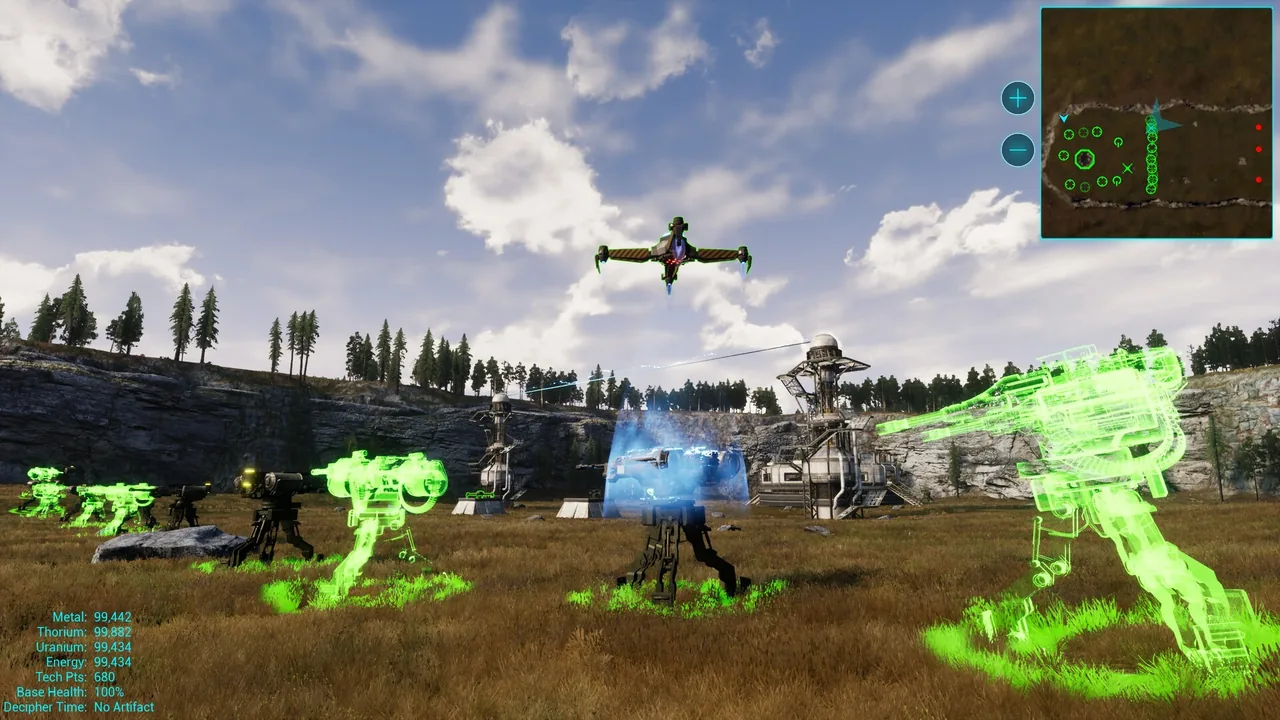
- Seamless switching between top-down RTS-style building and ground-level FPS combat, with strong UE5 visuals and explosion effects reviewers repeatedly called out as a highlight
- A developer reviewers describe as unusually responsive to feedback, actively patching and adjusting systems in direct response to player requests
Biggest weaknesses
- No ability to set turret targeting priority, a basic tower-defense convention several reviewers were surprised to find missing entirely
- Specific enemy types, particularly dropships and railgun mech bombers, that multiple reviewers described as effectively unbeatable without over-committing to one narrow counter
- An interface and control scheme several reviewers said feels closer to an early access build than a finished release, with placed structures that can't be removed or repositioned
Who it's for: Fans of the original Artificial Extinction or players looking for a genuinely fresh blend of tower defense and first-person shooter combat, who can tolerate some balance rough edges and a still-maturing interface at launch
Our recommendation: recommended with caveats
7 / 10
Two genres that actually earn their place together
Artificial Extinction 2 sells itself on a straightforward pitch: tower defense and first-person shooter combat, switchable at will, both taken seriously rather than one propping up the other. Reviewers who bought in largely agree the fusion works. One wrote, "It really is all of the 'tags' without feeling like any one of them are a stretch," a meaningful compliment given how often hybrid genre games end up feeling like a strong idea awkwardly bolted onto a weaker one. Another reviewer framed the balance between the two halves directly: "It is about 70% RTS/Tower defense and 30% FPS, and both aspects are really well executed. Guns feel punchy, enemies go down with great animations, explosions are REALLY cool," praise echoed across much of the positive side of the review pool for the game's UE5-powered visual presentation specifically.
A real sequel, not a reskin
Several reviewers with direct experience of the original Artificial Extinction framed this as a substantive follow-up rather than more of the same with new coats of paint. One wrote, "Compared to the first game, there is more of an emphasis on base building... There is a new tech screen, so turret[s] don't need to be [upgraded individually]," describing concrete systemic changes rather than just new levels or enemies. A playtester-turned-reviewer who'd logged extensive time with the original agreed on the scope of the jump: "AE2 takes it even further. Now there's more terrain to deal with, more enemy types to overcome, more types of turrets to work with, and more resource management to handle." That kind of specific, systems-level comparison from returning players is a stronger signal than generic sequel praise, and it lines up with the broader pool's sense that this is a meaningfully bigger game than its predecessor.
Missing a genre staple: turret targeting
Set against that ambition is a specific, repeated criticism that cuts right at the tower-defense half of the game's identity. One detailed reviewer was blunt about it: "No Ability to customize Turret Priority: How is this a 'tower defense' yet I can't tell my turret 'hey focus the strongest, the healthiest, the weakest, the closest the furthest...' all basic staples of Tower defense yet absent here?" That's not a vague balance gripe, it's a specific missing feature that most tower-defense games treat as foundational, and its absence was frustrating enough for at least one reviewer to significantly undercut their overall impression of the genre half of the hybrid.
A couple of enemy types reviewers call genuinely broken
Beyond the missing targeting options, the pool converges on a more specific balance complaint: certain late-game enemy types are disproportionately difficult to counter. One reviewer laid it out in detail: "Dropships and Railgun Mech Bombers are still completely busted. The fact that the ONLY thing that can actively shoot them down is the SAM site is... not great, considering that they often are far more numerous than drones... and your only placeable AA is effective against drones, and ONLY drones." That's a precise, mechanically grounded complaint rather than a general difficulty gripe, and it points at a real design gap where players can be forced into narrow, unsatisfying counter-building rather than adapting their strategy more broadly.
An interface that hasn't caught up to the ambition
A recurring, less flattering theme across several critical reviews concerns overall polish. One reviewer wrote plainly, "I really want to like this game but tbh it just feels like an early access game. The controls are clunky... The tech tree is very limited... you have 10 power towers to increase building range but once placed they cannot be removed." Another reviewer was harsher still about first impressions specifically: "It is something you'd use while working on the alpha build, not something you'd put in front of the player," describing the UI as flowing through their entire early experience in a way that coloured everything after it. These complaints are notably about presentation and interface friction rather than the underlying design ideas, which most of the pool, even its critics, still credits as genuinely interesting.
A developer reviewers say is actually listening
A meaningful counterweight to those rough edges is how consistently reviewers describe the developer as responsive. One wrote, "the developer seems very receptive to player feedback and offering options to play the game the way that you find most enjoyable. The only thing I could really ask for is more of what they're already doing." The game's own post-launch patch history backs that impression up, with a steady stream of updates addressing balance and player requests in the weeks after release, a pattern that several reviewers explicitly credited as a reason for staying optimistic about the game's rough edges getting sanded down over time.
Verdict
Artificial Extinction 2 earns its praise as a genuinely fresh, well-executed hybrid of tower defense and first-person shooter combat, expanding meaningfully on its predecessor with more terrain, enemy variety, and turret options, backed by striking UE5 visuals and a developer reviewers trust to keep improving it. But its launch-state rough edges are real and specific: a missing turret-priority system that undercuts a genre fundamental, a couple of enemy types multiple reviewers call outright broken, and an interface several reviewers felt wasn't ready for a full release. Worth picking up for fans of the original or anyone drawn to its unusual genre fusion, with the expectation that some patience for balance and polish issues will be required at this stage.
Pros and cons
Pros
- A genuinely distinct hybrid of tower-defense base building and first-person shooter combat that reviewers say pulls off both halves well rather than treating one as an afterthought
- Seamless switching between top-down RTS-style building and ground-level FPS combat, with strong UE5 visuals and explosion effects reviewers repeatedly called out as a highlight
- A developer reviewers describe as unusually responsive to feedback, actively patching and adjusting systems in direct response to player requests
- Meaningful expansion over the original Artificial Extinction, with more terrain variety, enemy types, turret options, and a new tech-progression screen
Cons
- No ability to set turret targeting priority, a basic tower-defense convention several reviewers were surprised to find missing entirely
- Specific enemy types, particularly dropships and railgun mech bombers, that multiple reviewers described as effectively unbeatable without over-committing to one narrow counter
- An interface and control scheme several reviewers said feels closer to an early access build than a finished release, with placed structures that can't be removed or repositioned
- At least one returning fan of the original felt the sequel traded the first game's more deliberate, quality-over-quantity defense pacing for a busier, more overwhelming approach
Screenshots
-
Artificial Extinction 2Image: 100Hr Games Inc via Steam -
Artificial Extinction 2Image: 100Hr Games Inc via Steam -
Artificial Extinction 2Image: 100Hr Games Inc via Steam