Game review
Anoxia Station
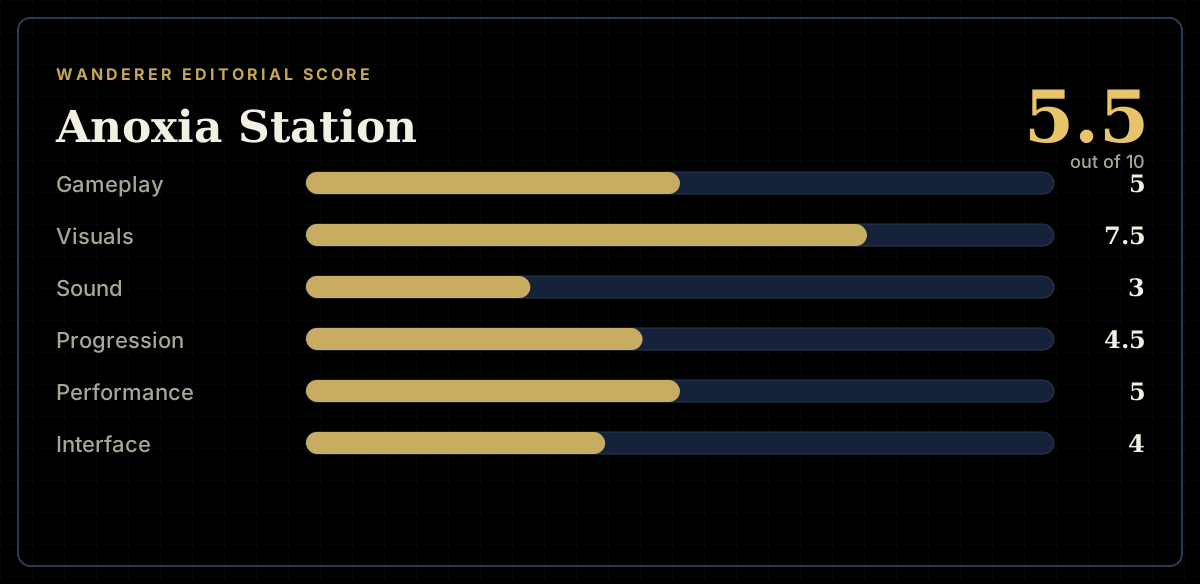
5.5 / 10
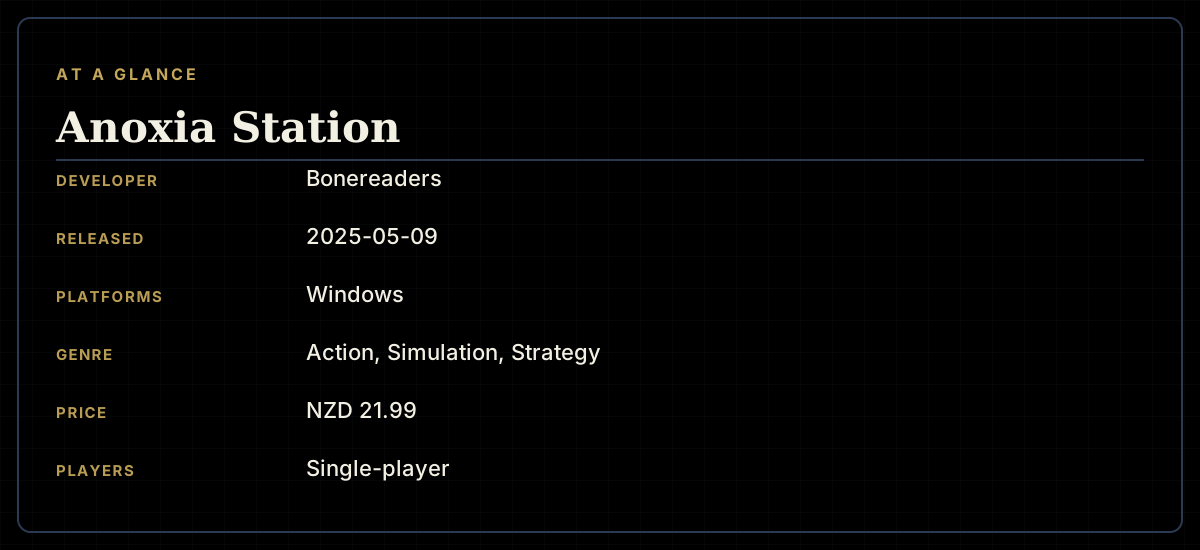
- Developer
- Bonereaders
- Publisher
- Abylight Studios
- Released
- 9 May 2025
- Platforms
- Windows
- Genre
- Action, Simulation, Strategy
- Players
- Single-player
The short version
Biggest strengths
- A genuinely distinctive, claustrophobic dystopian atmosphere that reviewers on both sides of the score divide consistently praise, even when frustrated with the mechanics underneath
- A creepy, morally uncomfortable premise about greed and resource extraction destroying a dying world that comes through clearly even to reviewers who found the plot hard to follow in detail
- Genuinely difficult, puzzle-like turn-based strategy for players willing to engage with its resource-management systems on their own terms
Biggest weaknesses
- Achievement data shows heavy mid-to-late campaign attrition — a majority of players who finish the first chapter never reach the ending — matching widespread reviewer complaints about frustrating late-game difficulty and tedium
- A forced turn-timer pressures players into hasty decisions in a genre that traditionally rewards careful planning, with several reviewers calling the pacing actively hostile to methodical play
- At least one specific, reproducible soft-lock reported: dismantling an oil harvester after its resource node is depleted can permanently block progress in mission 2
5.5 / 10
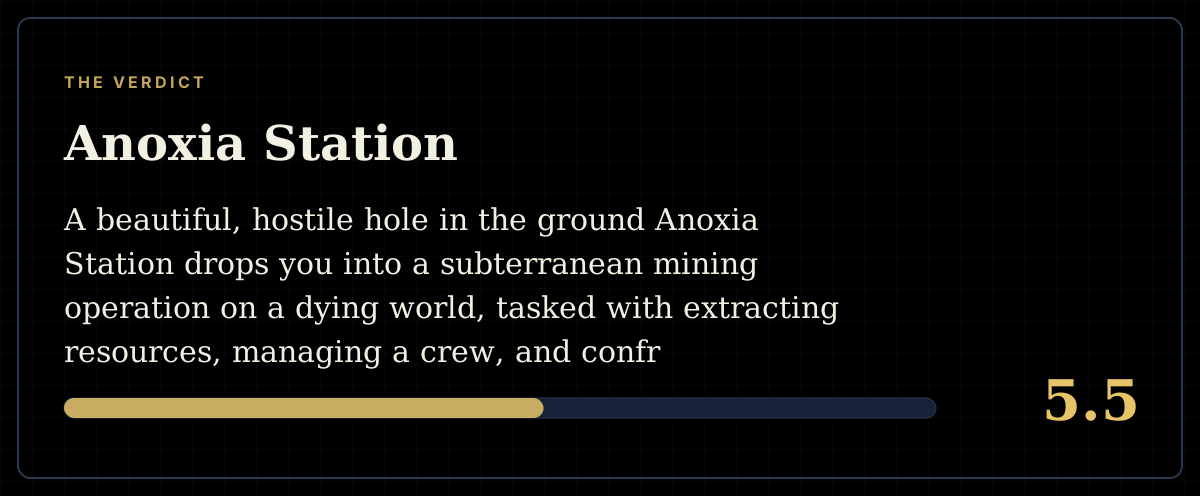
A beautiful, hostile hole in the ground
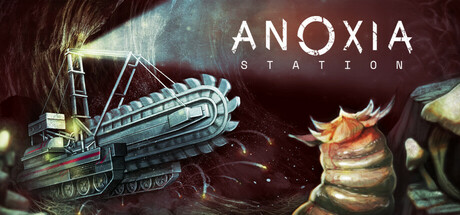
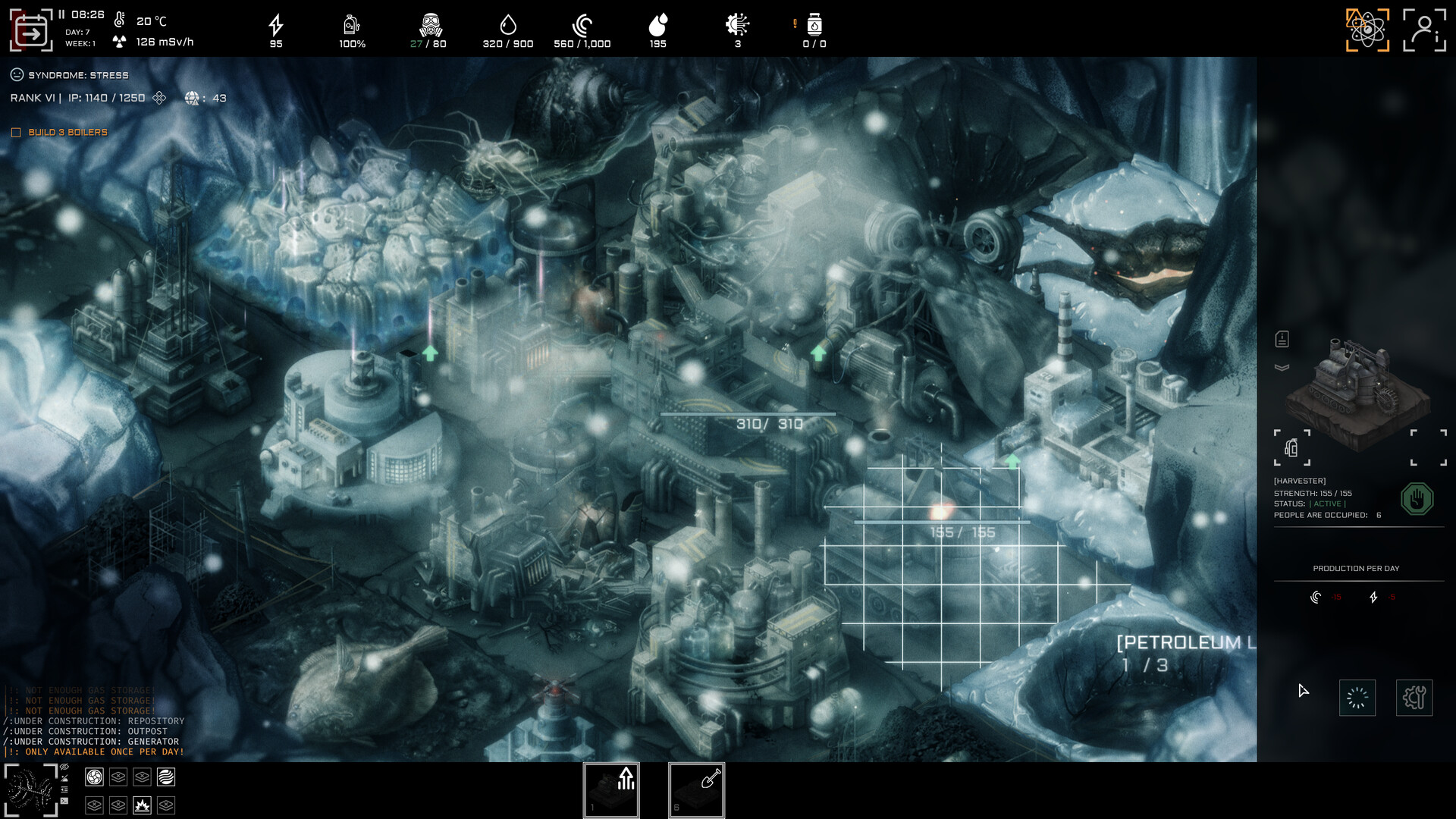
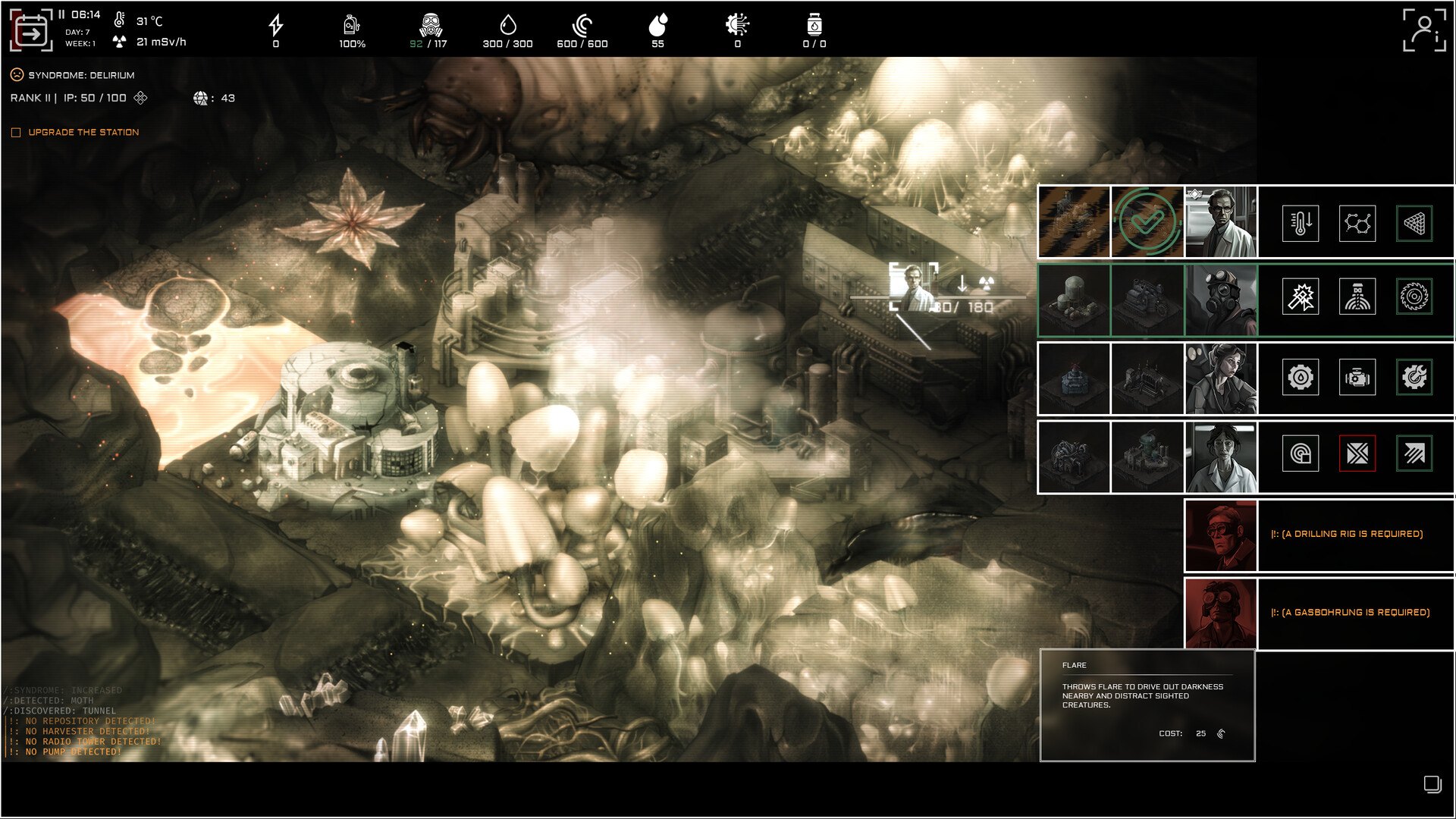
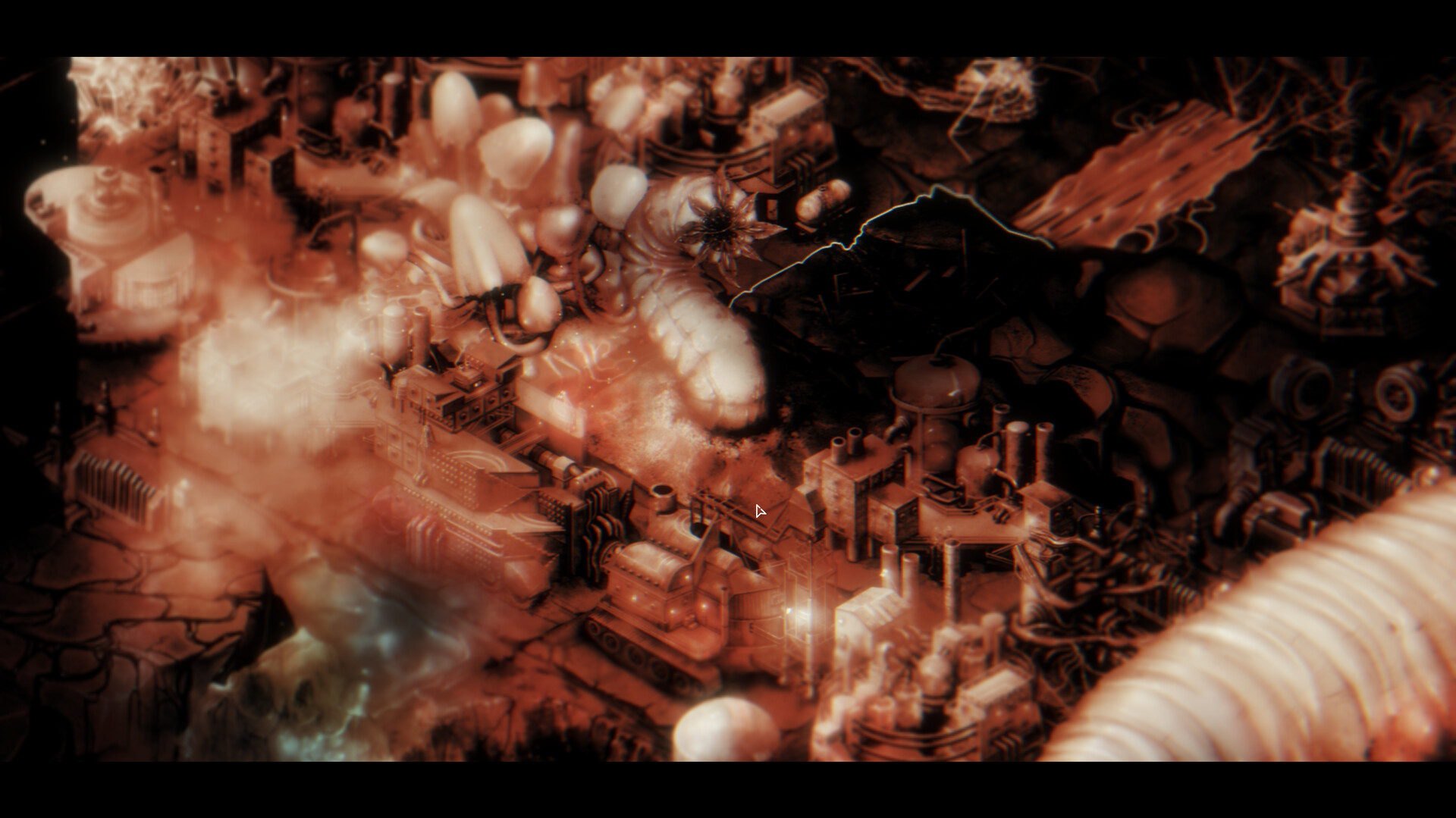
Anoxia Station drops you into a subterranean mining operation on a dying world, tasked with extracting resources, managing a crew, and confronting whatever horrors and moral compromises come with strip-mining a planet that's actively running out. Its dystopian, claustrophobic aesthetic is the one thing nearly every reviewer agrees on regardless of how they feel about everything else — "dystopian and claustrophobic" is a phrase multiple reviews arrive at independently, and even the game's harshest critics tend to carve out an exception for its visual and tonal identity. One reviewer, describing a habit of abandoning ugly-playing games within minutes, specifically credits the aesthetic with keeping them engaged through early frustration that would normally have sent the game straight to the trash.
That atmosphere is in service of a genuinely uncomfortable premise — greed and resource extraction accelerating a planet's collapse, with the player cast as a direct participant in the exploitation rather than a neutral observer. Several reviewers praise the mood this creates even while admitting the actual narrative beats are hard to follow; one finishes the entire campaign and reports "still no idea what the story is," immediately followed by "but the game's really good," which captures the split fairly well: the atmosphere sells an idea the plot doesn't always deliver clearly.
Mechanics that fight the player rather than testing them
The core mechanical complaint, repeated across a large share of the negative reviews, concerns pacing pressure applied to a genre that traditionally rewards patience. Anoxia Station is a turn-based strategy game with a forced turn timer, and multiple reviewers describe this as actively working against the kind of careful, methodical planning the genre usually invites. "It's a turn based strategy game that recommends you play it on a forced turn timer," one reviewer notes, framing it as a design choice they philosophically object to but ultimately find tolerable — a more measured take than several others, who describe the combination of an overcomplicated resource system and a hard time limit as making it impossible to even brute-force a difficult level through trial and error, since there simply isn't time to experiment before the clock forces a decision.
That frustration compounds with at least one concrete, reproducible bug: one reviewer reports dismantling an oil harvester after exhausting its resource node, only to discover the game won't let them place a new harvester on either already-mined spot, permanently blocking the upgrade path needed to complete mission 2. That's not a vague balance complaint, it's a specific, actionable soft-lock, and it corroborates the achievement data's own story rather cleanly: completion rates fall off a cliff as the campaign progresses, from 43.9% for finishing the first chapter down to just 15.3% for reaching the game's actual ending. Whatever the exact causes across the whole playerbase, a majority of players who start the campaign do not finish it.
Missing basics undermine an otherwise ambitious package
Beyond the core loop, a cluster of more mundane complaints is worth naming plainly because they're the kind of gap a released, priced product shouldn't ship with. Multiple reviewers independently flag the complete absence of an audio settings menu — no volume sliders for music, effects, or dialogue at all — which is a basic accessibility and comfort feature missing regardless of how the rest of the game plays. One reviewer's own category breakdown scores "Audio: 1" specifically, distinct from their otherwise-positive 7/10 marks for gameplay and graphics, underlining that this is a specific, isolated failure rather than general dissatisfaction bleeding into every category.
Tutorial and interface clarity draw similarly specific complaints: on-screen instructions are reported to disappear before they can be fully read, key prompts (like "press space or enter to skip") are reported not to function reliably for some players, and the map's visual style, while atmospheric, is criticized for making it genuinely difficult to tell what's clickable or what a given icon represents without prior knowledge. None of these are subtle nitpicks — they're the kind of onboarding failures that can turn a player away before the game's real strengths, the atmosphere and the puzzle-like resource planning, ever get a fair chance to land.
A recommendation with a strong caveat about going in blind
One recurring piece of advice across the more positive reviews is worth relaying directly: several reviewers specifically recommend going into Anoxia Station without reading detailed plot or mechanics breakdowns beforehand, arguing that discovering its systems and story beats organically is part of what makes the atmosphere land. "I recommend going in blind if you like the aesthetic of this game. That's why I bought it, and I wasn't disappointed," one review states, immediately followed by an honest 7/10 gameplay and graphics score alongside a rock-bottom audio mark — a genuinely mixed but considered verdict rather than either uncritical praise or dismissal.
That's a useful framing for weighing this review's overall conclusion: the atmosphere and premise are strong enough to justify a purchase for players specifically drawn to dystopian, claustrophobic survival strategy, provided expectations for mechanical polish, tutorial clarity, and basic settings menus are set appropriately low going in. It's a game whose reach exceeds its current technical grip, but the reach itself is real.
Where this leaves it
Anoxia Station has a genuinely distinctive mood and a premise with real moral weight behind it, and that combination is strong enough that several reviewers recommend experiencing it purely for the aesthetic even where they can't fully endorse the mechanics. But a forced-timer pacing system that fights against the genre's natural strengths, a specific reproducible soft-lock bug, a complete absence of audio controls, and a tutorial that reviewers say doesn't adequately explain its own systems add up to a rough, sometimes actively frustrating experience underneath the atmosphere — and the achievement data confirms most players who start the journey don't see it through to the end. Worth trying for the setting and the visual identity, with real patience required to get past its rougher mechanical edges.
Pros and cons
Pros
- A genuinely distinctive, claustrophobic dystopian atmosphere that reviewers on both sides of the score divide consistently praise, even when frustrated with the mechanics underneath
- A creepy, morally uncomfortable premise about greed and resource extraction destroying a dying world that comes through clearly even to reviewers who found the plot hard to follow in detail
- Genuinely difficult, puzzle-like turn-based strategy for players willing to engage with its resource-management systems on their own terms
- Distinct visual identity that several reviewers say is worth experiencing on its own even where they can't recommend the full package
Cons
- Achievement data shows heavy mid-to-late campaign attrition — a majority of players who finish the first chapter never reach the ending — matching widespread reviewer complaints about frustrating late-game difficulty and tedium
- A forced turn-timer pressures players into hasty decisions in a genre that traditionally rewards careful planning, with several reviewers calling the pacing actively hostile to methodical play
- At least one specific, reproducible soft-lock reported: dismantling an oil harvester after its resource node is depleted can permanently block progress in mission 2
- No audio settings menu at all, independently flagged as a real omission by multiple reviewers
- Tutorial and UI clarity are repeatedly criticized — on-screen instructions disappear too quickly to read, and map legibility makes it hard to identify what's actually interactive
Screenshots
-
Anoxia StationImage: Abylight Studios via Steam -
Anoxia StationImage: Abylight Studios via Steam -
Anoxia StationImage: Abylight Studios via Steam -
How the review scores each part of the gameWanderer Editorial -
At a glanceWanderer Editorial -
The short versionWanderer Editorial