Game review
GEODE
7 / 10
- Developer
- PhD
- Publisher
- PhD
- Released
- 1 June 2026
- Platforms
- Windows
- Genre
- Action, Adventure, Strategy
- Monetisation
- free-to-play
- Players
- true
The short version
Biggest strengths
- A day-scavenge, night-defend loop reviewers repeatedly described as addictive, with resource gathering and base building that feels rewarding in its own right
- Tower defense with real strategic weight; wall and Bow Tower placement genuinely matters and rewards planning rather than reflexes alone
- Scales well for up to eight players, turning coordinated planning into enjoyable, chaotic co-op even when it breaks down
Biggest weaknesses
- A detailed negative review reported a specific late-game balance issue around wave 15, where enemies can damage towers behind a wall before the wall itself is destroyed, undermining the core defense strategy
- Interface friction reported by multiple reviewers, including a wall-toggle interaction that requires opening a menu rather than a simple click, and unclear guidance on which tower placement the game's tutorial is actually referring to
- No boundary preventing players from wandering off the playable map and getting stuck, according to one reviewer
Who it's for: Co-op survival and tower-defense fans wanting a free, session-based game to play in a group, who don't mind rough tutorial and UI edges in exchange for a genuinely addictive day/night loop
Our recommendation: recommended
7 / 10
GEODE released in full on Steam on June 1, 2026, from developer PhD, a free-to-play, top-down co-op survival game built around a single core loop: gather resources and build up defenses by day, then hold the line as monster hordes converge on your team's Core Crystal by night. Its 27-review English pool lands at a strong Positive (26 up, 1 down, 96%), and while a large share of that pool leans into exaggerated, joke-format praise typical of free indie hits that find a viral moment, there's a smaller core of detailed, substantive reviews underneath it that paint a consistent, credible picture of what the game does well and where it still needs work.
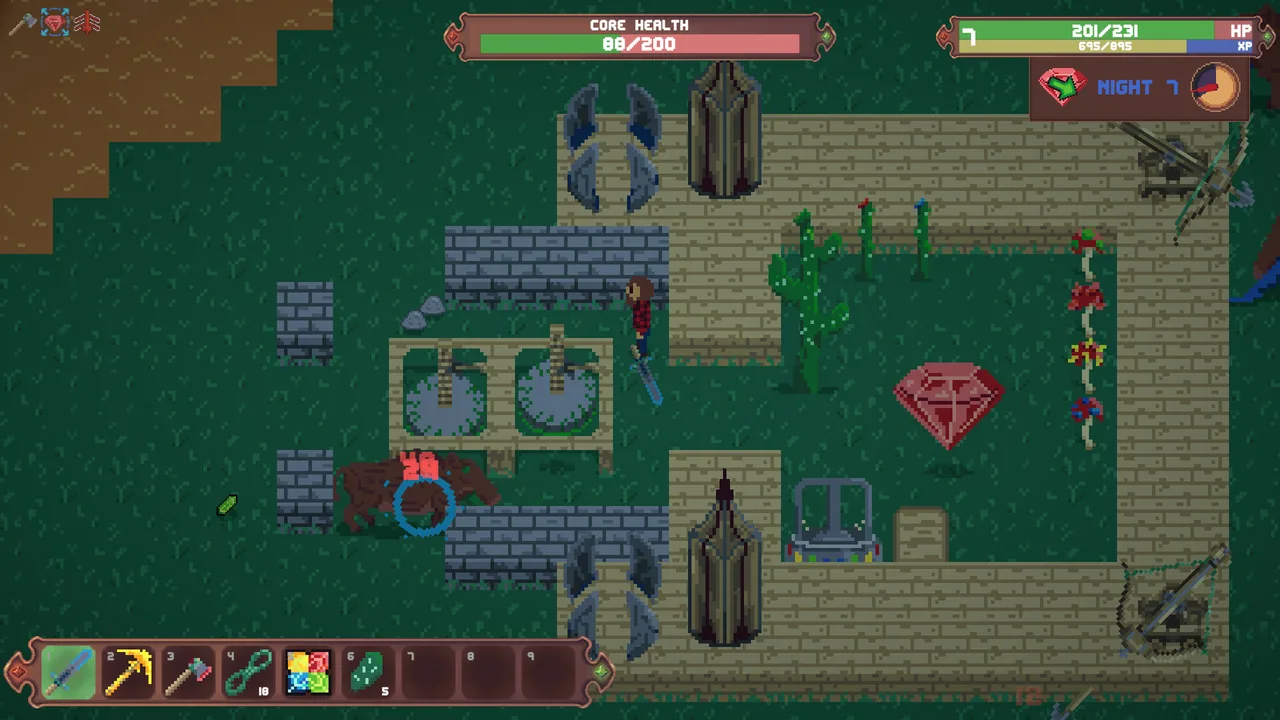
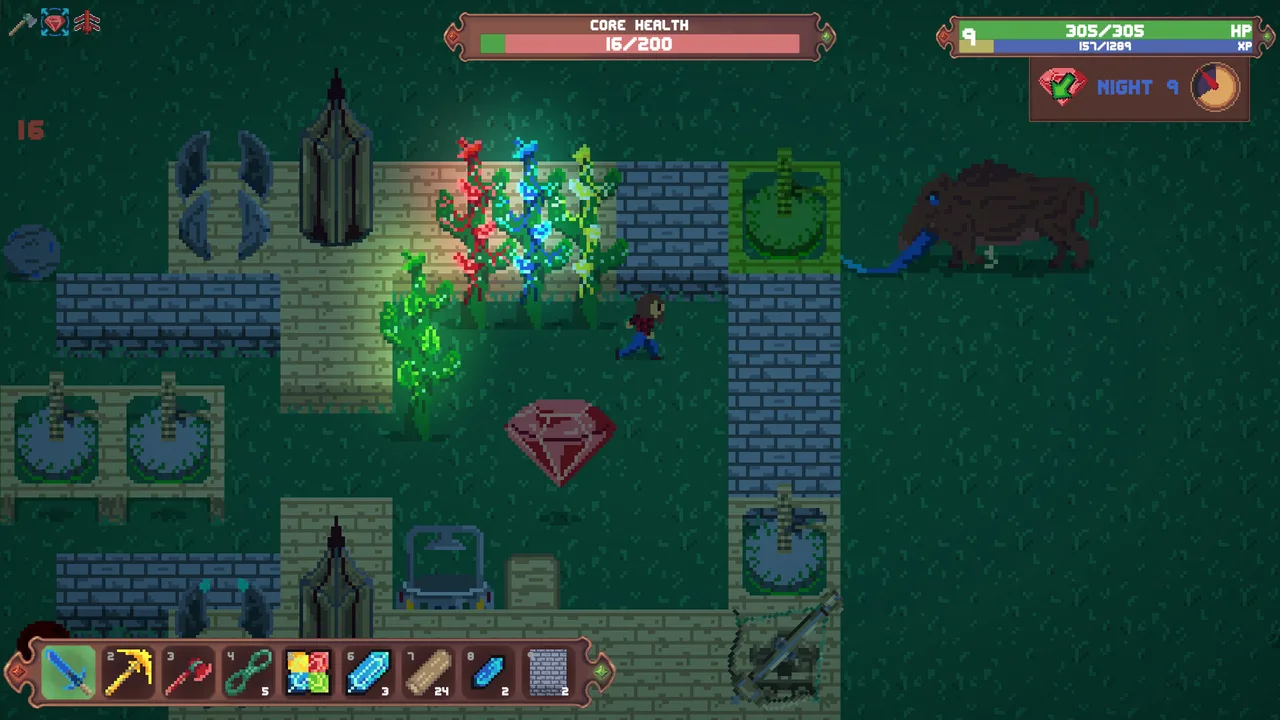
The day/night structure is the game's clearest hook. One of the pool's most detailed reviews broke the loop down precisely: daytime is for exploring, hoarding resources, crafting gear, and building up walls and towers, while night brings the horde, with no high-tech automation to fall back on, just "your own crafted weapons, smart pathfinding walls, and your trusty Bow Towers." That same reviewer specifically praised the tower defense as feeling old-school and strategic, "setting up Bow Towers and traps to bottleneck the monsters feels amazing when your strategy actually works," and described the eight-player co-op as chaotic in the best sense, quickly devolving from "highly coordinated tactical squad" into "everyone screaming and accidentally blocking each other's arrows." A separate reviewer independently drew a comparison to the browser game Zombz.io, praising similar enemy AI and base-building feel, and called GEODE "one of those gems" found while browsing Steam's free games.
That structural praise is echoed by a more measured reviewer who called the core idea "fun to play" while flagging specific rough edges: early waves that don't scale up in difficulty quickly enough, making it too easy to coast to wave 9 or beyond without real pressure, and a wall-toggle interaction that requires opening a UI menu to raise or lower a door wall rather than a single click. That same reviewer also noted the absence of a hard map boundary, meaning it's possible to wander outside the intended play area and get stuck, and suggested the game would benefit from more enemy variety and a clearer building and crafting progression to give the loop more depth over longer sessions.
The pool's one detailed negative review raises the most concrete balance concern in the whole set: around wave 15 on normal difficulty, even with upgrades and healing buffs applied, enemies were able to damage towers and structures sitting behind a wall before that wall itself was destroyed, undermining the layered-defense strategy the entire loop is built around. It's a single-source report rather than a widely corroborated complaint, but it's specific and mechanically plausible enough to flag directly for anyone planning to push into the game's later waves, particularly since that reviewer noted they'd reconsider the game only after a substantial balance update.
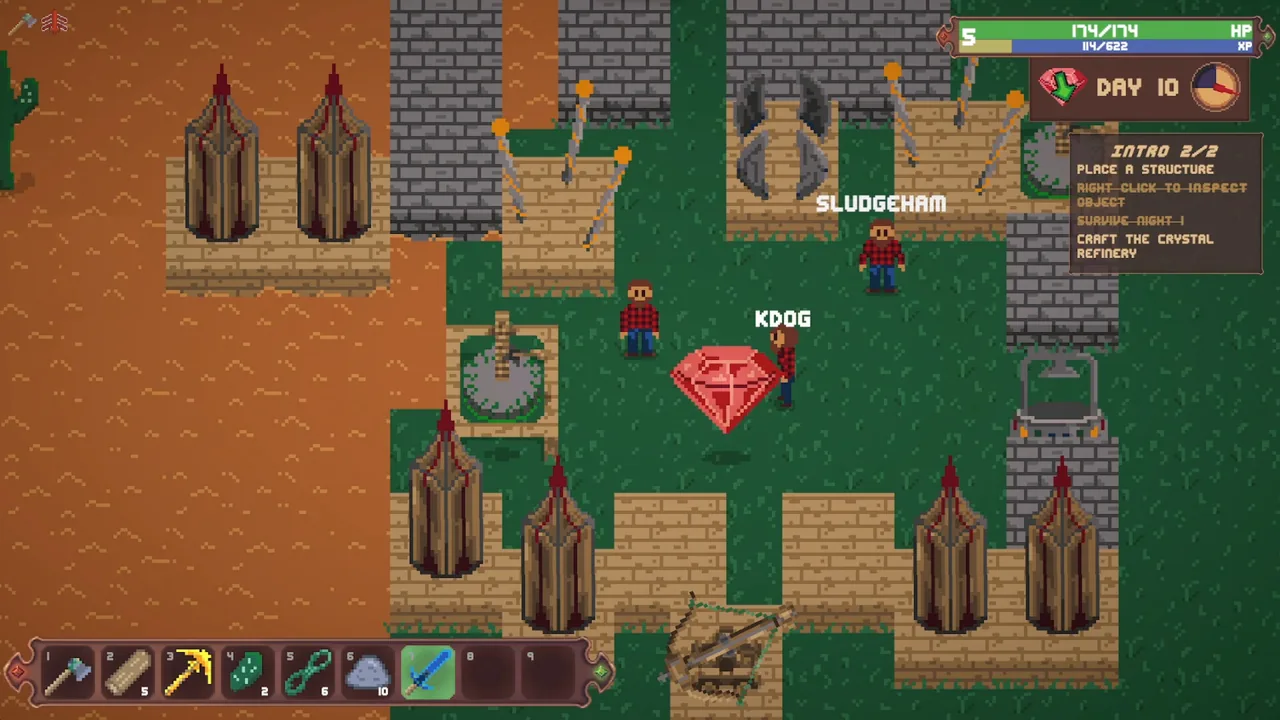
Tutorial clarity is a recurring smaller complaint. One reviewer described genuine confusion about which specific tower the game's onboarding was referring to when instructed to "place down tower near the core," since the game allows building several tower types, and suggested the tutorial would benefit from a clearer visual callout, like a highlighted circle around the relevant item, rather than text alone. That same reviewer still called the underlying idea fun despite the friction. Another reviewer, more measured than the pool's louder joke reviews, praised the core gameplay loop as working well but wanted more music variety, additional enemy and terrain types, and some light environmental lore, like collectible pages scattered through the map, to round out the experience.
As a free game, value is close to a non-issue; there's no purchase price to weigh against the experience, and reviewers across the pool, both the substantive ones and the more exaggerated joke reviews, consistently describe the core loop as compelling enough to keep coming back to with friends. The louder, meme-style reviews that dominate the top of the pool by vote count are themselves an implicit signal of a game that's found some genuine cultural traction among its early audience, even if they don't offer much in the way of concrete critique.
Resource gathering itself earns specific praise as more than just busywork between defense phases. The pool's most detailed reviewer called mining and refining "incredibly rewarding" in its own right, describing the satisfaction of watching a stockpile of raw materials become upgraded gear and stronger fortifications heading into a night phase, and framed time management as genuinely punishing rather than a soft suggestion: spend too long exploring or chasing distractions during the day and a later wave "will completely humble you." That kind of tension between exploration and preparation is exactly the design space free-to-play survival games tend to flatten out in pursuit of broader accessibility, and its presence here is part of why the substantive reviews in the pool describe the loop as more than a simple tower-defense reskin.
The developer's continued support also comes up as a point of optimism rather than concern. Several reviewers, both in the detailed critiques and the shorter positive notes, explicitly framed their current complaints as things they expect to be addressed given the game's early state, expressing interest in seeing new maps, towers, and enemy types added over time rather than treating the launch content as a finished, final product. That framing matters for a free release still finding its footing: the core mechanical foundation reviewers describe, an interlocking loop of gathering, building, and defending that rewards planning, is solid enough that the currently thin content variety reads as a natural target for post-launch expansion rather than a structural flaw.
Taken together, GEODE is a genuinely solid, free co-op survival base-defender with a satisfying core loop and real strategic depth in its tower and wall placement, held back at launch by rough UI edges, thin tutorial guidance, a reported late-game balance issue around wave 15, and a content pool that could use more variety to sustain longer play sessions. For a free download, especially with a group of friends, it's an easy recommendation with realistic expectations about its current rough edges.
Pros and cons
Pros
- A day-scavenge, night-defend loop reviewers repeatedly described as addictive, with resource gathering and base building that feels rewarding in its own right
- Tower defense with real strategic weight; wall and Bow Tower placement genuinely matters and rewards planning rather than reflexes alone
- Scales well for up to eight players, turning coordinated planning into enjoyable, chaotic co-op even when it breaks down
- Entirely free, giving it an easy floor for anyone curious about the genre with no financial risk
Cons
- A detailed negative review reported a specific late-game balance issue around wave 15, where enemies can damage towers behind a wall before the wall itself is destroyed, undermining the core defense strategy
- Interface friction reported by multiple reviewers, including a wall-toggle interaction that requires opening a menu rather than a simple click, and unclear guidance on which tower placement the game's tutorial is actually referring to
- No boundary preventing players from wandering off the playable map and getting stuck, according to one reviewer
- Relatively thin content variety at launch: reviewers wanted more enemy types, tower options, music, and map variety to keep the loop fresh over longer sessions
Screenshots
-
GEODEImage: PhD via Steam -
GEODEImage: PhD via Steam -
GEODEImage: PhD via Steam