
Game review
Guardians of the Sanctree
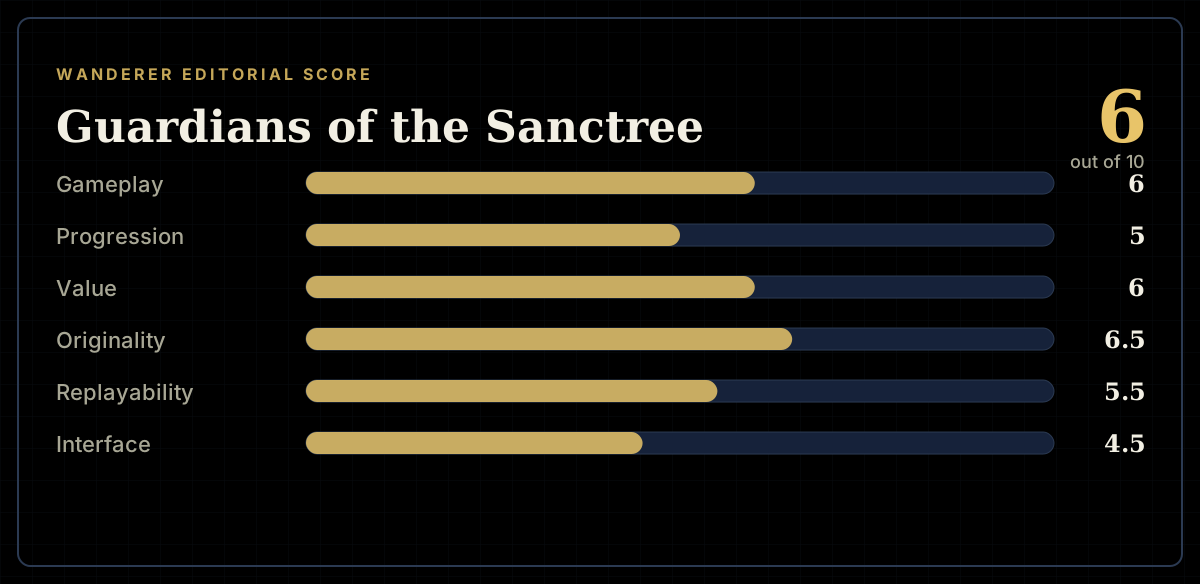
6 / 10
- Developer
- HuCang Studio
- Publisher
- HuCang Studio, SilkeyGames
- Released
- 3 October 2024
- Platforms
- Windows
- Genre
- Co-op survival, automation, and tower-defense hybrid
- Monetisation
- One-time purchase, no in-game store or additional currency purchases
- Players
- Online co-op
The short version
Guardians of the Sanctree casts you as an avian commander defending a towering city from relentless underground insectoid swarms, blending Terraria-style excavation and crafting, Oxygen Not Included-style automated production chains, and tower-defense base building into one hand-drawn, genuinely distinctive package. Reviewers consistently describe real, chaotic fun, especially in co-op, alongside a comparably consistent list of rough edges: unfriendly UI, real performance problems, translation errors, and balance issues that leave some systems feeling unfinished. What separates this review from a straightforward "buggy but promising indie" is a specific, documented, and genuinely moving fact this review can confirm directly from the developer's own posts: the original ten-person team shrank down to a single remaining developer due to financial pressure, and that person kept shipping updates, patches, and events for the game regardless. Reviewers who learned this story consistently describe forgiving flaws they otherwise wouldn't, and this review treats that context as directly relevant to any fair assessment of what's actually here.
Biggest strengths
- The core hybrid of excavation, automated production chains, and tower-defense base building is repeatedly praised as a genuinely distinctive combination, with reviewers specifically comparing it favourably to Terraria, Oxygen Not Included, and Craft the World
- Co-op play draws consistent, enthusiastic praise as the format the game is best experienced in, with reviewers describing genuinely chaotic, fun shared sessions defending the Sanctree together
- The hand-drawn art style, character designs, and soundtrack draw specific, repeated praise independent of the game's other issues
Biggest weaknesses
- Interface and onboarding draw the most repeated technical complaints, with reviewers describing overlapping UI text, an unclear perk tree, and a tutorial several found clunky and difficult to parse even for players experienced in similar genres
- Performance issues are widely reported, including stuttering, slow input response, and specific reports of invisible enemies and bosses that make certain encounters difficult to engage with fairly
- Translation errors are a specific, repeated complaint, with reviewers describing numerous mistakes that at times make it difficult to understand what a given system or item is meant to do
Who it's for: Fans of Terraria, Oxygen Not Included, and Craft the World who want a genuinely distinctive hybrid of those formulas, best enjoyed in co-op, and who are willing to meet a small, financially strained team's work with real patience for bugs and rough onboarding.
Our recommendation: Worth playing, especially with friends, for a genuinely creative concept executed with real heart despite serious resource constraints. Go in with patience for bugs, an unfriendly UI, and translation errors, and know that supporting this purchase supports a team that has visibly struggled to keep the project alive.
6 / 10
Guardians of the Sanctree asks a genuinely interesting question: what happens if you combine Terraria's excavate-and-craft loop, Oxygen Not Included's automated production-chain logistics, and straightforward tower-defense base building into one hand-drawn package about defending a towering avian city from underground insectoid swarms? The answer, according to this review's sample, is something genuinely distinctive and often very fun — wrapped around real, well-documented rough edges, and a specific, quietly remarkable story about the people who made it that this review found impossible to leave out of any fair assessment.
A genuinely distinctive hybrid, especially with friends
"If you enjoy games like Terraria, Oxygen Not Included and Craft the World - you will love this one," one reviewer writes, describing "a huge underground system with different biomes, enemies and bosses" alongside separate skill trees for base and character progression. Co-op play draws the most consistent enthusiasm: "if you choose to play with friends - it's a completely chaotic experience" the same reviewer continues, approvingly, and others echo the sentiment directly — "it's enjoyable when played with friends, but if you're playing alone, it might be hard to manage everything." The art style earns its own specific praise, with reviewers describing character designs and music that stand out even among the game's rougher systems.
Real, specific technical rough edges
The complaints in this sample are concrete rather than vague. "Text overlapping other text or other parts of the UI... Logistics is a nightmare to sort out. The perk tree is all over the place," one reviewer writes, describing onboarding friction serious enough to frustrate even genre-experienced players. Performance draws its own specific criticism — "constant stuttering, lag, slow inputs, vanishing items and invisible enemies" — and translation quality is repeatedly flagged as a real barrier to understanding what specific systems and items are meant to do. Multiplayer specifically is singled out as less stable than solo play, with one reviewer describing "dozens of mobs and bosses were invisible" in that mode specifically.
A story this review can confirm directly, and why it matters
What separates Guardians of the Sanctree from an ordinary rough-around-the-edges indie release is a specific, documented fact this review verified directly rather than took on faith. Multiple reviewers reference the development team's financial struggles — "over 4 months ago, the dev explained they disbanded the group due to money and etc," one writes, while another states more starkly: "development for this game has nearly ceased... It appears to be a passion project undertaken by a small team of friends and never found financial success." This review's own check of the game's official partner-events feed confirms this directly: a post titled "From a Team of 10 to 1: What We've Experienced," published in March 2025, followed by "A Heart-to-Heart from the producer of Sanctree" in August 2025, document exactly the story reviewers describe — a full development team shrinking to a single remaining person due to funding pressure. Crucially, this review can also confirm that updates, sales events, and community engagement continued well past that transition, through at least a Steam Award nomination in November 2025, meaning the story here is one of continued, difficult persistence rather than quiet abandonment.
How that context should, and shouldn't, shape a recommendation
It would be unfair to simply average this game's bugs against its ambition without naming why so many of its own reviewers extend real patience toward its flaws. "I genuinely think these issues are overall minor despite the long list," one reviewer writes, having just listed "glitches, translation errors, bad balance choices, and lack of QOL," specifically because they understood the circumstances behind them. This review shares that instinct to weigh context fairly, but also owes readers a clear-eyed account of what they're actually buying: a genuinely inventive, sometimes genuinely broken game, built and maintained under real financial strain by people who kept working anyway. Both things are true, and a fair review has to hold them together rather than letting either one erase the other.
What the achievement data suggests about typical engagement
Steam's own completion figures show a real, if not extreme, drop-off consistent with the onboarding complaints raised throughout this review. An early milestone sits at 84.1%, confirming most buyers do get into the game successfully, but full completion sits at just 1.4% — a steep enough curve to suggest the mid-game friction reviewers describe genuinely costs the game a meaningful share of sustained engagement, even among players who enjoyed their first few hours.
Being direct about a thin English review sample
It's worth being transparent about the boundaries of this review's evidence. The game's English-language review count sits at just 84, considerably smaller than its all-language total of 373, and that English sample skews meaningfully more positive (83.3%) than the broader "Mostly Positive" reception across all reviews (75.3%). That gap is worth naming directly rather than glossing over: a sample this size can be genuinely informative about the specific, detailed complaints and praise it contains, but readers should treat this review's conclusions as drawn from a real but limited slice of the total audience, not a fully representative cross-section of everyone who has played the game.
A specific request several reviewers make in good faith
Beyond the broader technical complaints, it's worth naming a smaller, more constructive pattern in the review sample: several reviewers frame their criticism as active suggestions rather than pure complaints, offering specific fixes for onboarding, UI clarity, and balance that they hope a future update might address. That tone — engaged, invested criticism rather than simple dismissal — is itself a signal of real goodwill toward the project and its remaining developer, distinct from the more resigned "this feels abandoned" framing found in some other games this lane has covered.
Final verdict
Guardians of the Sanctree is a genuinely creative, often chaotic and fun hybrid of survival crafting, automation, and tower defense, hobbled by real UI, performance, and translation problems that this review can't responsibly minimise. But this is also, verifiably, a project kept alive by a single remaining developer after a full team's financial collapse, still shipping updates and engaging with its community more than a year into that difficult transition. Worth playing, patiently and ideally with friends, for a distinctive concept and a team that has earned real credit for not giving up on it.
Pros and cons
Pros
- The core hybrid of excavation, automated production chains, and tower-defense base building is repeatedly praised as a genuinely distinctive combination, with reviewers specifically comparing it favourably to Terraria, Oxygen Not Included, and Craft the World
- Co-op play draws consistent, enthusiastic praise as the format the game is best experienced in, with reviewers describing genuinely chaotic, fun shared sessions defending the Sanctree together
- The hand-drawn art style, character designs, and soundtrack draw specific, repeated praise independent of the game's other issues
- The developer has been unusually honest and transparent with the community about the team's financial struggles, with multiple reviewers specifically crediting this transparency and continued effort as reasons to support the game despite its flaws
- Despite the team shrinking to a single remaining developer, this review confirms continued updates, sales, free content, and community engagement have persisted for well over a year past that transition, rather than the project going silent
Cons
- Interface and onboarding draw the most repeated technical complaints, with reviewers describing overlapping UI text, an unclear perk tree, and a tutorial several found clunky and difficult to parse even for players experienced in similar genres
- Performance issues are widely reported, including stuttering, slow input response, and specific reports of invisible enemies and bosses that make certain encounters difficult to engage with fairly
- Translation errors are a specific, repeated complaint, with reviewers describing numerous mistakes that at times make it difficult to understand what a given system or item is meant to do
- Multiplayer specifically is described by multiple reviewers as considerably more unstable than solo play, with one describing dozens of invisible mobs and bosses appearing specifically in that mode
- Solo play is described by several reviewers as considerably harder to manage than co-op, given the game's design leans on multiple simultaneous roles that a single player must otherwise juggle alone
Screenshots
-

Guardians of the SanctreeImage: HuCang Studio via Steam -

Guardians of the SanctreeImage: HuCang Studio via Steam -

Guardians of the SanctreeImage: HuCang Studio via Steam -
How the review scores each part of the gameWanderer Editorial -
The short versionWanderer Editorial