Game review
Sitting Ducks
6 / 10
- Developer
- The Gang Studio
- Publisher
- The Gang Studio, Disobey
- Released
- 4 June 2026
- Platforms
- Windows
- Genre
- Action, Adventure, Casual, Indie, Simulation, Strategy
- Monetisation
- paid
- Players
- true
The short version
Biggest strengths
- A physics-based building system, grabbing and welding objects together with sticky hands, that reviewers said turns even simple construction into a source of genuine comedy
- A rotating cast of disaster scenarios, meteor strikes, giant waves, zombie invasions, that forces players to adapt rather than repeat a single winning strategy
- A chaotic, genuinely funny co-op experience reviewers said shines brightest in a full group of friends
Biggest weaknesses
- A launch-week pricing controversy, advertised at roughly $1 before jumping to $7.99 shortly before release, that soured a meaningful share of early reviews
- A thin built-in matchmaking system, with reviewers reporting no in-game LFG tools and a slow, unreliable Discord as the only way to find teammates
- A specific, widely echoed difficulty spike on the meteor disaster that multiple reviewers described as close to unplayable relative to other rounds
Who it's for: Groups of friends looking for a chaotic, physics-driven co-op party game about slapping together janky survival machines, who don't mind a rough launch build and can find a full lobby
Our recommendation: recommended with caveats
6 / 10
A physics sandbox built for chaos, not efficiency
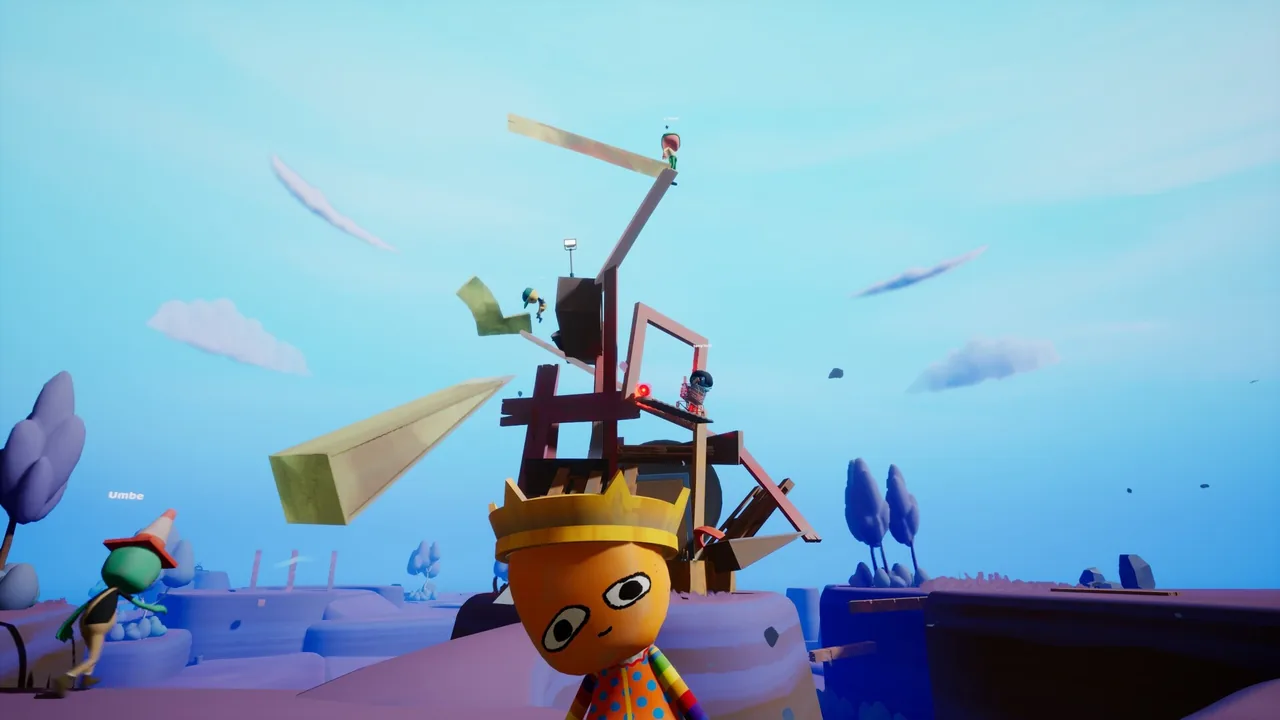
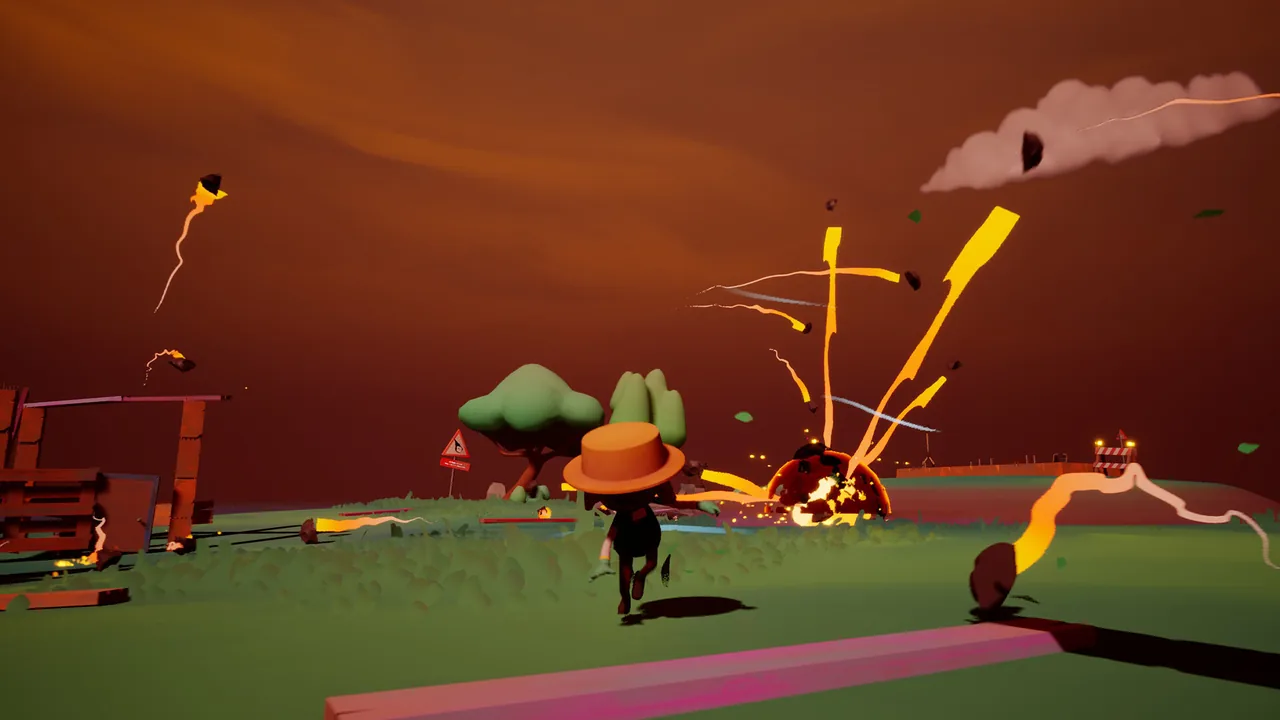
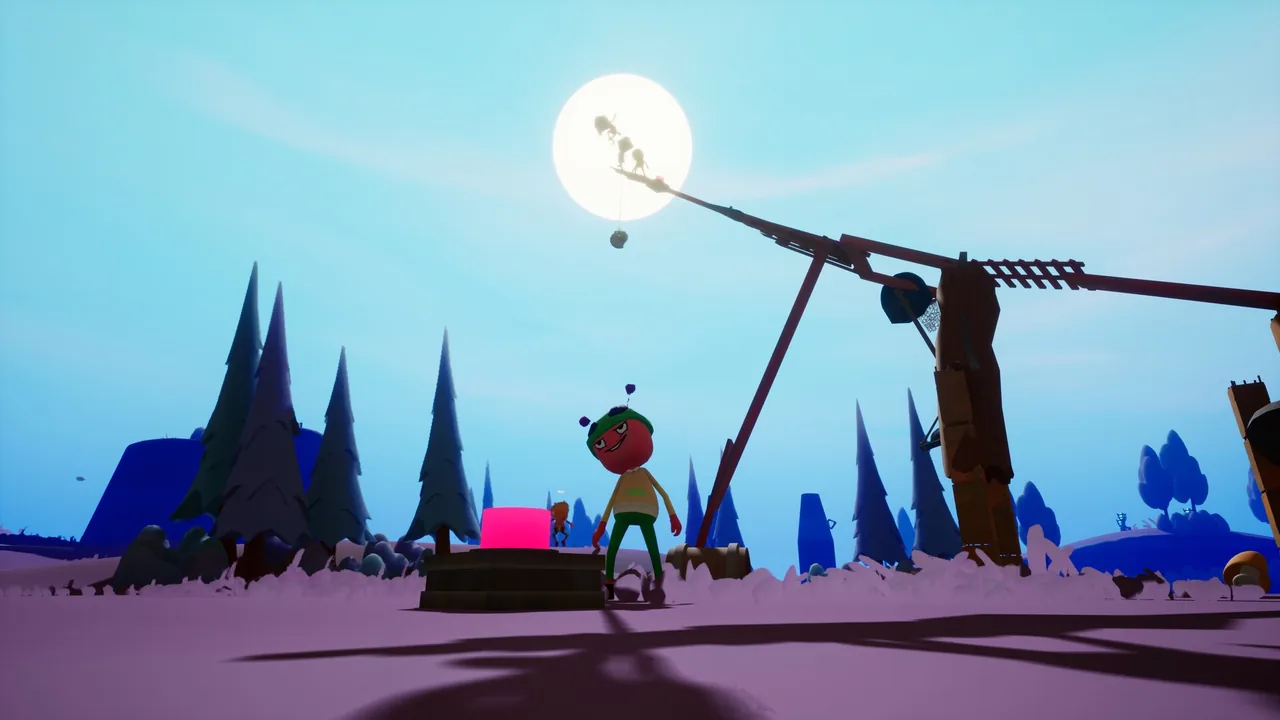
Sitting Ducks throws small groups of players onto islands and asks them to build whatever they can to survive a rotating series of absurd catastrophes. One detailed reviewer described the core system: "The game's most distinctive feature is its physics-based building system, which revolves around grabbing, moving, and attaching objects together using sticky hands. Instead of providing streamlined construction tools, Sitting Ducks intentionally introduces a level of clumsiness that creates both challenge and comedy. Every structure feels handcrafted, whether it is a towering fortress, a makeshift raft, or an entirely impractical vehicle." That same reviewer praised the variety of threats forcing players to keep adapting: "The game constantly changes the conditions of survival through threats such as meteor strikes, giant waves, zombie invasions, and extreme weather events. Each disaster requires a different approach, forcing players to adapt rather than rely on a single winning strategy."
Better with friends, still fun alone
Multiple reviewers were explicit that the game is designed around group play, though not exclusively so. One wrote, "Sitting Ducks is a lot of fun. Fun, goofy, zany friendslop game. Playing solo isn't nearly as good as playing in a group. The basic gameplay loop is building simple machines to deal with that round's apocalypse, be it zombies or meteor showers." Another reviewer, self-describing as unable to give a fully positive or negative verdict, still landed on a clear recommendation for the right audience: "I wholeheartedly recommend this game to anyone who wants a chaotic fun time with friends for a couple hours, the game is easy to understand with very simple rules but uses those rules to create some hilarious moments." A third summed up the appeal of the game's intentional jank directly: "The building mechanics are janky as fudge, but when you're derping around with a few friends, it doesn't matter. It just adds to the chaos!"
A launch pricing controversy that shaped early reviews
A meaningful share of the review pool, positive and negative alike, references a specific launch-week controversy over pricing. One reviewer explained the situation plainly: "Initially heavily advertised as $1 up until a few days before launch; with a sudden launch price of 8x the original advertised price. Now, after being caught be scummy, decide to play the 'oh, blame Steam, not Us'. Let's see how that works out for you. Quickest refund of my entire life." Notably, several other reviewers credited the developer with resolving the issue in good faith after the fact. One wrote, "EDIT: The developers have completely resolved the launch pricing issue. They stood by their word and distributed the game keys via Discord to fulfill their original promise. It's incredibly refreshing to see a dev team take accountability, listen to feedback." That split, between reviewers who refunded immediately and reviewers who stuck around and saw the issue resolved, is worth weighing directly against how much trust a given buyer is willing to extend a small studio after a rocky launch.
Finding a lobby is harder than it should be
Beyond the pricing dispute, the pool's most substantive gameplay complaint concerns the difficulty of actually finding people to play with. One frustrated reviewer wrote, "Finding someone to play with is impossible. People post in the discord but only maybe once or twice every 8 hours or so. No LFG channels in discord or public servers in game. For a CO OP game, you think they would have something to make finding others to play with an easy process." For a game whose best experience reviewers consistently locate in full groups, the absence of a built-in matchmaking or lobby-browser system is a real structural gap, one that pushes players toward outside tools that several reviewers found unreliable.
One disaster type standing out as genuinely broken
A specific, repeated complaint targets the balance of one particular disaster scenario rather than the game's difficulty in general. One reviewer wrote, "the game is good but the meteor level is harder than any level, we gave it multiple chances but its unplayable with the meteor level, its either the testers where drunk while testing it or im missing something, this will be a bad review till the developer fixes this." That the complaint is isolated to one specific round, rather than a blanket difficulty complaint, suggests a tuning problem the developer could plausibly fix directly rather than a fundamental design issue.
Rough edges reviewers wanted addressed
A handful of smaller but frequently repeated notes round out the critical side of the pool. Multiple reviewers separately flagged that motion blur is on by default with no obvious way to turn it off, a presentation choice with no clear justification for a chaotic building game where clarity matters. Others noted maps that "feels very empty and unfinished" and building pieces that "clip out of map if put down improperly," alongside one reviewer's suggestion that basic quality-of-life features, like being able to move an already-welded object without detaching it, would meaningfully improve the building experience.
Verdict
Sitting Ducks delivers exactly the kind of chaotic, physics-driven co-op comedy it promises, an inventive sticky-hands building system paired with a rotating cast of absurd disasters that keeps a full group of friends laughing and adapting. Its launch, however, was genuinely messy: a pricing controversy that the developer has since worked to make right, a real gap in matchmaking tools that undercuts the game's best-with-friends design, and at least one specific disaster type that multiple independent reviewers found close to unplayable. Groups who already have a full lobby lined up and can tolerate some launch-week jank will likely have a great time; solo players or those without a ready-made group should wait for matchmaking improvements before buying in.
Pros and cons
Pros
- A physics-based building system, grabbing and welding objects together with sticky hands, that reviewers said turns even simple construction into a source of genuine comedy
- A rotating cast of disaster scenarios, meteor strikes, giant waves, zombie invasions, that forces players to adapt rather than repeat a single winning strategy
- A chaotic, genuinely funny co-op experience reviewers said shines brightest in a full group of friends
- Responsive post-launch communication from the developer, including a full resolution to a pricing controversy that several reviewers credited directly
Cons
- A launch-week pricing controversy, advertised at roughly $1 before jumping to $7.99 shortly before release, that soured a meaningful share of early reviews
- A thin built-in matchmaking system, with reviewers reporting no in-game LFG tools and a slow, unreliable Discord as the only way to find teammates
- A specific, widely echoed difficulty spike on the meteor disaster that multiple reviewers described as close to unplayable relative to other rounds
- Janky building physics and clipping issues that, while sometimes played for laughs, some reviewers found genuinely frustrating rather than funny
Screenshots
-
Sitting DucksImage: The Gang Studio via Steam -
Sitting DucksImage: The Gang Studio via Steam -
Sitting DucksImage: The Gang Studio via Steam