
Game review
Animaly Bar: NO HUMANITY! Review
7.8 / 10
- Developer
- Domnaier
- Publisher
- Domnaier
- Released
- 13 September 2026
- Platforms
- ["Windows"]
- Genre
- Action
A Gorilla, a Shotgun, and a Bar Full of Liars
Animaly Bar: NO HUMANITY! opens on a simple, gleefully absurd premise: the animals won. Humanity lost some unspecified war, and the world now belongs to its former pets and livestock. You play a gorilla bartender running a bar for animal patrons, which would be a pleasant enough job if some of those patrons weren't actually humans in disguise, sneaking in among the regulars to steal supplies, sabotage the place, or worse. Your job is to serve drinks, keep the bar running, and figure out who's really who before it's too late to do anything about it.
The core loop borrows from the social-deduction and hidden-identity genre that games like Papers, Please helped popularize, but filters it through a horror-comedy lens that's closer to games like Bite Nite than anything dour or self-serious. You watch customers, listen to what they say, note the small tells that separate an actual animal from a human wearing a costume, and then make a call: serve them, or shoot them. Get it wrong in either direction and there are consequences, from lost money to an escalating threat to the bar itself. It's a tense little cat-and-mouse dynamic that rewards paying close attention rather than reflexes, and reviewers who came in expecting a straightforward horror game consistently mention being surprised by how much of the experience is actually about careful observation and judgment calls.
Running the Bar Is Half the Job
Between rounds of suspect-spotting, Animaly Bar asks you to actually run the establishment: collecting stools, cleaning up messes, taking out the trash, restocking drinks, and following recipes to fill orders correctly and completely. It's a light management layer rather than a deep simulation, but it gives the game a rhythm, alternating between the mundane satisfaction of keeping a bar tidy and the sudden tension of realizing the last customer you served might not have been what they claimed. A handful of reviewers noted early confusion over how to use certain tools, like the mop, since some controls aren't obvious without a trip to the settings menu, but once that hurdle is cleared the moment-to-moment flow of serving, cleaning, and scrutinizing settles into something genuinely absorbing for the game's short runtime.
Woven through the bar-management and suspect-hunting gameplay is a run of dark, frequently unhinged humor. The tone leans hard into gallows comedy, at one point drawing an explicit tribute to streamer CaseOh that reviewers who caught it found delightful, and the writing doesn't take its own premise remotely seriously even as it delivers legitimate jump scares along the way. That combination, silly and self-aware on one hand, genuinely unsettling on the other, is the thing reviewers single out most often as the game's defining strength. It's a tightrope that's easy to fumble, tipping too far into either straight horror or pure slapstick, and the near-unanimous praise across dozens of reviews suggests the solo developer behind it threaded that needle about as well as could be hoped.
Defending the Bar Is the Weak Link
The most consistent criticism aimed at Animaly Bar targets its nighttime "defend your bar" sequences, in which waves of human intruders in animal costumes attempt to break in and steal supplies while you try to stop them. Where the daytime customer-screening loop rewards careful observation, these defense sequences play more like a straightforward, less thoughtful action beat bolted onto a game that's otherwise about patience and attention to detail, and several reviewers describe them as the point where the tension the rest of the game carefully builds simply evaporates. More than one reviewer specifically wished the sequences were cut entirely or reworked into something that better matched the deduction-focused pacing of the rest of the experience, since as implemented they can feel like enemies get through no matter what you do, turning a tense moment into a frustrating one rather than a climactic one.
A smaller cluster of complaints centers on rough edges rather than design choices: an initial-launch brightness bug that left the first day almost entirely black on default settings until manually adjusted, a frame-rate cap that wouldn't budge without toggling between windowed and fullscreen mode a few times, the absence of a dedicated fullscreen option for some players, and no controller support for those who find mouse-and-keyboard play uncomfortable. None of these come up as dealbreakers in reviews, more often framed as small annoyances worth flagging for a solo developer still patching the game post-launch, but they're worth knowing about before diving in.
A Short, Sharp Shock With Real Replay Value
At roughly 1.5 to 2 hours for a full playthrough, Animaly Bar is unmistakably a short game, and that brevity is the other point reviewers return to again and again, some describing it as feeling like a taster for a larger experience rather than a complete standalone release. Three distinct endings, determined by the choices made throughout a run, give it more replay value than the runtime alone suggests, and the $3.99 asking price, discounted twenty percent off its $4.99 list at launch, is repeatedly cited as more than fair for what's on offer, especially given the game was built entirely by a single developer. Several reviewers who played the earlier public demo describe the jump from demo to full release as a clear step up, with a more complete story and additional systems layered on top of what the demo previewed, even if a few still wish the finished game had grown further beyond that foundation.
Taken as a whole, the response to Animaly Bar leans strongly, almost overwhelmingly, positive, with reviewers consistently praising its distinctive premise, its commitment to a genuinely odd tone, and the sheer novelty of a hidden-identity bartending horror-comedy that doesn't really resemble anything else currently on Steam. The most common piece of feedback, more than any specific bug or design gripe, is simply a wish for more of it: more content, more days, more variety in the customers passing through the door.
Verdict
Animaly Bar: NO HUMANITY! is a short, confidently weird horror-comedy that gets more mileage out of its central hook, scrutinizing customers for hidden humans while running a functioning bar, than its brief runtime has any right to deliver. The daytime deduction gameplay is genuinely engaging and well-tuned, even if the nighttime defense sequences drag against the game's better instincts, and a handful of launch-week rough edges don't do much to dampen an experience reviewers overwhelmingly describe as hilarious, surprising, and worth every cent of its low asking price. It won't take long to see everything it has to offer, but for a solo-developed debut with this much personality, that's a minor complaint next to how memorable the trip through its door turns out to be.
Pros:
- Inventive, genuinely tense hidden-identity gameplay built around careful observation rather than reflexes
- Distinctive dark-comedy horror tone that lands more often than it misses
- Three different endings give a short game real replay value
- Strong value at its discounted launch price, especially for a solo-developed project
- Clear step up in content and polish from the earlier public demo
Cons:
- Nighttime "defend your bar" sequences feel tacked-on and undercut the game's careful pacing
- Very short overall runtime, closer to a demo-length experience for some players
- A handful of launch bugs around brightness and frame rate settings
- No dedicated fullscreen option or controller support at launch
- Some tool controls aren't explained clearly without checking the settings menu
Screenshots
-
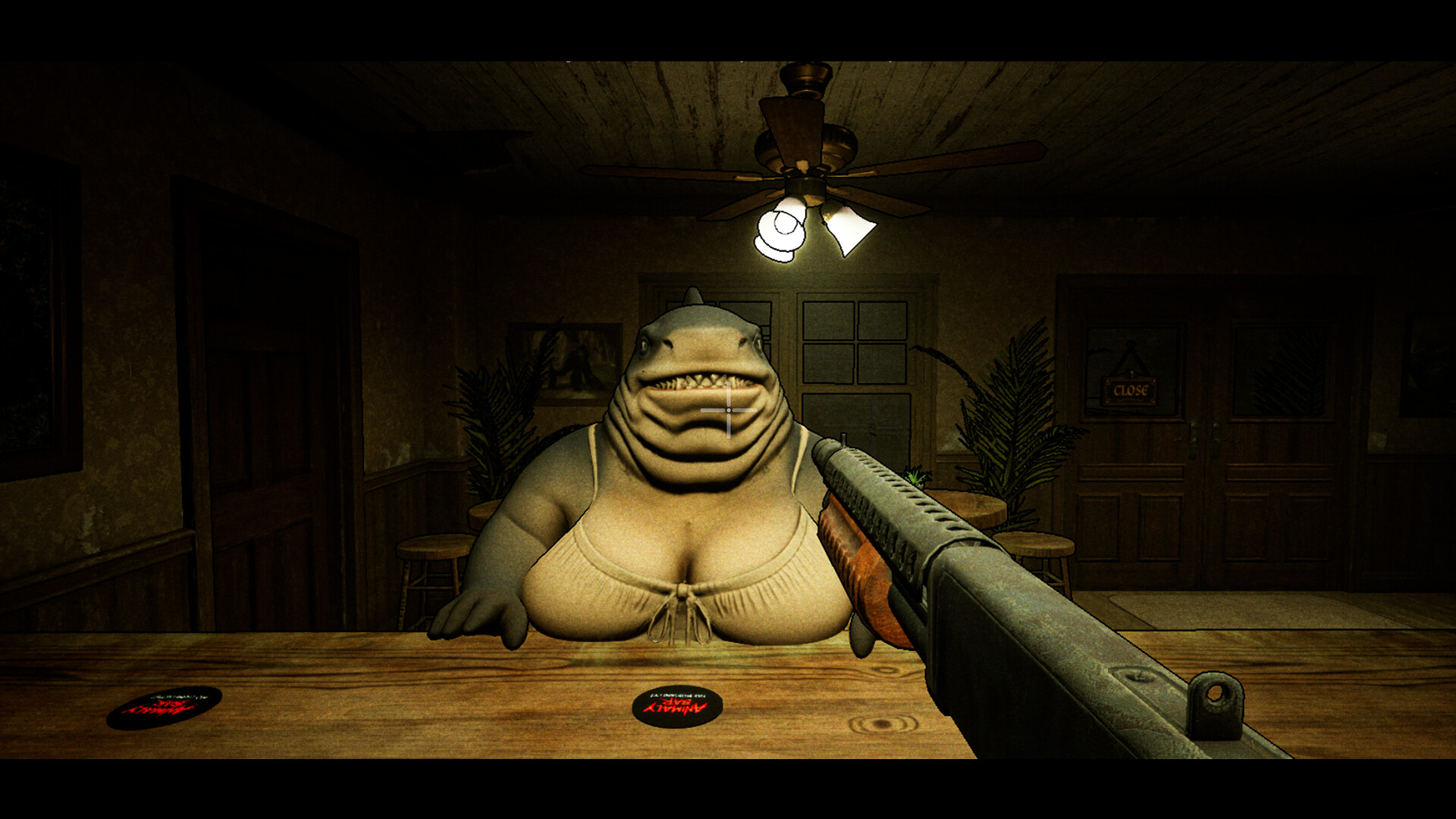
Sizing up a suspicious customer before making a callImage: Domnaier -
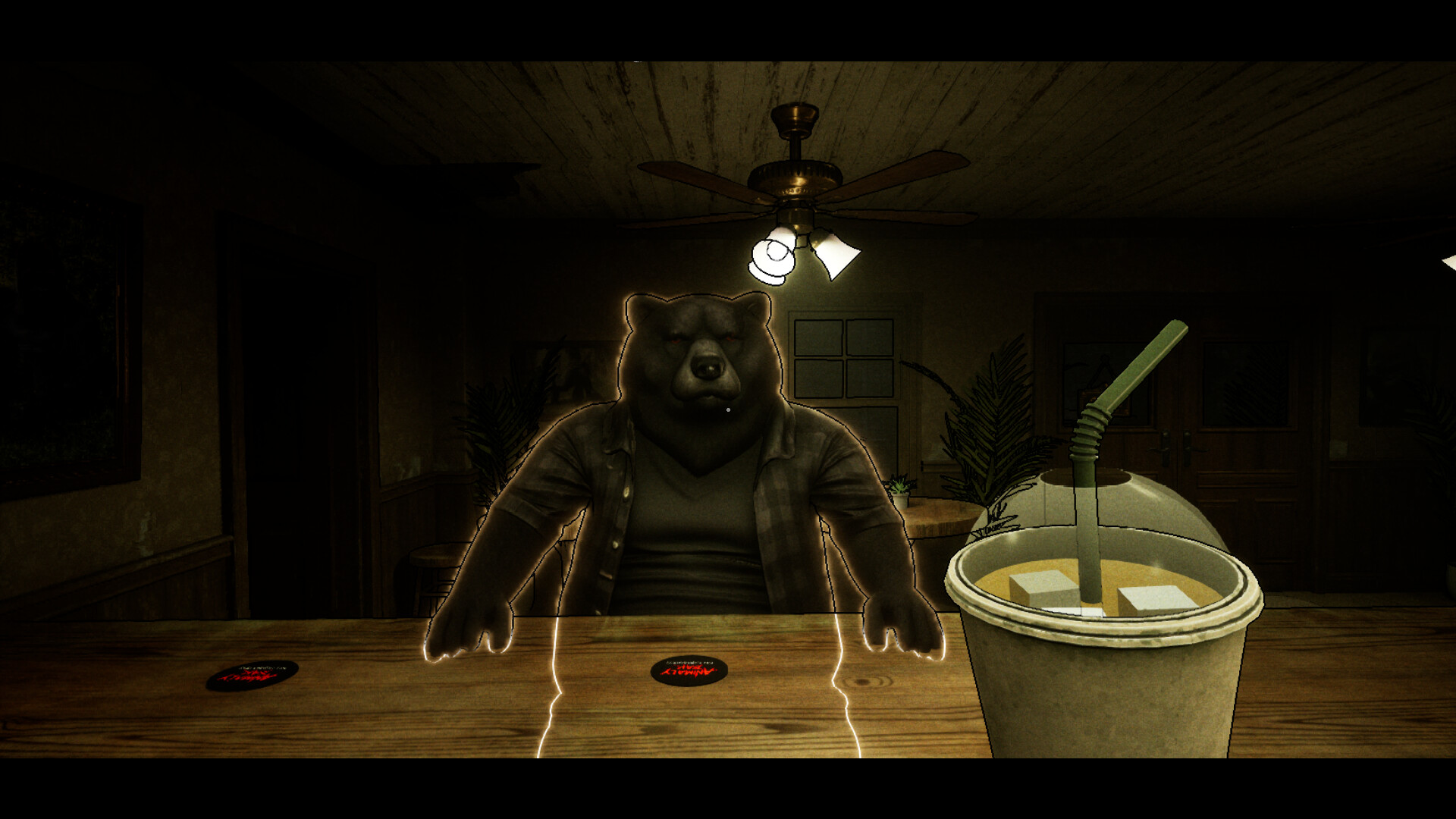
Scrutinizing a patron for signs of a human in disguiseImage: Domnaier -
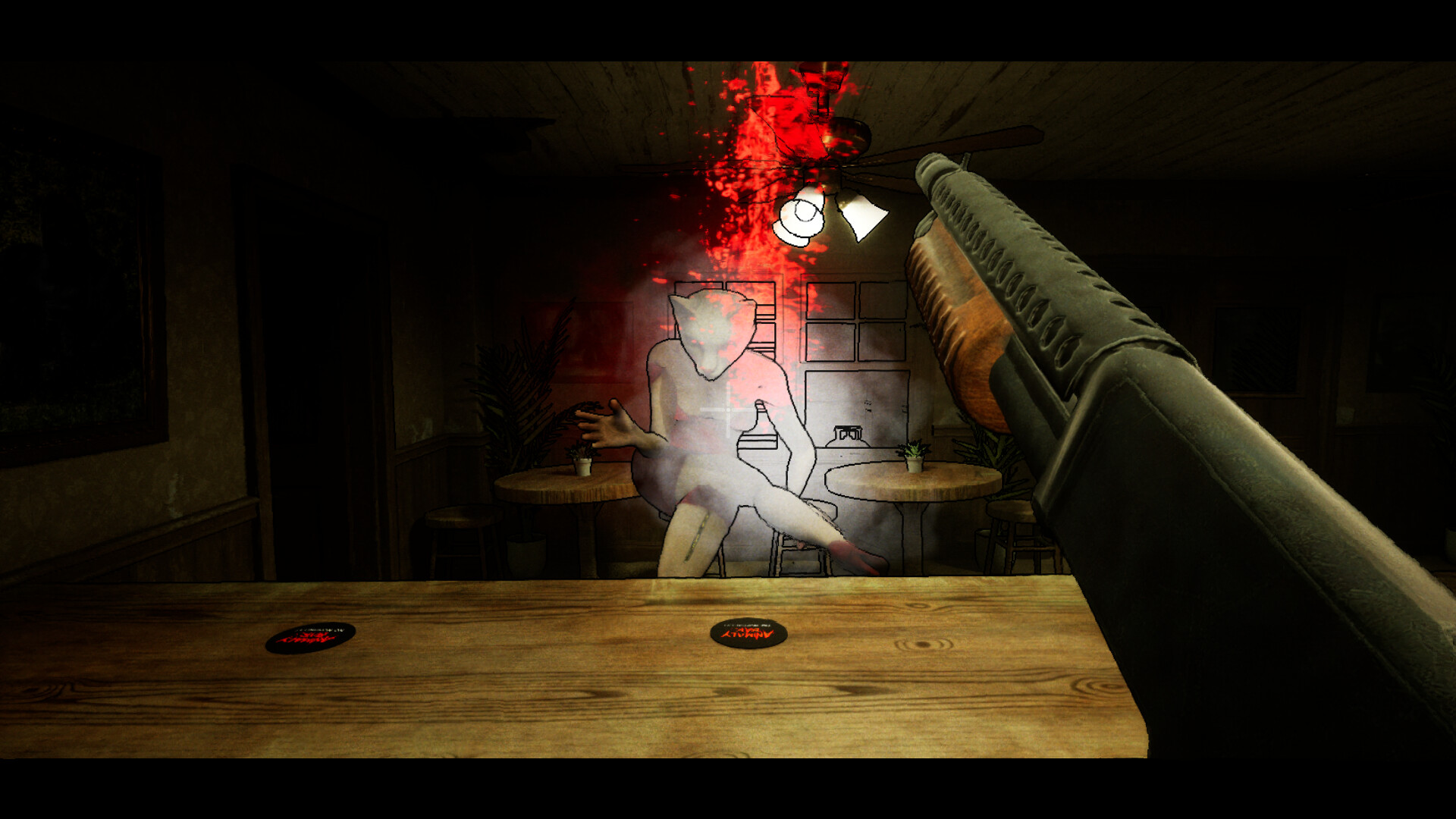
The consequences of pulling the trigger on the wrong, or right, targetImage: Domnaier -
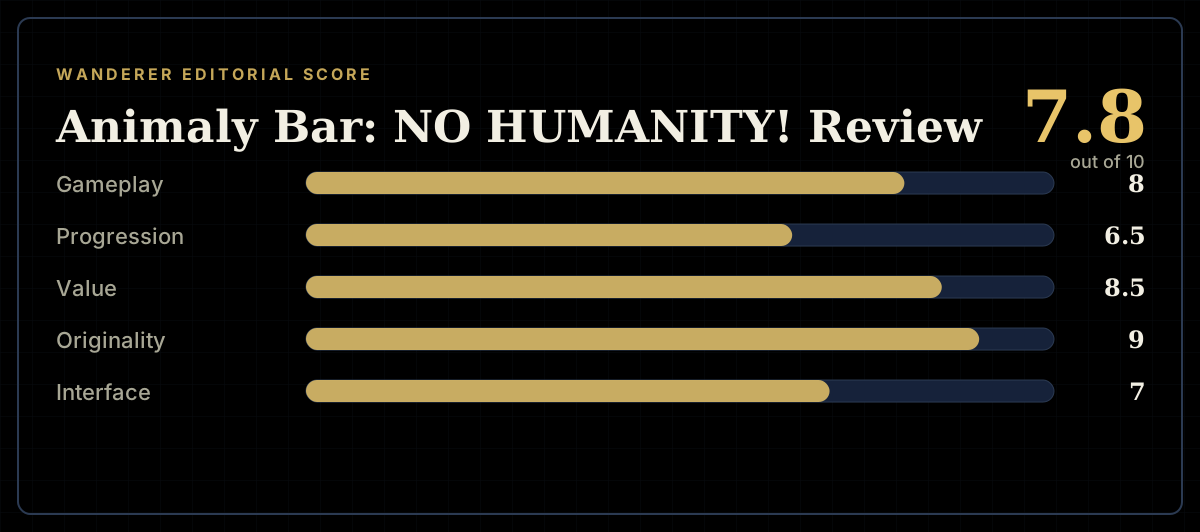
How the review scores each part of the gameWanderer Editorial -
The short versionWanderer Editorial