
Game review
Colony 19 Review: A Free VR Climb Worth Every Cent It Doesn't Cost
7.2 / 10
- Developer
- UCSC Games
- Publisher
- UCSC Games
- Released
- 25 November 2025
- Platforms
- ["PC (VR Only)"]
- Genre
- Horror / Climbing
- Monetisation
- Free
- Players
- false
The short version
Colony 19 hands VR players a Gorilla Tag-style climbing system and points them at the inside of an impossibly large, oppressive megastructure, and reviewers keep coming back to the same word for the result: scale. It's rough in places, short by design, and light on conveniences like saving, but as a free VR horror climb it consistently outperforms what its price tag would suggest.
Biggest strengths
- Reviewers across different headsets (Quest 2, Quest 3, Reverb G2) consistently single out the megastructure's sheer scale and oppressive atmosphere as the game's standout achievement
- Completely free with no monetisation of any kind, which multiple reviewers explicitly flag as remarkable given the quality of what's on offer
- Restrained horror design that leans on dread and environmental storytelling through terminal lore rather than cheap jump scares, which several reviewers specifically respect even while wishing for a few more scares
Biggest weaknesses
- A detailed review reports the game randomly teleporting the player into a freefall state, combined with no visible save feature, which is a serious problem in a climbing game where a mid-climb bug could cost significant progress
- The Gorilla Tag-inspired locomotion isn't fully physical -- one reviewer notes the player's body and arms pass through the environment rather than colliding with it, making movement feel clunkier than the games it's clearly inspired by
- The flashlight's limited charge is repeatedly flagged as awkward rather than tense, with reviewers suggesting it needs a physical model and better feedback, or a genuine threat to justify running out of light
Who it's for: VR owners who want a free, atmosphere-driven climbing horror game to fill an evening, rather than players seeking a long campaign or a polished commercial release.
Our recommendation: An easy recommendation at its price, provided you own VR hardware and go in expecting a short, rough-edged but genuinely impressive student-built experience rather than a full commercial horror game.
7.2 / 10
Colony 19, a free VR horror climbing game from student developer group UCSC Games, sits at 92% positive across 14 Steam reviews. A sample of seven English-language reviews spanning its November 2025 launch through mid-2026 shows a small but strikingly consistent reaction: reviewers keep describing an experience that feels far bigger than its price tag or credits list would suggest.
A Megastructure That Earns Its Name
The word that shows up again and again, unprompted, across different reviewers on different headsets is scale. One reviewer playing on a Reverb G2 calls the main environment "amazing" and says "you can clearly see where you need to go from the bottom, and look at how far you've gone from the top," adding that the "scale and lighting of the building helps creating oppressive atmosphere." Another, comparing it to Half-Life 2's set pieces, writes "I fully recommend giving this game a try if your into unthinkably large set pieces... I must have spent 3 whole hours crawling into every little place could find, and I'm certain I haven't seen it all yet." A third calls it simply "pretty cool megastructure climbing game." For a free, student-made project, that's an unusually consistent point of praise to find across an entire review sample.
Climbing That Borrows From Gorilla Tag, With Caveats
The locomotion system is repeatedly compared to Gorilla Tag: players grab surfaces and propel themselves around, climb ladders and handholds, and swim with a cupping motion through water sections. One reviewer calls it "a breeze" and praises how fluid it feels for exploring the structure. A more critical reviewer on a Reverb G2 pushes back on the comparison, though, noting that "player's body and arms are not physical objects and go through the environment, making it much more clunky" than true Gorilla Tag-style physicality, and separately flags the water effects as "terrible," saying it "barely looks or sounds like water" despite the swimming mechanic itself working fine. That's a specific, checkable technical gap between what the game reaches for and what it delivers.
Horror by Atmosphere, Not by Jump Scare
Colony 19 leans on dread and environmental storytelling rather than conventional scares, and reviewers are split on whether that's the right call. One reviewer explicitly respects the restraint: "I respect the decision to not have any jumpscares," while immediately noting a specific missed opportunity during a dark vents section where running out of flashlight charge in near-total darkness would have been "extremely effective" for a scare that never arrives. Two other reviewers echo a milder version of the same wish, one asking for the game to "add some jumpscares" and another suggesting something should actively hunt the player outside of one already-tense section "to create dread and panic when the light goes out." The consensus isn't that the game needs conventional horror -- it's that the restraint sometimes undersells the tension it's clearly capable of building.
Rough Edges Reviewers Flag by Name
Beyond the locomotion and lighting critiques, the sample surfaces two more specific complaints worth weighing seriously given how few reviews there are to draw from. One reviewer reports the game "randomly teleport[ing] you into freefall state," a bug with real consequences in a climbing game built around precise handhold-to-handhold movement. The same reviewer adds that the game "doesnt have save feature, at least i didn't see one" -- for a title that runs somewhere between 40 minutes and several hours depending on how thoroughly a player explores, the combination of an unpredictable freefall bug and no way to save progress is a meaningful risk rather than a minor inconvenience.
A Short Experience by Design
Multiple reviewers converge on runtime estimates in a fairly tight band: one clocks a full playthrough at "about 40-45 minutes," while another spent "3 whole hours crawling into every little place" without finishing everything the megastructure has to offer. That spread reflects how much the runtime depends on how thoroughly a player explores rather than inconsistent design -- the critical path appears short, but the structure rewards lingering. Several reviewers explicitly frame the short length as acceptable specifically because the game is free, with more than one suggesting a paid, expanded version would be a reasonable next step for the developers.
A Student Project With No Strings Attached
Colony 19 comes from UCSC Games, a university-affiliated student development group, and several reviewers explicitly call out how unusual it is for a free release to arrive with zero monetisation of any kind -- no ads, no cosmetic store, no paid expansion gate. One reviewer, who reviews VR titles regularly, writes that the developers "could have charged $5-10 bucks and I would have been very happy with the game," framing the free price as generosity rather than a sign of lower ambition. That context matters when weighing the rough edges above: a freefall bug or a missing save feature is a fair complaint regardless of price, but reviewers consistently extend more patience to student-made, cost-free VR projects than they would to a paid commercial release, and Colony 19's reception reflects that.
Final Verdict
Colony 19 is a free VR horror climb that consistently earns comparisons to games well outside its budget and credits list, built around a genuinely impressive sense of scale and a restrained, atmosphere-first approach to horror. The locomotion has real rough edges, the flashlight system needs rework, and a reported freefall bug paired with no save feature is a legitimate concern for anyone hoping to explore the whole structure in one sitting. None of that changes the core math, though: for zero cost, it's an easy recommendation for any VR owner willing to accept a short, occasionally buggy experience in exchange for genuinely memorable scale and atmosphere.
Pros and cons
Pros
- Reviewers across different headsets (Quest 2, Quest 3, Reverb G2) consistently single out the megastructure's sheer scale and oppressive atmosphere as the game's standout achievement
- Completely free with no monetisation of any kind, which multiple reviewers explicitly flag as remarkable given the quality of what's on offer
- Restrained horror design that leans on dread and environmental storytelling through terminal lore rather than cheap jump scares, which several reviewers specifically respect even while wishing for a few more scares
Cons
- A detailed review reports the game randomly teleporting the player into a freefall state, combined with no visible save feature, which is a serious problem in a climbing game where a mid-climb bug could cost significant progress
- The Gorilla Tag-inspired locomotion isn't fully physical -- one reviewer notes the player's body and arms pass through the environment rather than colliding with it, making movement feel clunkier than the games it's clearly inspired by
- The flashlight's limited charge is repeatedly flagged as awkward rather than tense, with reviewers suggesting it needs a physical model and better feedback, or a genuine threat to justify running out of light
Screenshots
-

Unsettling red figures glimpsed climbing a beam deep inside the megastructureUCSC Games -
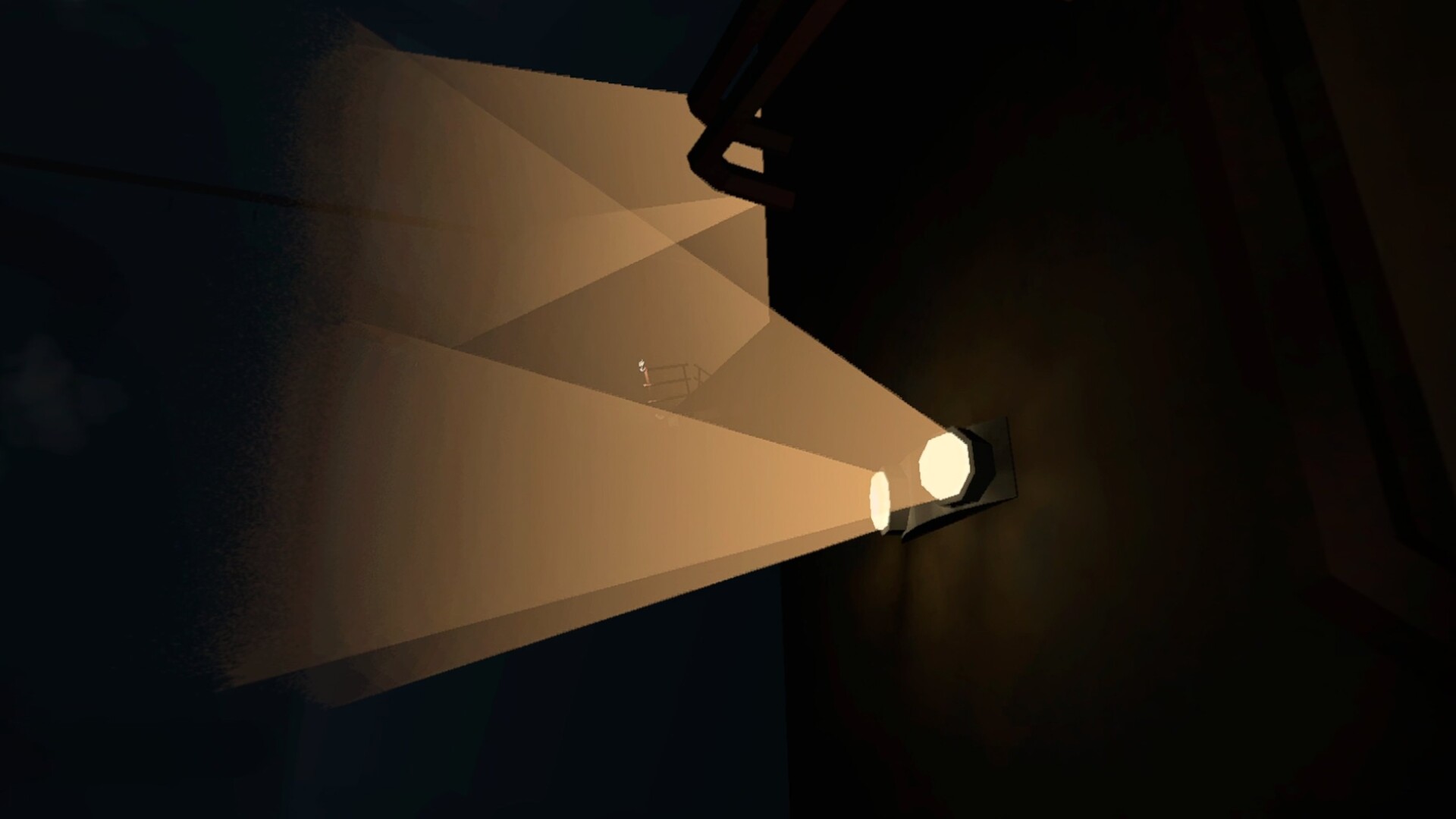
The flashlight is the main source of light while navigating the structure's walkwaysUCSC Games -
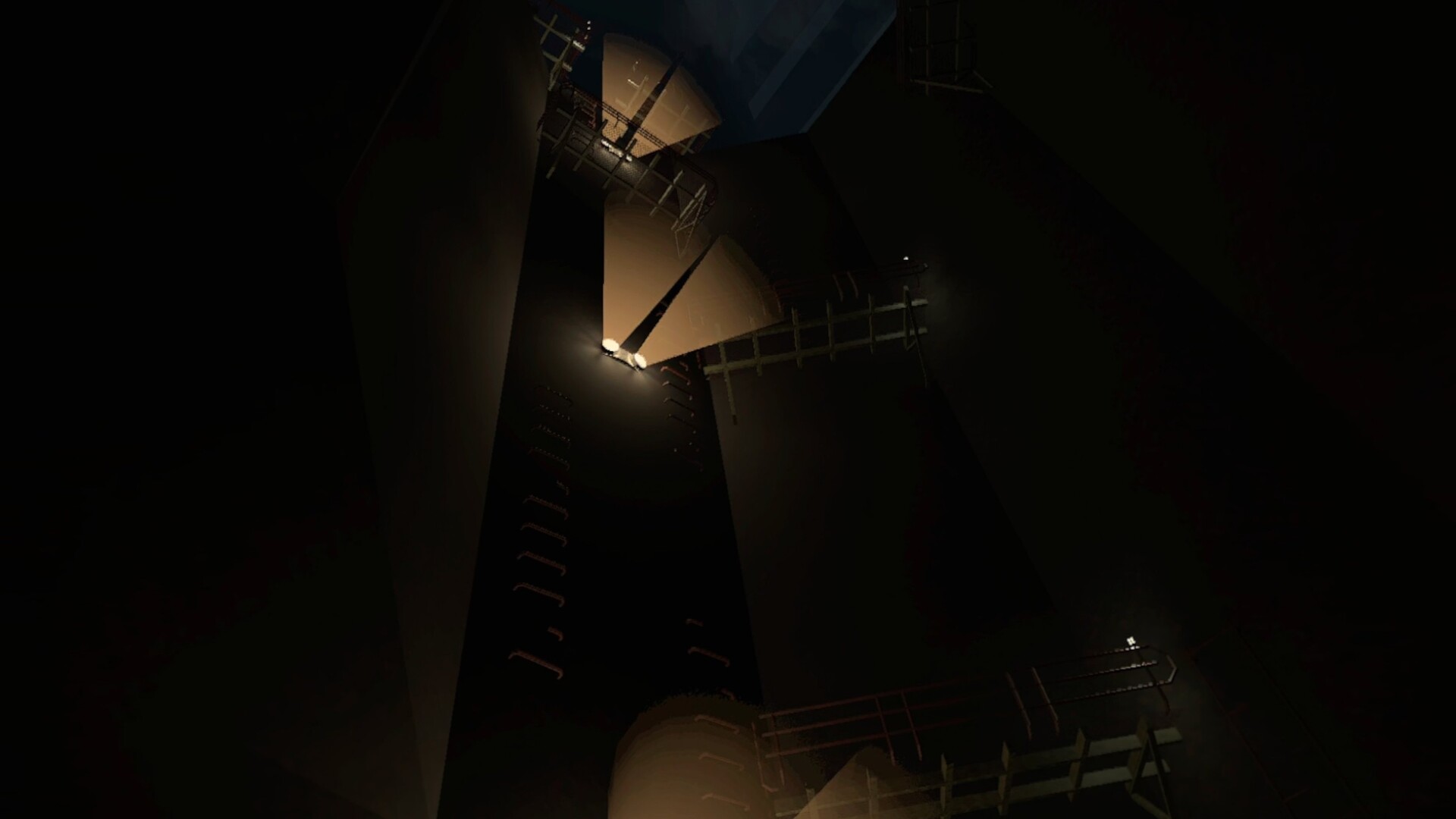
Ladders and catwalks stretch up into the darkness of the megastructure's interiorUCSC Games -
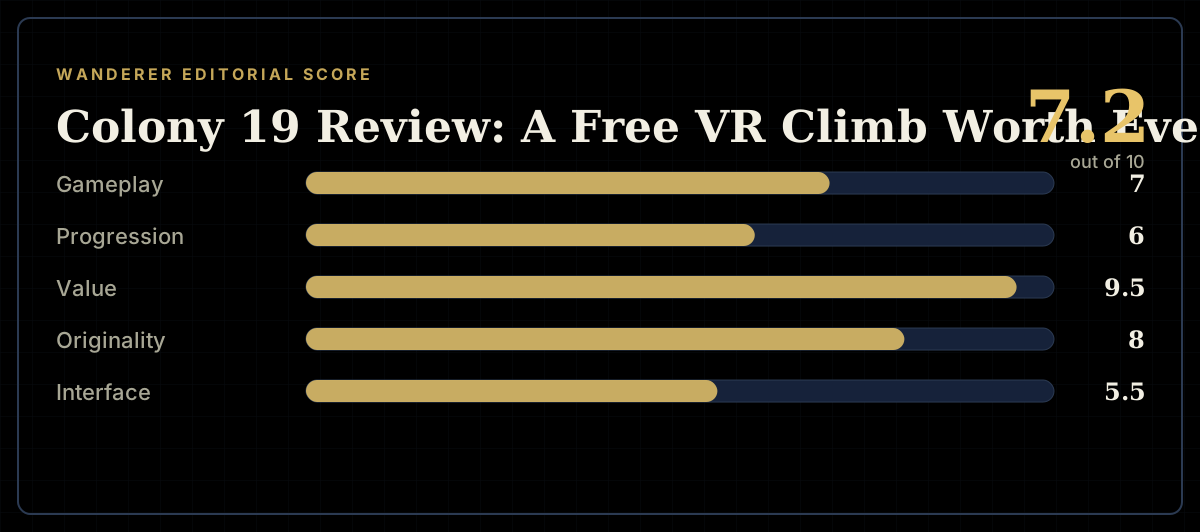
How the review scores each part of the gameWanderer Editorial -
The short versionWanderer Editorial