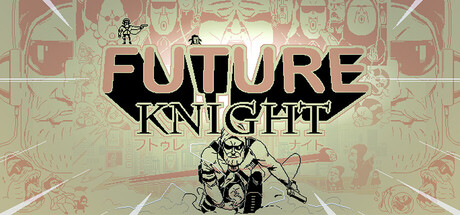
Game review
Future Knight Review: A Retro-LCD Shoot 'Em Up With an Acapella Soul
8.2 / 10
- Developer
- Studio Koba, Aeternum Game Studios
- Publisher
- Aeternum Game Studios
- Released
- 13 August 2026
- Platforms
- ["PC"]
- Genre
- Action / Shoot 'Em Up
- Monetisation
- Paid
- Players
- false
The short version
Future Knight fuses a vintage LCD-handheld art style with a fast, punchy shoot 'em up and an acapella soundtrack, and reviewers overwhelmingly describe it as one of the year's most distinctive indie surprises, even as one detailed review argues it's a slightly diminished retread of its developer's earlier work.
Biggest strengths
- Reviewers repeatedly single out the LCD ink-art visual style and animation as exceptional, with one calling the attention to detail 'phenomenal' down to how shadows appear before sprites do
- The acapella soundtrack draws consistent, specific praise, with one reviewer calling the game 'one of the most original and polished indie games on Steam this year' for how tightly the audio and combat sync
- Boss fights and pacing earn strong marks for clarity and flow, with reviewers noting 'not a single wasted second' and clearly telegraphed attack patterns that make failure feel fair
Biggest weaknesses
- One detailed review argues the game is a lesser version of the developer's previous release, Haneda Girl, describing it as 'practically the same game, but with less cool features'
- The same reviewer says in-game visuals look 'washed out and bland' compared to screenshots, with backgrounds that don't pop the way promotional art suggests
- Several reviewers note the campaign is short, roughly four to six hours for most players, with lasting appeal depending heavily on chasing par times and collectibles rather than raw length
Who it's for: Fans of tight, stylish action platformers like Cuphead who want a shorter, less punishing runtime, and anyone with fond memories of Tiger's old LCD handheld games.
Our recommendation: Highly recommended for its art direction, soundtrack, and combat feel, especially at a price that reviewers consistently call fair for a short but focused experience.
8.2 / 10
Future Knight sends a robot built from the remains of a 90s soap opera actor eight hours back in time to stop a cult leader from wiping humanity's memory, using a body-swap mechanic between the robot and a sentient tumor named Two More along the way. It's a deliberately strange premise wrapped around a tight 2D shoot 'em up styled after vintage Tiger LCD handhelds, and it's landed extraordinarily well: 98% positive across 115 Steam reviews. A sample of 19 English-language reviews from its August 2026 launch through mid-September shows a near-unanimous chorus of praise, with one significant dissenting voice worth weighing carefully.
An LCD Handheld Brought to Life
The visual conceit is Future Knight's calling card, and reviewers return to it constantly. One writes that "the art direction is amazing," highlighting small touches like sprite shadows appearing a beat before the sprites themselves, and screens visually breaking apart with bleeding liquid crystal when enemies die. Another calls it "awesome LCD ink art style and crisp animations," praising how the game "looks incredible and runs butter smooth." It's a genre often defined by pixel art, and Future Knight's willingness to chase a genuinely different retro reference point stands out clearly across the sample.
An Acapella Soundtrack That Reviewers Can't Stop Mentioning
Nearly as prominent as the visuals is the game's unusual acapella soundtrack, which multiple reviewers describe as tightly synced to the on-screen action. One reviewer calls the audio-gameplay sync "ridiculously well" matched, writing that "the acapella vocal rhythms match the frantic action so well that you just enter an instant flow state," and naming the game "one of the most original and polished indie games on Steam this year" partly on that strength. Another simply says the soundtrack is "gonna be stuck in my head for weeks."
Fast, Fair, Cuphead-Adjacent Combat
Reviewers who focus on mechanics compare Future Knight favorably to Cuphead, but specifically praise it for being less punishing while keeping the same commitment to precise, pattern-based combat. One reviewer explicitly asks whether players "crave the fast paced shooting action of Cuphead, but perhaps wish it wasn't quite such a punishing test of endurance," positioning Future Knight as an answer to that wish. Others echo the sentiment on pacing, with one writing "not a single wasted second or boring room," and another praising boss patterns as "super clear," so that "when you die, you know exactly what mistake you made."
A Detailed Dissent: Compared Unfavorably to the Developer's Earlier Work
The sample's most substantial critical review comes from a player who compares Future Knight directly to Studio Koba's previous release, Haneda Girl, arguing the new game is "practically the same game, but with less cool features and a new coat of paint on it." That reviewer specifically criticizes how the visuals hold up during actual play, saying that despite looking amazing in screenshots, "everything looks pretty washed out and bland" in motion, with backgrounds that fail to stand out from one another. The same review still recommends the game overall, but urges newcomers to try Haneda Girl first if they haven't already.
Short but Focused, With Modest Difficulty for Some
Multiple reviewers note the campaign runs on the shorter side, generally a handful of hours, with the same critical reviewer completing a full hard-mode run in 4.5 hours and describing it as not especially difficult, estimating they "would have breezed through this game if I was a casual player." Other reviewers report a more balanced challenge on hard mode, with one describing dying "plenty of times without too many in the same spot" while learning the game's mechanics. The gap between these accounts suggests the difficulty curve, like much of the experience, may land differently depending on genre familiarity.
Replay Value and Content Shape
Beyond the main campaign, reviewers point to time trials and collectibles as the main draw for extended play, alongside achievement hunting across difficulty modes. One reviewer notes it would take an additional playthrough on normal difficulty to unlock everything, a prospect they weren't personally drawn to after finishing on hard, while others describe genuine interest in chasing par times once the story wraps. That structure positions Future Knight closer to a tightly scoped arcade experience than a sprawling adventure, a shape most of the sample seems to appreciate rather than resent.
A Bizarre Premise Played With a Straight Face
Part of the sample's affection comes from how committed Future Knight is to its own absurdity. The framing device, that a cult leader accidentally wiped humanity's memory while washing her underwear, and that only a robot assembled from the remains of a 90s soap opera actor can fix it, sets a tone of deadpan silliness that carries through the level structure, with each of the game's eight levels representing a single hour counting down to the apocalypse. Reviewers who mention the story tend to treat it as a charming backdrop rather than a serious draw, but more than one credits it with giving the game a distinct personality that separates it from genre peers content to skip narrative framing entirely.
Price and Value
At NZ$23.49 with no discount at the time of writing, Future Knight sits at a mid-range indie price for a game most reviewers finish in well under ten hours, and the sample generally treats that as a fair trade for its focus and polish. One reviewer writes plainly that "for the price [I] feel the amount of content is warranted," a sentiment echoed across several shorter, enthusiastic reviews, while the more skeptical review in the sample still recommends the purchase despite finding less replay incentive than expected.
Final Verdict
Between its distinctive LCD-inspired art style, its acapella soundtrack, and combat reviewers consistently describe as punchy and fair, Future Knight earns its outstanding review score convincingly. The one detailed dissenting account serves mainly as a useful signpost toward the developer's earlier work, Haneda Girl, rather than a real knock against this one, and even that reviewer recommends Future Knight to fans of old-school platformers. For anyone drawn to a short, stylish, boss-focused action game with a genuinely unusual visual and audio identity, the sample makes a compelling, well-earned case.
Pros and cons
Pros
- Reviewers repeatedly single out the LCD ink-art visual style and animation as exceptional, with one calling the attention to detail 'phenomenal' down to how shadows appear before sprites do
- The acapella soundtrack draws consistent, specific praise, with one reviewer calling the game 'one of the most original and polished indie games on Steam this year' for how tightly the audio and combat sync
- Boss fights and pacing earn strong marks for clarity and flow, with reviewers noting 'not a single wasted second' and clearly telegraphed attack patterns that make failure feel fair
Cons
- One detailed review argues the game is a lesser version of the developer's previous release, Haneda Girl, describing it as 'practically the same game, but with less cool features'
- The same reviewer says in-game visuals look 'washed out and bland' compared to screenshots, with backgrounds that don't pop the way promotional art suggests
- Several reviewers note the campaign is short, roughly four to six hours for most players, with lasting appeal depending heavily on chasing par times and collectibles rather than raw length
Screenshots
-
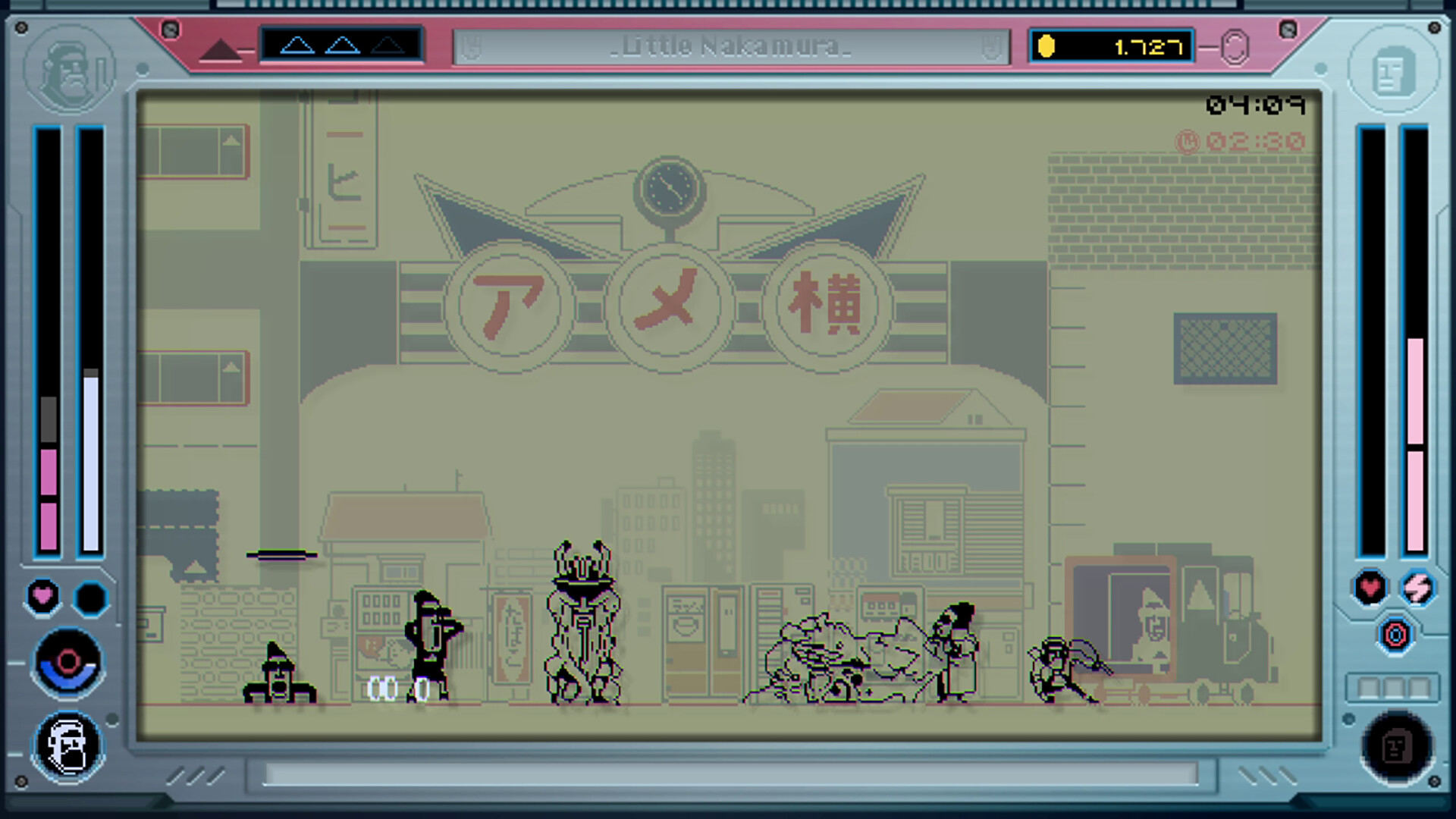
A street-level encounter styled after vintage LCD handheldsAeternum Game Studios -
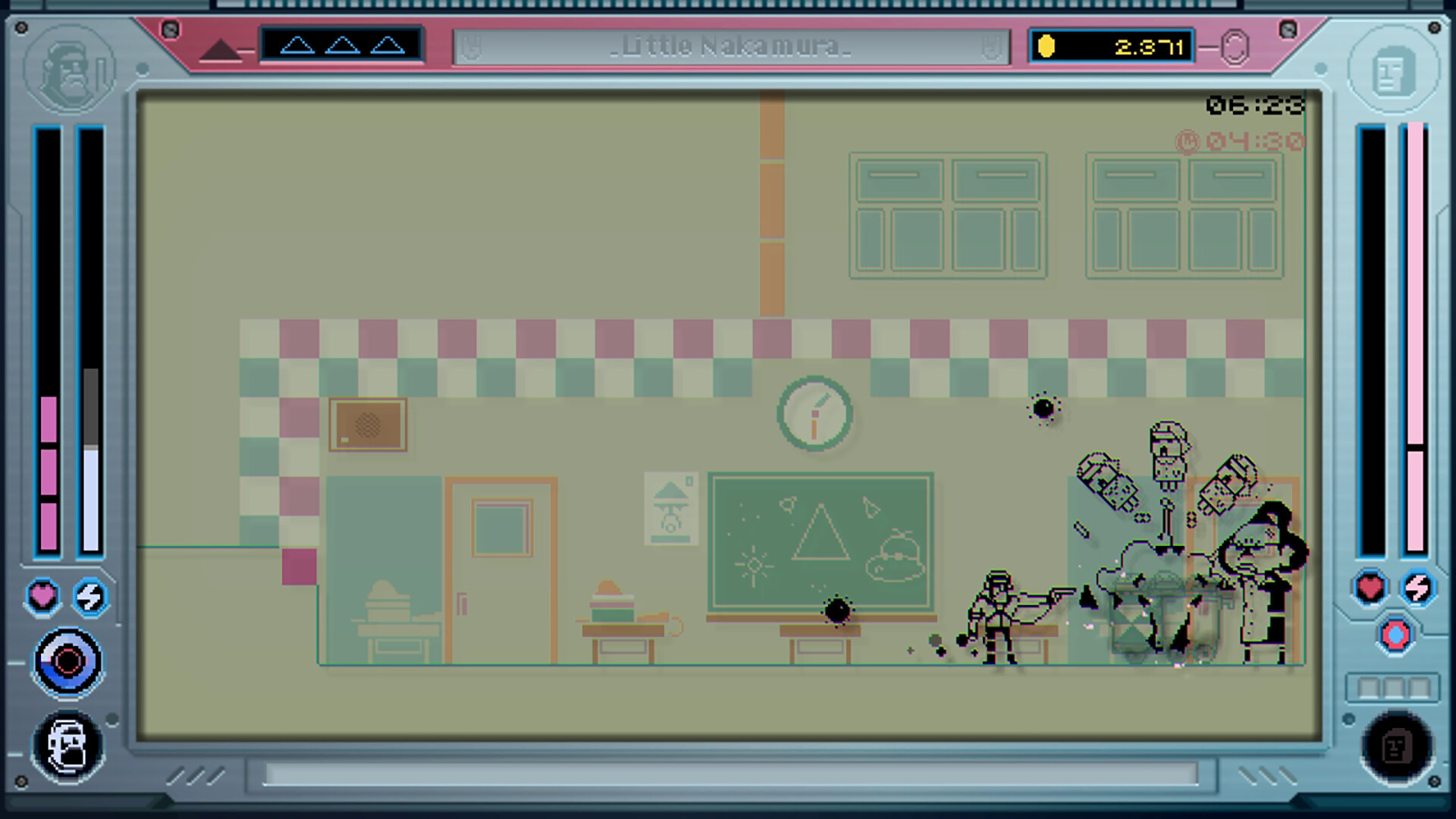
Combat inside a classroom overrun by grotesque enemiesAeternum Game Studios -
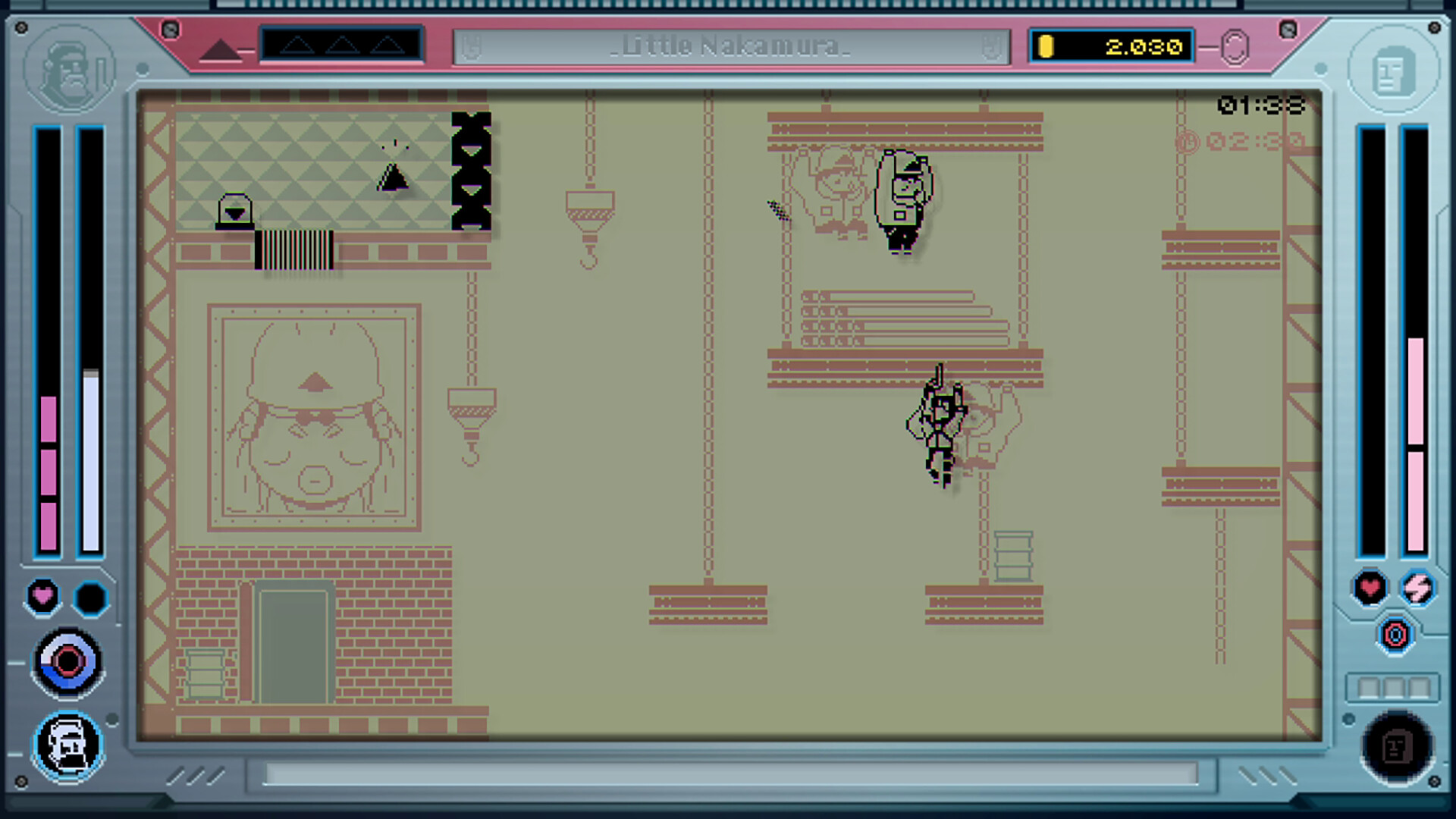
Platforming through an industrial stage in the game's pink LCD paletteAeternum Game Studios -
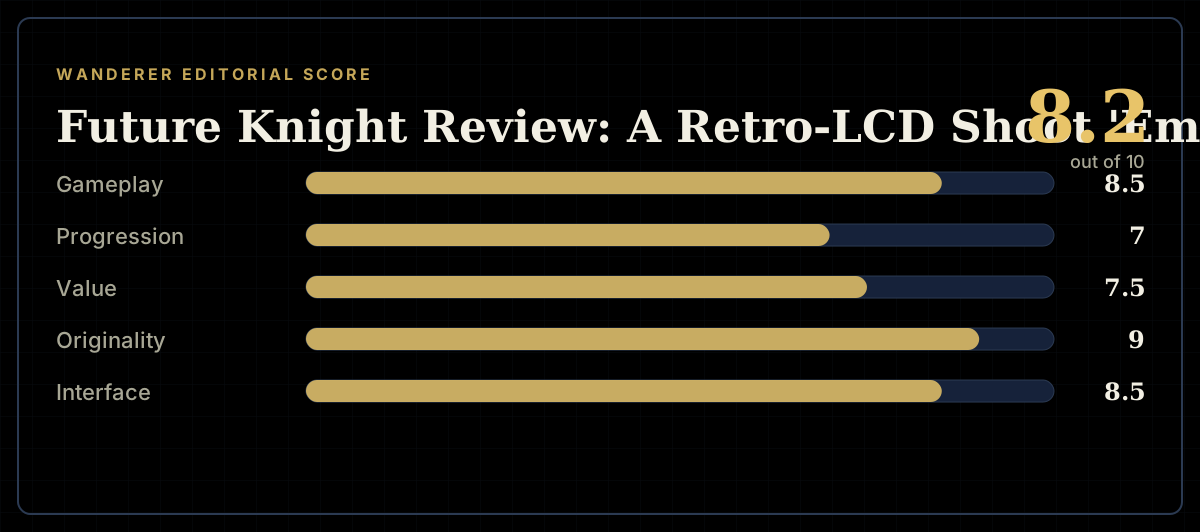
How the review scores each part of the gameWanderer Editorial -
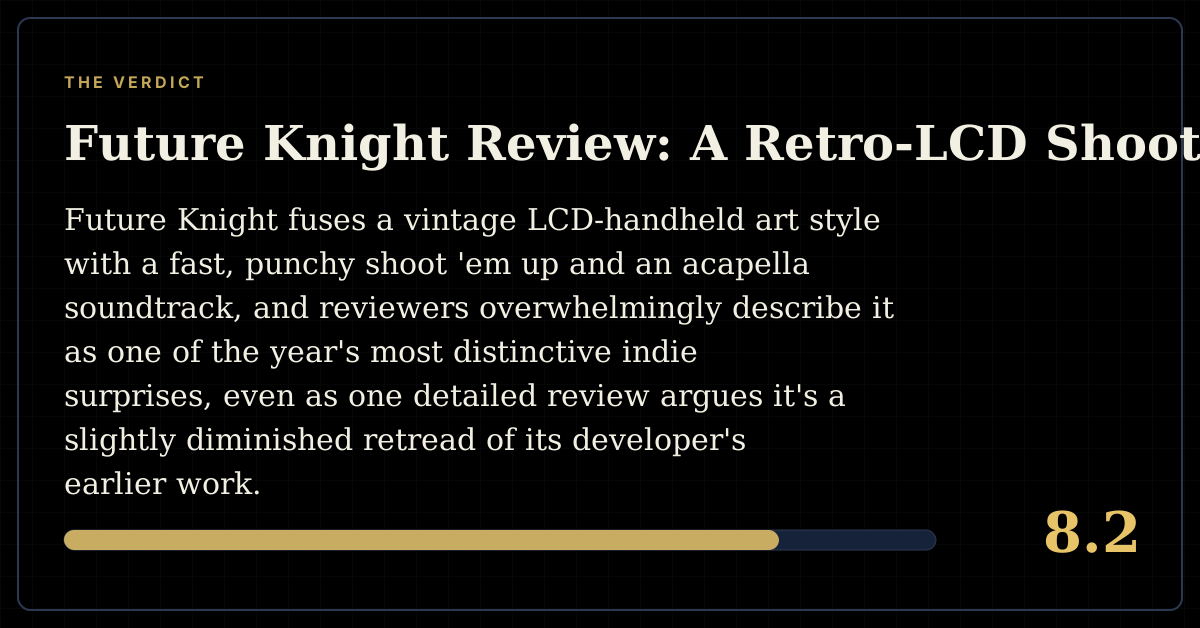
The short versionWanderer Editorial