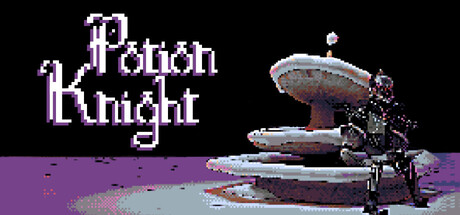
Game review
Potion Knight Review: A Free, Fast-Sliding Boomer Shooter With Rough Edges
6.8 / 10
- Developer
- Studio Knight Shift
- Publisher
- Studio Knight Shift
- Released
- 22 January 2026
- Platforms
- ["PC"]
- Genre
- Action / First-Person Shooter
- Monetisation
- Free to Play
- Players
- false
The short version
Potion Knight pairs slide-heavy boomer-shooter movement with potion-throwing combat and a distinctive PSX-inspired art style, and most reviewers who try it come away genuinely charmed by how the movement feels, even as several detailed accounts flag real friction in its level design, visibility, and onboarding.
Biggest strengths
- Reviewers repeatedly single out the sliding movement as the game's best feature, with one writing simply 'movement feels crazy please put it in another game'
- The PSX-inspired, illuminated-manuscript-influenced art style earns specific praise for giving the game its own identity rather than looking like 'another generic fantasy shooter'
- Being completely free and built around short, replayable runs draws consistent goodwill, with several reviewers saying they would have paid for a longer version
Biggest weaknesses
- A detailed critical review argues the level design doesn't reconcile its 'boomer shooter' and 'runner' halves, describing being 'shoved into unbreakable collision objects' mid-slide and occasionally getting stuck in meshes
- Multiple reviewers flag visibility problems in the snowy setting, one calling the snow 'blinding' and another noting red enemies can blend into red lighting
- A Not Recommended review argues the optional tutorial fails to teach required mechanics, specifically that sliding is needed to break the stage boundary, and criticizes the near-total lack of sound effects on potion impacts
Who it's for: Fans of fast-paced retro shooters and short, replayable score-chase games who don't mind some rough edges, rather than players expecting polished, well-tutorialized mechanics.
Our recommendation: Worth a look since it's free, especially for players who enjoy movement-focused shooters, but go in expecting a short, occasionally chaotic experience rather than a fully polished one.
6.8 / 10
Potion Knight is a free first-person shooter set in the snowbound village of Cronenberg, where a rogue alchemist has been fusing animals with weapons to defend his territory. Players fight through procedurally generated levels using a mix of a standard weapon and thrown potions, all built around fast, slide-heavy movement that several reviewers describe as the game's real hook. It sits at 90% positive across 77 Steam reviews, a strong but noticeably less lopsided score than many free indie shooters manage, and a sample of 18 English-language reviews from its January 2026 launch through September shows exactly why: real affection for the movement and art style, alongside specific, detailed friction points.
Movement as the Main Attraction
Across the sample, reviewers return again and again to how the game feels to move through. One writes, simply, "movement feels crazy please put it in another game," while another describes finding themselves "just spamming the slip 'n' slide upgrade" to fly through the map. A more detailed review calls the movement "probably what I enjoy most," describing how the game is built around staying constantly ahead of enemies rather than standing and shooting, which gives combat "a much faster feeling than I expected."
Throwing the Right Potion at the Right Enemy
The combat's other half asks players to match potion colors to enemy types, using colored rings around enemies as a visual cue, a detail one detailed reviewer specifically calls "a good game design choice." That same mechanic draws a genuine accessibility complaint elsewhere in the sample: one reviewer, describing themselves as slightly colorblind, reports repeatedly struggling to tell the yellow and red potions apart, leading to avoidable deaths. It's a small but concrete example of a mechanic that reads as clever on paper running into real friction for some players in practice.
A Distinctive PSX and Illuminated-Manuscript Look
Visually, Potion Knight draws consistent praise for standing apart from the crowded retro-shooter field. One reviewer describes the style as drawing on both PSX-era graphics and old illuminated manuscripts, giving enemies and environments "a really unusual look" that feels "rough and creepy in a way that suits the setting." Rather than reading as a limitation, the sample generally treats the low-fidelity aesthetic as a deliberate, successful choice that gives the game its own identity.
Where the Two Halves Don't Always Mesh
The sample's most detailed review makes a specific structural critique: that Potion Knight reads as "a merge of two different kinds of games," part tight boomer shooter and part momentum-based runner, without level design that always serves both halves at once. The reviewer describes being allowed to build up high slide speed only to be "shoved into unbreakable collision objects," and occasionally getting stuck in meshes like a fountain, interrupting momentum right as it builds. They'd have liked more rooftop-traversal sections that lean into the sliding and jumping directly, rather than keeping the runner elements largely separate from the shooting.
Visibility and Onboarding Complaints
A cluster of shorter, more critical reviews focuses on rougher practical issues. More than one reviewer calls the snowy environments genuinely hard to see in, with one writing the snow is "wayyyy too blinding," and another noting that red enemies can spawn near red lighting, making them difficult to spot in time. A Not Recommended review goes further, arguing the optional tutorial fails to teach an essential mechanic, that sliding is required to break through certain stage boundaries, and criticizing a near-total lack of sound effects when potions land on enemies, calling it a small but meaningful gap in feedback.
Short, Replayable, and Free
Nearly every reviewer, positive or critical, agrees the game is short, often clocking well under two hours for a full sense of its systems. Rather than counting against it, most reviewers treat that brevity as appropriate for a free release built around replayable runs and leaderboard chasing, with one writing they restarted "several, if not, countless times" to experiment with different upgrade combinations. Several reviewers explicitly say they would have paid for a longer, more content-rich version, a strong signal of goodwill for a game asking nothing up front.
A Small Studio's First Release
Several reviewers note, explicitly or implicitly, that Potion Knight reads as a first project from a small or solo studio, discovered by more than one player through the developer's TikTok presence rather than traditional marketing. One detailed critical reviewer, while listing several complaints, frames their review with that context in mind, writing that "if this was their first game, I'm excited to see what they'll make as they improve," treating the rough edges as growing pains rather than a dealbreaker. That framing recurs often enough across both positive and negative reviews that it's worth noting as part of how the sample collectively reads the game: as a promising foundation rather than a finished, polished product.
Final Verdict
Potion Knight earns real, specific praise for its slide-focused movement and its distinctive PSX-and-manuscript art style, and being completely free goes a long way toward softening its rougher edges. But the sample's more detailed reviews, both positive and negative, converge on the same underlying issue: a level design and onboarding experience that doesn't always keep pace with how good the core movement feels, from visibility problems in its snowy setting to collision hitches that interrupt a slide right as it gets going. For players drawn to fast, unusual, short-form shooters who can tolerate some friction, it's an easy recommendation at no cost; for anyone expecting a fully polished experience, the detailed critical accounts here are worth reading first, and the sample's own framing of the game as an early, promising effort seems like the fairest way to approach it.
Pros and cons
Pros
- Reviewers repeatedly single out the sliding movement as the game's best feature, with one writing simply 'movement feels crazy please put it in another game'
- The PSX-inspired, illuminated-manuscript-influenced art style earns specific praise for giving the game its own identity rather than looking like 'another generic fantasy shooter'
- Being completely free and built around short, replayable runs draws consistent goodwill, with several reviewers saying they would have paid for a longer version
Cons
- A detailed critical review argues the level design doesn't reconcile its 'boomer shooter' and 'runner' halves, describing being 'shoved into unbreakable collision objects' mid-slide and occasionally getting stuck in meshes
- Multiple reviewers flag visibility problems in the snowy setting, one calling the snow 'blinding' and another noting red enemies can blend into red lighting
- A Not Recommended review argues the optional tutorial fails to teach required mechanics, specifically that sliding is needed to break the stage boundary, and criticizes the near-total lack of sound effects on potion impacts
Screenshots
-
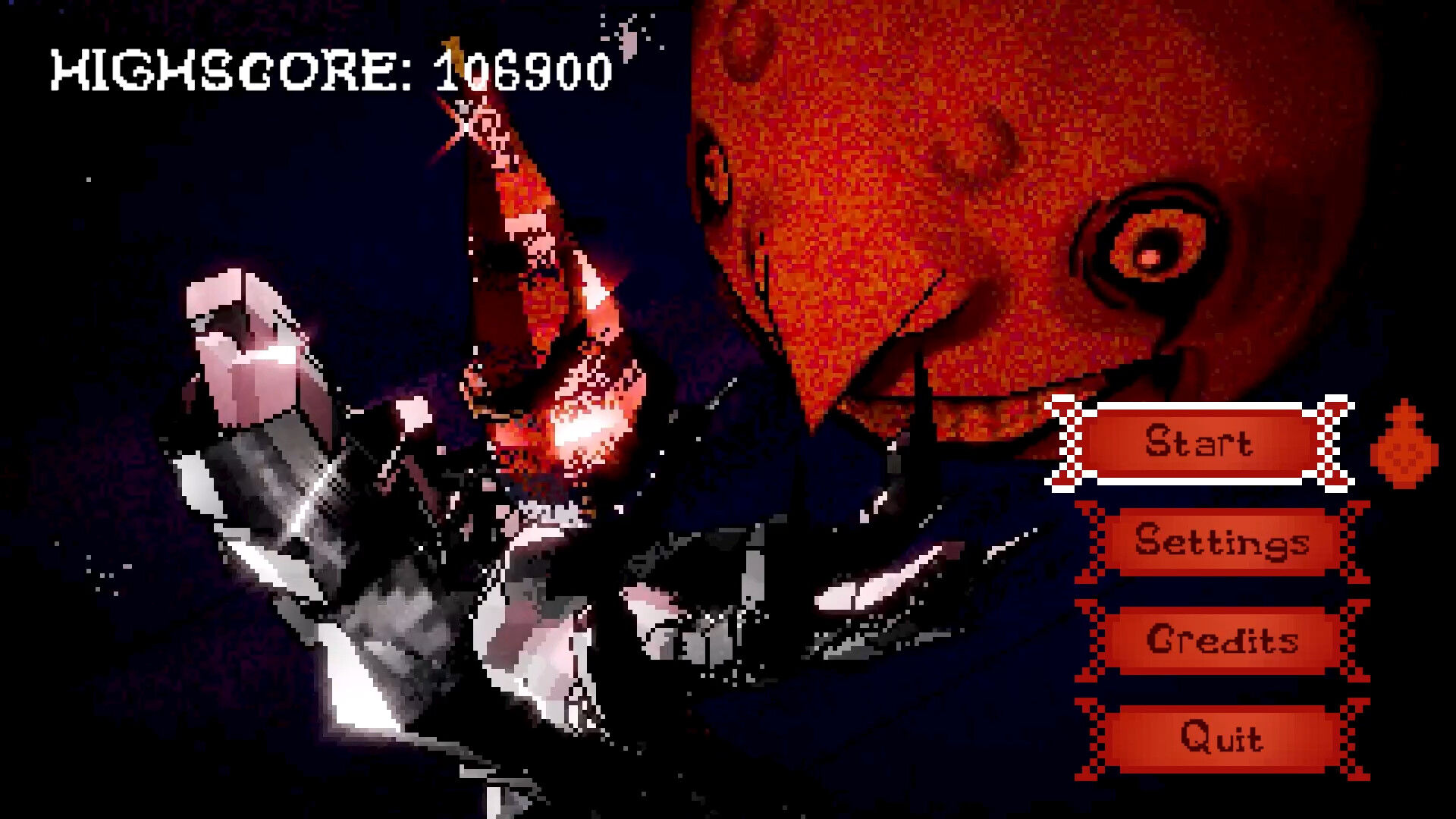
The retro PSX-inspired main menu, with a monstrous face looming in the backgroundStudio Knight Shift -
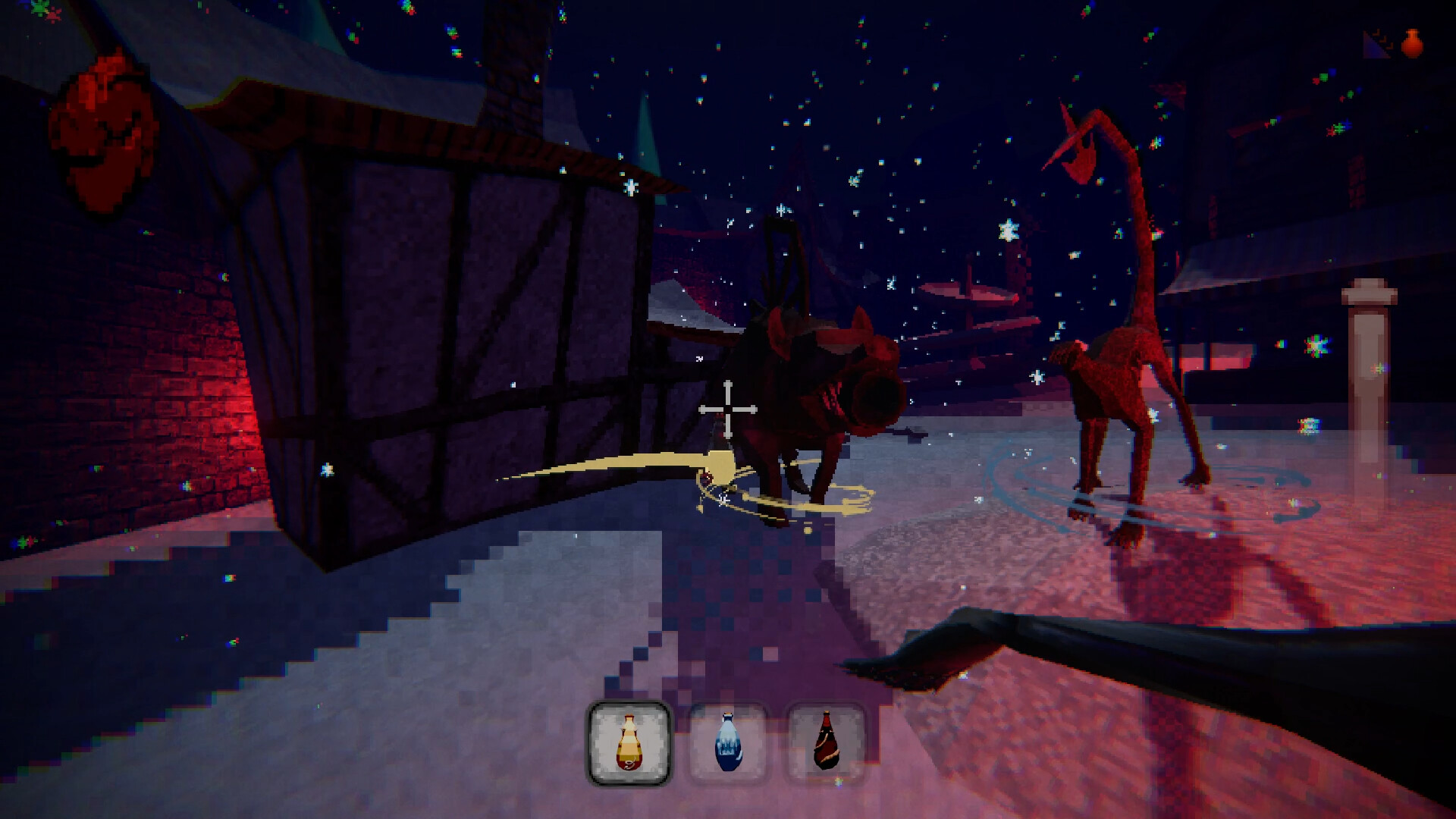
Throwing a potion at a weaponized enemy in the dim village of CronenbergStudio Knight Shift -
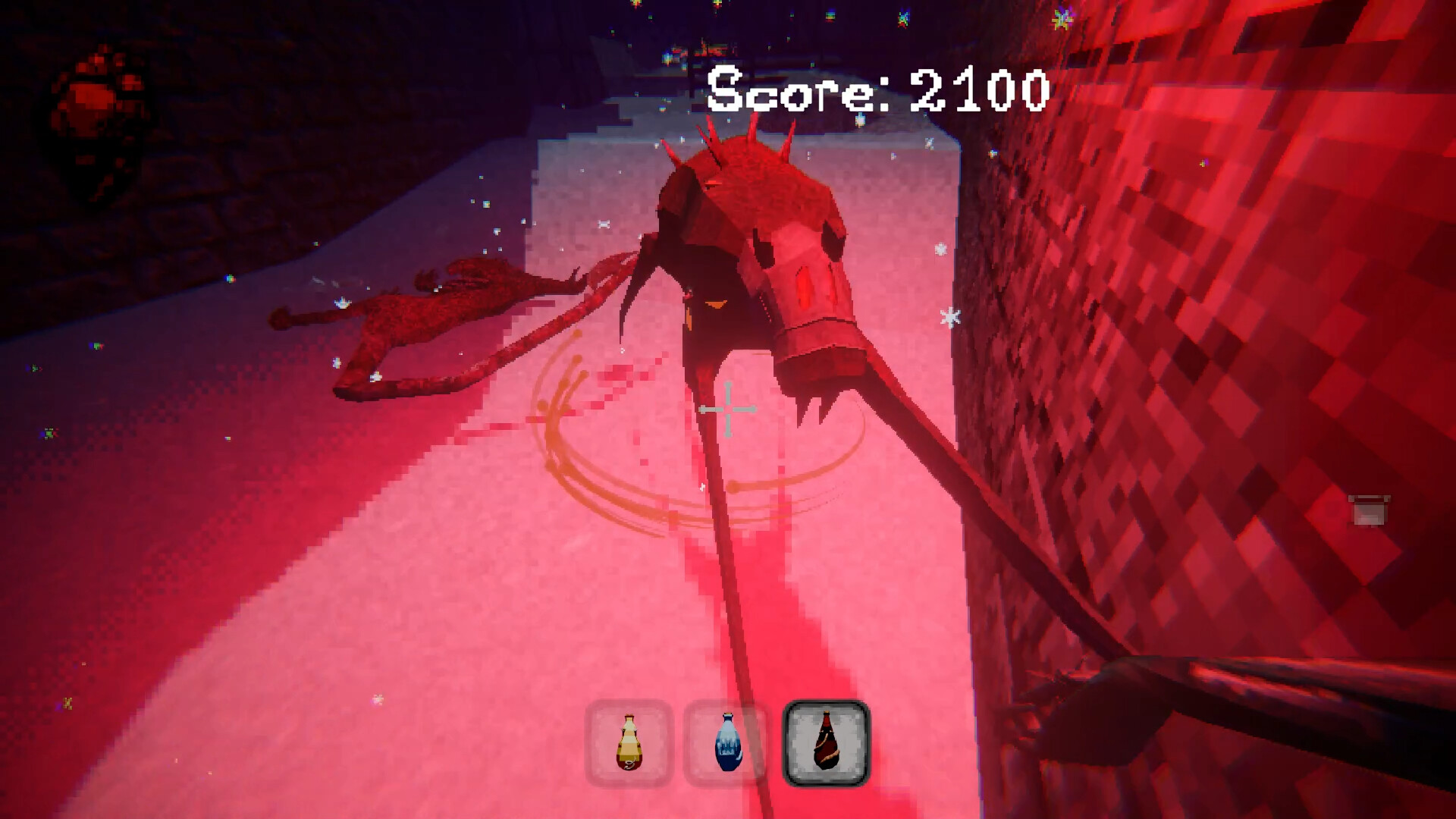
A red-tinted encounter that illustrates reviewers' complaints about visibilityStudio Knight Shift -
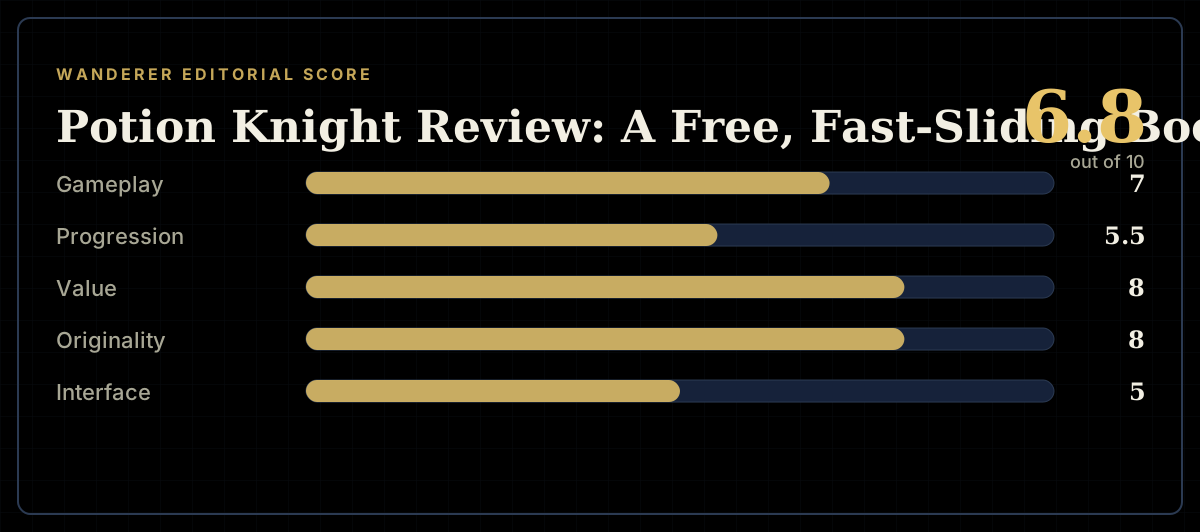
How the review scores each part of the gameWanderer Editorial -
The short versionWanderer Editorial