
Game review
Wasteland Outpost Review: An Early-Days PvPvE Shooter Winning Over Its First Players
6.8 / 10
- Developer
- Tarakan Game Studio
- Publisher
- Tarakan Game Studio
- Released
- 2 June 2026
- Platforms
- ["PC"]
- Genre
- Action / Survival Shooter
- Monetisation
- Paid
- Players
- true
The short version
Wasteland Outpost is a tactical top-down PvPvE shooter that compresses base building, mutant survival, and player raiding into tight 40-minute matches, and its small early review pool is uniformly enthusiastic about the tension that mix creates — though with only a handful of reviews on record, it's still an open question whether that enthusiasm holds once the launch crowd moves on.
Biggest strengths
- Every available reviewer specifically praises the tension of the scavenge-build-siege loop, with several citing the combination of incoming mutant hordes and unpredictable human players as the standout feature
- Reviewers repeatedly call out specific mechanics rather than vague praise — random events like airdrops, anomalies, and traders, plus tactics like baiting an enemy's base with a mutant, suggest real systems underneath the hype
- Multiple reviewers highlight the price as strong value for a 40-minute match format with this much replay variety
Biggest weaknesses
- The entire available review sample is positive, with no critical voice yet on record to weigh against the praise — worth treating that as a data gap rather than a verdict
- Reported playtimes cluster tightly around 2.5 to 5 hours, consistent with an enthusiastic first weekend rather than sustained long-term engagement
- As a small multiplayer-dependent release, its appeal hinges on maintaining an active player base, which none of the available reviews can speak to this early
Who it's for: Fans of tense, session-based survival shooters who like the idea of building something worth defending, provided they're comfortable being early adopters of a small multiplayer game.
Our recommendation: Worth trying for PvPvE fans who want short, high-stakes matches, but go in aware the review sample is thin and the long-term player population is still unproven.
6.8 / 10
Wasteland Outpost is a top-down PvPvE shooter from Tarakan Game Studio that squeezes base building, mutant survival, and player-versus-player raiding into 40-minute matches. At the time of writing it sits at 100% positive across a small pool of 11 Steam reviews, all posted within days of each other shortly after its June 2026 launch. That's a genuinely promising early signal, but it's also a small enough sample that it's worth reading carefully rather than taking at face value.
A Tight Loop of Building, Raiding, and Surviving
The reviews that are available describe a consistent, specific core loop: scavenge resources, fortify a base, and survive both a nightly mutant onslaught and the threat of other players raiding or allying with you. One reviewer sums it up as "the tension of building your base while knowing night and mutants are coming," adding that "unpredictable players who might raid or ally with you" produce "some of the wildest, most memorable matches" they've played all year. Another describes it more directly as "scavenge, build, survive, repeat," compressing "40 minutes into pure chaos in the best way." The consistency across reviewers, each describing the same mechanical beats in their own words, is a reasonably strong signal that the loop is functioning as designed rather than being described secondhand.
Specific Systems, Not Just Vague Hype
What separates this sample from a purely promotional-sounding one is how specific the individual mechanics called out are. One reviewer highlights "random events mean every match throws something new at you: airdrops, anomalies, traders," while another describes "baiting an enemy's base with a mutant boss" as "the most satisfying big-brain play I've pulled off in a shooter." A third reviewer frames the appeal around decision-making under pressure: "the tension of deciding 'do we turtle or do we raid.'" These are concrete, checkable claims about actual systems rather than the kind of generic "amazing game, highly recommend" copy that tends to accompany manipulated review activity, and none of them describe features the game doesn't actually have.
The Review Sample Is Thin, and That Matters
With only 11 total reviews, all positive, and all posted within a tight window right after launch, this is a genuinely small dataset to judge a game by. There is no critical review yet on record to weigh against the praise, which means readers don't currently have access to a counterargument, a reported bug, or a frustration point from someone who bounced off the game. That absence isn't itself suspicious here; the content is specific and internally consistent in a way that reads as real player experience rather than fabricated praise. But it is a genuine limitation worth being upfront about, and it's different from reviewing a game with a large, seasoned review base where negative and positive voices have had time to balance each other out.
Playtimes Suggest Early Enthusiasm, Not Proven Longevity
Reported playtimes across the sample cluster tightly between roughly 2.5 and 5 hours, which lines up with a launch-weekend crowd trying the game for the first time rather than players who've logged extended time with it. One reviewer does note "highly anticipated future updates," suggesting an expectation of ongoing content, but nothing in the available sample speaks to whether the loop stays engaging past a handful of matches, or whether the small early player base is large enough to keep PvP matchmaking healthy once the initial launch attention fades. For a game whose appeal is explicitly built around unpredictable human opponents, population size over time is arguably the single biggest open question the current review sample can't answer.
Price and Format Both Land Well With Early Adopters
At NZ$16.29, more than one reviewer specifically calls out the price-to-content ratio as strong, with one describing it as "an absolute steal" for the replayability on offer. The 40-minute match length also draws consistent praise as a format choice: short enough to fit into a single sitting, long enough to build real tension around the day/night cycle and the threat of other players. That combination of an approachable session length and a below-average price point for the genre is a reasonable pitch for players curious about PvPvE shooters but wary of committing to a longer session-based game.
Where the Genre Comparisons Land
Reviewers reach for a handful of different reference points when describing the game, which is itself a small tell about how it's being received. One calls it "an ambitious mashup of shooter, strategy, and survival," another frames it as "a great entry point if you're new to survival shooters," praising intuitive controls and a building system that "pulls you in without overwhelming you." A third reviewer, further along the difficulty curve, frames the appeal around genuinely strategic PvP decision-making rather than raw shooting skill: "the base-building layer adds a real strategic dimension most competitive games don't have." That spread, from newcomer-friendly to strategically deep, suggests the current design is doing a reasonable job serving more than one kind of player, though it's also exactly the kind of broad appeal that early reviews tend to emphasize before a wider audience starts finding the edges and rough spots that a bigger sample would surface.
Final Verdict
Wasteland Outpost's early reception is genuinely encouraging: a specific, consistent, mechanically detailed loop of building, scavenging, and surviving both mutants and other players, priced accessibly and packaged into tight 40-minute matches. But the review sample backing that reception is small, uniformly positive, and clustered around a single launch weekend, which means the game hasn't yet been tested by the kind of broader, more critical audience that reveals a title's real staying power. It's a reasonable pick for PvPvE fans drawn to the concept, with the caveat that anyone buying in early is, to some extent, betting on a player base that hasn't proven itself yet.
Pros and cons
Pros
- Every available reviewer specifically praises the tension of the scavenge-build-siege loop, with several citing the combination of incoming mutant hordes and unpredictable human players as the standout feature
- Reviewers repeatedly call out specific mechanics rather than vague praise — random events like airdrops, anomalies, and traders, plus tactics like baiting an enemy's base with a mutant, suggest real systems underneath the hype
- Multiple reviewers highlight the price as strong value for a 40-minute match format with this much replay variety
Cons
- The entire available review sample is positive, with no critical voice yet on record to weigh against the praise — worth treating that as a data gap rather than a verdict
- Reported playtimes cluster tightly around 2.5 to 5 hours, consistent with an enthusiastic first weekend rather than sustained long-term engagement
- As a small multiplayer-dependent release, its appeal hinges on maintaining an active player base, which none of the available reviews can speak to this early
Screenshots
-
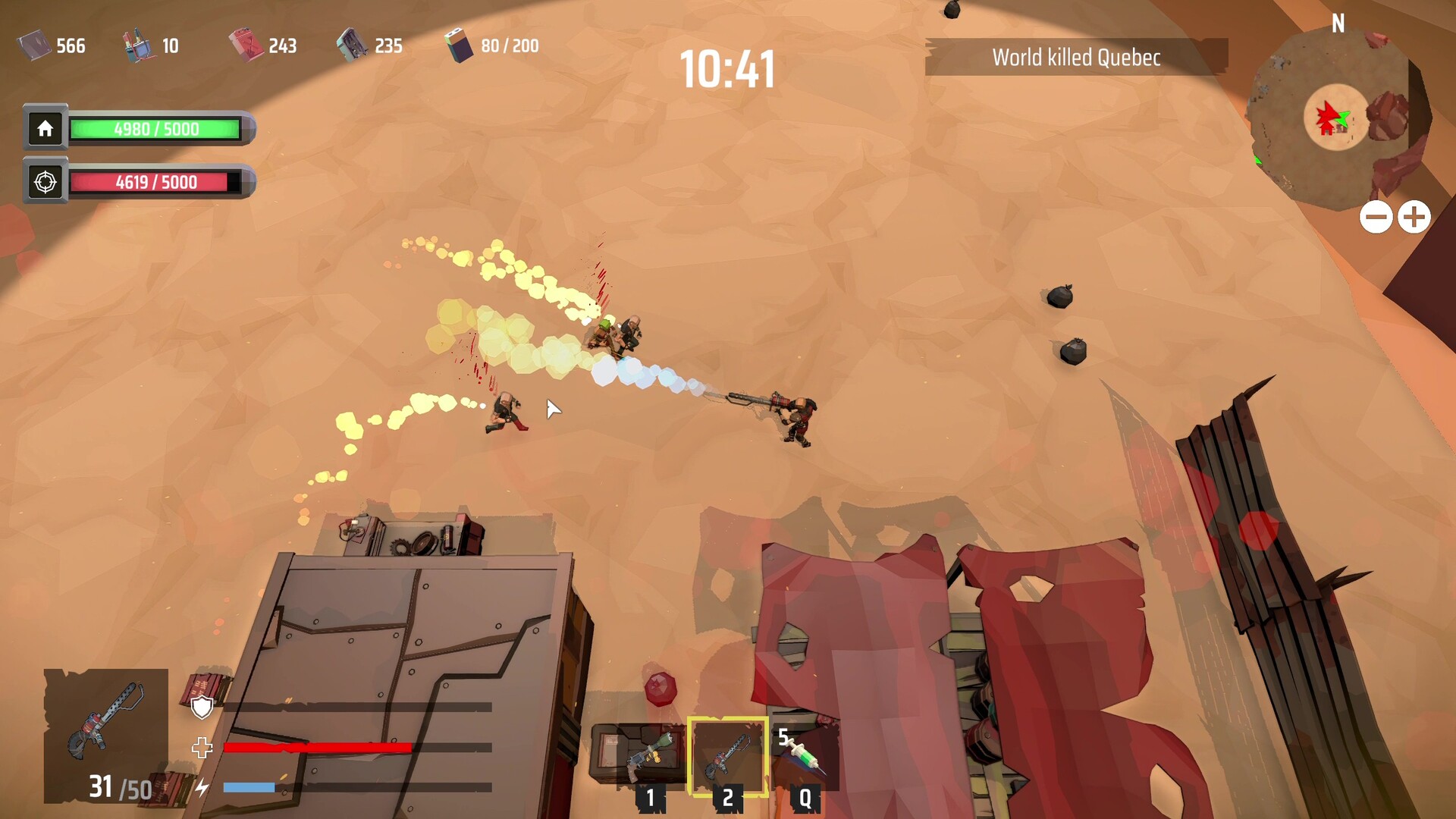
A tense firefight breaks out near a fortified outpost wall in the wastelandTarakan Game Studio -
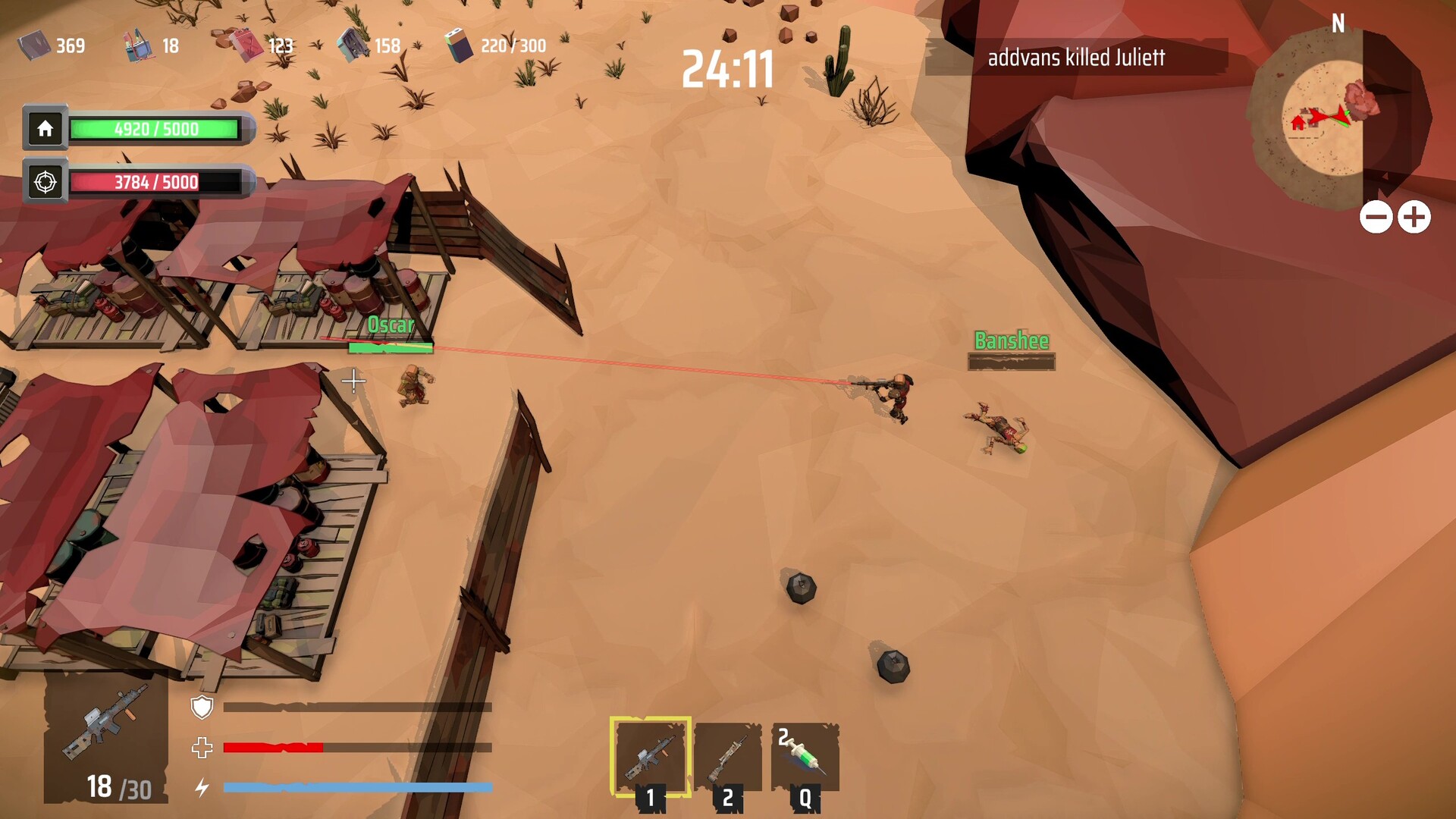
A player trades shots near their base's scavenged shelters as a rival goes downTarakan Game Studio -
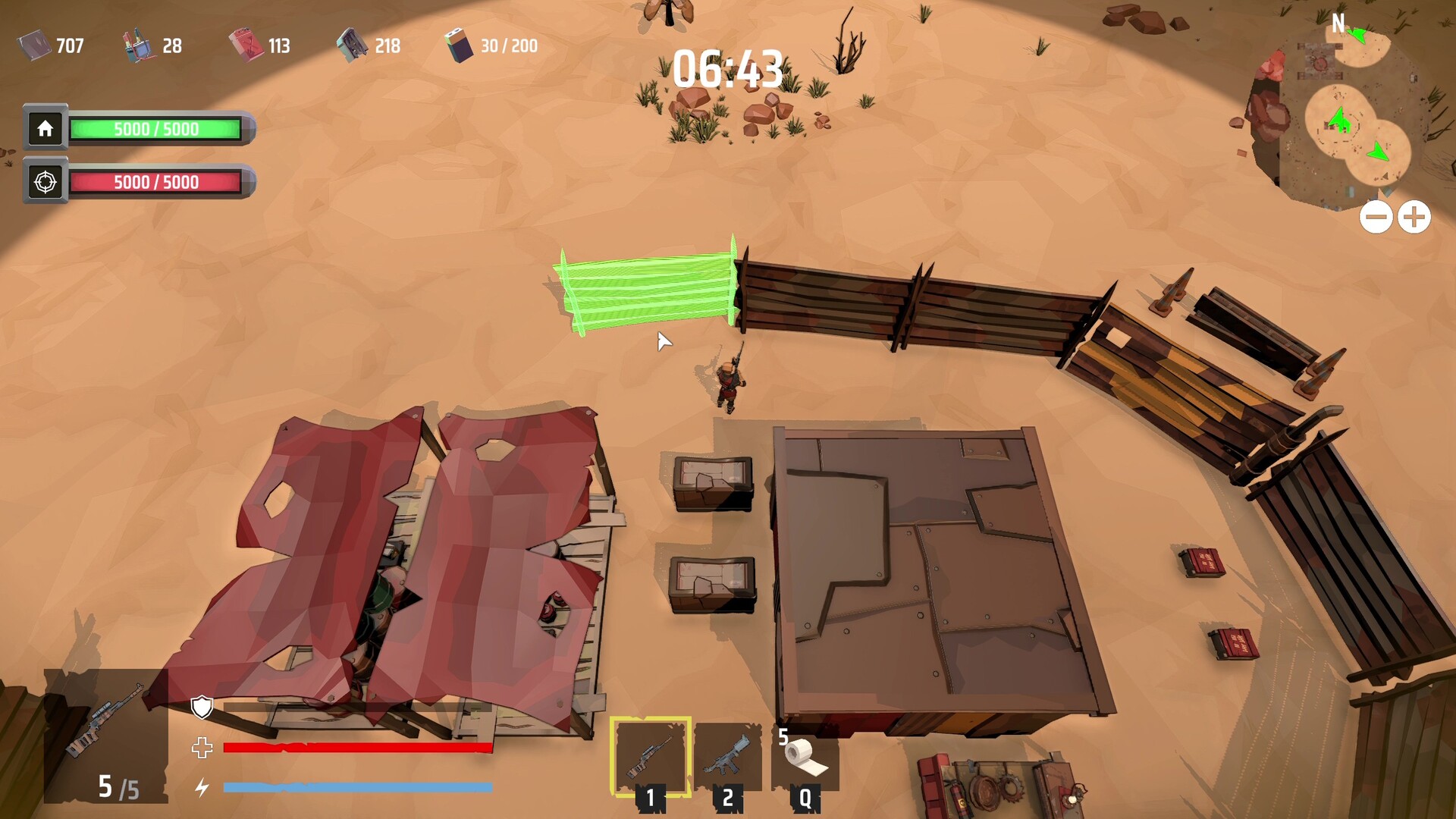
A fortified base perimeter, built from scavenged fencing and sheet metalTarakan Game Studio -
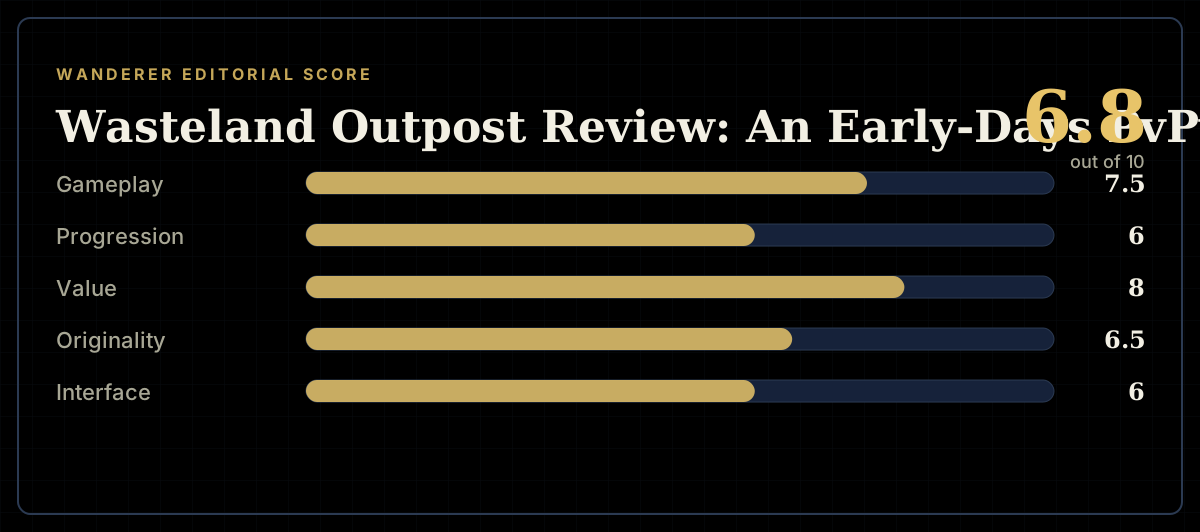
How the review scores each part of the gameWanderer Editorial -
The short versionWanderer Editorial