
Game review
Super Drift Blade Review: A Clever Puzzle Game Hiding Inside a Roguelike
7.1 / 10
- Developer
- Liujiajun
- Publisher
- Liujiajun
- Released
- 12 August 2025
- Platforms
- ["PC"]
- Genre
- Action RPG
- Monetisation
- Paid
- Players
- false
The short version
Super Drift Blade hides a genuinely inventive, knowledge-gated puzzle structure inside the shell of a horde-survival roguelike, and reviewers who click with its mouse-only drift controls consistently describe it as a hidden gem. It's undercut by combat that several reviewers call trivial busywork once upgrades pile up, a late-game backtracking grind that soured at least one long-time player, and a genuine, repeated controversy over AI-generated music that a couple of reviewers found impossible to look past.
Biggest strengths
- An unusual, well-executed mouse-drift control scheme, sliding to move and attack rather than clicking, that reviewers repeatedly single out as fresh and surprisingly tactile once mastered
- A time-loop amnesia narrative hook and knowledge-gated exploration structure that reviewers compare favourably to Tunic, Outer Wilds, and Void Stranger
- A strong, well-clued puzzle design that several reviewers praise for making solutions feel obvious in hindsight rather than obtuse, with the developer continuing to patch clarity issues post-launch
Biggest weaknesses
- Multiple reviewers describe the horde-survival combat as becoming trivial once permanent upgrades pile up, with one calling it a 'missed opportunity' and another avoiding fights entirely to skip the upgrade screen
- At least one detailed negative review describes the late game as increasingly tedious, citing forced waiting and repeated backtracking to re-reach previously visited puzzle areas
- Two independent reviewers flag the game's soundtrack as AI-generated, with one alleging the Steam AI-disclosure requirement was sidestepped by listing the music as a separate product
Who it's for: Puzzle and metroidbrainia fans who enjoyed Tunic, Outer Wilds, or Void Stranger and don't mind an unconventional, mouse-only control scheme.
Our recommendation: Recommended for puzzle-focused players willing to look past disposable combat, but be aware of the AI-music complaints before buying if that's a dealbreaker for you.
7.1 / 10
Super Drift Blade, developed and published by solo developer Liujiajun, sits at a strong 94% positive across 351 Steam reviews. On paper it reads as a horde-survival action roguelike: sword combat, timed arena runs, stat upgrades between attempts. In practice, the 18-review English-language sample pulled for this piece makes clear that's mostly a disguise. What reviewers are actually showing up for, and consistently praising, is a knowledge-gated puzzle structure wrapped around a genuinely unusual control scheme, with a smaller but real set of complaints about the combat layered on top of it and, more seriously, about the game's music.
An Unconventional Control Scheme That Actually Works
The game's defining mechanic is its refusal to use a mouse the normal way. Movement and attacks are handled entirely by sliding the cursor rather than clicking it, and one detailed review explains that clicking "can often produce unintended or even dangerous outcomes," forcing players to adapt to the game's rules rather than impose familiar habits onto it. Another reviewer confirms the risk directly, noting that accidental clicks cost health and that five misclicks will instantly end a run. That's a steep, slightly punishing learning curve, but the same detailed reviewer describes the payoff once muscle memory develops: combat becomes "a fluid and kinetic rhythm" where "positioning and timing feel tactile and deliberate," a description echoed by several shorter reviews that simply call the movement satisfying once it clicks.
A Time-Loop Amnesia Hook Built Around Real Secrets
The narrative framing gives the whole structure its hook. One reviewer lays out the premise: after the tutorial, an unseen narrator grows irritated that the player is too skilled, resets the game, and erases their memory, forcing them to relearn what's happening from scratch each loop. That same reviewer describes the resulting loop as a horde-survival structure layered over knowledge-gated progression, where clues unlock shortcuts and secret routes rather than raw stat grinding alone. Multiple reviewers draw comparisons to Tunic, Outer Wilds, Void Stranger, and The Blue Prince, calling the game "very metroidbrainia" and praising how solutions to its puzzles feel obvious only after you've found them, rather than obtuse. One reviewer's blunt verdict, "if you like Tunic or Outer Wilds, read no more and just play it," sums up the audience this game is clearly built for.
Combat: Present, But Widely Seen as an Afterthought
This is the sample's most consistent structural criticism, and it comes from reviewers who otherwise recommend the game. One reviewer states outright that "the game seems to think it's harder than it actually is," noting that permanent upgrades quickly make survival and fighting trivial without the difficulty scaling to match. Another goes further, calling the combat system "such a missed opportunity" and questioning why boss fights, weapons, and stat upgrades exist at all when the player becomes "more of a danger to yourself than the enemies are." A third reviewer echoes this almost word for word, describing the combat as "completely tedious" and adding it "doesn't need to be here honestly." None of these reviewers use this as grounds to dismiss the game outright, since the puzzle-solving they came for remains intact, but it's a clear, repeated pattern worth knowing about going in.
A Late-Game Grind That Broke at Least One Player
The sample's longest negative review goes further than combat complaints, describing a late-game structure that becomes actively tedious once the novelty wears off. That reviewer, who had 8 hours logged and ultimately did not recommend the game, compares the experience unfavourably to the endgame slog of The Blue Prince, describing forced waiting periods and the need to repeatedly slog back through cleared areas just to retry a single missed clue. They're careful to note "there's a lot to like about the game" and that the developer "can certainly go on to do good things," but conclude the core loop stopped being fun and became simply tedious for their tastes. It's a single detailed account rather than a widespread pattern in this sample, but it's specific enough, and the frustration compounding enough, to flag clearly for anyone particularly sensitive to backtracking-heavy design.
An AI-Music Controversy Reviewers Take Seriously
The sample's second real controversy is more pointed. One reviewer states plainly that the game's music is AI-generated and alleges the developer sidestepped Steam's AI-content disclosure requirement by listing the soundtrack as a separate product and only attaching the disclaimer there rather than to the base game listing. A second, longer negative review independently raises the same complaint, writing at length about feeling that discovering the AI-generated music retroactively soured an otherwise decent experience, and stating they would not have purchased the game had they known beforehand. Both reviewers note the developer responded to their reviews, suggesting the issue has been raised directly rather than going unacknowledged. This is a comparatively small number of reviews out of the full 351-review pool, but the specificity and independence of the two accounts make it worth reporting rather than dismissing as noise.
Presentation, Length, and Ongoing Support
Beyond the puzzle-versus-combat divide, the sample is positive about presentation and value. Reviewers describe a "cute," hand-drawn aesthetic and praise the game's lore and worldbuilding as unexpectedly rich for a small indie project. Logged playtimes in the sample range widely, from around 5 hours to over 17, suggesting a reasonably substantial experience for the price, and one detailed review specifically credits the developer with ongoing post-launch updates that have improved puzzle clarity and control responsiveness. Reviewers do flag that Steam's own tags misrepresent the game somewhat, with one warning that players expecting a roguelite adventure "will be very disappointed" while puzzle fans might overlook it entirely based on its storefront categorisation.
Final Verdict
Super Drift Blade is a genuinely clever puzzle game wearing an action-roguelike's clothes, and reviewers who understand that going in are largely delighted by its mouse-drift controls, its time-loop amnesia hook, and its knowledge-gated secrets. Where it stumbles is everywhere the roguelike shell shows through: combat that multiple reviewers call trivial padding, a late game that at least one player found actively tedious to navigate, and a specific, repeated controversy over AI-generated music that a couple of reviewers found difficult to forgive. None of these complaints have stopped the overwhelming majority of this sample from recommending it, but anyone weighing a purchase should go in aware of exactly what they're trading off.
Pros and cons
Pros
- An unusual, well-executed mouse-drift control scheme, sliding to move and attack rather than clicking, that reviewers repeatedly single out as fresh and surprisingly tactile once mastered
- A time-loop amnesia narrative hook and knowledge-gated exploration structure that reviewers compare favourably to Tunic, Outer Wilds, and Void Stranger
- A strong, well-clued puzzle design that several reviewers praise for making solutions feel obvious in hindsight rather than obtuse, with the developer continuing to patch clarity issues post-launch
Cons
- Multiple reviewers describe the horde-survival combat as becoming trivial once permanent upgrades pile up, with one calling it a 'missed opportunity' and another avoiding fights entirely to skip the upgrade screen
- At least one detailed negative review describes the late game as increasingly tedious, citing forced waiting and repeated backtracking to re-reach previously visited puzzle areas
- Two independent reviewers flag the game's soundtrack as AI-generated, with one alleging the Steam AI-disclosure requirement was sidestepped by listing the music as a separate product
Screenshots
-
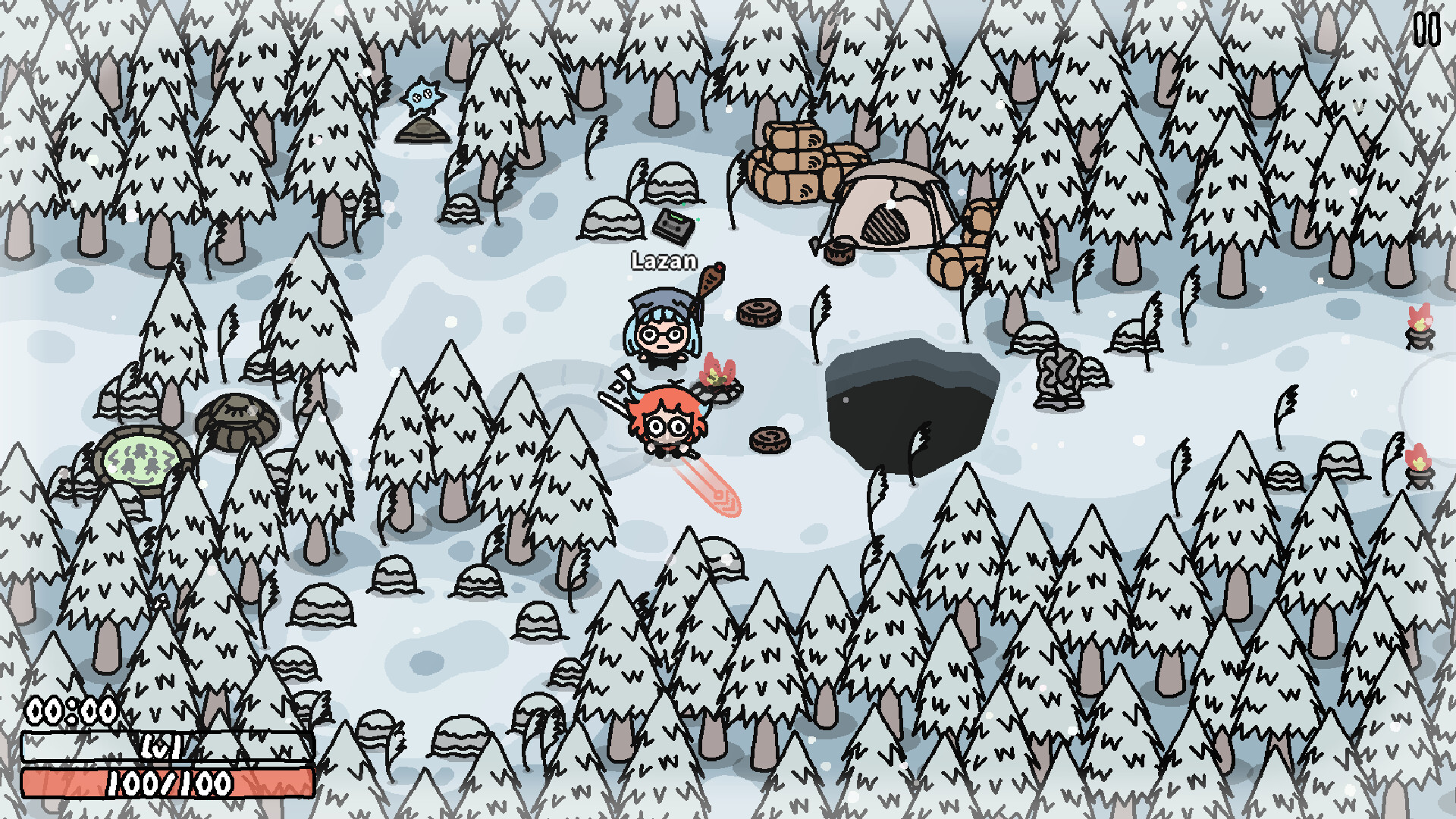
A snowbound camp area, one of the game's hand-drawn exploration zonesLiujiajun -
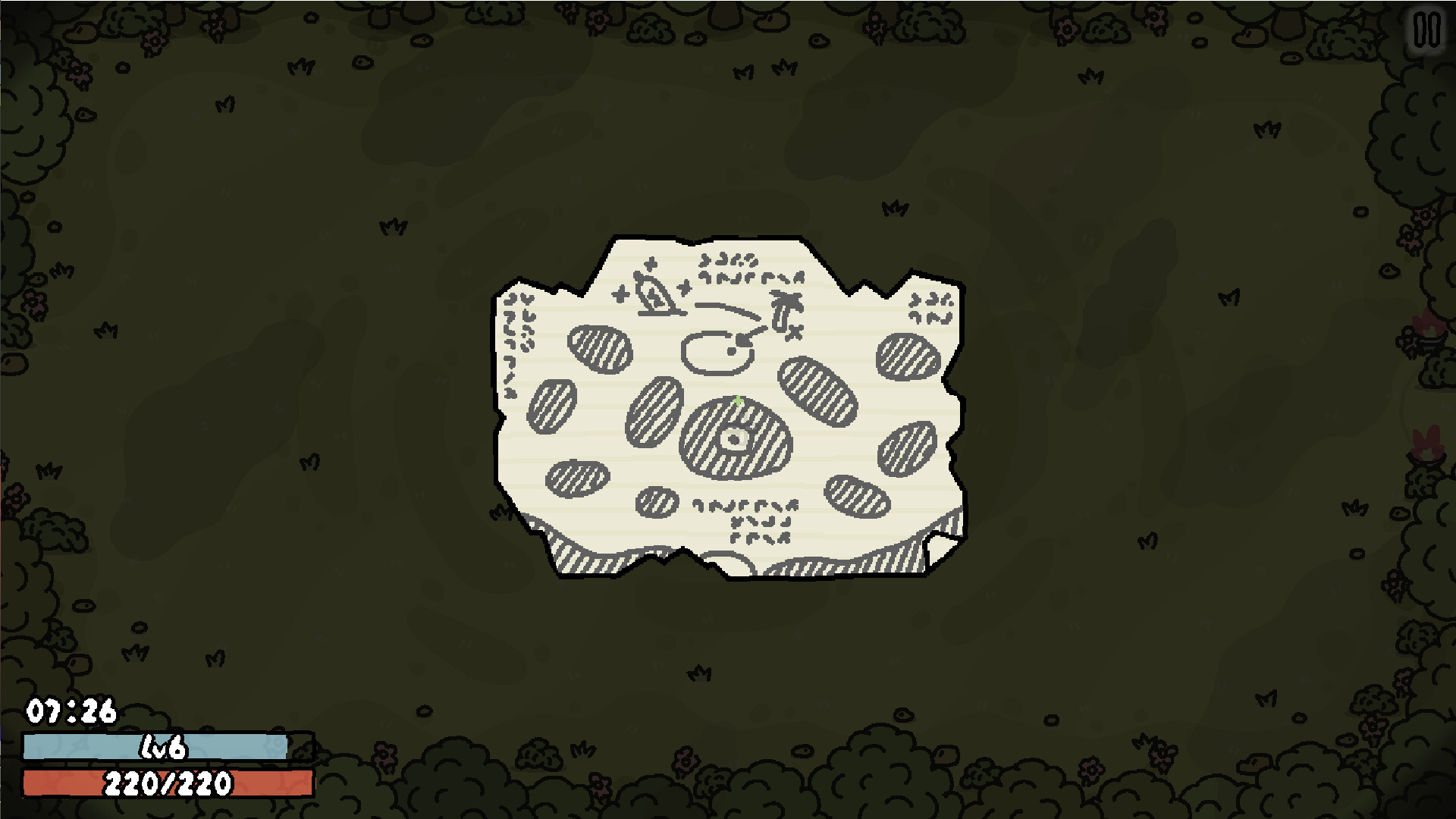
One of the game's knowledge-gated clue fragments, central to its puzzle structureLiujiajun -
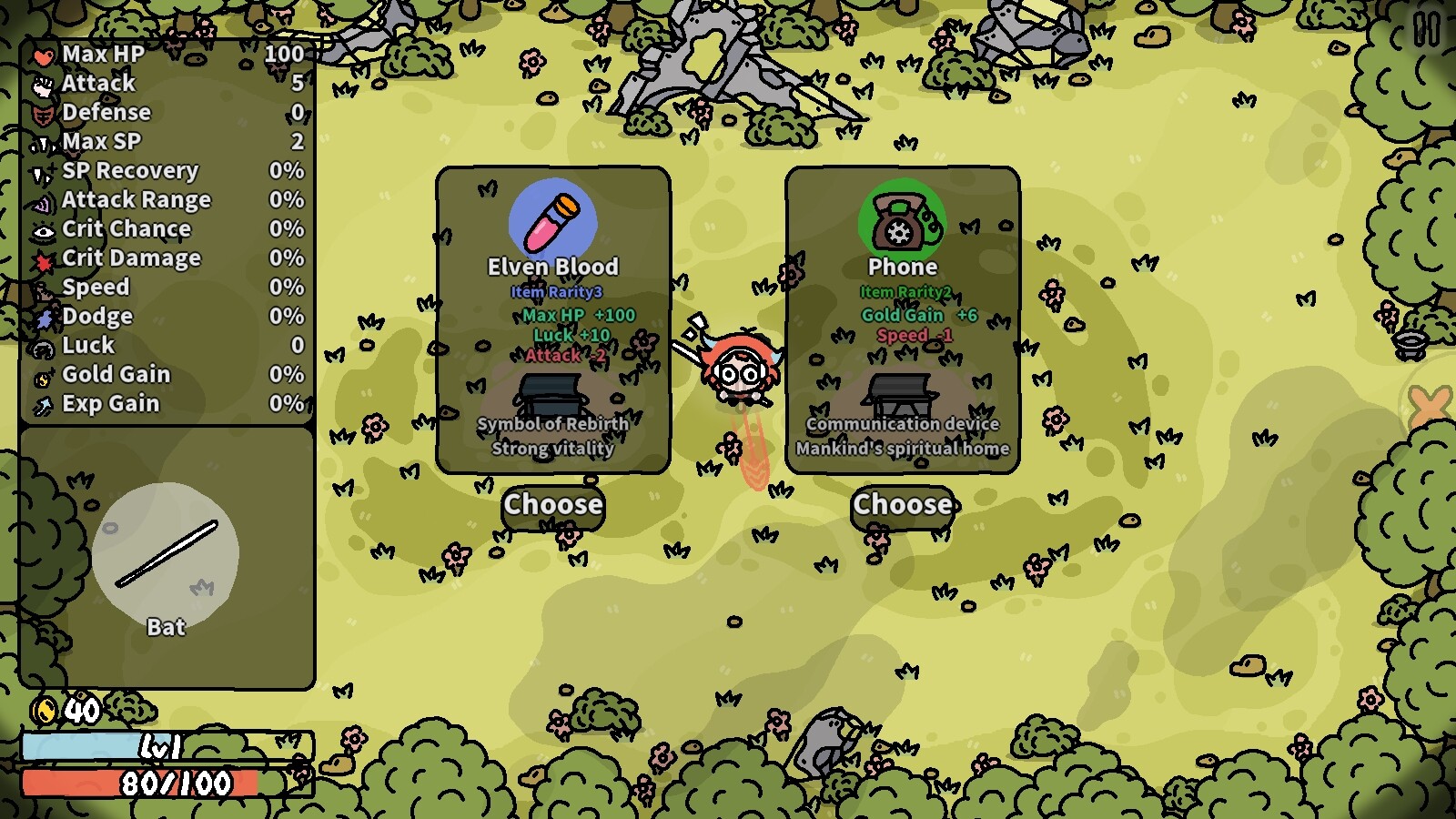
Choosing between permanent upgrades after a run, part of the roguelike progression layerLiujiajun -
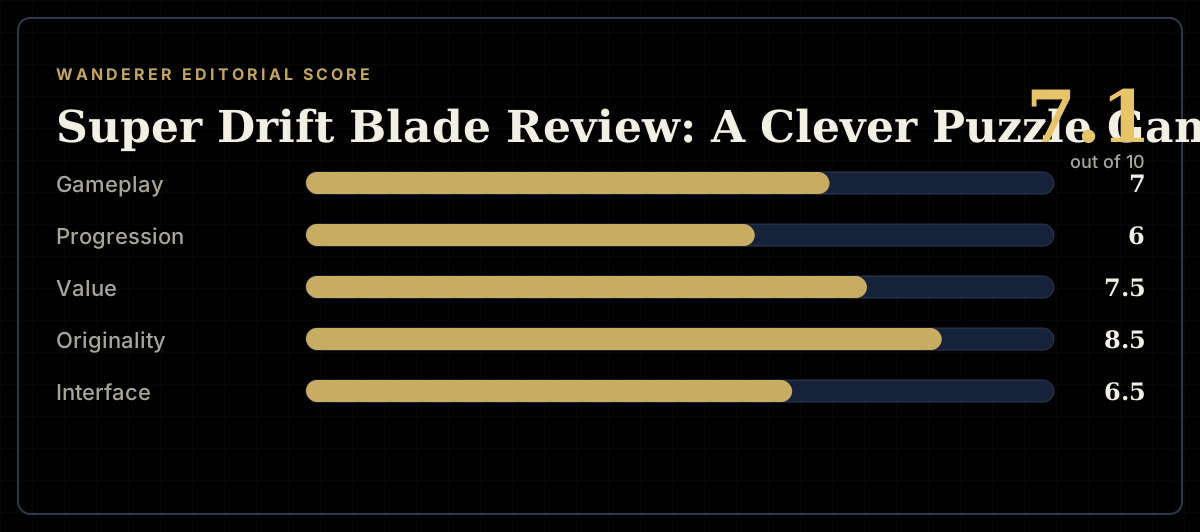
How the review scores each part of the gameWanderer Editorial -
The short versionWanderer Editorial