
Game review
Super Alloy Crush
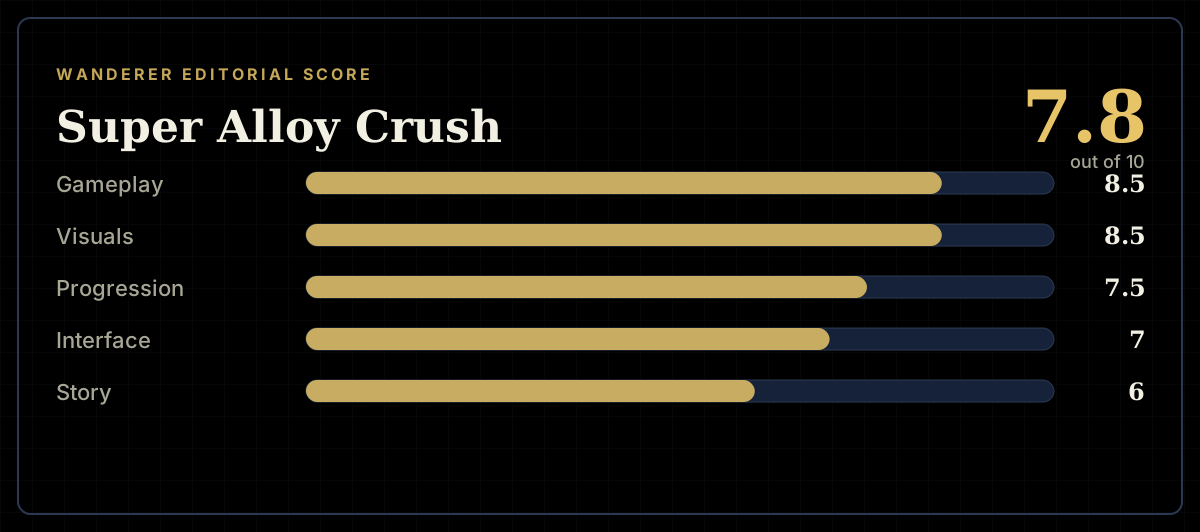
7.8 / 10
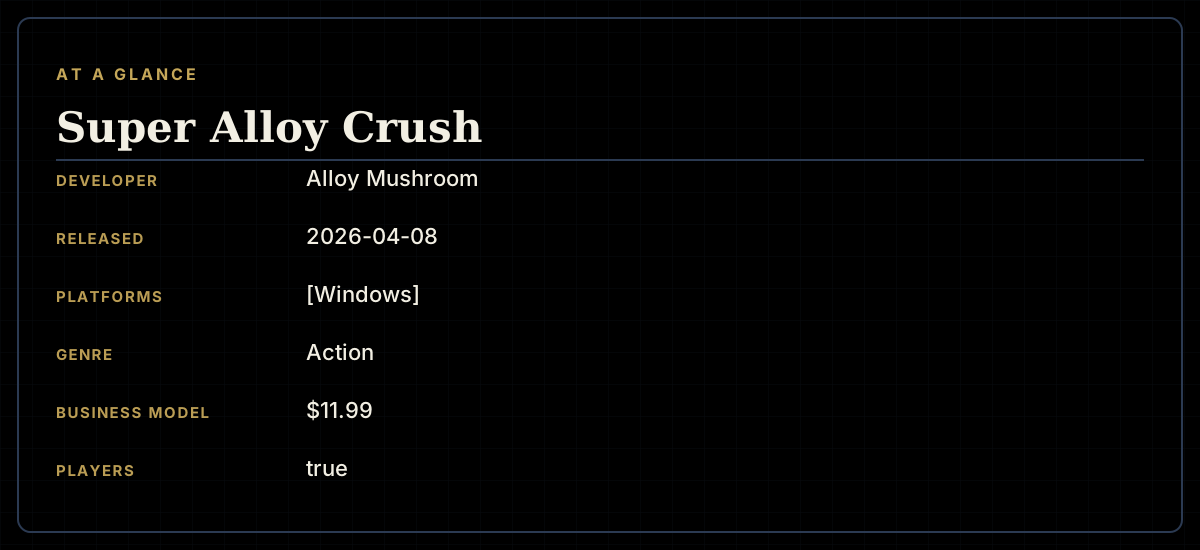
- Developer
- Alloy Mushroom
- Publisher
- Alloy Mushroom
- Released
- 8 April 2026
- Platforms
- [Windows]
- Genre
- Action
- Monetisation
- $11.99
- Players
- true
The short version
Super Alloy Crush is a genuine step up from its predecessor, pairing slick Mega Man X-inspired combat with a deep chip-based customization system and welcome local co-op, and while stages run long and late-game bosses can spike unfairly, this is one of the stronger Early Access action launches of the month.
Biggest strengths
- Fast, fluid combat that reviewers repeatedly compare favorably to Mega Man X and Zero, with satisfying combo chains and Overdrive Burst attacks between two distinct playable Cosmic Hunters
- A genuinely deep chip and skill system that lets players build toward melee, ranged, or hybrid playstyles, widely praised as more substantial than a typical roguelite loadout
- A clear improvement over the developer's first game, Super Alloy Ranger, with multiple reviewers calling it a generational leap in polish and content
Biggest weaknesses
- A vocal minority finds later stages drag on too long with health-sponge bosses and enemies that hit disproportionately hard once new modifiers stack in
- The story is treated as an afterthought by most reviewers, more a backdrop for combat than a reason to keep playing
- Level design leans repetitive across stages according to some reviewers, with map layouts feeling more interchangeable than distinct
Who it's for: Fans of Mega Man X/Zero-style side-scrolling action who want deeper build customization and don't mind an anime-flavored presentation.
Our recommendation: Buy it
7.8 / 10
Punching your way to planet AE-38
Super Alloy Crush, released into Early Access April 8, 2026 by developer and publisher Alloy Mushroom, sends Cosmic Hunters Kelly and Muu (Unit-02) across the galaxy hunting the treasure planet AE-38 aboard the spaceship Ranger. It's a 2D side-scrolling brawler that wears its Mega Man X influence openly, layering in roguelite chip customization, RPG-style stat growth, and local co-op. As the sequel to the developer's earlier Super Alloy Ranger, it launched to a strongly positive reception (247 reviews, roughly 92%), with most reviewers describing it as a clear step forward for the studio.
Combat that earns its comparisons
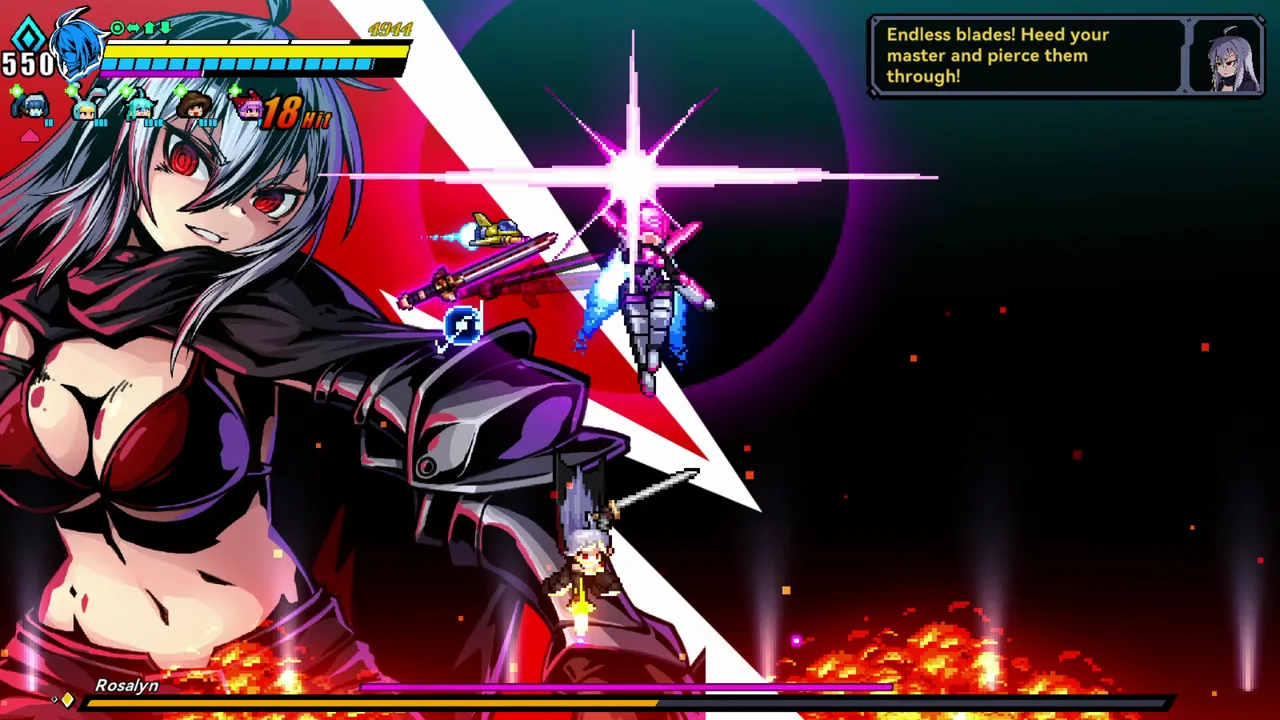
The overwhelming consensus across the review sample, spanning English, Chinese, Japanese, Brazilian, and Russian reviews, is that the combat feels genuinely excellent. Reviewers repeatedly reach for Mega Man X and Zero as reference points, praising fast, responsive movement, satisfying combo chains, and Overdrive Burst special attacks that make every hit feel weighty. Several reviewers who came in skeptical, expecting another disposable roguelite riding on the coattails of better-known games, say the combat alone won them over.
Depth in the chip system
Beyond basic combat, Super Alloy Crush's chip-based customization system draws consistent praise for giving players real build variety: chips can be combined to favor melee bursts, sustained ranged pressure, elemental effects, or hybrid approaches, and the balance between per-run roguelite upgrades and persistent account-level growth is repeatedly called out as avoiding the common roguelite problem of punishing, grindy early runs. Reviewers specifically note the system rewards experimentation without demanding it.
A real step up from the original
Because this is a direct sequel, much of the review sample explicitly frames its judgment against Super Alloy Ranger, the developer's first game. That comparison consistently favors Crush: reviewers who found the original merely competent describe this one as sharper, more polished, and considerably more generous with content, several going as far as calling it a generational leap for the small studio.
Where it drags
The clearest recurring criticism concerns pacing and difficulty in later stages. Some reviewers, including a detailed Traditional Chinese write-up, describe a difficulty spike where enemies in later areas deal enough damage to kill in two or three hits while new skills remain locked behind content players haven't reached yet, creating a frustrating gap between what the game demands and what it's given players to work with at that point. Others describe stages as simply running too long, with bosses that soak up damage without offering much additional depth to compensate, and note that map layouts across different areas can feel more interchangeable than distinct.
Story and presentation
Nobody in the review sample treats the plot as a major draw, most describing it as a lightweight backdrop for the action, occasionally undercut by a wall of on-screen information that one reviewer specifically called bloated. That's balanced by consistently well-received music and a distinctive, anime-influenced character art style, including the jiggle-physics-heavy designs of its two lead Cosmic Hunters, which reviewers who enjoy that presentation call a genuine highlight and reviewers who don't largely just don't mention.
An isolated score-manipulation claim
One negative reviewer, after refunding the game, suggested the overall review score felt "suspiciously bloated," partly out of disappointment after being drawn in by a cross-promotional bundle with the better-received Gravity Circuit. That's a serious claim, but it's an isolated one within the sample rather than a pattern corroborated by other reviewers, and is best read as one player's frustrated reaction to a game that didn't match a different game's reputation rather than established evidence of manipulation.
Three characters, three feels
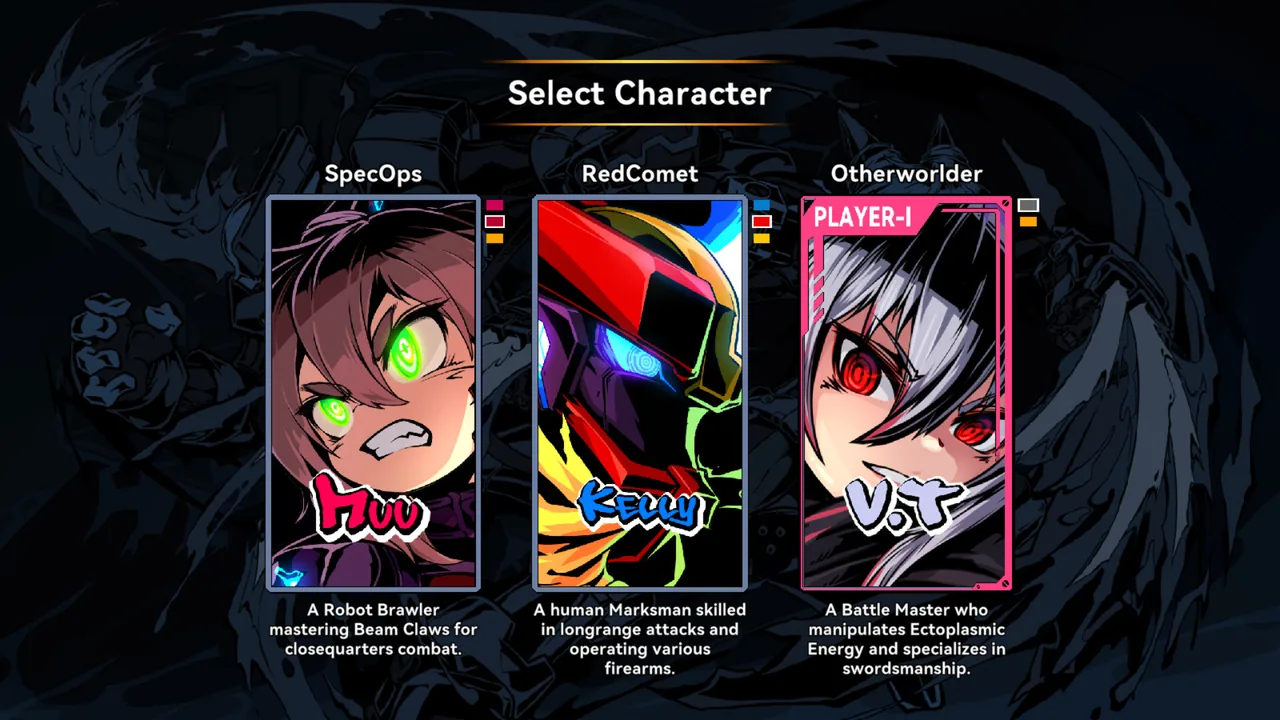
The review sample also highlights how differently the game's playable roster handles once players spend real time with each. Muu leans into close-range melee bursts with a shorter, more aggressive rhythm, while Kelly trades some of that mobility for sustained ranged pressure and chargeable heavy shots; a later-added third character, V.T., draws its own smaller but enthusiastic set of comparisons from reviewers still getting used to a heavier, more deliberate moveset. That spread is repeatedly cited as good evidence the Early Access build already has real structural depth rather than reskinned variations on one core kit, and reviewers frequently express hope that further updates will keep expanding it.
Early Access, actively supported
Version history since launch, running from 0.42 through 0.70 across roughly weekly-to-monthly updates by September 2026, backs up what the review sample describes: a developer actively iterating rather than treating the Early Access tag as a formality. Reviewers reference specific quality-of-life additions, such as adjustable difficulty and optional exploration guidance for players who want less friction finding their way through stages, as evidence the team is responding to feedback rather than just patching bugs. That track record goes a long way toward justifying patience with the late-game balance issues noted above.
Who should hunt for treasure
Super Alloy Crush is an easy recommendation for fans of Mega Man X/Zero-style action who want more build depth than those games typically offer, especially with a friend in local co-op. Players sensitive to late-game difficulty spikes or repetitive stage design might want to wait for a few more Early Access patches, given the update cadence already visible since launch, but the foundation here is clearly strong.
The verdict
For $11.99 in Early Access, Super Alloy Crush delivers combat and build depth well above what its price and roguelite trappings might suggest, with pacing and late-game balance as the clearest areas still needing work. It's a confident sequel that's already earned real goodwill, and worth buying now rather than waiting.
Pros and cons
Pros
- Fast, fluid combat that reviewers repeatedly compare favorably to Mega Man X and Zero, with satisfying combo chains and Overdrive Burst attacks between two distinct playable Cosmic Hunters
- A genuinely deep chip and skill system that lets players build toward melee, ranged, or hybrid playstyles, widely praised as more substantial than a typical roguelite loadout
- A clear improvement over the developer's first game, Super Alloy Ranger, with multiple reviewers calling it a generational leap in polish and content
- Local co-op that's specifically credited with elevating the experience for pairs of players, plus story, roguelite, and challenge modes for different play styles
Cons
- A vocal minority finds later stages drag on too long with health-sponge bosses and enemies that hit disproportionately hard once new modifiers stack in
- The story is treated as an afterthought by most reviewers, more a backdrop for combat than a reason to keep playing
- Level design leans repetitive across stages according to some reviewers, with map layouts feeling more interchangeable than distinct
- Online multiplayer is absent, with co-op currently limited to local/shared-screen and Remote Play Together
Screenshots
-

Super Alloy CrushImage: Alloy Mushroom via Steam -
Super Alloy CrushImage: Alloy Mushroom via Steam -
Super Alloy CrushImage: Alloy Mushroom via Steam -
How the review scores each part of the gameWanderer Editorial -
Key facts at a glanceWanderer Editorial -
The short versionWanderer Editorial