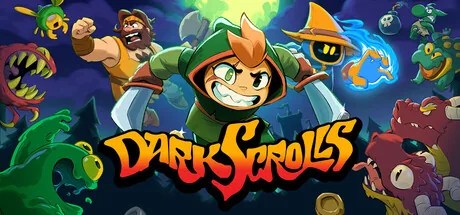
Game review
Dark Scrolls
6 / 10
- Developer
- doinksoft
- Publisher
- Devolver Digital
- Released
- 22 June 2026
- Platforms
- Windows, Nintendo Switch
- Genre
- Action, Indie, Adventure
- Monetisation
- paid
- Players
- true
The short version
Biggest strengths
- Genuinely appealing pixel-art character and enemy design, with each entity rendered in its own distinct palette rather than a single flattened screen palette
- An addictive, unusual hybrid of autoscrolling run-and-gun combat with roguelite character unlocks, favorably compared by reviewers to Kirby and Brawl's Subspace Emissary rather than punishing bullet-hell platformers
- A large, distinct cast of unlockable characters, each reviewers say plays meaningfully differently
Biggest weaknesses
- The upgrade and "star-level" progression systems are barely explained in-game, leaving several reviewers unsure whether their purchases were doing anything at all
- Significant character balance issues reported, including at least one character's invincibility frames described as "absolutely broken" relative to the rest of the roster
- A specific, reproducible audio bug where skipping dialogue triggers multiple voice sound effects playing simultaneously at full volume
Who it's for: Fans of Kirby-style breezy platforming chaos and shmup crowd-control who want a colorful co-op roguelite, and who can tolerate an under-explained upgrade system and rough edges while the developer continues patching
Our recommendation: recommended with caveats
6 / 10
Kirby energy, shmup mechanics
Dark Scrolls fuses autoscrolling run-and-gun combat with roguelite character progression, sending a colorful cast of heroes through fantasy dungeons packed with enemies, secrets, and unlockable playstyles. One detailed reviewer nailed the tone precisely: it "evokes runs of Kirby or even Brawl Subspace Emissary more than it does Contra," clarifying that "this is not a bullet-hell platformer that will task you with the challenge of clearing even a single level; but it IS an addictive and rewarding time." That framing matters, because reviewers who came in expecting punishing precision platforming report friction, while those who approach it as breezy, chaotic fun report exactly the addictive loop the developer was going for.
Genuinely lovable presentation
Across both positive and negative reviews, the game's art direction draws consistent praise. One reviewer highlighted a specific technical choice behind the charm: "each entity is cleverly depicted in their own palette, rather than a single palette being given to the entire screen," giving every character and enemy a distinct visual identity even amid on-screen chaos. Even reviewers who ultimately recommended against the game conceded this point; one blunt negative review admitted plainly, "art style is great, though," despite otherwise calling the game "mind-numbingly easy and frustratingly difficult at the same time."
A wide, distinct cast that carries the game
Reviewers consistently praised the character roster's variety, and the developer's own patch history backs that up with a steady stream of new hero reveals in the weeks around launch, from a saxophone-playing rat to a food-throwing chef to a machine-gun-toting alien. One reviewer called the roster "about as engaging to fig[ure out]" as any recent roguelite's, while another described the unlock structure as offering "plenty of wild and wacky characters to unlock and experiment with," each contributing to "a gameplay loop that scratches an itch I didn't even know I had." For players willing to invest the time to learn each character's quirks, that variety is clearly the game's strongest, most consistently agreed-upon asset.
Systems that don't explain themselves
The most substantive, corroborated criticism concerns how little the game tells players about its own mechanics. One detailed negative review catalogued the problem specifically: "the game does not explain what star-levels are or what difference it makes where you put your upgrades," adding that "the in-game upgrades just don't seem to make any difference on any given run, and while the price of these upgrades increases exponentially, the amount you earn just doesn't feel like it increases at all." That's a serious complaint for a roguelite, a genre that lives or dies by players feeling meaningful, legible progression between runs. The developer has since shipped an official in-game "instruction booklet" adding character strength and ability explanations, a direct if partial response to exactly this kind of confusion, though it doesn't fully resolve the underlying complaint about the upgrade economy's pacing.
Balance problems and specific reproducible bugs
Multiple reviewers flagged concrete balance and technical issues rather than vague dissatisfaction. One noted that "the barbarian[']s i-frames are absolutely broken" after a few runs, while a detailed negative review corroborated the broader balance concern, writing that "only some characters are actually good enough to get past the first two levels. And those who can are exceptionally overpowered and boring to play." On the technical side, the same detailed review documented a specific, reproducible audio bug: skipping past dialogue triggers "all of the Undertale RPG-esque talking noises" to play "simultaneously REALLY LOUD," while separately flagging that PlayStation controller button prompts render as "hard-to-read out-of-place text" instead of proper icons — a corroborated, easily verifiable presentation bug rather than a one-off complaint.
A game that splits its own audience
What stands out most about Dark Scrolls' review pool is how directly reviewers argue with each other inside their own reviews. One wrote, "I feel like I'm playing a different game from the negative reviews," describing straightforward, enjoyable arcade fun with just three buttons to learn. Another, more measured review captured the split explicitly: "Is it fun? A: kinda... I do enjoy this game, but I completely understand why people are frustrated." That's a genuinely useful signal for prospective buyers: this isn't a game with hidden, undiscovered flaws so much as one where the same mechanics land very differently depending on what a player wants out of an autoscrolling platformer.
Priced for a casual pick-up, not a definitive statement
At $14.99, Dark Scrolls sits comfortably in impulse-buy territory for the roguelite genre, and several reviewers explicitly weighed the purchase against that low bar rather than against genre heavyweights. One reviewer made the framing explicit: "Dark Scrolls IS a simple, straightforward arcade game perfect to kill some time either by yourself or with some friends, and it's cheaper than a fast food meal," contrasting it favorably against "bloated" genre entries that overpromise mechanical depth. That's a fair way to approach it: judged as a lightweight, colorful co-op diversion rather than a rigorously balanced roguelite in the vein of the genre's most polished names, its rougher systems and balance issues are easier to forgive, even if they're still worth knowing about before buying.
Verdict
Dark Scrolls has real, undeniable charm, backed by lovable character and creature design and an unusual, often addictive fusion of shmup combat and roguelite progression that a meaningful chunk of its audience genuinely loves. It's held back by systems the game barely bothers to explain, corroborated balance problems that make some characters trivial and others nearly unplayable, and specific bugs around audio and controller prompts that should have been caught before launch. Worth trying for fans of breezy, chaotic co-op platforming who go in with patience for its rough edges and an active developer still patching; players who need tight balance and clear systems from the outset should wait for further updates.
Pros and cons
Pros
- Genuinely appealing pixel-art character and enemy design, with each entity rendered in its own distinct palette rather than a single flattened screen palette
- An addictive, unusual hybrid of autoscrolling run-and-gun combat with roguelite character unlocks, favorably compared by reviewers to Kirby and Brawl's Subspace Emissary rather than punishing bullet-hell platformers
- A large, distinct cast of unlockable characters, each reviewers say plays meaningfully differently
- Cheap enough, and light enough in tone, to work as a casual pick-up-and-play session alone or with friends
Cons
- The upgrade and "star-level" progression systems are barely explained in-game, leaving several reviewers unsure whether their purchases were doing anything at all
- Significant character balance issues reported, including at least one character's invincibility frames described as "absolutely broken" relative to the rest of the roster
- A specific, reproducible audio bug where skipping dialogue triggers multiple voice sound effects playing simultaneously at full volume
- Controller button-prompt display bugs, including PlayStation prompts rendering as awkward text rather than icons, corroborated by more than one reviewer
Screenshots
-
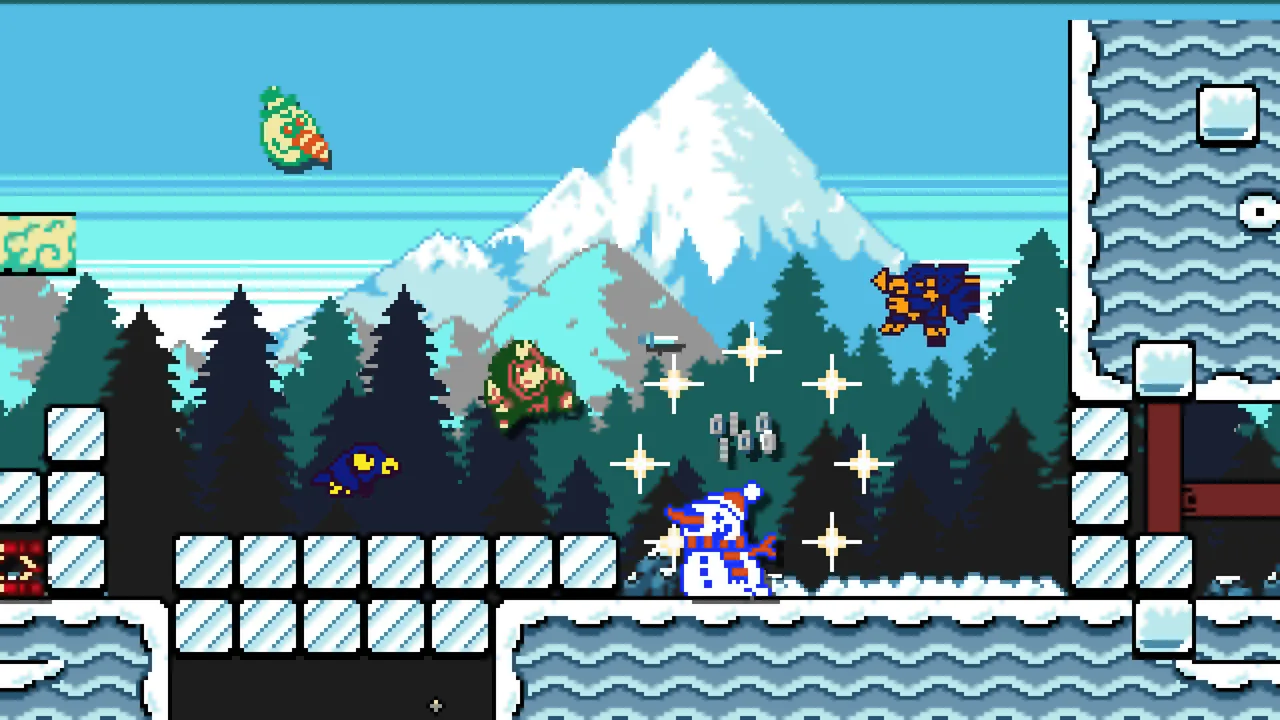
Dark ScrollsImage: Devolver Digital via Steam -
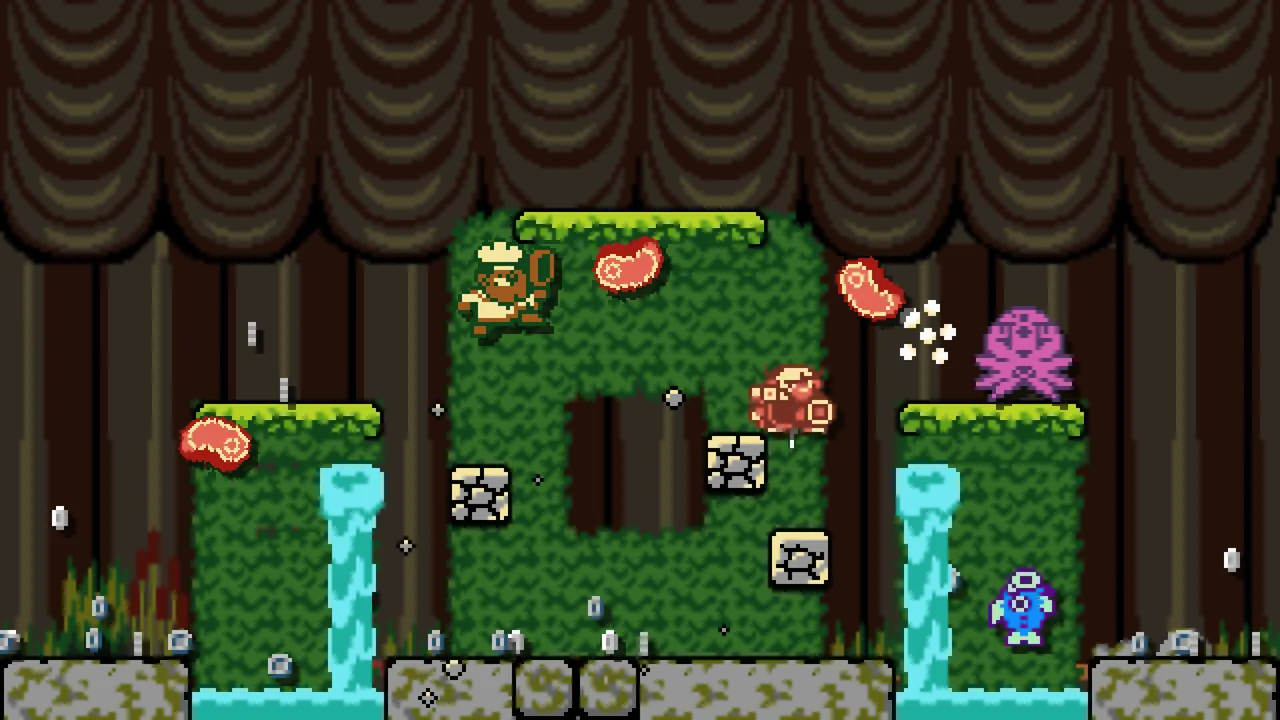
Dark ScrollsImage: Devolver Digital via Steam -
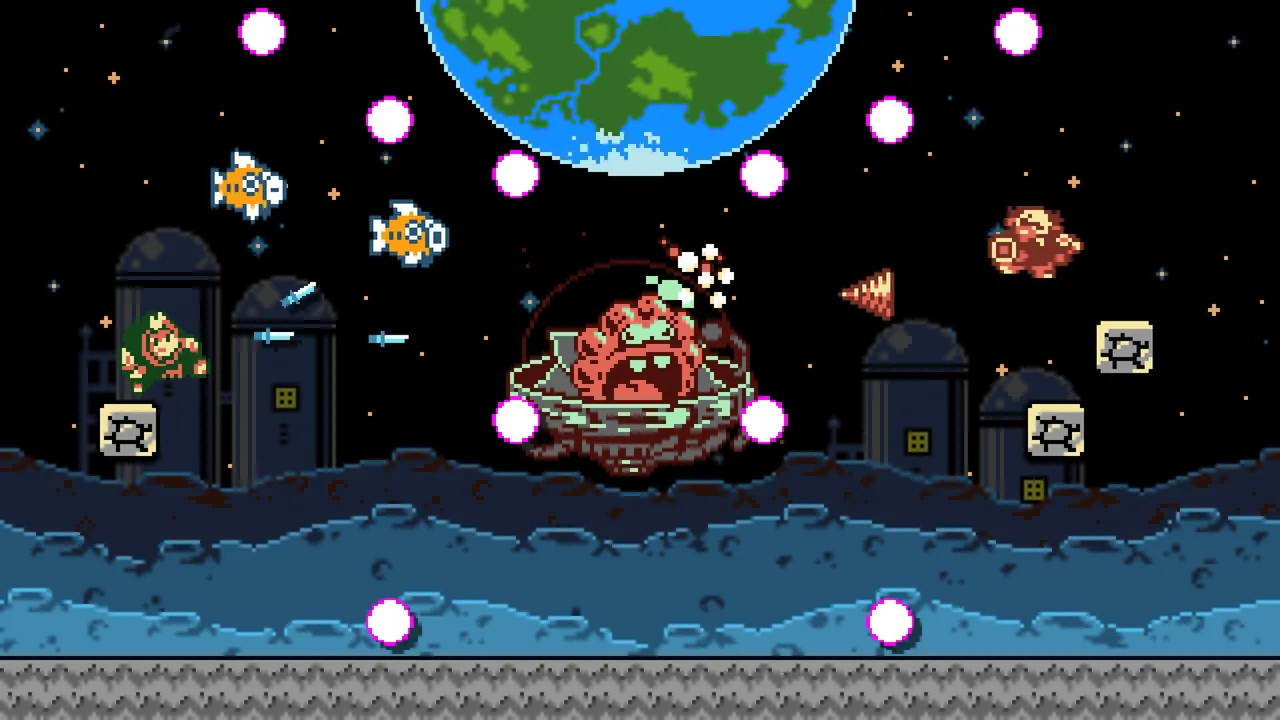
Dark ScrollsImage: Devolver Digital via Steam