Game review
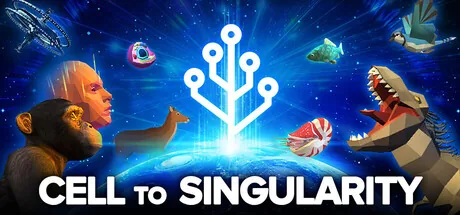
Cell to Singularity - Evolution Never Ends
6.5 / 10
- Developer
- Computer Lunch
- Publisher
- Computer Lunch
- Released
- 1 December 2018
- Platforms
- Android, iOS, Windows, macOS, Web browser
- Genre
- Idle / Incremental
- Monetisation
- Free-to-play with rewarded video ads for temporary boosts, a premium currency (Darwinium) sold in packs, and an Infinity Pass monthly subscription that removes ads and adds permanent multipliers
- Players
- Single-player, with limited-time community events
The short version
Cell to Singularity takes the oldest trick in the idle genre — spend a currency, watch a number grow, spend the bigger number faster — and wraps it in the actual story of life on Earth, from the first self-replicating cell through dinosaurs, hominids, civilisation and out into deep space. That subject matter is real work, not paint: every era comes with short, mostly accurate science write-ups that no cookie-clicker knockoff bothers to include, and the 3D habitats are genuinely pleasant to sit and watch fill up with creatures.
The tree underneath the theme is thinner than the presentation suggests, though — there's one correct order to unlock things and almost no branching choice — and the free-to-play machinery gets louder with every update. Ads, a premium currency, and a monthly subscription all compete for attention once the early hours of goodwill run out, and the pacing is tuned to make that competition feel necessary rather than optional.
Biggest strengths
- Every evolutionary and technological milestone ships with a short, specific science write-up instead of generic flavour text
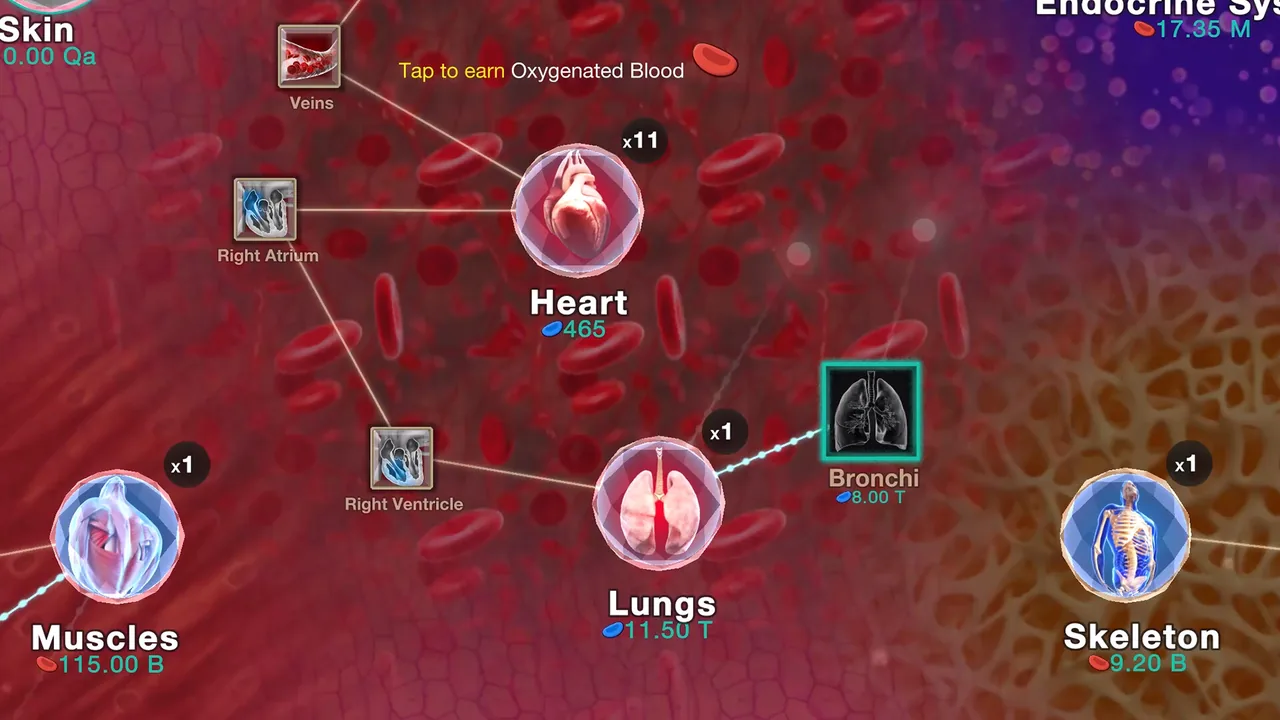
- The 3D creature habitats are genuinely attractive and make watching the tree fill in feel like a nature documentary rather than a spreadsheet
- Content updates have shipped roughly every two to three weeks through 2026, including a full mechanical overhaul (Reality Reboot) rather than the game going quiet after launch
Biggest weaknesses
- The evolution tree has one efficient unlock order almost every run, so replaying it a second time feels like retracing the same line rather than making new choices
- Boost prompts, ad offers and Darwinium bundles are visually loud enough that recent negative reviews specifically call out the sales pressure over the actual game
- Progression pacing tightens sharply a few hours in, to the point where unassisted growth can feel less like a wall and more like an invitation to open the shop
Who it's for: Players curious about evolutionary biology and cosmology who want that curiosity wrapped in a low-effort clicker, and anyone who wants an idle game they can hand to a kid without violence or gore. Idle veterans chasing genuine strategic depth or a monetisation-free experience should look elsewhere.
Our recommendation: Play it free on mobile or Steam for the first several eras purely for the science content, ignore every ad and boost prompt you can, and be honest with yourself about whether you're still finding it fun once Mesozoic Valley and Beyond start asking for real time investment rather than curiosity.
6.5 / 10
An idle game with a thesis
Most idle clickers don't bother explaining what the number represents. Cell to Singularity does, obsessively. You start as a single self-replicating cell in a tidepool, spend a currency called Entropy to unlock the next node on a sprawling tech tree, and watch it carry you through multicellular life, fish, amphibians, dinosaurs, mammals, hominids, agriculture, industry, computing, and eventually a technological singularity that resets the run. Every one of those nodes — hundreds of them — comes with a genuine science write-up: what a mitochondrion actually does, why the Cambrian explosion happened, how CRISPR gene editing works. That's the pitch, and on its own terms it mostly delivers. This is Computer Lunch's actual subject matter, not a licensed skin bolted onto a cookie-clicker chassis, and the difference shows in how much real information is packed into tooltips a genre built on ignoring lore usually never bothers to write.
The trouble is a tree with a thesis still has to be a tree worth climbing, and that's where the game is more conventional than its subject matter suggests.
The tree is a corridor with detours, not a maze
Spend any real time with the Primary Simulation tree and the branching starts to look cosmetic. There's a correct build order — cheapest nodes with the best multiplier-per-Entropy ratio first, generators that pay for themselves fastest next — and once you've learned it, a second run through the same section is executing a known sequence rather than making decisions. Compare that to Evolve, the free browser incremental that shares almost the same premise — a species climbing from primordial ooze to interstellar civilisation across repeated resets. Evolve gives you upward of sixty species with genuinely different starting traits, so the same opening minutes play out as different strategic problems depending who you picked. Cell to Singularity gives you one path: humanity's, in order, every time. The tree is enormous and the presentation dresses it up as a living organism-by-organism journey, but structurally it's closer to a very long, very pretty unlock list than a game asking you to choose between competing strategies.
That's not automatically a flaw — a curated linear experience can be worth having, and plenty of players clearly find real value in a tree that always tells you what to do next. But it means the "meaningful choice" question the genre usually answers with build variety, this game mostly answers with pacing and presentation instead. Once you already know the order, a second or third pass through the early tree exists to be waited through rather than solved.
Science that teaches, mostly without getting in the way
Where the game earns real credit is in how lightly the education sits on top of the clicking. Nothing forces you to read the write-ups — tap through and the tree still advances — but they're there, they're short enough to actually finish, and they're specific rather than the vague "did you know" trivia most edutainment settles for. The Cambrian explosion node doesn't just say "lots of life appeared"; it explains what made that possible. That's a genuine differentiator in a genre stuffed with reskinned cookie clickers, and it's the strongest argument for playing this over almost anything else with a similar loop.
It thins out unevenly, though. The early biological eras are detailed and well sourced-feeling; later technological and speculative content — the far-future and Beyond material especially — leans more on spectacle than substantiated fact, which is defensible given it's extrapolating past the present day, but the "scientifically accurate" claim the game makes about itself holds up much better in the first third than the last. Players hoping for a rigorous science course wrapped in a clicker will get real value early and diminishing returns later.
Mesozoic Valley and Beyond: real layers, thinner returns
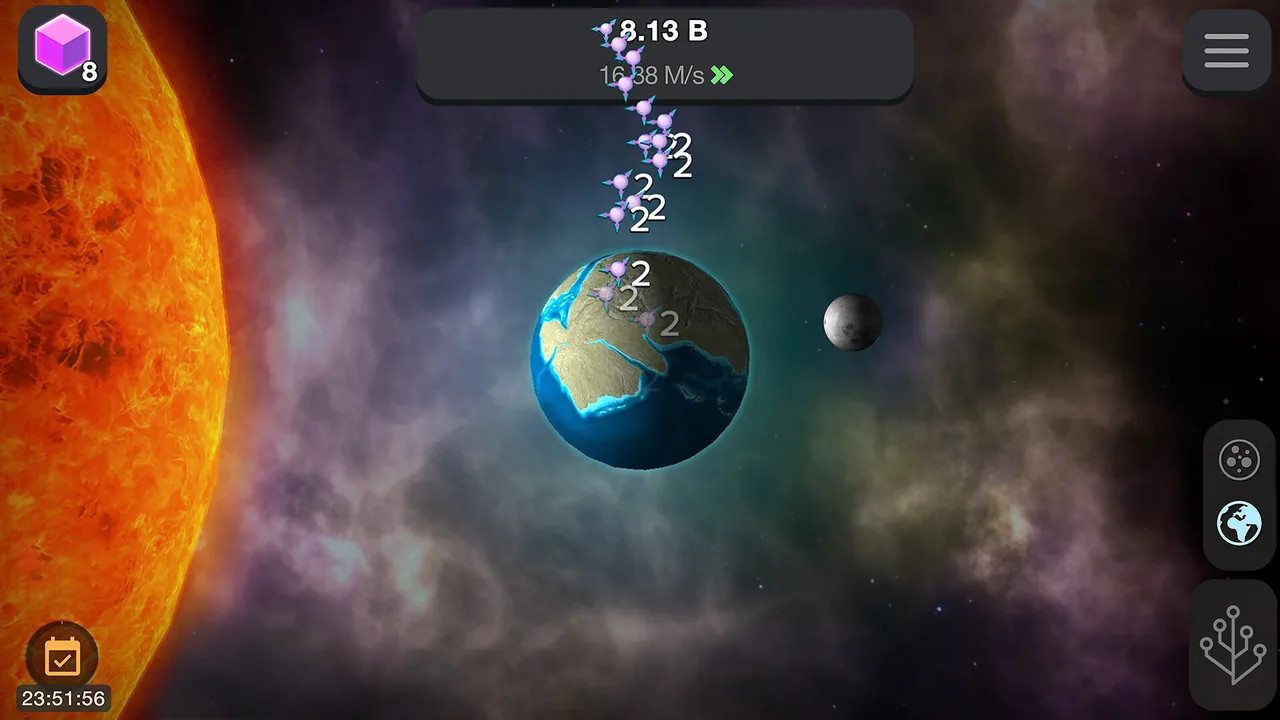
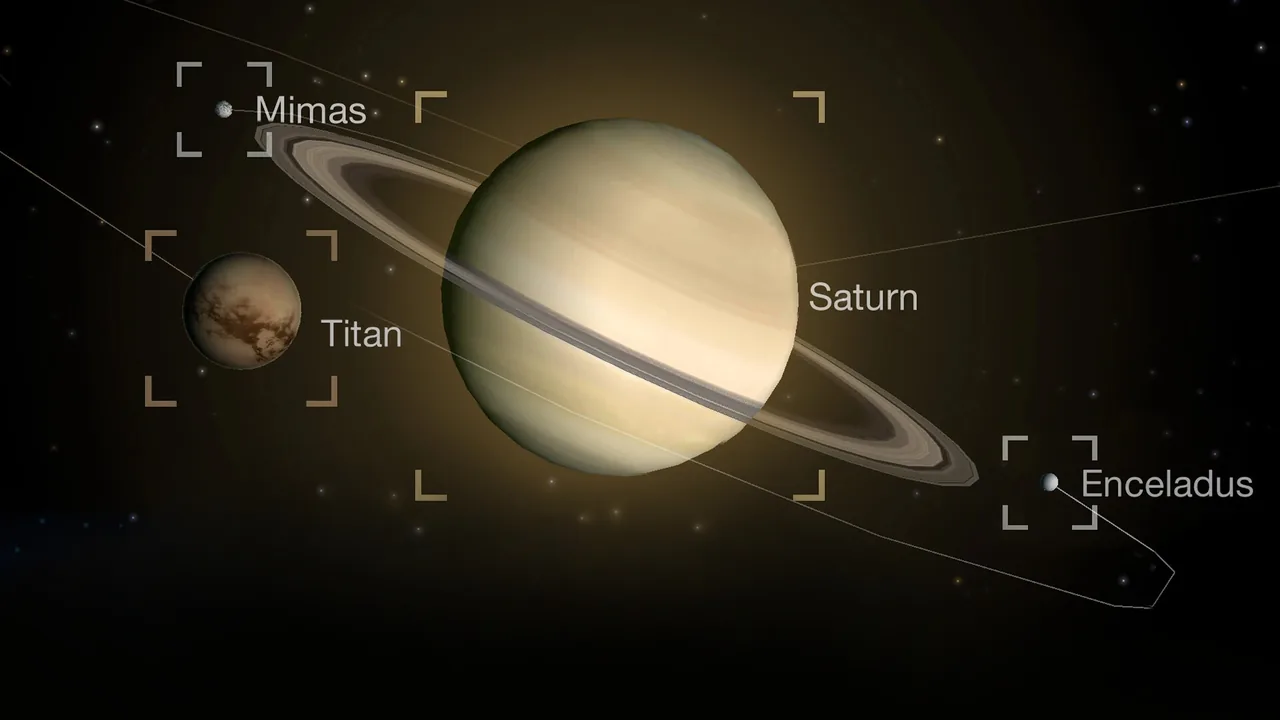
The prestige structure is where Cell to Singularity does its most interesting design work. Clearing the Primary Simulation opens Mesozoic Valley, a dinosaur-focused layer with its own trait-card system, and later Beyond, which reframes the loop around astronomy and the observable universe, still receiving new numbered episodes years after its 2021 launch. A Mars-focused branch bolts human off-world colonisation onto the same tree. Each genuinely adds new mechanics rather than re-skinning the base tap-and-wait cycle, which is more effort than most prestige-layer idle games put in.
The problem is that each successive layer keeps the format — new currency, new tree, same tap-spend-wait shape — without raising the ceiling on player agency. Universal Paperclips earns its late-game shift by fundamentally changing what the player is even doing, twice. Mesozoic Valley and Beyond change the subject matter and the numbers without changing what you're actually doing to engage with them. The result is a game with genuine scope that increasingly runs on inertia and curiosity about the next era, rather than on any real escalation in what the player is asked to think about.
Idle behaviour: capped, and increasingly ad-gated
Offline progress is real but bounded. Away time accrues at a reduced rate compared to active play and against a visible cap, after which the game explicitly offers to double or extend that catch-up through a rewarded ad or a Darwinium spend. That's a completely standard idle-genre pattern, and taken alone it wouldn't be worth criticising — plenty of respected idle games gate offline catch-up behind an optional ad. What's worth noting is how central that ad prompt becomes to the loop the longer you play: player feedback consistently describes returning from time away to a screen built around the boost offer rather than a simple summary of what you earned, and the game's own pacing curve — generous early, noticeably tighter a few hours in — is tuned in a way that makes tapping that offer feel less like a bonus and more like the efficient move. SPACEPLAN proves an idle game can respect a player's offline time with nothing more than clean math and good writing; Cell to Singularity has the math, but attaches a sales pitch to almost every point where that math pays out.
Monetisation is the actual review
This is the part that decides the score, so it's worth being precise about the mechanism rather than reaching for "pay-to-win" as a label. Every node in the core tree can be reached by a non-paying player — nothing is permanently locked behind a purchase, and Steam and Play Store reviews alike confirm the game can be finished for free given enough time. What money buys is speed: Darwinium accelerates specific generators, rewarded ads grant temporary multipliers and extended offline catch-up, and the Infinity Pass subscription — reported by players at roughly USD/EUR 12 a month — removes ads outright and layers on permanent boosts. None of that is a competitive advantage in a single-player game with no leaderboard that matters, so "pay-to-win" doesn't really describe what's being sold. What's being sold is your patience, priced explicitly against how long you're willing to wait for the same outcome for free.
The complaint that shows up most consistently in negative Steam reviews isn't that paying is required — it's that the gap between paying and not paying widens sharply once the tutorial-era generosity runs out, and the interface keeps reminding you of that gap with persistent, brightly styled buy prompts rather than letting you forget the option exists. That's a legitimate design criticism distinct from "it costs money": a free game is allowed to monetise, but one that visually competes for your attention against its own content every few minutes is making a choice about what it wants you looking at, and it isn't the dinosaurs. Compare it with AdVenture Capitalist, a similarly ad-and- subscription-funded clicker that at least keeps its shop contained to a dedicated screen rather than surfacing offers inside the main loop itself.
Save reliability compounds the trust problem. A recurring thread in negative reviews describes Steam Cloud sync wiping large amounts of progress — one report cites years of accumulated achievements gone, another describes losing roughly thirty hours in a single incident. That's a technical failure, not a monetisation one, but in a game whose value proposition rests on long-term accumulation, a save system that can silently erase that progress is a serious defect, not a footnote.
Interface: built for a phone, ported to a desktop
Cell to Singularity plays best on the platform it was designed for. The mobile version is tuned for one-thumb tapping, with generously sized buttons and a layout that makes sense on a small screen. The Steam version is close to a direct port of that same layout onto a monitor: the same oversized buttons, the same single-column density, none of the extra space used to show more of the tree at once or present the same data more efficiently. It isn't broken, and Partial Controller Support is listed on the store page, but nothing about the desktop build takes advantage of being on a desktop. Recent patch notes citing an "FPS Performance Hotfix" and a dedicated UI bug fix suggest Computer Lunch is still actively working performance issues rather than treating Steam as a finished afterthought, which is a point in its favour even if the interface itself hasn't caught up.
Verdict
Six and a half out of ten. Cell to Singularity's core idea — a tap-driven idle game built entirely around the real history of life and technology, with actual science content instead of filler — is a genuinely good one, and it's executed with more craft and more sustained post-launch support than most idle games ever get. The habitats are lovely to look at, the write-ups are specific enough to teach you something, and the fact that a free, patient player can clear the whole tree without spending anything is a real point in its favour.
What holds it back is that the systems underneath the theme don't hold up their end. The tree is a corridor dressed as a garden of choices, the prestige layers add scope without adding meaningfully different decisions, and the free-to-play machinery gets louder every year the game stays alive, to the point where recent player feedback is more focused on the shop than the science. Compared with Evolve — free, unmonetised, unguided, and genuinely willing to let a species' traits reshape the entire strategy — Cell to Singularity is the polished, guided, curated version of the same premise, and that polish comes at a real cost in both depth and trust. Players who want the science more than the systems will get real value here for free; players who want a deep incremental to actually master should look at what Evolve, or Kittens Game, ask of them instead.
Players who'd rather their long-term progress accrue without a shop prompt attached to almost every milestone may find that's closer to what Wanderer is built for.
Pricing, store data and update cadence checked 1 August 2026.
Pros and cons
Pros
- Every evolutionary and technological milestone ships with a short, specific science write-up instead of generic flavour text
- The 3D creature habitats are genuinely attractive and make watching the tree fill in feel like a nature documentary rather than a spreadsheet
- Content updates have shipped roughly every two to three weeks through 2026, including a full mechanical overhaul (Reality Reboot) rather than the game going quiet after launch
- The core tree can be cleared by a non-paying player through patience alone, with no content permanently locked behind a paywall
- Mesozoic Valley and Beyond genuinely add new mechanics on top of the base loop rather than just re-skinning the same tap-and-wait cycle
Cons
- The evolution tree has one efficient unlock order almost every run, so replaying it a second time feels like retracing the same line rather than making new choices
- Boost prompts, ad offers and Darwinium bundles are visually loud enough that recent negative reviews specifically call out the sales pressure over the actual game
- Progression pacing tightens sharply a few hours in, to the point where unassisted growth can feel less like a wall and more like an invitation to open the shop
- Several players report Steam Cloud sync wiping tens of hours of saved progress, with no visible in-game safeguard against it
- The desktop interface is a straightforward port of the mobile layout, so Steam players get large touch-style buttons and none of the extra screen real estate put to real use
Screenshots
-
Cell to Singularity - Evolution Never EndsImage: Computer Lunch via Steam -
Cell to Singularity - Evolution Never EndsImage: Computer Lunch via Steam -
Cell to Singularity - Evolution Never EndsImage: Computer Lunch via Steam -
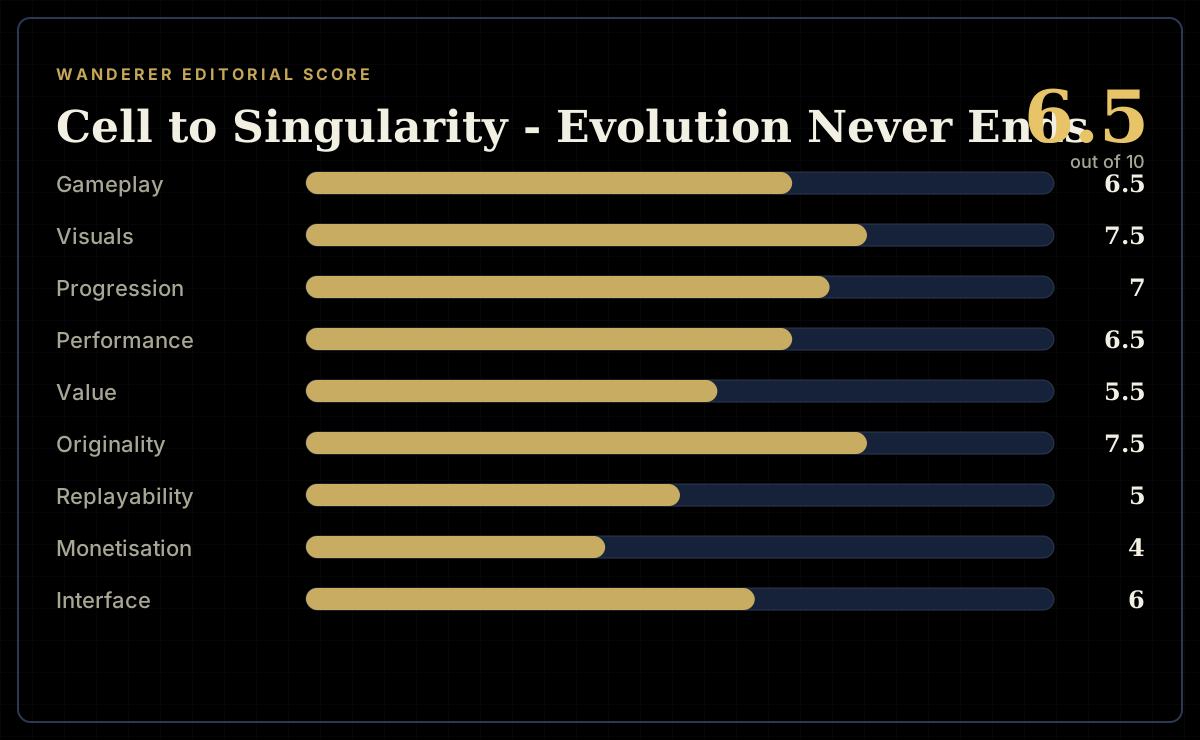
How the review scores each part of the gameWanderer Editorial -
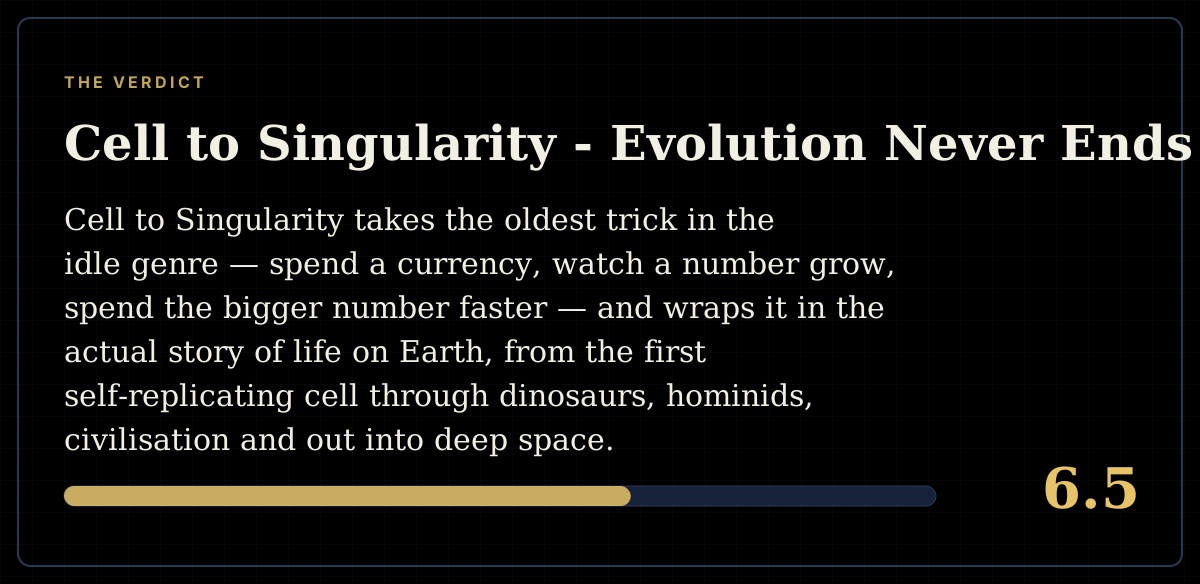
The short versionWanderer Editorial