
Game review
Lemonade Apocalypse
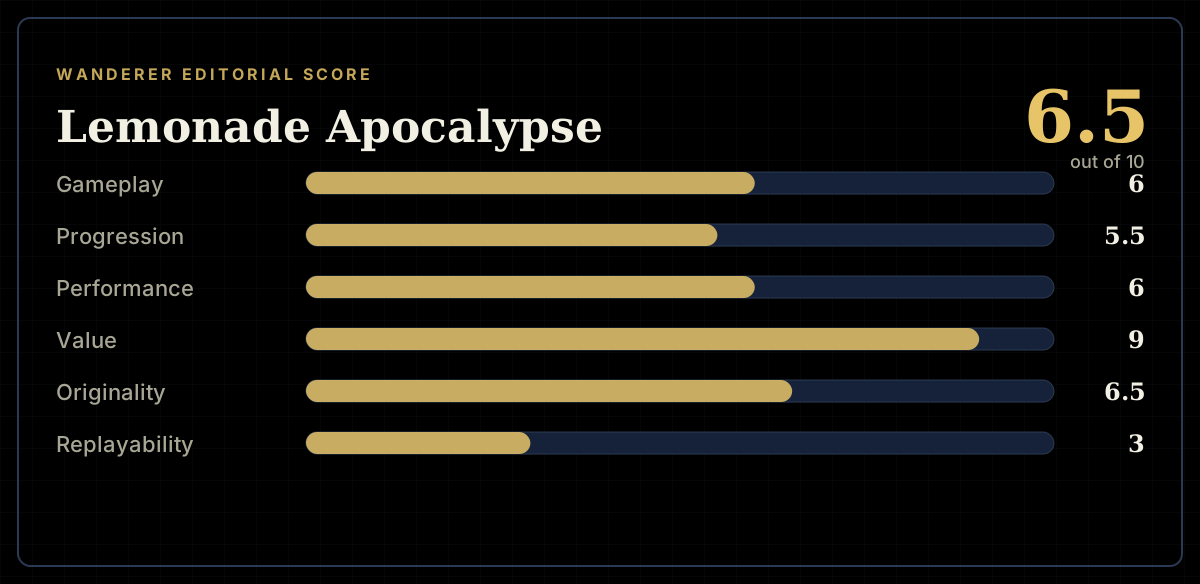
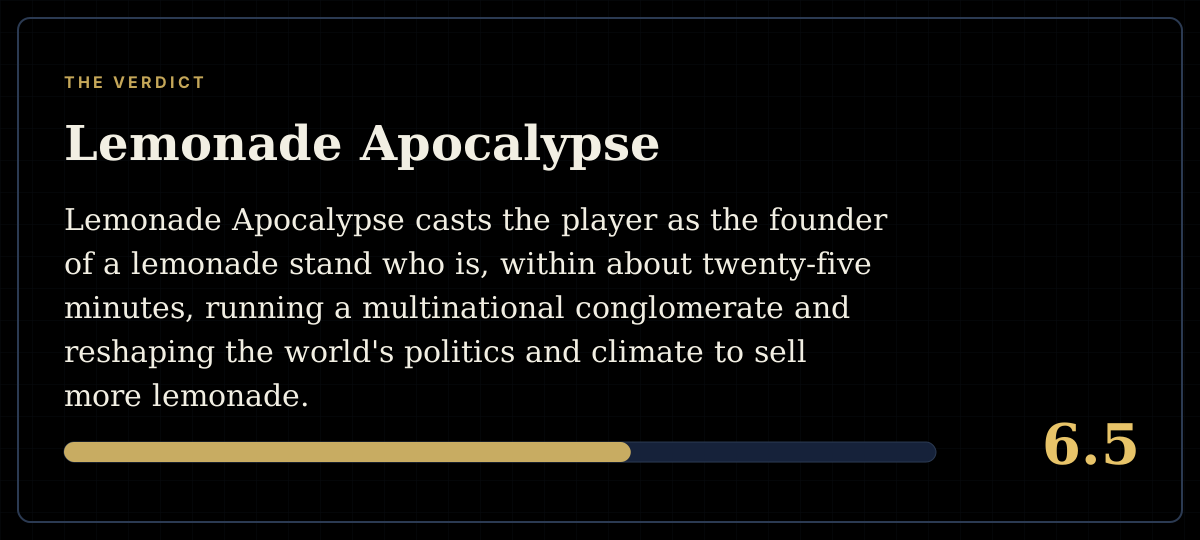
6.5 / 10
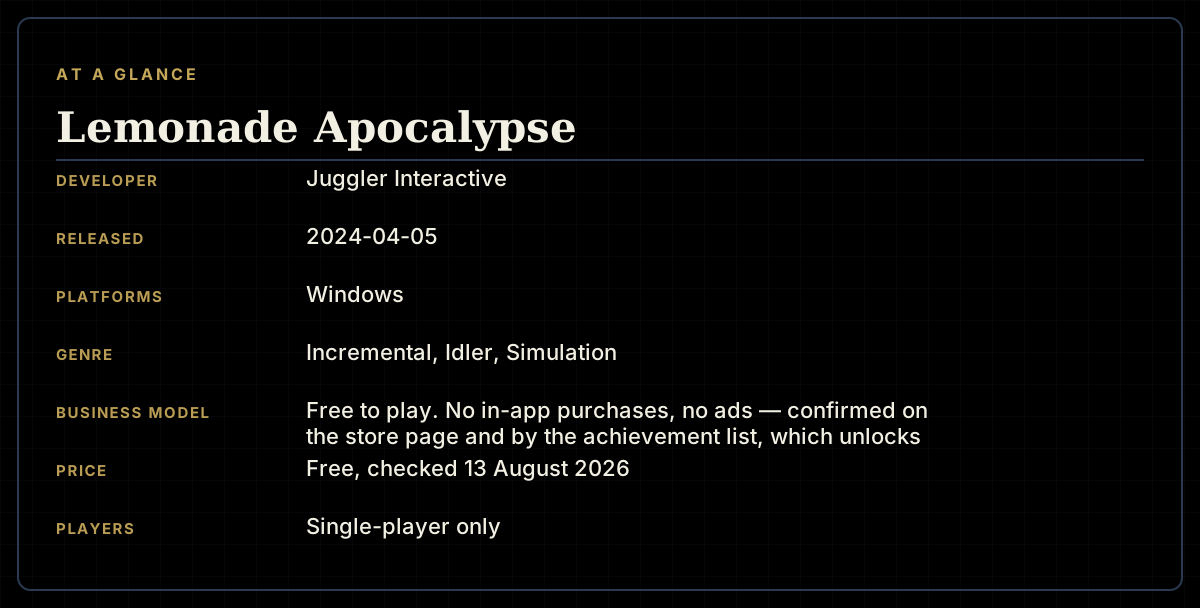
- Developer
- Juggler Interactive
- Publisher
- Juggler Interactive, Adventales
- Released
- 5 April 2024
- Platforms
- Windows
- Genre
- Incremental, Idler, Simulation
- Monetisation
- Free to play. No in-app purchases, no ads — confirmed on the store page and by the achievement list, which unlocks entirely through play
- Players
- Single-player only
The short version
Lemonade Apocalypse casts the player as the founder of a lemonade stand who is, within about twenty-five minutes, running a multinational conglomerate and reshaping the world's politics and climate to sell more lemonade. Grown out of a 2021 game jam and released free on Steam by solo developer Juggler Interactive on 5 April 2024, it sits at Very Positive — 94.9% of 916 English-language reviews — a score its own critics mostly earn, complaining less that it's bad than that it used to be broken and always was short. The most serious of those complaints, a complete absence of any save feature, went unresolved for nearly two years before the developer's March 2026 overhaul finally added permanent saves.
Biggest strengths
- Costs nothing, asks for nothing, and delivers a complete, structured arc from lemonade stand to skyscraper to global influence in one sitting
- The satirical premise is genuinely distinctive among incremental games, and the community's own vote-weighted Steam tags back that reading — Capitalism, Satire and Dystopian all sit above 275 votes alongside Incremental's 331
- Steam's achievement data shows 89% of players who install it reach the ending, an exceptionally healthy completion rate for any game
Biggest weaknesses
- There was no way to save progress at all for close to two years after release — a crash or an accidental close simply erased everything, and this review's own reading of the negative sample found it the single most repeated complaint before the March 2026 fix
- Despite framing several moments as ethical choices, at least one detailed negative review reports the game hard-locking progress behind the "correct" choice regardless of the player's actual capital, which undercuts the promise of a real decision
- There is only one practical order to buy upgrades in, so the sense of strategy thins out almost immediately after the opening minutes
Who it's for: Fans of short, satirical incrementals in the Universal Paperclips mould who want a free, one-sitting escalation story rather than an open-ended commitment; a poor fit for anyone hoping for real branching choices or a long-term idle game to leave running.
Our recommendation: A charming, free, twenty-five-minute satire about capitalism eating the world, whose worst historical problems — no save, a broken windowed mode, a broken mute button — have now been fixed, leaving mainly its short length and its illusion of choice as fair complaints.
6.5 / 10
Introduction
Lemonade Apocalypse starts the player behind a single lemonade stand, pricing cups and buying upgrades to squeeze out more demand, and ends — roughly twenty-five minutes later, if the completion data below is any guide — running a skyscraper-based conglomerate that lobbies governments and warms the climate to keep the lemonade flowing. It began life as a 2021 game jam project and was released free on Steam by solo developer Juggler Interactive on 5 April 2024, under the banner "you can finish it in one sitting on a Friday evening." It has aged into something genuinely well-liked — Very Positive at 94.9% across its English-language reviews — though this review's full read of its 47 negative reviews turns up a real, well-documented history of technical trouble that only recently got fixed.
An escalation, not a grind
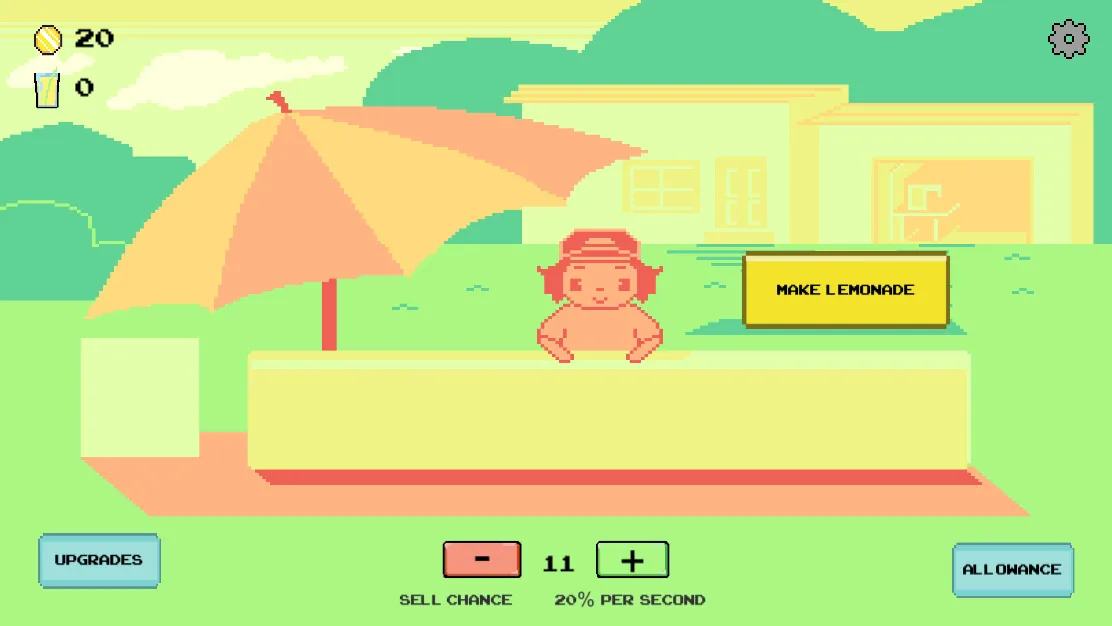
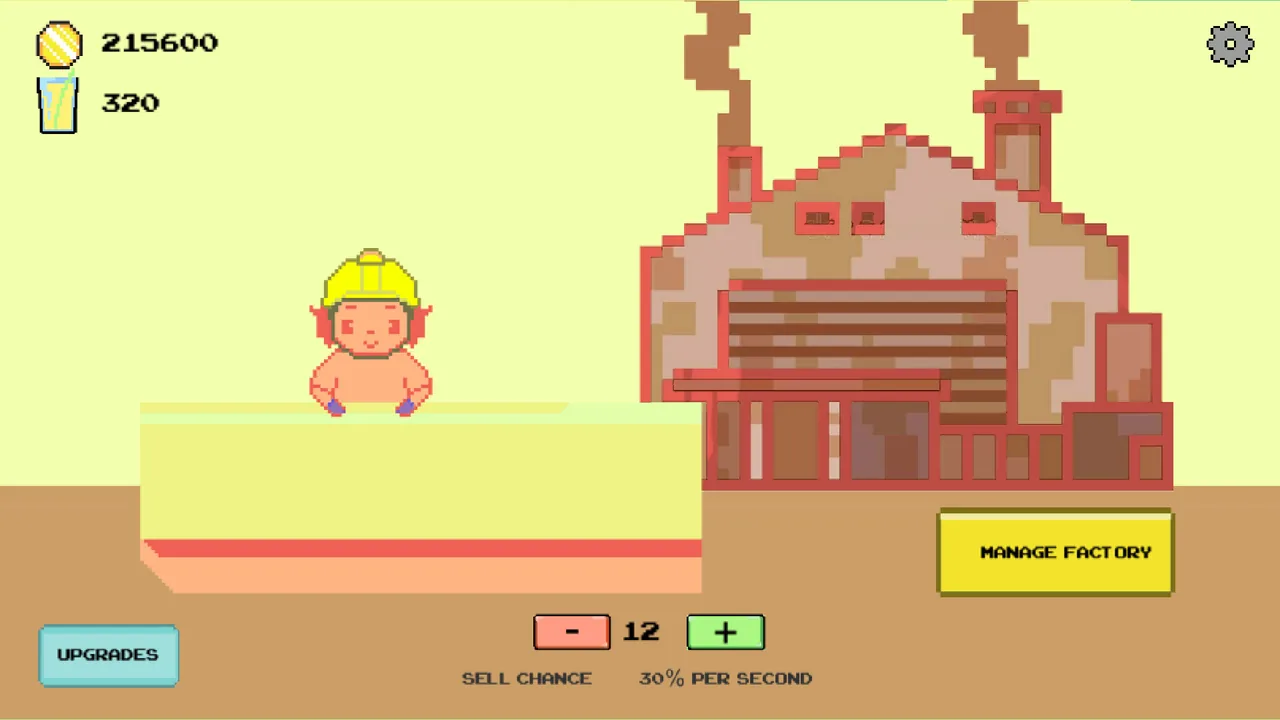
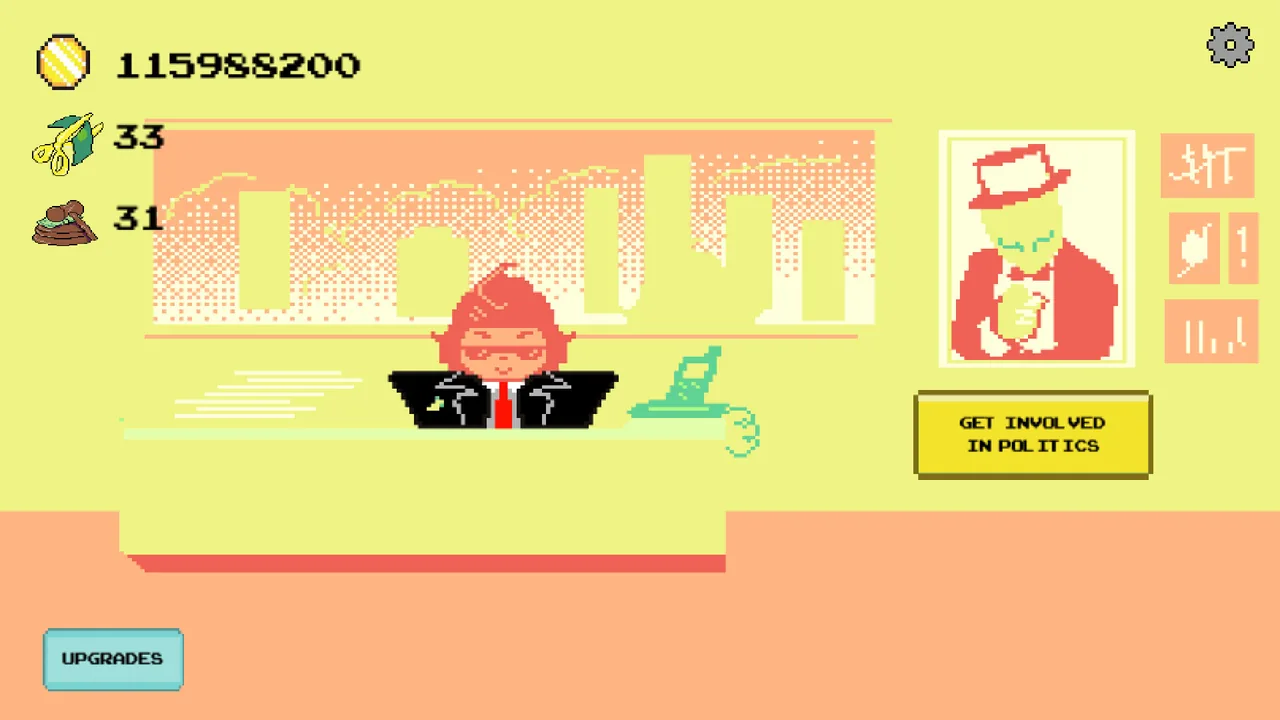
The core loop is deliberately linear rather than open-ended: each stage — stand, cart, shop, factory, skyscraper — hands the player a new pricing-and-demand puzzle and a short list of upgrades to buy through it, then advances the story to the next, larger stage once targets are hit. It plays less like a traditional incremental game you leave running and more like a short, structured business-satire story told through incremental mechanics, and the community's own vote-weighted Steam tags back that framing clearly: Capitalism (317 votes), Satire (306) and Dystopian (275) all sit close behind Incremental itself (331), well ahead of anything suggesting a long-haul idle commitment. That's a genuinely distinctive angle for the genre, closer in spirit to Universal Paperclips' slow reveal of what the player's number-chasing actually costs than to a Cookie Clicker-style forever-game — and two of this review's negative sample explicitly invoke Paperclips as the superior version of the same idea, which is a fair comparison to make even where this review disagrees with the verdict.
Steam's achievement data confirms the loop holds attention for its intended length: 89% of players who ever launched the game reach the "Finished" achievement, with the milestones along the way — first sale, buying a bike, building the factory, hiring lobbyists — sitting between 89% and 98.4% completion. That's an unusually clean curve, and it matches what the negative reviews themselves report: the median playtime among this game's critics is 25 minutes, meaning these are overwhelmingly people who saw the story through to its end and are complaining about what they found there, not players who bounced off early.
The choice that isn't quite one
The most interesting critical thread in the negative sample isn't about length at all. One detailed review describes attempting to pick the game's more ethical options at key decision points, only to find progress hard-gated behind the "correct" choice regardless of the player's actual financial state, with the game ultimately steering the story toward its predetermined apocalyptic ending anyway. That's a specific, checkable design complaint rather than a vague one, and it lands because the game's own tags — Political Sim, Immersive Sim — promise more agency than a strictly ordered upgrade path actually delivers. There is, in practice, one workable order to buy upgrades in at each stage, and the sense that the player is steering the outcome thins out fast once that becomes clear. It's a fair complaint to weigh against the satire's central point, which arguably is that the player was never really steering — but it's still a mechanical limitation worth knowing about going in.
A rough couple of years, now mostly fixed
The single most repeated technical complaint across this game's negative history is the straightforward absence of any way to save progress. Multiple reviewers describe losing an entire run to a crash or an accidental close with nothing to show for it — "Sure, it's free, but that's no excuse for this," as one put it — and the complaint recurs steadily across 2024 and into 2025. It was real, and it was not a small oversight for a twenty-five-minute game people often played in more than one sitting. It also, notably, took a long time to address: the developer's own March 2026 patch notes for a major "v2.0.0" overhaul list "Permanent Saves" as a headline feature, meaning the gap between launch and a real fix ran to nearly two years.
Two smaller technical complaints followed a much faster arc and are worth dating separately rather than folding into the same story. A launch-week bug locked the game into a fixed, unresizable window that broke on ultrawide monitors — the developer shipped a windowed-mode fix five days after release, on 10 April 2024, though at least one review from June 2024 still reported resolution trouble months later. A broken mute button that reset itself every time the story advanced to a new stage drew several early complaints and was patched properly by 21 July 2024, with separate music and sound mute options added the following month. Both were real launch problems, both were fixed within the game's first year, and neither shows up in this review's small 2025–2026 sample of negatives — which is the pattern of a bug that actually got solved, not one quietly aging out of relevance.
Where it leaves off
Judged purely as a length-for-money proposition, twenty-five minutes for free is not a hard case to make in the game's favour, and the developer never pretended otherwise — the original announcement post pitched it explicitly as something to "easily get into and potentially finish in one sitting." The fairer criticism is that a meaningful share of the audience clearly wanted more of exactly this idea, and got it: Juggler Interactive has since built a longer, paid sequel, Lemonade Apocalypse: The Great Filter, directly out of this game's premise and player feedback. That's context worth having rather than a reason to mark this original release down — it's the free proof of concept doing precisely the job a proof of concept is meant to do.
Final Verdict
Lemonade Apocalypse is a small, sharp, free satire that earns its Very Positive score honestly: a distinctive premise, a short but genuinely structured arc, and a completion rate almost any paid game would envy. What keeps it from scoring higher is a real, well-documented run of technical trouble — no save feature for nearly two years being the most serious of it — that a shopper checking this review before playing today will mostly not encounter, since the March 2026 update finally closed the gap. What remains fair criticism is structural rather than technical: the illusion of meaningful choice is thinner than the game's own political-satire tags suggest, and the whole experience is over in well under half an hour. For a free download with no strings attached, that's still an easy recommendation — just go in expecting a short, pointed story rather than a system to sink hours into.
Pros and cons
Pros
- Costs nothing, asks for nothing, and delivers a complete, structured arc from lemonade stand to skyscraper to global influence in one sitting
- The satirical premise is genuinely distinctive among incremental games, and the community's own vote-weighted Steam tags back that reading — Capitalism, Satire and Dystopian all sit above 275 votes alongside Incremental's 331
- Steam's achievement data shows 89% of players who install it reach the ending, an exceptionally healthy completion rate for any game
- The developer has stayed with the project for years after its 2024 release, culminating in a March 2026 update that added the permanent saves the game had lacked since launch
Cons
- There was no way to save progress at all for close to two years after release — a crash or an accidental close simply erased everything, and this review's own reading of the negative sample found it the single most repeated complaint before the March 2026 fix
- Despite framing several moments as ethical choices, at least one detailed negative review reports the game hard-locking progress behind the "correct" choice regardless of the player's actual capital, which undercuts the promise of a real decision
- There is only one practical order to buy upgrades in, so the sense of strategy thins out almost immediately after the opening minutes
- A meaningful share of critics beat the entire game in under half an hour and simply wanted more of it — a fair limitation even though the developer described it as a short experience from the outset
Screenshots
-
Lemonade ApocalypseImage: Juggler Interactive via Steam -
Lemonade ApocalypseImage: Juggler Interactive via Steam -
Lemonade ApocalypseImage: Juggler Interactive via Steam -
How the review scores each part of the gameWanderer Editorial -
The essentials at a glanceWanderer Editorial -
The short versionWanderer Editorial