
Game review
Holyday City: Reloaded
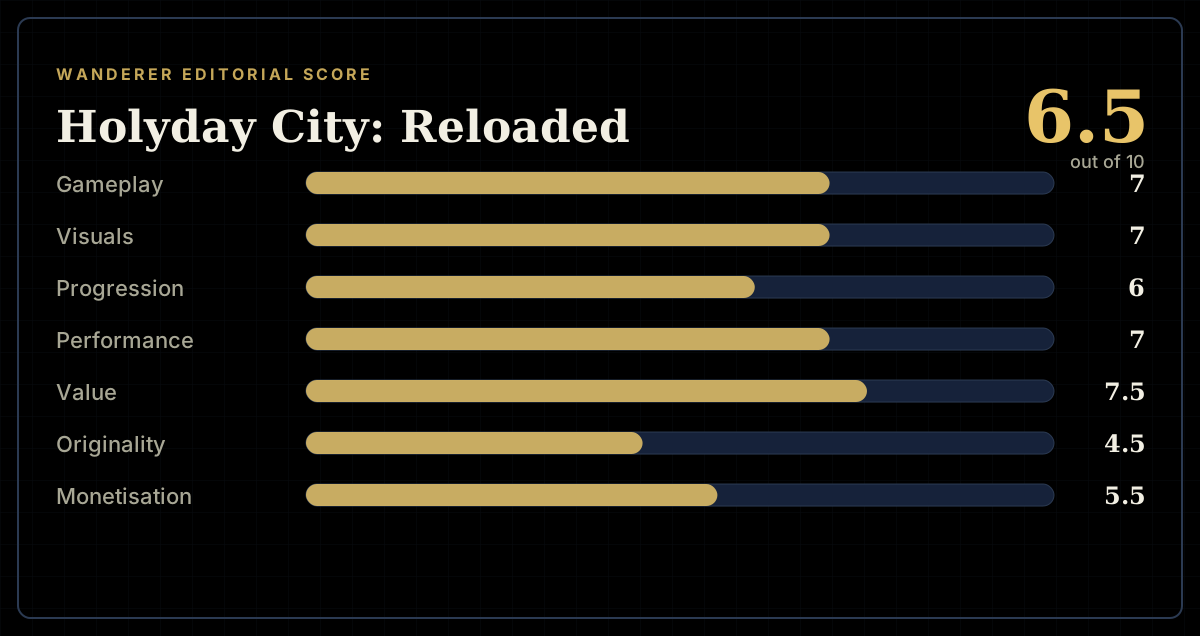
6.5 / 10
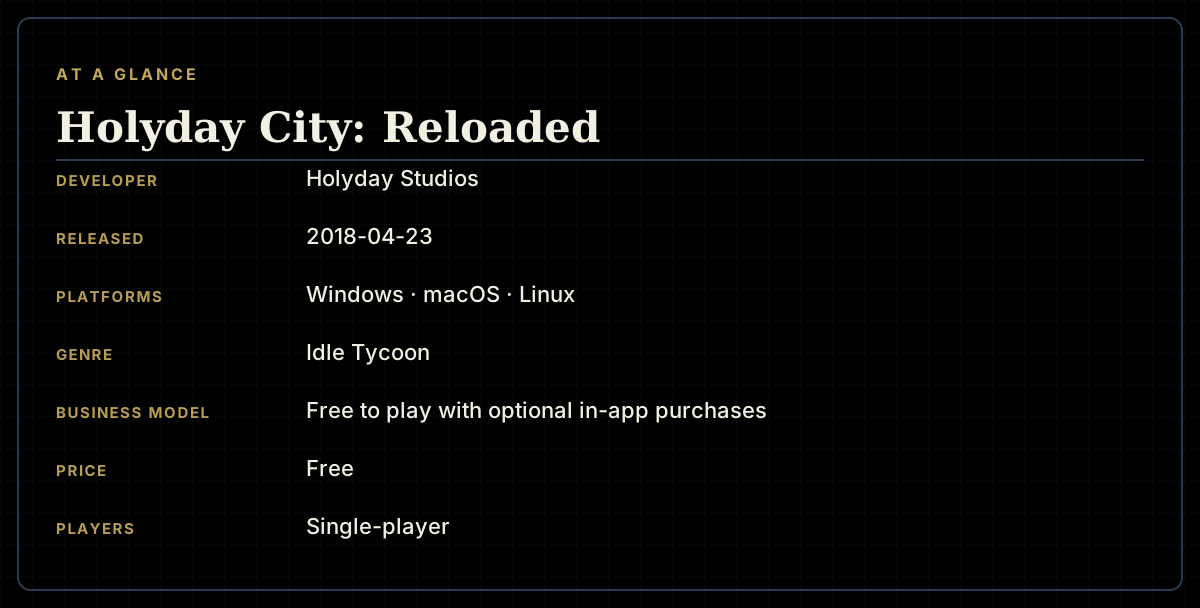
- Developer
- Holyday Studios
- Publisher
- Holyday Studios
- Released
- 23 April 2018
- Platforms
- Windows, macOS, Linux
- Genre
- Idle Tycoon
- Monetisation
- Free to play with optional in-app purchases
- Players
- Single-player
The short version
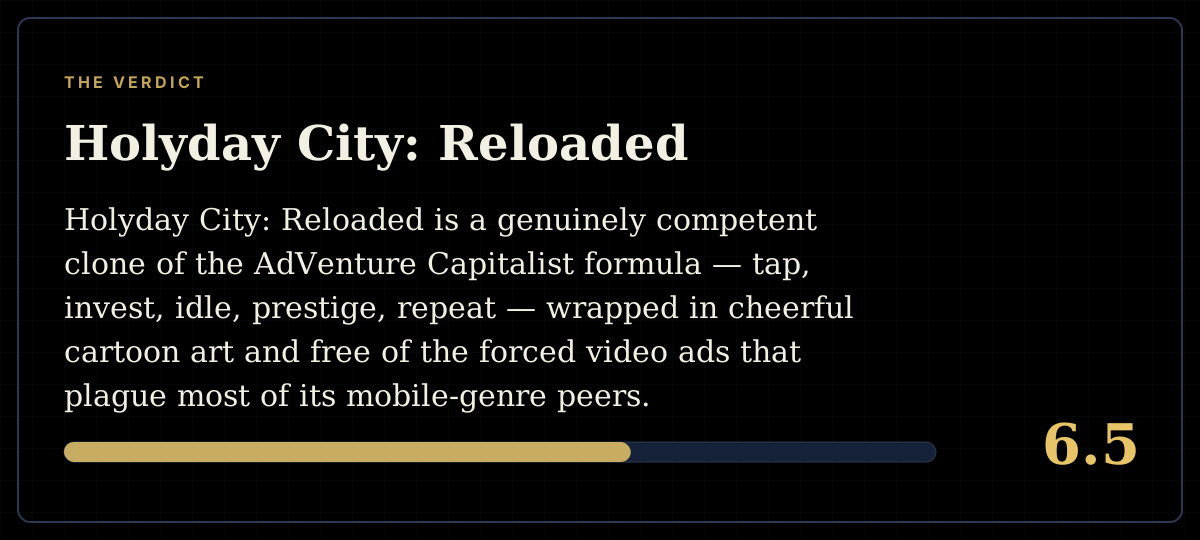
Holyday City: Reloaded is a genuinely competent clone of the AdVenture Capitalist formula — tap, invest, idle, prestige, repeat — wrapped in cheerful cartoon art and free of the forced video ads that plague most of its mobile-genre peers.
The trouble is less what it does than what stopped happening to it: the developer's own news feed shows no meaningful content update since 2019, and the same neglect players describe — dead social channels, a grind wall nobody smoothed out, a privacy policy nobody has revisited — shows up across seven years of reviews.
Biggest strengths
- No forced video ads and no pay-to-win pressure, since there's no PvP or leaderboard stakes to buy your way up
- Reads as a well-built, faithful take on the AdVenture Capitalist formula rather than a cheap clone
- Offline progress genuinely works — your city keeps earning while the game (or Steam) is closed
Biggest weaknesses
- Steam's own news feed shows no real content update since a June 2018 patch and a September 2019 Linux announcement — seven years of silence
- Progress collapses into a hard grind wall past roughly city level 30, and premium currency is the only way to move faster
- A cluster of well-known reviews from 2018 quote an unusually invasive-sounding privacy policy that nobody at the studio has publicly revisited since
Who it's for: Idle-game regulars who want a free, ad-free AdVenture Capitalist alternative for a few dozen hours, not players looking for a game still being actively developed.
Our recommendation: Worth installing — it's free and genuinely well made for the first stretch — but go in knowing the studio moved on years ago.
6.5 / 10
Introduction
Holyday City: Reloaded didn't start on Steam. It began life on Kongregate in late 2017 as a browser idle-clicker, went through a run of version updates into early 2018, and arrived on Steam on 23 April 2018 as close to unchanged as a port gets. That history matters more than usual here, because almost nothing about the game has moved since. Valve's own "AI Generated Content Disclosure" section doesn't exist on this store page for the obvious reason it predates the policy, but the more telling absence is in the news feed: the last item that reads like an actual content patch is dated 27 June 2018, followed by a single "now available on Linux" post in September 2019, and then nothing for almost seven years.
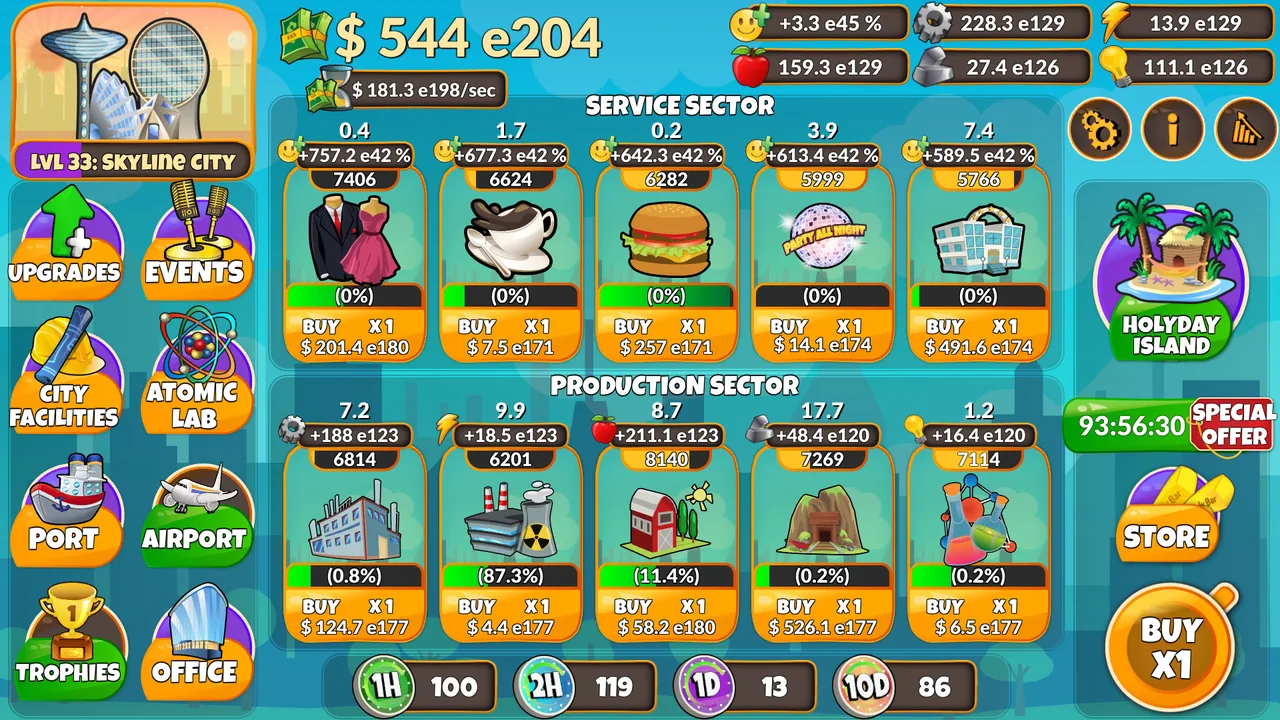
What survived that abandonment is a legitimately solid idle tycoon. You start a small business empire, tap to speed up early income, sink profits into upgrades and new venues, and eventually prestige your city for a permanent multiplier before doing it all again, faster. If that loop sounds familiar, it should — several of the game's own Steam reviews describe it as "very similar to Adventure Capitalist," and that's the right comparison to make. Holyday City: Reloaded doesn't try to reinvent the genre; it executes an established formula cleanly, with brighter, more cartoonish art than most of its rivals and, notably, none of the forced video ads that usually come bundled with free mobile-style idle games on other platforms.
Core loop and progression
The early hours are the game at its best: buildings unlock at a steady clip, managers automate the businesses you've outgrown clicking through, and short-term goals keep arriving faster than you can chase them. It's the same dopamine architecture AdVenture Capitalist popularised, applied competently rather than innovatively.
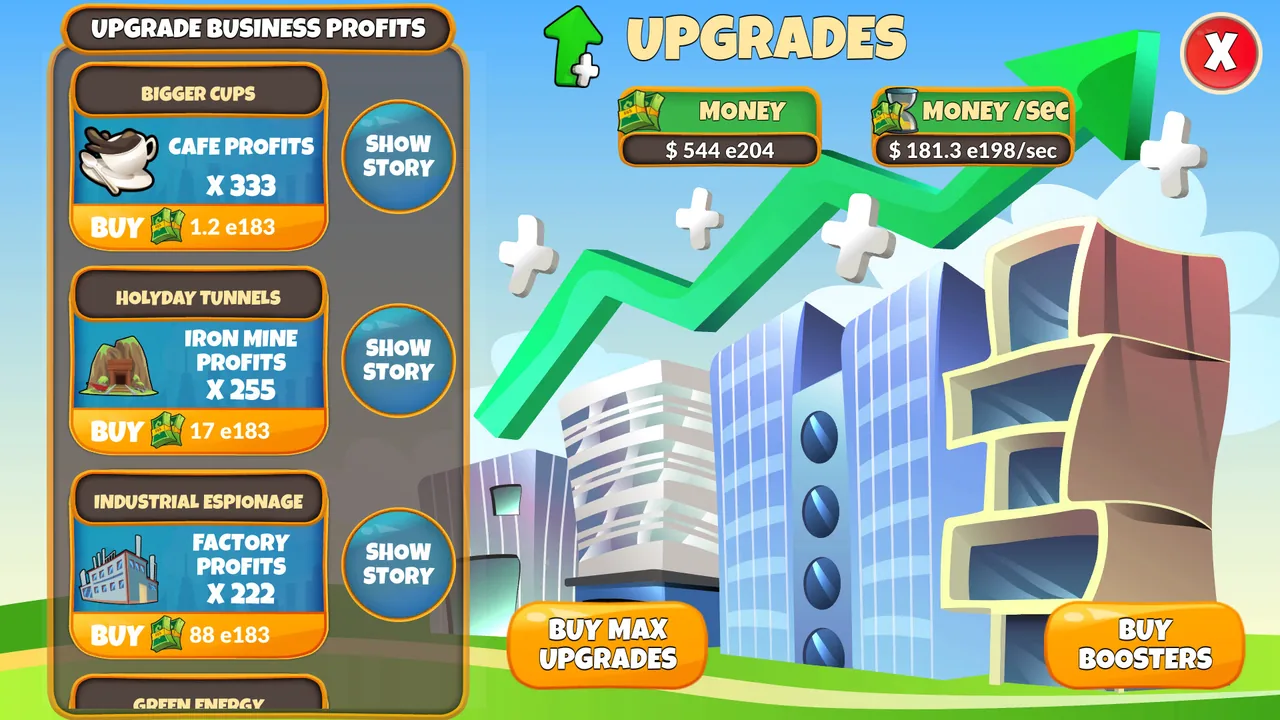
The trouble starts around city level 30, where multiple negative reviews independently describe the pace collapsing "to a snail's pace" unless you buy a time-skip. That's not a one-off complaint — it's the same shape of criticism from reviewers years apart, which suggests it was never tuned rather than that it broke. The most striking data point in the whole review corpus is a January 2024 review from a player with over 16,500 hours logged, who describes finally giving up because the studio "set the bar so high for your final upgrade that you will never hit it." That's not a complaint about difficulty; it's a complaint about a ceiling with no visible floor underneath it, on a game whose developer isn't around to lower it. The 42-achievement set backs this up at a smaller scale: the single easiest achievement sits at only 61.9% completion across everyone who's ever unlocked one, and the list falls into single digits well before the end, a steep drop-off typical of idle games whose late content thins out into a wait timer.
On the positive side of the same coin, prestige resets are described by several reviewers as generous rather than punishing — one long-time player specifically praises how a fresh run gives "a direct benefit to your game" instead of forcing a bare restart, which is the mechanic that keeps the mid-game readable even after the early rush fades.
Monetisation: pay-to-skip, not pay-to-win
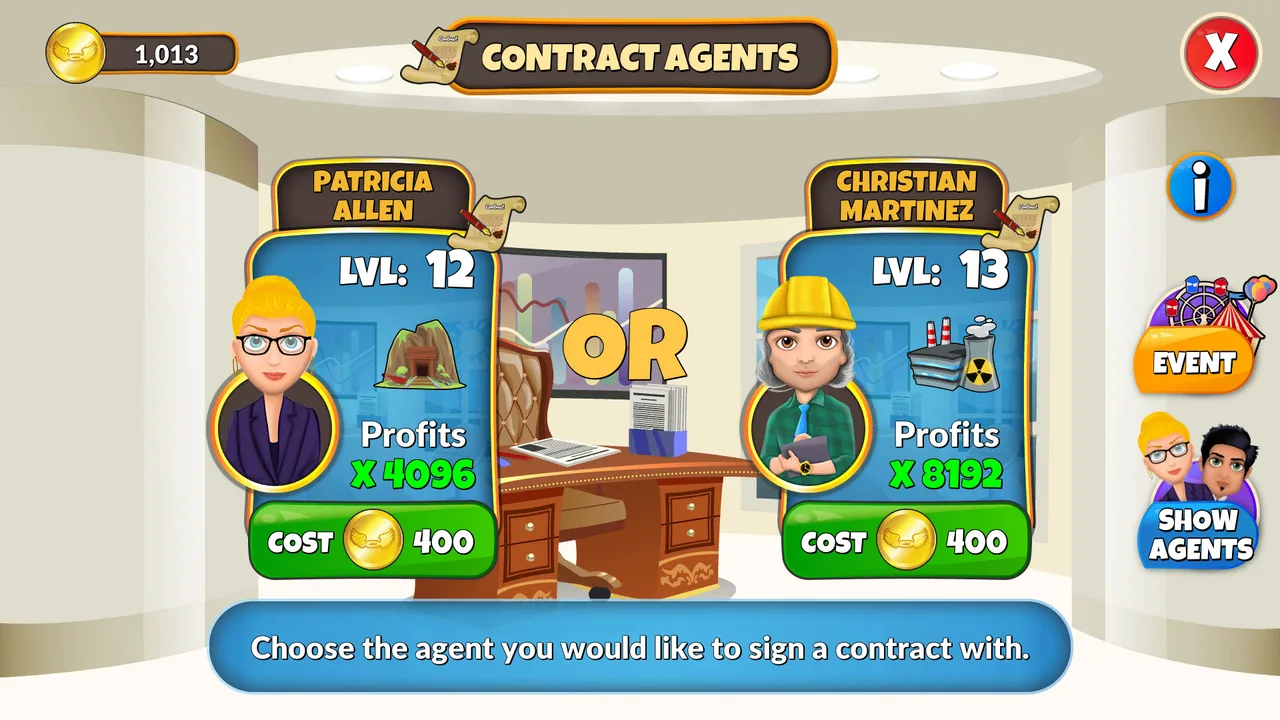
Because Holyday City: Reloaded has no PvP, no leaderboard stakes worth competing over, and no multiplayer component at all, the usual pay-to-win framing doesn't really apply — there's nothing competitive to win. What the in-app purchases sell is time: premium currency that buys skips past the exact grind wall described above. That's a real design choice worth scoring honestly rather than dismissing, because it means every dollar spent buys convenience against your own patience, not an edge over another player.
Reviewers who've stuck around the longest are also the ones least happy about it. A review posted in August 2026, from a player with 423 hours logged, puts it plainly: "like many freemium idle incremental games, it's swimming against two currents... the monetization current is stronger than the gameplay one." That's a fair summary of the whole design once the free progression rate slows down — you can out-wait it, out-click it in short bursts, or pay, and the game increasingly nudges toward the third option the longer you play. Set against that: this review's read of both the positive and negative samples found no mentions of forced advertising on the Steam build, which puts a real floor under how aggressive the monetisation gets.
Visuals, sound and stability
The cartoon art style draws consistent, unprompted praise — "nice-looking," "nice cartoon visuals" — and nothing in the review corpus disputes it. The looped soundtrack fares worse in at least one detailed review, which calls it tolerable "for 5 or 10 minutes, maybe" and grating after that; muting it and running your own music is the practical fix, and a common one for the genre.
Stability is mostly a non-issue across roughly 1,600 reviews in every supported language, with Steam Cloud saves, achievements and leaderboards all functioning. Two exceptions are worth flagging honestly rather than folding into "it just works": a 2019 review describes losing a 500-hour save with no working fix from support beyond a stock "reinstall it" reply, and a December 2025 review reports being forced to restart entirely, including re-picking a language, which reads like a server-side reset rather than a local bug. Both are rare against the size of the review base, but for an idle game — where the whole point is that your progress survives being left alone — a save-loss report carries more weight than it would in most other genres. There's also a small run of Linux-specific crash and browser-freeze reports as recently as February 2026, on a game whose only Linux-specific news post is from 2019.
A game the developer left behind
This is the throughline of Holyday City: Reloaded's more recent reviews, and it's corroborated by more than player impressions. Steam's own news feed for the app shows a burst of version updates from October 2017 through June 2018, one further post in September 2019 announcing Linux support, and silence since. Reviews from 2024 describe the game as "pretty neglected," note that its old social-media promotional codes "haven't been updated in a long time," and call it outright a "dead game" that runs on rotating scheduled events rather than any real development. None of that stops people from playing it — the game still draws a steady trickle of new English reviews every year through 2026 — but it does mean buying in means adopting a finished product, not a live one.
Worth reading in that light: the most-upvoted negative reviews on this page, by a wide margin, are from 2018 and concern the game's original privacy policy, which several reviewers quoted directly as unusually broad about reading what other apps a device had installed. That controversy is seven years old and this review cannot verify what the current policy says or whether the studio has changed its data practices since — only that the complaint is prominent, dated, and worth a prospective player checking the current store page's privacy disclosure for themselves rather than taking either the 2018 reviews or this summary as current fact.
Reading the review score
Across all languages Holyday City: Reloaded sits at 81% positive of 1,638 reviews — Very Positive. Restricted to English only, the more relevant figure for most of this audience, it's 76.3% of 675 — Mostly Positive, one tier down, which is a modest but real gap worth naming rather than quoting only the friendlier headline number. Year-by-year, English sentiment bounces between roughly 57% and 86% depending on the year, but each yearly bucket is small enough (a dozen to two dozen reviews) that the swings read more like noise than a trend in either direction — there's no clean "it used to be better" or "it's improving" story to tell here, just a small, steady stream of opinion on an unchanging game.
Holyday Studios' back catalogue is worth a mention here too: at least one long-time player specifically recommends the studio's other idle release, Midas Gold Plus, in the same breath as this one, suggesting whatever goodwill the studio built with this formula travels across its lineup even without ongoing support for either title.
Final verdict
Holyday City: Reloaded earns its Mostly Positive badge honestly. It's a free, ad-free, genuinely well-made take on the AdVenture Capitalist formula that will happily eat a few dozen hours, progress while you're away exactly as an idle game should, and never once demand you watch a video to keep playing. What it won't do is keep growing with you — the studio's own patch history stops in 2019, the mid-to-late game hits a wall that time-skip purchases exist specifically to paper over, and the support and community channels around it are, by the accounts of the people still playing it, quietly closed. Install it for a free first stretch of solid idle-tycoon fun. Don't expect anyone to still be building it.
Pros and cons
Pros
- No forced video ads and no pay-to-win pressure, since there's no PvP or leaderboard stakes to buy your way up
- Reads as a well-built, faithful take on the AdVenture Capitalist formula rather than a cheap clone
- Offline progress genuinely works — your city keeps earning while the game (or Steam) is closed
- Free across Windows, macOS and Linux with cloud saves and 42 Steam achievements
Cons
- Steam's own news feed shows no real content update since a June 2018 patch and a September 2019 Linux announcement — seven years of silence
- Progress collapses into a hard grind wall past roughly city level 30, and premium currency is the only way to move faster
- A cluster of well-known reviews from 2018 quote an unusually invasive-sounding privacy policy that nobody at the studio has publicly revisited since
- Social channels, daily-code promotions and customer support are reported as dead by multiple 2024-2026 reviews
Screenshots
-
Holyday City: ReloadedImage: Holyday Studios via Steam -
Holyday City: ReloadedImage: Holyday Studios via Steam -
Holyday City: ReloadedImage: Holyday Studios via Steam -
How the review scores each part of the gameWanderer Editorial -
The game at a glanceWanderer Editorial -
The short versionWanderer Editorial