Game review
Mortal Glory 2
6.5 / 10
- Developer
- Redbeak Games
- Publisher
- Redbeak Games
- Released
- 4 March 2024
- Platforms
- Windows
- Genre
- Tactics RPG, Roguelite, Strategy
- Monetisation
- One-time purchase plus optional paid DLC
- Players
- Single-player only
The short version
Mortal Glory 2 manages a roster of traveling gladiators through turn-based tactical battles, recruiting fighters, hunting item synergies and climbing a Slay the Spire-style node map toward each run's final tournament. Developed and self-published by Redbeak Games, it released on 4 March 2024 as a sequel to the well-regarded Mortal Glory. Its 221 English-language Steam reviews sit at Very Positive, roughly 89.1%, and this review reads the full available negative sample of 24 reviews alongside the top positives to find a genuinely addictive tactics roguelite whose specific restructuring — trading the original's visual-novel management flavour for a more conventional node-based run structure — splits opinion among fans of the first game while still winning over plenty of newcomers on its own merits.
Biggest strengths
- Reviewers repeatedly credit the tactical combat with an addictive "one more turn" quality, with several favourably comparing the overall structure to Slay the Spire's run-based format
- The class and skill system draws praise for genuine build variety and emergent strategy once players learn the mechanics, with unusual combos and item synergies drawing specific delight
- The game is credited as a strong standalone tactics roguelite even by reviewers who weren't won over by the original Mortal Glory, with one calling it "way more fun than I initially thought it'd be"
Biggest weaknesses
- A meaningful share of returning fans specifically mourn what the sequel removed: the original's visual-novel and management-RPG flavour between battles, which reviewers say has been replaced by "yet another node-based roguelite" structure
- Difficulty balance at higher settings draws repeated, specific complaints, with several reviewers describing enemies capable of one-shotting player characters through overloaded equipment or instant-kill hazards, especially when RNG turns against the player early
- Critical hits and random-number variance draw pointed criticism as capable of deciding fights independent of player skill or preparation, with high-level characters reported losing to weaker enemies on unlucky rolls
Who it's for: Tactics roguelite fans who enjoy Slay the Spire-style run structures layered onto gladiator combat; existing Mortal Glory fans should know the sequel trades some of the original's distinctive management flavour for a more conventional roguelite framework.
Our recommendation: A genuinely fun, well-built tactics roguelite on its own terms, with real difficulty-balance rough edges at higher settings and a structural change that won't sit well with everyone who loved the first game.
6.5 / 10
Introduction
Mortal Glory 2 manages a traveling band of gladiators through turn-based tactical combat, hunting gear and skill synergies while climbing a Slay the Spire-style branching map toward each run's final tournament. Redbeak Games developed and self-published it, releasing on 4 March 2024 as the sequel to the well-regarded Mortal Glory. Reading the full available negative sample of 24 English-language reviews alongside the top positives, out of a Very Positive corpus (roughly 89.1% across 221 reviews), finds a tactics roguelite that wins over plenty of newcomers on its own merits while splitting a meaningful share of the original's returning fans over how it got there.
Combat that earns its "one more turn" reputation
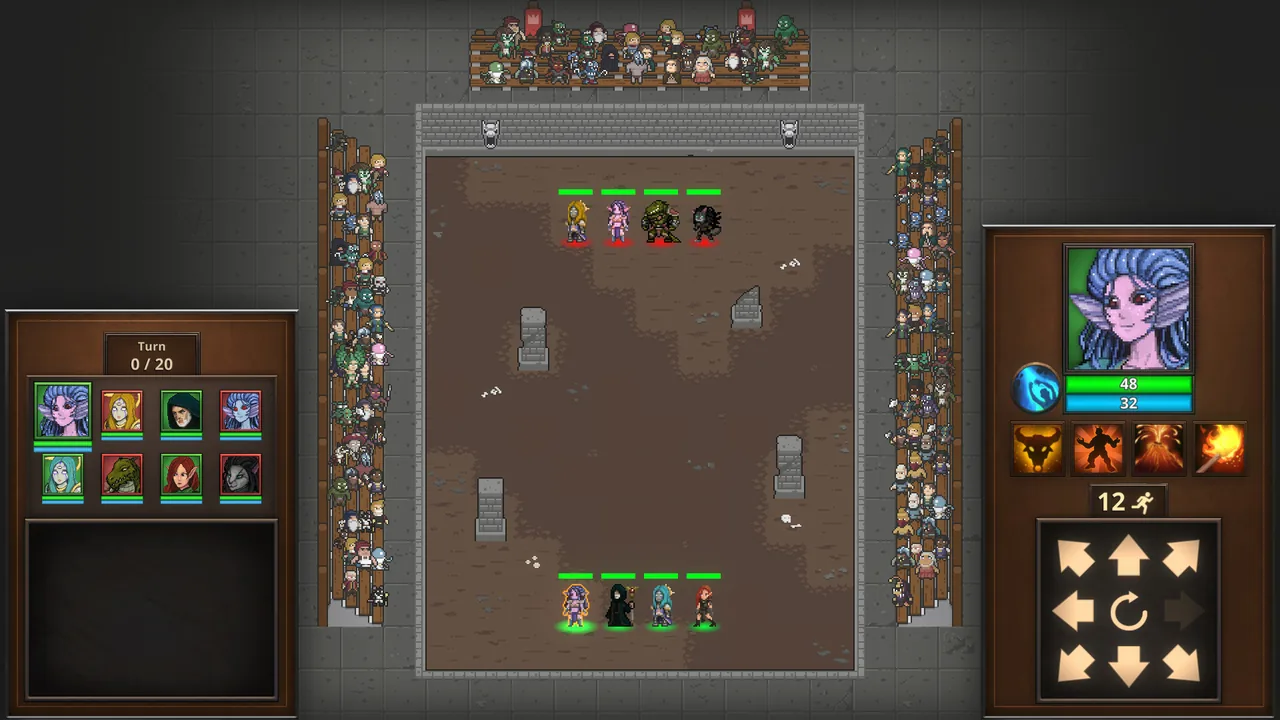
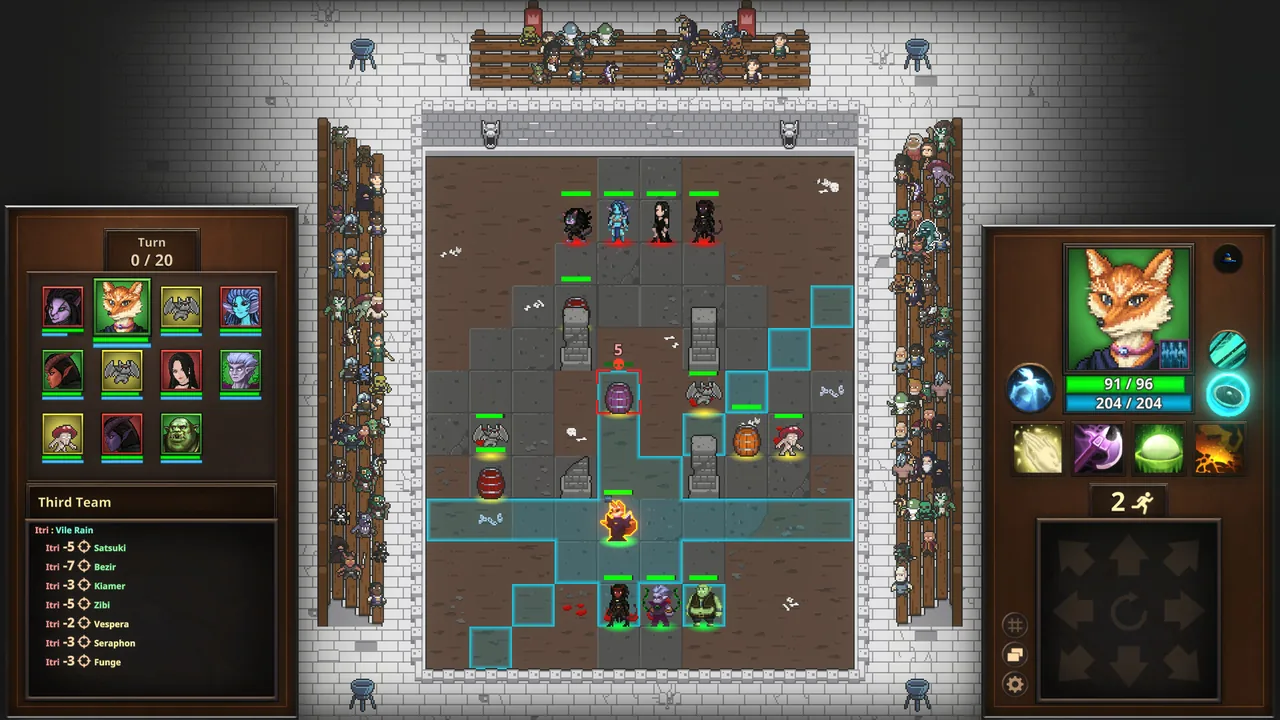
Reviewers reach for real, specific praise when describing the moment-to-moment tactics. One curator review, deliberately understated, called the game's style "efficient" and credited it with getting straight to satisfying decision-making without padding. Multiple reviewers independently compare the overall structure favourably to Slay the Spire, and several specifically praise the emergent strategy once item synergies and skill combinations click — one reviewer summarised a genuinely effective build in four blunt steps: get a dwarf, get gloves made for punching barrels, throw barrels, win. Even a reviewer who hadn't enjoyed the original Mortal Glory found the sequel "wayyy more fun than I initially thought it'd be" once past the early learning curve, and the class system draws consistent credit for meaningful build variety rather than a single dominant strategy.
A structural change that splits returning fans
The most substantive, recurring criticism in this review's sample comes specifically from players who loved what made the original Mortal Glory distinctive. Multiple reviewers say the sequel stripped away the first game's visual-novel and management-RPG flavour between battles in favour of a more conventional roguelite run structure — one reviewer put it plainly: "the best part of the game for me was the visual novel/management RPG aspect between the battles... feels like all of that was stripped away to make Yet Another Node Based Roguelite." Another reviewer, more measured, called the change "one step forward, two steps back" relative to the original, rating the sequel as a standalone game higher than as a follow-up specifically. This isn't nostalgia dressed up as criticism — it's a specific, considered account of what changed and why some fans preferred the original's approach, and it's worth flagging plainly for anyone coming to the sequel as a returning player rather than a newcomer.
Difficulty and RNG that can overwhelm preparation
A second, more mechanical thread of criticism concerns balance at higher difficulty settings. Multiple reviewers describe fights that can end in a single turn through overloaded enemy equipment or instant-kill environmental hazards, and several report bad early-run RNG effectively deciding a run's outcome before meaningful player choices come into play. Critical hits draw particular, repeated frustration — one reviewer described losing high-level, well-prepared fighters to low-level enemies purely on unlucky critical rolls, arguing the swing feels disproportionate to the stakes. This is a real, specific criticism rather than generic difficulty grumbling, and it recurs enough across independent reviewers to suggest genuine tuning issues at the harder end of the difficulty curve rather than a mismatch of expectations.
Final Verdict
Mortal Glory 2 succeeds as a genuinely addictive tactics roguelite on its own terms — reviewers who approach it without expectations from the original consistently find real depth and replayability in its combat and build systems. Where it draws real, considered criticism is in what changed from its predecessor: a meaningful share of returning fans specifically miss the original's management and visual-novel flavour, and difficulty balance at higher settings draws repeated, specific complaints about RNG and instant-kill scenarios overwhelming careful preparation. New to the series, this is a strong tactics roguelite worth its price; coming back from the original, temper expectations about what carried over.
Pros and cons
Pros
- Reviewers repeatedly credit the tactical combat with an addictive "one more turn" quality, with several favourably comparing the overall structure to Slay the Spire's run-based format
- The class and skill system draws praise for genuine build variety and emergent strategy once players learn the mechanics, with unusual combos and item synergies drawing specific delight
- The game is credited as a strong standalone tactics roguelite even by reviewers who weren't won over by the original Mortal Glory, with one calling it "way more fun than I initially thought it'd be"
- At its price, several reviewers specifically frame it as excellent value for a solo-developed game with this much tactical depth
Cons
- A meaningful share of returning fans specifically mourn what the sequel removed: the original's visual-novel and management-RPG flavour between battles, which reviewers say has been replaced by "yet another node-based roguelite" structure
- Difficulty balance at higher settings draws repeated, specific complaints, with several reviewers describing enemies capable of one-shotting player characters through overloaded equipment or instant-kill hazards, especially when RNG turns against the player early
- Critical hits and random-number variance draw pointed criticism as capable of deciding fights independent of player skill or preparation, with high-level characters reported losing to weaker enemies on unlucky rolls
- A cluster of reviewers describe pacing issues, with the early game feeling slow or under- explained and some individual battles, particularly larger team fights, running long enough to feel like a slog
Screenshots
-
Mortal Glory 2Image: Redbeak Games via Steam -
Mortal Glory 2Image: Redbeak Games via Steam -
Mortal Glory 2Image: Redbeak Games via Steam -
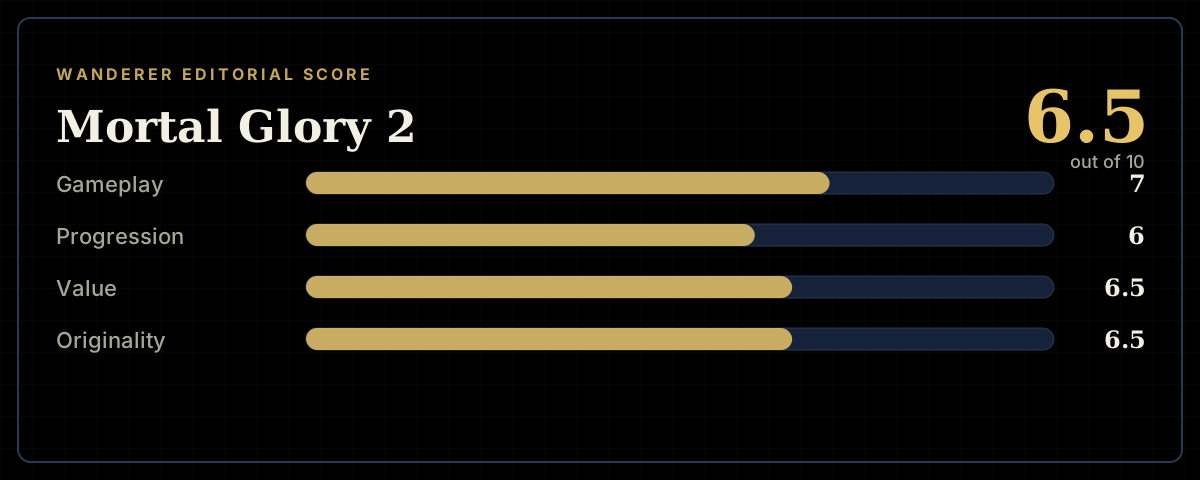
How the review scores each part of the gameWanderer Editorial -
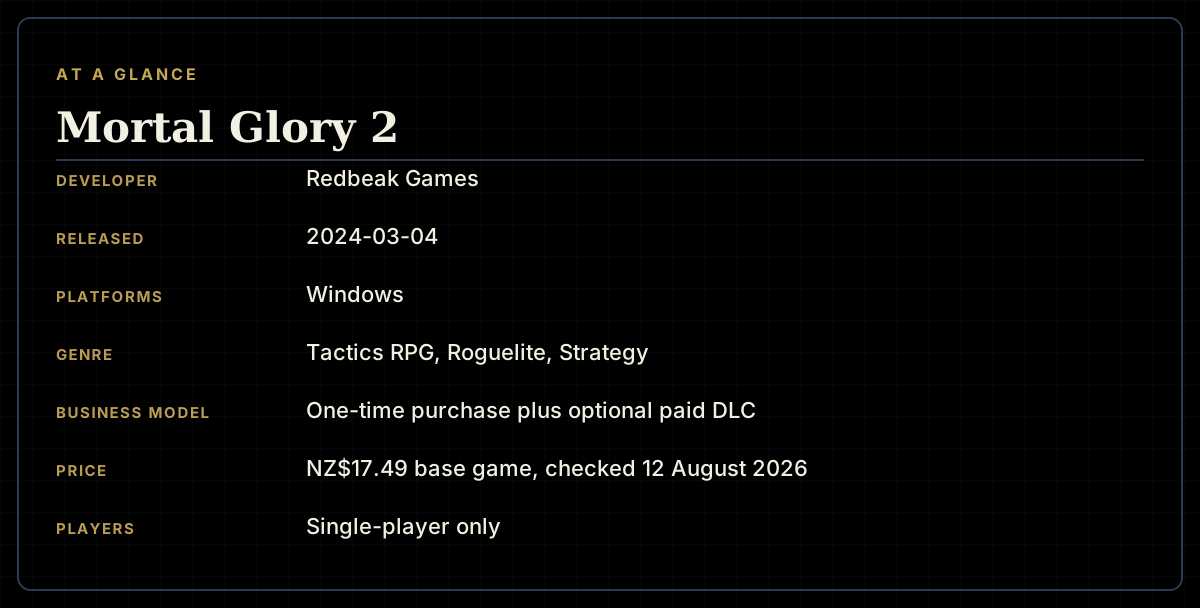
The essentials at a glanceWanderer Editorial -
The short versionWanderer Editorial