Game review
Ledgerbound
8 / 10
- Developer
- OmniMegaSuperCorp
- Publisher
- OmniMegaSuperCorp
- Released
- 13 August 2026
- Platforms
- Windows, macOS
- Genre
- Tactical RPG
- Monetisation
- One-time purchase, plus an optional cosmetics-and-soundtrack Deluxe Supporter Edition; no gameplay-affecting purchases
- Players
- Single-player
The short version
Ledgerbound sells itself on a joke — you play an insurance adjuster who has to deny a supernatural life-insurance claim by beating the monster that caused it — and then backs the joke with a genuinely well-built Fire Emblem-style tactics game and a fully voiced cast that Steam's own launch reviews keep singling out by name. RPGamer, Buffgaming and Nevi Games all scored it well ahead of the launch-day average indie release, and 34 of its first 38 Steam reviews are positive, most of them praising the writing and voice work specifically.
The one real design fight running through the reviews is the burnout and time-management system: every action, from swapping equipment to replaying a battle for better rewards, costs a shared time resource, and losing a fight increases burnout, which costs more time to recover from. Most players call it a smart layer that makes decisions matter; the most detailed critical review, from a player with real hours logged, calls it a death spiral that actively punishes engaging with the story the game is otherwise selling. Both are describing the same system honestly, and which one a given player becomes depends on how they play.
Biggest strengths
- A fully voiced cast that dominates the early reviews, with outside critics (RPGamer 4/5, Buffgaming 8.5/10, Nevi Games 8/10) agreeing before launch
- A genuinely distinctive premise — corporate insurance satire fused with epic fantasy and a dating sim — that earns its comedy rather than coasting on the pitch alone
- Grid-based tactical combat with promotion paths, hundreds of abilities and difficulty options for both newcomers and veterans of the genre
Biggest weaknesses
- The shared time/burnout resource that gates equipment changes, battle replays and story conversations reads as smart pacing to most reviewers and as a punishing death spiral to at least one detailed, high-playtime critical review
- No conversation log at launch, flagged by multiple reviewers as a real gap in a game this dialogue-heavy
- No display scaling or resolution options reported at launch, a problem on 4K and ultrawide setups according to one review
Who it's for: Tactics fans who want their grid combat wrapped in genuinely funny writing and a proper voice cast, and anyone who enjoyed the character-focused structure of a dating sim but wanted real combat depth alongside it. Less suited to players who want to save-scum their way through a hard fight, or who need a chat log to keep track of dialogue.
Our recommendation: Recommended at NZ$41.84 for tactics and narrative RPG fans alike — a distinctive premise, a cast reviewers keep calling out by name, and combat with real teeth, held back only by a time-management system that divides opinion and a couple of missing quality-of-life options at launch.
8 / 10
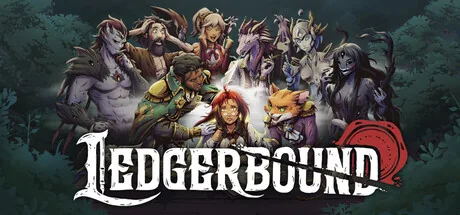
The pitch for Ledgerbound sounds like a throwaway joke: you play an insurance adjuster, and when an ancient enemy kills off the world's usual roster of heroes, your company is on the hook for their life insurance payouts — unless you can prove those heroes were simply underprepared by beating the enemy yourself. Claim denied. It's a corporate-satire premise stretched over an epic fantasy quest, and it would be easy for a game this pleased with its own pitch to coast on it. Ledgerbound mostly doesn't. Underneath the paperwork jokes is a genuine grid-based tactics game and a fully voiced dating-sim layer that Steam's launch-day reviews keep praising by name, sitting alongside a time-management system that a smaller, more detailed slice of the same reviews argues actively works against everything the game is otherwise selling.
Deny a claim, save the world
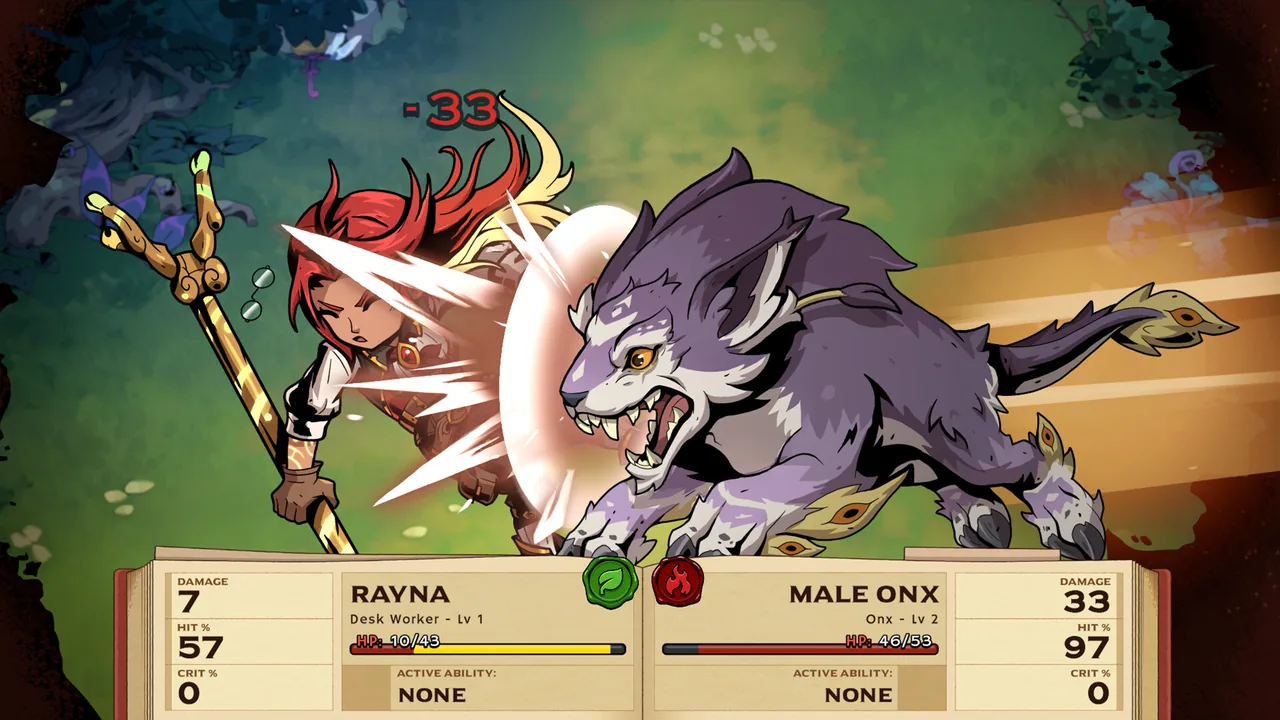
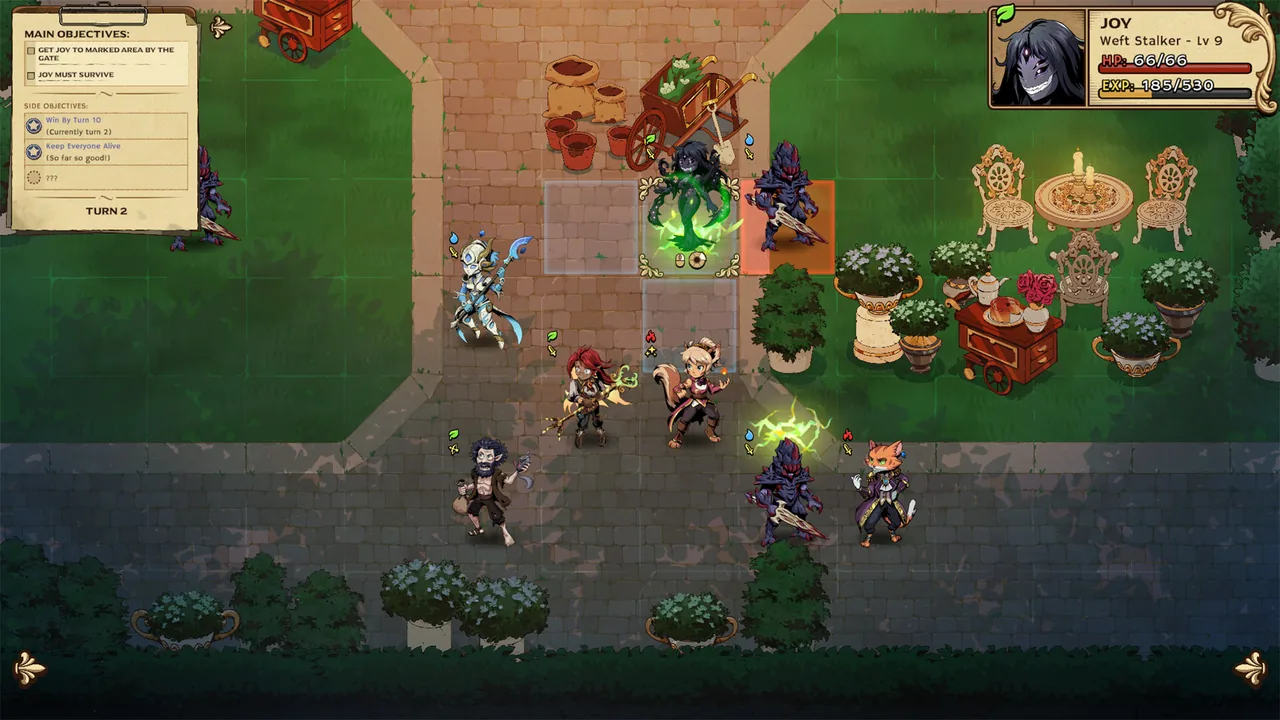
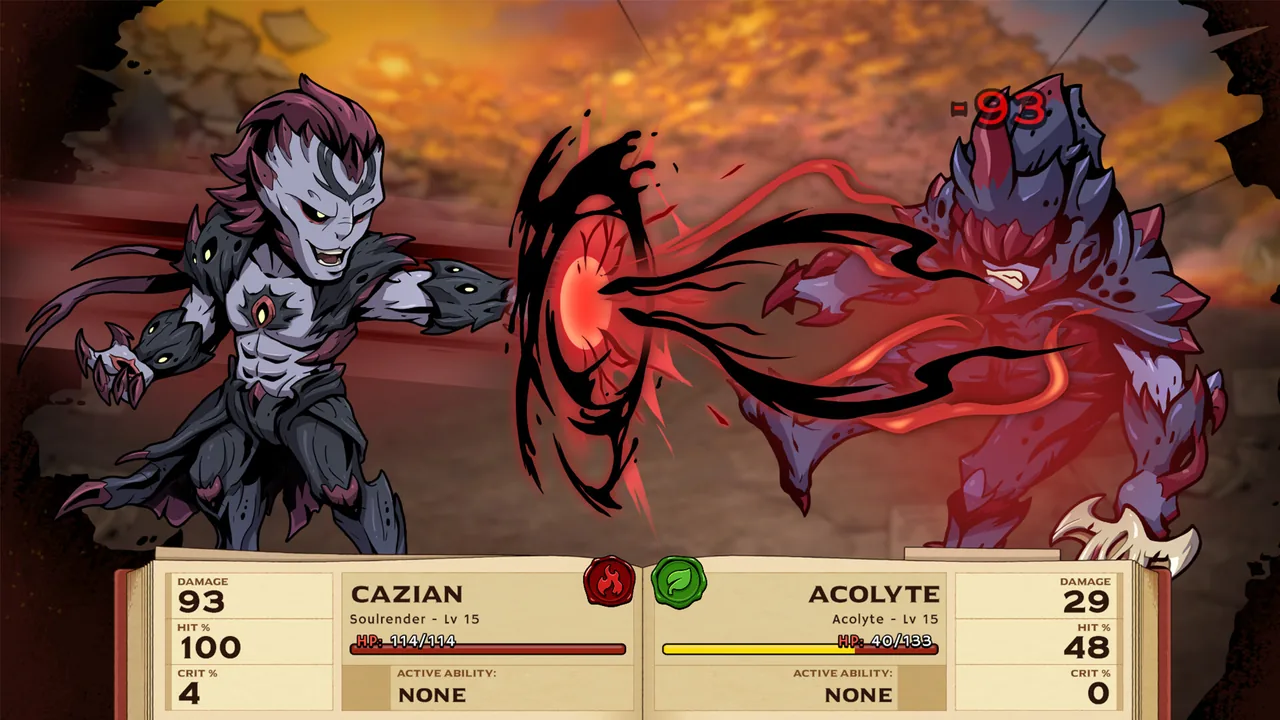
The structure is a tactical RPG with a visual-novel spine. Between grid-based battles, the player manages a growing roster of recruited party members — a ragtag mix of the strange and the sympathetic, per the store page's own description — building relationships, reading newspaper lore entries and choosing how to spend limited time. Combat itself follows familiar Fire Emblem-adjacent rules: positioning, elemental match-ups, promotion paths that unlock new skills as characters level, and hundreds of unique abilities to build a team around. Screenshots of the battle screen show a stat-heavy, book-styled combat log tracking damage, hit chance and crit chance for both sides, and objective panels that track main goals alongside optional side objectives like clearing a fight within a turn limit or keeping every party member alive — the kind of layered win conditions that reward replaying an encounter rather than just clearing it once and moving on.
A cast that critics keep naming individually
The single most consistent thread across both outside critics and Steam's own user reviews is the voice work. RPGamer gave it 4 out of 5, calling it "a level of horniness that puts Baldur's Gate III to shame — with murder, swearing, and innuendo aplenty." Buffgaming scored it 8.5 out of 10, praising "memorable characters, smart time management, and enough corporate chaos to give it a personality of its own." Nevi Games landed on 8 out of 10 for "its excellent cast of characters, its lighthearted humor, and a solid tactical combat system." That critical consensus shows up verbatim in the player reviews: "top notch voice acting, beautiful art, great music and fun gameplay," "the over-the-top comedic/dramatic voice acting really carries this game," and multiple reviews naming individual party members — an anthropomorphic hat rack among them — as the reason they kept playing. One reviewer specifically credits the actor Ben Starr among the cast. For a game built around dialogue-heavy relationship building, landing the voice work is close to the whole ballgame, and the early consensus is that it did.
The satire has teeth, mostly in one direction
The comedy leans hard into corporate absurdism — HR-approved romance, denied claims as heroism, a shareholder-appeasing tone running through the flavour text — and most reviewers find it funny rather than grating, several specifically noting that writing which initially reads as juvenile "warms on you" once the characters get room to breathe. Not everyone agrees on what the satire is actually doing. The most substantial negative review in the launch sample — from a reviewer with over 23 hours logged, evidently from extended access to the game's public demo, which had been available in some form since October 2025 — argues the satire "does more to uphold corporatist propaganda and stereotypes than it ever does to tear them down," and links out to a longer critique making that case in detail. That's a minority reading against a strong majority who found the target of the jokes clear and the delivery sharp, but it's a substantive disagreement rather than a nitpick, and readers who care about how a game's satire actually lands should weigh it.
The time-management fight
Ledgerbound's most divisive system is the one it's built around: every action outside combat draws from a shared time resource, whether that's changing a piece of equipment, replaying a battle for better rewards, or sitting down to talk with a party member and nudge a relationship forward. Losing or underperforming in a fight adds burnout, a status that weakens the player's protagonist and itself costs time to recover from. Most of the launch reviews treat this as smart pacing — one calls it "an interesting time management system," another frames the choice between grinding tactics skill and nurturing relationships as the game's actual thesis, since "whatever decisions you make, you're stuck with forever." The dissenting view, from the same high-playtime critical review referenced above, is considerably harsher: it describes "a built-in death spiral where the worse you do at it the harder it will subsequently become," and specifically flags that the game's single autosave slot with no manual reloading means a difficult fight or a crash mid-conversation can cost a relationship point permanently, with no way back. A separate, more casual review independently confirms the same edge case in miniature, noting it's "impossible to 100%" a replayed battle depending on burnout level at the time. That's two reviewers, at very different levels of engagement, converging on the same specific complaint — worth taking seriously even though it didn't stop either of them recommending the underlying game.
Rough edges at launch
A handful of other gaps show up consistently enough in the first day of reviews to be worth flagging rather than dismissing as one-offs. Multiple reviewers ask for a conversation log, since the game's dialogue-driven structure makes it easy to miss a line with an accidental double-click and have no way to check it. One reviewer reports no display scaling or resolution options at launch, specifically calling out problems on 4K and ultrawide monitors. And supported languages are English-only for text and voice, despite reviews already arriving from French, German and Simplified Chinese players playing it anyway — with the Chinese-language review asking directly for more language support. None of these are systemic in the way the time-management debate is; they read as the kind of launch-week list a responsive developer works through in the first few patches.
Price and monetisation
The base game costs NZ$41.84 at its 10% launch discount off a NZ$46.49 list price. The only additional purchase is a Deluxe Supporter Edition at NZ$21.14, which the store page describes plainly as cosmetic rewards plus the digital soundtrack — nothing that touches combat, progression or story content. That's a clean model for a game in this price bracket: one purchase for the full experience, one clearly optional supporter tier for players who want to pay more, and nothing resembling a currency, timer or gate anywhere in the systems described above.
A note on the content
Ledgerbound carries a Mature Content Description on its store page, and it's worth quoting rather than characterising. The developers write: "At no point is there explicitly visible sexual content, but there is a lot of innuendo, and the text and VO do get fairly spicy." They go on to list fantasy violence, frequent crude language, alcohol and drug use, non-visually-explicit romance and a mention of suicide as content players should expect. The game's own launch was briefly delayed, by the developers' account, specifically while Steam completed a fuller content review of the roughly 350,000 words in the script — an unusually candid piece of process to make public, and one that suggests the disclosure above is being taken seriously rather than treated as boilerplate.
Final verdict
Ledgerbound earns its comparisons to bigger tactical RPGs mostly through its writing and its cast — a fully voiced ensemble that both outside critics and day-one players keep singling out, wrapped around a premise weird enough to actually stand out in a crowded genre. The tactical combat underneath is solid rather than groundbreaking, and the time-and-burnout system that ties everything together is the game's real fault line: most players read it as the mechanic that makes the whole game cohere, while the most detailed critical account calls it a punishing spiral that fights the story it's meant to be pacing. Add a missing conversation log, no resolution options yet and English-only voice work, and this reads exactly like what it is: a distinctive, well-reviewed launch day with a handful of real rough edges still to sand down. At NZ$41.84, with clean monetisation and a cast worth the price of admission on its own, it's an easy recommendation for tactics and narrative fans who go in knowing what the time system asks of them.
Pros and cons
Pros
- A fully voiced cast that dominates the early reviews, with outside critics (RPGamer 4/5, Buffgaming 8.5/10, Nevi Games 8/10) agreeing before launch
- A genuinely distinctive premise — corporate insurance satire fused with epic fantasy and a dating sim — that earns its comedy rather than coasting on the pitch alone
- Grid-based tactical combat with promotion paths, hundreds of abilities and difficulty options for both newcomers and veterans of the genre
- Clean monetisation: one purchase plus a wholly optional cosmetics-and-soundtrack supporter edition, nothing that touches gameplay
- Steam's own content disclosure is upfront and specific about what the mature content actually is, rather than leaving buyers to guess
Cons
- The shared time/burnout resource that gates equipment changes, battle replays and story conversations reads as smart pacing to most reviewers and as a punishing death spiral to at least one detailed, high-playtime critical review
- No conversation log at launch, flagged by multiple reviewers as a real gap in a game this dialogue-heavy
- No display scaling or resolution options reported at launch, a problem on 4K and ultrawide setups according to one review
- A single autosave slot with no manual reloading, which one reviewer reports cost them a relationship-point conversation after a crash
- Full voice support is English only, despite reviews already arriving in French, German and Simplified Chinese
Screenshots
-
LedgerboundImage: OmniMegaSuperCorp via Steam -
LedgerboundImage: OmniMegaSuperCorp via Steam -
LedgerboundImage: OmniMegaSuperCorp via Steam -
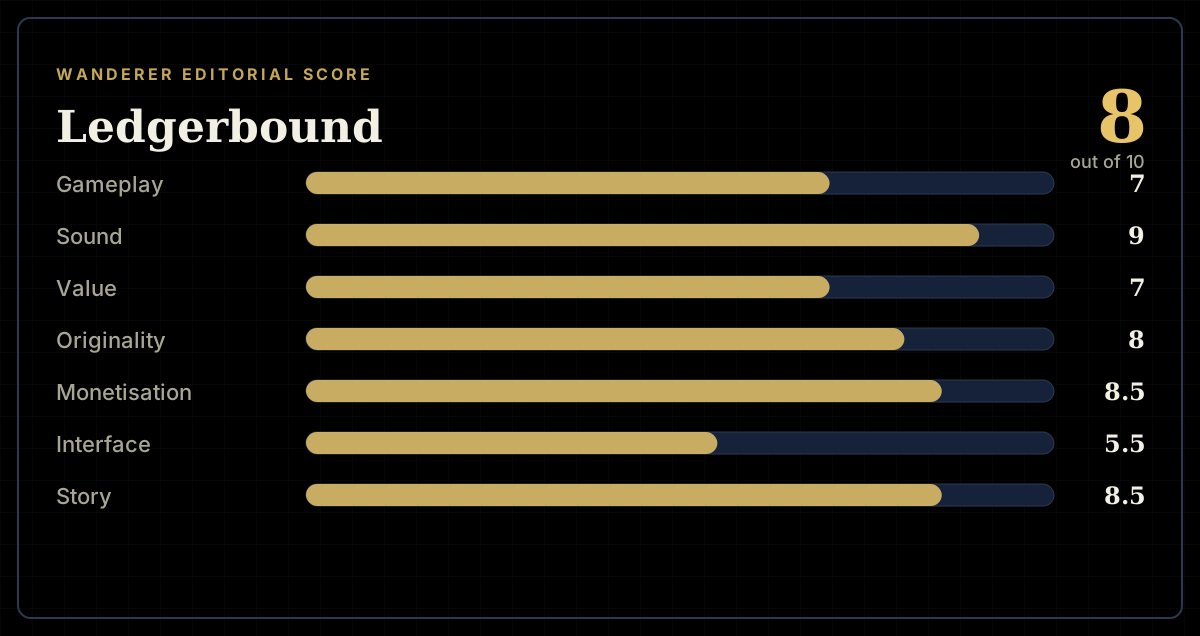
How the review scores each part of the gameWanderer Editorial -
The short versionWanderer Editorial