Game review
Cube Life: Island Survival
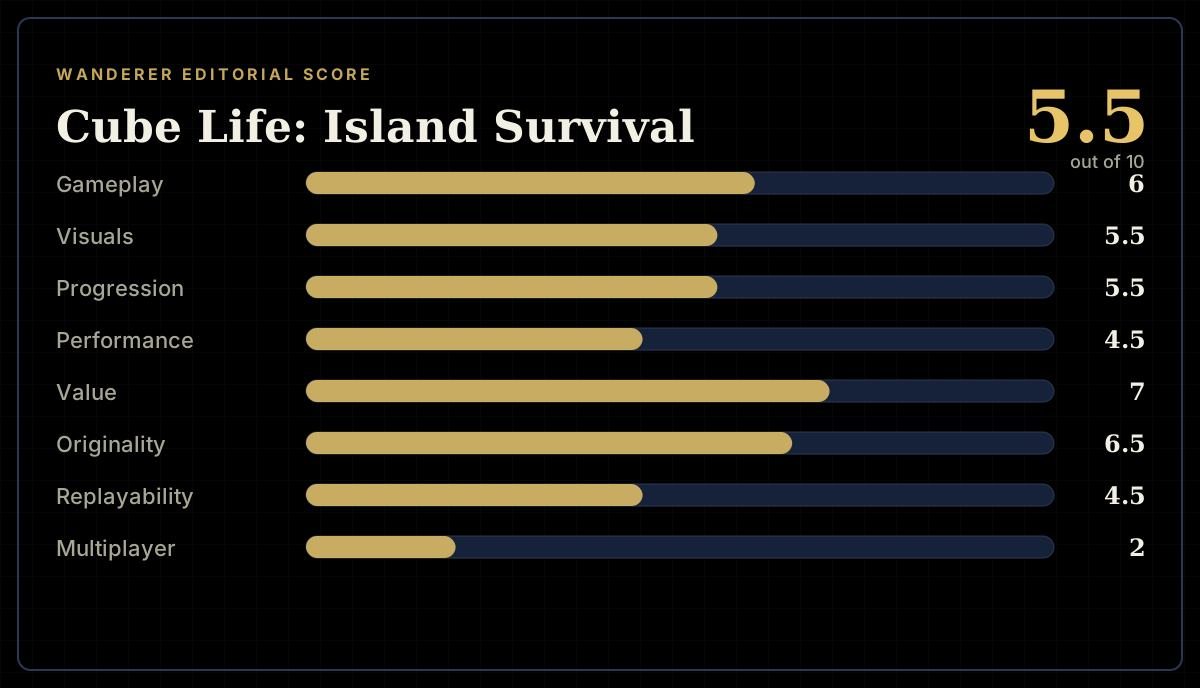
5.5 / 10
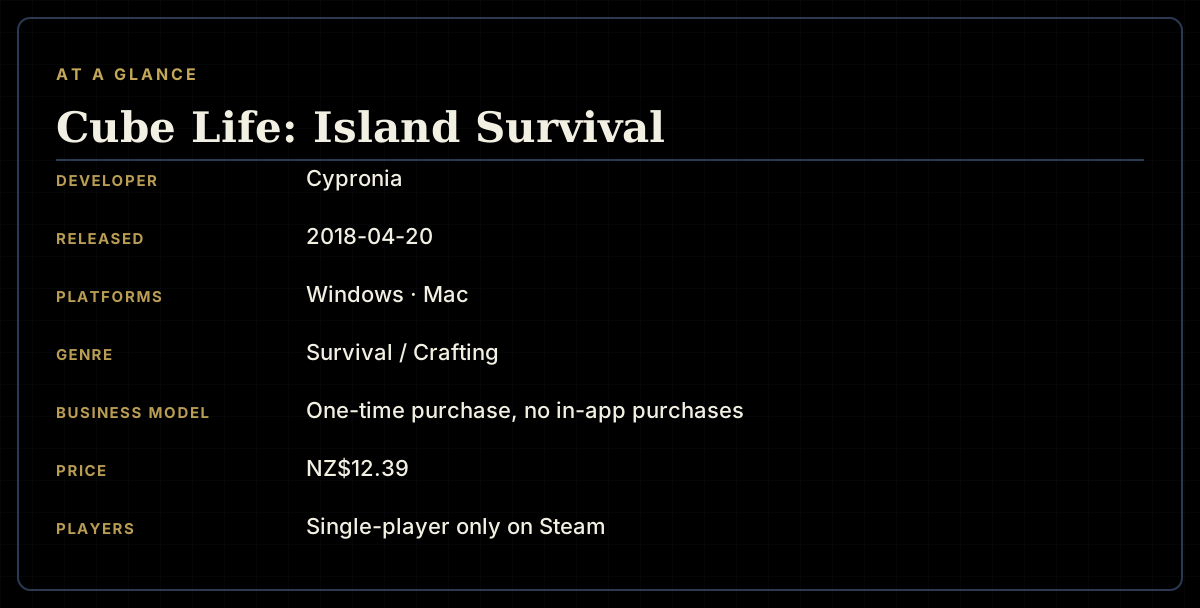
- Developer
- Cypronia
- Publisher
- Cypronia
- Released
- 20 April 2018
- Platforms
- Windows, Mac
- Genre
- Survival / Crafting
- Monetisation
- One-time purchase, no in-app purchases
- Players
- Single-player only on Steam
The short version
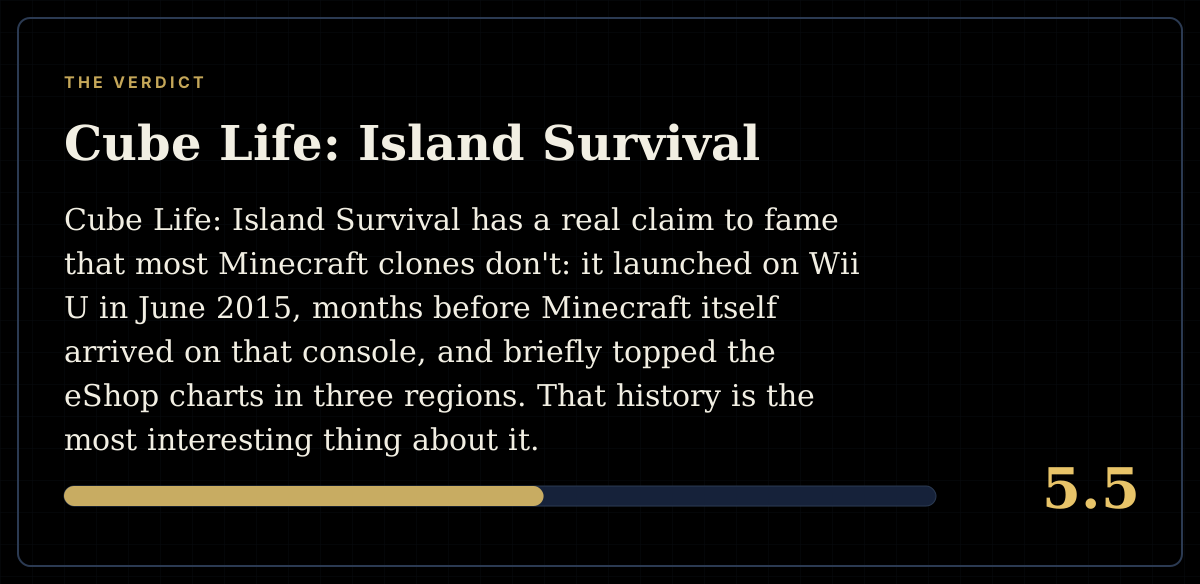
Cube Life: Island Survival has a real claim to fame that most Minecraft clones don't: it launched on Wii U in June 2015, months before Minecraft itself arrived on that console, and briefly topped the eShop charts in three regions. That history is the most interesting thing about it. The Steam version, out since April 2018, is a competent, cheap, single-player block-building survival game built on hand-crafted rather than procedural islands — a genuine point of difference — but it has had no news post or patch since November 2021, its Steam reviews sit at a "Mixed" 65%, and its own store page still advertises a feature, multiplayer, that the Steam release explicitly does not support. Reviewers ask for it in nearly every thread. It has never arrived.
Biggest strengths
- Real historical novelty — it beat Minecraft to the Wii U eShop by half a year and briefly charted number 1 in Europe, number 2 in the US and number 3 in Japan
- Hand-crafted rather than procedurally generated islands, which several reviewers call out as a deliberate, welcome point of difference from every other block-survival clone
- Honest, cheap, one-time price with no in-app purchases or battle pass of any kind
Biggest weaknesses
- No Steam news post or patch since November 2021 — close to five years of silence, and one detailed review of that final update calls the game "unplayable" afterward
- Multiplayer is explicitly unsupported in the Steam version, and it is the single most requested feature across the review corpus, positive and negative alike
- Achievement data shows a steep drop-off past the early game: only 1.6% of players have survived 250 days and 1.8% have built 10,000 blocks, against 66% for the first kill
Who it's for: Minecraft-genre completionists and Wii U-era nostalgics who want a short, cheap, single-player island survival game and don't mind dated visuals or an abandoned roadmap.
Our recommendation: Fine at its low asking price if you go in solo and don't expect updates — skip it if multiplayer or active support matters to you.
5.5 / 10
The pitch
Cube Life: Island Survival is a block-building survival game: you're shipwrecked on a remote island, and you gather, craft, build and fight your way to staying alive. On paper that's a one-line description of dozens of Minecraft-adjacent games on Steam. What sets Cube Life apart is timing and structure. It first shipped on Nintendo's Wii U in June 2015 — six months before Minecraft itself was officially announced for that console — and briefly topped the Wii U eShop charts in Europe, reached number 2 in the US and number 3 in Japan. The current Steam release, out since April 2018, is a "rebuilt for PC" version of that same game: hand-crafted (not procedurally generated) islands, a survival mode alongside a creative mode with map and skin editors, 500-plus items, trading with local inhabitants, and boss fights against the likes of a Kraken and a recurring Cannibal Boss.
A clone with one genuine idea
The single most-repeated compliment across Cube Life's Steam reviews, from players who otherwise have very different opinions of the game, is that its islands are hand-built rather than procedurally generated. "I am enjoying this game," reads one representative review. "It is set in a handcrafted world. The fact that the game is not randomly generated is a big plus for me. I enjoy the experience of playing on a map that was made, not randomly cobbled together." That's a real structural difference from Minecraft, Terraria-likes and the wave of proc-gen survival games that followed them — a world an artist actually laid out, with intentional exploration paths rather than infinite, samey terrain.
The rest of the feature list reads like a checklist of "things you'd normally have to mod into Minecraft": stealth attacks from behind, pets, boats, a day/night cycle with cannibals that come out after dark, and a full in-game survival guide with recipes. One long-time player puts it bluntly: "It's way better looking, and it adds in 100 features that you'd have to mod into Minecraft." Reviewers who came to it fresh, rather than nostalgic for the Wii U original, are more divided — several call the same feature set "restrictive" and "clunky" next to genre leaders, and more than one reviewer's blunt verdict is some version of "just play Minecraft instead."
Five years of silence, and a missing feature the store page still implies
Cube Life's Steam news feed tells a clear story: patches landed steadily from launch through November 2021 — the last entry is "Cube Life Patch v1.9.1 released!" — and nothing since. That update is also, by more than one account, where things went wrong rather than right. One review updated after the fact reads: "They released an update after more than a year and the game is just unplayable. More bugs that really hurts your gameplay experience." Whether or not that's the universal experience, it's the last thing Cypronia's own community heard from the game before five years of quiet.
The other recurring theme is multiplayer — or the total absence of it. The Steam store page itself flags this directly under "Steam Version Notes": "Multiplayer is not supported in the Steam version." That single line sits underneath feature bullets that still promise the broader Cube Life experience, and it clearly frustrates buyers who don't spot it up front. Requests for co-op or online multiplayer turn up in a large share of the review corpus, both positive ("I wish they would include online multiplayer in the future. It would be cool!") and negative ("Could be more fun if multiplayer was added"). It's the single most consistent ask in five years of Steam feedback, and it has never shipped.
What the achievement data shows
Steam's global achievement stats back up the impression that most buyers see the opening hours and stop. Of Cube Life's 49 achievements, the most common — killing one animal (66.0%) and crafting one item (64.4%) — are cleared by roughly two in three owners. From there the curve falls fast: reaching level 5 sits at 29.3%, using the furnace at 22.7%, reaching level 10 at 16.5%. By the far end of the list, the numbers describe a small, committed core rather than a broad audience: 1.6% have survived 250 in-game days, 1.8% have built 10,000 blocks, and killing the Kraken's hand sits at 1.7%. That's a normal shape for a sandbox survival game — most owners sample the loop and move on — but it's steeper than most, consistent with reviewers citing low-level bugs, dated combat and a raft that some say needs rebuilding every two to three days of in-game time, eating into the resources meant for everything else.
Performance and presentation
Cube Life's visuals split opinion along the same nostalgia line as everything else about it. Some reviewers call it a clear step up from the Wii U original ("it looks much much better"); others find it dated even by 2018 standards, let alone 2026. Performance is the more concrete complaint: one detailed review reports roughly 15 FPS at the lowest graphics settings with no option to fully disable shadows, a real problem for a budget indie title aimed partly at lower-end hardware. It runs on Windows and Mac (no Linux build), lists full controller optimisation, and asks for no demanding specs beyond that — this is a small game that should run everywhere, and for a chunk of its audience it evidently doesn't.
Value and monetisation
There's nothing to complain about here: Cube Life is a single NZ$12.39 purchase with no DLC, no in-app purchases and no live-service trappings of any kind. For that price, 500-plus items, a boss fight, and a hand-crafted island to explore is a fair trade even with the caveats above — this is a budget game priced like one, which is more than can be said for a lot of its genre neighbours.
Verdict
Cube Life: Island Survival earns its place in Minecraft-genre trivia honestly — it really did beat Minecraft to the Wii U, and its hand-crafted islands are a genuine, still-underused idea in a genre dominated by procedural generation. But the Steam version is a game its developer stopped touching in November 2021, its achievement curve shows most buyers stopping early, and it is missing the one feature — multiplayer — that its own review section asks for more than anything else. At NZ$12.39 with no microtransactions, it's a fair, low-risk purchase for solo players chasing Wii U nostalgia or a short hand-built survival game. Anyone hoping for an actively supported, sociable alternative to Minecraft should look elsewhere.
Pros and cons
Pros
- Real historical novelty — it beat Minecraft to the Wii U eShop by half a year and briefly charted number 1 in Europe, number 2 in the US and number 3 in Japan
- Hand-crafted rather than procedurally generated islands, which several reviewers call out as a deliberate, welcome point of difference from every other block-survival clone
- Honest, cheap, one-time price with no in-app purchases or battle pass of any kind
- 500+ items, a boss fight against a Kraken, stealth attacks and a full crafting/survival guide packed into a budget release
Cons
- No Steam news post or patch since November 2021 — close to five years of silence, and one detailed review of that final update calls the game "unplayable" afterward
- Multiplayer is explicitly unsupported in the Steam version, and it is the single most requested feature across the review corpus, positive and negative alike
- Achievement data shows a steep drop-off past the early game: only 1.6% of players have survived 250 days and 1.8% have built 10,000 blocks, against 66% for the first kill
- Reviewers report frame rates as low as 15 FPS on modest hardware with no option to fully disable shadows
Screenshots
-
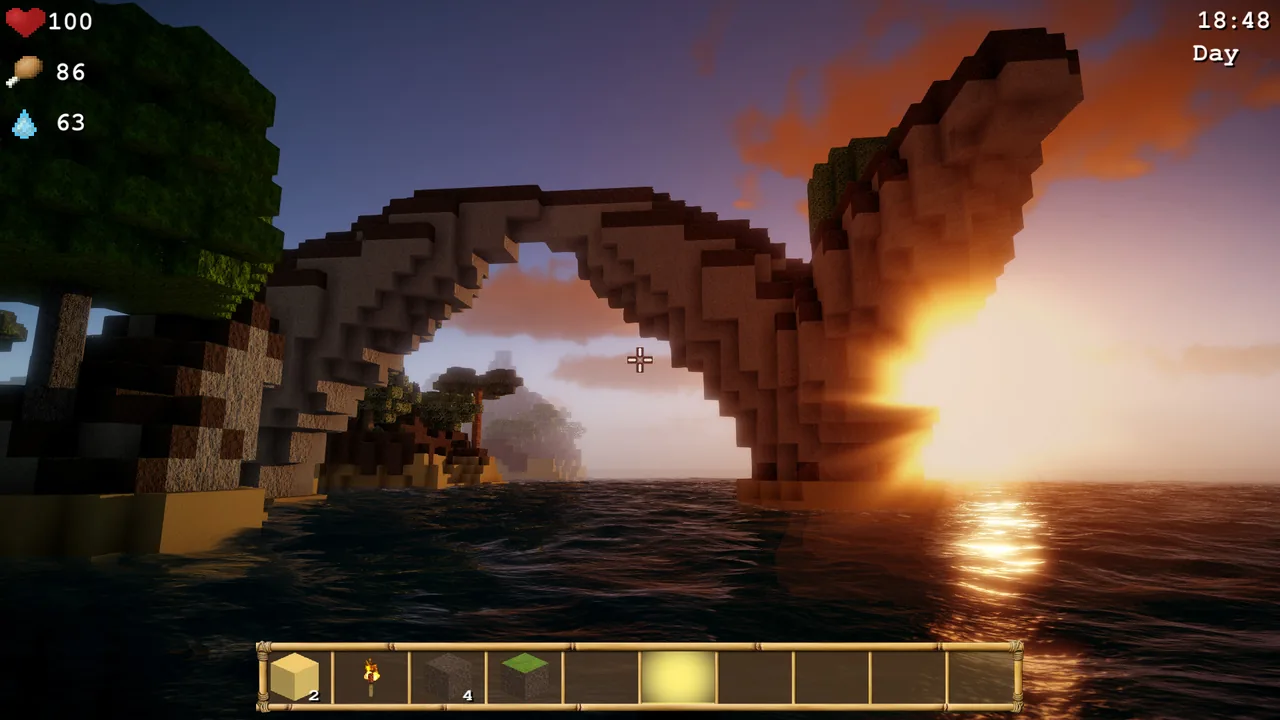
Cube Life: Island SurvivalImage: Cypronia via Steam -
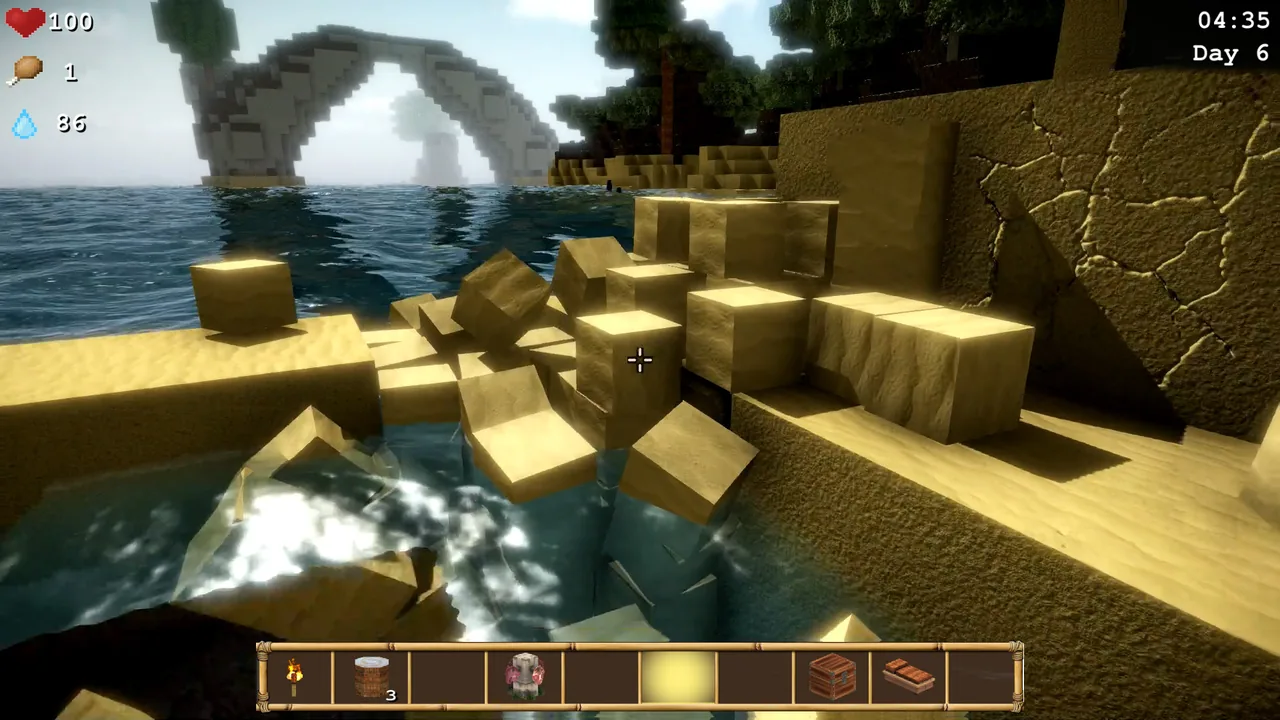
Cube Life: Island SurvivalImage: Cypronia via Steam -
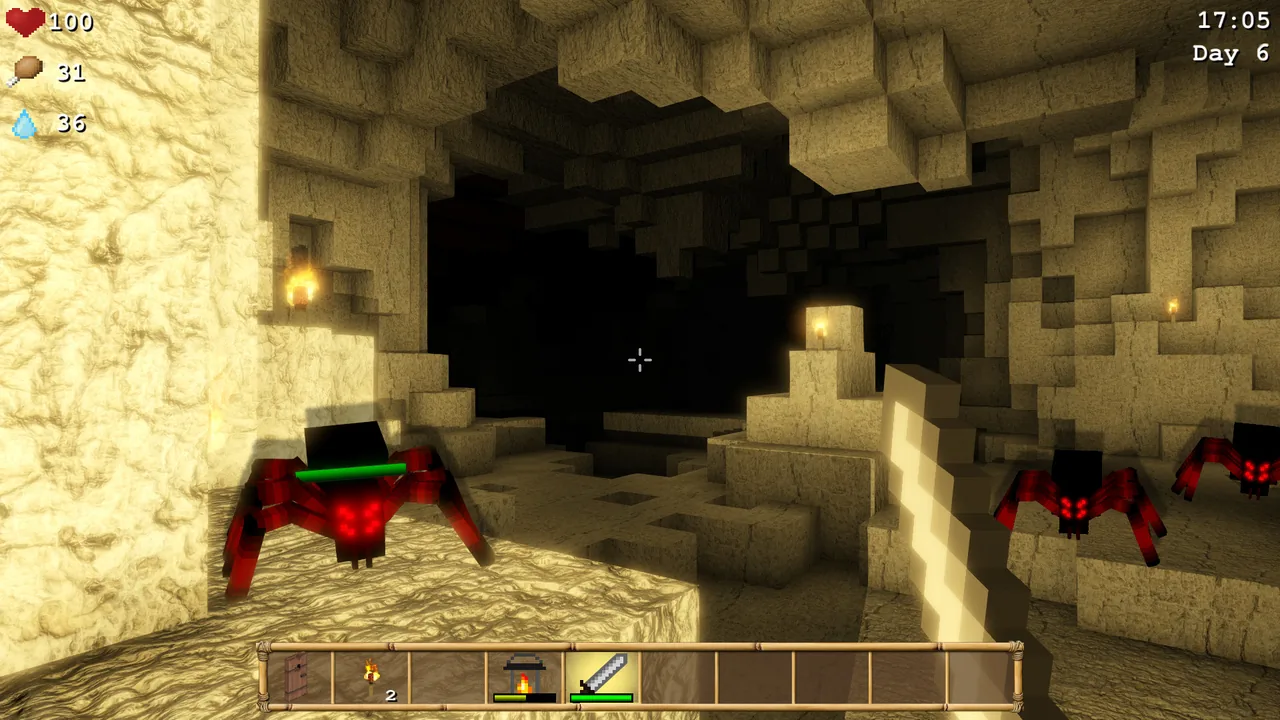
Cube Life: Island SurvivalImage: Cypronia via Steam -
How the review scores each part of the gameWanderer Editorial -
The game at a glanceWanderer Editorial -
The short versionWanderer Editorial