Game review
Citadel: Forged with Fire
5.5 / 10
- Developer
- Blue Isle Studios
- Publisher
- Blue Isle Publishing
- Released
- 1 November 2019
- Platforms
- Windows
- Genre
- Fantasy Survival MMO
- Monetisation
- One-time purchase. No subscription. Cosmetic-focused paid DLC packs released after launch.
- Players
- Online PvP and PvE on public and private servers, plus solo/offline play
The short version
Citadel: Forged with Fire pitches a genuinely distinctive hook inside an already crowded genre: a survival sandbox where instead of guns and rocks, every player is a spellcasting wizard, building floating castles, taming dragons and duelling with customisable magic. It entered Steam Early Access on 26 July 2017 and exited to a 1.0 release in November 2019, and today sits at Mixed on Steam, 64% positive of 3,561 English-language reviews. That number undersells how much real, sustained enthusiasm exists in the review corpus: multiple reviewers report hundreds of hours, and one of the most-read positive reviews comes from a player with over 2,600 hours logged across beta and every subsequent update, still coming back years later "in the hope it's better."
What that same review corpus also documents, with unusual consistency across nearly a decade, is a specific and repeated grievance: development that slowed to a crawl after launch, a shrinking active playerbase, and long stretches reviewers describe outright as abandonment. "Do not buy this game," reads one representative 2024 review, "it has been abandoned." The pattern isn't players souring on the core idea -- it's long-invested fans, some with thousands of hours, watching a genuinely good concept stop receiving the support it needed to grow into what its early hours still promise.
Biggest strengths
- A genuinely distinctive premise in a crowded genre -- customisable spellcasting instead of guns or melee weapons, with real building and taming systems layered underneath
- Enough depth to hold dedicated players for hundreds, in some documented cases thousands, of hours across multiple return visits over several years
- Solid solo and small-group play, with several reviewers specifically recommending it as a cosy sandbox for one or two players rather than a full MMO population
Biggest weaknesses
- Reviewers across nearly every year since 2017 describe development slowing dramatically after launch, with several recent reviews using the word "abandoned" outright
- A visibly shrinking active playerbase and low population on public servers, repeatedly cited by reviewers as the main reason multiplayer content (raiding, PvP, guild play) doesn't function as intended today
- Rough animations, unpolished creature AI and unresolved balance issues (particularly around raiding and endgame PvP) that multiple long-time players say were never properly fixed
Who it's for: Fantasy survival fans specifically drawn to the "everyone's a wizard" hook, who are happy to treat it as a solo or small-group sandbox rather than expecting a thriving persistent MMO population. Not for anyone wanting an actively developed live-service game or a large, populated server scene today.
Our recommendation: Worth a cheap or discounted purchase for the spellcasting sandbox itself, especially solo or with a couple of friends on a private server -- go in with launch-era, not live-service, expectations, since the review record is consistent that meaningful new content and server population both thinned out years ago.
5.5 / 10
The pitch
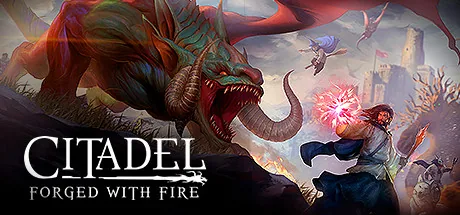
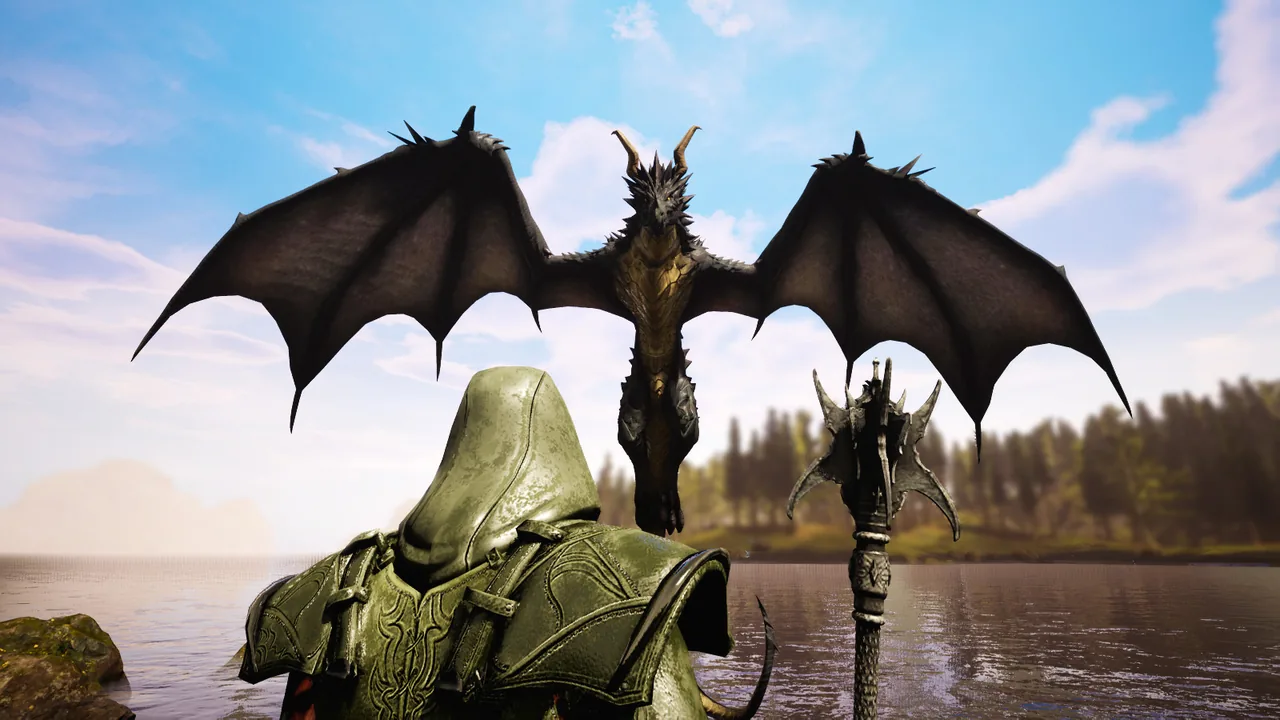
Citadel: Forged with Fire drops you into the world of Ignus as a newly minted apprentice of magic, with the genre's usual survival loop -- gather, craft, build, fight -- reframed entirely around spellcasting. Instead of picking up a rifle or a sword as your core tool, you're customising spells, taming beasts (including dragons), building floating castles with a genuinely flexible construction system, and duelling other players or PvE monsters with magic rather than firearms. It's the same basic Rust/Ark/Conan Exiles survival-sandbox structure most of the genre runs on, with a fantasy skin distinctive enough that several reviewers specifically credit it as the reason they bought the game over its more numerous competitors.
Developed by Blue Isle Studios, the game entered Steam Early Access on 26 July 2017 and spent just over two years in that state before exiting to a full 1.0 release on 1 November 2019 -- making 2017 its original release year under the rule this review's lane follows.
A real hook, and real staying power for some players
It's worth being clear about what Citadel gets right, because the review corpus backs it up with unusually large numbers: this isn't a game people bounce off after an hour. Multiple reviewers report hundreds of hours, and one of the most striking entries in the sample comes from a player reporting over 2,600 hours played across beta and multiple later updates in 2018, 2020 and 2022, who is still coming back "in the hope it's better" -- a phrase that captures the shape of a large share of this game's fandom better than almost anything else in the corpus. Another long-time reviewer with roughly 300 hours across several separate return visits describes essentially the same pattern: real, repeated re-engagement over years, driven by genuine fondness for the core concept.
The spellcasting-first structure is the reason. Reviewers consistently single out the freedom to build a character around magic rather than a fixed weapon-and-armour loadout, the flexibility of the building system, and the novelty of taming and riding creatures including dragons as things the genre's bigger, better-known competitors simply don't offer in the same form.
The complaint that repeats for nine years
What sets Citadel apart from most Mixed-rated survival games in this review's coverage is how consistently the negative sample points at the same underlying cause rather than scattering across many different complaints. Reviewers across 2017, 2018, 2019, 2021, 2023, 2024 and 2025 converge on a single word with striking frequency: abandonment. "They have abandoned it," reads one; "DO NOT BUY THIS GAME... it has been abandoned," reads a 2024 review with over 12,000 hours of collective playtime represented across its most-helpful neighbours in the sample. A 2025 review, six years after the 1.0 launch, describes buying the game, hoping, and getting nothing in return -- "should be refunded the full price for this kind of trash behaviour."
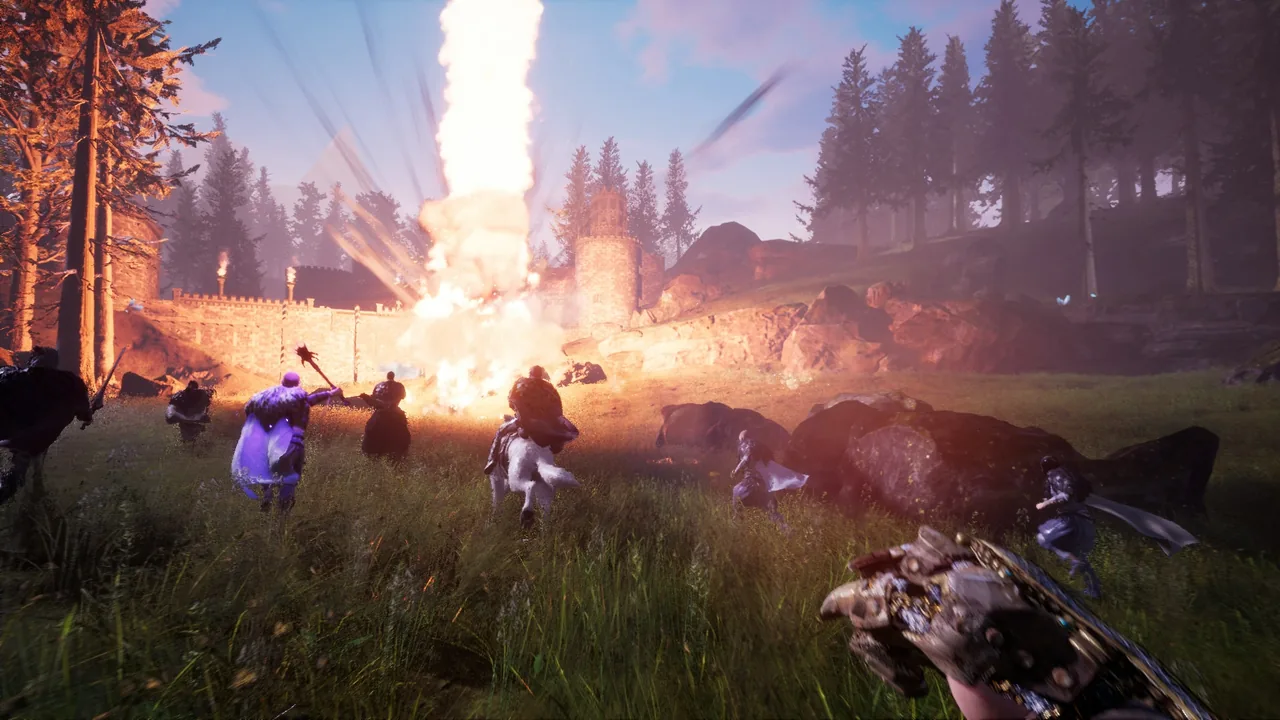
The practical consequence reviewers describe most often is a shrinking, sometimes near-empty public server population, which specifically breaks the parts of the game built around other players -- raiding, PvP balance, guild-based play -- even though the solo and small-group experience often still functions. Multiple reviewers explicitly recommend playing it that way now: solo or with one or two friends on a private server, treating it as a self-contained sandbox rather than the living MMO it was originally built and marketed to become.
What the achievement data shows
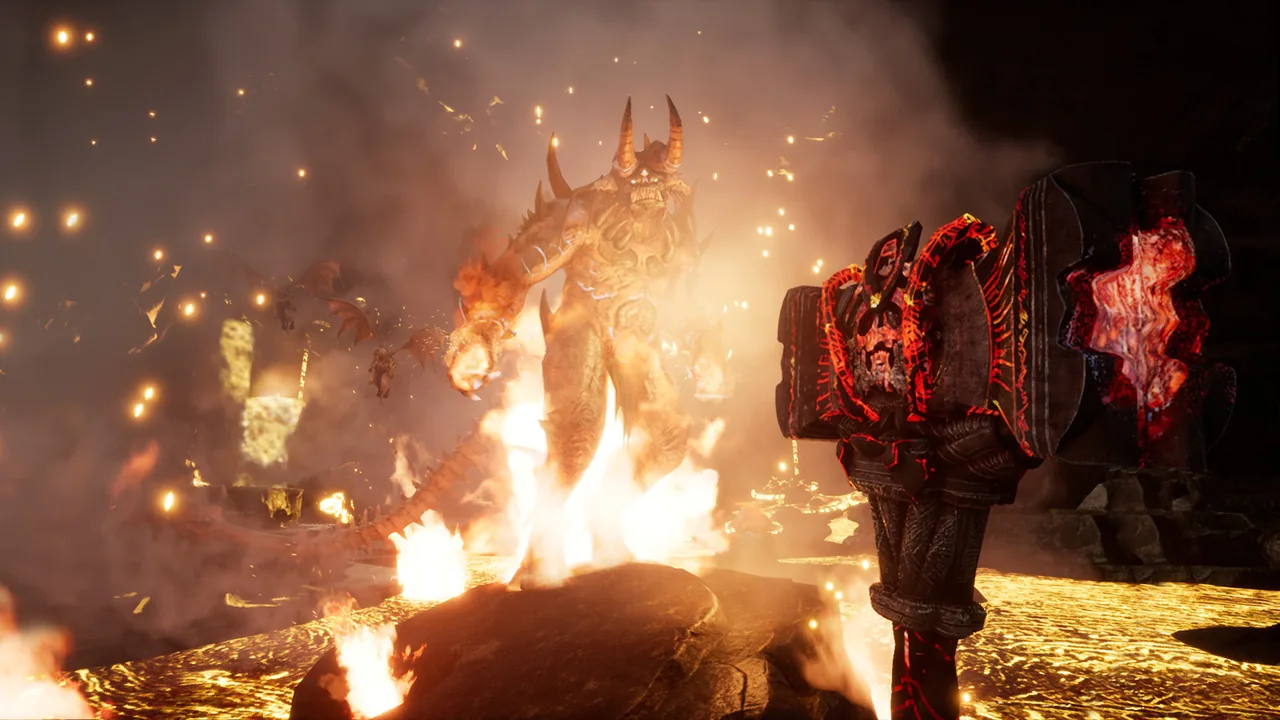
Global achievement completion supports the same story from a different angle. Early crafting and levelling milestones -- building a workbench, reaching player level 10, harvesting basic resources -- sit in the 25-40% range, healthy numbers for a survival game's tutorial-stage content. Endgame content tells a much starker story: achievements for crafting iron and gold gear sit under 3%, and boss-kill achievements for the game's most dangerous named creatures -- a unicorn, an infernal dragon, a demon -- sit at 0.4-0.5%. That's an unusually steep drop, even by this genre's standards, and it's consistent with a playerbase that engages with the early sandbox loop in real numbers but rarely reaches, or rarely finds populated servers capable of supporting, the content built for later stages of the game.
Value nine years on
At NZ$21.99 with no discount active at the time of checking, Citadel is inexpensively priced for a survival sandbox with this much raw content and system depth, particularly for solo or small-group play where the population problems documented above matter less. It has had ongoing but slow post-launch support -- cosmetic DLC packs continued to release well after 1.0 -- which is more than some abandoned Early Access survival games can claim, even if reviewers consistently feel it falls well short of what the concept deserved. For a buyer today, the honest pitch is a distinctive, still-functional fantasy sandbox best enjoyed with modest expectations about population and ongoing content, rather than the thriving persistent world its original marketing implied.
Verdict
Citadel: Forged with Fire is that rare Mixed-rated game where the negative reviews aren't really arguing the core idea is bad -- they're mourning what it could have become. The spellcasting-first survival hook is genuinely distinctive, and the hundreds and, in documented cases, thousands of hours some players have logged prove it holds up as a moment-to-moment sandbox. What it hasn't held up, by its own community's account across nine years of reviews, is the sustained development and active population an online persistent world needs to keep its endgame content meaningfully alive. Buy it today for the wizard-survival fantasy on its own terms, in a small group or solo, and it still delivers. Buy it expecting the living MMO the pitch promises, and the review record says you'll likely end up writing the same review as everyone else who loved it first and lost it later.
Pros and cons
Pros
- A genuinely distinctive premise in a crowded genre -- customisable spellcasting instead of guns or melee weapons, with real building and taming systems layered underneath
- Enough depth to hold dedicated players for hundreds, in some documented cases thousands, of hours across multiple return visits over several years
- Solid solo and small-group play, with several reviewers specifically recommending it as a cosy sandbox for one or two players rather than a full MMO population
- A reasonable one-time price with no subscription, unusual for a game built around persistent online servers
Cons
- Reviewers across nearly every year since 2017 describe development slowing dramatically after launch, with several recent reviews using the word "abandoned" outright
- A visibly shrinking active playerbase and low population on public servers, repeatedly cited by reviewers as the main reason multiplayer content (raiding, PvP, guild play) doesn't function as intended today
- Rough animations, unpolished creature AI and unresolved balance issues (particularly around raiding and endgame PvP) that multiple long-time players say were never properly fixed
- Global achievement data shows a steep fall-off from early crafting milestones (around 30-40%) to endgame boss kills under 1%, consistent with a game whose late content sees very little active play
Screenshots
-
Citadel: Forged with FireImage: Blue Isle Publishing via Steam -
Citadel: Forged with FireImage: Blue Isle Publishing via Steam -
Citadel: Forged with FireImage: Blue Isle Publishing via Steam -
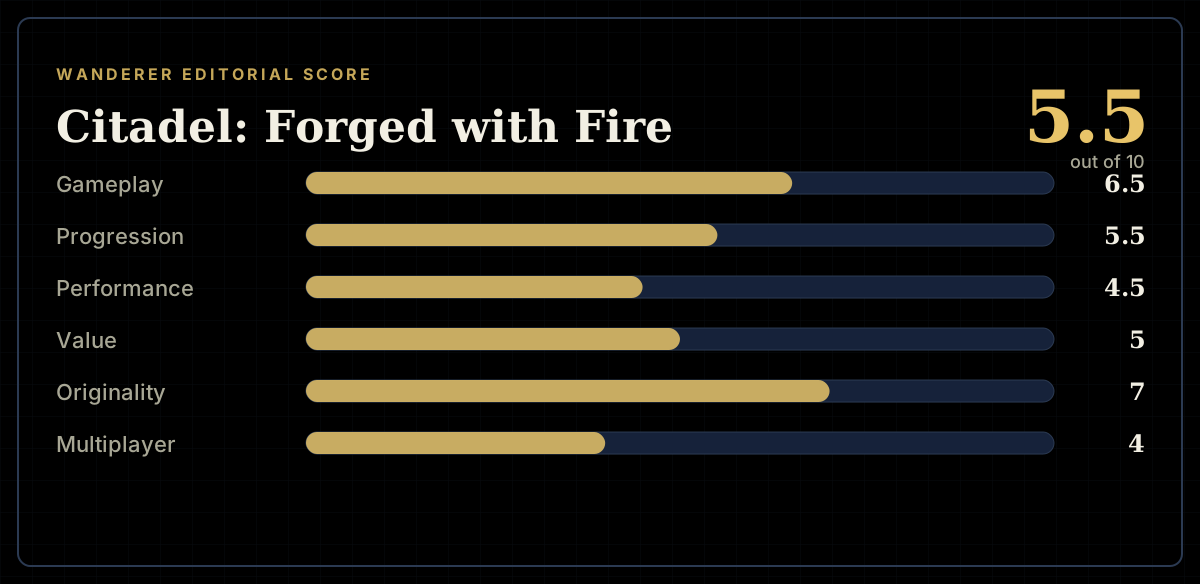
How the review scores each part of the gameWanderer Editorial -
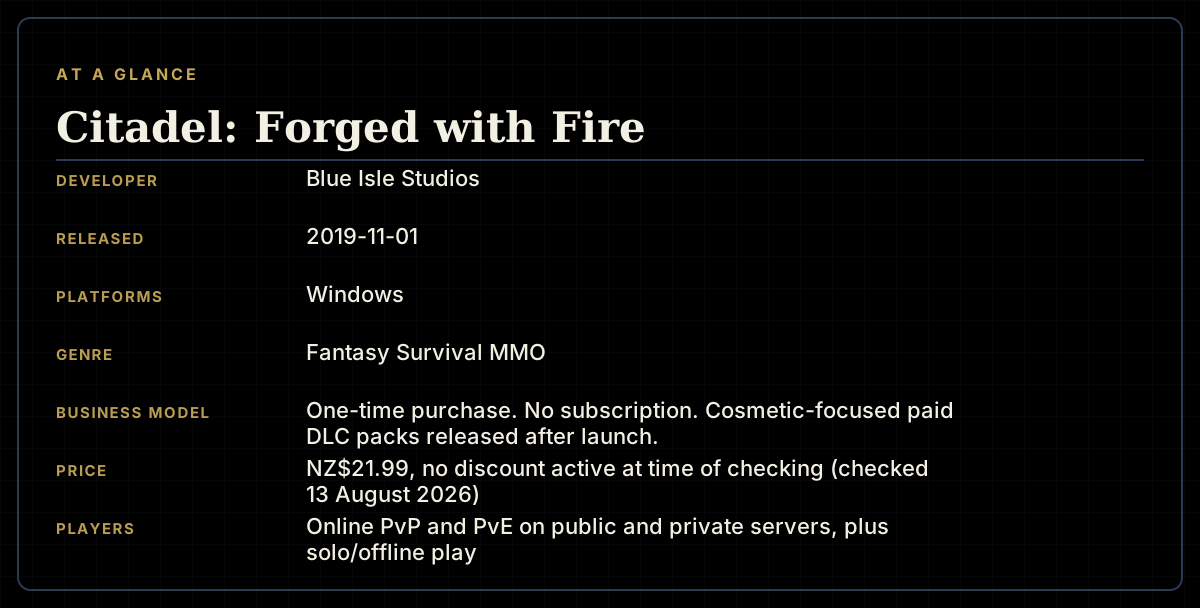
Citadel: Forged with Fire at a glanceWanderer Editorial -
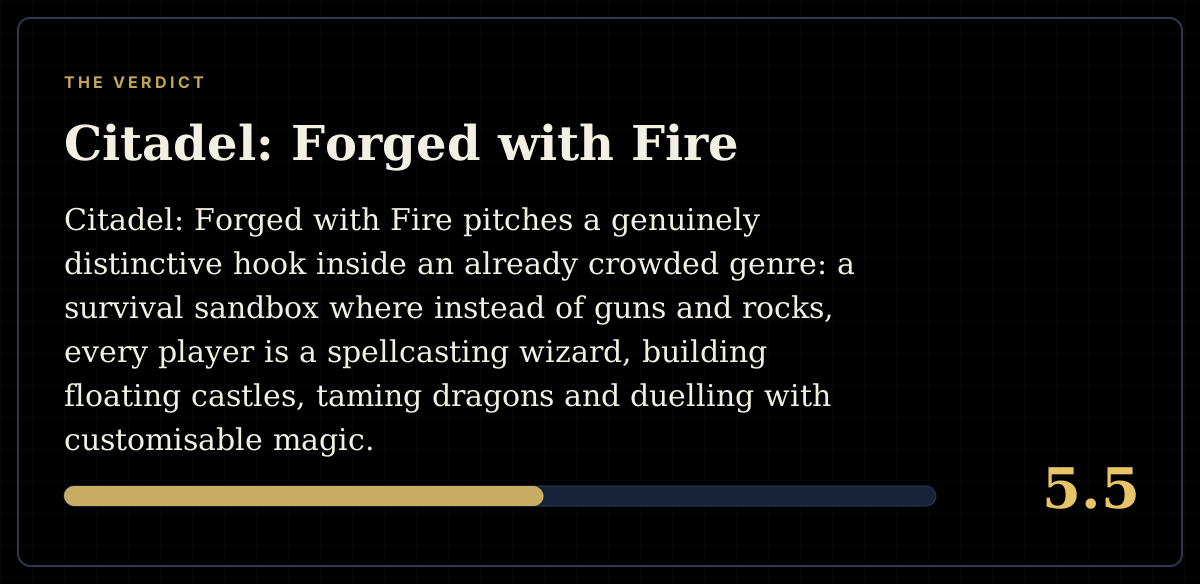
The short versionWanderer Editorial