
Game review
Underworld Idle
5.5 / 10
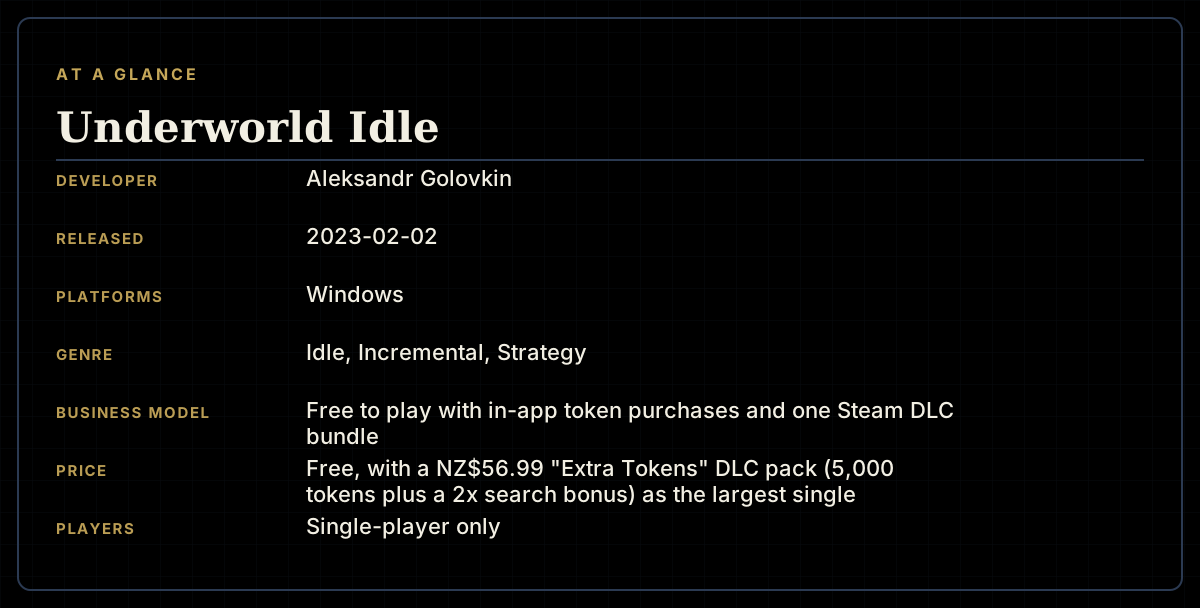
- Developer
- Aleksandr Golovkin
- Publisher
- Aleksandr Golovkin
- Released
- 2 February 2023
- Platforms
- Windows
- Genre
- Idle, Incremental, Strategy
- Monetisation
- Free to play with in-app token purchases and one Steam DLC bundle
- Players
- Single-player only
The short version
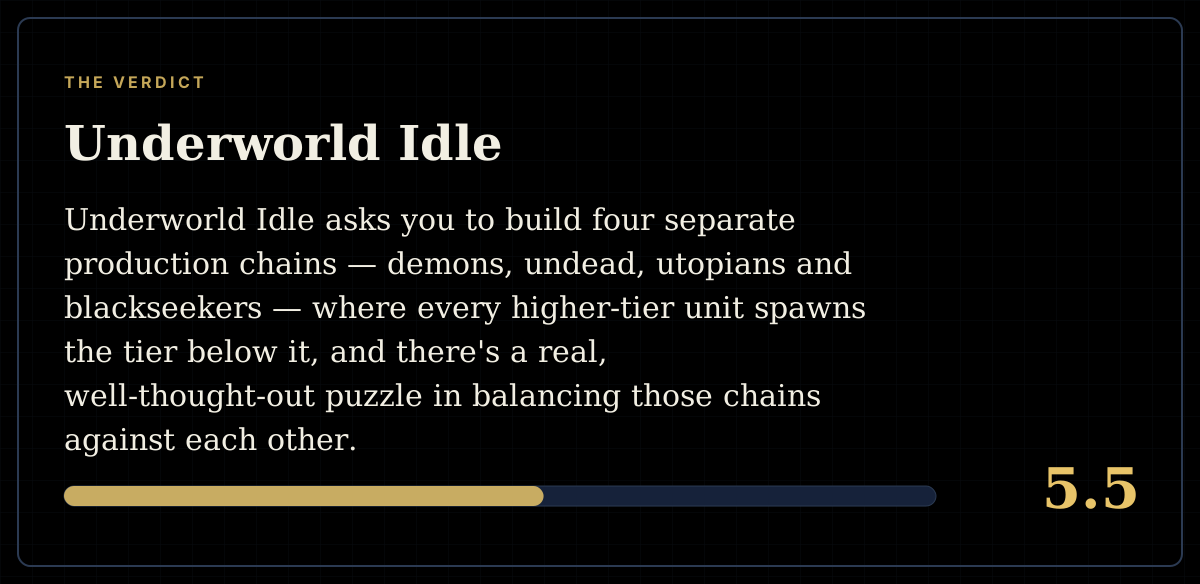
Underworld Idle asks you to build four separate production chains — demons, undead, utopians and blackseekers — where every higher-tier unit spawns the tier below it, and there's a real, well-thought-out puzzle in balancing those chains against each other. The problem is what happens when you close the window. Complaints about the offline system go back to the game's first week on Steam in May 2021 and are still showing up in reviews posted this year, from players with hundreds and even thousands of hours logged: energy trickles in while you're away, capped low, and almost everything else simply waits for you to come back and click it. Combine that with a pacing curve that a meaningful slice of the negative reviews describe as built around a real-money token shop, and you get a game whose central promise — idle — is also its most consistently reported flaw.
Biggest strengths
- Four interlocking faction chains (demons, undead, utopians, blackseekers) where every unit you buy is itself a producer of the tier below it, and balancing four chains against each other is a genuinely distinctive puzzle for the genre
- A long content tail — separate demon, undead and "Rusty World" robot zones were added across 2021 and 2022, plus a prestige system (Infernal Contracts) for players who want a reason to reset
- Steam's achievement curve shows a smooth, not a cliff-edge, drop-off across its eight milestones (72% down to 12.5%), meaning a real slice of the audience pushes deep into the faction tree rather than bouncing off it early
Biggest weaknesses
- Offline progress is close to nominal. One faction's energy trickles in at a capped rate while the window is closed; almost every other resource, including the runes several reviews name specifically, simply pauses until you're back and clicking. This exact complaint appears in reviews from May 2021 through 2025, including from players with over 1,000 hours logged
- A meaningful share of the negative sample — including reviews as recent as April and August 2026 — describes pacing as deliberately tuned around its token shop, up to and including the NZ$56.99 "Extra Tokens" DLC bundle, rather than balanced for a patient free player
- The genre's promise is "walk away and come back to progress"; this game asks for the opposite — long, repeated clicking sessions to clear queues and buy upgrades, which several reviewers, including ones with thousands of hours logged elsewhere in the genre, say crosses from "idle" into "job"
Who it's for: Players who enjoy Swarm-Simulator-style "higher units create lower units" chain games and don't mind treating this one as an active clicker with idle flavouring rather than a true background game, and who are comfortable saying no to the token shop for as long as it takes.
Our recommendation: Try it — it's free and there's a genuinely clever chain-production puzzle under the hood — but go in expecting a game that wants your attention, not just your patience, and budget zero dollars for tokens until you've decided the pacing is worth fighting.
5.5 / 10
A chain-production puzzle with a real idea at its centre
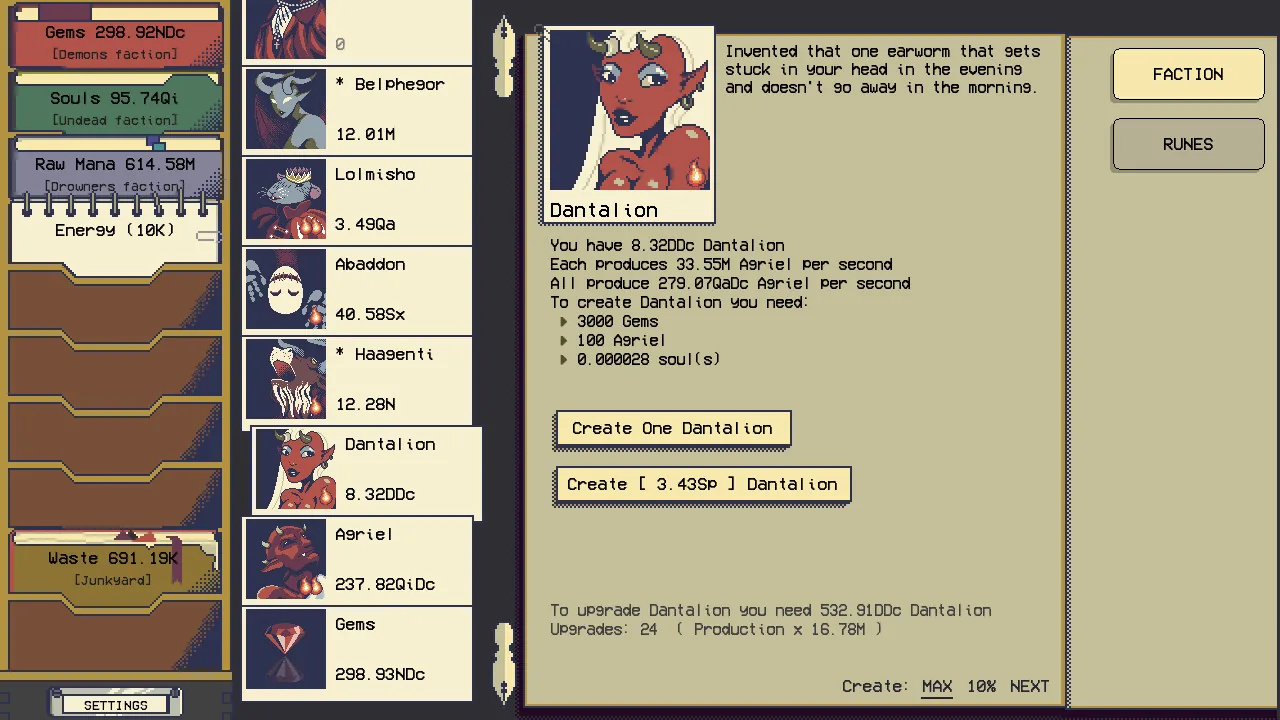
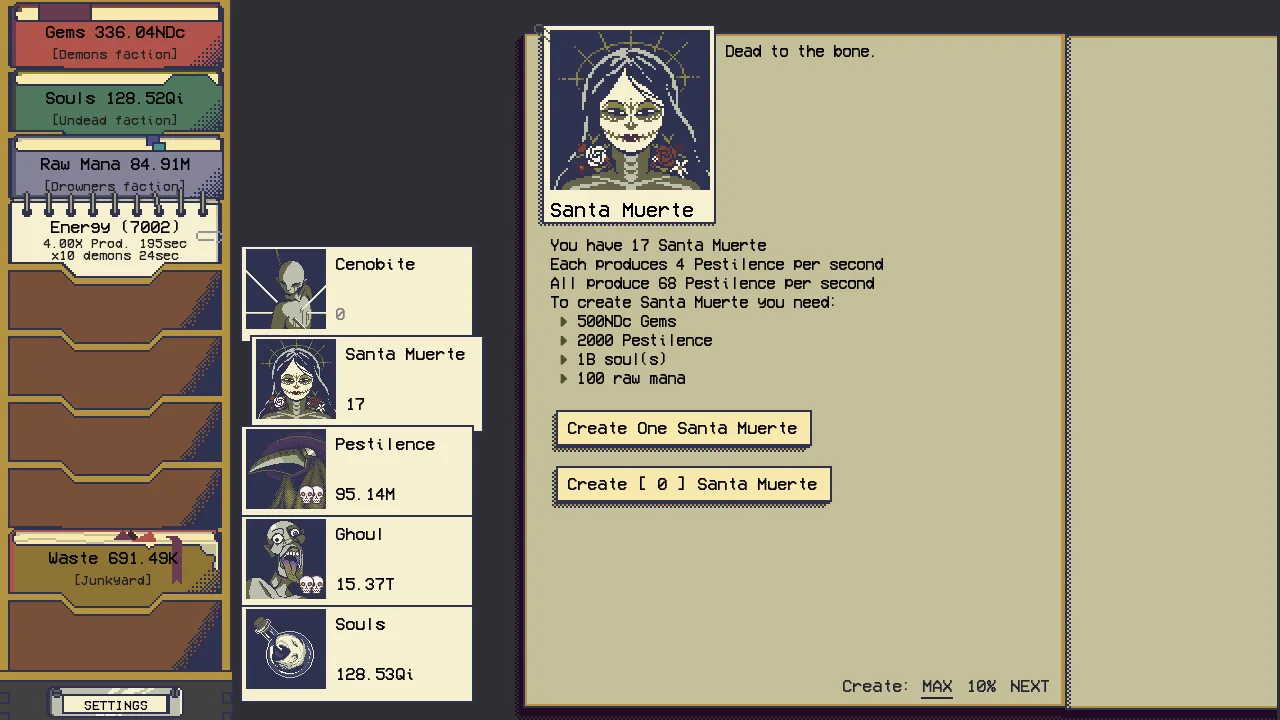
Underworld Idle's pitch is a specific, well-worn sub-genre of incremental game — the store page itself name-checks Swarm Simulator and Antimatter Dimensions as its reference points — but its execution has a genuinely distinctive shape. Four factions, each with its own resource and its own production ladder: demons, undead, utopians and blackseekers. In every chain, the highest-tier unit you own spends its output creating the tier below it, which spends its output creating the tier below that, all the way down to the resource you actually spend. Buying a single top-tier demon doesn't just add one number to a total; it sets off a cascade that reshapes every tier beneath it. Juggling four of those cascades at once, each with its own pacing and its own unlock gates, is the kind of puzzle that rewards the exact spreadsheet-brained thinking this genre's fans show up for.
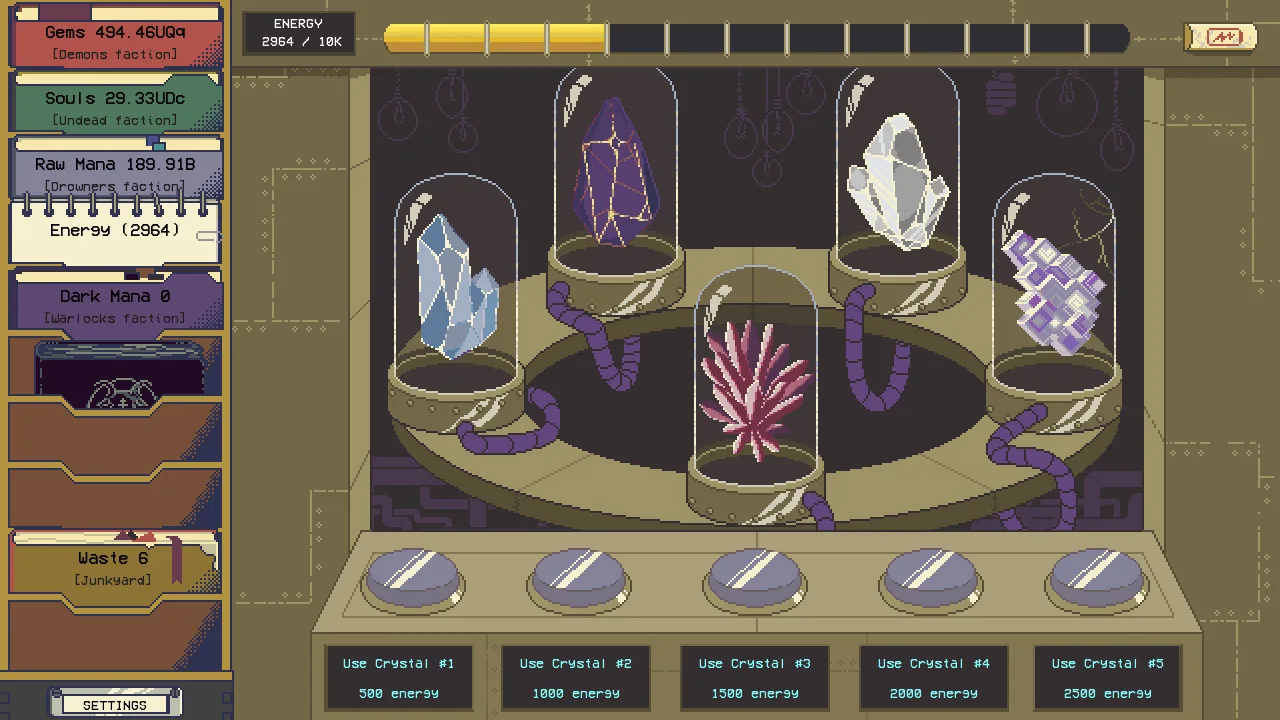
The zones layered on top give that structure somewhere to go. A lab full of energy crystals, a junkyard, a library stacked with a dark-magic grimoire, an undead world added in mid-2022, and a "Rusty World" of robots that closed out the content additions at the end of that year — each pulls in new unit types and new twists on the same higher-creates-lower rule rather than just re-skinning the first zone. There's an Infernal Contracts prestige system for players who want a reason to reset and come back stronger, and Steam's achievement data backs up that a real number of players push a long way into all of it: the curve across the game's eight milestones runs a smooth 72%, 61%, 52%, 34%, 32%, 25%, down to 14.5% and 12.5% at the two deepest achievements, Obelisk and Warlocks. That's a gradual taper, not a cliff — the kind of shape that says a meaningful slice of the audience genuinely works through the mid-game rather than bouncing off it in the first hour.
The word "idle" is doing a lot of work it can't back up
Here's where the reviews turn, and they've been turning the same way since the game's first week on Steam. A May 2021 review, one of the earliest on the page, is blunt about it: "THERE'S NO OFFLINE PROGRESSION. Yep. No offline progression in an idle game. Sure, you're still regenerating your energy, but that's it." That's not an isolated first impression from a rough Early Access build. The same complaint, in close to the same words, shows up from a 122-hour reviewer in 2022 ("very minimal offline progression... which doesn't give much incentive to check in each day"), from a 1,130-hour reviewer after full release in January 2023 ("the rewards obtained from being offline are almost nothing even after upgrades"), from a 258-hour reviewer in March 2023 singling out that runes and oysters specifically don't progress offline while waste and energy trickle in, and from a 368-hour reviewer as recently as January 2024. The most recent instance in the sample is dated August 2025.
The developer clearly knew this was the game's weak point — a January 2023 patch note, nine days before the full 1.0 release, is literally titled "Offline Boost, Preparing to Exit Early Access, Bugfixes." It didn't settle the argument. Complaints about the same underlying issue keep appearing in reviews dated after that patch, which suggests the boost narrowed the gap rather than closed it. What's left is a design where one resource, energy, accrues at a capped rate while you're away, and almost everything that actually matters — rune levelling, most of the faction chains, the deeper unlock gates — sits frozen until you open the client and start clicking again. One review from a 555-hour player puts the practical consequence sharply: a UI bug that copies save data to the clipboard repeatedly "has screwed me over while I'm trying to do other things," which only stings because the game gives you no offline reason not to be doing other things in the first place.
Several reviewers frame this as a category error rather than a balance nitpick. "It's not an Idle game. It's a full time job," reads one January 2023 review from a 1,130-hour player, and a different reviewer with over a thousand hours in the genre elsewhere — citing completed runs of Melvor Idle, Cookie Clicker and a deep run into NGU Idle — draws the same conclusion about this one specifically. If the genre's core promise is that the game keeps working while you don't, Underworld Idle asks you to supply the labour it's supposed to be doing for you.
Pacing, and where the token shop sits in it
The second recurring thread in the negative reviews is more contentious, because it touches money directly: a substantial number of reviewers describe the mid-to-late game's pacing as built around, not merely accommodating, the token shop. "Don't play this game unless you're willing to waste a ton of your real life money," reads a December 2024 review with 26 upvotes, arguing progression is "extremely slow unless you're willing to buy tokens." A January 2023 review draws a specific contrast with the light-touch monetisation players tolerate in most free idle games — "2x production for this resource for $1 but the game is balanced around not buying this" — and argues Underworld Idle crosses that line rather than respecting it. The complaint isn't confined to the game's early years, either: an April 2026 review flatly calls the scaling "intentionally skewed to push you towards microtransactions," and an August 2026 review — among the very newest in the sample — makes the same argument again.
It's worth being precise about what's actually for sale, since the store page itself is the clearest evidence here: a single DLC listing, "Underworld Idle - Extra Tokens," priced at NZ$56.99 for 5,000 tokens and a permanent 2x search bonus. That's a steep top-end purchase for a free-to-play idle game, and it sits alongside smaller in-client token purchases the Steam listing flags under "In-App Purchases" without itemising. Whether the free pace is fair or engineered depends on how much clicking you're willing to do without paying, and the reviews above suggest a real slice of the player base concluded, across five separate years, that the answer is "more than it should be."
An interface built for clicking, not for checking in
The genre-standard idle-game interface promise — glance at the screen, buy a few upgrades, close it — doesn't hold up well here either. Multiple reviews describe long stretches of repeated, button-mashing input to clear resource queues rather than the occasional purposeful click idle games are known for; one puts it as being "gated behind days of clicking" strongly enough to warn of repetitive strain. That's a harsher framing than most idle games earn, but it lines up consistently with the offline-progression finding above: if very little happens while you're away, the only way to make real progress is to be there, clicking, for long stretches at a time. The pixel art and per-faction writing get real, specific praise even from critical reviewers — several call out the visual identity of the four factions as the game's best-preserved strength — but a good looking interface built around constant manual input isn't the same thing as a good idle interface.
A project that's gone quiet
Underworld Idle's last recorded update, version 1.02d, shipped on 6 February 2024 — roughly two and a half years before this review. The same Steam news feed carries an announcement, dated August 2023, for the developer's next project, Epic Auto Towers, which suggests the studio's attention moved on not long after this game's full release. Nothing in the public record confirms the game is abandoned outright, and the recent review sample (68% positive across the last 100 English reviews, spanning the last year) shows a stable, unremarkable reception rather than a collapsing one — but a buyer weighing whether to invest serious time should know there's no active development cadence to factor in, only a finished-feeling 1.0 build from early 2023 with a handful of bugfix patches on top.
Final verdict
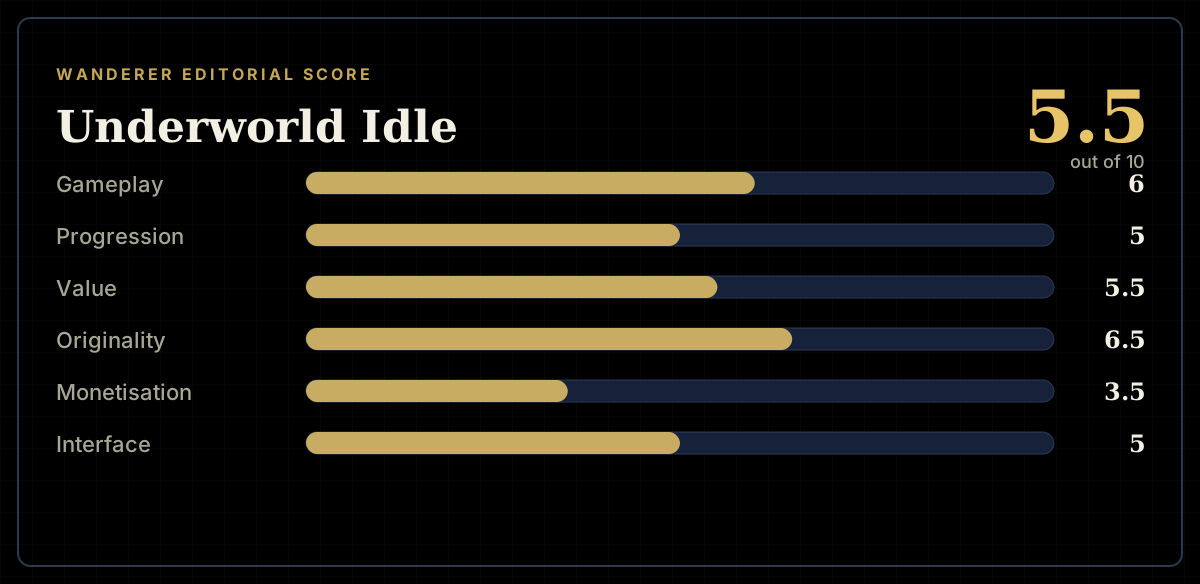
Underworld Idle has a real idea worth the free download: four interlocking chain-production factions where every purchase cascades through several tiers beneath it, wrapped in distinctive art and backed by an achievement curve that shows plenty of players stick with it. What keeps it from scoring higher is that the genre word in its own title undersells what it actually demands. Offline progress has been the single most consistent complaint in its review history for over five years, still showing up in reviews from this year, and a meaningful share of its critics — some with thousands of hours logged in other idle games — argue its pacing is tuned toward a NZ$56.99 token pack rather than toward patient, unpaid play. 5.5 out of 10 reflects a genuinely clever system wrapped around a business model and an offline design that keep working against it rather than for it. Worth trying because it costs nothing; worth watching your clock, and your wallet, closely once you do.
Pros and cons
Pros
- Four interlocking faction chains (demons, undead, utopians, blackseekers) where every unit you buy is itself a producer of the tier below it, and balancing four chains against each other is a genuinely distinctive puzzle for the genre
- A long content tail — separate demon, undead and "Rusty World" robot zones were added across 2021 and 2022, plus a prestige system (Infernal Contracts) for players who want a reason to reset
- Steam's achievement curve shows a smooth, not a cliff-edge, drop-off across its eight milestones (72% down to 12.5%), meaning a real slice of the audience pushes deep into the faction tree rather than bouncing off it early
- Distinctive, faction-specific pixel art and writing that several long-time reviewers single out as the game's best-preserved strength even when they're recommending against buying tokens
Cons
- Offline progress is close to nominal. One faction's energy trickles in at a capped rate while the window is closed; almost every other resource, including the runes several reviews name specifically, simply pauses until you're back and clicking. This exact complaint appears in reviews from May 2021 through 2025, including from players with over 1,000 hours logged
- A meaningful share of the negative sample — including reviews as recent as April and August 2026 — describes pacing as deliberately tuned around its token shop, up to and including the NZ$56.99 "Extra Tokens" DLC bundle, rather than balanced for a patient free player
- The genre's promise is "walk away and come back to progress"; this game asks for the opposite — long, repeated clicking sessions to clear queues and buy upgrades, which several reviewers, including ones with thousands of hours logged elsewhere in the genre, say crosses from "idle" into "job"
- No update recorded since February 2024, roughly two and a half years ago, and the developer's most recent public Steam post is an announcement for their next game rather than a roadmap for this one
Screenshots
-
Underworld IdleImage: Aleksandr Golovkin via Steam -
Underworld IdleImage: Aleksandr Golovkin via Steam -
Underworld IdleImage: Aleksandr Golovkin via Steam -
How the review scores each part of the gameWanderer Editorial -
The game at a glanceWanderer Editorial -
The short versionWanderer Editorial