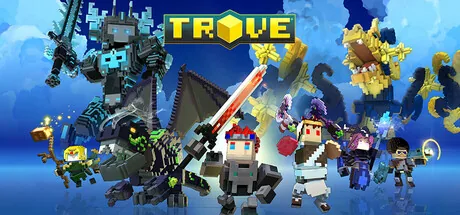
Game review
Trove
6 / 10
- Developer
- gamigo US Inc.
- Publisher
- gamigo US Inc.
- Released
- 9 July 2015
- Platforms
- Windows, PlayStation 4, PlayStation 5, Xbox One, Xbox Series X|S, Nintendo Switch
- Genre
- Voxel Action MMORPG
- Monetisation
- Free to play, with a Patron subscription, direct-purchase Chaos Chest loot boxes, real-money class unlocks and a large cosmetic mount/wings/ally shop
- Players
- Persistent MMO with shared overworlds, instanced dungeons, guild-style Clubs and Club Worlds, and PvP arenas — but no crossplay or cross-progression between PC, PlayStation, Xbox and Switch
The short version
Trove's core idea — build in voxels, then go fight things for ARPG loot in procedurally generated dungeons made of the same blocks — is still one of the more distinctive hybrids in the MMO space, and it's still free to fully play from the tutorial through the endgame. Eleven years on, under its second owner, the game is genuinely alive: monthly community letters, seasonal events, an anniversary celebration timed to its own launch date, and a playerbase in the tens of thousands of Steam reviews.
What's harder to defend is how much of the endgame loop now runs through a store rather than a dungeon. Chaos Chests, the game's core loot-box currency, can be bought outright with real money on top of being earned through play, and a 2025 anti-cheat rollout drove a wave of negative reviews from players with a thousand-plus hours logged — a rare case of the veteran audience turning, not the newcomers.
Biggest strengths
- The voxel-building-meets-ARPG-loot hybrid is still genuinely distinctive and nothing else on the market does both halves at once
- All sixteen classes can be unlocked through play — via crafting, Class Coins or in-game currency — with no class permanently locked behind cash alone
- Cornerstones and Club Worlds keep a real building layer alive, reinforced with recurring community build contests as recently as May 2025
Biggest weaknesses
- Chaos Chests, the primary loot-box reward, are sold directly for real money on top of being earned through play, and Patron status doubles how many you earn per day
- Endgame gem leveling and gear empowerment ask for weeks of repetitive dungeon farming gated behind heavy RNG
- A 2025 rollout of the XignCode3 anti-cheat system triggered a wave of negative reviews from players with hundreds to well over a thousand hours logged, citing invasive kernel-level scanning
Who it's for: Players who liked the idea of Minecraft with a class system and a loot table, and who don't mind an MMO that asks for real patience — and occasionally real money — once the honeymoon wears off.
Our recommendation: Install it free and stick to the early biomes and starter classes for a genuine first impression. Decide on Patron and Chaos Chests only after you've felt the grind for yourself, not before.
6 / 10
Trove was never just a Minecraft clone with monsters. From its first Early Access build in 2015, Trion Worlds' pitch was a voxel world you could genuinely build in, wired directly into an ARPG loot loop with classes, procedurally generated dungeons and gear you chase for its stat rolls, not just its shape. Eleven years and one company collapse later, that hybrid is still the reason anybody plays it — and still the thing every other design decision in the game gets measured against.
Who's actually running this thing in 2026
Trion Worlds, the studio that built Trove, folded in October 2018. Its games — Trove among them, alongside Rift, Defiance and ArcheAge's publishing rights — were picked up by gamigo through an asset acquisition after Trion's assignment for the benefit of creditors, with the games' intellectual property routed to a gamigo sister company and gamigo taking on the staff needed to keep operating the titles. Steam's own storefront listing confirms where things stand now: as of this review, both developer and publisher of record are gamigo US Inc.
That's not a formality worth skipping. A lot of MMOs that change hands this way quietly slide into maintenance mode — a skeleton crew pushing balance patches and nothing else. Trove hasn't. The Steam news feed through mid-2026 shows a genuine monthly rhythm: community letters, a Trove Cup esports-style event, a summer sale, an eleventh-anniversary celebration timed to the game's own July 2015 launch date, and seasonal content drops like SunFest running for weeks at a stretch. Whatever else is true about Trove's monetisation, "abandoned" isn't one of the complaints, and it's worth saying plainly: gamigo kept this game alive and actively updated for longer post-acquisition than most publishers manage with games they built themselves.
The loop that still works
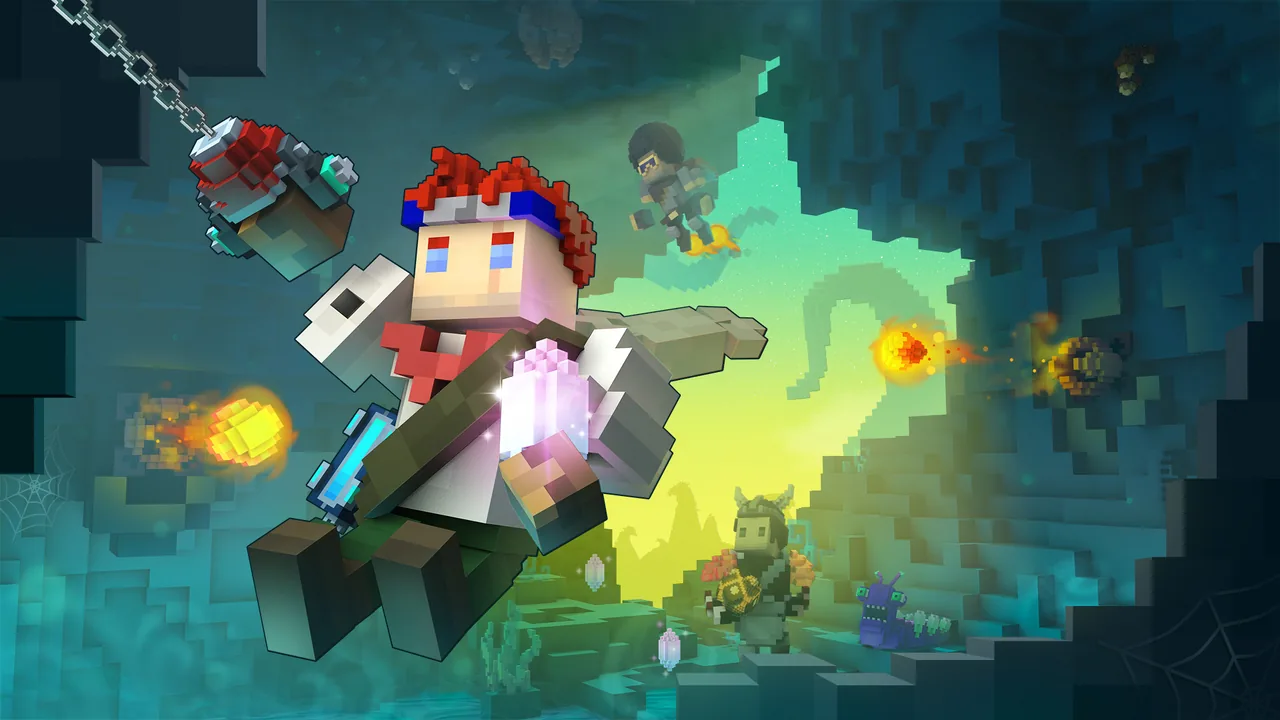
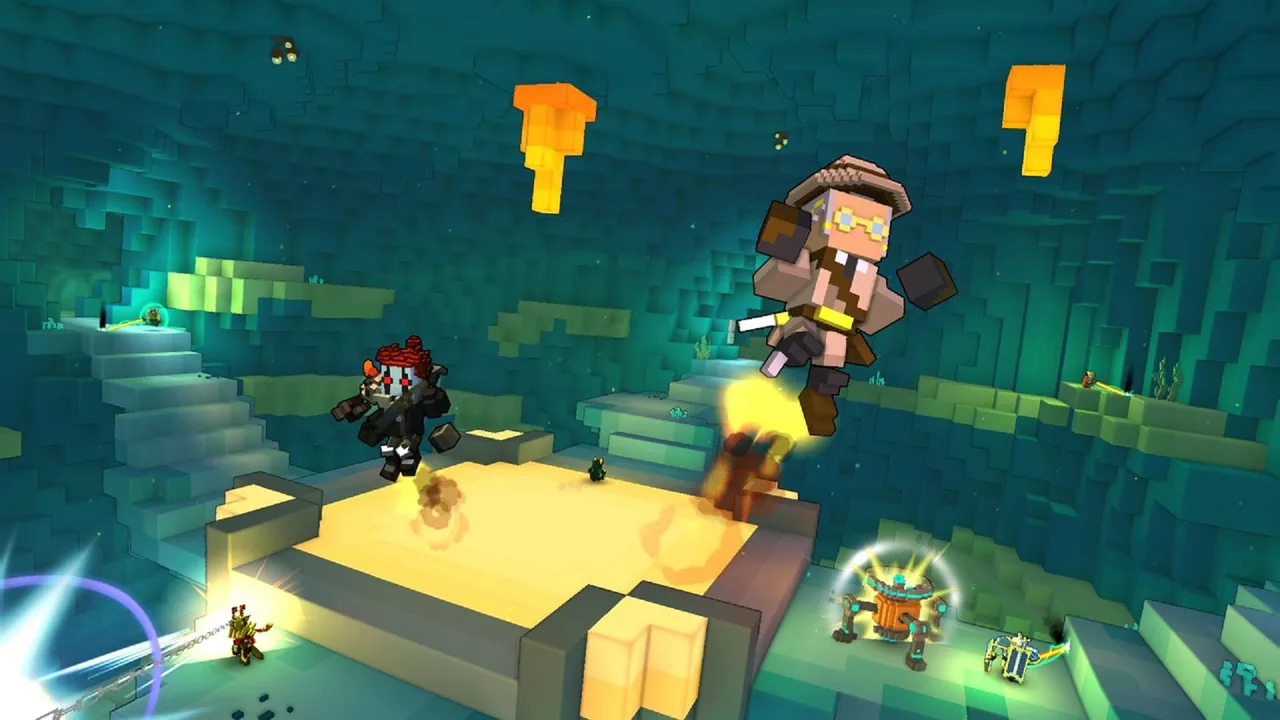
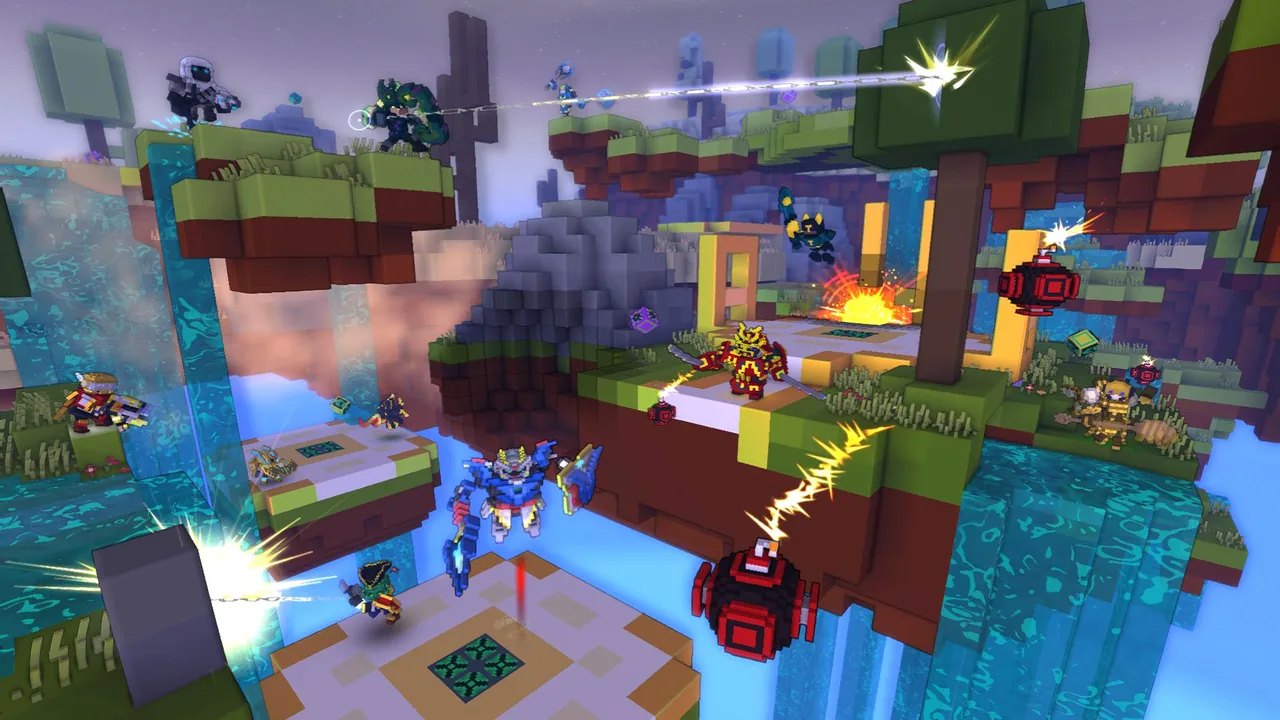
Strip away the shop and Trove's actual gameplay holds up reasonably well. You pick from sixteen classes — Knight, Pirate Captain, Dracolyte, Shadow Hunter and a dozen others — each with its own combat kit, then head into procedurally generated dungeons stacked with the same destructible voxel blocks the overworld is built from. Combat is simple but has real texture: classes play differently enough that swapping between them changes the moment-to-moment feel rather than just the coat of paint, and biome-specific dungeon layouts keep the environments from blurring together as fast as a pure loot-grinder would.
Gear drops with real itemisation — stat rolls, set bonuses, gem sockets — and the itemisation layer is deep enough to reward theorycrafting without demanding it. That's the part of Trove that still earns comparisons to full ARPGs rather than to lighter voxel sandboxes, and it's genuinely well built.
The class question, answered fairly
Sixteen classes is a lot of character choice for a free MMO, and the honest version of how you get them matters more than the headline number. Trove supports several overlapping unlock paths: a free Starter Class Coin for every account, referral bonuses, crafting most classes at the Chaos Crafter using materials and in-game Flux, buying Class Coins in Store packs for real money, or picking up tradeable class items through the player marketplace. Nobody is permanently locked out of a class by price alone — every one of them is reachable through play, just not quickly. Real money buys the fast lane, not the only lane, which is the distinction that keeps this system out of straightforward pay-to-win territory: nothing sold provides an advantage a free player can't eventually reach, it just controls how long "eventually" takes.
Where the store starts doing the game's job
Chaos Chests are Trove's core loot-box reward, and they're the clearest example of monetisation crossing from "supporting the game" into "replacing part of it." You earn a limited number per day tied to your Chaos Factor, mostly by clearing dungeons — but you can also just buy them outright for Credits, individually or in bundles that throw in bonus chests and a rarer Golden Chaos Chest. Active Patron status doesn't just add convenience here, it directly doubles your daily Chaos Chest yield on top of boosting the Chaos Factor that determines how many you can earn per dungeon in the first place. That's a subscription with a real progression multiplier attached, not a purely cosmetic perk, and it sits in the grey zone the brief's four-part test exists for: it doesn't buy a stat advantage a free player can't match, it doesn't lock content away, but it does compound, day over day, in a way that a free account can't fully offset without a lot more grinding.
Add in Patron's flat experience, mining-speed and resource-capacity bonuses, and the honest read is that Trove's monetisation isn't selling power directly — it's selling the rate at which you accumulate the systems that produce power. Whether that distinction matters to you depends on how much you value your own time relative to the subscription price, which is exactly the calculation gamigo is counting on you making in its favour.
The grind, unvarnished
Trove's endgame — gem leveling, gear empowerment, the deeper Shadow's Eve and world-boss content — runs almost entirely on repetition. You clear the same handful of high-tier dungeon layouts over and over, hoping for better gem rolls or rarer crafting materials, for weeks at a stretch. That's a familiar shape for the genre, and Trove doesn't hide it, but it's also the single most common complaint across the game's long review history: players describe hitting a wall where the fun combat loop becomes a numbers-grinding chore, with cosmetic content updates arriving faster than substantive new endgame systems. The building layer offers a genuine alternative outlet — Cornerstones and Club Worlds are still actively supported, with the developers running biome-themed building contests as recently as May 2025 — but building doesn't feed the gear progression, so for anyone chasing power rather than creativity, it's a parallel hobby rather than a relief valve.
2025's anti-cheat backlash, and what the timestamps actually show
The most useful thing about Trove's Steam review history isn't the lifetime score, it's what changed and when. Across 42,334 all-time reviews the game sits at Mostly Positive, 76%. Reviews from the last 30 days sit at Mixed, 60% — a real, measurable dip, and the negative sample explains why. Sorting negative English-language reviews by recency turns up a dense cluster from late June 2025, many from accounts with hundreds or well over a thousand hours logged, almost all pointing at the same target: the rollout of the XignCode3 anti-cheat system, criticised for invasive kernel-level file scanning and data-collection concerns rather than for anything about the game itself. That's a meaningfully different signal than the usual "game got boring" complaint — it's long-tenured players objecting to what got installed on their machine, not to the loot table. The older, larger wave of negative reviews from 2017 tells a more familiar story: pay-to-win framing, server lag and grind fatigue, the standard complaints for a game this shape. Both are real; they're just not the same complaint, and treating the anti-cheat backlash as evidence the whole game turned sour would be reading the data wrong.
Presentation and the fractured playerbase
Trove's voxel art style is still charming in the way blocky, brightly coloured worlds tend to be, and it holds up better than a decade-old engine has any right to in quiet moments. It shows its age the moment a dungeon fills up with players, particle effects and simultaneous ability casts — frame pacing gets rough exactly when the MMO part of the game is working as intended, which is an old, familiar problem for games in this genre.
The bigger structural issue is platform fragmentation. Trove runs on PC, PlayStation 4 and 5, Xbox One and Series X|S, and Nintendo Switch, but there's no crossplay between console families and no cross-progression at all — build a character on PlayStation and it stays on PlayStation. That splits what should be one shared MMO population into several smaller, separate ones, and it's a limitation the game has carried since its console launches years ago without resolving.
Final verdict
Trove earns real credit simply for still being here, still updated, and still fully playable for free from the tutorial through every dungeon tier and all sixteen classes. gamigo inherited a messy situation when Trion Worlds collapsed in 2018 and has kept the game genuinely alive since, which is more than a lot of acquired live-service MMOs can claim. The voxel-building-meets-ARPG hybrid at its core is still distinctive, the class variety is real, and nothing meaningful is permanently locked behind a paywall.
It doesn't score higher because too much of what should be earned through play is also sold directly, and because the systems that are earnable ask for a grind heavy enough that the shop starts to look like the reasonable option rather than the impatient one. A 2025 anti-cheat rollout that alienated some of the game's most dedicated players, and a platform split that keeps PC, PlayStation, Xbox and Switch from ever being one community, round out a game that's aged into "still worth trying, know what you're signing up for" rather than "still essential."
Install it free, play through the early biomes on a couple of starter classes before deciding whether Patron or Chaos Chests are worth it to you, and treat the building layer as the genuine bonus it is rather than a shortcut to the loot you're actually there for.
Facts, pricing and monetisation checked 2026-08-02.
Readers who like the idea of voxel building without an ARPG loot treadmill bolted on may prefer Minecraft, and anyone weighing Trove's Chaos Chest economy against a different free MMO's monetisation should read our reviews of Realm of the Mad God and Albion Online. Players who'd rather their progression kept safe without a subscription or a loot-box shop attached might also enjoy Wanderer.
Pros and cons
Pros
- The voxel-building-meets-ARPG-loot hybrid is still genuinely distinctive and nothing else on the market does both halves at once
- All sixteen classes can be unlocked through play — via crafting, Class Coins or in-game currency — with no class permanently locked behind cash alone
- Cornerstones and Club Worlds keep a real building layer alive, reinforced with recurring community build contests as recently as May 2025
- gamigo has kept a genuine content cadence running for years after Trion Worlds' 2018 collapse, not just a maintenance trickle
- The full campaign, every dungeon tier and the entire class roster are reachable without spending a cent
Cons
- Chaos Chests, the primary loot-box reward, are sold directly for real money on top of being earned through play, and Patron status doubles how many you earn per day
- Endgame gem leveling and gear empowerment ask for weeks of repetitive dungeon farming gated behind heavy RNG
- A 2025 rollout of the XignCode3 anti-cheat system triggered a wave of negative reviews from players with hundreds to well over a thousand hours logged, citing invasive kernel-level scanning
- No crossplay or cross-progression between PC, PlayStation, Xbox and Switch effectively splits the game into four separate, smaller communities
- The decade-old engine visibly strains once a dungeon fills up with players and particle effects at once
Screenshots
-
TroveImage: gamigo US Inc. via Steam -
TroveImage: gamigo US Inc. via Steam -
TroveImage: gamigo US Inc. via Steam -
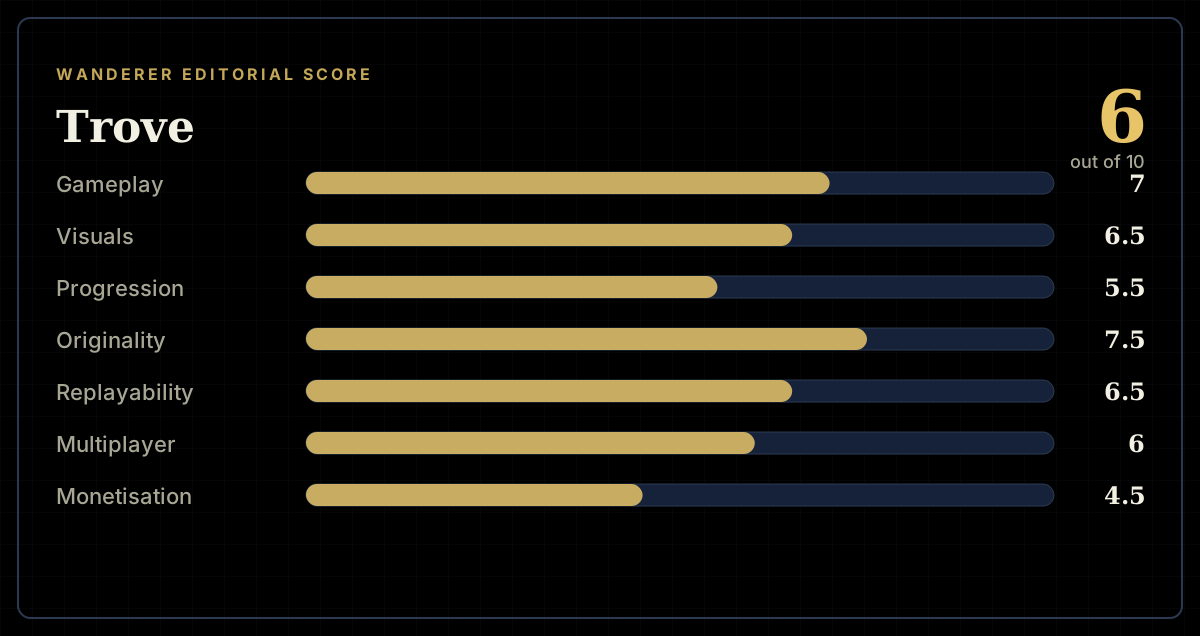
How the review scores each part of the gameWanderer Editorial -
The short versionWanderer Editorial