
Game review
Idle Hacking: An Inaction RPG
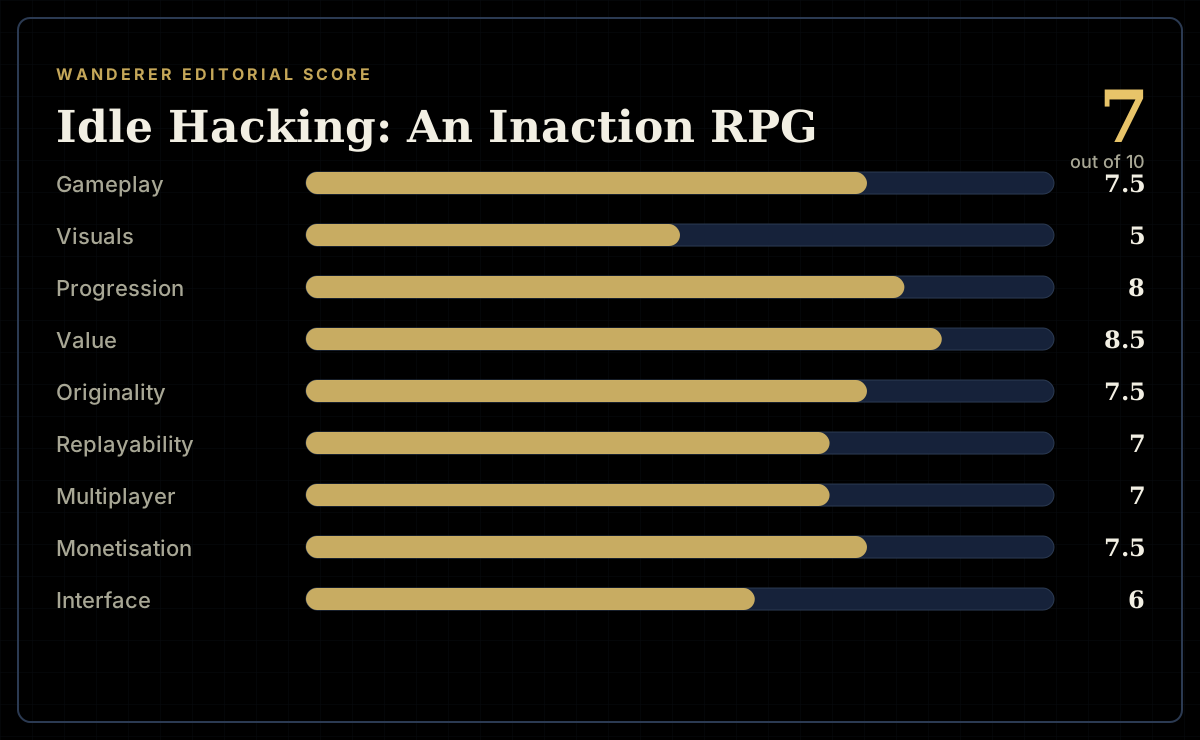
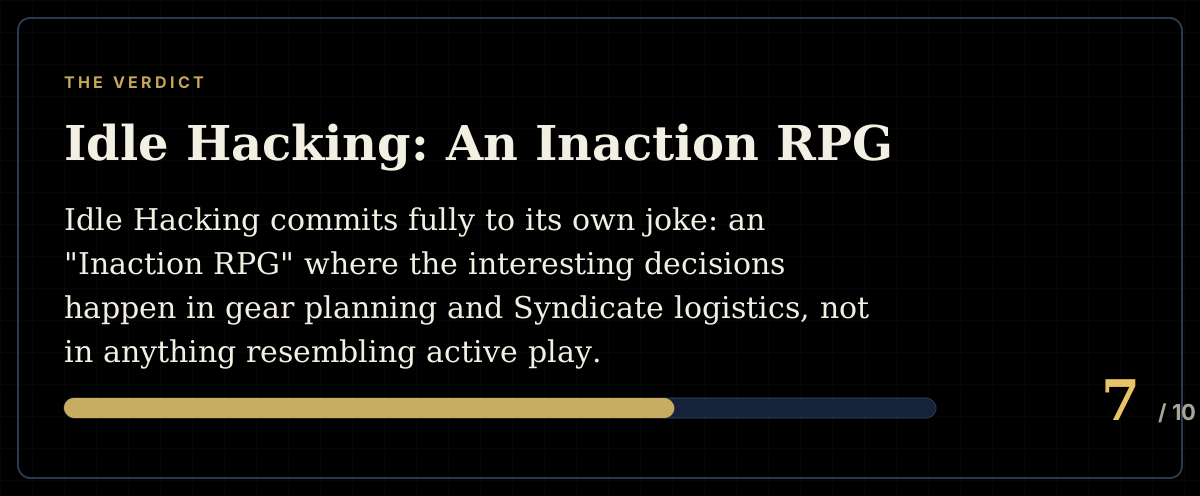
7 / 10
- Developer
- GigaForge Games
- Publisher
- GigaForge Games
- Released
- 18 March 2026
- Platforms
- Windows, macOS, Linux, Browser
- Genre
- Incremental MMORPG
- Monetisation
- Free to play with an optional premium subscription. Premium mainly extends offline progress past the free 12-hour cap and adds minor account conveniences; it can be bought with real money or, per repeated player accounts, earned indirectly by trading for it on the in-game marketplace.
- Players
- Persistent shared world — player-run Syndicates (guild equivalents), an open player marketplace, recurring timed community world-boss events, and weekly Syndicate contracts
The short version
Idle Hacking commits fully to its own joke: an "Inaction RPG" where the interesting decisions happen in gear planning and Syndicate logistics, not in anything resembling active play. The affix-driven equipment system borrows enough from action-RPG crafting to give idle-genre veterans a reason to think harder than usual, and the free-to-play terms are unusually honest about letting patient players reach premium-tier conveniences without paying.
What holds it back from the genre's top tier is everything around the systems rather than the systems themselves — a presentation so minimal it will test players who want any visual reward for progress, documentation that lags behind the number of mechanics on offer, and a community that a meaningful slice of reviewers describe as actively unwelcoming to people still learning the ropes.
Biggest strengths
- The affix and Signature Affix loot system gives gear-hunting a real decision tree instead of a single "bigger number" upgrade path
- Free accounts can reach almost everything premium offers by trading for it on the player marketplace rather than paying directly
- Multiple long-term players describe bugs getting fixed within hours of being reported, which is rare for a small free-to-play idler
Biggest weaknesses
- The interface leans almost entirely on text and numbers, with none of the small visual payoffs that soften the grind in comparable idlers
- A recurring and specific complaint describes chat moderation and the report system as tools some players use against newcomers rather than protection for them
- The RNG-heavy affix rolls that make early crafting interesting start to feel like the only lever left once the surrounding systems are understood
Who it's for: Idle and incremental veterans who've exhausted the number-go-up basics and want an affix-and-build layer closer to Path of Exile than Cookie Clicker, and who don't mind a game that looks like a spreadsheet.
Our recommendation: Try it — it's free, browser-based and asks nothing up front. Read the in-game help and community guides before committing to a build, and treat the public chat as optional.
7 / 10
The name is the pitch. "Inaction RPG" is GigaForge Games being upfront about the fact that nothing in Idle Hacking asks you to do anything quickly, or often, or at all if you'd rather not. Your character hacks virtual targets and gathers resources on its own, whether you're watching or not, for up to twelve hours after you close the tab. What you actually spend your attention on is everything downstream of that: which stats to chase, which affixes to keep rolling for, which Syndicate to throw your resources behind. It's a familiar idle-genre trick — hide the real game behind the fake one — but Idle Hacking leans harder into the "real game" half than most of its free-to-play peers bother to.
The loop under the loop
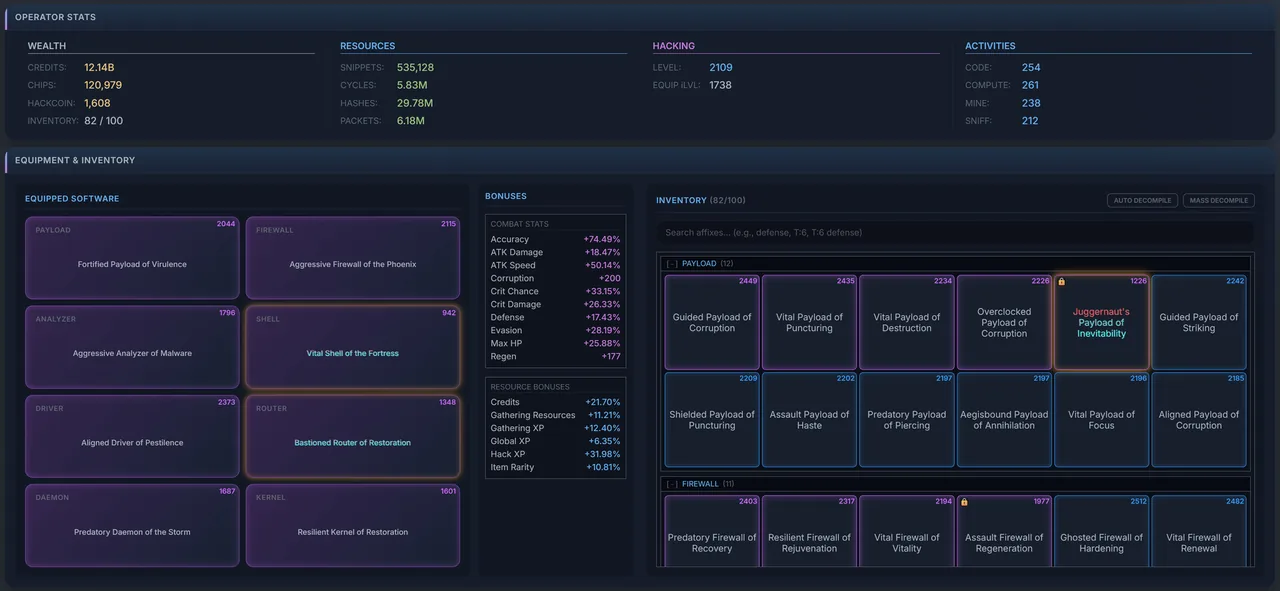
Strip away the hacking theme and the skeleton is standard incremental fare: passive resource generation, skill levels that raise your collection rate, gear that makes the numbers bigger. What sets it apart is the equipment layer sitting on top. Rather than a single "attack power" stat to inflate, gear rolls from a pool of over a hundred affixes, echoing the prefix/suffix crafting players know from action-RPGs like Path of Exile. Chase the wrong combination and you've built a mediocre item with wasted stats; chase the right one and certain items carry a "Signature Affix" — a unique modifier that can open up an entire alternate way of building your character rather than just adding another number to an existing one.
That's a real design choice, not dressing. It means the interesting decisions in Idle Hacking happen in planning, not in reaction — you're deciding what to craft toward and what to reroll away from, then letting the passive systems execute the plan while you're doing something else entirely. For an idle game, that's close to the ideal division of labour: active thought where it matters, automation everywhere it doesn't.
Syndicates, contracts and a marketplace that actually moves
Idle Hacking's multiplayer layer is built from familiar parts assembled sensibly. Syndicates are the game's guilds — pool resources, share bonuses, and take on weekly Syndicate contracts that hand out temporary buffs when the group clears them together. Recurring community world-boss events run several times a day, letting players who want to fight alongside dozens of others do so, while players who'd rather just support from the sidelines can still contribute toward the event's shared reward tiers. None of this reinvents the guild-and-event MMO template, but it gives an otherwise solitary idle loop actual reasons to coordinate with other people on a schedule, rather than just comparing leaderboard numbers in isolation.
The player marketplace is the more interesting piece, because it's also where the monetisation story gets genuinely fair. Premium time — the subscription tier that extends offline progress well past the free twelve-hour ceiling and trims a few other frictions — isn't locked behind a developer storefront alone. Multiple long-time players describe buying and selling premium time through the in-game market using resources earned by playing, meaning a patient free account can work its way to the same convenience a paying one gets, just on a longer timeline. That's a meaningfully more honest free-to-play structure than the genre's norm, where "free" usually means "free until the point the game wants you to stop being patient."
Presentation: the part the theme doesn't dress up
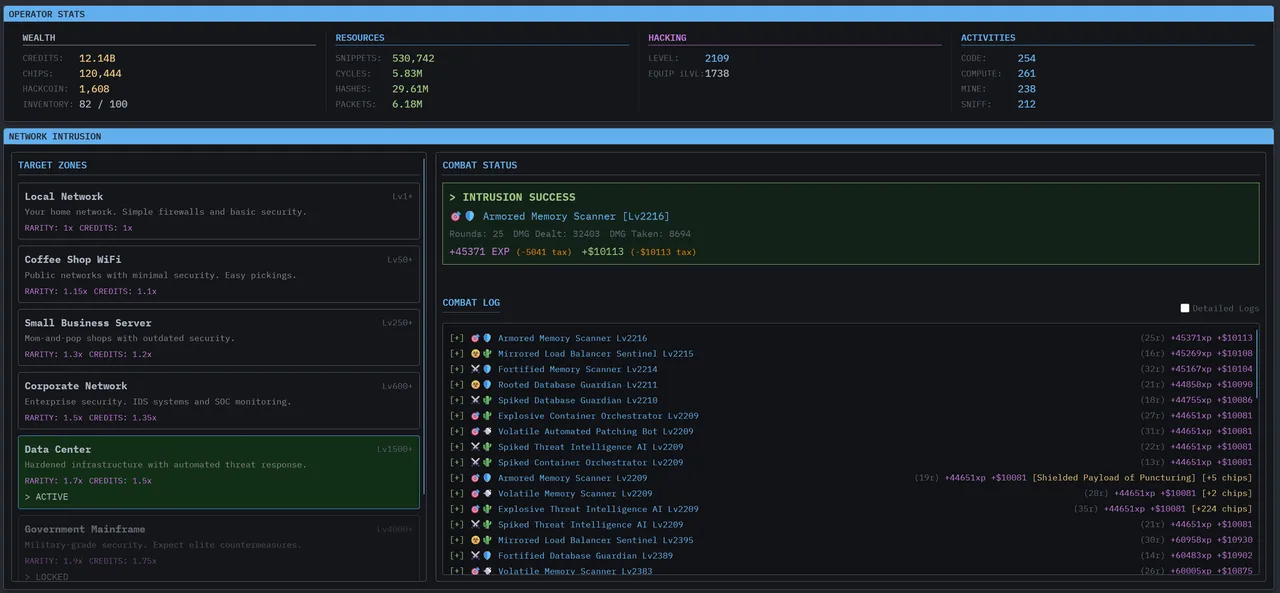
Idle Hacking is a text-and-numbers game first and a hacking-themed skin second. There's no animation to reward a big crafting win, no visual flourish when a world boss goes down, nothing that gives progress a moment to land the way even modest sprite-based idlers manage. That's a deliberate trade — every development hour not spent on presentation is presumably a development hour spent on the stat and affix systems the game is actually selling — but it's a trade players should know they're making before they commit real time to it. Idlers with even lightweight visual feedback loops tend to hold attention longer than ones that ask players to read their own progress off a stat sheet, and this is very much the latter. Anyone drawn to the genre for the small dopamine hits of watching things happen on screen will find Idle Hacking asking them to supply that feeling themselves.
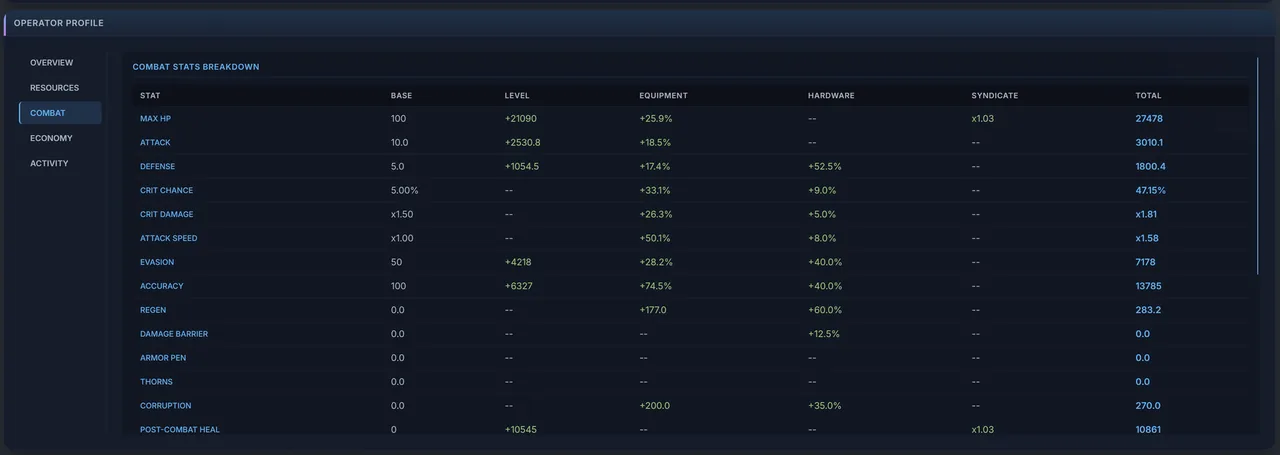
The interface follows the same logic: dense, functional, and unapologetically built for players willing to parse dozens of stats and a hundred-plus possible affixes without much in the way of in-game explanation. Community guides fill a lot of that gap, which works, but it also means the game is currently relying on its players to write the manual it hasn't quite finished writing itself.
The community problem the systems can't fix
Player accounts of Idle Hacking split cleanly into two camps, and it's worth taking both seriously rather than averaging them into a shrug. One side describes an unusually active, responsive developer — bug reports fixed within hours, balance changes that get tested before they ship, and a lively in-game chat that makes an otherwise solitary idler feel like a shared space. The other side, smaller but consistent, describes that same chat and its moderation tools turning hostile toward newcomers, with the report system specifically called out as something established players can use against people who push back rather than a protection for people being harassed. Both patterns show up often enough across independent accounts that neither reads as an isolated grudge. For a game whose main social space is its chat channel, that's a real cost, and it's one GigaForge Games can only partly solve through moderation policy rather than game design.
There's a second, gentler recurring note underneath that: the core loop's early charm — chasing affixes, tuning a build, watching the plan you made actually pay off — thins out for some players once the initial systems are understood and the RNG grind becomes the only remaining lever. That's a common idle-genre plateau rather than a flaw unique to this game, but it's fair to flag alongside the community friction as the second reason some players bounce off after the first few weeks rather than settling in for months.
Verdict
Idle Hacking earns its place among the more interesting free idlers currently active by taking its equipment system seriously instead of treating "number go up" as the whole pitch. The affix and Signature Affix crafting gives it a real identity, the Syndicate and event structure gives the idle loop a social pulse, and the marketplace path to premium time is a genuinely fair way to run a free-to-play economy. None of that is undercut by its price, because there isn't one to undercut it with.
It doesn't climb higher because the experience around those systems asks a lot in return: a presentation with almost nothing to look at, documentation that hasn't caught up with its own complexity, and a community that — by its own players' repeated account — isn't uniformly kind to the people it should be recruiting. Idle-genre veterans looking for a deeper build layer than usual will get real value here. Anyone hoping for a gentler on-ramp, visually or socially, should go in with that expectation set correctly.
Players who like the idea of persistent, away-from-keyboard progression but want a friendlier learning curve and a bit more to look at while it happens may also want to give Wanderer a try.
Pros and cons
Pros
- The affix and Signature Affix loot system gives gear-hunting a real decision tree instead of a single "bigger number" upgrade path
- Free accounts can reach almost everything premium offers by trading for it on the player marketplace rather than paying directly
- Multiple long-term players describe bugs getting fixed within hours of being reported, which is rare for a small free-to-play idler
- Recurring Syndicate contracts and timed world-boss events give the idle loop scheduled reasons to check in, not just a number to glance at
Cons
- The interface leans almost entirely on text and numbers, with none of the small visual payoffs that soften the grind in comparable idlers
- A recurring and specific complaint describes chat moderation and the report system as tools some players use against newcomers rather than protection for them
- The RNG-heavy affix rolls that make early crafting interesting start to feel like the only lever left once the surrounding systems are understood
- In-game documentation trails the sheer number of stats and modifiers the game expects players to track
Screenshots
-
Idle Hacking: An Inaction RPGImage: GigaForge Games via Steam -
Idle Hacking: An Inaction RPGImage: GigaForge Games via Steam -
Idle Hacking: An Inaction RPGImage: GigaForge Games via Steam -
How the review scores each part of the gameWanderer Editorial -
The short versionWanderer Editorial