Game review
Farm RPG
7 / 10
- Developer
- Magic & Wires LLC
- Publisher
- Magic & Wires LLC
- Released
- 28 April 2021
- Platforms
- Windows, macOS, Android, iOS, Web browser
- Genre
- Idle RPG
- Monetisation
- Free to play with an optional Gold premium currency earnable through normal play, purchasable in packs from under a dollar up to well over NZ$200, plus an optional monthly supporter subscription; no advertising on any platform
- Players
- Shared persistent world with trading, mailboxes, a friends list and community events, but no direct combat or competition between players
The short version
Farm RPG has been running since 2021 as a menu-based farming MMO with no combat, no ads and a premium currency that never gates the systems that actually matter. Its Steam release in June 2026 isn't a launch so much as a fifth storefront for a game that already has over a million registered players and star ratings north of 4.7 on both mobile app stores — numbers that are hard to argue with for a free game built entirely out of dropdown menus.
What holds it back from ranking higher is the interface itself. Farm RPG expects players to lean on a fan-run wiki for basic strategy almost from day one, and while that community infrastructure is genuinely excellent, needing it this early is a design choice the game never quite owns up to.
Biggest strengths
- No advertising anywhere on any platform, and nothing in the core loop is locked behind the Gold currency
- New activities (fishing, crafting, cooking, exploring, mining) unlock steadily rather than dumping every system on day one
- Item Mastery and Craftworks auto-crafting give long-time players ongoing goals well past the point most farming games run out of content
Biggest weaknesses
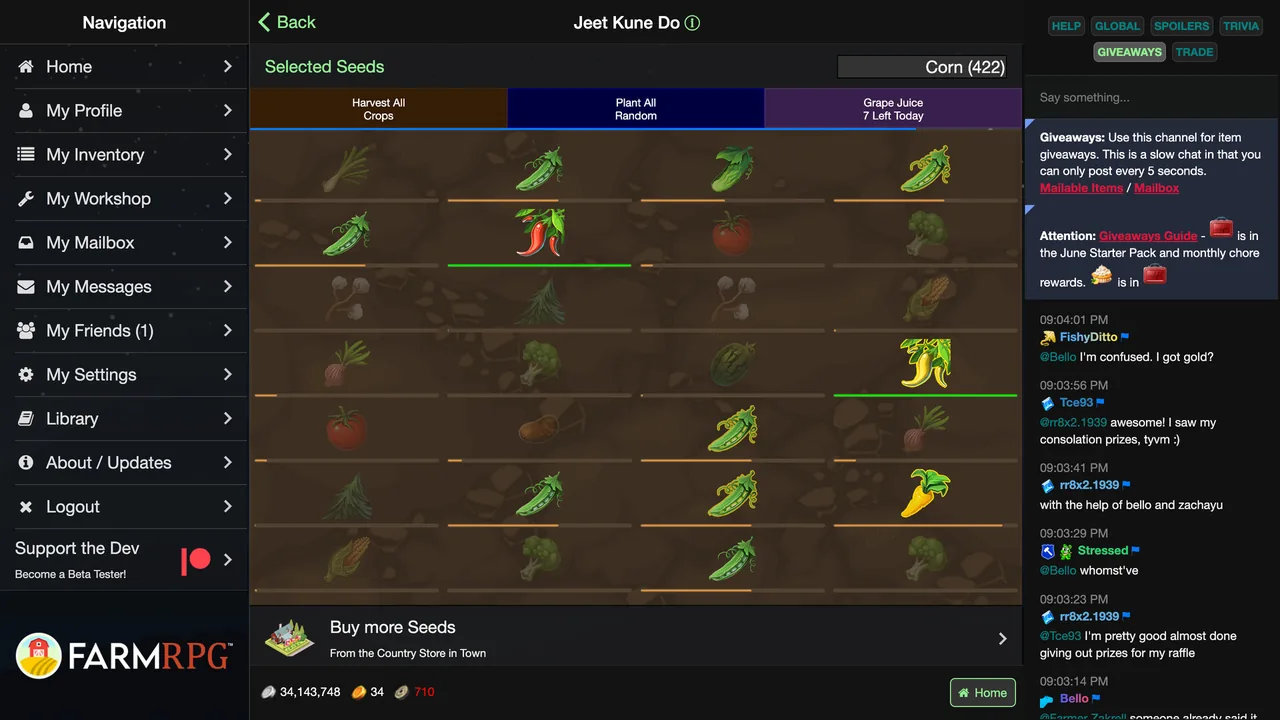
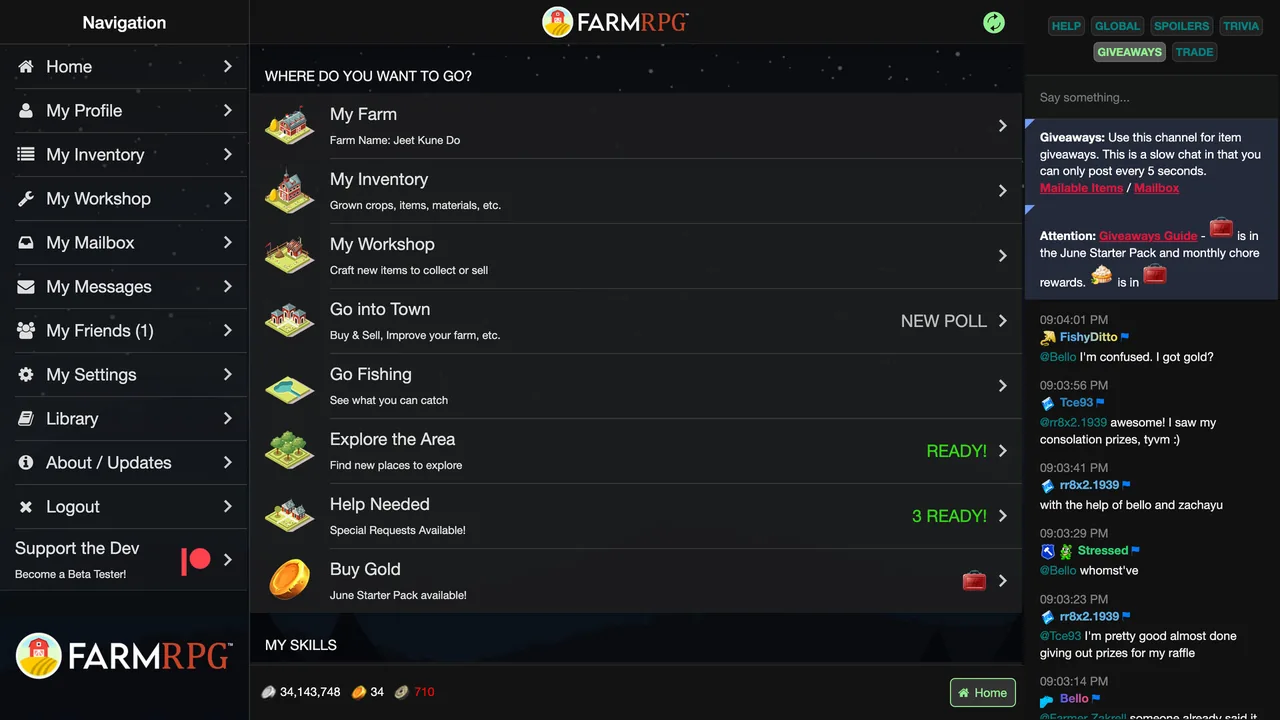
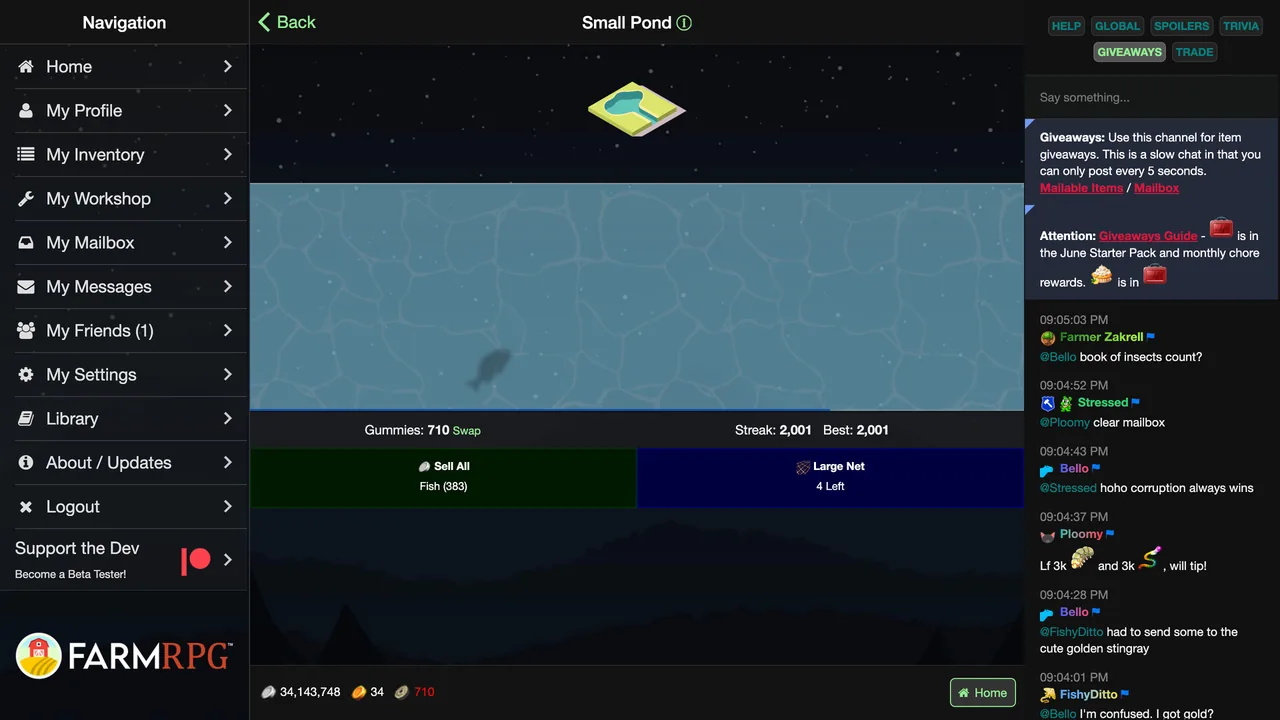
- The interface is plain menus and text lists throughout, with no map, no animation and very little visual feedback on what an action actually did
- Core strategy — what to craft next, which zone is worth the trip, how the Steak Market moves — is explained far better by the fan wiki than by the game itself
- Progress on any single action is slow enough that meaningful sessions mean checking in repeatedly across a day rather than sitting down to play
Who it's for: Players who want a genuinely calm, no-pressure progression game to check in on between other things, and anyone burned by aggressive mobile monetisation who wants to see what a patient, community-first free-to-play game looks like instead.
Our recommendation: Install it on any platform for free and give it a week before judging the pace — the early systems are sparse on purpose. Keep a tab open to the community wiki from the start; treating it as optional will cost you time the game itself won't explain how to save.
7 / 10
Every so often a Steam release date is a lie by omission, and Farm RPG's is a particularly clean example. The store page says 3 June 2026, which makes it look like the newest farming MMO on the platform. It isn't. Farm RPG has been running continuously since it launched on iOS in April 2021, building a player base north of a million registered accounts and star ratings that most premium games would kill for, entirely on mobile and in a browser. What arrived on Steam this June wasn't a new game — it was the same five-year-old menu-driven farm finally getting a desktop storefront to sit alongside the app stores it already dominated.
That distinction matters, because judging this as a fresh release would miss the actual story: a genre built almost entirely around dropdown lists and text descriptions has somehow built one of the more devoted, highest-rated communities in casual gaming, and it's done it without a single advertisement or a shop that gates anything essential.
A game made entirely of menus, on purpose
There is no map to walk around, no character to watch move, and no combat to speak of. Farm RPG's entire interface is lists — a list of crops to plant, a list of fish to catch, a list of zones to explore, a list of items to craft. You tap an action, a timer runs, and you either wait or tap the next thing on the list. The developers are upfront that this is deliberate: a menu-based design keeps data usage low and load times near-instant, which matters more than it sounds like it should for a game clearly built to be opened for thirty seconds at a time, dozens of times a day, rather than sat with for an evening.
The core loop stacks farming, fishing, crafting, cooking, exploring and (eventually) mining into a single shared economy. Crops and animals feed cooking, cooking feeds stamina for exploring, fishing and exploring feed crafting, and crafting builds the tools that make the earlier steps faster. None of it is complicated in isolation, but the game is patient about opening it up — new systems arrive gradually rather than all at once, which is one of the more genuinely well-paced onboarding curves in this genre. A player who's spent time with idle RPGs that dump their entire skill list in the first ten minutes will notice the restraint here, and it's a point in the game's favour.
Item Mastery and the reason to keep going
The system doing the most work to keep long-term players around is Item Mastery, which tracks cumulative experience with individual items — catch enough of a specific fish, craft enough of a specific tool — and hands out permanent bonuses as each item's mastery level climbs. It's a slower, quieter version of the prestige layers that drive most incremental RPGs, built around depth in individual items rather than a single global reset. Craftworks, an auto-crafting system added well after launch, exists specifically to make the mid-game version of this less tedious, letting queued crafting run in the background instead of demanding a tap for every single item.
Together they give Farm RPG something a lot of "cozy" farming games lack: an actual endgame. There isn't a point where the systems stop generating new small goals, because Item Mastery always has another tier and new zones keep arriving with their own rare drops and their own mastery ladders. Whether that constitutes deep design or simply a very long list is a fair question, and the honest answer is a bit of both — but it's more structure than most competitors in the genre bother building for a game that costs nothing to play.
The interface is the whole review
This is where the review has to be blunt: Farm RPG's presentation is bare in a way that goes past "minimalist" into "unfinished-looking" for a stretch of the early game, and it stays that way throughout. There's no animation to speak of, feedback on actions is mostly a number changing in a list, and there's nothing that rewards simply watching the screen the way even other text-heavy idle games occasionally manage with a well-placed icon or a satisfying tally. That's a defensible trade for a game built to load fast on old phones and thin data plans, and it's consistent with the studio's stated design philosophy of simple, streamlined systems over spectacle. It's still the single biggest reason this won't appeal to players who want their RPG to look or feel like anything beyond a list of numbers.
The bigger problem is legibility, not looks. Menus are dense, categories multiply as systems unlock, and the game rarely explains why one crafted item, fishing zone or cooking recipe is better than another — it hands you the option and expects you to work out the value yourself. That wouldn't be unusual for the genre except for how early it starts mattering: within the first few in-game days, decisions about what to prioritise next already benefit from information the interface itself doesn't surface.
The wiki is not optional, whatever the game implies
That's where Buddy's Almanac comes in — a fan-built, fan-maintained wiki at buddy.farm that functions as a second interface layered over the actual game. It has a searchable item and location database, fishing and exploring guides, level-reward tables, and even short-term forecasting for the in-game Steak Market, one of the economy's more volatile trading systems. None of it is official, and the site says as much: data is community-contributed and errors get reported to a named community maintainer rather than the developer.
That arrangement works, and it's arguably one of Farm RPG's genuine strengths — few free mobile games earn a volunteer-run reference site this comprehensive, and it says something real about how attached this community is. But it's worth naming plainly what's happening: a meaningful share of the strategic decision-making that makes Farm RPG rewarding to optimise doesn't live in the app at all. Compare that to Melvor Idle, which buries its numbers in dense tables but at least keeps them in-game, or to Farmer Against Potatoes Idle, whose interface complaints are about clutter rather than missing information. Farm RPG's menus don't just look sparse; they're often genuinely incomplete without a second screen open, and the game never quite admits that out loud.
Money, and how little it's actually required
On the monetisation side, Farm RPG earns its reputation. Gold buys convenience items and speeds a handful of processes, and the developer's messaging is consistent across every storefront: no ads, ever, and the game is fully completable without spending anything. Sentiment across both major app stores backs that up better than for almost any other free RPG on mobile, and a combined rating above 4.7 across tens of thousands of reviews isn't a number that survives a genuinely unfair shop.
The one place the pricing gets uncomfortable is at the top of the Gold pack ladder. Purchase options run from under a dollar up past NZ$200 for the largest bundle — a spread wide enough to include exactly the kind of whale-tier packaging that "no pressure, ever" free-to-play games usually avoid advertising quite so plainly. There's also an optional monthly supporter contribution pitched as backing the developer's hosting costs rather than buying power, a more honest framing than most subscription tiers in this genre bother with. Taken as a whole, this is a fair, low-pressure shop with an unusually expensive ceiling — not predatory, but not quite as clean as the "you'll never need to pay" messaging implies.
A community that runs on its own goodwill
The multiplayer side isn't competitive in any sense — there's no combat between players and nothing resembling a leaderboard chase. What exists instead is a functional trading and mailbox system, a friends list, and a community culture the developers lean into, describing the player base's habit of helping newcomers as close to a design pillar. That tone shows up in the review data on both major app stores, where "friendly" and "helpful" are recurring words in a way that's unusual for any online game, let alone a free one. For a genre that often drifts toward isolated, single-player number-watching, Farm RPG's insistence on staying a shared, cooperative space is one of its more distinctive choices, even if it means little to players who'd rather not deal with other people at all.
Five years of updates, now on a fifth platform
What the Steam listing actually represents is continuity, not novelty. Weekly content updates, seasonal events and steady expansion of crafting, exploring and cooking systems have been the pattern since 2021, and the studio — now operating as Magic & Wires LLC — has kept that pace through the Steam release rather than treating it as a finish line. That's a genuinely reassuring signal for anyone deciding whether to invest time here: this isn't a game coasting on an old build, and the desktop version isn't a stripped-down port either, since it's the same account and the same progress synced across every platform the studio supports.
Verdict
Farm RPG succeeds at the thing it's actually trying to do: a calm, ad-free, no-pressure farming MMO that respects a player's wallet more consistently than almost anything else in the free-to-play space, backed by five years of continued support and a community that genuinely seems to like being there. Item Mastery and the slow-drip system unlocks give it a real long game, not just a pleasant first afternoon.
It loses ground on presentation that goes past minimal into occasionally unreadable, and on an honesty gap between "you'll never need help" and the reality that a fan-run wiki is doing real structural work the app itself should be doing. Neither is disqualifying, but together they're enough to keep this out of the genre's top tier rather than merely a notch below it.
Anyone who wants proof that a free mobile MMO can go five years without an ad, a paywall or a predatory shop should install this and give it a week before deciding the pace is too slow. Just bookmark the community wiki before you start; you'll need it sooner than the game lets on.
Pricing and monetisation checked 2 August 2026.
Players who like their progression numbers attached to a world they can actually walk around in, rather than a menu of dropdown lists, might prefer what Wanderer does with the same patient, no-pressure approach to time invested. Anyone weighing Farm RPG against other low-drama idle RPGs should also read our reviews of Melvor Idle and Farmer Against Potatoes Idle, both of which wrestle with the same trade-off between deep systems and an interface that keeps up with them.
Pros and cons
Pros
- No advertising anywhere on any platform, and nothing in the core loop is locked behind the Gold currency
- New activities (fishing, crafting, cooking, exploring, mining) unlock steadily rather than dumping every system on day one
- Item Mastery and Craftworks auto-crafting give long-time players ongoing goals well past the point most farming games run out of content
- A five-year update history with weekly patches and seasonal events shows real ongoing developer investment, not a game coasting on its launch build
- App Store and Google Play ratings above 4.7 across tens of thousands of reviews are a genuinely rare result for a free MMO
Cons
- The interface is plain menus and text lists throughout, with no map, no animation and very little visual feedback on what an action actually did
- Core strategy — what to craft next, which zone is worth the trip, how the Steak Market moves — is explained far better by the fan wiki than by the game itself
- Progress on any single action is slow enough that meaningful sessions mean checking in repeatedly across a day rather than sitting down to play
- The Gold shop's higher-tier packs run well past NZ$200, a steep top end for a game marketed as needing no purchases at all
- Combat and confrontation are essentially absent, which will read as a missing dimension for players who want their RPG to include a fight
Screenshots
-
Farm RPGImage: Magic & Wires LLC via Steam -
Farm RPGImage: Magic & Wires LLC via Steam -
Farm RPGImage: Magic & Wires LLC via Steam -
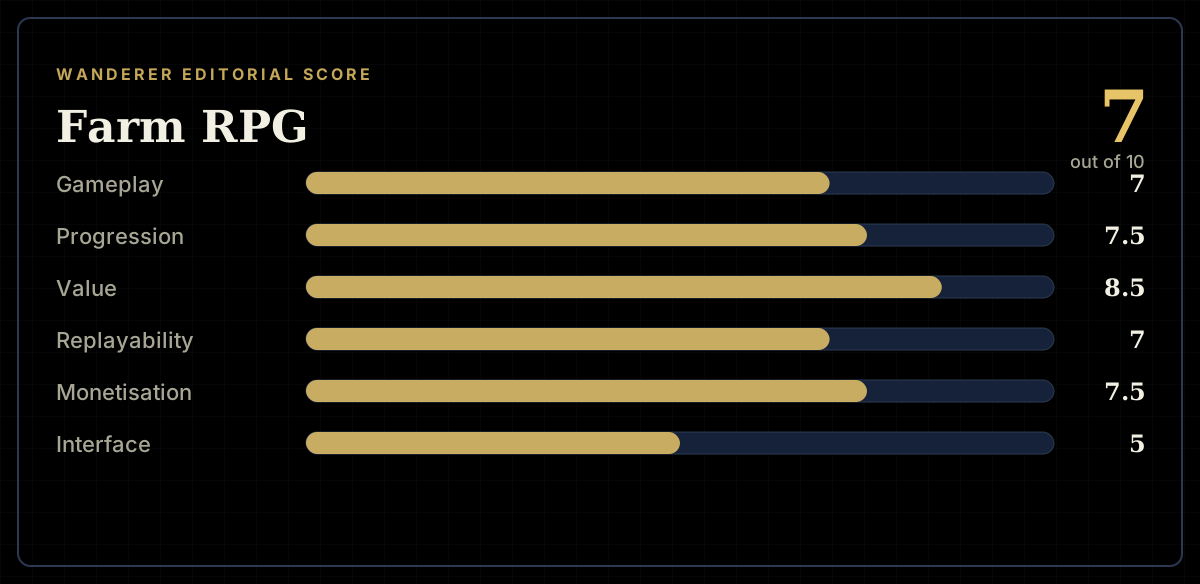
How the review scores each part of the gameWanderer Editorial -
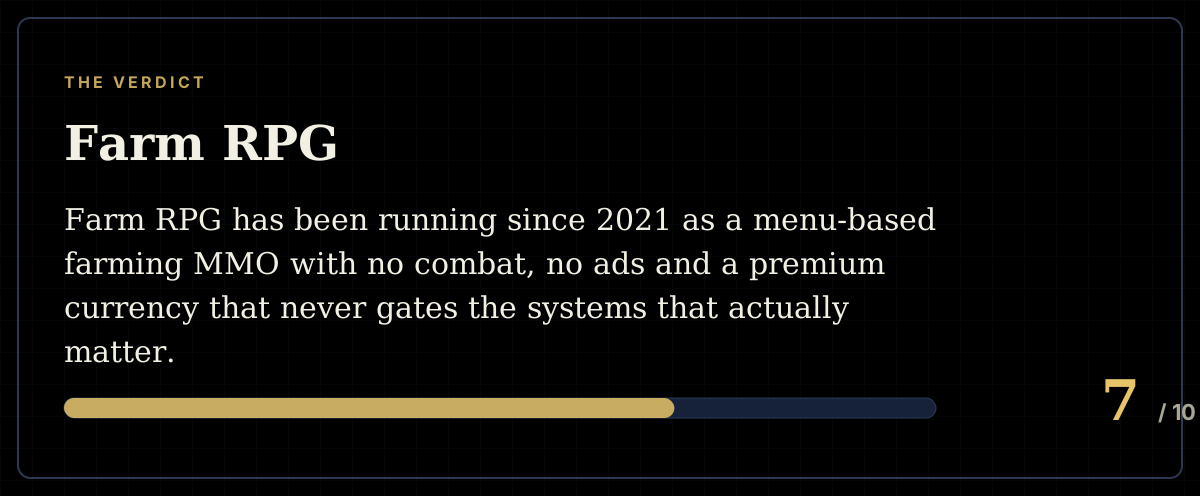
The short versionWanderer Editorial