Game review
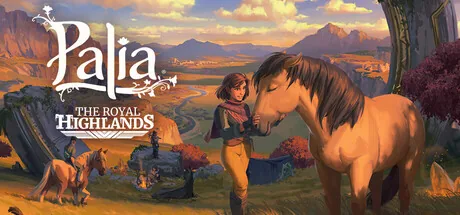
Palia
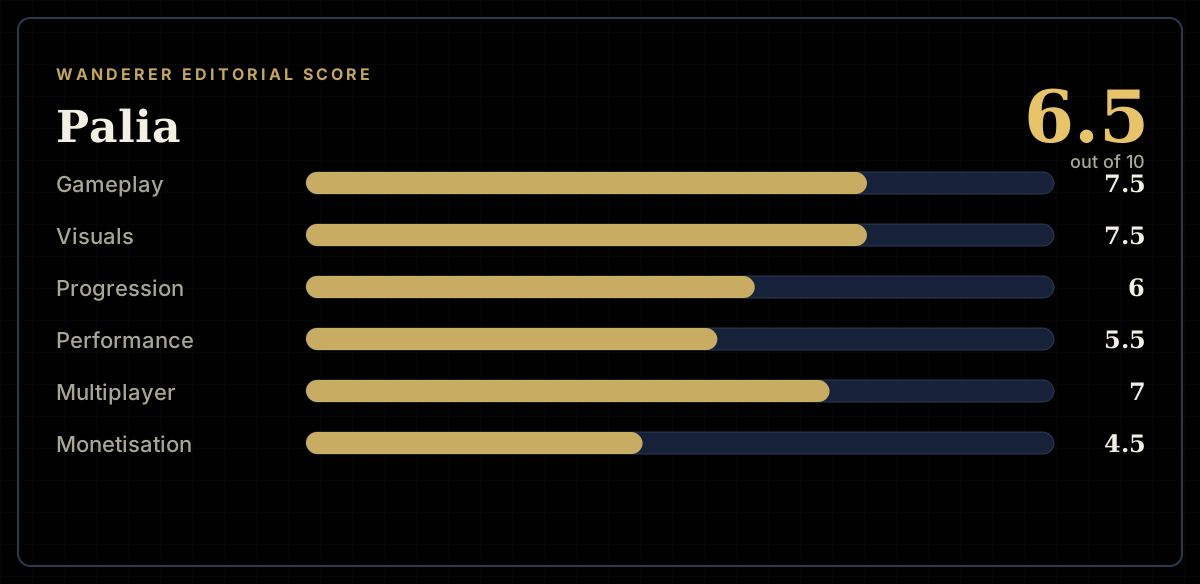
6.5 / 10
- Developer
- Singularity 6 Corporation
- Publisher
- Singularity 6 Corporation
- Released
- 10 August 2023
- Platforms
- Windows, Nintendo Switch, PlayStation 5, Xbox Series X|S
- Genre
- Cozy Life-Sim MMO
- Monetisation
- Free-to-play with a premium currency (Palia Coins) spent on a cosmetic store, optional one-time supporter bundles, and a seasonal Palia Path pass with free and premium tracks
- Players
- Persistent shared-world co-op with cross-play and cross-progression across all four platforms; no PvP or combat-focused content, built instead around shared neighbourhoods, visiting other players' housing plots and community events tied to Palia's day/night cycle
The short version
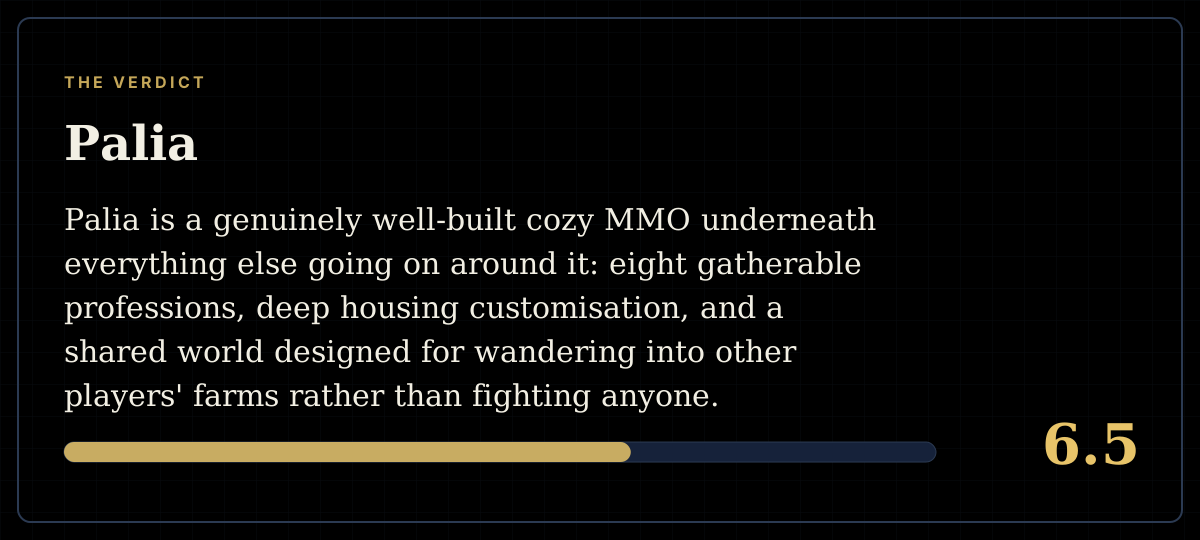
Palia is a genuinely well-built cozy MMO underneath everything else going on around it: eight gatherable professions, deep housing customisation, and a shared world designed for wandering into other players' farms rather than fighting anyone. It has also survived a studio nearly falling apart — Singularity 6 cut close to 40% of its staff in 2023 and 2024 before Daybreak Game Company bought the studio outright — and the game that came out the other side is still receiving real, dated content roughly every three to four weeks in 2026, most recently a patch on 28 July.
The problem sitting on top of all of that is monetisation that keeps finding new places to charge for things players already did the work to earn. The clearest example, recurring across dozens of 2026 reviews from players with hundreds of hours logged, is a quest-reward mount that can be looked at and cannot be ridden until a separate real-money "riding licence" is purchased for it. Palia's ranching system has drifted the same direction. None of that erases what the core loop does well, but it's the reason a Very Positive Steam rating sits next to a steady stream of long-time players saying, in effect, that the game they fell for isn't quite selling itself the same way any more.
Biggest strengths
- Eight distinct gathering and crafting professions (foraging, fishing, hunting, mining, bug catching, cooking, furniture-making, gardening) give the moment-to-moment loop real variety instead of one repeated action dressed up differently
- Housing customisation is deep enough that players build and share layouts as their own creative output, independent of any progression goal
- Cross-play and cross-progression genuinely work across Windows, Switch, PlayStation 5 and Xbox Series X|S, sharing one account and one world
Biggest weaknesses
- Some quest-reward mounts require a separate real-money "riding licence" purchase before they can actually be ridden, a specific and repeatedly cited example of a reward that isn't really a reward until money changes hands
- Ranching has been drifting the same way, with animal companions increasingly gated behind one-time purchases before they'll do anything beyond stand on the player's plot
- Long-time players with 500-plus hours logged describe a persistent pattern of new content shipping with bugs while older, already-reported bugs go unaddressed for entire content seasons
Who it's for: Players who want a low-stakes, combat-free MMO to putter around in with friends — farming, decorating, fishing, cooking — and who can shrug off a cosmetic shop without it souring the whole experience. Less suited to anyone who wants their in-game achievements to actually unlock things without a follow-up prompt to pay.
Our recommendation: Worth installing, since it costs nothing to find out whether the loop clicks for you — just go in expecting the community-sim core to be better than the business model wrapped around it, and expect that gap to show up specifically around anything the game hands you as a reward.
6.5 / 10
The clearest way to explain what's gone wrong with Palia's business model doesn't come from a critic — it comes from a player with 710 hours logged, describing exactly what happens after finishing one of the game's longer quest chains: you get a rare mount as the reward, you open your inventory to ride it, and you can't. It sits on your ranch, visible, useless, until you pay for a "riding licence" tied to that specific animal. That's not a hypothetical edge case dredged up to make a point. It's one of the single most repeated complaints in Palia's 2026 review corpus, showing up almost word-for-word from players with wildly different total playtimes, because it's the moment where a genuinely well-made cozy MMO stops feeling like it's rewarding you and starts feeling like it's running a toll booth on your own quest log.
That tension — a well-built game wrapped around a business model that keeps testing how much it can charge for things players thought they'd already earned — is the whole story of where Palia stands two and a half years after it left its own launcher for Steam.
What Palia actually is
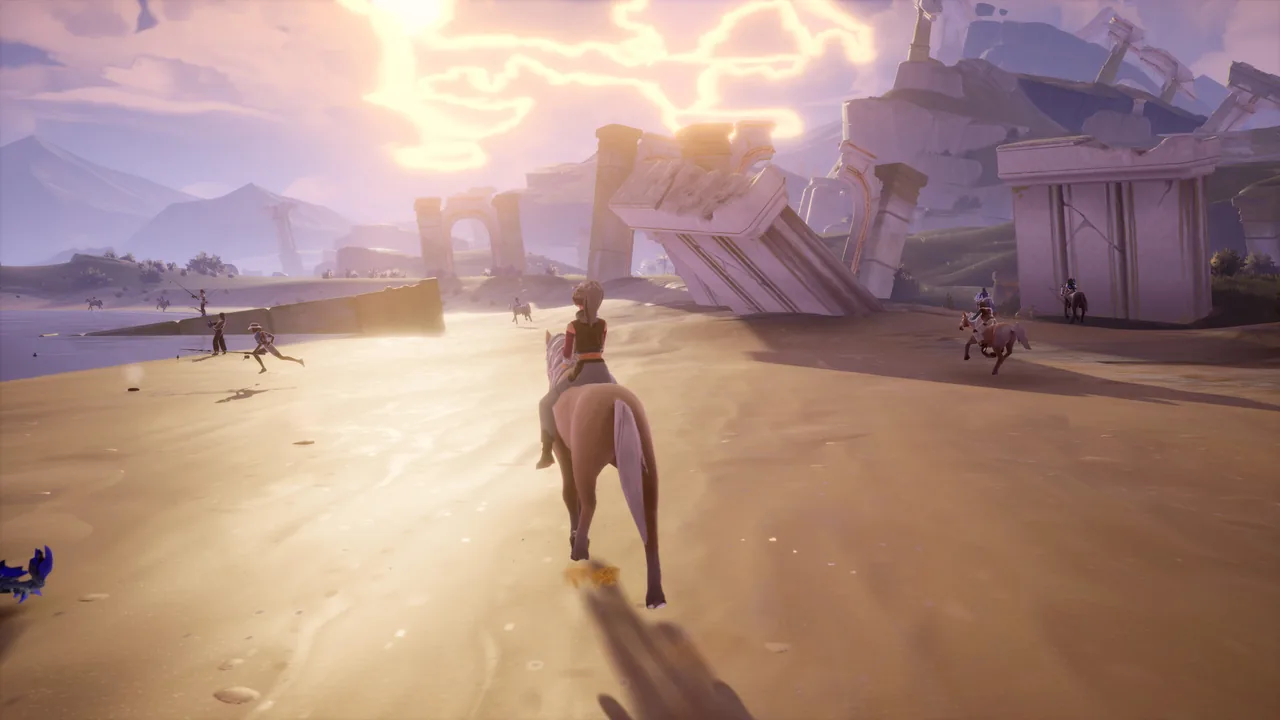
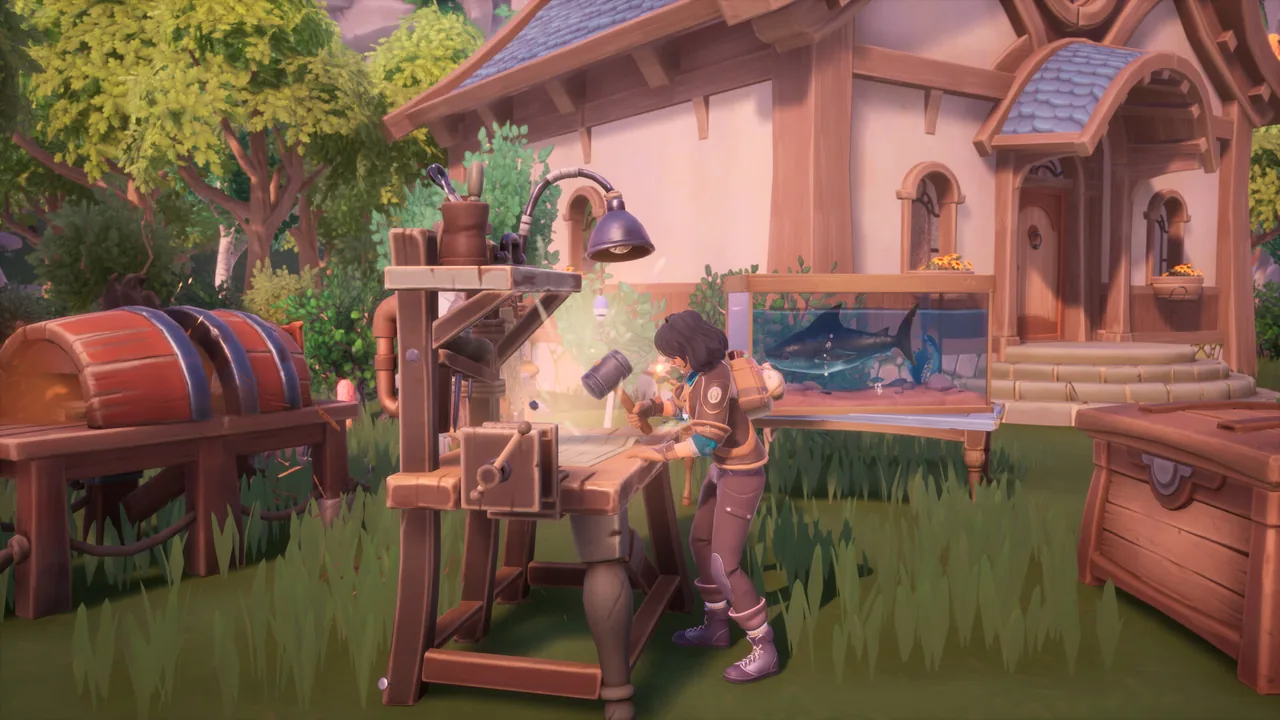
Underneath the headlines, Palia is a shared-world community sim with no combat focus and no PvP. You land in Kilima Village, pick up a farm plot, and start working through eight professions — foraging, fishing, hunting, mining, bug catching, cooking, furniture-making and gardening — each taught by a villager NPC and each feeding a housing and decoration system with genuine depth. There's a second, higher-level zone in Bahari Bay for tougher resources and server-timed events, and as of the Royal Highlands expansion in May 2026, a further zone built around ranching and mounted traversal. None of it is combat-driven; the closest thing to danger is a hunting minigame against wildlife that doesn't fight back. The appeal is closer to a shared Stardew Valley than an MMO in the WoW sense — you're there to putter, decorate, cook, and wander into other players' housing plots to see what they've built, not to raid anything.
That loop works. Reviewers who've stuck with the game for hundreds of hours consistently credit the professions for giving the grind actual texture rather than one repeated action wearing different skins, and the housing system draws praise specifically for letting players treat it as a creative outlet independent of any progression checklist. None of the criticism below is really an argument that the core game is bad. It's an argument that the business sitting on top of it has been eroding the goodwill that core game earns.
Who's actually running it now
Palia's ownership history matters here because it explains both why the game nearly didn't make it to 2026 and why its monetisation has been tightening. Singularity 6 launched the open beta on its own PC launcher on 10 August 2023, brought it to Nintendo Switch that December, and reached a full 1.0 on Steam on 25 March 2024 — the Steam page's release date is a storefront milestone, not the game's actual birthday. What followed was rough: the studio cut 49 staff, about 35% of its workforce, in April 2024, then another 36 people the following month, its third layoff round since September 2023. In July 2024, Daybreak Game Company — itself a subsidiary of the Swedish holding company EG7 — acquired Singularity 6 outright.
Palia's Steam listing still credits Singularity 6 Corporation as both developer and publisher today, and by contemporaneous reporting the studio kept its creative leadership and direction under Daybreak rather than being folded into another team. What changed is who ultimately owns the revenue line, and the monetisation shifts described below have mostly landed since that acquisition — not before it. Whether that's cause or coincidence isn't something a storefront listing can settle, but the timeline is worth knowing before deciding how much to read into any single pricing decision.
The monetisation problem, specifically
Palia has always run on a Palia Coins premium currency spent in a cosmetic store — outfits, pet skins, tool skins — and that part of the model draws little complaint on its own; cosmetics-only shops are the free-to-play norm players have made peace with. Steam currently lists a Starter Pack around NZ$7.49, a Founders Pack around NZ$43.99 bundling 3,400 Coins with outfits and a pet, and two Highlands supporter tiers at roughly NZ$46.49 and NZ$85.99 — all one-time purchases, checked 3 August 2026, none of them required to play.
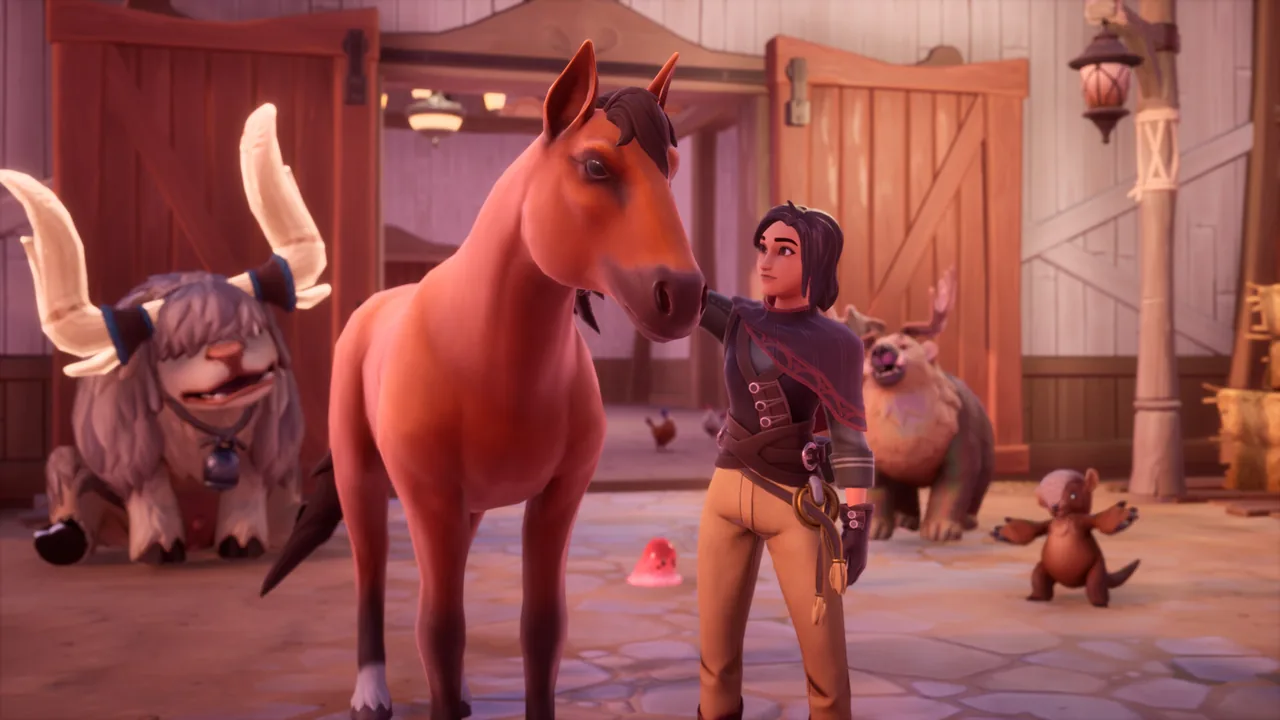
Where the model has drawn genuine, specific criticism is in what happens after a purchase-free player finishes earning something. The riding-licence mechanic described above is the sharpest example: a mount obtained through gameplay that can't actually be used until a separate real-money purchase unlocks riding it. Ranching has followed a similar arc — animal companions increasingly need a one-time purchase before they'll do more than stand on a player's plot, and several reviewers note the animals age quickly enough that the resource payoff for owning one barely outlasts the purchase. It's worth crediting that the studio has walked at least one of these back in response: a newer mount, Riffroc, shipped fully free to obtain and ride, and the player who'd posted the most widely echoed version of the riding-licence complaint updated their own review to note it as a genuine step in the right direction.
The newest system, a battle-pass-style track called Palia Path, launched with the Winter's Wonder 2025 update in December and is the one part of the monetisation story that reads as a deliberate, thought-through response to genre fatigue rather than another toll gate. It carries no expiring items and no countdown timer — both tracks, free and premium, stay available to finish whenever a player gets around to it, which is a real departure from how battle passes usually pressure players. The catch some players have flagged is that crafting materials, not just cosmetics, have started showing up as pass rewards, which raises the possibility of resource progression itself becoming something players feel they need the premium track to keep pace with. That hasn't fully materialised as a complaint yet, but it's the kind of scope creep worth watching given everything else on this list.
Is it actually still supported
This is the part where the story gets more encouraging than the monetisation complaints alone would suggest. Palia's official Steam news feed shows a real, dated content cadence running into mid-2026: a patch on 28 July, another on 6 July, another on 2 June, the Royal Highlands zone expansion on 12 May, and a "10 million players" milestone post on 21 April. That's roughly every three to four weeks, sustained across an entire year post-acquisition, not a studio coasting on a skeleton crew. Whatever else the ownership change did to the monetisation model, it did not turn Palia into an abandoned live-service husk — the most recent patch at time of writing landed five days before this review was checked, and the pattern behind it looks sustainable rather than a last gasp before a shutdown announcement.
Current player sentiment backs that up more than a single Very Positive badge can on its own. Steam's all-time score sits at roughly 86% positive across more than 43,000 reviews (checked 3 August 2026), and a sample of the hundred most recent English-language reviews — spanning the last several days before this review was checked — comes in at 81% positive, close enough to the long-run figure that there's no sign of a recent collapse in goodwill, review-bombing event, or fossil "Mixed" badge hiding a dead game. The 2026 negative reviews that do exist are substantive rather than drive-by: specific complaints about mount licensing, ranching costs, and unresolved bugs, mostly from players with hundreds of hours already invested rather than people bouncing off the tutorial.
The grind, and the bugs nobody's chasing down
Set the monetisation argument aside and there's a second, quieter complaint running through the same high-hour reviews: bugs shipping with new content and staying unfixed while the next season's patch gets prioritised instead. Reviewers with 500-plus hours logged describe crafting sessions ruined mid-action by glitches, animation or interaction bugs surviving multiple patch cycles, and a general sense that development effort goes toward new content rather than stabilising what already exists. Material requirements compound the frustration — some furniture and building recipes call for hundreds, occasionally into the low thousands, of a single gathered resource, which reads less like the relaxed pacing the marketing promises and more like a deliberate time-sink.
Palia's own achievement data offers a soft data point here rather than a smoking gun: the single most commonly earned achievement, tied to building a first house, sits at 45.2% of all owners, the next most common — getting a glider — drops to 24.5%, and most of the list sits under 15%, with completionist-style achievements (catching every fish, cooking every dish) under 2%. That shape is about what you'd expect from any live MMO with a constant stream of brand-new players diluting the denominator, so it shouldn't be read as proof of a content cliff the way it might on a finished, single-player game — but it's consistent with what the reviews already describe: most players get comfortably through the early, guided hours, and far fewer chase the deep end.
Presentation and the community it's built for
None of the above is really a knock on how Palia looks or plays moment to moment. The art direction — warm, painterly, closer to a storybook than a hyperreal MMO — is one of the least-contested parts of the whole package, and the cross-play implementation genuinely works: Windows, Switch, PlayStation 5 and Xbox Series X|S players share one world, one save, and one economy, which is a real technical achievement for a studio that spent a chunk of the review period laying off a third of its own team. The social design leans hard into low-stakes cooperation — visiting other players' housing plots, working the same fishing spot without competing for it, turning up to the same server event by coincidence — and it's genuinely good at making a shared world feel unhurried rather than transactional, right up until the cash shop reminds you it isn't entirely.
Final verdict
Palia earns real credit on two fronts that don't usually go together for a studio that nearly collapsed: the core community-sim loop is well-built and still expanding, and the game is still receiving genuine, dated content on a sustainable cadence deep into 2026 rather than limping toward a sunset announcement. What keeps the score in the middle of the scale rather than higher is a monetisation model that has repeatedly found new ways to charge for things a player already did the work to unlock — the riding-licence mount is the clearest single example, but it's a pattern, not an isolated misstep — stacked on top of a bug backlog that long-time players say never quite clears before the next season arrives. A 6.5 reflects a genuinely competent, actively supported game that free-to-play skeptics have specific, current, non-hypothetical reasons to be skeptical of.
Anyone drawn to a shared world built around gathering, building and slow social progress rather than combat should also look at Stardew Valley for the single-player version of the same idea done without a cash shop attached, or Wuthering Waves for how a different free-to-play live-service handles its own monetisation trade-offs. Players who'd rather their earned rewards stay earned — no separate purchase required to actually use what a quest just handed them — might also want to see how that's handled in Wanderer.
Pros and cons
Pros
- Eight distinct gathering and crafting professions (foraging, fishing, hunting, mining, bug catching, cooking, furniture-making, gardening) give the moment-to-moment loop real variety instead of one repeated action dressed up differently
- Housing customisation is deep enough that players build and share layouts as their own creative output, independent of any progression goal
- Cross-play and cross-progression genuinely work across Windows, Switch, PlayStation 5 and Xbox Series X|S, sharing one account and one world
- Under new ownership the game has kept a real, dated content cadence into mid-2026 — a full zone expansion in May, seasonal patches roughly every three to four weeks, and the most recent patch landing five days before this review was checked
- The Palia Path pass, introduced in the Winter's Wonder 2025 update, carries no expiring items and no FOMO countdown — progress and rewards persist whenever a player returns to it
Cons
- Some quest-reward mounts require a separate real-money "riding licence" purchase before they can actually be ridden, a specific and repeatedly cited example of a reward that isn't really a reward until money changes hands
- Ranching has been drifting the same way, with animal companions increasingly gated behind one-time purchases before they'll do anything beyond stand on the player's plot
- Long-time players with 500-plus hours logged describe a persistent pattern of new content shipping with bugs while older, already-reported bugs go unaddressed for entire content seasons
- Crafting and building requirements scale into the hundreds or low thousands of raw materials for some items, which reads as grind rather than the relaxed pace the game is marketed on
- The studio's near-collapse — roughly 40% of Singularity 6's staff cut across 2023 and 2024 before its acquisition — still colours a visible slice of the review corpus with distrust that has little to do with the current build
Screenshots
-
PaliaImage: Singularity 6 Corporation via Steam -
PaliaImage: Singularity 6 Corporation via Steam -
PaliaImage: Singularity 6 Corporation via Steam -
How the review scores each part of the gameWanderer Editorial -
The short versionWanderer Editorial