
Game review
Wuthering Waves
7.5 / 10
- Developer
- Kuro Games
- Publisher
- Kuro Games; Nijigen Games handles publishing in Hong Kong, Macau and Taiwan
- Released
- 23 May 2024
- Platforms
- Windows, PlayStation 5, Xbox Series X|S, macOS, Android, iOS
- Genre
- Open-World Action RPG
- Monetisation
- Free to play with a Convene (gacha) system split across limited Resonator and weapon banners plus a permanent standard banner, a Waveplate stamina cap gating Echo-farming domains and boss re-fights, a seasonal battle pass and direct premium-currency top-ups
- Players
- No co-op and no PvP of any kind — Wuthering Waves is built and balanced as a single-player experience, unlike Genshin Impact's four-player open-world co-op
The short version
Wuthering Waves makes a genuinely convincing case that its combat system is mechanically sharper than Genshin Impact's — the parry windows are tighter, the swap-cancel chaining rewards real execution, and the Echo system turns loot into something you actively hunt for a specific skill rather than a specific stat roll. Traversal with no stamina cost at all, wall-running included, makes Solaris-3 feel like it was built for a player already in motion.
What holds it below Genshin's mark isn't the core loop, which is arguably the best in the genre right now. It's that a two-year-old game is still shipping updates its own players say destabilise performance on hardware that ran fine the patch before, and a story still leaning on long unskippable cutscenes to do work its pacing hasn't earned yet. The 2024 launch complaints are old news. The current ones are worth taking seriously.
Biggest strengths
- The Echo system doubles loot and build customisation into one mechanic — killing a monster can hand you its actual skill to slot onto any Resonator, not just a stat stick
- Wall-running, gliding and a rideable motorbike cost zero stamina, so Solaris-3 never interrupts exploration to make you manage a meter
- Intro-outro swap chaining rewards genuine timing and combo-building rather than rotating through a fixed damage script, giving combat a real execution ceiling
Biggest weaknesses
- Recent Steam reviews describe major content updates repeatedly destabilising performance that was fine the patch before, a pattern that's persisted well past the 2024 launch window
- Early chapters lean on long, unskippable cutscenes before handing control back, a much heavier-handed opening than Genshin's lighter-touch story pacing
- There's no co-op or party play of any kind, so the Resonators sitting on your bench never get to matter beyond a swap-in animation
Who it's for: Action RPG players who want a tighter, harder combat system than Genshin's and don't mind a rougher technical ride to get it. Less suited to anyone who wants co-op, a mature world with years of content already banked, or a game that's fully settled into its own skin.
7.5 / 10
The rematch nobody asked Genshin to have
Every open-world gacha RPG that's launched since 2023 gets measured against Genshin Impact whether it wants to be or not, and Wuthering Waves has spent two years actively inviting the comparison rather than dodging it. Kuro Games built a game that looks like it's answering a specific set of complaints about Genshin — combat too slow, traversal too gated by a stamina bar, artifacts too random — and then shipped it into a launch window rough enough that the comparison briefly ran the other way. That's the story worth telling here, and it's not the lazy "Genshin but edgier" pitch. It's a genuinely different combat philosophy sitting inside a noticeably younger live-service product, and the two facts pull the review in opposite directions.
Rover wakes up on the shore of Solaris-3 with no memory, gets adopted by a cast of Resonators, and sets off across a world clearly built to be run through rather than walked across. That's the right place to start, because traversal is where Wuthering Waves makes its first and most convincing argument for itself.
Traversal with the leash cut
Genshin's climbing and gliding are good systems wrapped around a stamina bar that still, six years in, occasionally tells you no. Wuthering Waves' answer is to remove the meter entirely. Wall-running has no cost. Gliding has no cost. There's a rideable motorbike for covering open ground fast, and none of it asks you to manage a resource while you're doing it. The practical effect is that the world stops interrupting itself — you see a ledge, you take it, and the game never makes you calculate whether you'll make the landing with stamina to spare.
It's a small design change with an outsized effect on how the world feels to move through. Genshin's traversal rewards patience and planning; Wuthering Waves' rewards impulse. Neither is wrong, but the second one is a better match for a combat system built around constant, fast movement, and Solaris-3's level design — cliffs, ruins and vertical city blocks stacked on top of each other — is clearly built with a stamina-free player in mind. The world doesn't need to be as large as a mature seven-region map to feel good to move through when moving through it is this frictionless.
Combat that asks more of you, on purpose
This is the section that actually decides whether this game is for you. Wuthering Waves' combat runs on three interlocking systems: parry and dodge-counter timing that rewards reading an attack rather than just avoiding it, Echo skills that let a Resonator temporarily borrow an enemy ability, and an intro-outro swap system that turns switching characters mid-combo into the actual damage engine rather than a pause button.
That last part is the real mechanical difference from Genshin. Genshin's four-character swap is mostly about applying different elements to trigger reactions — you swap, you tag an element, you swap back. Wuthering Waves builds entire combo strings around the swap itself: outro skills from the character you're leaving chain directly into intro skills from the character you're bringing in, and stringing three Resonators through a single sequence does meaningfully more damage than parking on one main DPS and poking with the others. It's a genuinely higher execution ceiling than Genshin's reaction-based combat, closer in spirit to the parry-and-dash systems in NTE: Neverness to Everness than to Genshin Impact's elemental chemistry.
Whether that ceiling makes the game genuinely better to play or just busier depends entirely on what you want from combat. Players who want to master timing windows and build combo strings by hand get a system with real depth and a real skill curve. Players who liked that Genshin's combat could be played competently on relatively loose reflexes will find Wuthering Waves less forgiving — parries have tighter windows, and a missed dodge-counter costs more than a missed elemental application usually does in Genshin. It's not harder for the sake of being harder, but it is harder, and that's a real trade-off rather than a straightforward upgrade.
Echoes: loot that's also a skill
The Echo system is Wuthering Waves' answer to Genshin's artifacts, and the framing is smart enough that it's worth taking seriously as its own idea rather than a reskin. Field monsters drop Echoes that, once equipped, grant a version of that monster's actual skill — kill a boar and you can eventually equip a boar-charge Echo; kill an elite mob with a signature move and that move can end up on your own bar. It does double duty as both gear and a customisable extra ability, which gives the system a legibility artifacts never had: you know exactly what an Echo does the moment you see what it dropped from, instead of decoding a set bonus and four random substats.
It's still a grind, and it's worth being honest about where. Echoes carry their own substat rolls on top of the skill they grant, so "the right Echo" is still a layered RNG problem — right monster, right cost tier, right main stat, right substats — that mirrors Genshin's artifact domains in shape if not in exact math. What's different is that a mediocre Echo roll is still usable the moment you get it, because the skill itself is the primary value and the stats are the optimisation layer on top, rather than the other way around. Compared to Genshin's system, where a bad roll is functionally dead weight until re-farmed, Wuthering Waves' Echoes fail softer. That's a real, considered improvement on the format, even if the underlying grind hasn't gone anywhere.
Waveplate and the daily loop
The stamina system Wuthering Waves didn't remove is Waveplate, which gates the content that actually matters for character growth — Tacet Field domains (the Echo-farming stages) and certain boss re-fights — the same way Genshin's Resin gates artifact domains and Star Rail's Trailblaze Power gates its own farming stages. The shape of the daily loop will be instantly familiar to anyone who's played Honkai: Star Rail: log in, spend your capped energy on the Echoes or materials you actually need, then decide whether the rest of your session is story, exploration or nothing. It's the same design pattern the entire genre has converged on, and Wuthering Waves doesn't meaningfully innovate on it — it just applies it to a slightly different set of farmable content.
Where it does diverge from Genshin's design philosophy is in how hard it leans on convenience. Arknights' Sanity and Genshin's Resin both function as fairly hard caps that most players simply accept; Wuthering Waves' Waveplate economy leaves more routes back to full through events, login rewards and battle pass items, which softens the daily leash without removing it. It's a reasonable middle ground, and it means a missed day costs you less than it would in stricter energy systems, but it's still a resource cap doing the same retention job every game in this genre uses one for.
The Convene system, honestly
Wuthering Waves' gacha layer, Convene, splits pulls across limited Resonator banners, a separate limited weapon banner and a permanent standard pool, funded by a premium currency spent through direct top-ups or earned through play. A pity system guarantees a five-star pull within a set number of attempts, and the structure has earned a genuine reputation among critics and players as more generous than the genre's biggest competitor — reviewers covering the game at launch specifically called the pull economy "forgiving" even while flagging the technical problems around it, and that reputation has held up rather than faded as the game has matured.
What's worth being straight about is the exact math. Kuro doesn't put a rate table in front of players on its own storefront pages the way HoYoverse publishes Genshin's 0.6 percent base five-star chance directly on its website — the pity system's specific pull counts and 50/50 mechanics live in the in-game Convene screen and in community testing rather than anywhere this review could independently verify them. The generosity is well documented as a pattern; the precise numbers behind it aren't something worth guessing at in print. If exact figures matter to your decision to spend money, check the in-game probability disclosure yourself before you pull, not a review that can't see it.
A launch that's genuinely two years behind it
The fair way to frame Wuthering Waves' launch is that it happened, it was bad, and it isn't happening anymore. Metacritic scored the May 2024 launch build in the low-to-mid 70s across platforms, and the specific complaints — animation errors, movement glitches, crash reports, audio desync — were real and well-documented at the time. Kuro's response was to keep patching and to compensate players directly, and the current numbers reflect that it worked: Steam shows Very Positive at 88 percent of all-time reviews and 83 percent across the last 30 days, a genuinely strong current standing for a live-service action RPG.
But "current standing" and "current experience" aren't quite the same claim, and this is the one piece of the launch story that hasn't fully closed. Recent player feedback keeps returning to a specific, more targeted complaint than the 2024 bug list: major content updates repeatedly introducing new stutter, frame drops or crashes on hardware that handled the previous patch without issue, with some reviewers explicitly attributing it to the engine's limitations under the weight of newer content. That's not a launch-era problem being unfairly relitigated — it's a live, current pattern showing up in reviews written in the last month, and it's the single biggest reason this review doesn't score performance as high as the overall reception would suggest. Solid system requirements bear this out too: Kuro's own minimum spec asks for a Core i5 ninth-gen or Ryzen 2700, 16GB of RAM and a GTX 1060 just to run the game at all, which is a heavier floor than most of its direct competitors set.
Story pacing and a world still filling in
The other place Wuthering Waves genuinely falls short of its main rival is less a bug than a consequence of age. Early chapters ask new players to sit through long stretches of unskippable cutscene before handing back control, and the story's pacing hasn't yet earned that kind of patience the way six years of accumulated worldbuilding has earned it for Genshin. Newer players also describe onboarding as more gated than the genre's norm — core systems like the Echo menu unlock behind prerequisite content rather than being available from the opening hours, which makes the first few sessions feel more like homework than exploration.
None of that is fatal, and Kuro is clearly still building toward the version of this game that exists in three or four more years, in the same way Genshin took its first couple of regions to find its footing. But a reader deciding whether to start today should know the honest state of that gap: this is a two-year-old world standing next to a six-year-old one, and it plays like it, story pacing and region count both.
Final verdict
Wuthering Waves earns its reputation as the sharpest combat system in the open-world gacha genre, and traversal with the stamina cap simply removed is the kind of change that makes you notice its absence the next time you go back to a game that still has one. The Echo system is a genuinely smart rework of artifact-style loot, softening the worst of Genshin's RNG problem without pretending the grind isn't still there, and the pity/Convene structure has a real reputation for generosity that's survived contact with two years of live-service reality.
It lands below Genshin's 8.0 not because the core game is worse, but because the two reviews are measuring different things at different points in each game's life. Genshin's flaws are the ones a mature, essentially finished free product develops at its edges — a punishing artifact grind and a competitive endgame that quietly asks for money. Wuthering Waves' flaws are still closer to the center: performance that destabilises on a predictable schedule, a story still finding its pacing, and a world that hasn't had the years Teyvat has had to fill in. Buy in for the combat, because that part of the pitch is completely real. Go in expecting a game still becoming itself, because that part is real too.
Pros and cons
Pros
- The Echo system doubles loot and build customisation into one mechanic — killing a monster can hand you its actual skill to slot onto any Resonator, not just a stat stick
- Wall-running, gliding and a rideable motorbike cost zero stamina, so Solaris-3 never interrupts exploration to make you manage a meter
- Intro-outro swap chaining rewards genuine timing and combo-building rather than rotating through a fixed damage script, giving combat a real execution ceiling
- Steam's aggregate score has climbed to Very Positive at 88 percent of all-time reviews, a real recovery from the low-70s Metacritic scores the game launched with in May 2024
- Xbox Series X|S finally joined the platform list on 10 July 2026, so the console spread now matches Genshin's without a console-exclusive gap
Cons
- Recent Steam reviews describe major content updates repeatedly destabilising performance that was fine the patch before, a pattern that's persisted well past the 2024 launch window
- Early chapters lean on long, unskippable cutscenes before handing control back, a much heavier-handed opening than Genshin's lighter-touch story pacing
- There's no co-op or party play of any kind, so the Resonators sitting on your bench never get to matter beyond a swap-in animation
- New players describe onboarding as gated behind prerequisite content before core systems like the Echo menu fully open up, a steeper ramp than the genre's more forgiving tutorials
- Two years into live service, Solaris-3 has noticeably fewer explored regions to get lost in than a six-year-old game with an entire world map behind it
Screenshots
-
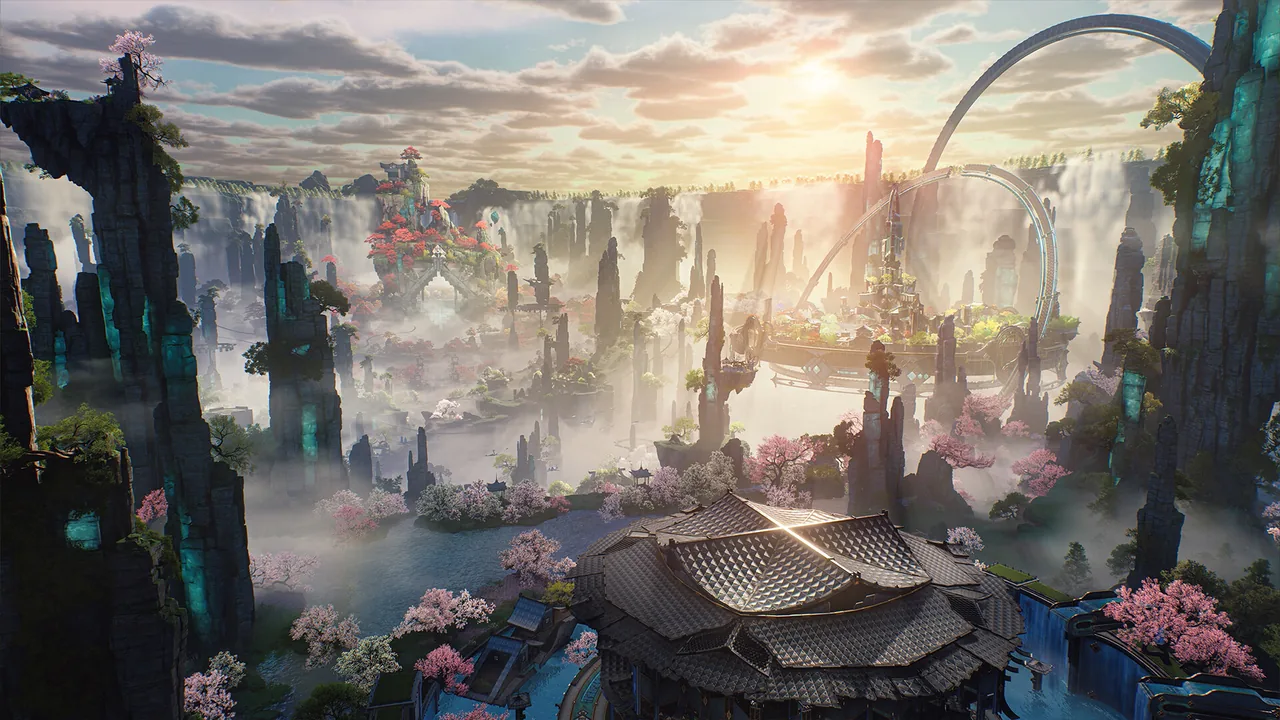
Wuthering WavesImage: KURO GAMES via Steam -
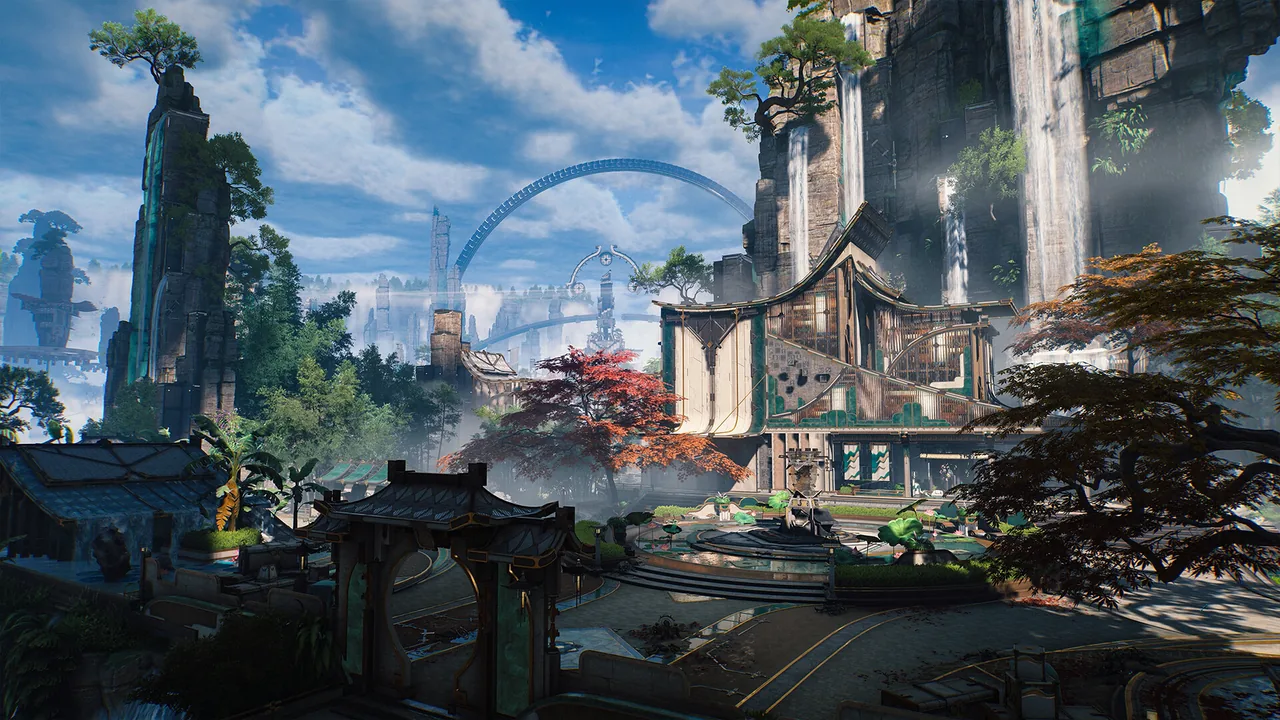
Wuthering WavesImage: KURO GAMES via Steam -
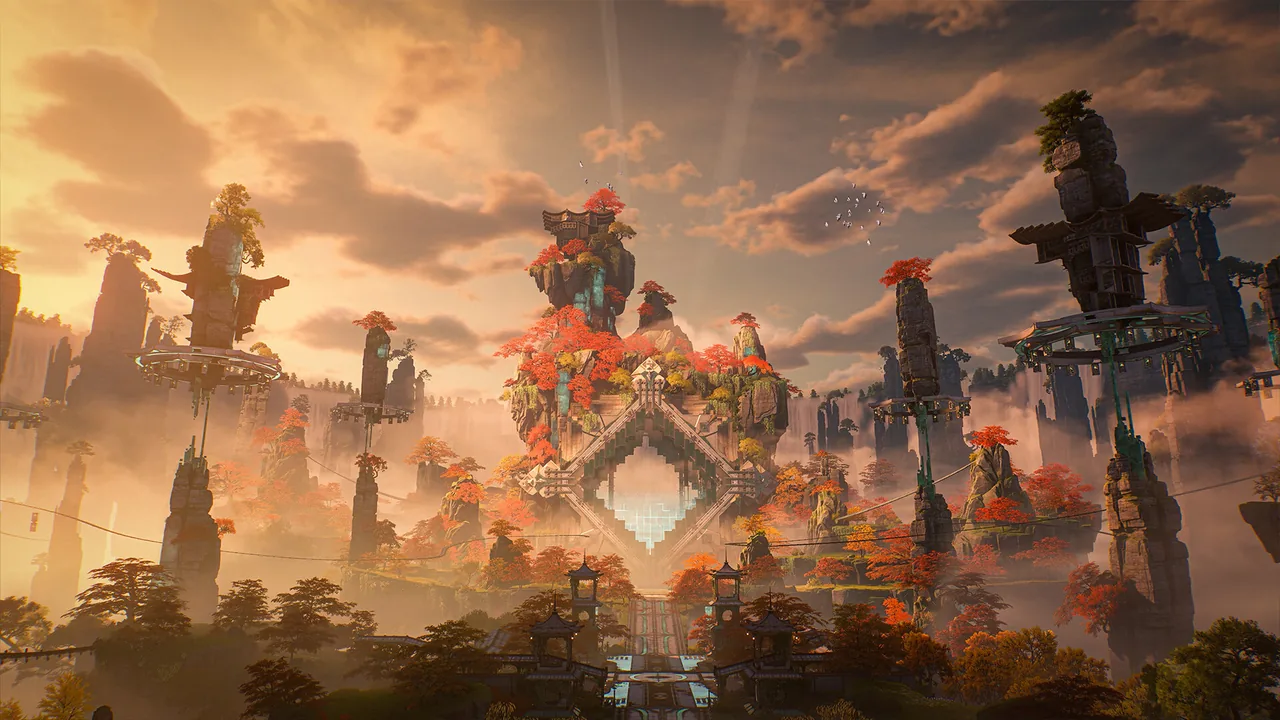
Wuthering WavesImage: KURO GAMES via Steam -
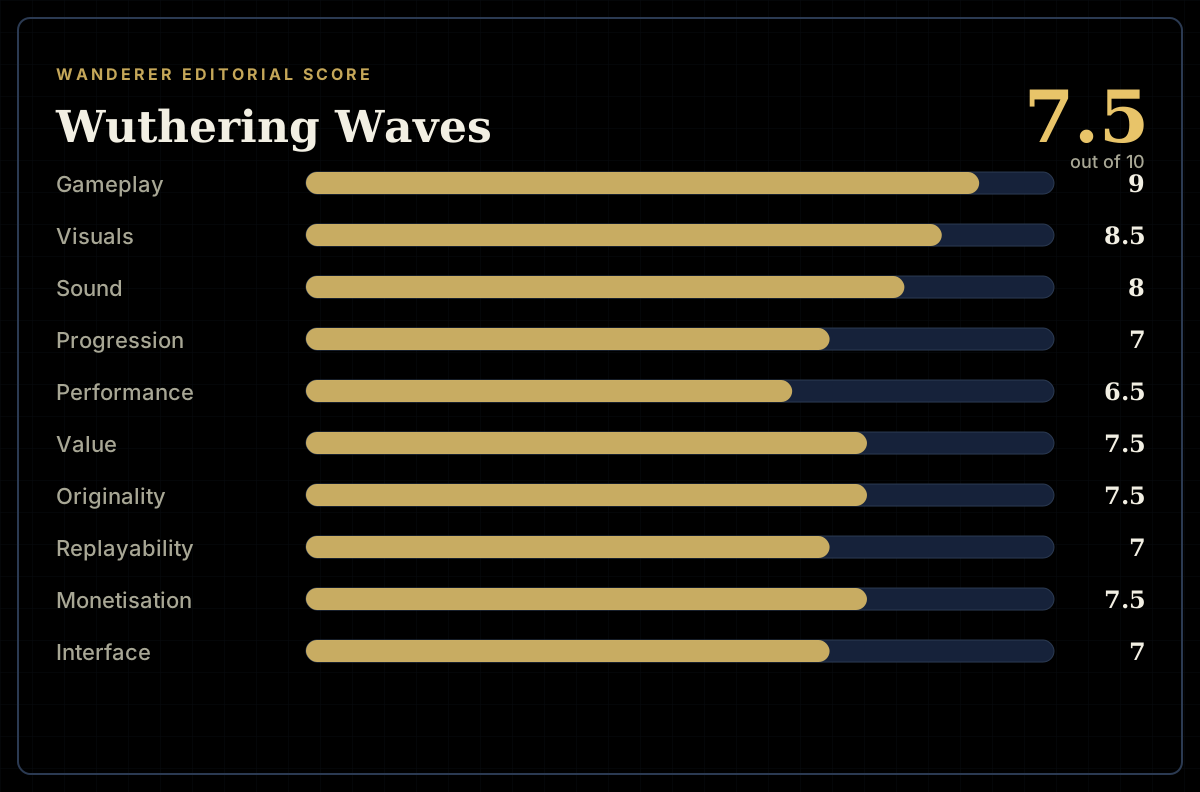
How the review scores each part of the gameWanderer Editorial -
The short versionWanderer Editorial