Game review
Zenless Zone Zero
7.5 / 10
- Developer
- miHoYo
- Publisher
- HoYoverse
- Released
- 4 July 2024
- Platforms
- Windows, PlayStation 5, Xbox Series X|S, Android, iOS
- Genre
- Urban Fantasy Action RPG
- Monetisation
- Free to play with a single Signal Search (gacha) currency split across a limited Agent banner, a limited W-Engine (weapon) banner and a permanent standard banner, a stamina cap gating Drive Disc farming and boss re-fights, a monthly subscription and a per-patch battle pass
- Players
- No co-op and no PvP of any kind — Zenless Zone Zero is built and balanced entirely around solo play, same as Star Rail and unlike Genshin's open-world co-op
The short version
Zenless Zone Zero makes the strongest case of any HoYoverse game that combat, not the world around it, can carry the whole product. Perfect Dodges, Defensive Assists and Chain Attacks interact the way a real character-action system should, and the endgame mode Deadly Assault actually scores you on landing parries and assists rather than just on team damage — a genuine design choice, not a marketing line. What it gives up for that focus is the open world: this is a hub-and-mission game through and through, and the commission structure repeats itself faster than either of its siblings' worlds do.
Biggest strengths
- Perfect Dodge, Defensive Assist and Chain Attack interact as a genuine execution-based combat system, closer to a character-action game than to a stat-check gacha RPG
- Deadly Assault, one of two rotating endgame modes, scores Performance Points for landing parries, triggering assists and breaking specific enemy parts, not just for raw team damage
- The TV/grid-based Array Mode that defined launch exploration and drew heavy criticism was phased out of regular content after the Version 1.2 update in September 2024, in favour of straightforward on-foot movement
Biggest weaknesses
- Commissions and side content repeat a small handful of objective types (patrol, escort, fetch) across most of New Eridu, and a hub city hides that repetition far less than an open world does
- Story chapters lean on long static dialogue between encounters, and it's a frequent, specific complaint that hours of a playthrough can pass with only minutes of actual combat
- The gacha bones are the same as its siblings': a published 0.6 percent base S-Rank rate, a 90-pull hard pity, and premium-currency top-ups running the identical US$0.99-to-US$99.99 ladder as Genshin and Star Rail
Who it's for: Action RPG players who want tight, execution-rewarding combat in short daily sessions and don't need an open world to feel like they're getting their time's worth. Less suited to anyone who came to HoYoverse games for exploration, or who wants their reading time between fights kept to a minimum.
Our recommendation: Play it for the combat system, which is the best HoYoverse has built and holds up against dedicated action games rather than just other gacha RPGs. Go in knowing the missions outside combat repeat their own small set of objective types quickly, and that the story asks for real patience between fights.
7.5 / 10
Combat first, world a distant second
Every other HoYoverse game opens by selling you a place. Genshin sells Teyvat, Star Rail sells the Astral Express and whatever planet it's currently parked at. Zenless Zone Zero sells you a fight. Boot it up and you're a handful of menus away from controlling three Agents at once in New Eridu's monster-infested Hollows, and the game clearly wants you there faster than its siblings want you anywhere. That's the whole thesis of this review: Zenless Zone Zero is a character-action game wearing gacha-RPG clothing, and it should be judged as one before anything else about it gets discussed.
The combat actually holds up
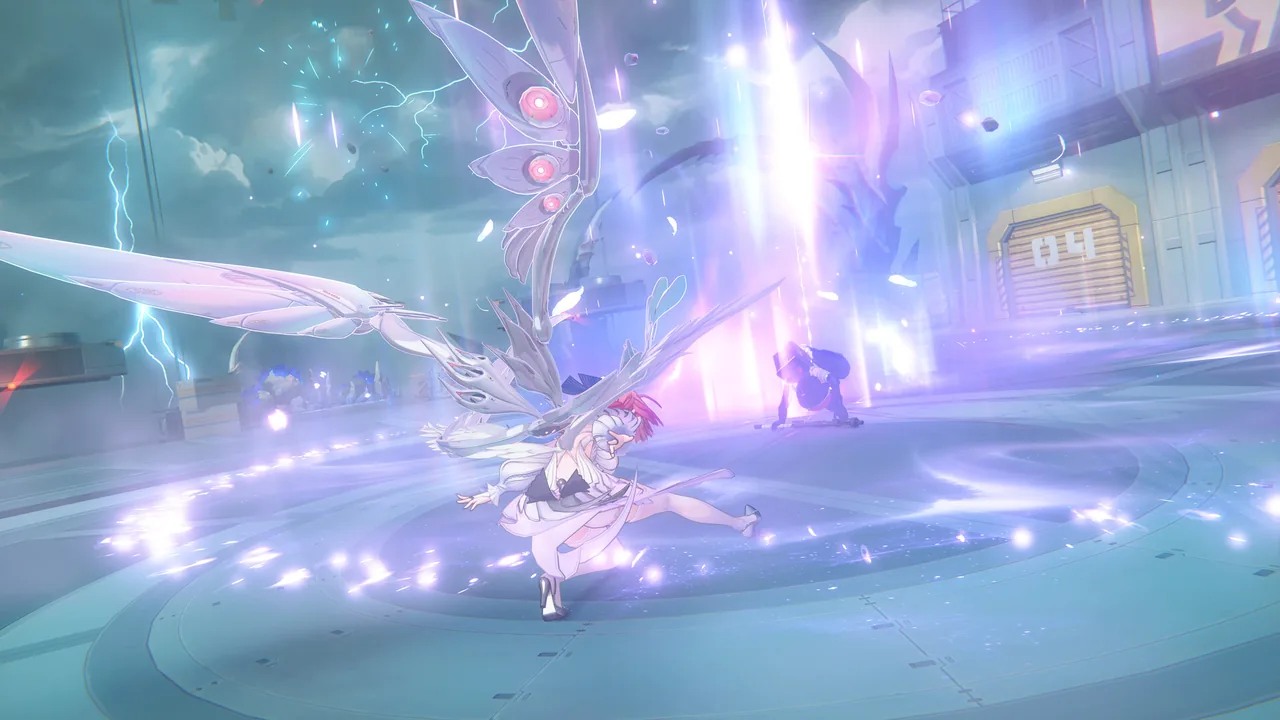
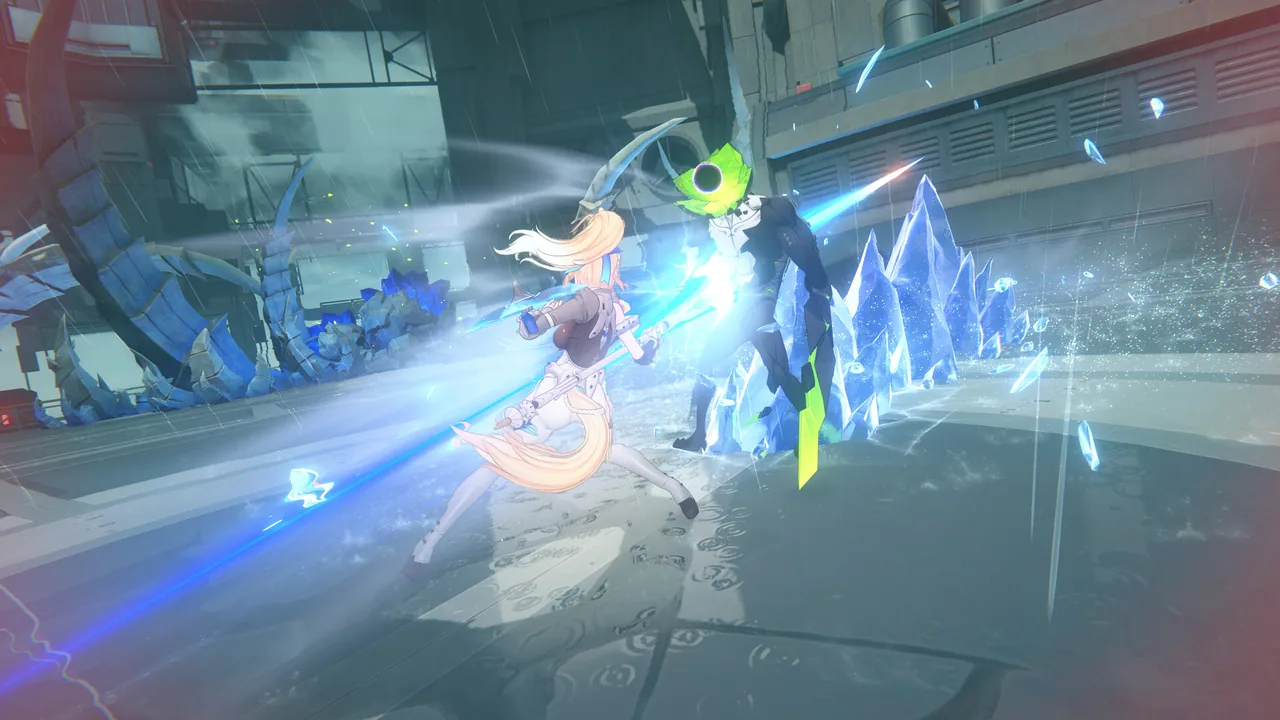
Basic Attacks and Special Attacks build toward an EX Special once a meter fills, which is the familiar part. What isn't familiar, at least not from this publisher, is how tightly the defensive and team-swap layers are wired into that same rhythm. A Perfect Dodge — timed to the frame an enemy attack lands — triggers a bullet-time window and, on some Agents, a direct counter-hit. A Defensive Assist swaps a benched teammate in automatically to intercept a blow that would otherwise land clean, turning what looks like a scripted save into something you can deliberately set up by managing your dodge timing across the whole roster rather than just the character on screen. Chain Attacks, unlocked once an enemy's Daze gauge is broken, hand control to a cinematic full-team combo that actually rewards the stagger you spent the fight building toward, rather than just playing itself out as a cutscene.
Put together, that's a real decision space: who do you keep active, when do you eat a hit versus assist out of it, and which Agent do you want holding the Chain Attack window when a boss finally breaks. It's the closest thing HoYoverse has shipped to Devil May Cry's stagger-and-combo language, and the best evidence that the system isn't just window dressing is Deadly Assault, one of the game's two rotating endgame modes. Its Performance Points don't only track how much damage you did — they're earned for landing parries, triggering assists and breaking specific enemy parts, on top of inflicting status effects like Impair, Disorder and Shutdown. That's a scoring system built around execution, not around who has the best-rolled Drive Discs, and it's a meaningfully different design decision from Genshin's Spiral Abyss or Star Rail's Memory of Chaos, both of which are ultimately pure damage checks dressed up with a time limit.
What actually changed after the TV mode backlash
Here's the fact this review most needed to get right, because getting it wrong would be an obvious and embarrassing error: Zenless Zone Zero is not, and never really was, an open-world game, but it is also not the TV-grid game its launch reputation still suggests to anyone who hasn't checked lately. At launch, Hollow exploration ran through "Array Mode" — colloquially "TV Mode" — where you piloted a Bangboo avatar across a 2D board of television-screen tiles, choosing paths and triggering events like a digital board game. Reception was mixed at best and openly hostile at worst, and HoYoverse responded fast by its own standards: Array Mode was phased out of regular story and commission content after the Version 1.2 update in September 2024, replaced by straightforward on-foot 3D movement through the same spaces. It survives today only in one specific endgame roguelike mode, Hollow Zero: Withered Domain, and in a single permanent nostalgia event — not in anything a returning or new player will hit by default.
What's left is a hub-and-mission structure: New Eridu's districts function as navigable hub space connecting shops, story triggers and side commissions, and Hollows themselves are now small, purpose-built combat spaces you walk into on foot rather than a board you play across. It's closer in shape to a mission-select action game than to Genshin's contiguous world or even to Star Rail's 2.5D hub paths. That's a legitimate structural choice, not a compromise nobody signed up for anymore, but it does mean the game leans on mission variety to keep itself interesting in a way an open world never has to, and that variety is the review's biggest actual complaint below.
Twenty minutes, roughly true
Zenless Zone Zero is built for shorter sessions than Genshin, and shorter, by most accounts, than Star Rail too. A stamina resource caps how much Drive Disc farming and boss re-fighting you can do in a sitting, dailies clear quickly, and a Combat Simulation-style menu lets you resolve previously-cleared fights without replaying them. In practice that means a session built around clearing your dailies, checking in on the current commission chapter and maybe pushing one endgame mode's score is genuinely short — closer to the twenty-minute pitch this site has already credited Star Rail with than to Genshin's much larger "there's always something to go explore" surface area.
The catch shows up in the story chapters specifically, and it's the single most consistent complaint in current player feedback: combat density inside a story arc can be thin, with stretches of static dialogue between fights that some players describe as watching more than playing. That's a real, specific pattern rather than one loud complaint — it shows up repeatedly in recent Steam reviews independent of each other — and it means the "short honest session" pitch holds for the daily loop but not always for a story chapter you're trying to finish in one sitting.
Drive Discs: the same grind, with one real mercy
Drive Discs are this game's artifact/relic equivalent, dropping in up to six equipped slots with a fixed-role main stat on the first three slots and a chosen-from-a-pool main stat on the back three, plus up to four random substats that can each upgrade further on level-up. Read that back and it's the same compounding-odds shape this site has already covered twice this year: set, then slot, then main stat, then which substats landed. Community guides describe it, accurately, as functioning "similarly to Genshin's Artifacts and Star Rail's Cavern Relics" — because it is the same design lineage.
The one genuine mercy is the Bardic Needle Music Store. Dismantle unwanted discs for Master Copies, then spend those copies buying a disc of a specific set and slot directly, sidestepping the domain-drop RNG that decides which set and slot you even get a shot at. It doesn't remove the substat lottery underneath — that part is exactly as punishing as its siblings' — but it removes one full layer of the stack, which is a real, checkable difference in this game's favour rather than a vague impression.
The monetisation is the same math, stated plainly
Same publisher, and it shows: Zenless Zone Zero runs a Signal Search gacha with a published 0.6 percent base S-Rank rate and a 90-pull hard pity on both the limited Agent banner and the limited W-Engine (weapon) banner, with a standard 50/50-then-guaranteed-next structure identical to Genshin's and Star Rail's character banners. The Inter-Knot Membership subscription runs US$4.99 a month — the same price point as Welkin Moon and the Express Supply Pass — and Monochrome top-ups run the same US$0.99-to-US$99.99 ladder this site has already documented twice. If you've read either sibling review, none of that architecture needs re-explaining.
The one place it actually differs, and differs in the player's favour: the W-Engine banner's guarantee. Lose the 50/50 on a weapon pull here and your next S-Rank on that banner is guaranteed to be the featured Engine outright — no Epitomized Path pick-two banking like Genshin, and no 75-percent partial guarantee like Star Rail's Light Cone banner. It's a smaller system than either of those, since weapon banners generally matter less than character banners for most players, but it's a genuine, sourced improvement rather than a wash.
Style: the one thing that's actually new
This is the most stylistically distinct thing HoYoverse has made, and it's worth saying plainly rather than as a footnote. Cutscenes render as static comic-book panels with motion lines and dialogue boxes rather than full 3D cinematics, which sounds like a cost-saving shortcut and instead reads as a deliberate visual language that suits the urban-noir, cassette-and-VHS aesthetic of New Eridu far better than another fully-animated cutscene would have. The soundtrack leans synth and J-pop-adjacent rather than orchestral, and it's a better fit for a game about proxies navigating a neon-lit city than the sweeping fantasy scores Genshin and Star Rail both reach for. None of it looks or sounds like it's trying to be a second Genshin, and after two games that mostly share a visual language, that matters more than it might elsewhere.
Where it actually falls short
The mission repetition is real and specific: commissions and side content lean on a small set of objective types — patrol a route, escort an NPC, retrieve an item — and a hub city doesn't hide that the way a sprawling open world does, where the next hill always promises something different. Story pacing is the second genuine issue, not because the writing is bad but because the combat-to-dialogue ratio in some chapters tests patience the daily loop otherwise respects. Roster power creep is the third: community tier-list tracking already shows several 2024 launch characters slipping a tier below 2026 releases, an ordinary live-service pattern but one worth knowing about before investing pulls in an older favourite. And the mobile experience specifically trails what PC players are reporting — Google Play sits at 3.4 stars across roughly 160,000 ratings, a meaningfully rougher picture than the "Very Positive" score Steam's much newer, smaller userbase has given the PC client since its June 2026 launch.
Final verdict
Zenless Zone Zero earns its place as the most interesting thing HoYoverse currently publishes, not because it's the best-rounded of the three but because it's the only one actually built to be judged as an action game first. The combat system is genuinely excellent — Perfect Dodges, Defensive Assists and Chain Attacks produce real decisions, and Deadly Assault proves the studio means it by scoring execution instead of just damage. The TV-mode baggage that still follows this game around online is two years out of date; what replaced it is ordinary on-foot movement through a hub-and-mission structure, and that structure's real cost is repetition, not the puzzle-board frustration people still associate with launch.
Score it against its siblings and the shape is different from either: Genshin's weak point is mostly time, Star Rail's increasingly includes character functionality, and Zenless Zone Zero's is mission variety and a story that sometimes forgets its own pitch is combat. That's why this lands at the same 7.5 as Star Rail despite a stronger combat system underneath it — the daily loop is shorter and the itemisation is marginally kinder, but there's less game surrounding the fights, and what's there repeats itself faster. Players who want the sharpest action combat this publisher has built, in sessions that actually respect the twenty-minute pitch, will get exactly that. Players who came to HoYoverse games for a world to wander should stay with Genshin Impact or look at what Wuthering Waves does with open-world traversal instead — this one was never trying to be that.
Pros and cons
Pros
- Perfect Dodge, Defensive Assist and Chain Attack interact as a genuine execution-based combat system, closer to a character-action game than to a stat-check gacha RPG
- Deadly Assault, one of two rotating endgame modes, scores Performance Points for landing parries, triggering assists and breaking specific enemy parts, not just for raw team damage
- The TV/grid-based Array Mode that defined launch exploration and drew heavy criticism was phased out of regular content after the Version 1.2 update in September 2024, in favour of straightforward on-foot movement
- The Bardic Needle shop lets you spend Master Copies on a Drive Disc with a chosen set and slot directly, cutting one layer off the pure-domain RNG stack that defines Genshin's artifacts and Star Rail's relics
- Comic-panel cutscene interstitials and a synth-and-J-pop-leaning soundtrack give it a visual and audio identity none of HoYoverse's other live-service games share
Cons
- Commissions and side content repeat a small handful of objective types (patrol, escort, fetch) across most of New Eridu, and a hub city hides that repetition far less than an open world does
- Story chapters lean on long static dialogue between encounters, and it's a frequent, specific complaint that hours of a playthrough can pass with only minutes of actual combat
- The gacha bones are the same as its siblings': a published 0.6 percent base S-Rank rate, a 90-pull hard pity, and premium-currency top-ups running the identical US$0.99-to-US$99.99 ladder as Genshin and Star Rail
- Roster power creep is already visible in community tier tracking less than two years in, with several 2024 launch S-Ranks now sitting a tier below characters released in 2026
- Google Play users rate the mobile client considerably lower (3.4 of 5 across roughly 160,000 ratings) than the newer, smaller Steam userbase does, and the gap is wide enough to be worth checking before committing on phone
Screenshots
-
Zenless Zone ZeroImage: COGNOSPHERE PTE. LTD. via Steam -
Zenless Zone ZeroImage: COGNOSPHERE PTE. LTD. via Steam -
Zenless Zone ZeroImage: COGNOSPHERE PTE. LTD. via Steam -
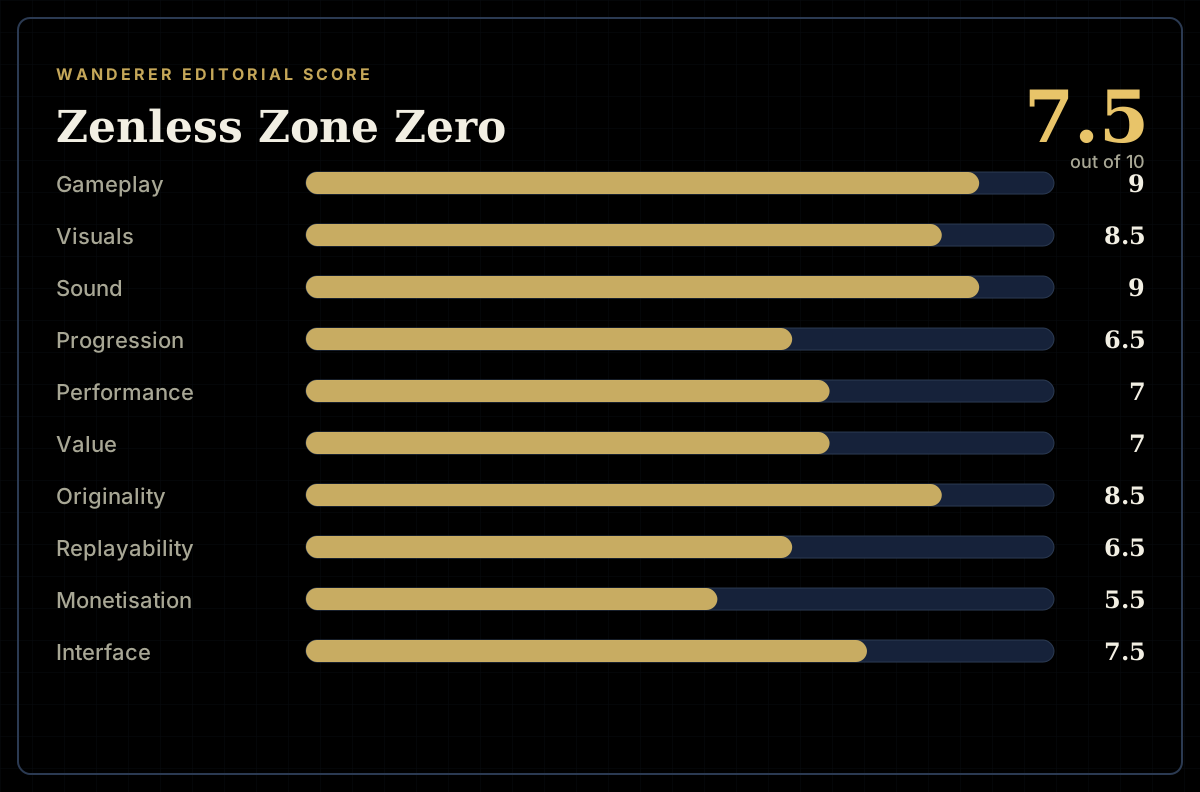
How the review scores each part of the gameWanderer Editorial -
The short versionWanderer Editorial