
Game review
Cultivation Idle
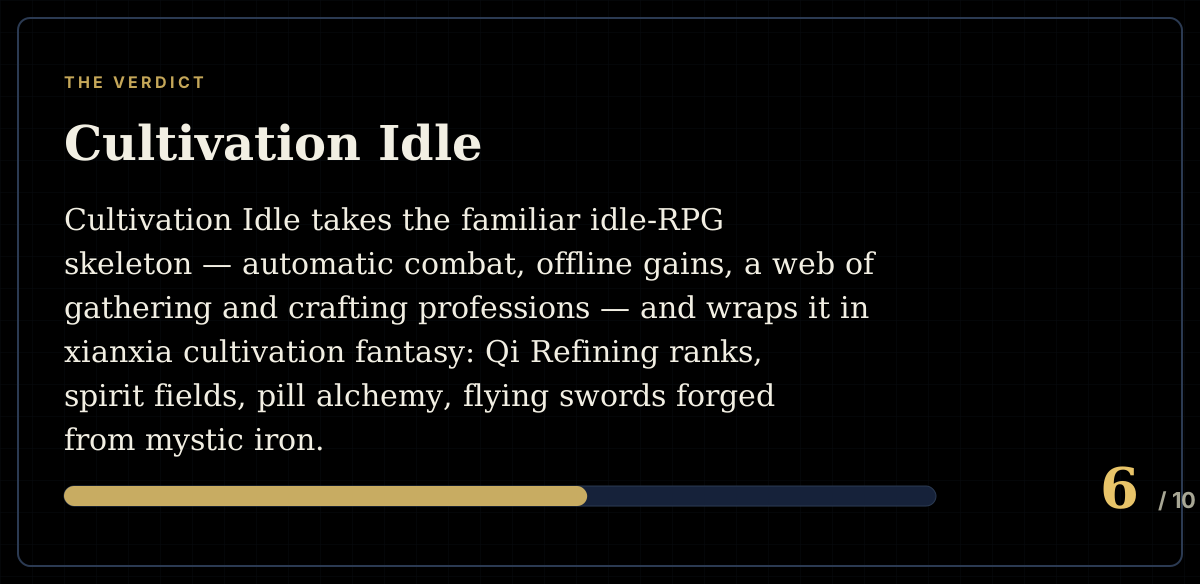
6 / 10
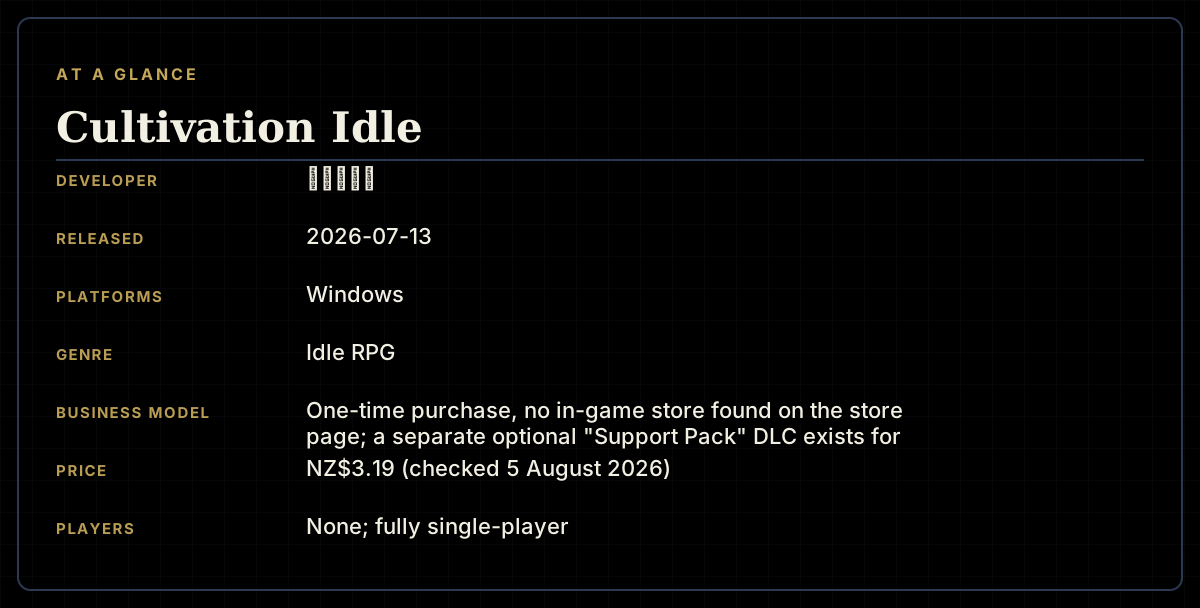
- Developer
- 老鱼工作室
- Publisher
- 老鱼工作室
- Released
- 13 July 2026
- Platforms
- Windows
- Genre
- Idle RPG
- Monetisation
- One-time purchase, no in-game store found on the store page; a separate optional "Support Pack" DLC exists for players who want to back development directly
- Players
- None; fully single-player
The short version
Cultivation Idle takes the familiar idle-RPG skeleton — automatic combat, offline gains, a web of gathering and crafting professions — and wraps it in xianxia cultivation fantasy: Qi Refining ranks, spirit fields, pill alchemy, flying swords forged from mystic iron. That's a flavour Western idle games rarely commit to this fully, and at three dollars it costs less than a coffee to find out if it's for you.
Three weeks into Early Access, though, it plays like three weeks into Early Access. A cluster of its early reviewers, mostly writing in Chinese, describe the pacing as tedious rather than relaxing — hours spent stuck at the same early rank with little visible reward — and one detailed bug report about a broken rare-event drop rate was confirmed and patched only a day before this review went up. The developer is shipping fixes at a genuinely fast clip; whether the foundation underneath them is fun yet is still an open question.
Biggest strengths
- A fully-realised xianxia cultivation theme — realm breakthroughs, spirit fields, pill alchemy, flying-sword forging — that most Western-facing idle RPGs don't attempt
- Extremely low cost of entry at NZ$3.19, with several early reviewers explicitly framing it as cheaper than a single coffee
- A genuinely fast patch cadence, with ten separate update posts in its first three weeks addressing bugs, adding content and refining existing systems
Biggest weaknesses
- Several of the game's own early reviewers describe long stretches with almost no visible progress, including reports of being stuck at the same early cultivation rank after three to eight hours
- A rare-event drop-rate bug — reported by a player who logged millions of gathering actions without it ever triggering — was only confirmed and fixed the day before this review, a sign of how unsettled some systems still are
- English localisation is functional but rough around the edges, according to English-language reviewers, and the review base itself is overwhelmingly Chinese-language at this stage
Who it's for: Idle-RPG regulars curious about a cultivation-themed take on the genre, comfortable with Early Access roughness and reading around some translation gaps, at a price low enough that disappointment costs almost nothing.
Our recommendation: Worth the three dollars if the cultivation setting appeals to you and you're willing to treat it as a work in progress. Wait a few months if you want a settled pacing curve rather than a build that's still visibly finding its footing.
6 / 10
Most idle RPGs speak the same visual language — fantasy knights, dungeon crawls, the occasional anime skin. Cultivation Idle speaks a different one entirely, and speaks it fluently: this is a xianxia game, built around the Chinese cultivation-fantasy tradition of ranked spiritual attainment, alchemical pills and swords forged from mystic ore, and it commits to that setting completely rather than treating it as a reskin. Three weeks into Early Access, at a price under four dollars, it's an easy game to try and a harder one to judge — because right now, its own early players can't agree on whether the grind underneath the theme is working yet.
Qi Refining, and the hundred cultivation arts
You begin as a low-level Qi Refining cultivator and climb through realm breakthroughs by training automatically, exploring maps, and clearing dungeons — the standard idle-RPG shape, dressed in cultivation terminology. What sets Cultivation Idle apart is how wide it spreads its resource systems. Alongside combat, there's a full web of life skills — fishing, woodcutting, mining, farming, alchemy, cooking, forging — each feeding into the others: spirit herbs grown in your own fields go into elixirs, ore pulled from mines gets forged into weapons, and a pet-taming system sits alongside all of it. It's an ambitious amount of interlocking scope for a three-dollar Early Access launch, and the studio's own marketing leans hard into that breadth with the phrase "Hundred Cultivation Arts."
Offline progress works as the genre demands — your cultivator keeps training, gathering and producing while you're away — and that's the promise most reviewers came in expecting. Whether the game delivers on the idle half of "idle RPG" cleanly is where opinion splits hardest.
A loop under construction
Reading through Cultivation Idle's small early review pool, in Chinese and English both, a clear pattern emerges: players who've stuck with it for tens or hundreds of hours generally like what they're finding, while several shorter-session reviewers describe long stretches with almost nothing to show for the wait. One review reports idling for roughly eight hours and still sitting at the third layer of Qi Refining with what they call "almost zero positive feedback." Another independently reports being stuck at the same early rank after three hours. A stamina system that gates active play draws specific criticism from a reviewer who argues it needs a proper auto-continue setting to justify existing at all in a game sold as idle.
None of that reads as catastrophic on its own — early-game pacing is one of the most commonly mistuned things in any Early Access idle release, and it's also one of the fastest things for a small studio to fix once it hears about it. What makes it worth flagging here is how consistently several separate reviewers land on the same specific complaint independently.
The bug that was real, and got fixed a day before this review
The most concrete finding in Cultivation Idle's review section is also the easiest to verify. One detailed report describes chopping roughly 5.5 million trees without a documented 0.5% chance encounter ever triggering, contacting the developer, seeing the odds raised to 1.5%, and then logging another 4 million chops with the same result — a run of bad luck so far outside normal probability that it reads as a genuine bug rather than an unlucky streak. Checking the game's own patch history confirms it: the v1.1.1 update, posted 4 August 2026 — the day before this review — explicitly lists "Fixed an issue where mining and logging events did not drop rewards" as a patched issue.
That's worth reading two ways at once. It's a real problem that genuinely affected early players and went unresolved through several patch cycles, and it's also a case study in how fast this particular developer moves once an issue is understood — ten separate update posts landed in Cultivation Idle's first three weeks, covering everything from inventory pagination to a new talent system to automatic quest claiming. Anyone checking this review later than early August 2026 should assume the game has moved further from where it's described here, in either direction, given that pace.
Price, polish, and who this is for right now
At NZ$3.19 with no in-game store found on its page, Cultivation Idle is close to the cheapest possible way to find out whether cultivation-themed idle progression appeals to you — several reviewers make exactly that "cheaper than a coffee" argument in its favour, and it's hard to argue with the maths. English localisation is functional rather than polished; one English reviewer who otherwise liked the game noted it "still needs work on the translation but nothing major," which tracks with a review base that's currently 27 Chinese-language entries against just 4 in English. Anyone judging this purely off its aggregate "Mostly Positive" badge should know how thin and how linguistically skewed that sample still is — 33 total reviews is barely enough to read a trend, let alone a verdict.
Final verdict
Cultivation Idle earns real credit for going all-in on a setting the genre rarely commits to, for building an unusually wide web of interconnected systems for its price point, and for a developer that's visibly, rapidly responding to the feedback its earliest players are giving it. It doesn't yet earn a strong recommendation on execution alone — the pacing complaints are real, specific and repeated by more than one reviewer, and a three-week-old Early Access build with 33 total reviews is not a settled product by any measure.
For three dollars, that's a reasonable trade for cultivation fans curious about the genre. For anyone wanting a idle RPG that already knows what it wants its first few hours to feel like, this is worth a second look in a few months rather than a purchase today.
Players who'd rather their character's progress accumulate inside a shared, persistent fantasy world than a private cultivation path may also want to look at Wanderer.
Pros and cons
Pros
- A fully-realised xianxia cultivation theme — realm breakthroughs, spirit fields, pill alchemy, flying-sword forging — that most Western-facing idle RPGs don't attempt
- Extremely low cost of entry at NZ$3.19, with several early reviewers explicitly framing it as cheaper than a single coffee
- A genuinely fast patch cadence, with ten separate update posts in its first three weeks addressing bugs, adding content and refining existing systems
- A wide web of interlocking systems — logging, fishing, mining, farming, alchemy, cooking, forging, pet taming — for players who enjoy juggling several resource loops at once
- Long playtimes among its early reviewers suggest the loop hooks the players it does land with, even in its current state
Cons
- Several of the game's own early reviewers describe long stretches with almost no visible progress, including reports of being stuck at the same early cultivation rank after three to eight hours
- A rare-event drop-rate bug — reported by a player who logged millions of gathering actions without it ever triggering — was only confirmed and fixed the day before this review, a sign of how unsettled some systems still are
- English localisation is functional but rough around the edges, according to English-language reviewers, and the review base itself is overwhelmingly Chinese-language at this stage
- A stamina system gates active play without, as of this review, a way to fully automate around it, which several reviewers single out as needless friction in a game marketed as idle
- With only 33 total reviews at time of writing, any read on this game's reception is a very early and very small sample
Screenshots
-
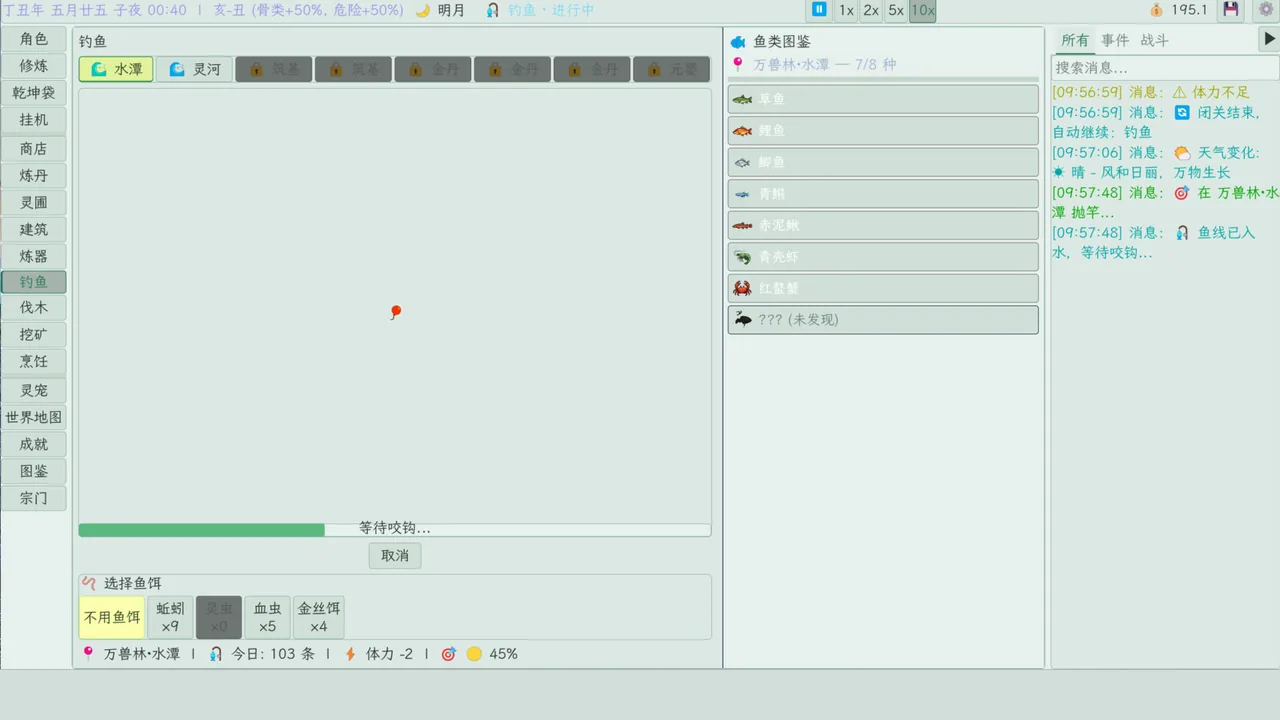
Cultivation IdleImage: 老鱼工作室 via Steam -
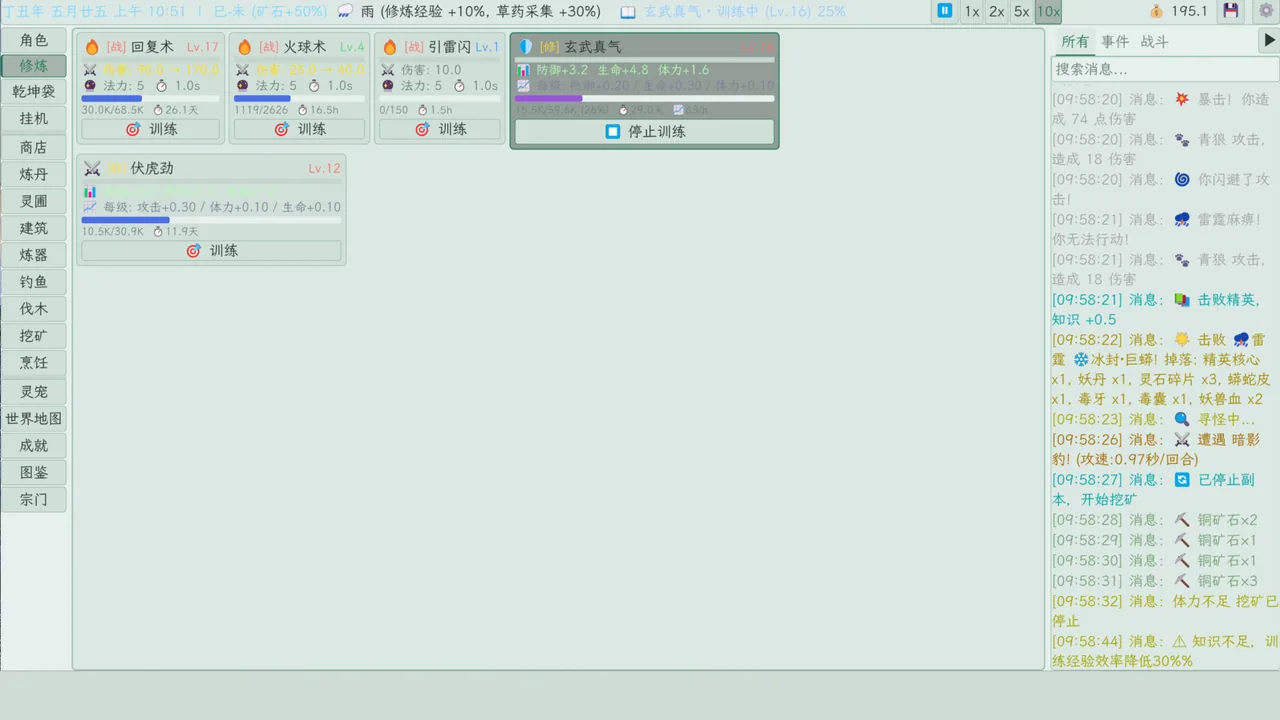
Cultivation IdleImage: 老鱼工作室 via Steam -
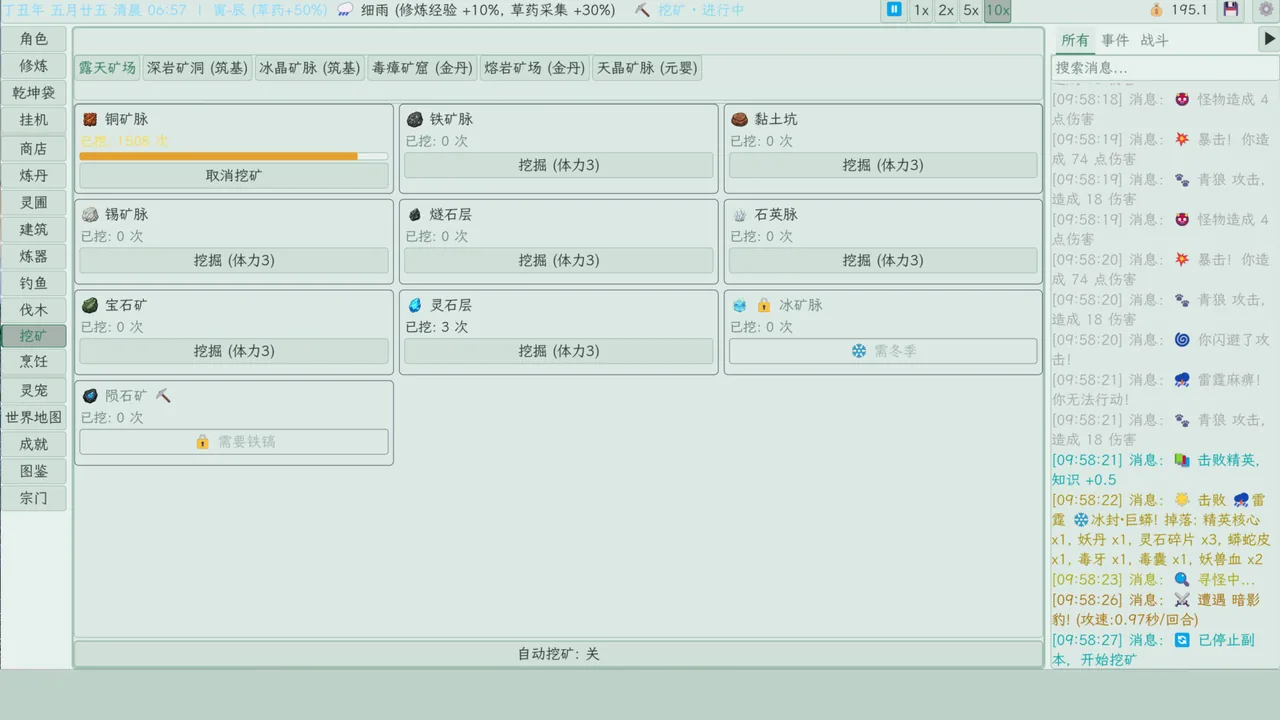
Cultivation IdleImage: 老鱼工作室 via Steam -
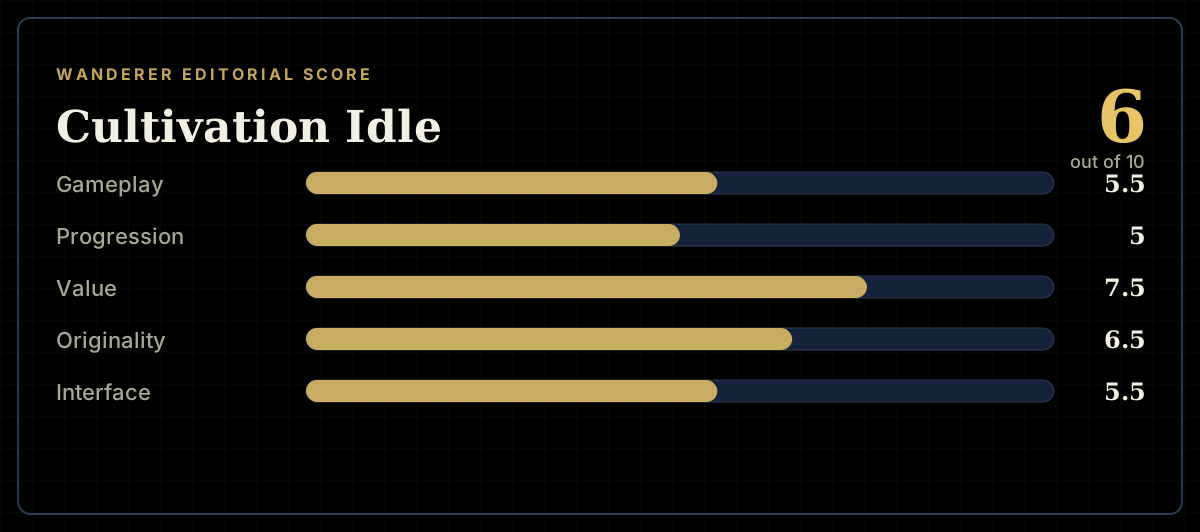
How the review scores each part of the gameWanderer Editorial -
The game at a glanceWanderer Editorial -
The short versionWanderer Editorial