
Game review
Sunderfolk
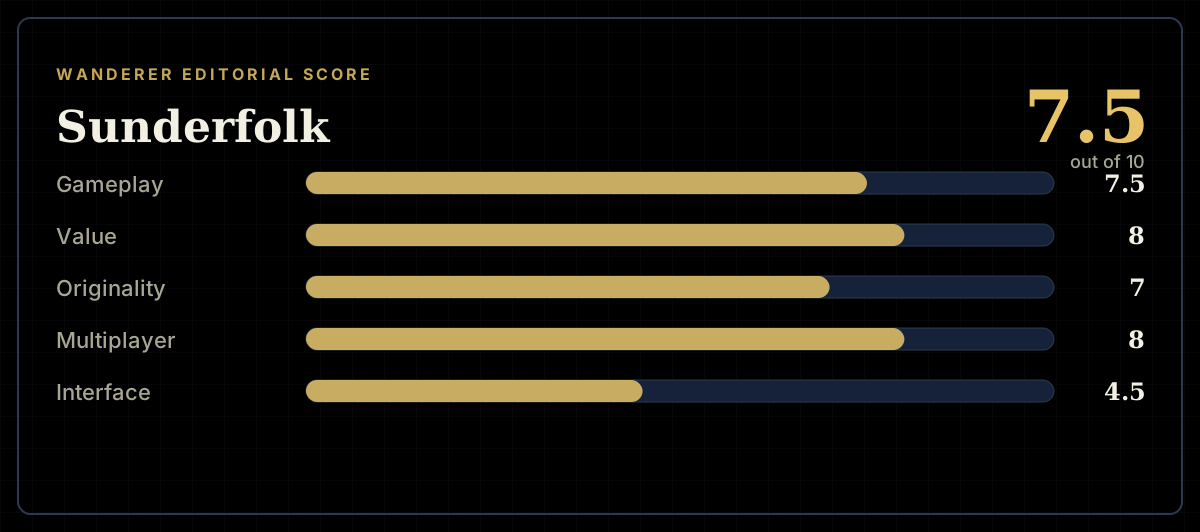
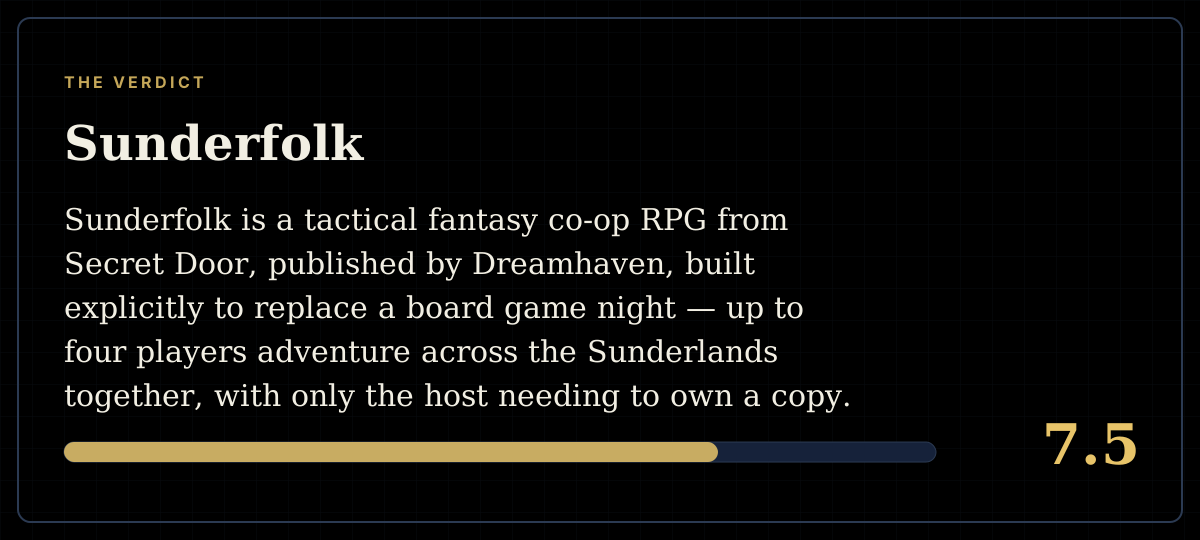
7.5 / 10
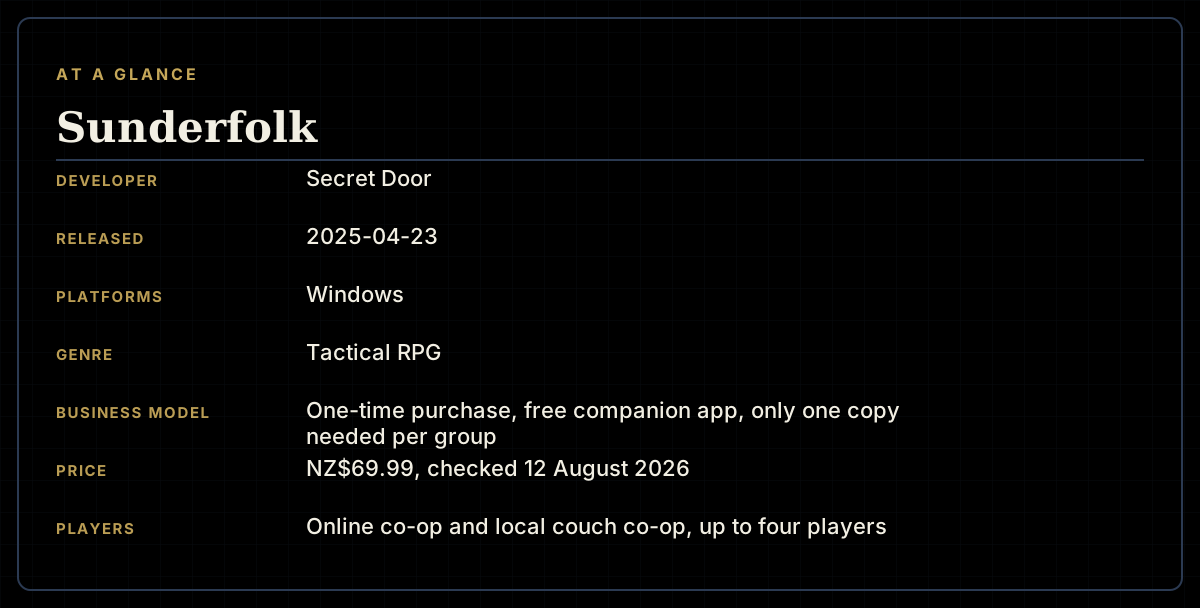
- Developer
- Secret Door
- Publisher
- Dreamhaven
- Released
- 23 April 2025
- Platforms
- Windows
- Genre
- Tactical RPG
- Monetisation
- One-time purchase, free companion app, only one copy needed per group
- Players
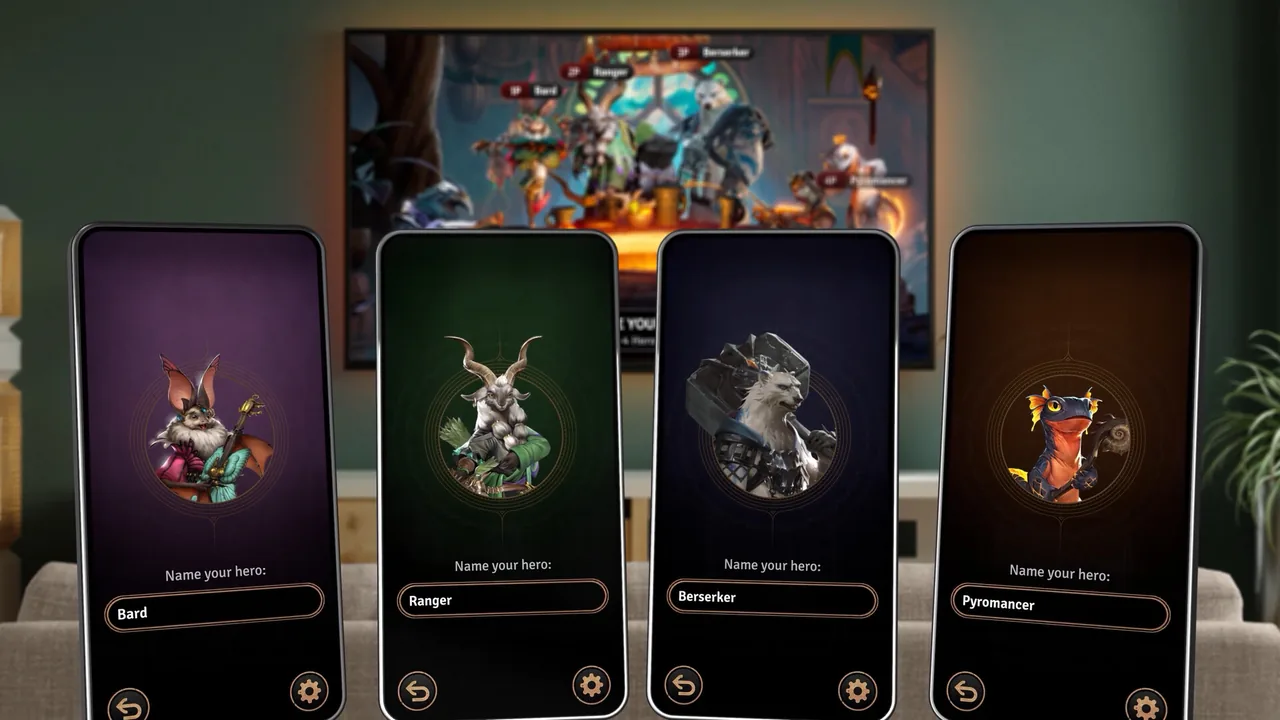
- Online co-op and local couch co-op, up to four players
The short version
Sunderfolk is a tactical fantasy co-op RPG from Secret Door, published by Dreamhaven, built explicitly to replace a board game night — up to four players adventure across the Sunderlands together, with only the host needing to own a copy. Released 23 April 2025, it built from former Blizzard developers and has held a large, healthy Steam review base since launch: 91.1% positive across 1,760 English-language reviews and 89.8% across 2,230 all-language reviews, both comfortably Very Positive, with recent sentiment holding steady or slightly improving through mid-2026. This review reads the 100 most-relevant English negative reviews and finds one complaint dominating every other: 44 of the 100 raise the game's phone-as-controller scheme, which several reviewers report is required even for solo play, with no way to use a keyboard, mouse or standard controller for that mode despite the game carrying Steam Deck Verified status.
Biggest strengths
- The core value proposition draws consistent, specific praise — only the host needs to own the game, and up to three friends can join free via a companion app, several reviewers specifically noting this justifies a price that initially looked steep
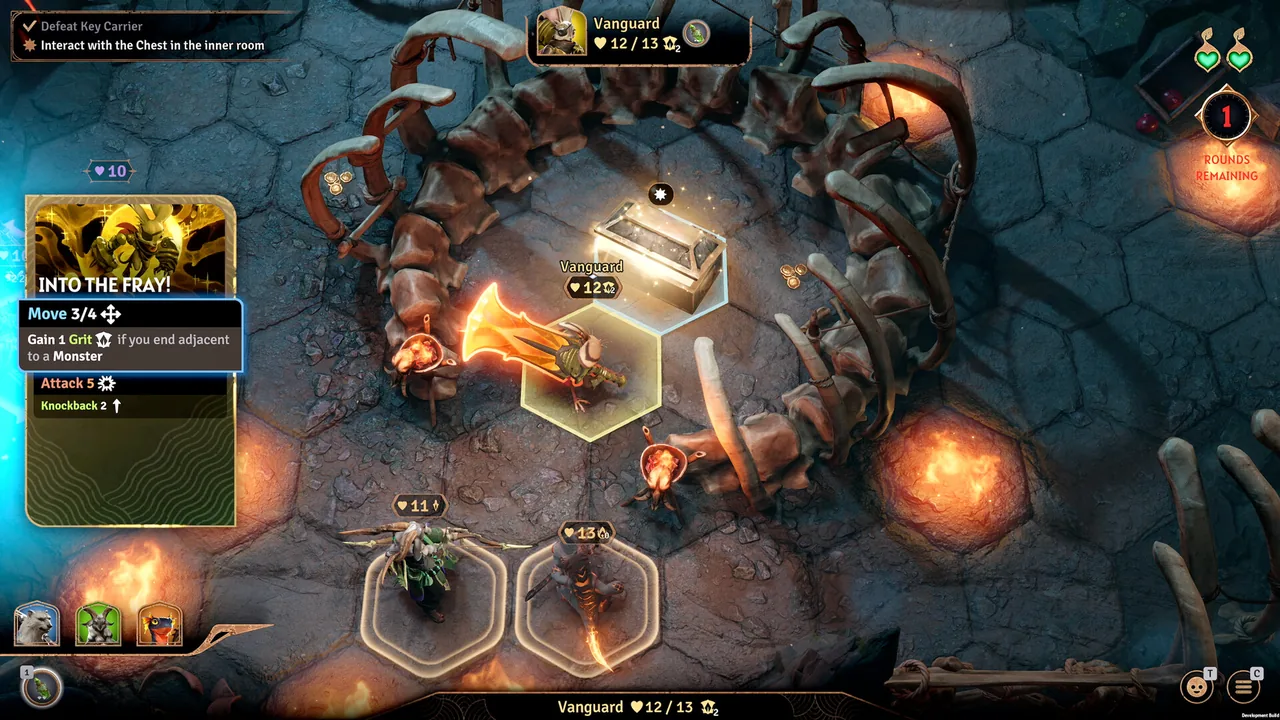
- Tactical combat earns genuine comparisons to Gloomhaven from reviewers who call it a strong, accessible entry into that style of encounter design, with one high-playtime review calling it "better than Gloomhaven" outright
- The writing, tone and presentation are widely credited with capturing a genuine tabletop-RPG feeling, described by multiple reviewers as one of the few digital games that "feels like actual D&D"
Biggest weaknesses
- The single most repeated complaint in this review's negative sample — 44 of 100 — concerns the mandatory phone-or-tablet companion app used as a controller, which several reviewers report is required even to play solo, with no keyboard, mouse or standard controller option for that mode
- Steam lists the game as Steam Deck Verified and carries a controller-support entry in its store listing, which multiple reviewers call directly contradicted by the actual requirement to use a phone app rather than a gamepad
- Selecting and targeting on the touchscreen app draws specific complaints about imprecision, with reviewers describing swipe-only controls as clumsy compared to a simple button press
Who it's for: Groups looking for a genuine board-game-night replacement who don't mind incorporating phones into the experience; a poor fit for anyone wanting to play solo or with a traditional controller without a companion device in hand.
Our recommendation: An excellent, generous co-op tactics game once a group accepts the phone-controller premise it's built around — but that premise is a real, immediate dealbreaker for a large share of its own reviewers, so try the free trial before committing to the full NZ$69.99 price.
7.5 / 10
Introduction
Sunderfolk sets out to be a board game night in digital form: up to four players build a party, adventure across the fantasy Sunderlands, and work through tactical encounters together, with only one member of the group needing to actually own the game. Developed by Secret Door, a studio founded by former Blizzard developers, and published by Dreamhaven, it released 23 April 2025 and has held a large, healthy Steam review base ever since — 91.1% positive across 1,760 English-language reviews, 89.8% across 2,230 all-language reviews, both comfortably Very Positive, with recent sentiment (91 of the last 100 English reviews) if anything slightly ahead of the lifetime figure. This review reads the 100 most-relevant of the English negative sample and finds a corpus with an unusually singular complaint at its centre.
A genuinely generous, well-built co-op tactics game
Start with what the reviews agree on, because it's substantial. Sunderfolk's headline structural decision — that only the host needs to buy the game, with up to three friends joining through a free companion app — draws real, repeated praise as a rare piece of consumer-friendly design in a genre that usually charges everyone at the table full price. "They need to market the free-to-share aspect a lot harder," reads one 74-vote review, describing almost dismissing the game over its sticker price before realising the whole group only needed one copy between them. On the tactics side, the comparison that recurs most often is Gloomhaven, and it's usually meant as a compliment: one detailed, high-playtime review calls it flatly "better than Gloomhaven," crediting accessible but genuinely tactical encounter design. Writing and tone earn similarly consistent credit — several reviewers specifically say Sunderfolk is one of the few digital adaptations that actually feels like sitting down to a real tabletop RPG session, rather than a videogame borrowing the aesthetic.
The phone controller is the review
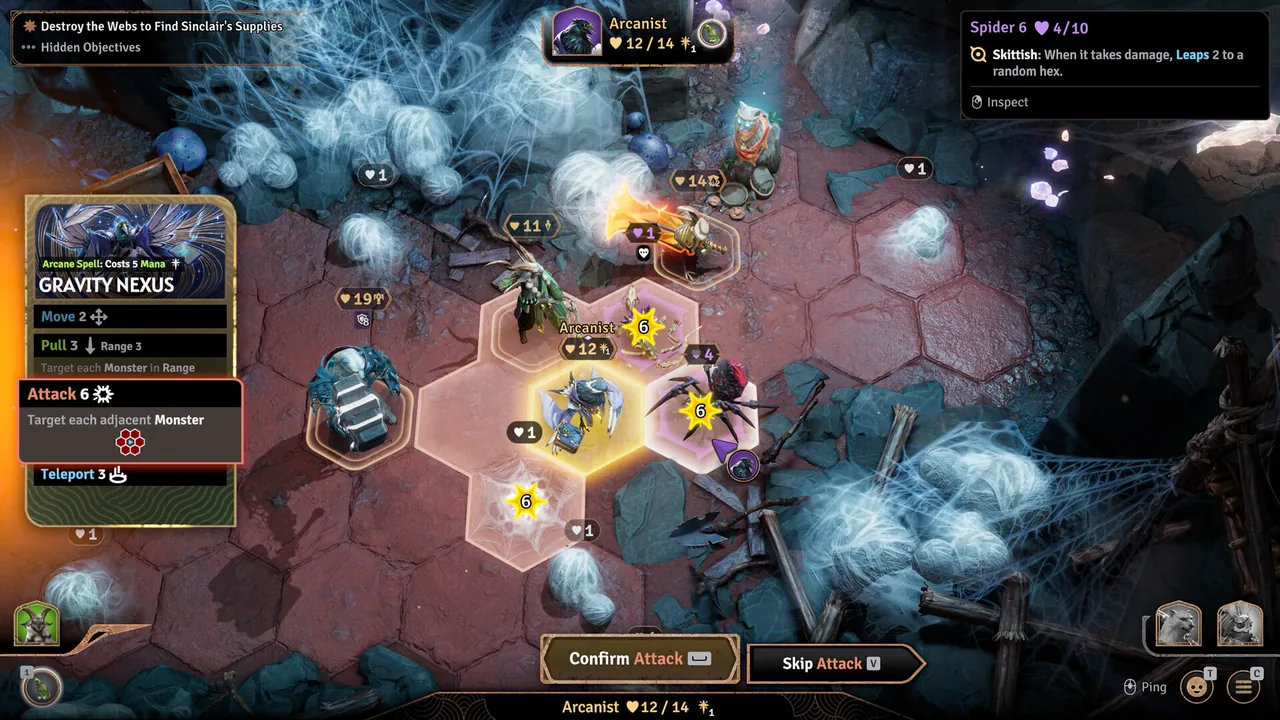
Read the negative sample in bulk, though, and one issue swallows almost everything else. Sunderfolk ships with a design built around using a phone or tablet as each player's controller — reading cards, selecting actions and moving pieces on a companion touchscreen app while the shared view plays out on the TV or monitor. Forty-four of the 100 negative reviews read for this piece raise that scheme directly, and the sharper version of the complaint isn't really about local couch co-op, where the concept at least makes some sense — it's that several reviewers report the same requirement applies to solo play, with the campaign-selection option "simply greyed out" on keyboard and mouse until a phone is connected, and no explanation offered anywhere in the game about why. "There is no way to play the game on PC without also using a smartphone app, even when playing singleplayer," reads one representative review, echoed closely by several others encountering the same wall during the free trial or opening minutes.
The complaint sharpens further around a specific, checkable inconsistency: Sunderfolk carries Steam Deck Verified status and a controller-support listing on its store page, and Steam's own metadata for the game shows no formal controller support at all. One reviewer put it bluntly: "How do you even get Steam Deck Verified without controller support? Steam Deck Verified requires full controller support through the entire game." Whatever the technical explanation, several reviewers independently arrived at the same conclusion — that the badge and the actual control requirements don't line up — which is the kind of specific, verifiable friction point worth flagging plainly rather than folding into a general "controls are annoying" complaint. Beyond the requirement itself, the touchscreen implementation draws its own separate criticism: swipe-based selection is described as clumsy and imprecise compared to a simple button press, with battery drain on the connected phone raised as a secondary annoyance by reviewers playing longer sessions.
Smaller cracks beneath the big one
A quieter but real complaint cluster concerns encounter design and difficulty consistency, distinct from the control scheme entirely. A handful of reviewers describe specific boss fights — one featuring a scripted late-game betrayal — as close to unwinnable on a first attempt regardless of play quality, more of a memorisation puzzle than a fair tactical challenge. A smaller number raise unclear victory conditions and RNG-driven objectives as a source of frustration, in terms similar to long-standing criticisms of the tabletop games Sunderfolk draws inspiration from. None of this approaches the volume or intensity of the phone-controller complaint, but it's worth a mention for readers weighing whether the tactical layer itself will hold up over a longer campaign.
Final Verdict
Sunderfolk succeeds at what it sets out to do for the group that accepts its central premise: a generous, well-written, genuinely tactical co-op fantasy RPG that turns one purchase into an entire game night, earning real comparisons to Gloomhaven along the way. Where a large share of its own reviewers push back, hard and specifically, is the phone-as-controller requirement that several report can't be avoided even solo, compounded by a Steam Deck Verified badge and controller-support listing that a meaningful number of reviewers say doesn't match what the game actually demands. That's not a matter of taste so much as a concrete access problem for a specific kind of buyer — anyone hoping to sit down alone with a controller in hand. Try the free trial first, and know going in whether your group is one that will embrace the phones or resent them, because this review's sample suggests there isn't much middle ground.
Pros and cons
Pros
- The core value proposition draws consistent, specific praise — only the host needs to own the game, and up to three friends can join free via a companion app, several reviewers specifically noting this justifies a price that initially looked steep
- Tactical combat earns genuine comparisons to Gloomhaven from reviewers who call it a strong, accessible entry into that style of encounter design, with one high-playtime review calling it "better than Gloomhaven" outright
- The writing, tone and presentation are widely credited with capturing a genuine tabletop-RPG feeling, described by multiple reviewers as one of the few digital games that "feels like actual D&D"
- Sustained post-launch support is real and substantial, including a major free 2.0 update in March 2026 and continued patches and content additions through mid-2026, well past launch
Cons
- The single most repeated complaint in this review's negative sample — 44 of 100 — concerns the mandatory phone-or-tablet companion app used as a controller, which several reviewers report is required even to play solo, with no keyboard, mouse or standard controller option for that mode
- Steam lists the game as Steam Deck Verified and carries a controller-support entry in its store listing, which multiple reviewers call directly contradicted by the actual requirement to use a phone app rather than a gamepad
- Selecting and targeting on the touchscreen app draws specific complaints about imprecision, with reviewers describing swipe-only controls as clumsy compared to a simple button press
- A smaller cluster of reviews raise inconsistent difficulty and unclear victory conditions in specific boss encounters, with one describing a scripted late-game betrayal fight as close to unwinnable on a first attempt regardless of play quality
Screenshots
-
SunderfolkImage: Dreamhaven via Steam -
SunderfolkImage: Dreamhaven via Steam -
SunderfolkImage: Dreamhaven via Steam -
How the review scores each part of the gameWanderer Editorial -
The essentials at a glanceWanderer Editorial -
The short versionWanderer Editorial