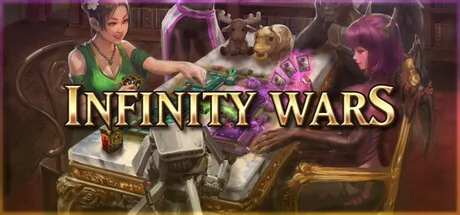
Game review
Infinity Wars: Animated Trading Card Game
5.5 / 10
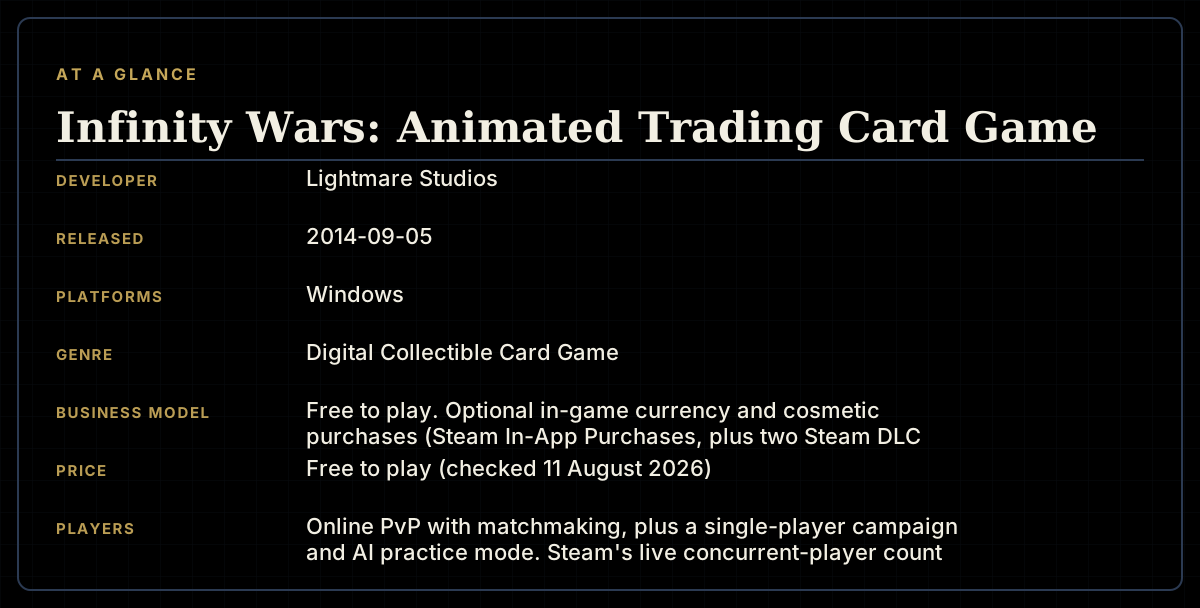
- Developer
- Lightmare Studios
- Publisher
- Lightmare Studios
- Released
- 5 September 2014
- Platforms
- Windows
- Genre
- Digital Collectible Card Game
- Monetisation
- Free to play. Optional in-game currency and cosmetic purchases (Steam In-App Purchases, plus two Steam DLC packs). Multiple reviewers report purchased card collections becoming inaccessible after long absences.
- Players
- Online PvP with matchmaking, plus a single-player campaign and AI practice mode. Steam's live concurrent-player count sat at 5 at the moment this was checked.
The short version
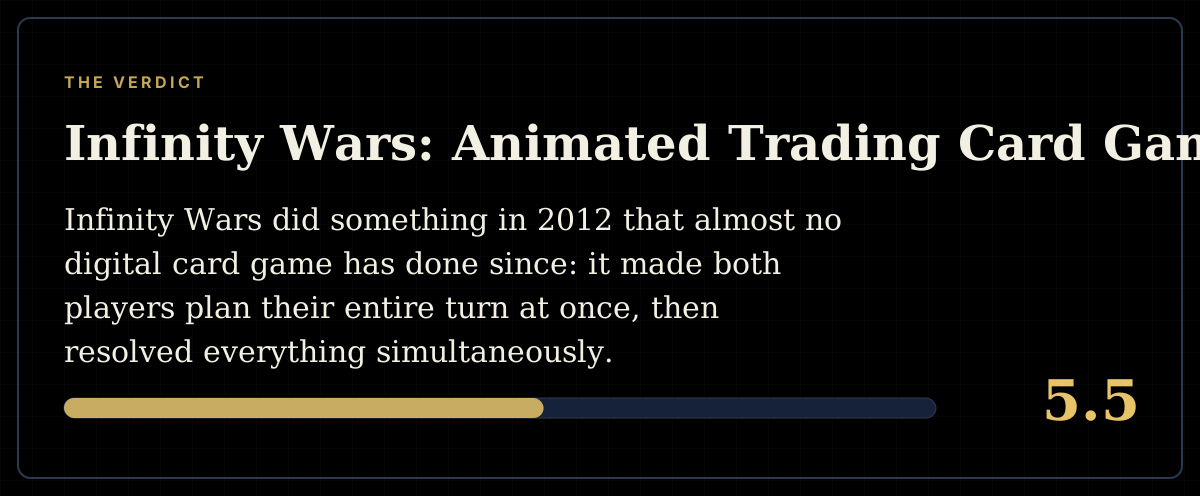
Infinity Wars did something in 2012 that almost no digital card game has done since: it made both players plan their entire turn at once, then resolved everything simultaneously. That single idea turns a card game into a bluffing contest, and more than a decade later it is still a genuinely sharp piece of design that Hearthstone-shaped competitors never bothered to copy.
The problem isn't the game. It's that almost nobody is left to play it with. Steam's own concurrent-player counter reads in single digits, years of user reviews describe accounts and paid-for collections vanishing without recourse, and the store page's promise of "a truly level playing field" is hard to cash in against an empty matchmaking queue.
Biggest strengths
- Simultaneous-turn combat remains genuinely unique among digital card games, over a decade after Infinity Wars introduced it
- Every one of a thousand-plus cards is fully illustrated and animated, a visual identity no rival TCG has matched
- Commander-based deckbuilding across eight factions supports a huge range of hybrid strategies
Biggest weaknesses
- Steam's live concurrent-player count is in the single digits, undermining the "level playing field" PvP pitch the store page sells
- Recurring reports across 2024-2025 of accounts and purchased card collections vanishing on return, with support described as unresponsive
- Multiple recent reviews describe the new-player tutorial as broken outright — a bad first impression for a game that already has to fight for attention
Who it's for: Card-game veterans curious about a genuinely different turn structure, and anyone researching digital-CCG history. Not a good pick for someone who wants a busy PvP ladder today.
Our recommendation: Worth ten minutes of anyone's time as a free download and a history lesson in what this genre could have been — go in expecting the AI/bot mode to be where you actually spend your time, not the queue.
5.5 / 10
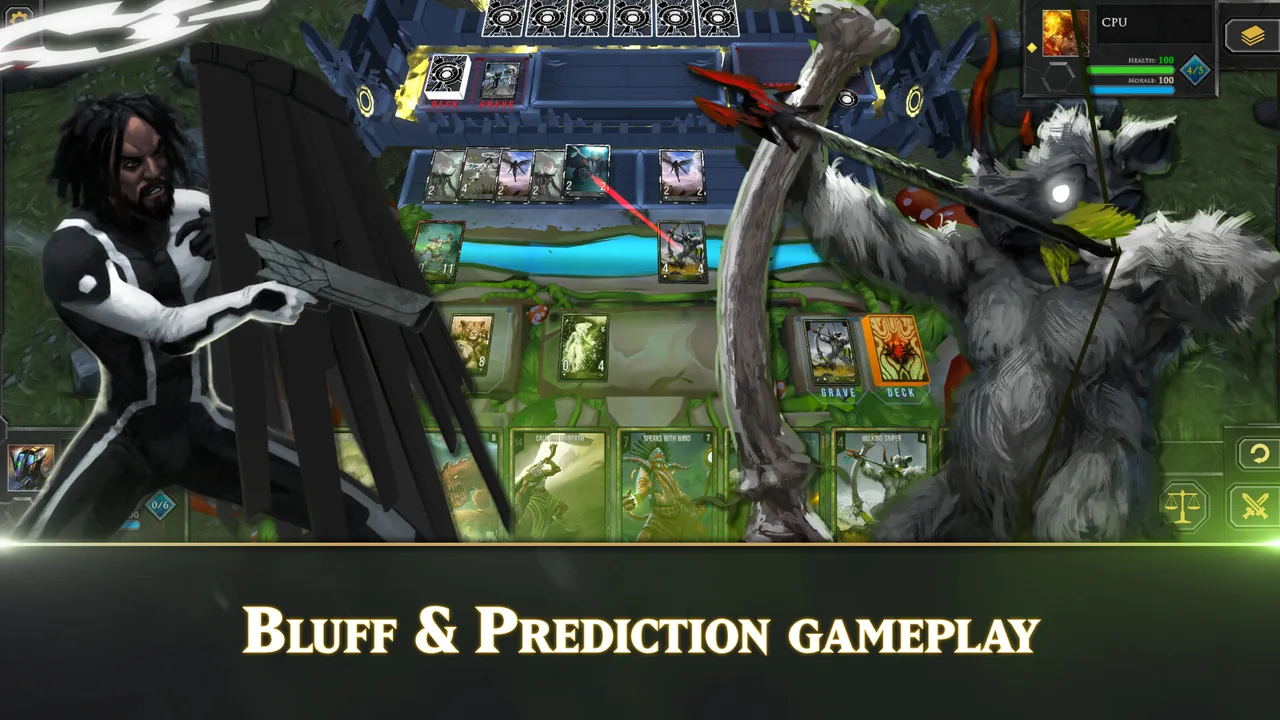
Ask a digital-card-game veteran what Infinity Wars did differently and most of them will say the same thing before you finish the question: simultaneous turns. Released in September 2014 after a successful 2012 Kickstarter, Infinity Wars had both players plan their entire turn in secret, then resolved every action at once. No waiting for an opponent to finish thinking. No perfect information about what they're about to do to you. Just two plans colliding at the same instant, over and over, for as long as the match lasts.
More than a decade on, that idea is still rare. Hearthstone, Magic: The Gathering Arena, Legends of Runeterra and nearly every other digital CCG that followed kept the alternating-turn structure card games have used since before computers existed. Infinity Wars didn't, and the design still reads as ahead of its time. Which makes what happened to it afterward worth examining in some detail.
The pitch: cards that move, turns that collide
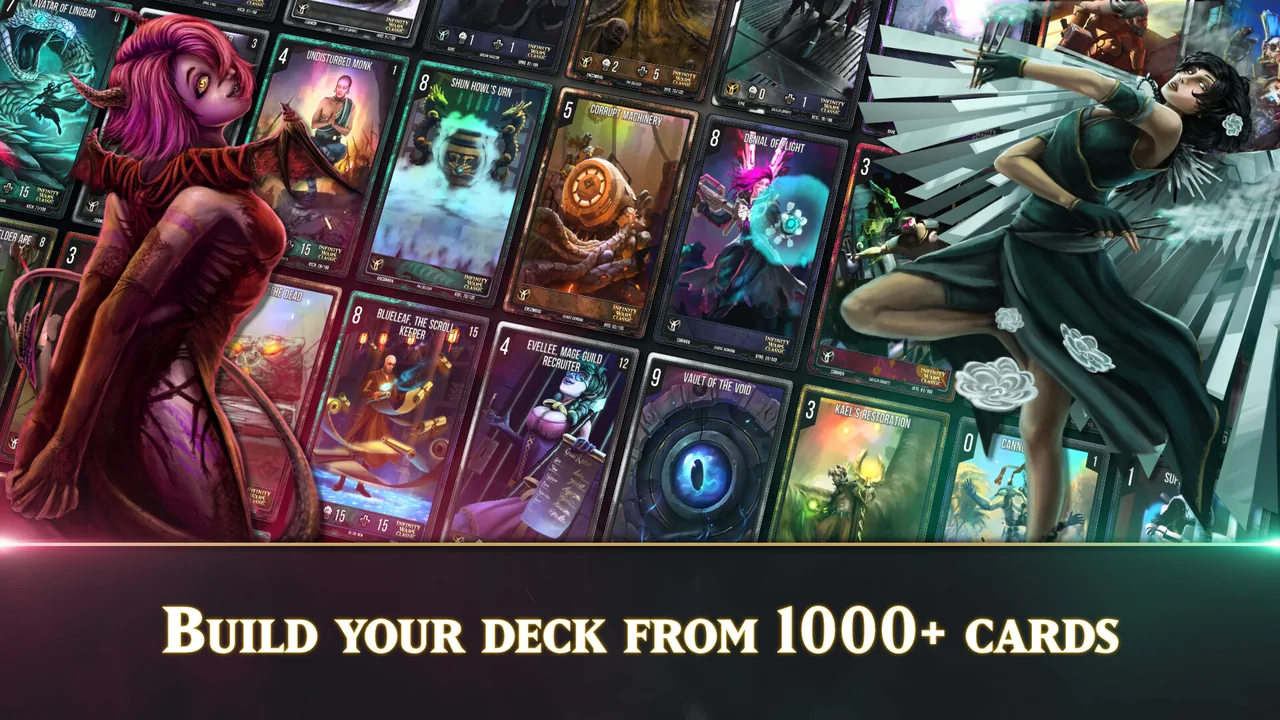
Every one of the game's 1,000-plus cards is fully illustrated and animated — not a static portrait with a border, but a small moving scene that plays out on the battlefield when the card resolves. Combined with simultaneous turns, a match has a different rhythm to almost anything else in the genre: you're not watching an opponent's turn happen to you, you're watching your prediction of their turn collide with the reality of it, animations firing in whatever order the rules resolve ties.
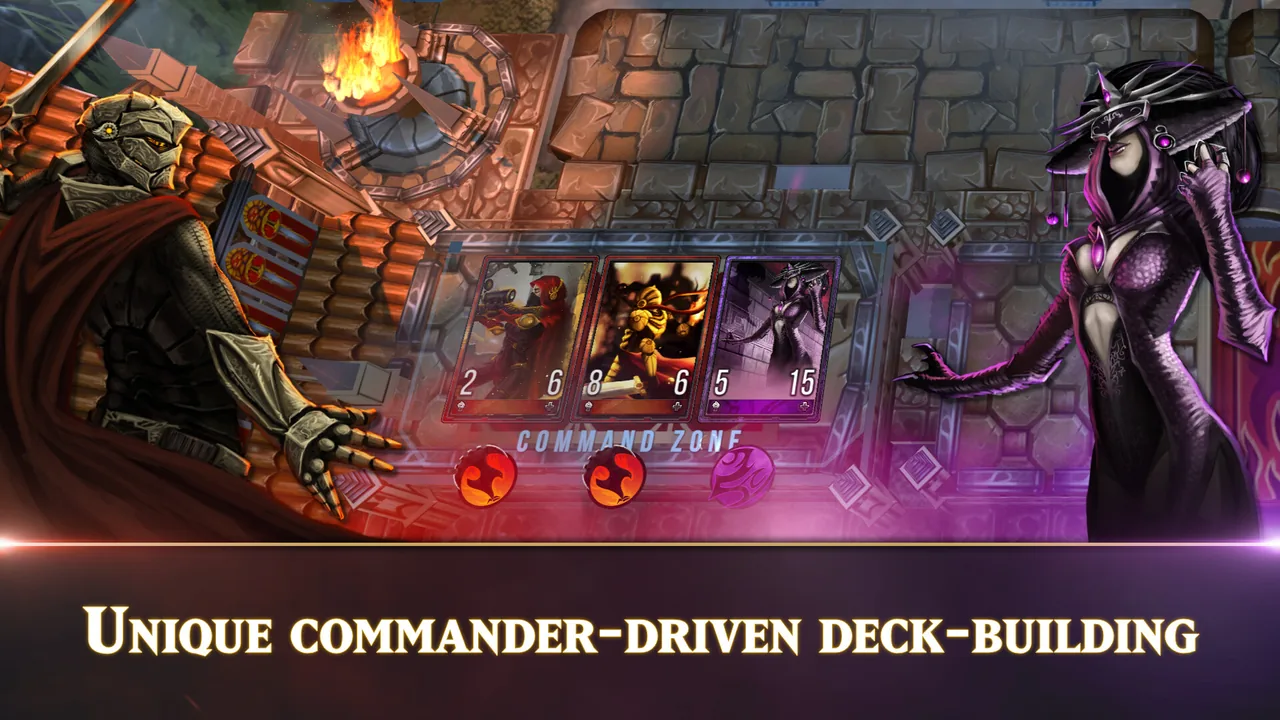
Deckbuilding runs through three Commanders per deck, drawn from eight factions (seven plus a factionless option), each Commander unlocking faction-specific bonuses and card access. Mix Commanders from different factions for a hybrid build, or stack all three from one faction to go deep on its strongest synergies. It's a real design space — enough that veteran reviewers with thousands of hours logged still describe finding new combinations — and it sits on top of a combat system that rewards reading an opponent rather than just having a bigger number.
The elephant in the room
Here is Steam's concurrent-player count for Infinity Wars at the moment this review was checked: five. Not five thousand — five. That number moves around during the day and during tournament weekends it presumably spikes, but it is the plainest fact available about the game's current state, and for a PvP-first card game whose own store page promises "a truly level playing field" where "skill is the only factor that determines victory," an empty matchmaking pool is close to an existential problem. Skill can't be the deciding factor in a match that never finds an opponent.
The user reviews chart the decline in real time, and they're worth reading in order rather than by helpfulness ranking, because the story changes as you move through the years. A reviewer with 23,099 minutes logged, writing in May 2025, still recommends the game but calls the playerbase "barely surviving." One from August 2024, with 4,790 minutes in, puts it more bluntly: "it's a really good card game but its dead, no one plays it anymore." Another, in March 2025, mourns that the developers gave everyone all the cards up front with "nothing to play for anymore." These aren't drive-by one-hour reviews filed by people who bounced off the tutorial — several of the most critical recent reviews come from accounts with tens of thousands of minutes played, the kind of investment that only shows up from people who loved the game first and are disappointed second.
That devotion is real and worth sitting with for a moment. One of the most-upvoted reviews on the page comes from an account with 378,452 minutes played — north of 6,300 hours — who still calls the simultaneous-turn structure "the poker of TCGs" and a genuine innovation nothing else has matched, before landing on a negative recommendation anyway, blaming what they call incompetent, absent development. Whatever the truth of that specific accusation, it takes an extraordinary amount of played hours to arrive at a review that hostile. This is not a case of a bad game losing its audience. It's closer to a beloved one losing the plumbing that kept an audience finding each other.
An account, a queue, and neither one you can count on
Set the population problem aside for a second, because there's a second, sharper complaint running through 2025's reviews: reports of accounts and purchased card collections becoming inaccessible on return. One reviewer with 40,226 minutes logged writes plainly that after years away, their account and everything they'd bought for it was deleted, and that support refused to restore access. Another, with nearly 10,000 minutes played, describes coming back to find every card gone despite real money spent on packs. A third describes losing rewards from the offline bot mode specifically, after what they understood to be a quiet removal of progression from single-player play.
None of this reads as an aggressive monetisation scheme in the pay-to-win sense — several long-time players are explicit that the in-game economy was historically generous and that spending was never required to compete. The problem is closer to basic service reliability: a live game whose backend can apparently misplace years of a paying customer's progress with no clear path to get it back. For a free-to-play title, that is a trust problem as damaging as any loot box, because it tells a prospective player that the thing they build here — time, cards, money — might not still be theirs later.
Newcomers fare no better on the way in. Multiple reviews from 2024 describe the tutorial as broken outright — no Play button reachable from it, or a tutorial that dumps a new player into a match with no explanation of what any of the interface does. For a game already fighting for attention against better-funded competitors, an onboarding flow that doesn't reliably function is close to self-sabotage.
Still, somehow, alive
What complicates the obituary is that Infinity Wars is not actually abandoned. Steam's news feed for the game shows a patch as recent as June 2026 (build 2026.0.95.4), a Season 7 tournament announced the same month, a "Rise of the Rifts" content update in May 2026, and an official soundtrack release on Steam in early August 2026 — days before this review was written. A small team, presumably Lightmare Studios at reduced scale, is still building for a playerbase that Steam's own counter says numbers in the single digits at any given moment. That's an unusual, slightly sad kind of dedication: maintaining live-service infrastructure — patch cadence, seasonal tournaments, matchmaking, a cash shop — for an audience that could comfortably fit around one table.
The verdict
Judge Infinity Wars purely as a design and it's easy to be generous: simultaneous turns are a genuinely different way to play a card game, the animated-card presentation still looks distinct from anything that followed it, and the Commander system gives deckbuilders real room to work. Judge it as a live product you're being invited to join today, and the honest answer is that the core promise — competitive PvP on a level field — isn't reliably deliverable when the queue is this thin, and the accounts of vanished purchases and progress are recent and specific enough to take seriously before spending anything.
It's free, so there's no financial reason not to install it and see the simultaneous-turn system for yourself against the bots. Just go in treating the AI mode as the main event rather than a warm-up, because the multiplayer the store page is selling may not be there when you look for it.
Category scores
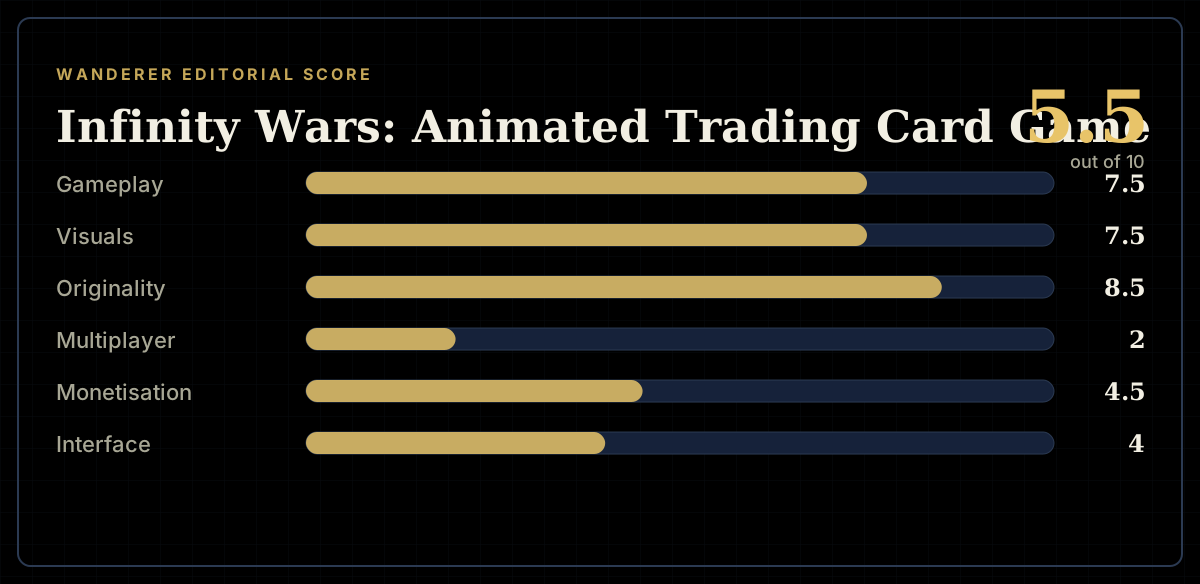
Gameplay and originality score high because the simultaneous-turn system and animated cards are still genuinely distinctive achievements, more than a decade on, that no major competitor has replicated. Visuals follow for the same reason — the animation work remains the game's clearest signature. Multiplayer scores near the bottom of the scale on the strength of Steam's own live player count and years of reviews describing an empty queue. Monetisation lands in the middle: the underlying economy was built fairly and rarely draws pay-to-win complaints, but recent reports of purchased collections becoming inaccessible are serious enough to weigh the category down hard. Interface reflects specific, repeated reports of a broken new-player tutorial, a real cost for a game that needs every new player it can get.
Pros and cons
Pros
- Simultaneous-turn combat remains genuinely unique among digital card games, over a decade after Infinity Wars introduced it
- Every one of a thousand-plus cards is fully illustrated and animated, a visual identity no rival TCG has matched
- Commander-based deckbuilding across eight factions supports a huge range of hybrid strategies
- Completely free to enter, with a single-player campaign and bot mode to learn the game away from PvP
- Still receiving patches, seasonal tournaments and a new soundtrack release as of August 2026 — not formally abandoned, whatever the player count suggests
Cons
- Steam's live concurrent-player count is in the single digits, undermining the "level playing field" PvP pitch the store page sells
- Recurring reports across 2024-2025 of accounts and purchased card collections vanishing on return, with support described as unresponsive
- Multiple recent reviews describe the new-player tutorial as broken outright — a bad first impression for a game that already has to fight for attention
- Offline/bot-mode rewards reportedly stripped back over time, closing off the safest way to learn the game without a live opponent
- Windows only, with no Mac, Linux or mobile client despite years of stated ambitions to expand
Screenshots
-
Infinity Wars: Animated Trading Card GameImage: Lightmare Studios via Steam -
Infinity Wars: Animated Trading Card GameImage: Lightmare Studios via Steam -
Infinity Wars: Animated Trading Card GameImage: Lightmare Studios via Steam -
How the review scores each part of the gameWanderer Editorial -
The specsWanderer Editorial -
The short versionWanderer Editorial