Game review
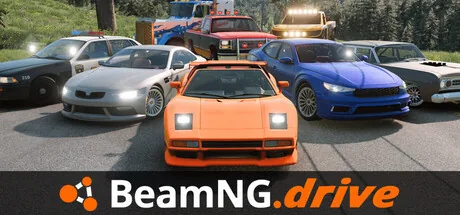
BeamNG.drive
8.5 / 10
- Developer
- BeamNG
- Publisher
- BeamNG
- Released
- 29 May 2015
- Platforms
- Windows
- Genre
- Vehicle Simulation
- Monetisation
- One-time purchase. No DLC, no in-game purchases, eleven years of free updates.
- Players
- Single-player (community multiplayer mods exist)
The short version
BeamNG's soft-body physics remain unmatched. Every panel deforms, every component can fail, and a crash resolves differently every time because it's being calculated rather than animated. Eleven years on, nothing else does this, and the people who love it *really* do — the median playtime among its harshest critics is **180 hours**, with one at 6,514.
It's also still in Early Access, at version 0.39, with no 1.0 in sight. Update appears in **58 of the 100 most-helpful negatives** — by far the top term — because v0.39 landed on 29 July 2026 with a graphics overhaul and a wave of performance complaints. But check the actual recent window and the picture changes: all 100 of the newest English reviews postdate that update, and **95 are positive**.
Biggest strengths
- Soft-body physics with no real competitor, a decade after release
- Enormous modding scene that extends the vehicle and map roster indefinitely
- Eleven years of substantial free updates with no DLC of any kind
Biggest weaknesses
- Version 0.39 has degraded performance for a meaningful minority, including traffic limits
- Menus, tutorials and interface remain janky after a decade
- Little built-in structure — career mode is thin and the game barely explains itself
Who it's for: Anyone who finds vehicle physics interesting for its own sake, and modders. If you want structured racing with objectives and progression, this is the wrong purchase.
Our recommendation: Buy it — NZ$35.99 for eleven years of free development and the best destruction physics in games is straightforward value. If you're on older hardware, read the v0.39 discussions first, because the newest update has made performance markedly worse for some players.
8.5 / 10
Sixty-seven of BeamNG.drive's hundred most-helpful negative reviews were written in 2026, and a cluster of them are dated 29 and 30 July. That's the week version 0.39 arrived — the game's biggest update ever, with an overhauled renderer.
"They've just ruined the game with this update," writes one at 60 votes, with 171 hours played. "I used to be able to spawn tons of cars in traffic, and now it only lets me spawn about seven. The game isn't optimized like it used to be." Another, 45 votes: "Update 0.39 feels like a step backward. We were promised better performance, but the opposite is true." A third, 38 votes: "You should have released a BeamNG '2' game separately instead of pushing this update that runs terribly."
That looks like a revolt. It isn't one, and the distinction matters.
Checking whether it's actually a revolt
Earlier today I reviewed a game where recent sentiment really had collapsed — DRAGON BALL: Sparking! ZERO, where only 30 of the last 100 English reviews were positive against an 86.7% lifetime badge. That's what a live revolt looks like in the data.
Here, every one of the hundred most recent English reviews was posted on 4 or 5 August — a week after v0.39 — and 95 of them are positive. Only 13 mention updates or performance at all.
So both things are true. A meaningful minority is genuinely angry, angry enough to write detailed complaints that collected dozens of votes within days, and their specific reports — traffic density limits, stuttering, worse performance on the same hardware — are consistent enough to take seriously. And the broad audience buying and playing it this week is as happy as ever.
If you're on older hardware, that minority is who you should listen to. If you're not, the score tells you what you need to know.
The thing it does that nothing else does
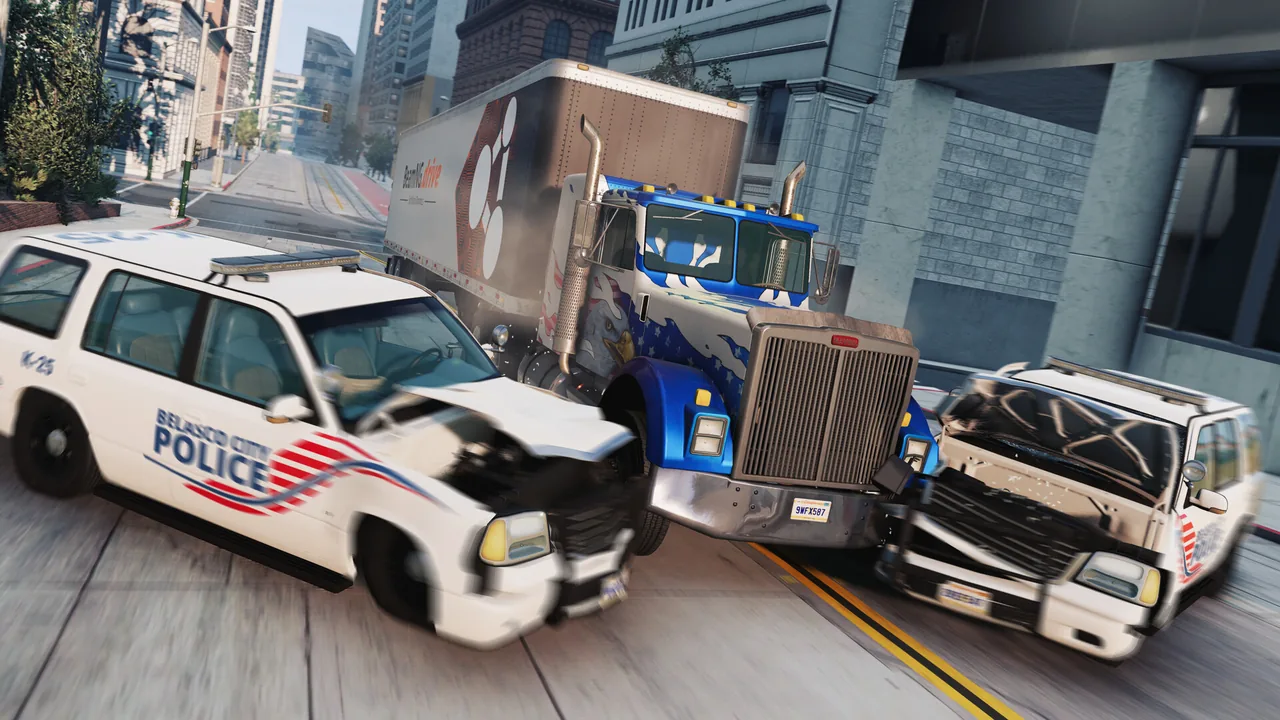
Soft-body physics. Most driving games animate damage: you hit something, a pre-made dent appears. BeamNG simulates the structure of the vehicle as a mesh of connected nodes, so a crash deforms the actual car — panels crumple, suspension collapses, an engine mount shears and the whole thing changes how it drives.
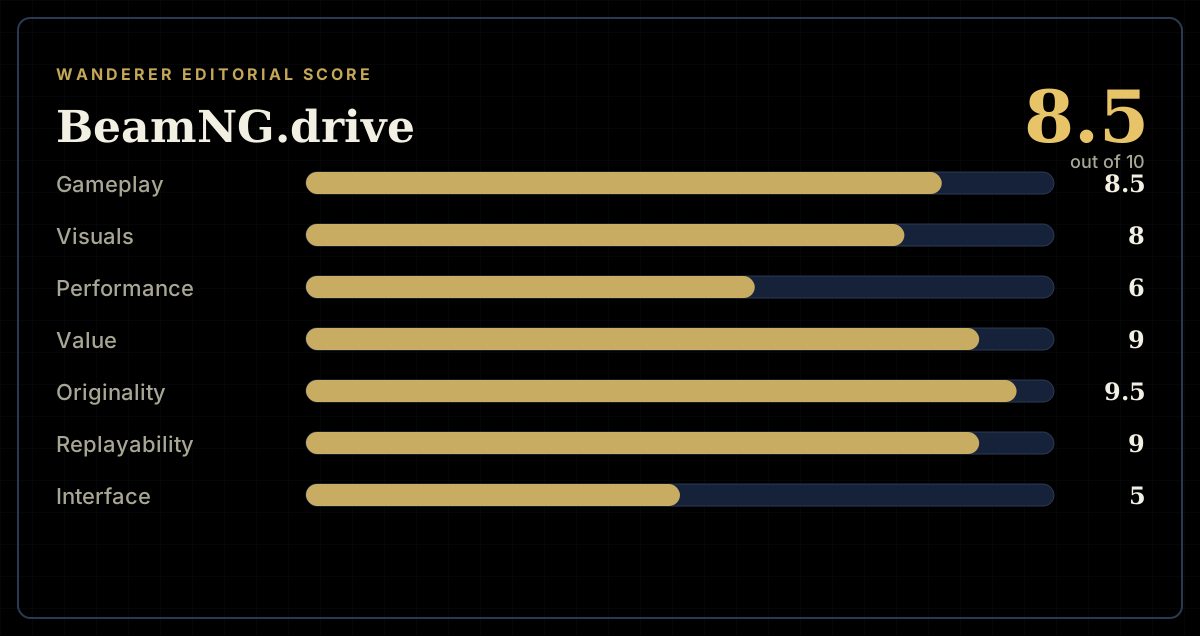
Eleven years later there is still no real competitor, which is why originality scores a 9.5. It's also why the game barely needs objectives: the experiment is the content. Physics appears in 11 of a hundred negatives, always as the thing being praised before the complaint.
The modding scene compounds it — mod appears in 23 of a hundred negatives, largely from people who depend on it — with community vehicles, maps and even multiplayer built on top of a game that ships single-player only.
The criticisms that have nothing to do with v0.39
The interface, at 20 of a hundred. A 49-vote review is the sharpest summary anyone has written of this game: "At the core is a brilliantly designed physics simulator. Surrounding it is a patchwork of content that can loosely be described as a game. The menus are janky, loading or resetting maps takes a long time, the sandbox tools have a steep learning curve." Interface scores a 5 and it's earned — a decade of development has gone into the simulation and visibly less into everything wrapping it.
It doesn't teach you. Career mode is thin, tutorials are sparse, and a 40-vote reviewer reports that asking the community for help produced "lol get good" rather than answers. I can't characterise a community of this size from one review, but a game this deep with this little onboarding leaves new players dependent on exactly that.
Worth noting for anyone scanning the negative column: it's heavily salted with jokes. The most-upvoted negative of all time, at 371 votes, complains that "there were no real humans for me to commit vehicular manslaughter", and a 27-vote thumbs-down reads, in full, "Stop looking at the negative reviews and buy the ♥♥♥♥♥♥ game!" Same hazard I found on ULTRAKILL — read them before you count them.
Eleven years, no 1.0
This is the longest Early Access run in this library by a distance — ULTRAKILL's six years looked extreme until now. BeamNG has been in Early Access since May 2015 and is at version 0.39, with quarterly major updates (0.36 in June 2025, 0.37 in September, 0.38 in December, 0.39 in July 2026) each followed by hotfixes within days.
For NZ$35.99 with no DLC ever, that's eleven years of free development. Whether "Early Access" still means anything after a decade is a fair question, but nobody buying this is being short-changed.
The verdict
BeamNG.drive earns an 8.5. The physics are a landmark, the modding scene is vast, the value is extraordinary, and its players measure their time in hundreds of hours.
It's held back by an interface and onboarding that a decade hasn't fixed, by having very little game around the simulation, and — right now — by an update that has cost some existing players performance they had a fortnight ago.
Buy it if crashing cars into things at a simulated level of detail sounds like a hobby rather than a gimmick. Check the v0.39 discussion threads first if your PC is a few years old.
Pros and cons
Pros
- Soft-body physics with no real competitor, a decade after release
- Enormous modding scene that extends the vehicle and map roster indefinitely
- Eleven years of substantial free updates with no DLC of any kind
- Endlessly replayable as a sandbox — critics routinely have hundreds of hours
- The July 2026 overhaul genuinely improves how it looks
Cons
- Version 0.39 has degraded performance for a meaningful minority, including traffic limits
- Menus, tutorials and interface remain janky after a decade
- Little built-in structure — career mode is thin and the game barely explains itself
- Still Early Access after eleven years, with no announced 1.0
- Community help has a reputation some reviewers find unwelcoming
Screenshots
-
BeamNG.driveImage: BeamNG via Steam -
BeamNG.driveImage: BeamNG via Steam -
BeamNG.driveImage: BeamNG via Steam -
How the review scores each part of the gameWanderer Editorial -
The short versionWanderer Editorial