
Game review
HYPER DEMON
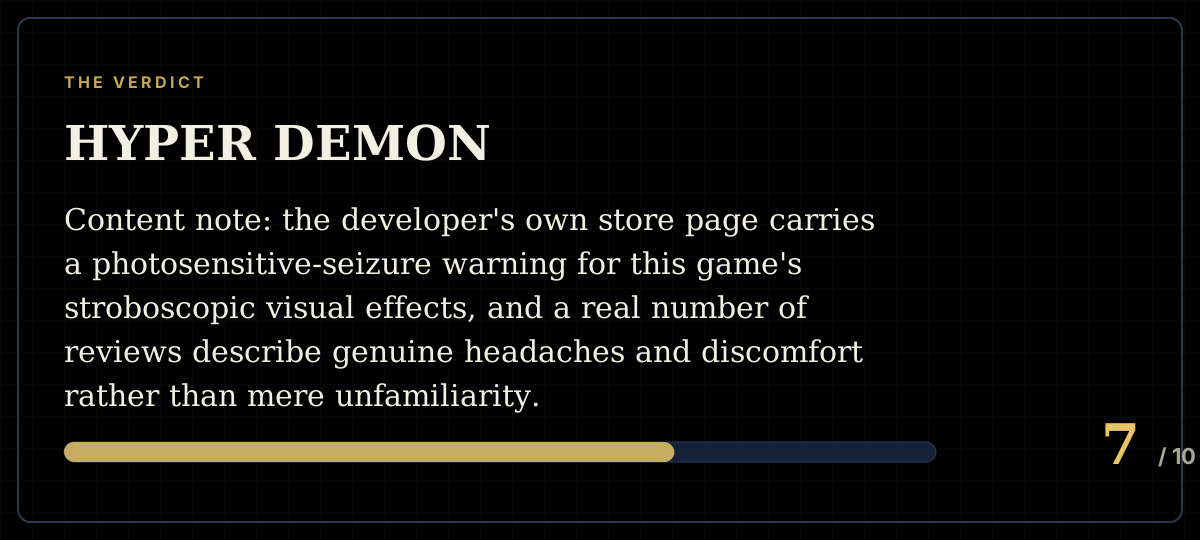
7 / 10
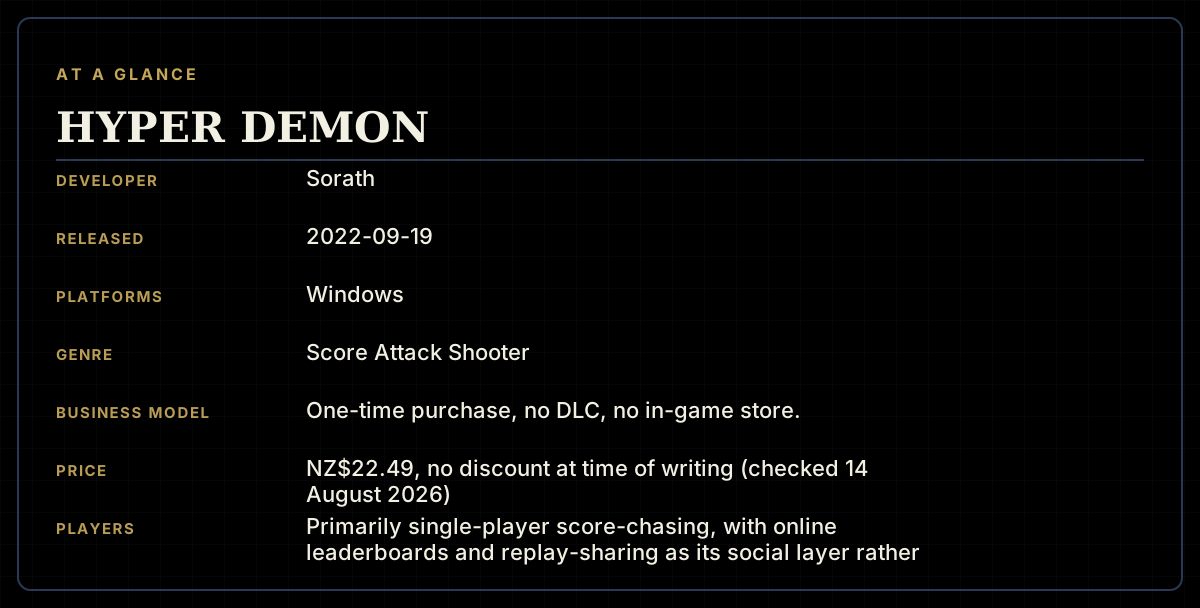
- Developer
- Sorath
- Publisher
- Sorath
- Released
- 19 September 2022
- Platforms
- Windows
- Genre
- Score Attack Shooter
- Monetisation
- One-time purchase, no DLC, no in-game store.
- Players
- Primarily single-player score-chasing, with online leaderboards and replay-sharing as its social layer rather than direct competitive multiplayer.
The short version
Content note: the developer's own store page carries a photosensitive-seizure warning for this game's stroboscopic visual effects, and a real number of reviews describe genuine headaches and discomfort rather than mere unfamiliarity. HYPER DEMON is a score-attack FPS built entirely around a single hi-score chase, and it inspires the kind of devotion that gets it called, by more than one professional developer reviewing it, one of the most significant games of the decade. It also, deliberately, refuses almost every accessibility convention modern games use: minimal visual settings, an overloaded control scheme, and a single achievement held by 1.5% of owners. Whether that reads as an artistic statement or a design failure depends entirely on what you're looking for.
Biggest strengths
- A genuinely singular, hard-to-categorise design that professional developers reviewing it single out as one of the decade's most significant releases
- Deep, skill-based mastery with a scoring system built around risk and speed rather than survival alone
- Active online leaderboards and built-in replay-sharing keep the score chase alive years after launch
Biggest weaknesses
- The developer's own store page carries a photosensitive-seizure warning, and a real number of reviews describe genuine headaches, not just unfamiliarity with the style
- Movement, dash, slide and dodge are heavily overloaded onto very few keys, and multiple reviewers call the resulting controls confusing rather than deep
- Minimal onboarding and visual-settings options make it a poor entry point for anyone not already committed to the genre
Who it's for: Score-attack and arcade-shooter veterans, especially existing Devil Daggers fans willing to relearn a related but distinct game, and players not sensitive to intense strobing visuals.
Our recommendation: Try the store page's photosensitivity warning as a literal filter before buying — if intense flashing visuals are a problem for you, skip this regardless of how the rest of the review reads. Everyone else: this is a genuinely singular, hard-earned cult favourite worth the steep learning investment.
7 / 10
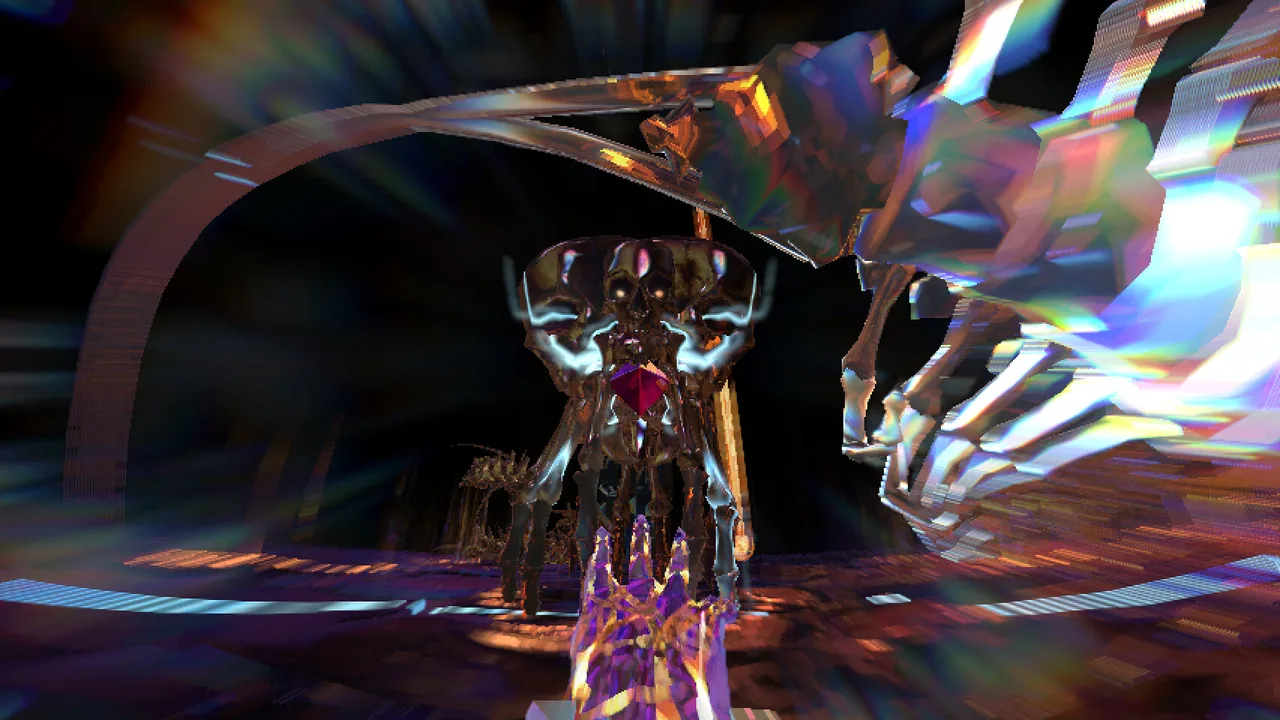
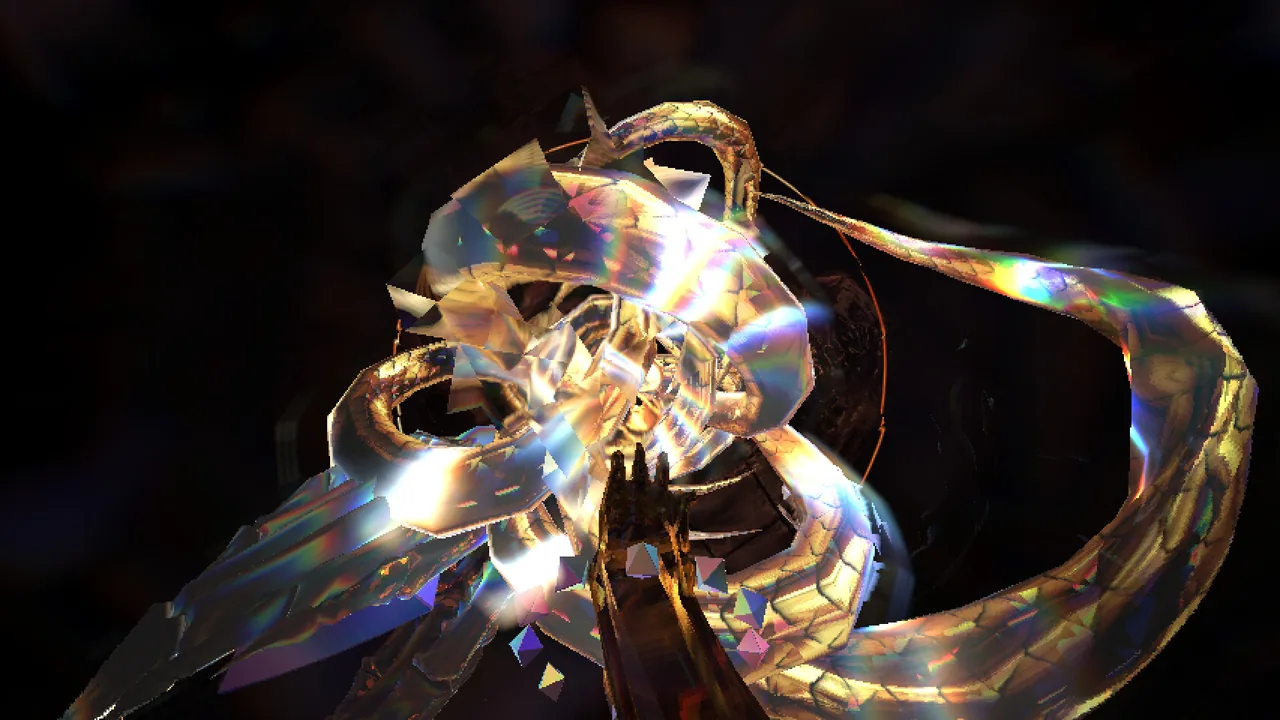
Content note up front, because it matters more here than in almost any other review this outlet publishes: HYPER DEMON's own store page carries a "Photosensitive seizure warning" for its "intense visuals including stroboscopic effects." That's not a cautious disclaimer added by an overly careful publisher — read the negative reviews, and it's describing something real. Multiple players across four years report genuine headaches and discomfort, not just unfamiliarity with an unusual visual style, and several say they requested refunds specifically because of it. Whatever else is true about this game, that has to come first.
What it actually is
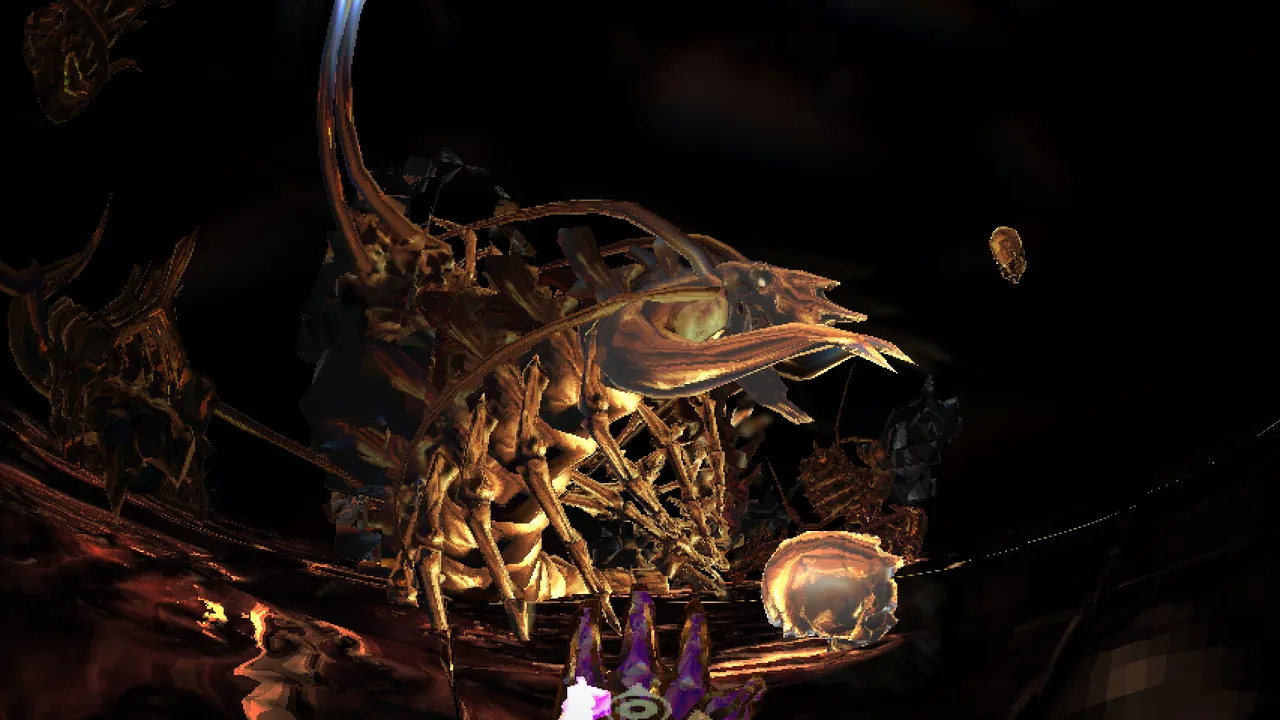
HYPER DEMON is the spiritual successor to Devil Daggers, a cult-favourite 2016 score-attack FPS by the same solo developer, Sorath. The structure is similarly stripped down: no story, no levels in the traditional sense, just a hostile arena, a horde of demons, and a single running score you're trying to beat. What HYPER DEMON changes is the core tension. Where Devil Daggers rewards patient survival — the longer you last, the higher your score — HYPER DEMON inverts it: the faster you kill, the harder the game gets and the more your score climbs, turning the whole experience into a feedback loop between aggression and risk rather than endurance alone.
That inversion is why the game's most enthusiastic reviews read less like typical praise and more like manifestos. One review, from a professional game designer with a decade of industry experience, calls it "possibly the most significant game to release in the past decade," saying it "shattered my perception of what videogames are." Another compares learning it to skateboarding — "it's painful and strenuous, your ankles hurt and you scrape your palms and knees" — before the mechanics click into something that feels like genuine physical mastery rather than memorization. These aren't casual recommendations; they're descriptions of something closer to a sport, from players who've put in the hours to back that framing up.
The barrier is the point, and also the problem
Here's the tension a review of this specific game has to sit with: nearly everything that makes HYPER DEMON beloved by its core audience is also what makes it actively hostile to almost everyone else, and the developer clearly built it that way on purpose.
The controls overload very few keys with a lot of function — jump, dash, slide, and dodge are packed onto minimal inputs, and one representative negative review puts it bluntly: "Jump+dash+slide+dodge on the same key are you kidding me?" That's not one confused player; it's a recurring, specific complaint about a scheme that rewards muscle memory over intuition, with training modes several reviewers call inadequate for actually teaching what the game expects you to already know. Visual settings are similarly minimal — there's little to turn down if the "groundbreaking spherical projection" visual style, as the store page itself calls it, doesn't work for your eyes.
The single Steam achievement the game has — "DEICIDE" — is held by just 1.5% of owners. That number is the most honest summary of this game's design philosophy available: it isn't hiding how hard it is, and it isn't apologising for it either.
Devil Daggers fans are split, and that's worth knowing
A specific and recurring thread among the negative reviews comes from players who loved Devil Daggers and expected HYPER DEMON to be more of the same, refined. Several say directly that "none of the Devil Daggers magic is to be found" here, preferring the earlier game's clarity and simplicity to this one's visual chaos and inverted difficulty curve. Others in the positive reviews argue the opposite — that HYPER DEMON is a meaningful evolution rather than a retread, and that judging it against its predecessor undersells what it's doing on its own terms. Both camps have logged real hours forming those opinions; this isn't a case of one side having played the game and the other not.
Where it's landed, four years on
Sentiment has, if anything, strengthened rather than softened with time. The 100 most recent English reviews, all posted in 2026, run 97% positive — higher than the 94.2% lifetime figure — and the built-in leaderboards and shareable replay clips have kept a dedicated community actively chasing scores years past launch rather than moving on once the initial wave of coverage faded. One December 2025 review captures the current culture around it well: "I love playing this in front of people who have never seen it before and hearing their reactions that can only be described as 'concerned for my health.'" That's a community that's made peace with, and even leans into, how alienating the game looks from outside it.
Value
At NZ$22.49 with no DLC and no live-service structure to worry about, HYPER DEMON is priced fairly for what's essentially a permanent skill ceiling to climb — there's no sense in which you'll run out of content, because the content is your own improvement against a leaderboard that never stops moving. For the audience it's built for, that's excellent value. For anyone hoping for a broader, more approachable arcade shooter, the price is almost beside the point next to the accessibility barriers above it.
Verdict
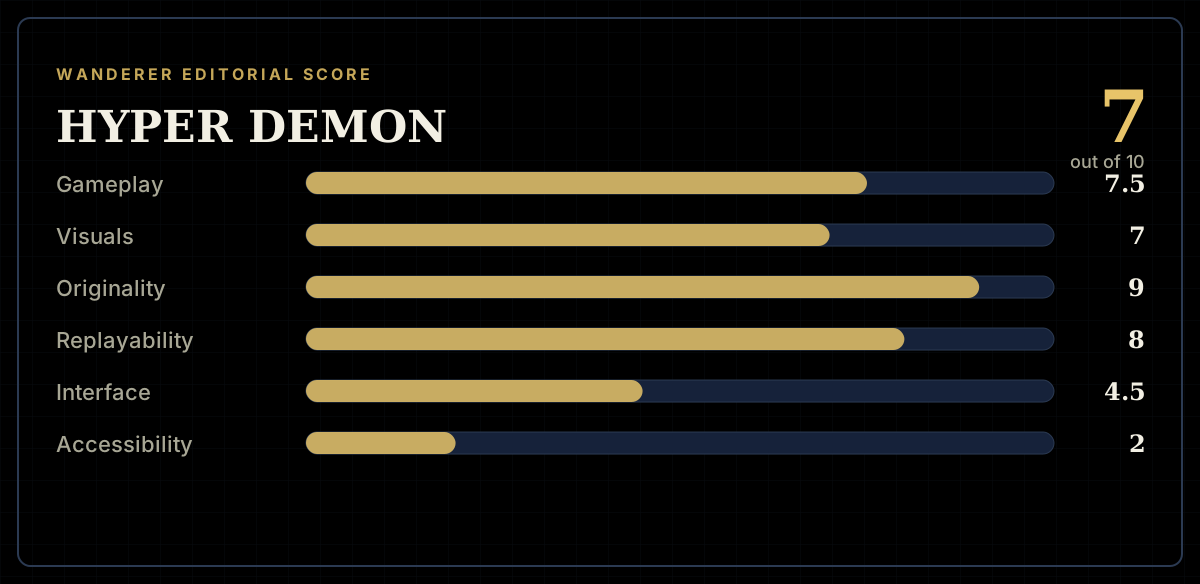
HYPER DEMON earns real, sustained devotion from a niche that recognises it as something genuinely singular, and this review doesn't want to undersell that: very few games commit this completely to a single, uncompromising design idea, and the people it clicks for describe an experience close to a physical sport rather than a typical video game. A 7 reflects that real achievement weighed honestly against what it costs to reach it — a control scheme several reviewers find actively confusing, an onboarding process that doesn't meet newcomers halfway, and, most importantly, a developer-disclosed seizure risk that should be the first thing anyone considering this purchase reads, not the last.
Pros and cons
Pros
- A genuinely singular, hard-to-categorise design that professional developers reviewing it single out as one of the decade's most significant releases
- Deep, skill-based mastery with a scoring system built around risk and speed rather than survival alone
- Active online leaderboards and built-in replay-sharing keep the score chase alive years after launch
- Sustained, near-unanimous devotion from its core audience — 97% positive in the most recent 100 English reviews
- Distinctive spherical-projection visual style that's unlike anything else in the genre, for players it works for
Cons
- The developer's own store page carries a photosensitive-seizure warning, and a real number of reviews describe genuine headaches, not just unfamiliarity with the style
- Movement, dash, slide and dodge are heavily overloaded onto very few keys, and multiple reviewers call the resulting controls confusing rather than deep
- Minimal onboarding and visual-settings options make it a poor entry point for anyone not already committed to the genre
- Only one Steam achievement exists, held by just 1.5% of owners — an accurate signal of how steep the skill floor is
- Devil Daggers fans specifically are divided on whether this improves on or dilutes what made the original work
Screenshots
-
HYPER DEMONImage: Sorath via Steam -
HYPER DEMONImage: Sorath via Steam -
HYPER DEMONImage: Sorath via Steam -
How the review scores each part of the gameWanderer Editorial -
The specsWanderer Editorial -
The short versionWanderer Editorial