
Game review
Howl
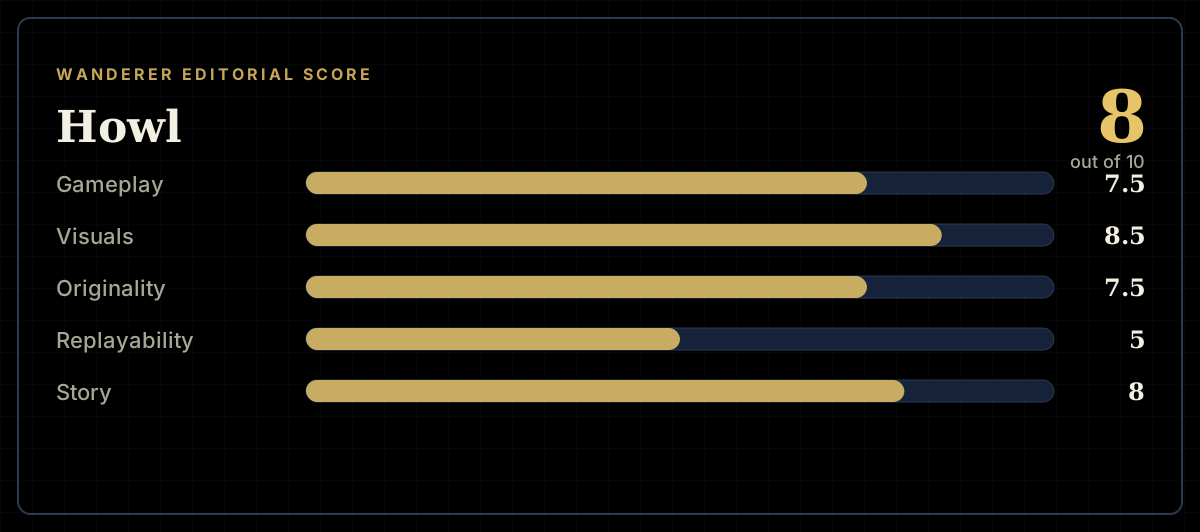
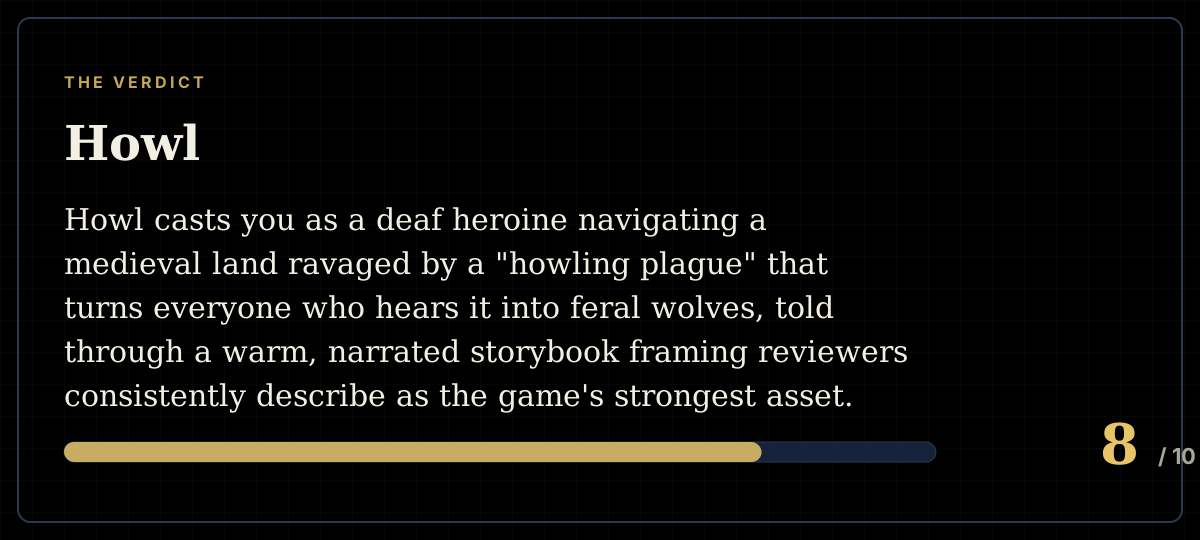
8 / 10
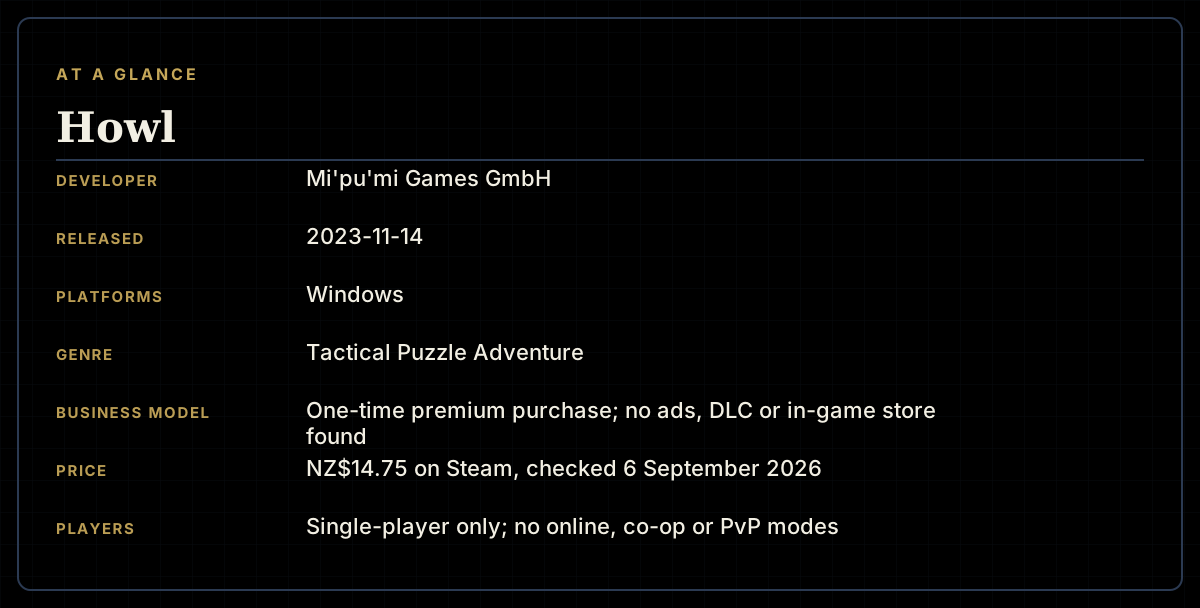
- Developer
- Mi'pu'mi Games GmbH
- Publisher
- astragon Entertainment
- Released
- 14 November 2023
- Platforms
- Windows
- Genre
- Tactical Puzzle Adventure
- Monetisation
- One-time premium purchase; no ads, DLC or in-game store found
- Players
- Single-player only; no online, co-op or PvP modes
The short version
Howl casts you as a deaf heroine navigating a medieval land ravaged by a "howling plague" that turns everyone who hears it into feral wolves, told through a warm, narrated storybook framing reviewers consistently describe as the game's strongest asset. Underneath that presentation sits turn-based tactical puzzles reviewers compare to Into the Breach and Desktop Dungeons — every enemy telegraphs its next move, every solution is knowable in advance, and figuring out the precise sequence of actions to clear a level is the entire, satisfying point.
Reviewers are almost unanimous that this makes Howl closer to a puzzle game than a strategy game: the AI is fully deterministic, so a given level plays out identically on repeat attempts, and there's little reason to replay a level once solved. That's by design rather than a flaw, and reviewers consistently praise the game for staying roughly ten hours and stopping before it overstays its welcome, though a frustrating dose of genuine randomness in the final level and an unusually hard optional post-launch chapter draw specific, real criticism.
Biggest strengths
- A genuinely charming, cohesive storybook presentation — warm narration, distinctive art, and a folk-tale atmosphere reviewers repeatedly single out as the game's standout quality
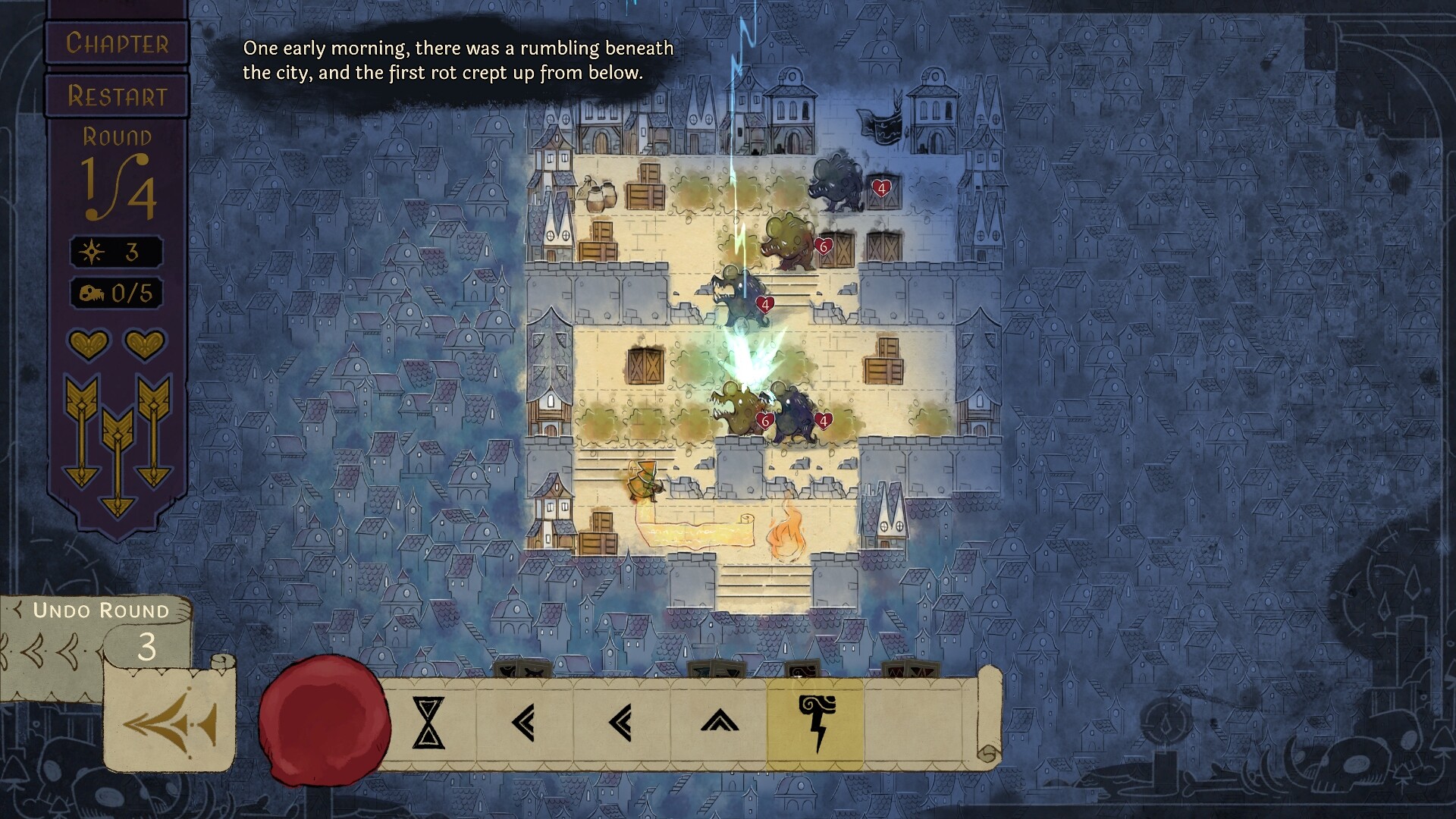
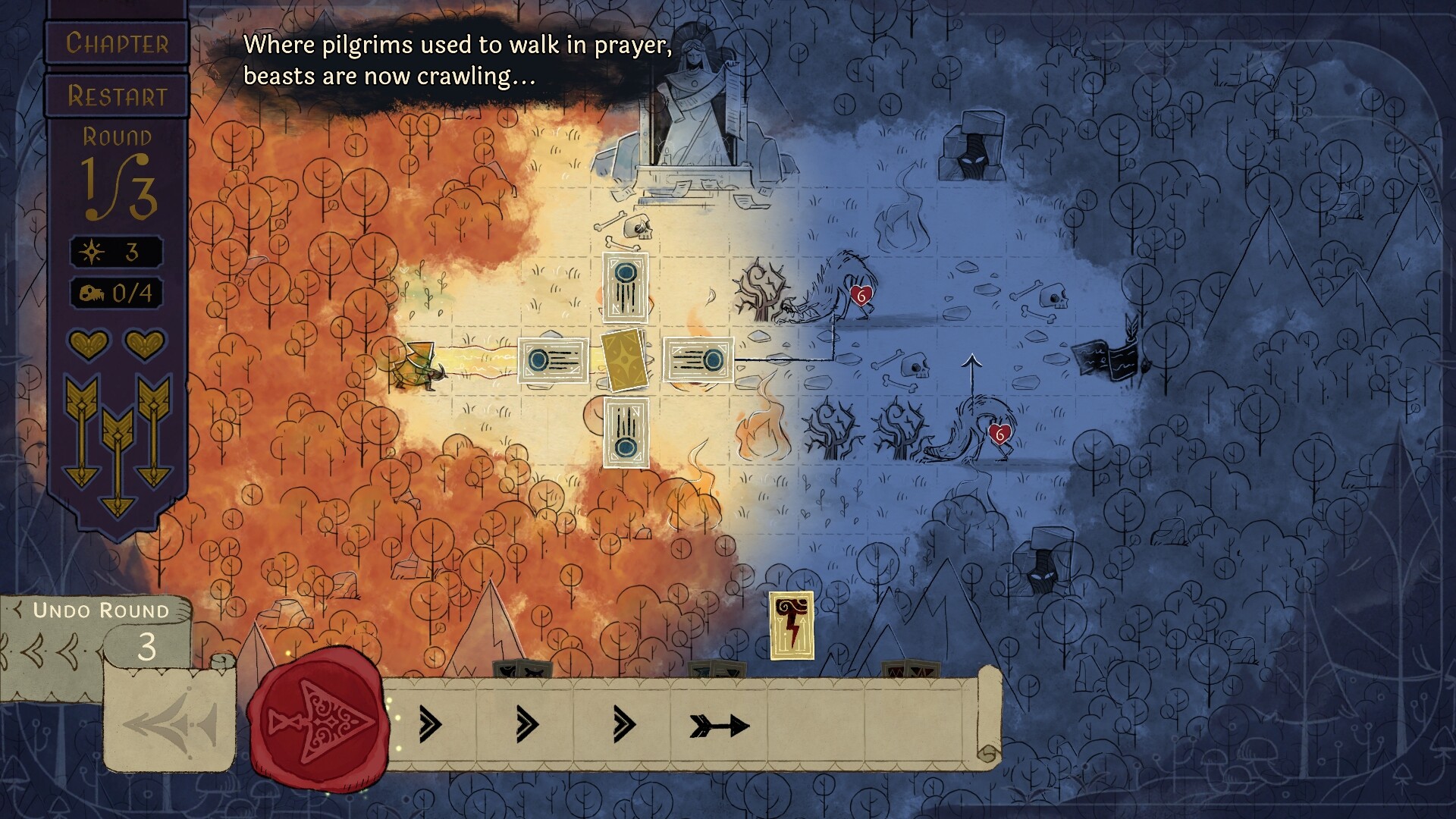
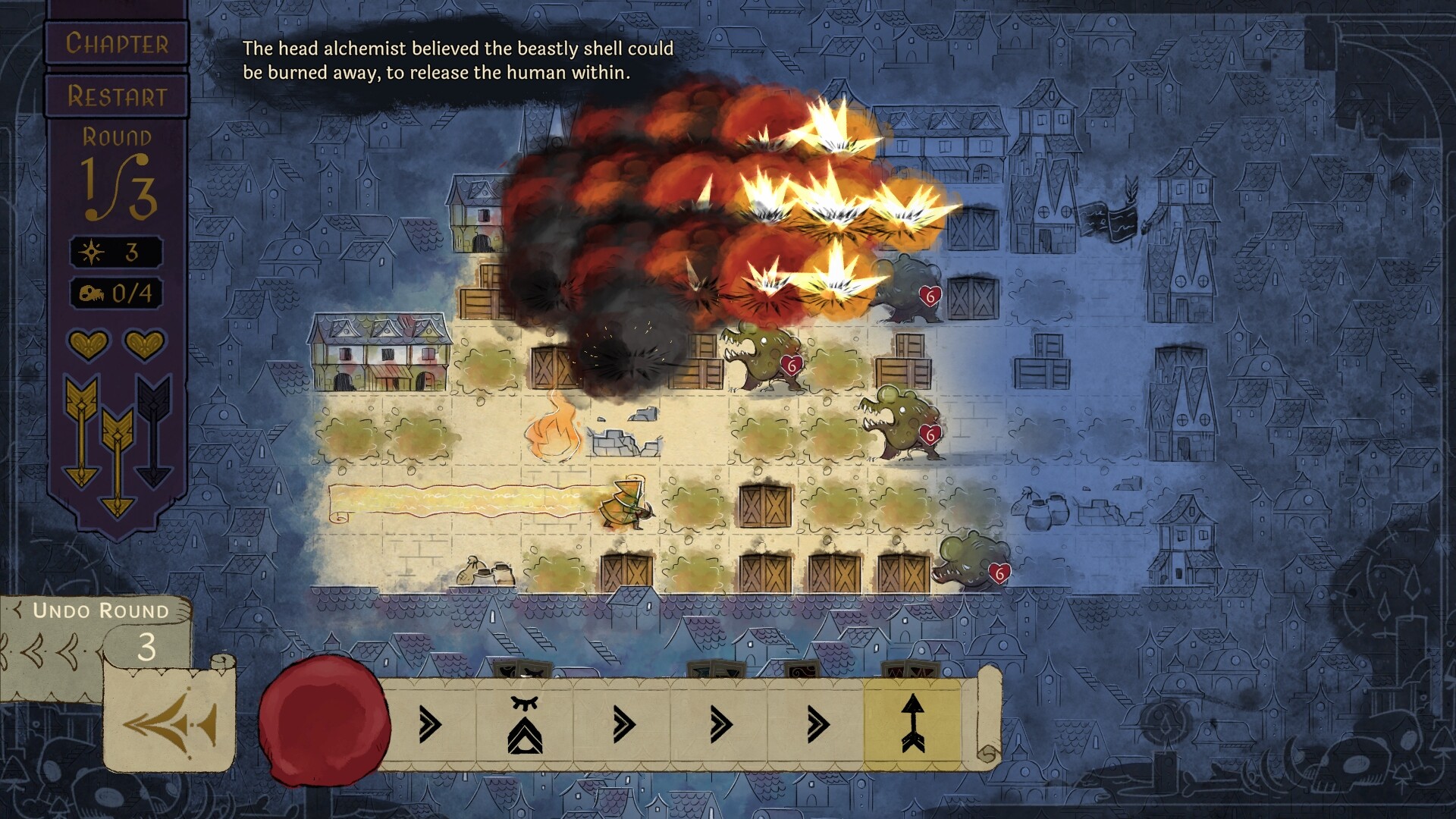
- Deterministic, fully-telegraphed enemy behavior gives every level a real, knowable puzzle to solve, with wolves and other threats visually signalling their next action clearly
- From Mi'pu'mi Games, the studio behind the well-regarded The Lion's Song, bringing real narrative and production pedigree to a modestly scoped release
Biggest weaknesses
- The AI is fully deterministic, meaning a given level plays out identically on repeat attempts, which several reviewers say leaves the game with little to no meaningful replay value once solved
- The final level introduces genuine randomness that reviewers specifically call out as frustrating and inconsistent with the otherwise fully knowable, puzzle-like design of every earlier level
- Some enemy mechanics are reported as under-explained, requiring trial and error to fully understand rather than being taught as clearly as the core combat loop
Who it's for: Fans of tightly-designed tactical puzzle games like Into the Breach who want a short, atmospheric, narrative-forward experience rather than a long strategy campaign with build variety. Less suited to anyone wanting high replay value or randomized encounters.
Our recommendation: A confident recommendation for puzzle and tactics fans specifically — go in knowing it's a short, once-through experience rather than a game built for repeat playthroughs.
8 / 10
A "howling plague" has swept across a medieval land, turning everyone who hears its call into a feral wolf. Howl casts you as a deaf heroine immune to that transformation, sent out in search of a cure — a premise that immediately sets the tone for a game reviewers describe, almost without exception, as one of the more distinctive fairy-tale atmospheres they've encountered in the tactics genre. That reception isn't a coincidence: Howl comes from Mi'pu'mi Games, the studio behind the well-regarded narrative adventure The Lion's Song, and the same attention to mood and voice carries straight through into this very different genre.
A puzzle wearing a strategy game's clothes
The combat structure will be immediately familiar to fans of Into the Breach: every enemy telegraphs its next action clearly before it happens, movement and positioning follow consistent, learnable rules, and a level's solution is entirely knowable in advance rather than obscured by hidden information or randomness. Reviewers repeatedly frame this as the game's central identity — closer to a puzzle game wearing tactical RPG clothing than a strategy game with build variety or randomized encounters. One detailed review, from a reviewer with deep genre experience across titles like The Incredible Machine, states this precisely: "The AI is completely algorithm-based and will have the same output for a given input." That's not a criticism so much as an accurate description of the design, and reviewers who go in with that expectation consistently describe the resulting puzzles as genuinely satisfying to work out.
Presentation carrying real weight
What elevates Howl above a purely mechanical puzzle game, by wide reviewer agreement, is its presentation. A calm, narrated voice frames the story in a letter-writing format that reviewers compare to reading an original, unsanitized fairy tale rather than a modern, softened retelling, and the wolves and other threats are animated with enough character and clarity that their telegraphed actions read as genuinely alive rather than merely functional UI. The music draws separate, specific praise for reinforcing that same folk-tale mood without becoming intrusive. Combined, reviewers describe roughly ten hours of content — including full achievement completion — that consistently lands as "just long enough," stopping before the game's genuinely simple core mechanics have a chance to wear out their welcome for most players.
Where the puzzle-first design shows real cracks
The clearest, most specific complaint concerns the one place Howl departs from its own design philosophy: the final level introduces genuine randomness into what has otherwise been a fully deterministic, knowable puzzle throughout, and reviewers describe this as jarring and frustrating rather than a satisfying capstone challenge — one detailed account specifically calls it "very annoying" and describes it determining how many times a player ends up clicking Restart rather than testing the planning skills the rest of the game has built. A smaller, related complaint concerns clarity: some enemy mechanics are reported as under-explained relative to the otherwise clean teaching curve of the core systems, requiring trial and error to fully understand.
A hard optional coda, added later
Nearly a year and a half after release, Mi'pu'mi added a free content chapter titled "Heart of Rot," expanding the game with new content well past its original scope — a genuine, no-cost investment in a small release most studios would have considered finished. At least one reviewer describes a specific encounter within that added content, involving a "rot monster" in an optional town section, as feeling close to impossible relative to the fair difficulty curve of the base game, a notable outlier in an otherwise consistently well-tuned experience. Continued support has extended even further since — Steam Deck verification arrived in January 2024, and a security patch was released as recently as October 2025, nearly two years after the game's original launch.
What the achievement curve confirms
Global achievement figures back up the shape of a genuinely difficult back half. Early milestones like completing the first chapter sit around 50%, but that completion rate more than halves by the second chapter (32%) and continues falling — the fourth and final chapter sits at 16.4%, with the achievements tied to fully mastering every level's optional challenges (collecting every "skull" rating, maintaining full "confidence" throughout) dropping to around 11-12%. That's a real, substantial curve for a game reviewers otherwise describe as approachable and fair, and it lines up precisely with the specific complaints above: the deterministic puzzle logic that makes early levels satisfying to crack becomes a genuinely demanding test by the time a player reaches the game's harder optional content and its one deliberately randomized final encounter.
An accessibility option worth noting
It's worth flagging directly that Howl ships with an assist mode giving players additional information about enemy behavior and intentions, explicitly framed as an easier alternative to puzzling out enemy patterns purely through observation. Reviewers describe this as a genuine, meaningful choice rather than a token difficulty slider — one detailed account specifically notes that pursuing full achievement completion without assist mode is a real, harder undertaking than simply finishing the story, giving the same core puzzle design two legitimately different difficulty experiences depending on how much information a player wants handed to them upfront.
Where it lands
Howl succeeds completely at what it sets out to be: a short, beautifully presented tactical puzzle game that respects its own scope rather than padding itself with artificial length or randomized replay value. Its lack of meaningful replayability is a deliberate design choice reviewers largely accept on those terms, and its two real, specific missteps — a frustrating dash of late-game RNG and an unusually difficult optional post-launch section — are narrow enough not to undercut the overwhelmingly positive reception it's earned. For tactics and puzzle fans specifically, this is an easy, confident recommendation.
Pros and cons
Pros
- A genuinely charming, cohesive storybook presentation — warm narration, distinctive art, and a folk-tale atmosphere reviewers repeatedly single out as the game's standout quality
- Deterministic, fully-telegraphed enemy behavior gives every level a real, knowable puzzle to solve, with wolves and other threats visually signalling their next action clearly
- From Mi'pu'mi Games, the studio behind the well-regarded The Lion's Song, bringing real narrative and production pedigree to a modestly scoped release
- A well-judged runtime, with reviewers consistently praising roughly ten hours of content that stops before its simple core mechanics wear thin
- A free post-launch content chapter ("Heart of Rot") added nearly a year and a half after release, plus continued support including Steam Deck verification and a 2025 security patch
Cons
- The AI is fully deterministic, meaning a given level plays out identically on repeat attempts, which several reviewers say leaves the game with little to no meaningful replay value once solved
- The final level introduces genuine randomness that reviewers specifically call out as frustrating and inconsistent with the otherwise fully knowable, puzzle-like design of every earlier level
- Some enemy mechanics are reported as under-explained, requiring trial and error to fully understand rather than being taught as clearly as the core combat loop
- The core mechanics are simple enough that at least one reviewer reports finding the game repetitive within a couple of hours despite enjoying its early impressions
- An optional post-launch section, added via the free "Heart of Rot" update, is described by at least one reviewer as feeling close to impossible relative to the rest of the game's otherwise fair difficulty curve
Screenshots
-
HowlImage: astragon Entertainment via Steam -
HowlImage: astragon Entertainment via Steam -
HowlImage: astragon Entertainment via Steam -
How the review scores each part of the gameWanderer Editorial -
The specsWanderer Editorial -
The short versionWanderer Editorial