Game review
Great Hero's Beard
6.5 / 10
- Developer
- OneShark
- Publisher
- SakuraGame
- Released
- 17 October 2018
- Platforms
- Windows
- Genre
- Semi-idle action RPG
- Monetisation
- One-off purchase, no in-game currency, ads or gameplay-affecting purchases at any point in its life
- Players
- None; single-player only
The short version
Great Hero's Beard looks like nothing else in its genre — a warlord's beard growing panel by panel against a 1930s rubber-hose cartoon backdrop is a genuinely distinctive hook — and its fusion-and-retirement progression loop gives that hook real mechanical follow-through for the first several hours. Where it runs into trouble is the exact question its own reviewers keep raising: it markets and half-plays as an idle game, but forces enough manual zone-starting and loot-sorting that the "just let it run" promise idle fans buy in for never quite arrives, leaving a game that's too hands-on to relax into and too repetitive to stay engaging on its own merits once the art style stops carrying it. A savedata-loss bug drew a rare, direct developer apology in 2018, but the Steam Cloud support promised in response never shipped before the game was pulled from sale in 2021 — a promise made and quietly not kept. None of it can be bought now regardless of how it's judged, which makes this review a record of what existing owners still have rather than a shopping recommendation.
Biggest strengths
- A genuinely distinctive 1930s rubber-hose cartoon art style carries the early hours further than the underlying mechanics would alone
- The item-fusion system means loot never feels wasted, since anything you outgrow converts directly into stat and skill points rather than clutter
- The retirement/prestige loop gives a real, checkable reason to restart rather than just padding playtime, and the achievement data shows most players who start one do reach the midgame content behind it
Biggest weaknesses
- Marketed and widely perceived as an idle game, but battles are the only automated part — starting each zone, distributing skill points and sorting fused loot all require constant manual attention, a mismatch multiple detailed reviews call out as the single biggest reason the game disappoints its target audience
- Steam Cloud support was explicitly promised in the developer's own December 2018 response to the savedata bug and never shipped; the store page still carried a "does not support Steam Cloud yet" warning at the time it was delisted
- Progression past the first few hours reads to several reviewers as deliberately tuned to reward large time investment over meaningful decision-making, with one detailed review calling the sense of progress "artificial" and warning readers to value their own time before starting
Who it's for: Only relevant to players who already own it from before its 2021 delisting, or as a case study for anyone evaluating a similarly "semi-idle" action RPG still on sale today — specifically, a reminder to check how much of an "idle" game's loop is actually automated before buying.
Our recommendation: Cannot be purchased new. Existing owners with a taste for cartoonish, grindy progression loops will get a real handful of hours out of it; nobody should go looking for a way around the delisting to acquire it, and this review shouldn't be read as encouragement to.
6.5 / 10
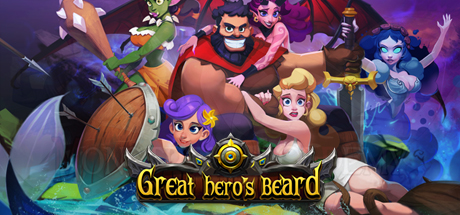
Great Hero's Beard sends a hardworking farmer chasing wealth and glory after he steals an artifact that lets him travel between worlds, and it renders that pulpy setup in a rubber-hose 1930s cartoon style that looks like nothing else in the idle-RPG space it was sold into. Underneath the beard-growing visual gag is a genuine action-RPG progression system — automated combat, a skill tree, item fusion, a New Game+ style "retirement" mechanic — released in October 2018 to a Very Positive reception that held up for years. It's also, as of October 2021, a game nobody can actually buy anymore, pulled from the Steam store by a joint publisher-developer decision with no real explanation offered. That combination makes it an odd but useful subject: a real game with a real, documented review history, now frozen in place as a lesson for players evaluating anything similar still on sale today.
A distinctive look wrapped around a familiar loop
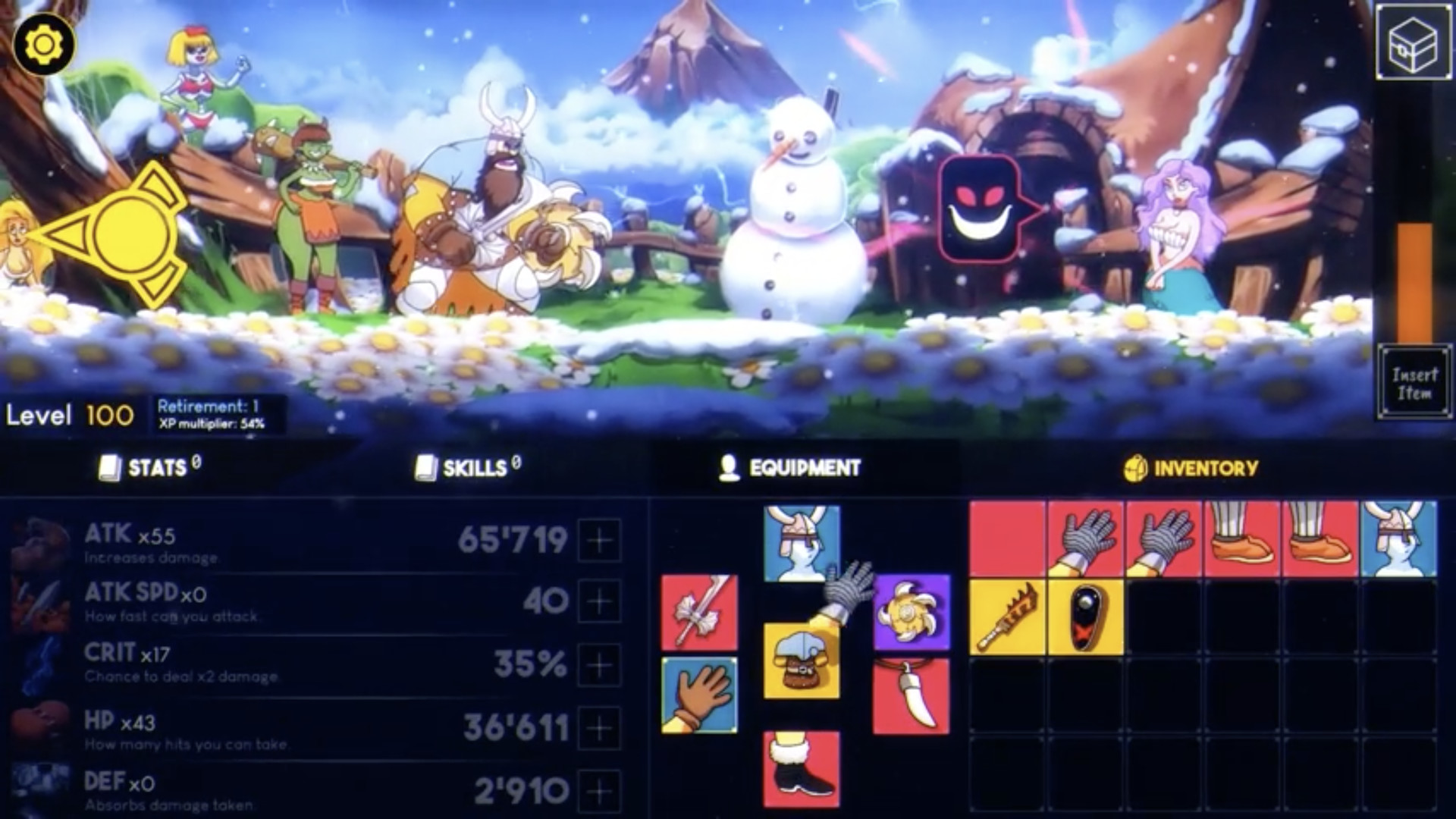
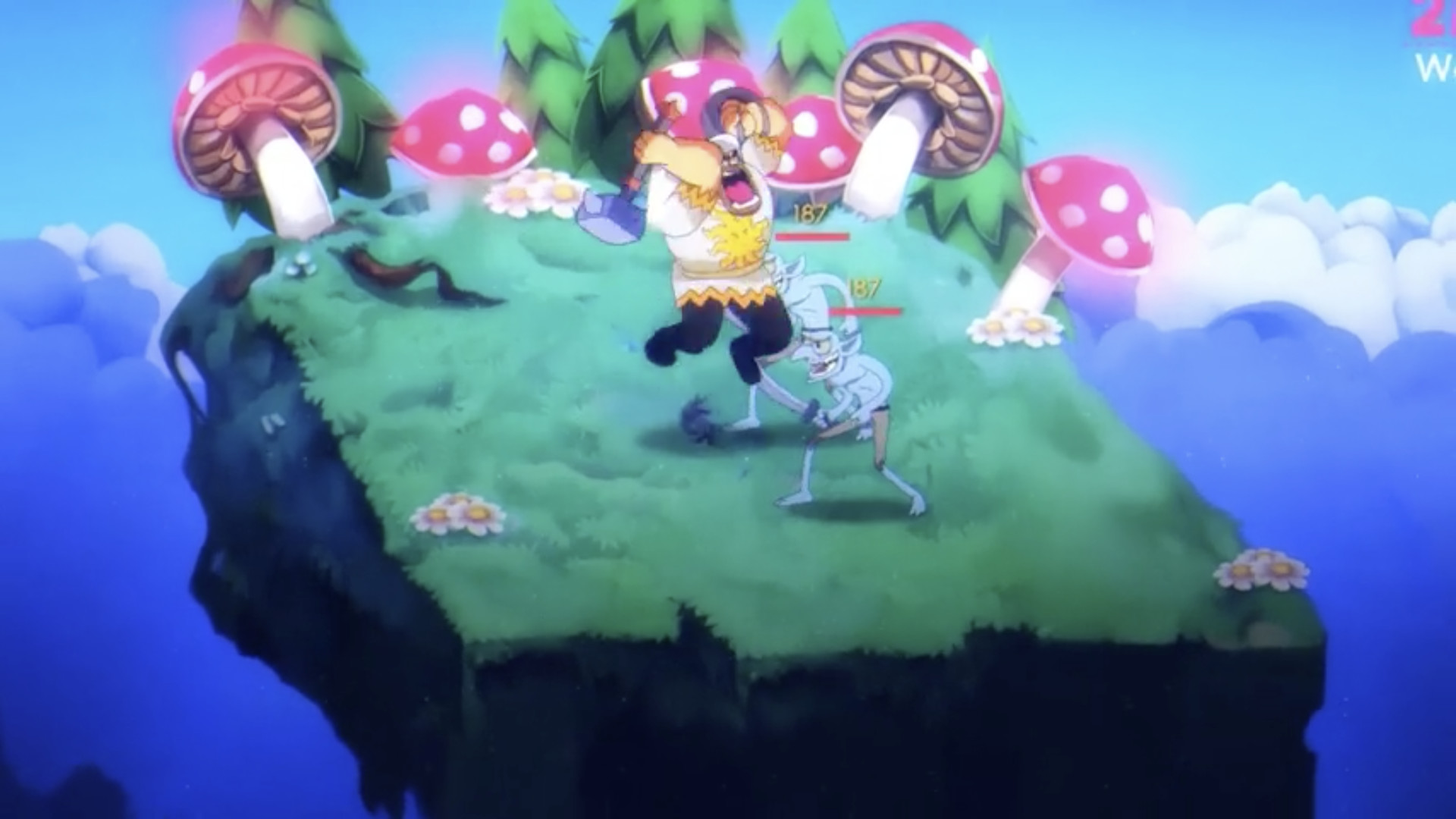
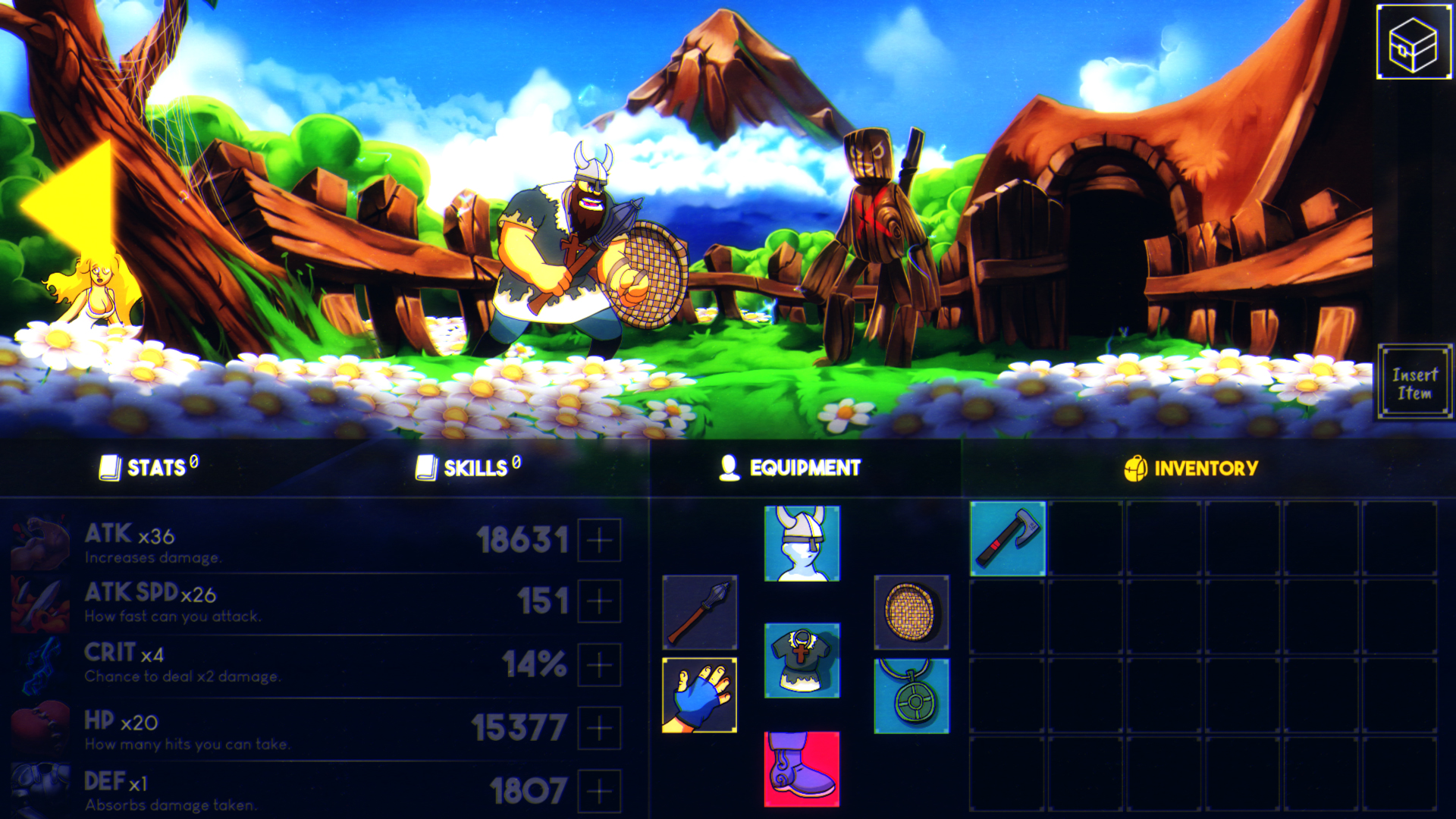
The art direction is the game's clearest achievement and reviewers say so almost unanimously, independent of how they feel about everything else. The hero's beard visibly grows as he progresses, environments and enemies are rendered in a warm, saturated cartoon style multiple reviewers compare directly to Cuphead, and the presentation carries real weight in the opening hours specifically because nothing else in the idle-RPG genre looks like it. Underneath that presentation is a structurally sound, if unremarkable, action-RPG loop: automated battles resolve in seconds based on stats and equipped gear, loot that doesn't make the cut gets fed into a fusion system that converts it directly into stat and skill points rather than letting it pile up as clutter, and a retirement system resets the character to level 1 in exchange for permanent experience and stat bonuses — a legible, honest prestige mechanic rather than a disguised paywall, helped considerably by the game charging a one-off price with no microtransactions anywhere in it.
Global achievement data backs up that the core loop functions as designed for most buyers rather than gating out the majority early. Of 27 total achievements, the bulk of early- and mid-game milestones sit between 55% and 86% of the playerbase, a healthy spread that suggests most people who start the game do reach its middle stretch. The curve narrows meaningfully for late content — 28% for one late-zone achievement, 14.3% for a story-completion milestone, and a single outlier achievement at 6.8% that one completionist reviewer specifically flagged as "practically tiring and nonsense" to chase — but that's a normal difficulty taper for an RPG's endgame, not the achievement data of a game that loses most of its audience immediately.
The argument over what "idle" even means here
The single most-repeated theme across the review sample, on both sides of the recommend line, is a direct dispute over genre labeling. Several detailed reviews go out of their way to state plainly that despite battles resolving automatically, Great Hero's Beard is not an idle game in the sense its store presence and genre tagging implied: starting each new zone requires manual input, distributing skill points and stat allocations is entirely manual, and sorting fused loot after every run is manual too. One reviewer with over 3,000 hours logged put it as directly as possible: "You can automate nothing. This is a horrific design decision when you consider that battles typically take 15-30 seconds apiece." Another, more measured review calls it "semi-idle" and describes the actual loop accurately: "you manually start each zone and then sort loot afterwards. It is not quite a clicker because you cannot click along to help; it is not quite an idle game because it won't play itself." This isn't a handful of outlier complaints — it's the dominant critical frame the game's own fanbase uses to explain why some players who like the art and the loop still can't fully recommend it, and it's worth taking at face value: a game that can't decide whether it wants to be played or watched ends up doing neither particularly well for players who came in expecting one or the other.
That tension bleeds into a second, related complaint: several reviewers describe the progression pacing itself as deliberately manipulative rather than simply grindy. One detailed, widely-upvoted review frames the entire game around this idea directly: "Great Hero's Beard is a good time waster due to its twisted progression design. People who dont value their TIME would enjoy the artificial sense of progression." Another reviewer described a compulsive, almost unpleasant relationship with the game's number-go-up feedback loop, writing that they could "physically feel the precious limited time" slipping away while playing and being "low-key glad nobody can buy this anymore." Neither review is hostile to the game overall — both engaged with it for many hours before writing these specific criticisms — which makes the shared language around wasted time and artificial reward worth treating as a real, considered critique of the pacing design rather than simple buyer's remorse.
A promise made and not kept
Great Hero's Beard drew a rare, specific developer response in December 2018 after players began reporting lost save data: SakuraGame posted a direct apology, asked affected players to send their save folders for manual recovery, and promised Steam Cloud support was coming to prevent it from happening again. That's a genuinely good-faith response to a real bug, and it deserves credit as one. But the promise wasn't kept — the game's own store page still carried an explicit "this game does not support Steam Cloud yet" warning in its detailed description at the time it was delisted in 2021, nearly three years after Steam Cloud was promised as an imminent fix. One reviewer as recently as the game's later years still reported losing 24 hours of progress. Crediting the initial transparency doesn't require pretending the follow-through matched it.
Delisted, not deleted
The partner-events feed confirms the shape of the game's afterlife plainly: a normal patch cadence through early 2019 (version 1.14 was the last numbered update found), then a long quiet stretch punctuated only by unrelated cross-promotion for the publisher's other titles, ending in an October 2021 announcement stating that "the developer and we, the publisher... has reached an agreement to stop the distribution of the game on Steam," with continued support promised for existing owners and no further explanation given. Several reviews written after that date reflect the news directly — some sadly, some approvingly ("low-key glad nobody can buy this anymore"), one practically ("I would recommend this game but it has been pulled from Steam so you can't buy it even if you wanted to now"). There's no indication of a rights dispute, a platform violation, or any other specific cause; it reads as a quiet, mutual decision to stop selling a small, aging catalogue title rather than anything more dramatic.
Verdict
Judged purely as a piece of design, Great Hero's Beard is a competent, visually distinctive action-RPG with an honest prestige loop let down by a genre identity crisis its own players spent years arguing about — sold and tagged as something closer to a passive idle game than the hands-on grind it actually is. Judged as something a reader today can act on, it's moot: the game has been unavailable for purchase since October 2021, with no announced return. What's left is a useful data point about the "semi-idle" subgenre and a reminder, worth carrying into any similar still-on-sale game, to check exactly how much of an idle RPG's loop is actually automated before trusting the label.
Sources: Steam store page and appdetails API (release date, pricing, platform data, the in-page delisting notice, and the persistent "no Steam Cloud" warning); Steam's aggregate review data (query_summary totals, English-language and all-language samples); individually read user reviews, both positive and negative, sorted by helpfulness and recency; Steam's global achievement statistics API; SakuraGame's own partner-events patch notes and the October 2021 retirement announcement.
Pros and cons
Pros
- A genuinely distinctive 1930s rubber-hose cartoon art style carries the early hours further than the underlying mechanics would alone
- The item-fusion system means loot never feels wasted, since anything you outgrow converts directly into stat and skill points rather than clutter
- The retirement/prestige loop gives a real, checkable reason to restart rather than just padding playtime, and the achievement data shows most players who start one do reach the midgame content behind it
- A one-off purchase price with zero microtransactions, unusual restraint for a publisher whose other titles lean harder on monetisation
- The developer publicly and directly acknowledged a 2018 savedata-loss bug rather than staying silent about it
Cons
- Marketed and widely perceived as an idle game, but battles are the only automated part — starting each zone, distributing skill points and sorting fused loot all require constant manual attention, a mismatch multiple detailed reviews call out as the single biggest reason the game disappoints its target audience
- Steam Cloud support was explicitly promised in the developer's own December 2018 response to the savedata bug and never shipped; the store page still carried a "does not support Steam Cloud yet" warning at the time it was delisted
- Progression past the first few hours reads to several reviewers as deliberately tuned to reward large time investment over meaningful decision-making, with one detailed review calling the sense of progress "artificial" and warning readers to value their own time before starting
- The moment-to-moment combat and zone structure repeats with little variation once its handful of enemy types and environments are seen once
- Delisted from Steam in October 2021 by a mutual publisher/developer decision with no public explanation beyond a brief thank-you notice, meaning nobody reading this review today can actually buy it
Screenshots
-
Great Hero's BeardImage: SakuraGame via Steam -
Great Hero's BeardImage: SakuraGame via Steam -
Great Hero's BeardImage: SakuraGame via Steam -
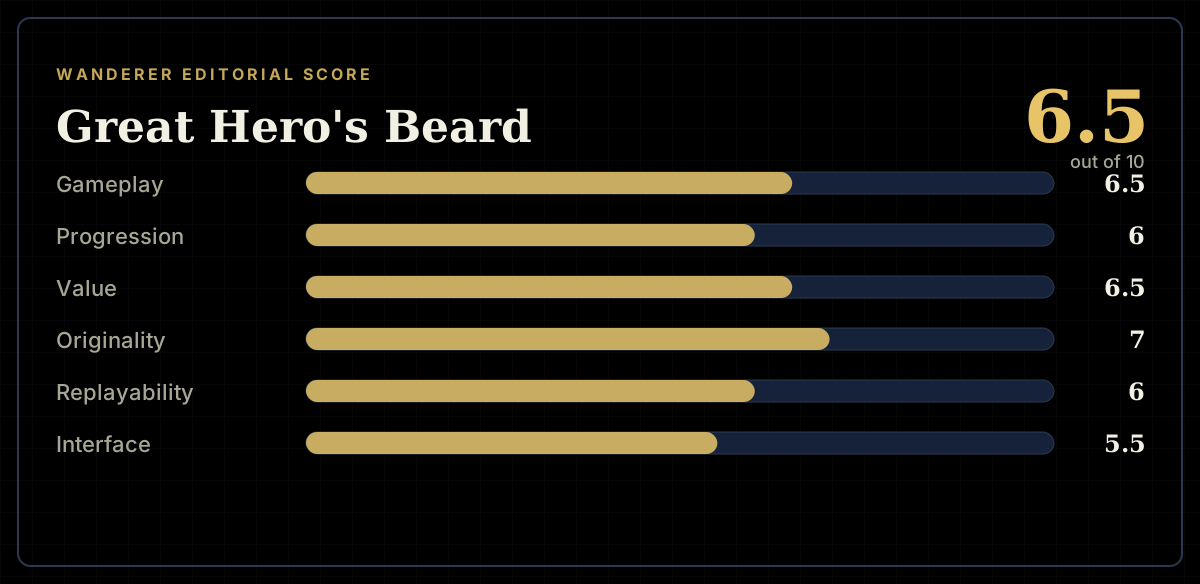
How the review scores each part of the gameWanderer Editorial -
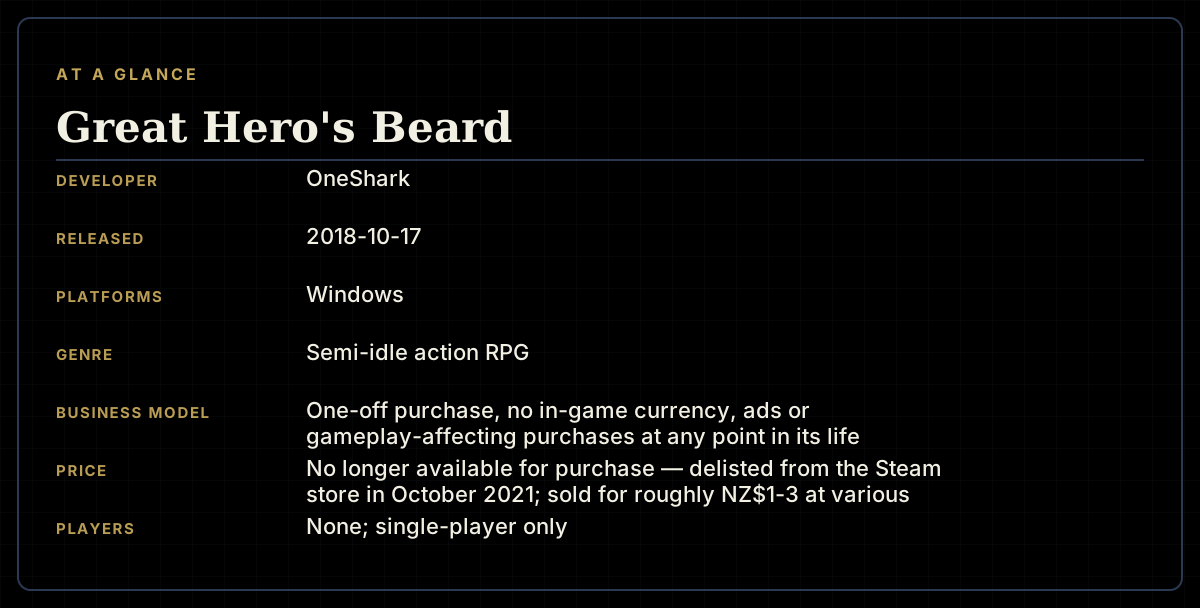
The specsWanderer Editorial -
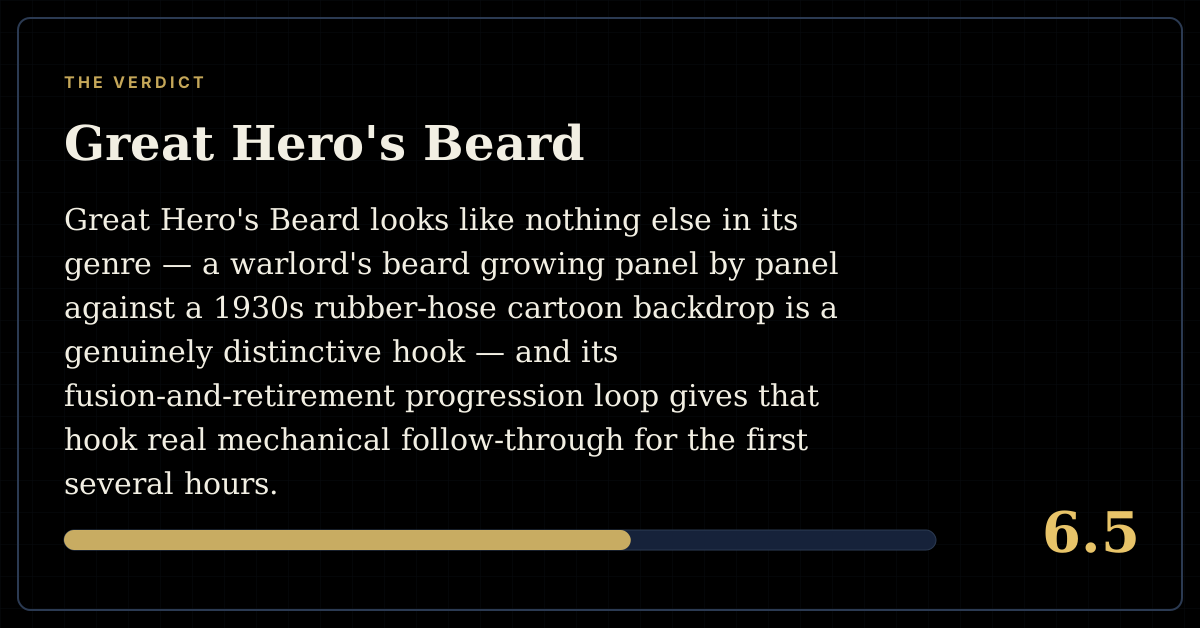
The short versionWanderer Editorial