
Game review
Tumbleweed Destiny
7 / 10
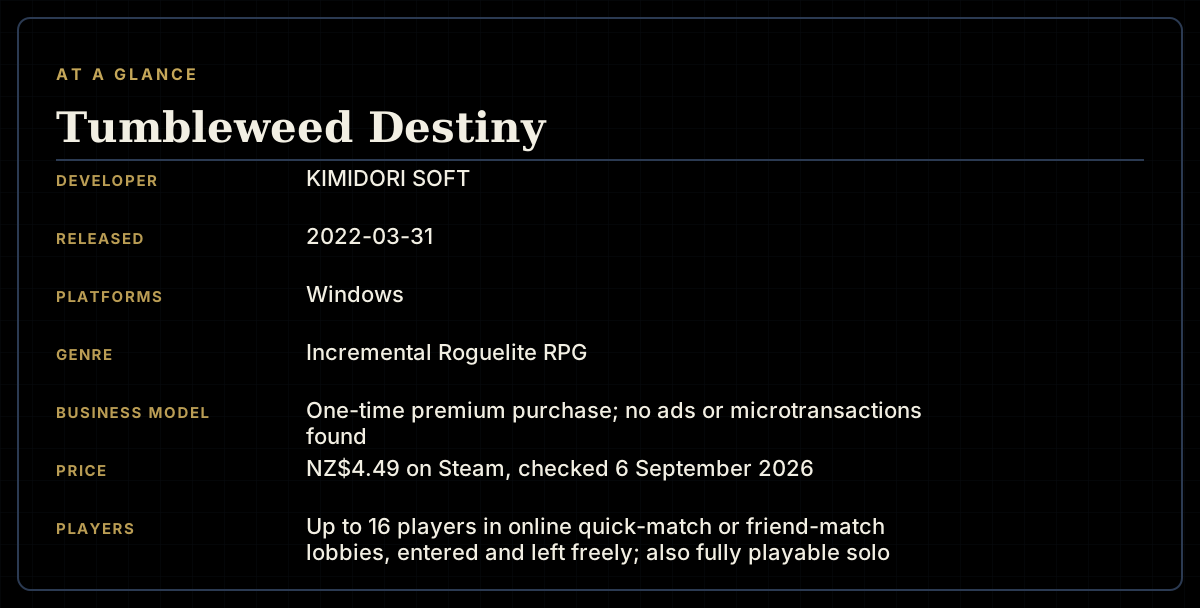
- Developer
- KIMIDORI SOFT
- Publisher
- KIMIDORI SOFT
- Released
- 31 March 2022
- Platforms
- Windows
- Genre
- Incremental Roguelite RPG
- Monetisation
- One-time premium purchase; no ads or microtransactions found
- Players
- Up to 16 players in online quick-match or friend-match lobbies, entered and left freely; also fully playable solo
The short version
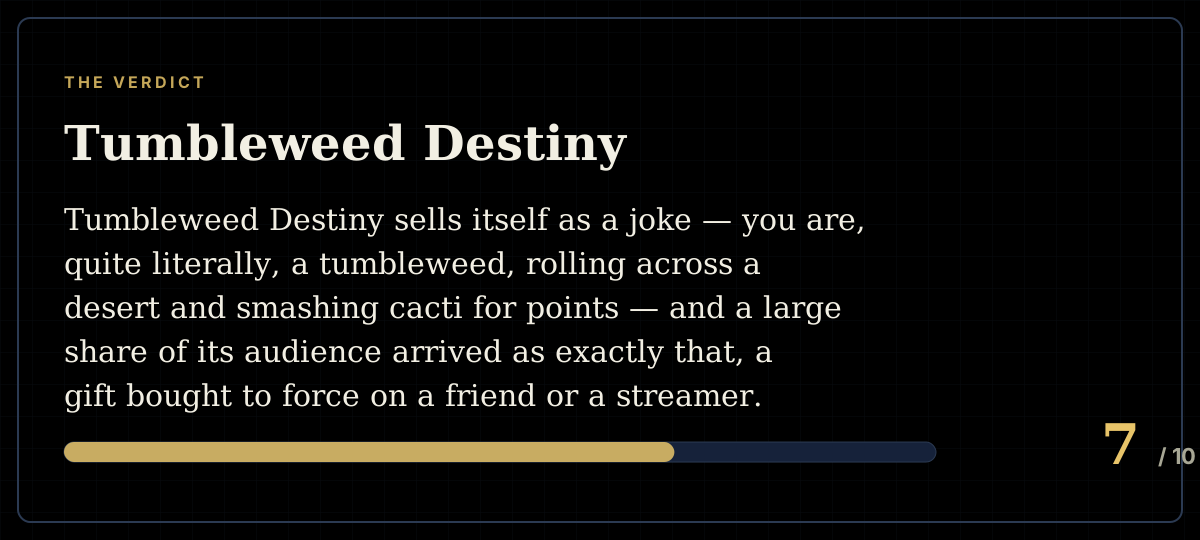
Tumbleweed Destiny sells itself as a joke — you are, quite literally, a tumbleweed, rolling across a desert and smashing cacti for points — and a large share of its audience arrived as exactly that, a gift bought to force on a friend or a streamer. What's underneath the premise is a real, if compact, incremental RPG: tumbling and cactus-breaking earn currency spent on ability upgrades and a rebirth-style prestige loop, all wrapped around maybe three to six hours of content players consistently describe as more substantial than the trailer suggested.
Its most-cited flaw isn't the length or the price, both of which reviewers treat as more than fair — it's that a game built and tagged around idling actively refuses to idle, pausing the moment its window loses focus. That single design choice fights against the exact use case its own genre tag promises, and it's specific enough that it's worth going in aware of rather than discovering the hard way.
Biggest strengths
- A genuinely funny, committed premise (you are a tumbleweed, rolling and smashing cacti to grow more powerful) that reviewers repeatedly say has more actual game behind it than expected
- A real incremental/rebirth progression system sits underneath the joke, with achievement data showing more than half of players who start a rebirth cycle push through several loops of it
- Extremely cheap for the amount of content on offer, and repeatedly cited by reviewers as worth the price even by those otherwise lukewarm on it
Biggest weaknesses
- Despite carrying the "Idler" tag, the game pauses entirely when its window loses focus, directly undermining the passive, walk-away-from-it use case the genre promises
- Reviewers describe the endgame area as unusually large for how little is actually in it — one boss, no side content, after the main progression loop is exhausted
- The core "grind to full power, then everything after feels dull" arc is called out directly by more than one reviewer, with post-unlock earning rates described as too slow to stay engaging
Who it's for: Anyone who wants a short, genuinely funny incremental game to burn an evening on, or to buy as a joke gift that turns out to have real substance once the joke wears off. Not for anyone looking for an idle game to run in the background while doing something else.
Our recommendation: An easy recommendation at its price point — just don't expect it to idle for you the way the tag implies, and don't expect much waiting for you once the credits roll.
7 / 10
Some games arrive as a joke and stay a joke. Tumbleweed Destiny arrives as a joke — you play a tumbleweed, rolling across a desert, smashing cacti, growing steadily more powerful — and then quietly turns into a real incremental RPG once the initial laugh wears off. A meaningful share of its own review base admits to buying it as a prank on a friend or being handed it by a streamer, and then staying for several hours longer than the premise seemed to promise. That gap between expectation and what's actually there is the most interesting thing about the game, and it's also where its sharpest complaint sits.
A clicker where the clicking is rolling
The system underneath the joke is straightforward: instead of clicking to generate currency, you earn Tumble Points by physically moving your tumbleweed and breaking the cacti in its path. Those points buy ability cards that make future tumbling more efficient, eventually letting a fully built tumbleweed fly and chain destruction combos rather than just roll. It's a clicker with the click replaced by movement, and a roguelite-adjacent structure layered on top through a rebirth-style prestige system that resets progress in exchange for permanent gains.
Global achievement data backs up how well that loop lands with the people who try it: 69.1% of players reach the game's "save the earth" ending, and more than half of everyone who starts rebirthing (56.8%) pushes through at least ten cycles of it. For a joke-premise four-dollar game, that's a genuinely strong completion rate, and it lines up with the reviews describing three to six hours of real, if compact, content rather than a five-minute gag that overstays its welcome.
An idler that can't idle
The single most specific, repeated criticism isn't about length, price or content — it's that a game explicitly tagged "Idler" pauses completely the moment its window loses focus. One reviewer put it bluntly: "An 'idler' game that requires focus or it pauses. This is the dumbest thing ever put into a game that wasn't made by EA." That's not a vague tone complaint; it's a specific, checkable design contradiction between what the genre tag promises — leave it running, check back later — and what the game actually does, which is stop entirely the second you tab away. For a game whose own store tags list both "Incremental" and "Idler" as top community tags, that's a real mismatch between labelling and behaviour, not a minor nitpick.
It matters more here than it might elsewhere because the appeal of an idle-adjacent game is precisely the ability to let it run unattended. A player who buys Tumbleweed Destiny expecting to treat it the way its tags describe — background progress while doing something else — will hit this wall almost immediately, and no patch on record has addressed it.
A big empty room at the end
The other recurring complaint concerns what's waiting once the core loop is mastered. Multiple reviewers describe reaching "full power" — reviews jokingly compare the unlock to a Dragon Ball Z transformation — and finding that the payoff curve flattens out quickly afterward, with one reviewer calling the post-unlock earning rate "too small" to stay interesting. The game's final area compounds this: reviewers describe it as unusually large relative to how little content actually populates it, with a single boss whose health is disproportionately padded relative to everything before it, and no side content to fill the space. For a short game, an oversized, underpopulated final stretch stands out more than it would in something longer.
Sixteen players, mostly playing alone
Tumbleweed Destiny supports up to 16 players in either quick-match or friend-match online lobbies, freely joinable and leavable at any point, alongside a fully self-contained solo mode. None of the reviews surveyed for this piece describe actually using the multiplayer mode, positive or negative — it's present and functional per the store listing, but doesn't appear to be a meaningful part of how the game's own audience actually plays it. Worth knowing it exists rather than assuming it's been tested by the people writing about the game.
How much game is actually in here
Not every review lands as glowing as the headline percentage suggests, and the more measured middle ground is worth taking seriously. One reviewer frames their take explicitly as a grey rather than a positive verdict, stating outright that a higher price tag would have flipped it to a thumbs-down: "there's barely a game here," reaching full power is deliberately time-gated for as long as the design can manage, and the hidden bonus map — the one piece of content meant to reward finishing the main loop — is oversized without anything genuinely secret in it, guarded by a boss with roughly ten times the health of anything in the regular game. That's a specific, considered complaint from someone who still finished it, not a drive-by pan, and it lines up with the separate criticism above about the main final area feeling similarly oversized and underbuilt.
The honest read is that Tumbleweed Destiny's price is doing real work in how forgiving its reception is. Several reviewers say as much directly — that the exact same pacing and content volume would read as thin at a higher price point, and only reads as charming because it costs about as much as a bus fare. That's not a knock on the game so much as a reason to calibrate expectations before buying: this is a joke that earns real affection, but the "real game" underneath the joke is genuinely compact, and the price is doing a lot of the heavy lifting in making that compactness feel like a feature rather than a shortcoming.
A short, real launch, then years of quiet
KIMIDORI SOFT shipped a genuine cluster of patches in the five weeks after release — six numbered updates between 1 April and 5 May 2022, adding a new area, a new monster and new ability cards on top of the usual fixes. After that window closed, the only further activity on record is a single "Security Fix Applied" post more than three years later, in October 2025, with no accompanying content notes. That's a real, if brief, support burst rather than a shipped-and-abandoned release, but anyone expecting ongoing content after the initial patch cycle should adjust expectations accordingly — this is a game that got what support it was going to get within its first two months.
Where it lands
At NZ$4.49, Tumbleweed Destiny asks for less than most people spend on a coffee and delivers a genuinely funny premise backed by a real, well-completed incremental system — the achievement data alone suggests this isn't a novelty players bounce off quickly. The idler tag that doesn't actually idle and an oversized, underbuilt final area are real flaws worth knowing about going in, but neither one changes the fact that this is a cheap, short, well-regarded joke that turned out to have more game inside it than its premise let on.
Pros and cons
Pros
- A genuinely funny, committed premise (you are a tumbleweed, rolling and smashing cacti to grow more powerful) that reviewers repeatedly say has more actual game behind it than expected
- A real incremental/rebirth progression system sits underneath the joke, with achievement data showing more than half of players who start a rebirth cycle push through several loops of it
- Extremely cheap for the amount of content on offer, and repeatedly cited by reviewers as worth the price even by those otherwise lukewarm on it
- Up to 16-player online quick-match and friend-match lobbies that can be entered or left freely, on top of a fully self-contained solo mode
- A real, if short, launch-window patch cycle added a new area, a new monster and new ability cards within the first five weeks after release
Cons
- Despite carrying the "Idler" tag, the game pauses entirely when its window loses focus, directly undermining the passive, walk-away-from-it use case the genre promises
- Reviewers describe the endgame area as unusually large for how little is actually in it — one boss, no side content, after the main progression loop is exhausted
- The core "grind to full power, then everything after feels dull" arc is called out directly by more than one reviewer, with post-unlock earning rates described as too slow to stay engaging
- Real content updates stopped roughly five weeks after launch; the only activity since is a single security-related fix over three years later, with nothing about new content
- Sits in an awkward genre space — tagged as an idler and a roguelite simultaneously while not fully committing to either, which is part of why the single largest complaint is about what the "idler" label promises versus what the game actually does
Screenshots
-
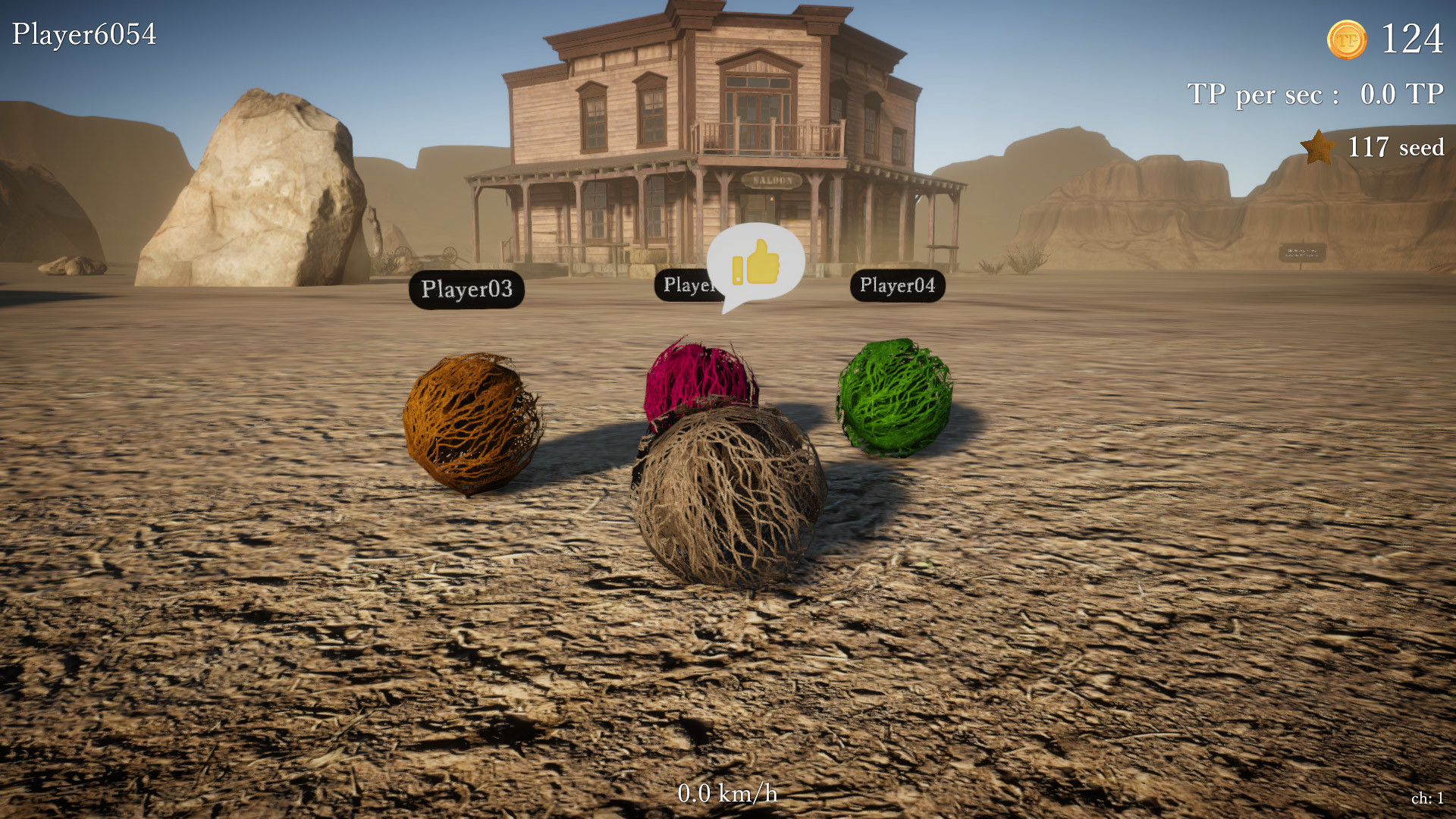
Tumbleweed DestinyImage: KIMIDORI SOFT via Steam -
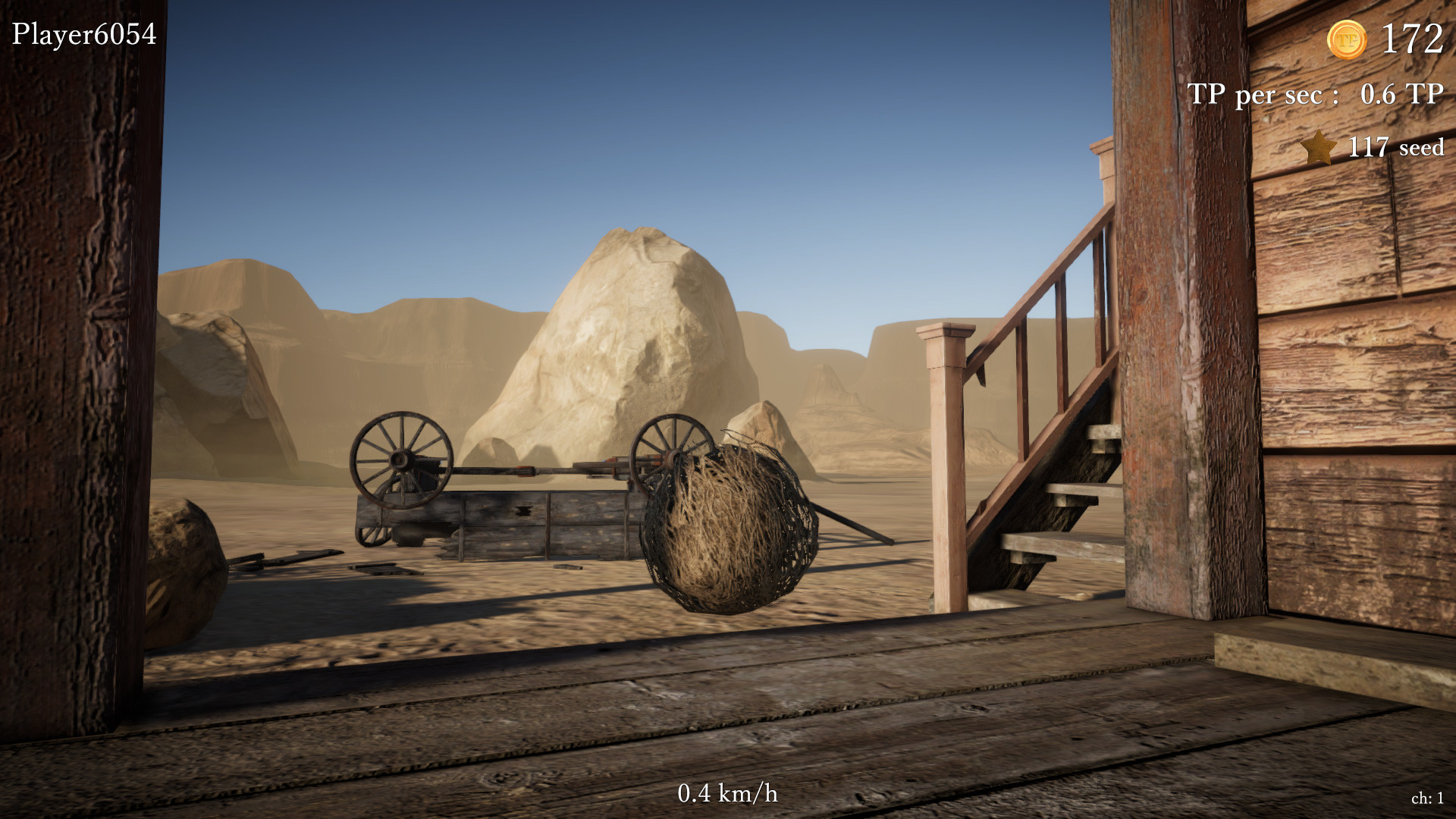
Tumbleweed DestinyImage: KIMIDORI SOFT via Steam -
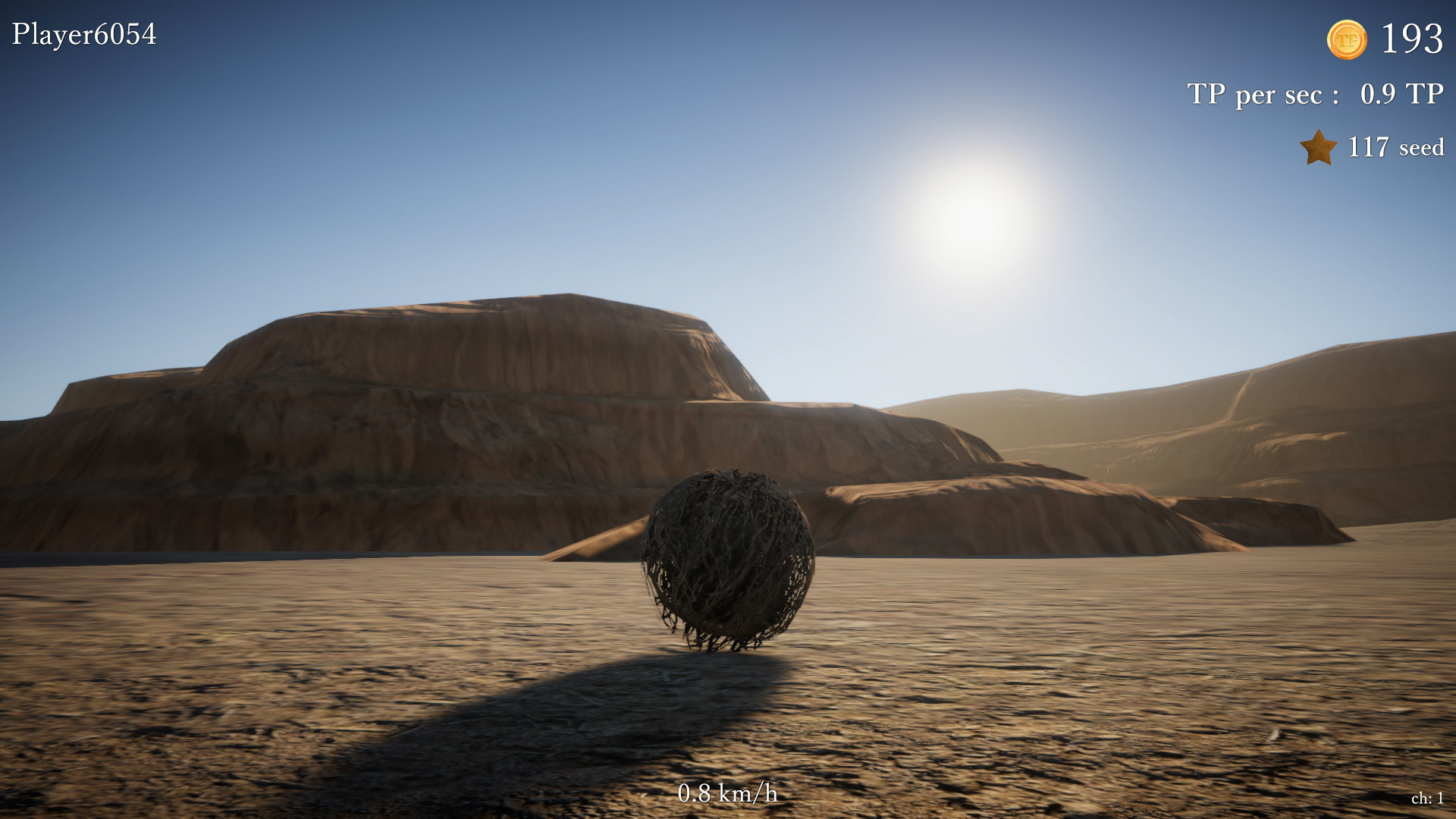
Tumbleweed DestinyImage: KIMIDORI SOFT via Steam -
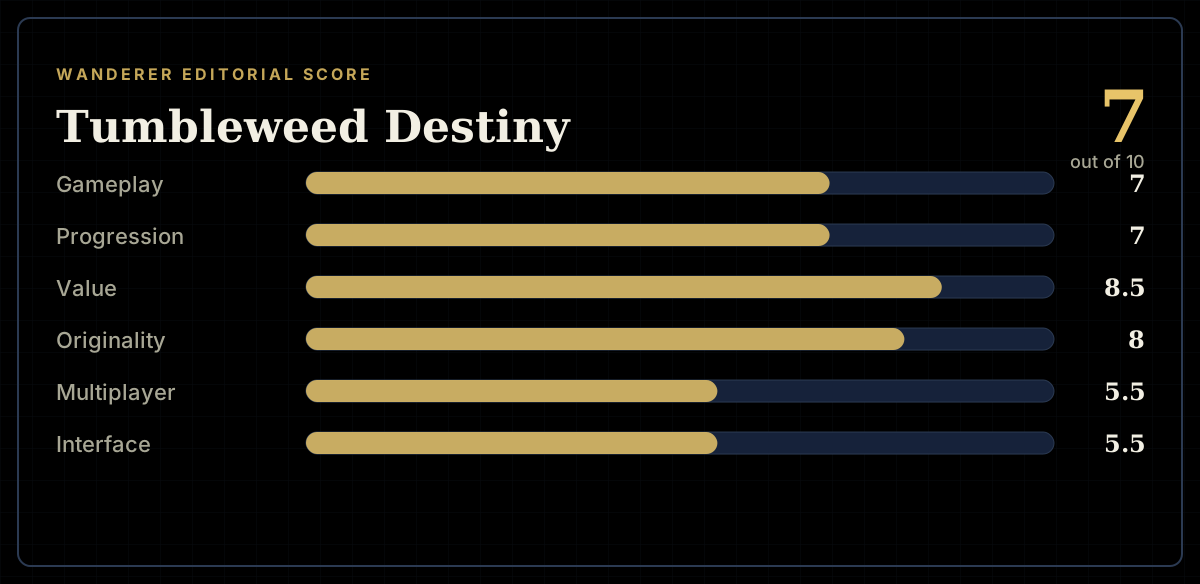
How the review scores each part of the gameWanderer Editorial -
The specsWanderer Editorial -
The short versionWanderer Editorial