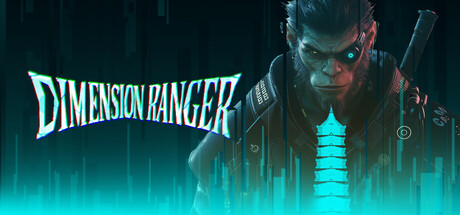
Game review
DIMENSION RANGER
6.6 / 10
- Developer
- 游际线
- Publisher
- 游际线
- Released
- 30 April 2026
- Platforms
- ["Windows", "Mac"]
- Genre
- Strategy
- Monetisation
- Paid
- Players
- Single-player
The short version
DIMENSION RANGER's premise, half a dozen parallel-universe Sun Wukongs teaming up across a Hearthstone-inspired card battler, is a genuinely fun hook backed by real build variety, but a punishing and unevenly tuned difficulty curve, a bloated install, and a rough technical launch keep it from being the standout its concept promises.
Biggest strengths
- A genuinely inventive premise: multiple parallel-universe Sun Wukongs, each with an entirely separate card pool, combat quirks, and preferred archetypes
- A clever twist on Hearthstone-style combat, where units auto-attack only directly opposing lanes and every fight resolves at the end of the player's own turn
- Dozens of viable deck archetypes (deathrattle burst, devour-and-grow, token swarm, spell burn) across hundreds of cards for a low asking price
Biggest weaknesses
- A difficulty curve reviewers describe as unfairly tilted toward the AI, which often gets larger starting stats, cheaper abilities, and snowballing buffs the player can't match
- Sluggish default game speed with combat animations that can stretch a single run past an hour, and a speed multiplier that skips damage numbers and stutters at its highest setting
- A rough technical launch: a bloated 20+ GB install for a card game, noticeable frame drops and stuttering, and at least one reported softlock that prevents ending a turn
Who it's for: Card battler fans who enjoyed Hearthstone's tavern brawl format or roguelike deckbuilders in general, and who don't mind an unapologetically over-the-top multiverse spin on Journey to the West.
Our recommendation: Worth its low asking price for the sheer amount of build variety on offer, but go in expecting a steep, occasionally unfair difficulty curve and be prepared to wait for balance and performance patches.
6.6 / 10
Six Sun Wukongs, One Rescue Mission
DIMENSION RANGER, developed and self-published by the Chinese studio 游际线 (YoujiXian), released on April 30, 2026 as the studio's debut title. Its premise reads like a fever dream: in the year 2126, a mercenary version of Sun Wukong living under a cyberpunk regime is betrayed by Bull Demon King, fails an assassination attempt on the Jade Emperor, and spends fifty years imprisoned in a data cage before striking a deal with the Buddha to travel across parallel universes and rescue Tang Sanzang, whose disappearance is unraveling reality itself. Along the way, this cyberpunk Wukong meets other versions of himself from other timelines, a traditional mythological incarnation, an eldritch "strange" Wukong who catalogues horrors rather than fights them, and others still locked behind future content, each hunting their own missing Tang Sanzang and gradually banding together against a shared threat.
Reviewers, almost unanimously writing in Chinese, describe the setup as gleefully absurd on paper, complete with a cybernetic Bull Demon King and a laser-eyed Erlang Shen, but say it works far better in practice than it has any right to, mostly because the story exists to justify genuinely distinct card pools and combat identities for each Wukong rather than to be taken seriously.
A Hearthstone Skeleton With Its Own Rules
Mechanically, DIMENSION RANGER borrows its bones from Hearthstone: both players start with a small mana pool that grows by one each turn, playing units and spells from a hand onto a five-slot board, with the goal of reducing the opposing leader's health to zero. Two rule changes set it apart, and reviewers consistently call both out as the game's best ideas. First, units don't choose targets manually; each one automatically attacks whatever sits directly opposite it in its lane at the end of a turn, and only strikes the enemy leader directly if that lane is empty, turning board positioning into the core tactical puzzle rather than raw stats. Second, and more significant, combat only resolves at the end of the player's own turn, meaning the opponent never gets an independent attack phase of their own; as long as a player has the mana and the will to keep answering the board, even a single freshly played 1/1 can block an otherwise lethal attacker. Reviewers describe this as making the game feel almost entirely player-favoured in isolated exchanges, for better and for worse. A further wrinkle ties a player's maximum health directly to deck size, so trimming weak cards for consistency comes at the literal cost of a smaller health pool, a tension several reviewers single out as a smart, underused idea for the genre.
Six Wukongs, Dozens of Archetypes
The roguelike Tower of the Nine Heavens mode is where most of the game's advertised depth lives: a nine-floor climb with a unique boss and passive ability on every floor, rewards of gold and cards after each victory, and a shop between floors for buying new cards, buying relic-like power-up cards (capped at five equipped at once), or deleting unwanted cards for a single gold coin. A separate Story Mode strings eight narrative chapters together but gates progress behind Tower runs starting at chapter four, requiring a full climb before the next chapter unlocks, a structural choice several reviewers find odd, effectively forcing a roguelike run to unlock more story content. Across the currently unlocked Wukongs, reviewers describe archetypes ranging from a deathrattle-focused build that snowballs into a one-turn kill, to a "devour" build that permanently grows a single towering unit by consuming allies, to token-swarm and spell-burn builds that play nothing like each other despite sharing a rules set. With several hundred cards split across universes and a fragment-based crafting system for unlocking specific ones, reviewers describe genuine, lasting variety once multiple Wukongs are unlocked, several explicitly comparing the mix-and-match archetype design favourably to Hearthstone's own adventure-mode expansions.
A Rough, Overtuned Climb
Where the reviews turn critical is almost entirely technical and balance-related rather than conceptual. The most common specific complaint is a lopsided difficulty curve: multiple reviewers describe early Tower floors throwing enemies with doubled effect triggers or wildly inflated stats at players who haven't had a chance to build a coherent deck yet, while the AI opponent consistently starts with more mana, larger health pools, and cheaper abilities than the player receives, a design choice one detailed review calls out directly as feeling unfair for a purely single-player mode. Gold income compounds the issue: clearing a floor typically yields only enough for one or two card purchases, leaving little room to both remove weak cards and buy strong ones before a run's economy stabilizes. Pacing draws sustained complaints too: the default game speed is very slow, animations play out in full for every attack, and while a speed-up option exists, it only offers 1x, 2x, or 5x with no smooth range between them, with 5x specifically reported to skip damage number displays and stutter. Combined with reports of severe frame drops and high CPU usage from the game's dense visual effects, and a bloated install that reviewers repeatedly flag as far larger, over 20 GB, than a card game of this scope should need, the overall experience of a single run can stretch past an hour even for veteran players. One English-language review reports a hard softlock on the fifth floor across three separate runs where the game refuses to pass the turn, ending those attempts outright, and several Chinese reviews note smaller bugs like cards visually lingering after they should have been sent to the graveyard.
Verdict
DIMENSION RANGER pairs a wonderfully unhinged premise, multiple cyberpunk and mythological Sun Wukongs joining forces across parallel universes, with a Hearthstone-inspired card battler clever enough to earn its own identity through lane-locked auto-combat and a health pool tied to deck size. Reviewers who push past its rough edges describe a genuinely deep, replayable roguelike with dozens of viable archetypes for a modest asking price. But an unevenly tuned difficulty curve that often favours the AI outright, a sluggish default pace, a needlessly bloated install, and reported bugs including a run-ending softlock all point to a debut title that needed more time to settle before launch. Recommended for patient card battler fans willing to ride out a few balance and performance patches, less so for anyone hoping for a smooth, fair climb from the first floor.
Pros and cons
Pros
- A genuinely inventive premise: multiple parallel-universe Sun Wukongs, each with an entirely separate card pool, combat quirks, and preferred archetypes
- A clever twist on Hearthstone-style combat, where units auto-attack only directly opposing lanes and every fight resolves at the end of the player's own turn
- Dozens of viable deck archetypes (deathrattle burst, devour-and-grow, token swarm, spell burn) across hundreds of cards for a low asking price
Cons
- A difficulty curve reviewers describe as unfairly tilted toward the AI, which often gets larger starting stats, cheaper abilities, and snowballing buffs the player can't match
- Sluggish default game speed with combat animations that can stretch a single run past an hour, and a speed multiplier that skips damage numbers and stutters at its highest setting
- A rough technical launch: a bloated 20+ GB install for a card game, noticeable frame drops and stuttering, and at least one reported softlock that prevents ending a turn
Screenshots
-
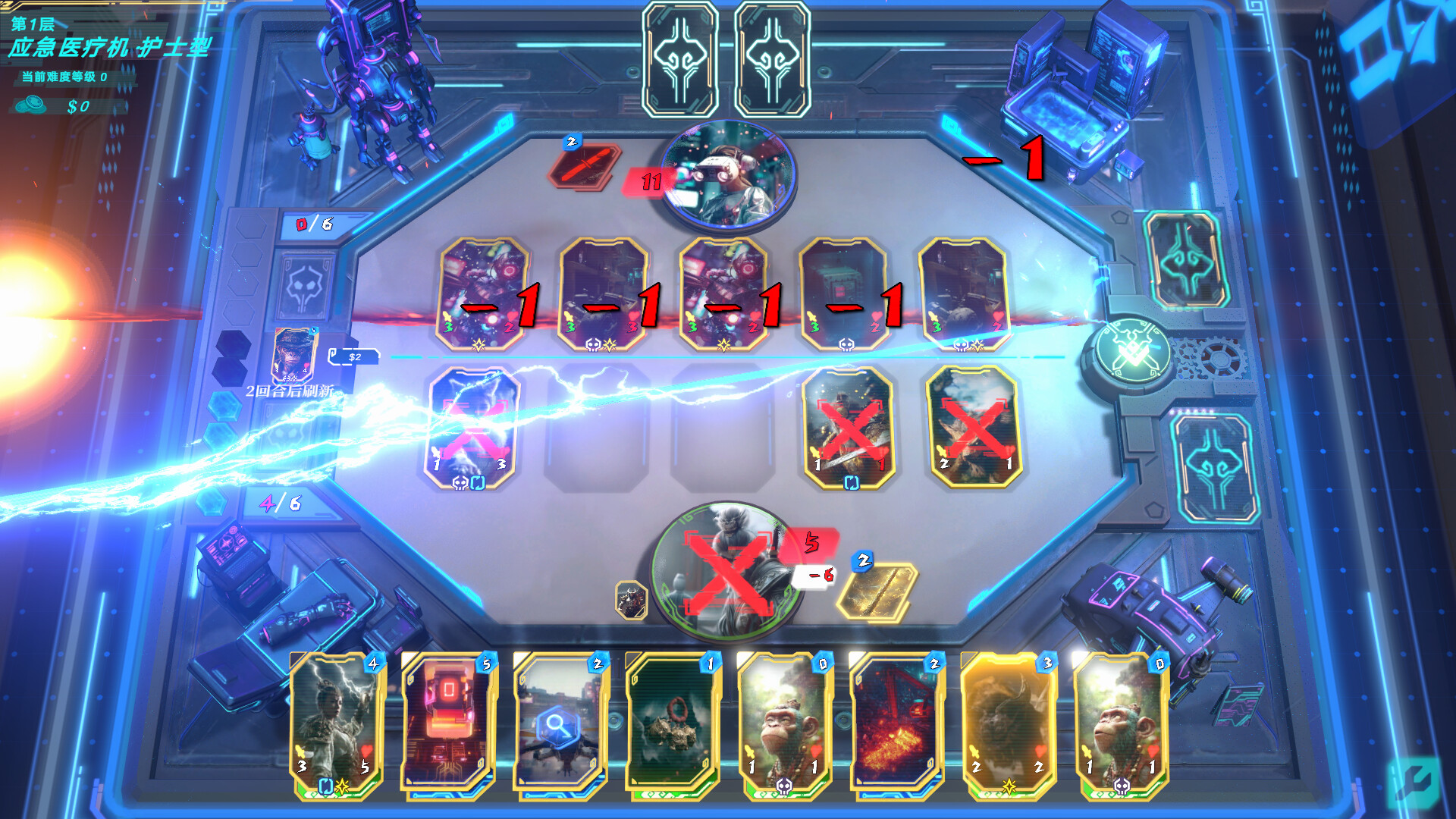
Combat plays out across five lanes, with units striking only whatever sits directly opposite themImage: 游际线 -
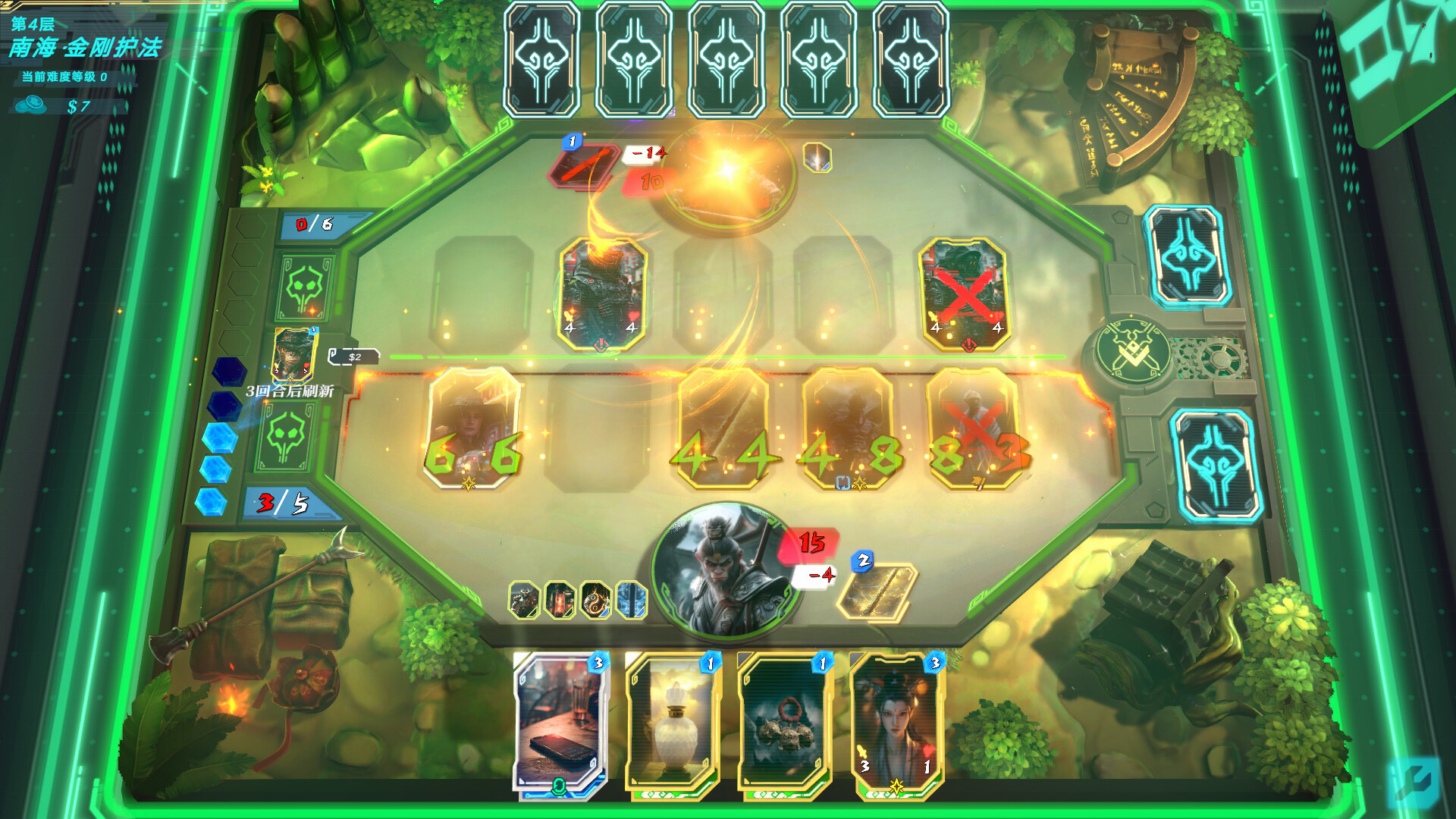
Later Tower floors introduce tougher guardian bosses with unique passive abilitiesImage: 游际线 -
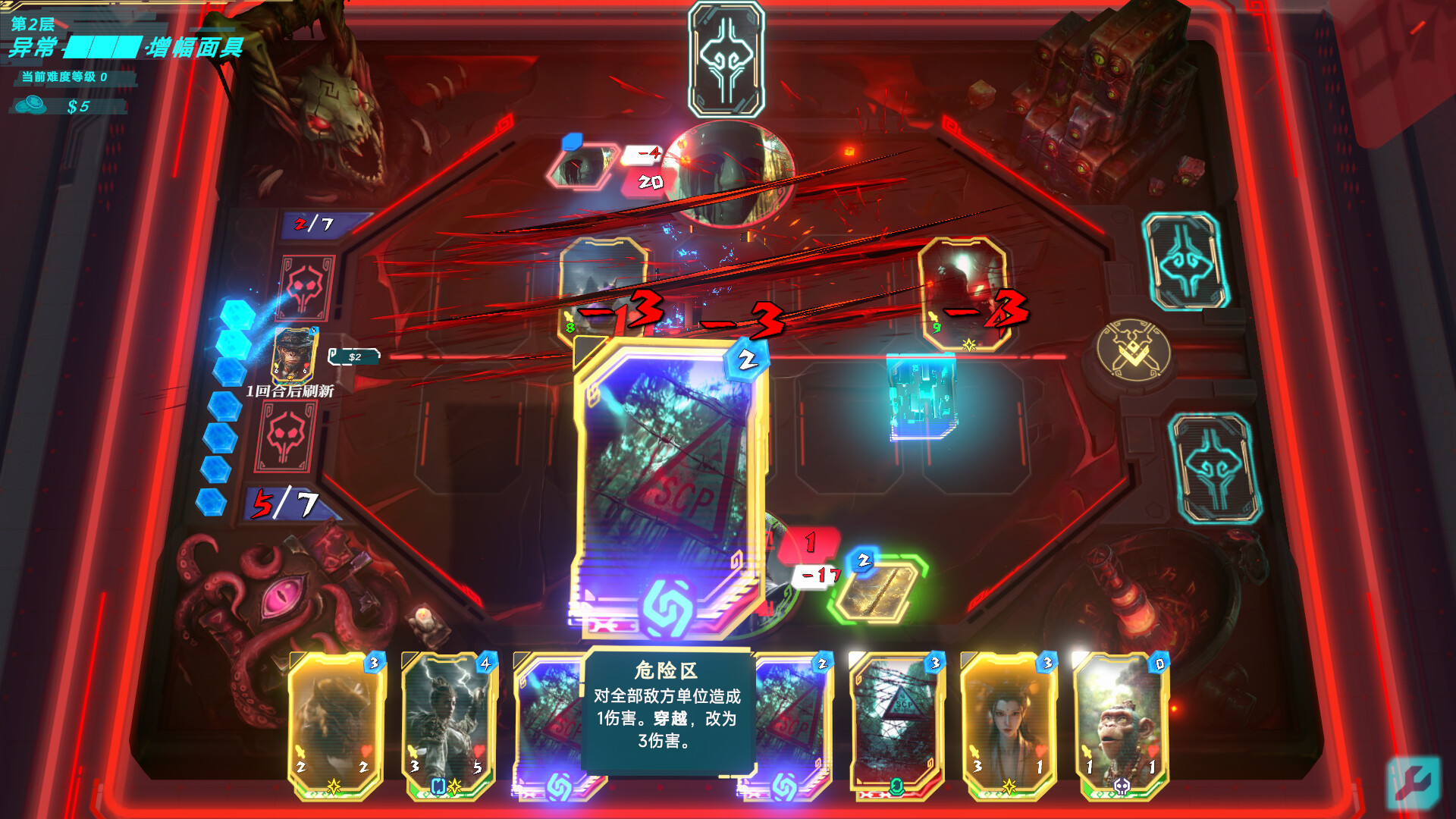
Anomaly floors add board-wide effects on top of the usual lane combatImage: 游际线 -
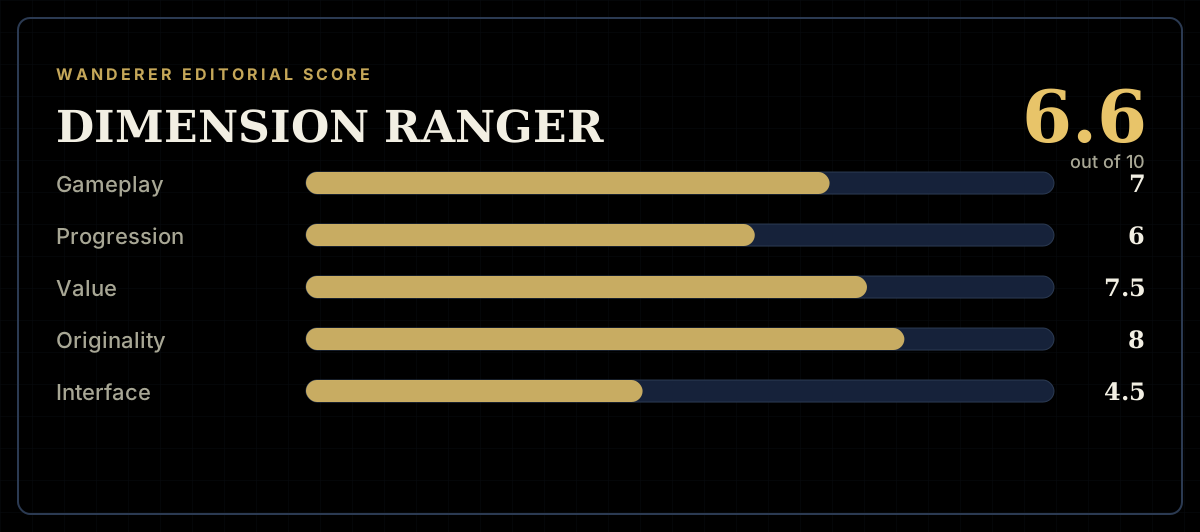
How the review scores each part of the gameWanderer Editorial -
The short versionWanderer Editorial