Game review
Dawnsbury Days
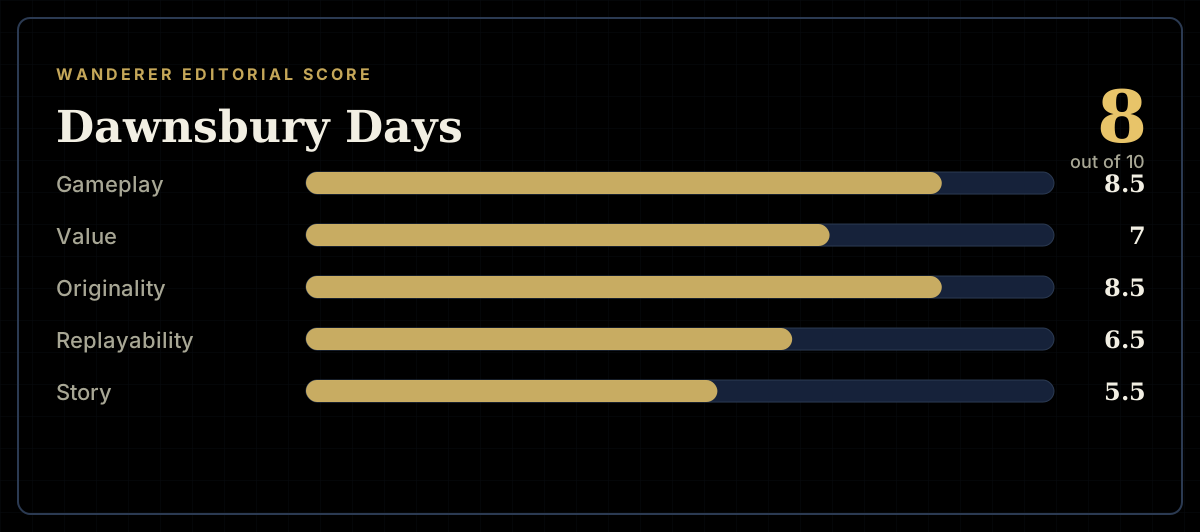
8 / 10
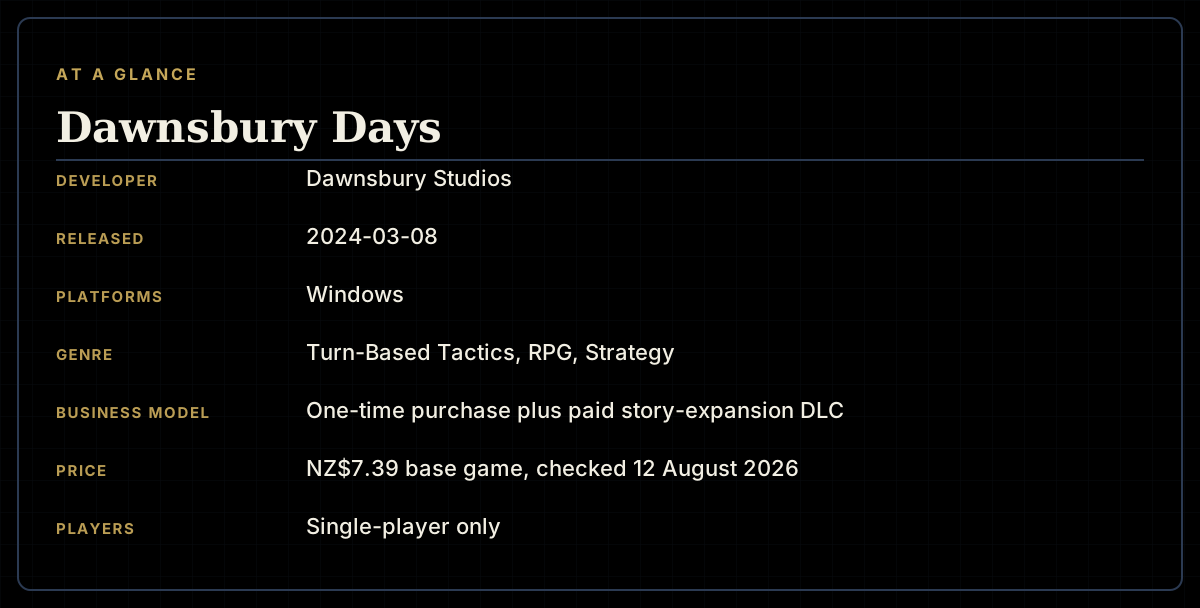
- Developer
- Dawnsbury Studios
- Publisher
- Dawnsbury Studios
- Released
- 8 March 2024
- Platforms
- Windows
- Genre
- Turn-Based Tactics, RPG, Strategy
- Monetisation
- One-time purchase plus paid story-expansion DLC
- Players
- Single-player only
The short version
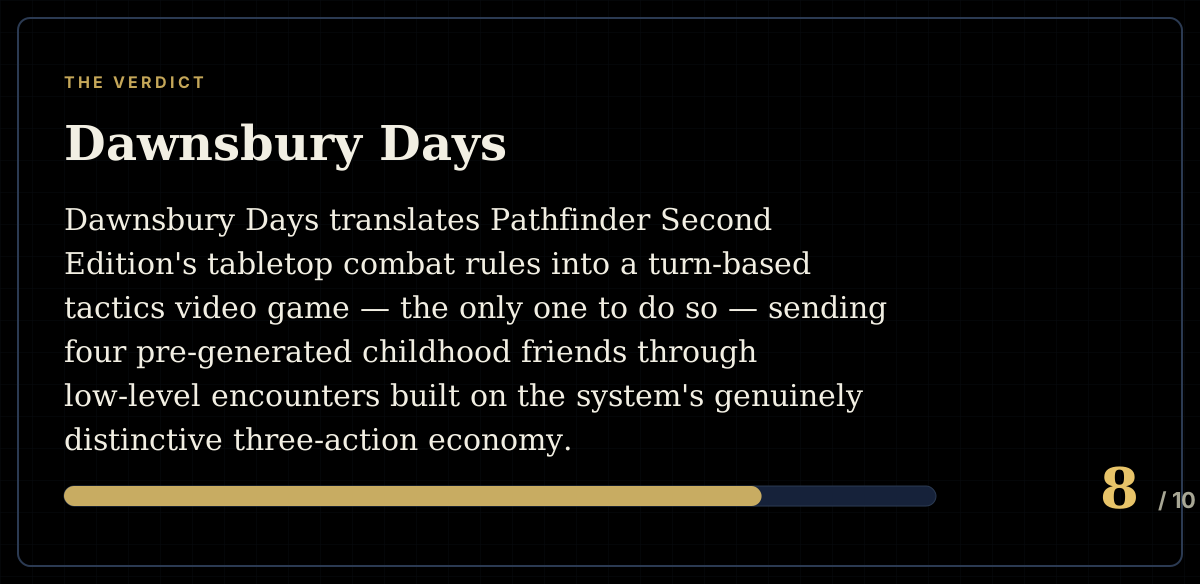
Dawnsbury Days translates Pathfinder Second Edition's tabletop combat rules into a turn-based tactics video game — the only one to do so — sending four pre-generated childhood friends through low-level encounters built on the system's genuinely distinctive three-action economy. Built and self-published by the solo-developer Dawnsbury Studios, it released on 8 March 2024. Its 826 English-language Steam reviews sit at Overwhelmingly Positive, roughly 98.2%, and this review reads every one of the game's 15 available English negative reviews alongside its top positives to find a corpus that agrees almost completely on what the game gets right — mechanical fidelity to a beloved ruleset — and where its harshest critics, even while recommending against it, still concede the game is "good."
Biggest strengths
- Combat is widely and specifically praised as an exceptionally faithful translation of Pathfinder 2E's three-action economy, credited by multiple reviewers as good enough to teach the tabletop system to newcomers
- The solo developer is repeatedly described as responsive to feedback and actively supportive of the game's modding community, including a well-regarded expanded-class mod built by a player
- Achievement data shows a healthy, gentle completion curve through the main campaign's episodes, suggesting most buyers who start it see it through rather than bouncing early
Biggest weaknesses
- The base campaign is short, covering only levels 1 through 4, and reaching further content requires purchasing one of two paid story-expansion DLC packs, each priced the same as the base game
- The four playable characters are fixed rather than player-created, and several detailed reviews criticise their writing and voice acting as weak, stereotyped and prone to breaking immersion with out-of-character mechanical dialogue
- Pathfinder 2E's genuinely lower hit-chance math, faithfully reproduced, reads to some players unfamiliar with the tabletop system as excessive randomness, with several reviews describing long strings of missed attacks against enemies who rarely miss back
Who it's for: Pathfinder 2E fans and tactics-RPG players who want faithful, demanding turn-based combat and don't mind a light, short story wrapper around it; a poor fit for anyone hoping for deep character writing or a lengthy campaign in the base package alone.
Our recommendation: An essential pickup for anyone curious about Pathfinder 2E's ruleset and a solid tactics game in its own right, best understood as the first chapter of an ongoing, paid-DLC story rather than a complete campaign on its own.
8 / 10
Is Dawnsbury Days the best Pathfinder 2E RPG?
For faithfully reproducing Pathfinder 2E combat, yes — it is both the only direct video-game adaptation and a strong tactics RPG on its own merits. Its three-action battles earn an 8 out of 10; the short base campaign and lightweight character writing are what keep it from scoring higher.
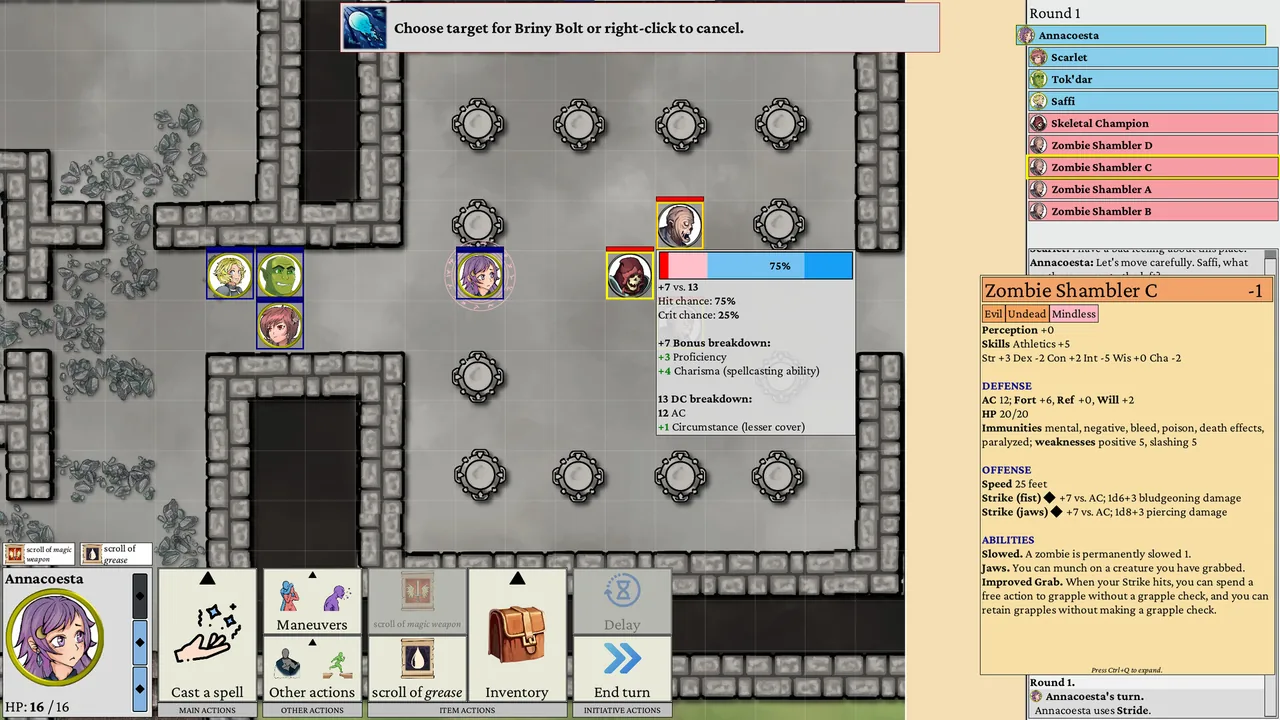
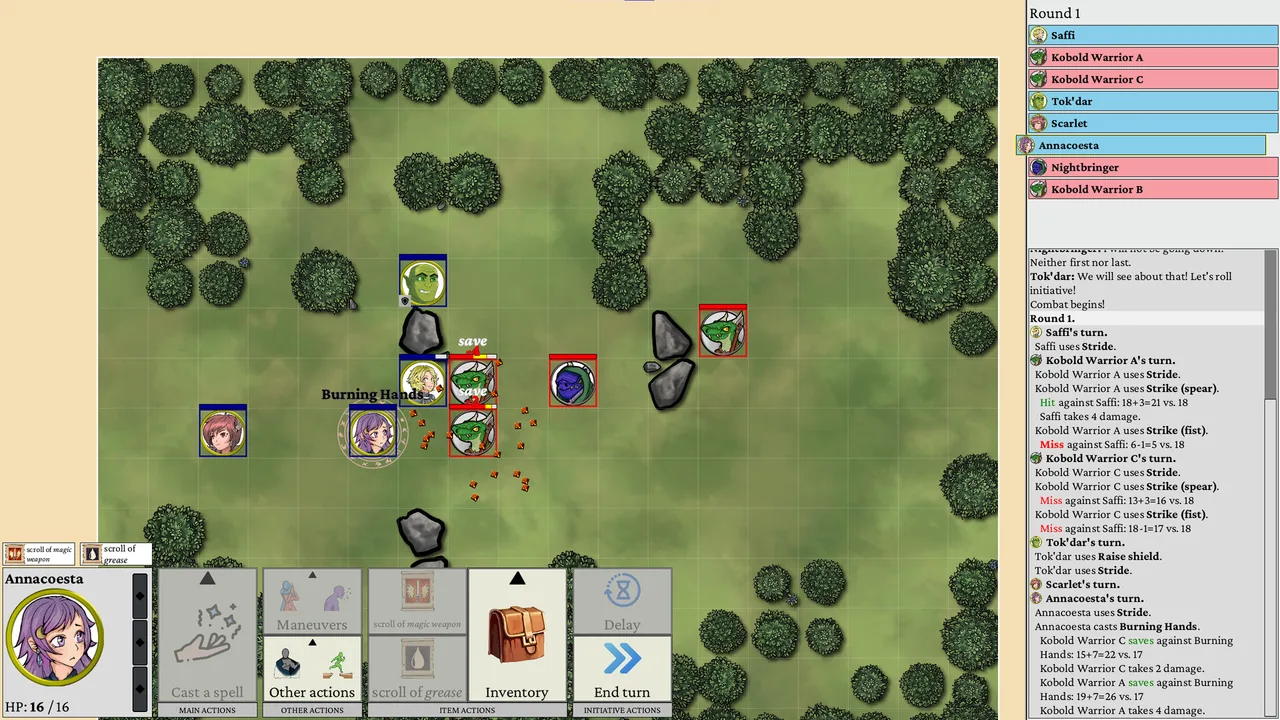
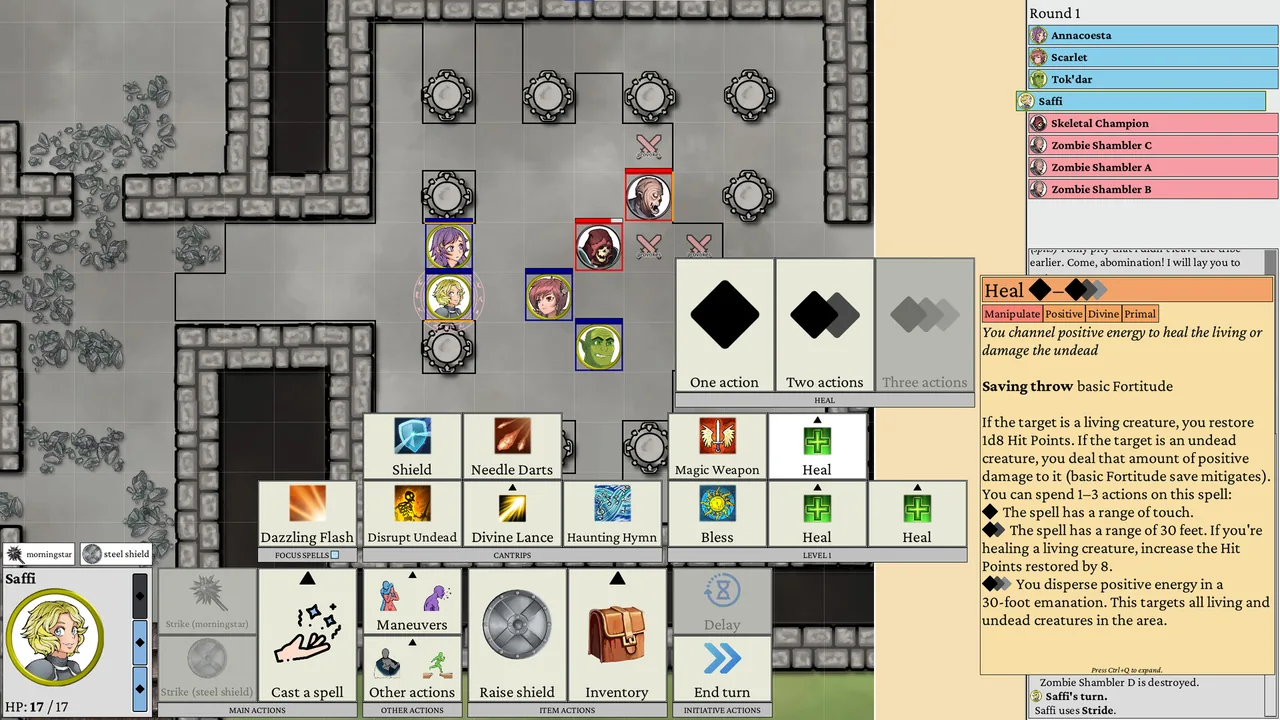
Dawnsbury Days occupies a genuinely unusual niche: it is, as multiple reviewers point out, the only video game built on Pathfinder Second Edition's actual ruleset, translating the tabletop system's distinctive three-action economy into a turn-based tactics game rather than adapting it loosely the way most licensed CRPGs do. Four childhood friends from a small town take on early-level threats using classes, feats and spells drawn directly from the PF2E rulebook. Dawnsbury Studios, a solo developer, built and self-published it on 8 March 2024. This review reads all 15 of the game's available English-language negative reviews — a small enough number to cover completely — alongside its top 100 positives, out of a corpus of 826 English reviews sitting at Overwhelmingly Positive, roughly 98.2%.
A rare case of near-total agreement
What stands out most about this review sample is how little the two sides actually disagree about. Reviewers on the positive side describe the game as "an exceptionally faithful adaptation" of PF2E, with one detailed review arguing you "could teach someone 80% of PF2e combat mechanics" just by playing it. Multiple reviewers frame it explicitly as a teaching tool for newcomers to the tabletop system, praising the three-action economy's flexibility over more rigid systems. Crucially, the negative reviews largely agree with this assessment rather than contesting it — the single most-upvoted negative opens by conceding "the game is good, mostly on the virtue that it is running off of Pathfinder 2e," and goes on to call it "literally" the only Pathfinder 2E game available. That's an unusual shape for a review split to take: not a disagreement about quality, but a disagreement about whether that quality is enough on its own, or whether a reader needs to already care about the source ruleset to enjoy it.
A short base campaign, openly extended by paid DLC
The most concrete, repeated complaint concerns scope. Several negative reviews note the base campaign only covers character levels 1 through 4, with one describing the full package as feeling like "a demo version of PF2E." That complaint checks out against the game's own storefront listing: Dawnsbury Studios has released two paid story-expansion DLC packs since launch — The Profane Barrier in April 2025 and Good Little Children Never Grow Up in October 2025, each priced the same as the base game — with a third, The Four-Leaf Clover, announced for a future release. That's a transparent, if unavoidably divisive, model: the base game genuinely is a shorter first chapter rather than a complete campaign, and continuing the story costs as much again per expansion. Reviewers who feel misled by that structure have a fair point; reviewers who see it as ongoing, reasonably-priced support for a beloved system by a single developer have an equally fair one.
Writing that can't match the mechanics
A second consistent thread concerns the four pre-generated protagonists, who can't be replaced with player-created characters in the base campaign. Several detailed negative reviews criticise their writing and voice acting directly, describing dialogue that breaks immersion by having characters discuss game mechanics in casual conversation, and personalities some reviewers found thin or stereotyped. This is a real, specific weakness independent of the combat-system praise, and it's worth flagging plainly: Dawnsbury Days earns its score almost entirely on the strength of its tactical combat, and readers hoping for narrative depth to match should adjust expectations accordingly.
When faithful math feels unfair
A smaller but recurring complaint concerns PF2E's own combat mathematics, faithfully reproduced here: several reviewers unfamiliar with the tabletop system describe frustratingly frequent missed attacks against enemies who seem to hit far more reliably. This is less a flaw in the adaptation than a genuine friction point in bringing a notoriously swingy, lower-hit-chance ruleset to players who haven't encountered it before — Pathfinder 2E is deliberately harder to land attacks in than many CRPG systems, by design, and a faithful digital version inherits that reputation along with the system's strengths. Achievement data suggests this doesn't stop most buyers from finishing what's there: episode-completion achievements for the main campaign sit in a gentle 75–82% range, a healthy funnel by this library's standards, while the hardest difficulty tiers on the paid DLC content sit around 1–2%, exactly where genuinely hardcore optional content should land.
Final Verdict
Dawnsbury Days succeeds at something narrow and difficult: making a beloved, mechanically dense tabletop ruleset feel genuinely good to play on a screen, and its review base — on both sides of the split — largely agrees it pulls that off. Where it falls short of a higher score is everything around that combat core: a base campaign short enough to read as an opening chapter rather than a complete game, characters and writing that don't match the mechanical polish, and a difficulty math that will frustrate anyone who arrives without patience for PF2E's particular flavour of randomness. For the audience it's built for — tabletop fans and tactics players willing to meet it partway — it's an easy recommendation at its price; for everyone else, it's worth trying the base campaign before deciding whether the story is worth continuing into paid territory.
Pros and cons
Pros
- Combat is widely and specifically praised as an exceptionally faithful translation of Pathfinder 2E's three-action economy, credited by multiple reviewers as good enough to teach the tabletop system to newcomers
- The solo developer is repeatedly described as responsive to feedback and actively supportive of the game's modding community, including a well-regarded expanded-class mod built by a player
- Achievement data shows a healthy, gentle completion curve through the main campaign's episodes, suggesting most buyers who start it see it through rather than bouncing early
- At NZ$7.39, the base game draws consistent praise as excellent value for a genuinely faithful niche RPG adaptation, even from reviewers who otherwise recommend against it
Cons
- The base campaign is short, covering only levels 1 through 4, and reaching further content requires purchasing one of two paid story-expansion DLC packs, each priced the same as the base game
- The four playable characters are fixed rather than player-created, and several detailed reviews criticise their writing and voice acting as weak, stereotyped and prone to breaking immersion with out-of-character mechanical dialogue
- Pathfinder 2E's genuinely lower hit-chance math, faithfully reproduced, reads to some players unfamiliar with the tabletop system as excessive randomness, with several reviews describing long strings of missed attacks against enemies who rarely miss back
- A handful of reviews argue individual encounters are tuned closer to "severe" than "standard" difficulty by default, making early fights feel adversarial rather than balanced for newcomers
Screenshots
-
Dawnsbury DaysImage: Dawnsbury Studios via Steam -
Dawnsbury DaysImage: Dawnsbury Studios via Steam -
Dawnsbury DaysImage: Dawnsbury Studios via Steam -
How the review scores each part of the gameWanderer Editorial -
The essentials at a glanceWanderer Editorial -
The short versionWanderer Editorial