Game review
Wintermoor Tactics Club
6.5 / 10
- Developer
- EVC Games
- Publisher
- Versus Evil, tinyBuild
- Released
- 5 May 2020
- Platforms
- Windows, macOS, Linux
- Genre
- Tactical RPG / Visual Novel Hybrid
- Monetisation
- Premium one-time purchase; no DLC or in-game purchases
- Players
- Single-player only
The short version
Wintermoor Tactics Club tells a genuinely charming story about three teenagers defending their tabletop-gaming club through a snowbound boarding-school year, with writing and characters warm enough that several reviewers call it a comfort-food favorite. What a large and specific share of its own audience pushes back on is the other half of its name: the turn-based battles are widely described as deterministic, shallow puzzles rather than a real tactics game, with enemies that broadcast fixed targeting priorities and a story that several reviewers say backs away from its own best idea rather than building on it.
Biggest strengths
- The central cast and their tabletop-gaming club premise are repeatedly described as charming, funny and genuinely moving, with several reviewers calling it a bittersweet favorite they wished lasted longer
- Diverse, well-written characters land even with reviewers who are otherwise critical of the combat, a rare split where the writing survives a negative review largely intact
- Approachable difficulty makes it a specifically recommended entry point for players who've historically bounced off tactics RPGs, several of whom credit this game with finally getting them into the genre
Biggest weaknesses
- A large, specific and independently corroborated body of reviews reports that the battles are deterministic, easily solved puzzles rather than a genuine tactics system, with the same core damage-maximizing solution applying to most encounters
- Enemies are described as broadcasting a fixed targeting priority they never deviate from, meaning positioning yourself outside that priority can neutralize threats without real risk, a specific and repeatable exploit several reviewers independently mention
- Several reviewers say the game introduces a genuinely clever idea, wargaming reframed as a school snowball fight, and then backs away from developing it rather than building the premise out further
Who it's for: Fans of cozy, story-forward games and newcomers curious about tactical RPGs who want a gentle, forgiving introduction, more than genre veterans looking for real tactical depth to match the title's promise.
Our recommendation: A good, inexpensive pickup for the writing and atmosphere alone, especially for players new to tactics games; skip it if depth and difficulty in the battles is the reason you're buying, since that's the review sample's most consistent and specific complaint.
6.5 / 10
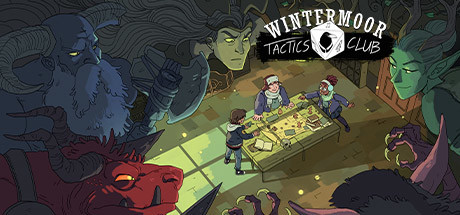
Wintermoor Tactics Club opens with a great hook: three members of a high school tabletop-gaming club, at a snowbound 1981 boarding school, have to defend their hobby's honor against the jocks in a school-sanctioned wargame — fought, appropriately, with snowballs standing in for spells and swords. It's a clever premise for blending a visual novel's character writing with a tactics game's battle system, and the review sample agrees completely on half of that promise: the writing is genuinely charming. Where opinion splits sharply, and specifically, is on whether the "Tactics" half of the title is actually earned, and that split runs consistently enough through the review sample to be the single most useful thing a prospective buyer can know going in.
A cast worth spending ten hours with
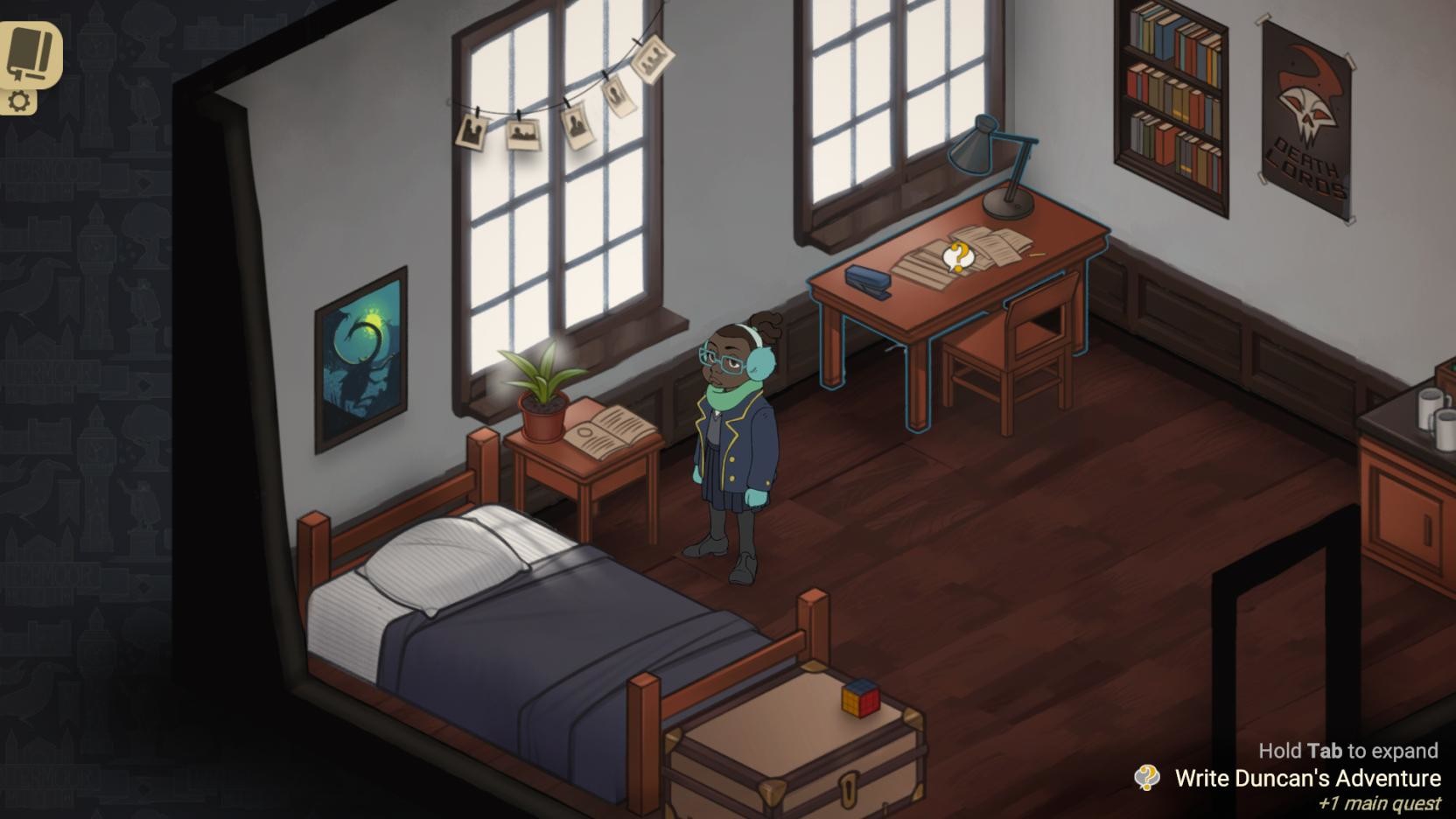
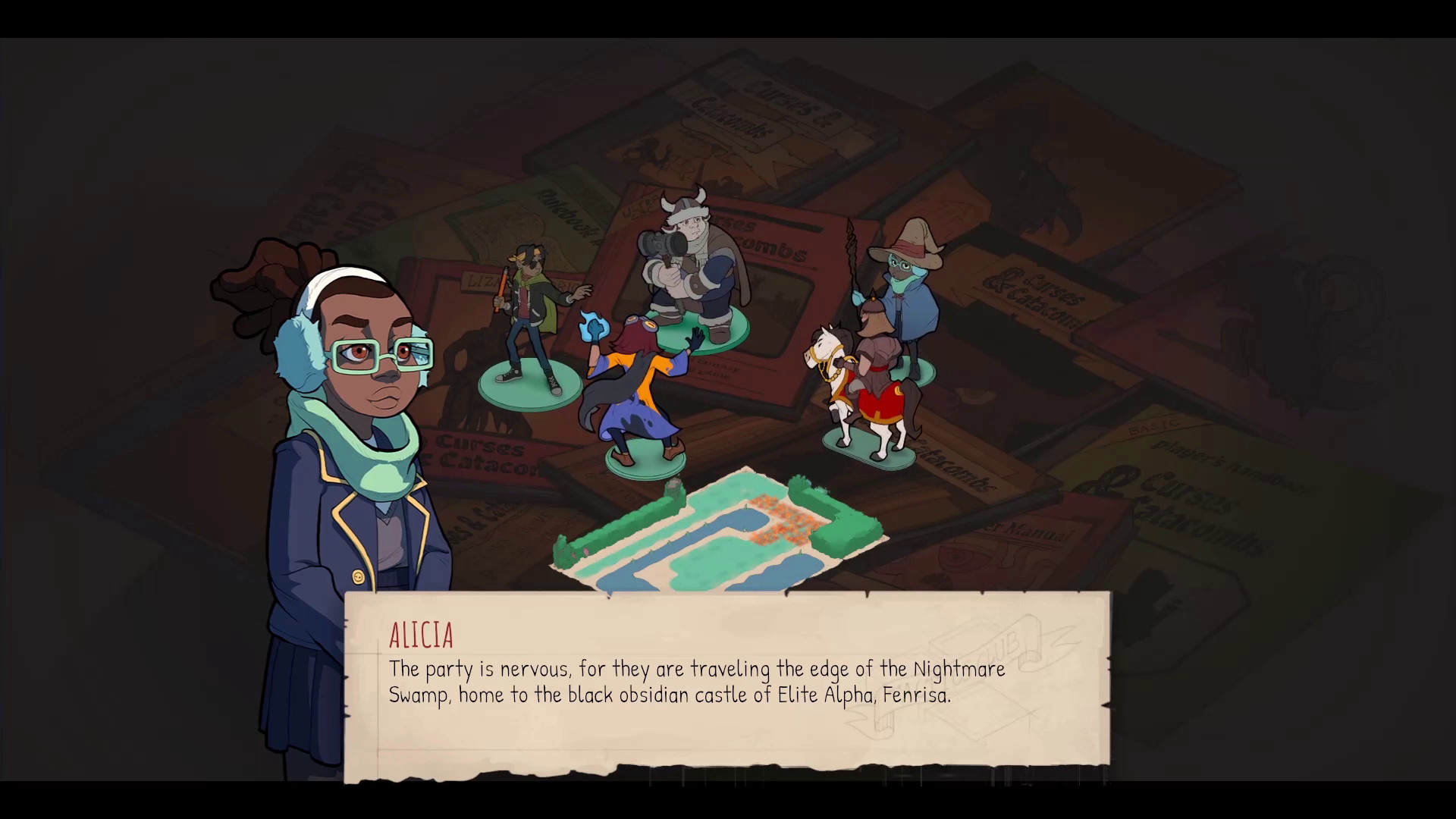
The characters carry this game. Alicia and her fellow club members are described across the review sample, including in largely negative reviews, as funny, likeable and diverse enough to land emotionally even when the mechanics around them don't. Several reviewers specifically call the game a comfort read — one describes it as "a cup of cocoa," another as a playable graphic novel — and more than one says they finished the roughly ten-hour story in a single extended sitting because they didn't want to stop. For players newer to tactics RPGs, that gentleness is framed as a genuine asset rather than a weakness: several reviewers credit the low difficulty specifically with finally getting them into a genre they'd previously found intimidating.
The complaint that runs through nearly every critical review
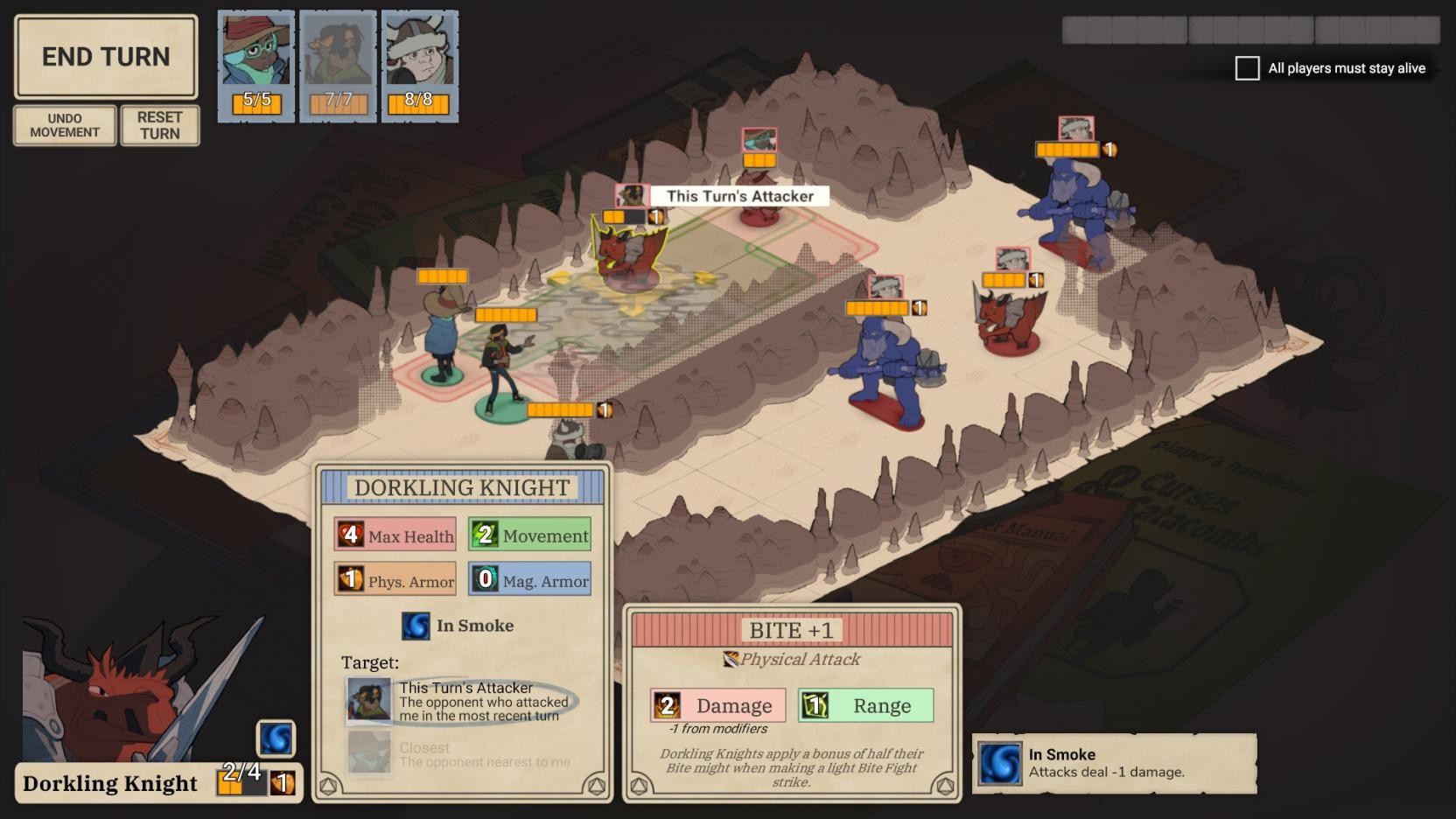
Set against that is a specific, repeated and detailed pushback from a meaningful share of the review sample, concentrated almost entirely on the battle system. Reviewers describe the combat as a series of deterministic puzzles rather than a real tactics game — most encounters, several say, are solved by the same damage-maximizing approach regardless of the specific units involved, and enemies broadcast a fixed targeting priority they never deviate from, letting a player simply stand outside that priority to neutralize a threat without meaningful risk. That level of specificity, independently repeated by multiple reviewers describing the same exploit in similar terms, reads as a genuine mechanical shortfall rather than a difficulty complaint dressed up as something more substantial.
The story draws its own version of the same "doesn't follow through" complaint: several reviewers say the game's best idea — wargaming reframed through a school snowball fight — never gets developed as far as its premise promises, and that the writing's quality, while strong at the outset, becomes less consistent as the story approaches its final act. Combined with a fairly short roster of roughly 25 to 30 total story battles, the overall picture several reviewers describe is a game that sets up more mechanical and narrative ambition than the back half actually cashes in.
A specific accessibility note worth flagging
One narrower but concrete complaint deserves a direct mention: at least one reviewer reports that a moving background animation during battle sequences triggered genuine motion sickness, severe enough to affect their ability to play. This isn't a widespread complaint in the sample, but it's specific and actionable — anyone with known sensitivity to that kind of visual motion should know about it before buying, rather than discovering it mid-session.
What the completion data adds to the story-versus-combat picture
Steam's global achievement data offers a useful supporting read on where players actually land. Roughly 61% of owners complete the first chapter, dropping to about 47% by the second and 34% by the third — a real but not especially steep taper for a ten-hour story, consistent with a game most players who start intend to finish rather than one with a hard difficulty wall. The achievements requiring more deliberate mechanical engagement with the battle system, like earning the game's top combat rank across every fight, sit in the low single digits by comparison. Read together, that gap supports the review sample's overall shape: most players are here for the story and finish it, while genuinely engaging with the combat as its own skill-testing system is something only a small minority pursues, whether because the battles don't reward that deeper engagement or because most players simply came for the writing in the first place.
A cult favorite that never got a sequel
More than one reviewer explicitly wishes for a sequel or a continuation of Alicia's story, and as of this writing none exists — Wintermoor Tactics Club remains EVC Games' single entry in this particular world, with the studio's post-launch update history limited to a short run of balance and bug-fix patches in its first few weeks rather than any long-term content roadmap. For a game whose reception among the people who connected with it runs this warmly, that's a mild disappointment in its own right, though it doesn't detract from what the original release actually delivers within its own ten-hour scope.
Verdict
Wintermoor Tactics Club is best understood as a strong, cozy visual novel that happens to have a tactics game attached, rather than the reverse. Its cast and writing earn the praise they get, including from players who otherwise can't recommend the game, and its gentle difficulty genuinely works as an on-ramp for tactics-curious newcomers. But a specific, well-corroborated body of criticism about deterministic, exploitable combat and an underdeveloped central premise means players expecting the tactical depth its title promises should adjust their expectations accordingly — or look elsewhere if that depth is the whole reason they're buying.
Pros and cons
Pros
- The central cast and their tabletop-gaming club premise are repeatedly described as charming, funny and genuinely moving, with several reviewers calling it a bittersweet favorite they wished lasted longer
- Diverse, well-written characters land even with reviewers who are otherwise critical of the combat, a rare split where the writing survives a negative review largely intact
- Approachable difficulty makes it a specifically recommended entry point for players who've historically bounced off tactics RPGs, several of whom credit this game with finally getting them into the genre
- A complete, well-paced story can be finished in a single extended sitting or two, at roughly ten hours for most players
- Art direction and character design draw consistent praise even from the review sample's more critical voices
Cons
- A large, specific and independently corroborated body of reviews reports that the battles are deterministic, easily solved puzzles rather than a genuine tactics system, with the same core damage-maximizing solution applying to most encounters
- Enemies are described as broadcasting a fixed targeting priority they never deviate from, meaning positioning yourself outside that priority can neutralize threats without real risk, a specific and repeatable exploit several reviewers independently mention
- Several reviewers say the game introduces a genuinely clever idea, wargaming reframed as a school snowball fight, and then backs away from developing it rather than building the premise out further
- At least one reviewer flags a moving background during battle sequences as a specific motion-sickness trigger, worth knowing in advance for anyone sensitive to that kind of visual movement
- With around 25 to 30 story battles total and a story that some reviewers say weakens as it progresses, both the combat and narrative halves are reported as feeling thinner by the game's final act than its opening hours promise
Screenshots
-
Wintermoor Tactics ClubImage: Versus Evil via Steam -
Wintermoor Tactics ClubImage: Versus Evil via Steam -
Wintermoor Tactics ClubImage: Versus Evil via Steam -
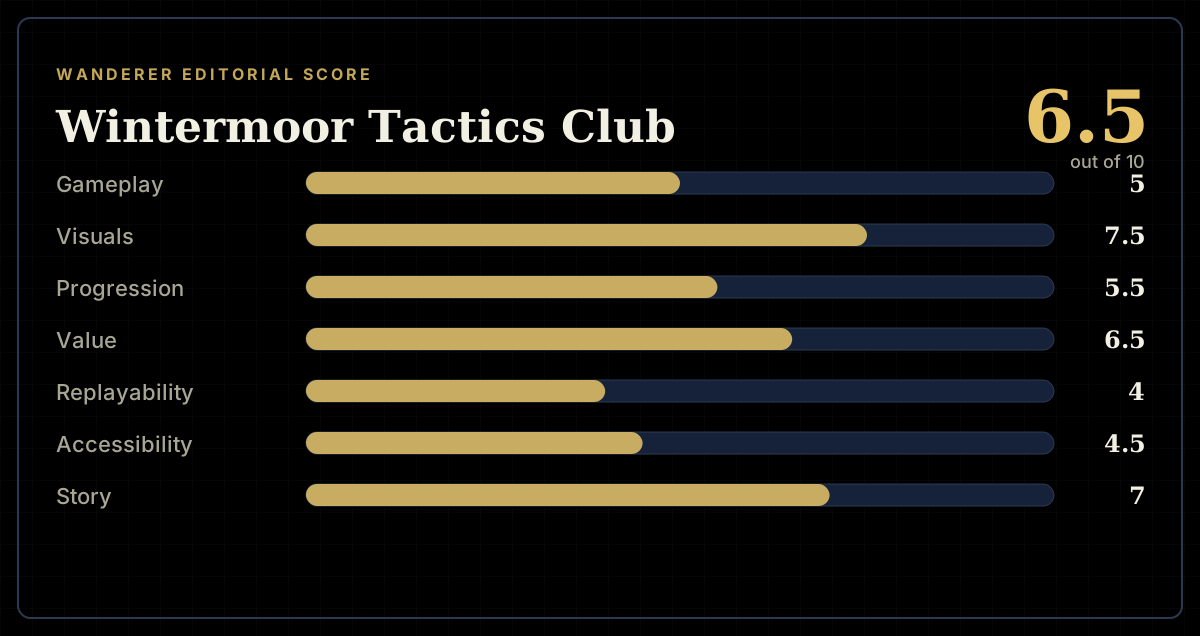
How the review scores each part of the gameWanderer Editorial -
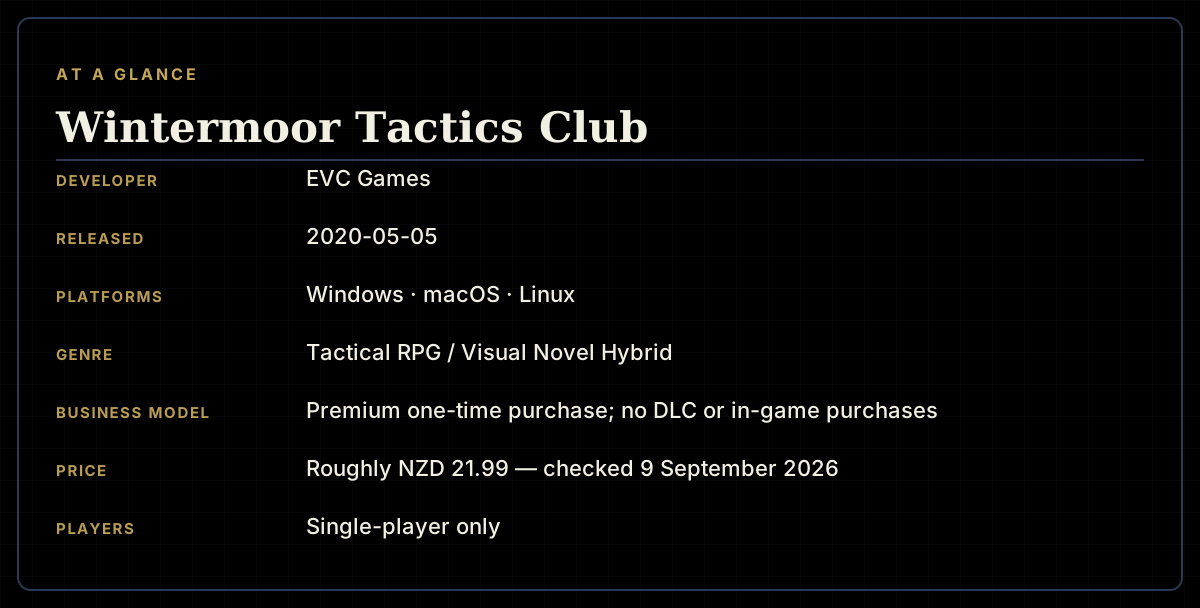
At a glanceWanderer Editorial -
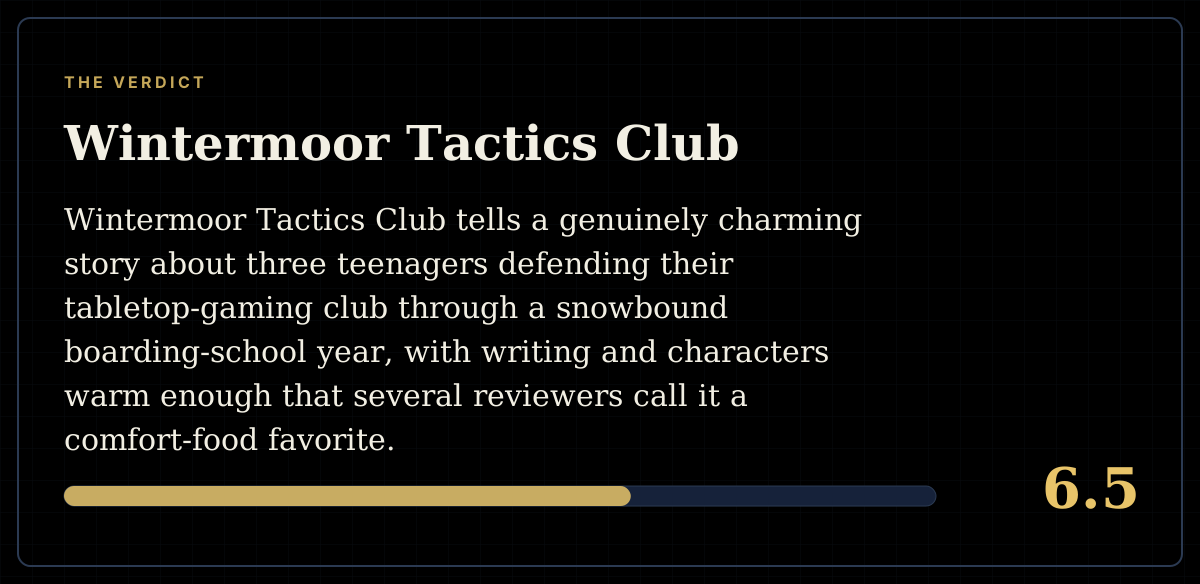
The short versionWanderer Editorial