Game review
Warframe
8 / 10
- Developer
- Digital Extremes
- Publisher
- Digital Extremes
- Released
- 25 March 2013
- Platforms
- Windows, PlayStation 5, PlayStation 4, Xbox Series X/S, Xbox One, Nintendo Switch, Nintendo Switch 2, iOS, Android
- Genre
- Action RPG / Looter-Shooter
- Monetisation
- Free-to-play with a premium currency, Platinum, spendable on cosmetics, Warframe and weapon slots, crafting-time skips and convenience items. Platinum can be bought outright or earned entirely free by trading tradeable items — mods, Prime parts, Arcanes — with other players, which is the mechanic the whole "everything is earnable" claim rests on. No Warframe, weapon or piece of combat power is sold directly for cash.
- Players
- Squad-based co-op for up to four players across missions, open-world zones and Railjack ship combat; a lightly populated PvP mode, Conclave, exists but has never been the game's draw. Cross-platform play launched in 2022 and cross-platform save has been rolling out since December 2023
The short version
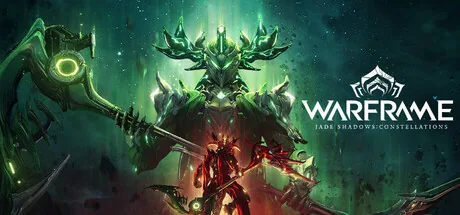
Warframe's core promise has held for thirteen years: nothing that makes you stronger is behind a paywall, and the movement-and-mod combat it's built on is still some of the best third-person action any free game offers. Jade Shadows: Constellations keeps the story engine running and the Tau tease at TennoCon 2026 shows no sign of Digital Extremes slowing down.
The cost of that longevity is a new-player experience buried under thirteen years of interlocking systems, and a "you can earn everything" pitch that's true in principle but demands either serious trading know-how or serious patience to actually collect on.
Biggest strengths
- Every Warframe and weapon in the game is farmable through normal missions, with no faction, boss or blueprint locked behind a cash-only purchase
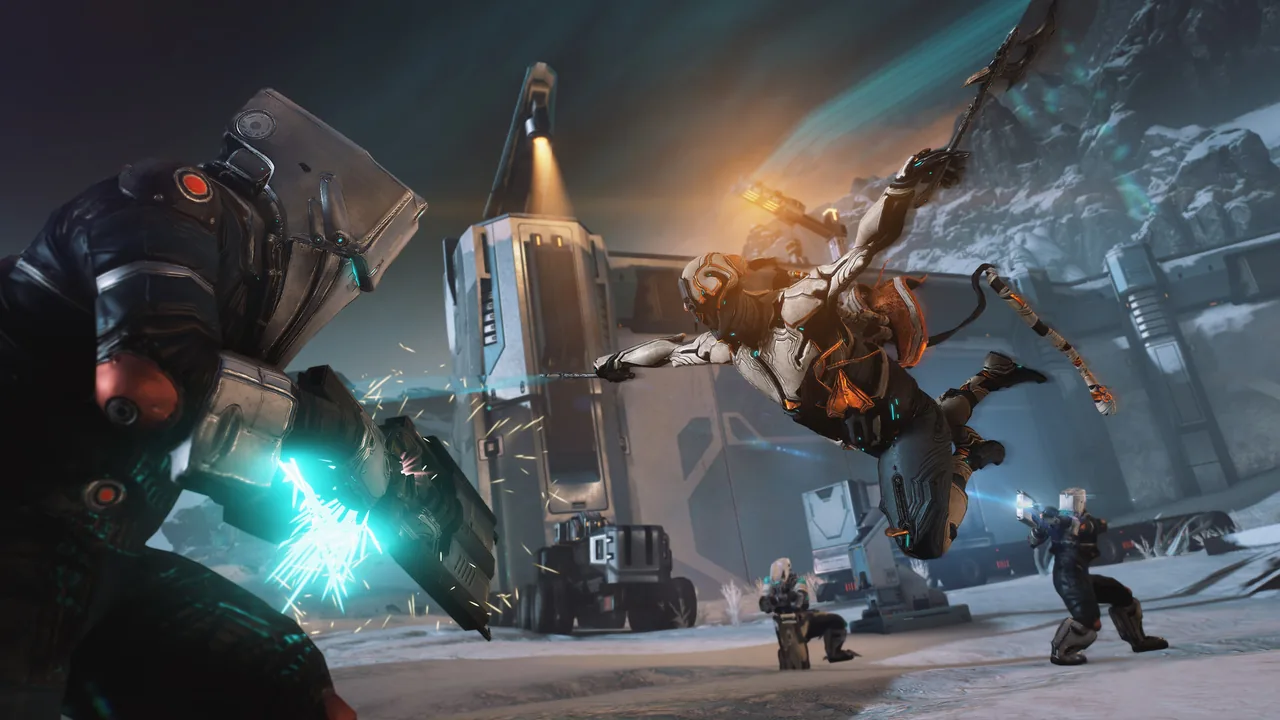
- Parkour movement and melee stance combos give combat a vertical, momentum-driven feel that most shooters in the genre never attempt
- Platinum, the premium currency, can be earned entirely free by trading mods and Prime parts with other players rather than paid for
Biggest weaknesses
- The early Star Chart teaches almost none of the vocabulary — mods, Forma, Focus, Riven Mods — that the rest of the game assumes you already know
- Warframe and weapon inventory slots are gated behind Platinum, so a player who won't trade or pay eventually has to start deleting gear to keep farming new gear
- The PC Metacritic score still sits at 69 from years-old launch impressions, a stale number next to the console releases' mid-80s scores for the same live game
Who it's for: Players who want a deep, systems-heavy action game they can dip into for a session or lose a weekend to, and who don't mind a slow first few weeks while the game's vocabulary clicks into place. A poor fit for anyone who wants an F2P game to be immediately legible, or who won't engage with the trade chat that makes the free economy actually work.
Our recommendation: Push through to the Second Dream story quest before judging the game. Almost every system that makes Warframe distinctive — the Operator, Focus, the real shape of the endgame — sits on the far side of it, and the opening hours undersell what's waiting there.
8 / 10
Warframe sells itself, when it bothers to sell itself at all, on one sentence: everything in this game can be earned for free. Thirteen years and something like 80 million registered accounts later, that sentence is still technically true — no Warframe, no weapon, no mod that actually matters for combat is locked behind a credit card. What that sentence leaves out is how much of the game you have to understand before "earned for free" stops meaning "earned for free after weeks of trading, farming and reading a wiki." Digital Extremes built one of the most honest free-to-play economies in the industry and then buried its own onboarding under thirteen years of systems nobody ever simplified. Both of those things are true at once, and neither cancels the other out.
The first ten hours undersell the next thousand
New Tenno start on the Star Chart, a solar-system map of short missions that teach shooting, melee and the game's parkour-driven movement — double jumps, wall runs, slides that chain into melee finishers — well enough. What they don't teach is the vocabulary the rest of the game runs on. Mods, the upgrade cards slotted into every Warframe and weapon, aren't explained so much as handed to you; Forma, the item that lets you reconfigure a piece of gear's mod capacity at the cost of resetting its rank to zero, shows up as a reward with no context for why you'd want to burn a maxed weapon back down to level 0. Focus schools, Arcanes, Riven Mods, the Operator — the systems that actually define how a mid-game Tenno plays — are all things the early game gestures at without committing to.
Digital Extremes has clearly tried to soften this. The Duviri Paradox, added in 2023, restructured the early hours around the Drifter and a self-contained open loop before players are dropped into the wider Star Chart, giving new accounts a cleaner first few hours than the old prologue mission ever offered. It helps. It doesn't solve the deeper problem, which is structural: Warframe wasn't designed as one coherent onboarding funnel, it was designed as thirteen years of expansions each assuming you'd already cleared the last one. A brand-new player in 2026 isn't learning "Warframe." They're learning thirteen overlapping games that happen to share a save file, and the tutorial can only front-load so much of that before it starts actively obscuring what the game is good at.
Combat is still the best argument for sticking around
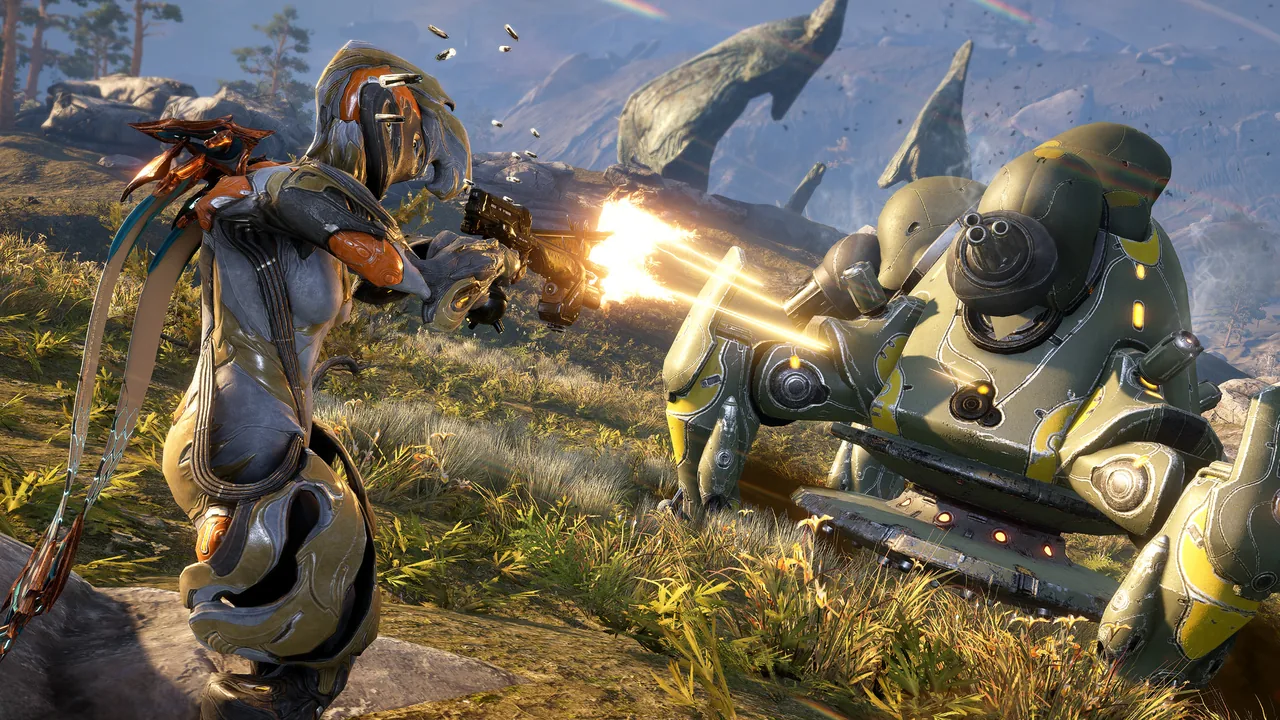
What the game is good at is movement combined with violence in a way almost nothing else in the genre attempts. A Warframe isn't a class so much as a moveset and a kit of four powers, and combat at its best chains guns, melee stance combos and ability casts into a single unbroken sequence while you're wall-running past an enemy squad rather than standing still and trading shots with it. Melee alone has its own combo trees per weapon type, its own stance mods, its own heavy-attack system layered on top of the base swing — it's a genuinely deep system hiding inside what a lot of looter-shooters treat as a last-resort panic button.
The forty-plus Warframes span everything from stealth-and-crowd-control kits to pure damage casters to frames built entirely around manipulating enemy behaviour, and because any Warframe can be built with any weapon, the actual variety of viable loadouts is enormous. Mod loadouts add another whole axis on top — the same Warframe played with a build tuned for survivability plays almost nothing like the same frame built for raw ability spam. It's a combat system that rewards theory-crafting as much as it rewards reflexes, and thirteen years in, Digital Extremes is still adding frames — Jade Shadows: Constellations shipped a pair of constellation-themed dual Warframes in June 2026 — without the roster starting to feel redundant.
Story quests carry more weight than the genre usually asks of them
The mission structure underneath all that combat is mostly procedurally-assembled objectives — exterminate, defense, survival, spy — repeated across different tilesets and factions, and taken in isolation none of it is remarkable. What elevates Warframe past "shooter with a lot of maps" is the cinematic story quest line running underneath it. The Second Dream, from 2015, recontextualises what a Warframe actually is and who's piloting it, and it's the point where the game stops being a mission simulator and starts being a mystery with real stakes. The New War, in 2021, closes out a years-long antagonist arc with production values well past what a free game is expected to deliver. 1999, in late 2024, and Jade Shadows: Constellations, this past June, keep extending that same narrative spine rather than resetting it — Jade Shadows leans specifically into fatherhood as a theme for its two new Warframes, which is an unusually specific emotional register for a game mostly known for space parkour. Digital Extremes previewed the next chapter, codenamed Tau, at TennoCon 2026 in July, and the studio's pacing on these quests — roughly one major cinematic release a year, alongside smaller open-world and system updates — has been consistent enough that "there's always another one coming" is a safe bet rather than a hope.
The catch, again, is access. None of that story is skippable, all of it assumes you've cleared what came before, and a player who wandered in during 2026 is looking at a genuinely long queue of mandatory context before Jade Shadows means anything emotionally. It's a smaller version of the same toll that subscription MMOs charge for their main story — Warframe just charges it in game-time instead of a monthly fee.
What "earn everything" actually costs
This is where the free-to-play pitch has to survive contact with the clock, and it mostly does — with an asterisk worth taking seriously. Platinum, Warframe's premium currency, buys cosmetics, crafting-time skips, and two things that matter for actual progression: Warframe slots and weapon slots. Every frame and weapon can be built from farmed blueprints and resources, but each one occupies a slot, and once those slots fill up, a player who refuses to spend or trade for Platinum has exactly one option left — start deleting gear to keep collecting new gear. That's not a hypothetical edge case; it's the natural end state of playing entirely free for long enough to want more than a handful of frames.
The escape hatch, and it's a real one, is trading. Platinum has no cash-exclusive tier — it flows between players constantly, earned by selling Prime parts, mods, Arcanes and other tradeable drops in the game's trade chat and through third-party price-check tools the community maintains. A player willing to learn what a Prime part is worth can fund every slot, every frame and every cosmetic they want without ever opening a wallet. That's a genuinely rare thing for a live-service game to offer honestly. But it's not free in the sense a new player hears "free-to-play" and expects — it's free in the sense that time, market knowledge and a working relationship with the trade economy substitute for cash. Whether that trade is a good deal depends entirely on how much a player enjoys the meta-game of pricing Prime parts, and plenty of players simply don't want to run a second job inside their shooter. For them, the honest answer is that Platinum is a soft toll on convenience, not a hard wall on power, which is still a better deal than most of the genre offers — just not quite the unconditionally free game the marketing implies.
On Steam, the DLC listings are mostly what that spending actually buys: character and cosmetic bundles in the NZ$16-54 range, a soundtrack pack, and rotating starter offers, none of which unlock anything a free player can't eventually farm or trade for (checked 30 July 2026). Prime Access — the game's flagship paid bundle, wrapping a Prime Warframe, weapons and cosmetics with a discount over buying the parts individually — rotates in and out of the storefront with each Prime release rather than sitting there permanently, which is normal for the format but worth knowing if a specific frame you want isn't currently for sale.
Co-op, open worlds and the parts of the map that show their age
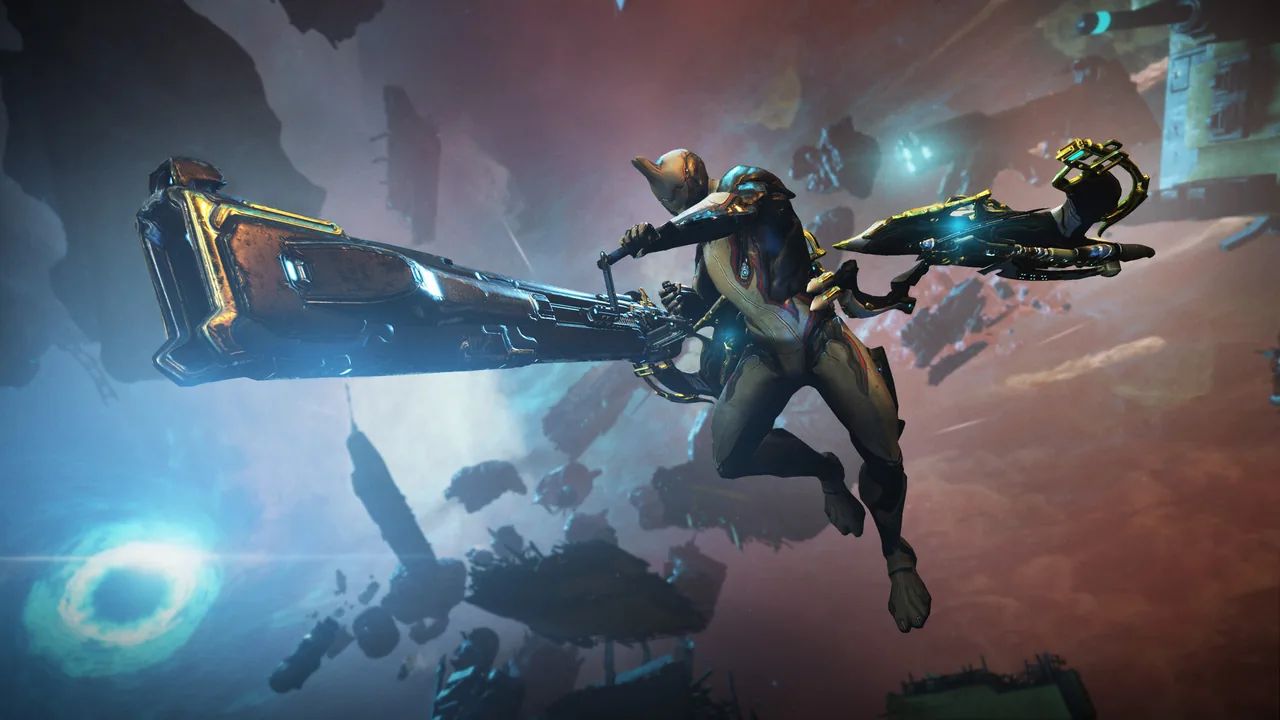
Warframe is built to be played with other people, and the squad-of-four structure works well across its mission types, its open-world zones — Plains of Eidolon, Orb Vallis, the Duviri open loop — and Railjack's cooperative space combat, where one player can pilot while others handle turrets, boarding parties and engineering repairs. Matchmaking is reliable and cross-platform play means the squad size isn't artificially limited by which storefront someone bought the game on. PvP, by contrast, has never landed: Conclave exists, has a dedicated small community, and isn't where Digital Extremes' attention has gone in years — nobody claiming Warframe as a competitive shooter is describing the actual game.
Visually, the newer content — Jade Shadows' constellation Warframes, the Duviri Paradox's stylised painterly zones — looks genuinely striking, and the frame and weapon design across the whole roster has aged better than most 2013-era art direction has any right to. What hasn't kept pace is some of the older Star Chart tileset content and UI, which still carries the visual and structural fingerprints of a much earlier live-service game sitting a few menus away from art that could pass for a current release. It's the same split the aging PC Metacritic score of 69 reflects without meaning to — that number is frozen from early, much rougher impressions of the game, while the Switch and PlayStation 5 releases, reviewed years later against the game it had actually become, scored in the mid-80s for functionally the same live client. Performance itself is generally solid on modern hardware across platforms, with the heavier open-world zones and Railjack's more chaotic fights the likeliest places to feel the strain, particularly on older or lower-spec systems given the 75GB install and the game's steadily growing visual ambition.
Final verdict
Warframe earns its reputation as one of the fairest free-to-play games on the market, and it earns that reputation the hard way — by actually letting players trade their way to every frame, every weapon and every slot without a mandatory purchase anywhere in the chain. Jade Shadows: Constellations and the Tau tease that followed it at TennoCon 2026 are proof the story engine hasn't run out of things to say after thirteen years, and the parkour-and-mod combat underneath all of it remains one of the genre's most distinctive systems. None of that changes how badly the opening hours undersell what's waiting on the other side of the Second Dream, or how much the "it's all free" pitch quietly depends on a player's willingness to learn the trade economy rather than simply grinding solo. Players who'll put in that early patience, or who have a friend willing to explain the vocabulary directly, are signing up for one of the most rewarding long-term commitments free gaming has to offer. Players who bounce off the first few confusing hours aren't wrong about what they experienced — they're just leaving before the game actually starts.
Anyone drawn to the idea of a huge farmable item economy without a pay-to-win shortcut sitting next to it might also want to look at Wanderer — a much smaller game built on the same rule that what you can earn should never be something you're quietly pressured to buy instead.
Pros and cons
Pros
- Every Warframe and weapon in the game is farmable through normal missions, with no faction, boss or blueprint locked behind a cash-only purchase
- Parkour movement and melee stance combos give combat a vertical, momentum-driven feel that most shooters in the genre never attempt
- Platinum, the premium currency, can be earned entirely free by trading mods and Prime parts with other players rather than paid for
- Cinematic story quests like The Second Dream, The New War and Jade Shadows treat the Tenno's identity as a genuine ongoing mystery rather than a levelling wrapper
- Thirteen years of content updates have never been walked back into a paid remaster or a soft relaunch — the whole history is still playable in one client
Cons
- The early Star Chart teaches almost none of the vocabulary — mods, Forma, Focus, Riven Mods — that the rest of the game assumes you already know
- Warframe and weapon inventory slots are gated behind Platinum, so a player who won't trade or pay eventually has to start deleting gear to keep farming new gear
- The PC Metacritic score still sits at 69 from years-old launch impressions, a stale number next to the console releases' mid-80s scores for the same live game
- Mastery Rank and Forma both ask for repeat playthroughs of gear you've already mastered, and neither system disguises that it's asking for your time twice
- Mac and Linux are unsupported outright, and the minimum spec's 75GB install is a real barrier on space-limited PCs
Screenshots
-
WarframeImage: Digital Extremes via Steam -
WarframeImage: Digital Extremes via Steam -
WarframeImage: Digital Extremes via Steam -
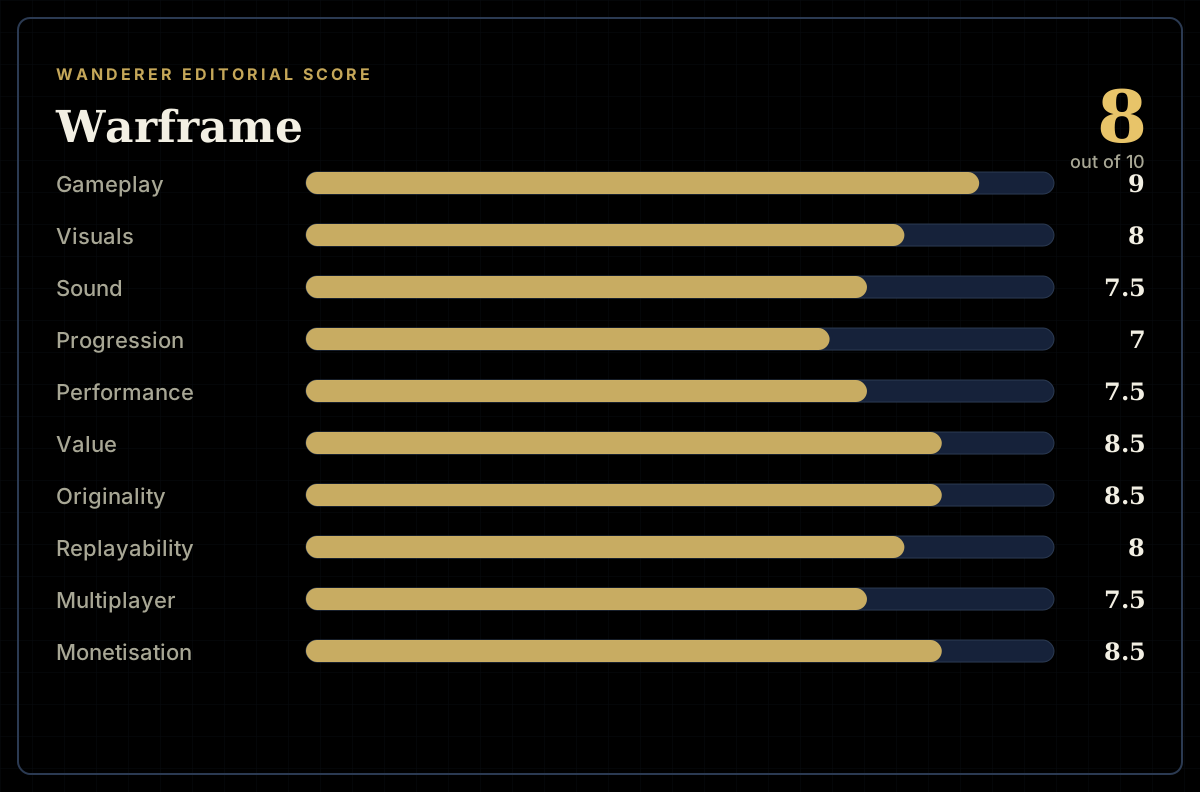
How the review scores each part of the gameWanderer Editorial -
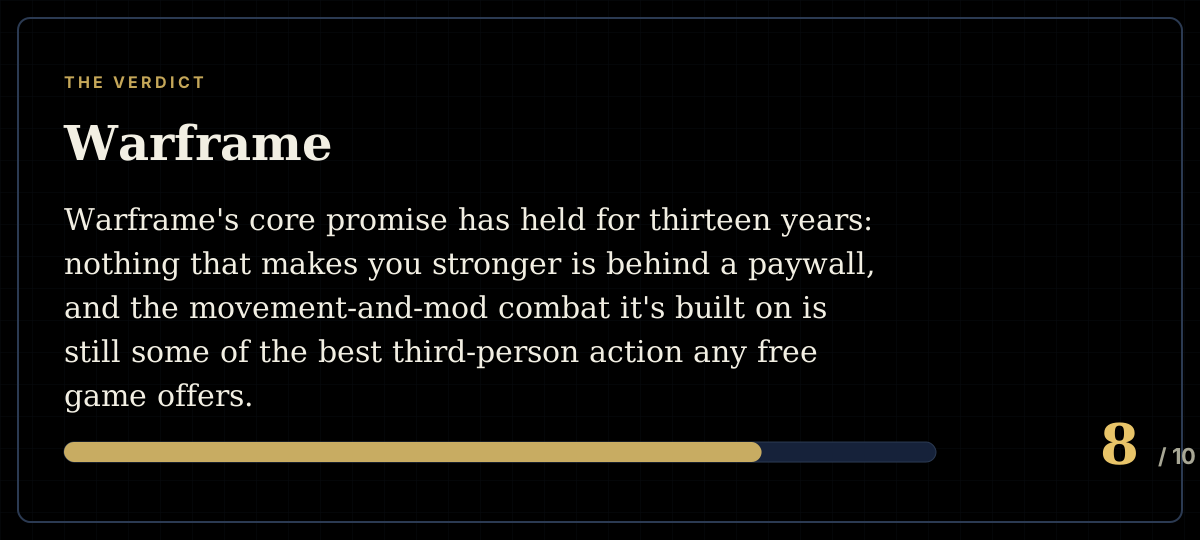
The short versionWanderer Editorial