Game review
Treasure Chest Clicker
6.5 / 10
- Developer
- Simon Eftestol
- Publisher
- Simon Eftestol
- Released
- 17 July 2023
- Platforms
- Windows
- Genre
- Idle, Clicker, Incremental
- Monetisation
- Premium, one-off purchase, no in-app purchases or ads
- Players
- Single-player
The short version
Treasure Chest Clicker is exactly what it says on the tin, and then a little more: crack open chests for gold, spend the gold on five separate skill-tree branches, and chase a rarity-tiered log of collectible treasures that runs all the way up to a 0.0050% drop chance. For NZ$5.99, with no microtransactions anywhere in sight, that's a genuinely fair amount of solo-developer clicker for the money, and the achievement data backs it up — completion rates here stay unusually healthy all the way to the end rather than collapsing after the opening hour the way most cheap idle games do.
What holds it back is a save-loss bug that keeps recurring across the game's entire lifespan. Independent reports dated from August 2023 through February 2026 describe hours or hundreds of hours of progress vanishing after a power cut or a Steam Cloud sync gone wrong, with no backup save to fall back on. For a genre that sells itself on patient, long-term number-watching, losing that number to a bug is close to the worst thing that can happen.
Biggest strengths
- No microtransactions, ads or paywalls anywhere — the entire game is the one NZ$5.99 purchase, which multiple reviewers call out by name as a relief after mobile idle games
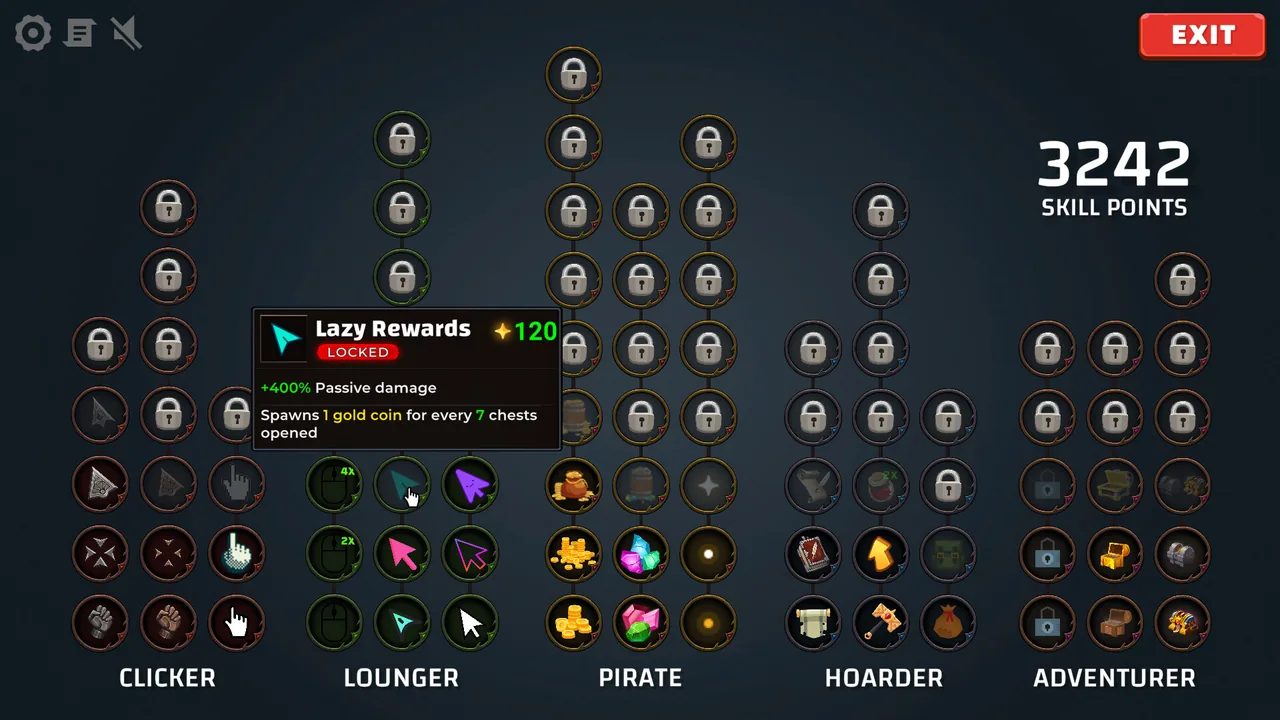
- Five separate skill-tree branches (Clicker, Lounger, Pirate, Hoarder, Adventurer) give meaningfully different upgrade paths rather than one flat stat ladder
- A rarity-tiered treasure collection log, down to items with a stated 0.0050% drop chance, gives long-term players something to chase beyond raw numbers
Biggest weaknesses
- A save-loss bug recurs across the game's entire release history — dated reports from August 2023, twice in February 2024, March 2024, October 2025 and February 2026 all describe hours or hundreds of hours of progress disappearing, often blamed on a power interruption during a Steam Cloud sync with no local backup to recover from
- Passive damage overtakes active clicking damage early, which several reviewers say makes the clicking itself — and a chunk of the early skill tree built around it — largely pointless
- The mid-to-late game is mostly the same loop scaling upward rather than introducing new mechanics, and more than one long-time player describes the back half as repetitive
Who it's for: Clicker and idle fans who want a cheap, honest, ad-free game to leave running for dozens or hundreds of hours, and who don't mind a rough, solo-developer edge in the UI and writing. A poor fit for anyone who can't tolerate the risk of losing hours of progress to an unresolved save bug, or who wants new mechanics to keep unlocking rather than the same loop scaling upward.
Our recommendation: A safe NZ$5.99 pickup if you already know you like the clicker genre and mostly want more of it without a mobile game's monetisation attached — just back up your save file manually and don't rely on Steam Cloud alone, since the game's own review history shows that trust misplaced more than once.
6.5 / 10
Introduction
Treasure Chest Clicker doesn't pretend to be anything other than what its name says. Solo developer Simon Eftestol released it on Steam on 17 July 2023, for NZ$5.99, and its entire pitch is right there in the store description: click chests, get gold, unlock more chests, repeat. What separates it from the enormous pile of similarly-named mobile-style clickers on Steam is that it commits harder than most to giving that loop actual structure — five distinct upgrade branches, a proper prestige system, and a treasure collection log with real rarity tiers — and it does all of that without a single microtransaction. Three years on, it's also carrying a bug that should worry anyone about to invest serious hours in it: recurring, well-documented reports of entire save files disappearing.
A clicker that actually branches
The core loop starts exactly where the title suggests: click a chest, watch gold and treasures spill out, spend that gold on upgrades. Where it gets more interesting is the skill tree, which splits into five differently-themed branches — Clicker, Lounger, Pirate, Hoarder and Adventurer — each built around a different way of playing. The Clicker branch rewards active engagement, the Lounger branch leans into automation and passive multipliers, and the others sit somewhere in between, layering in gold multipliers, critical-hit chances and chest-opening speed. It's a meaningfully wider structure than the single flat stat ladder most budget clickers offer, and it gives players a real choice about whether they want to sit and click or start the game and walk away.
Underneath that sits a treasure collection log worth calling out on its own: named, rarity-tiered items with stated drop percentages running as low as 0.0050% for the rarest entries, each with a line of flavour text. It's a small thing, but it's the kind of detail that turns "numbers go up" into something with actual texture, and it gives committed players a reason to keep opening chests long after the main skill tree is maxed out.
Where the clicking stops mattering
The most consistent structural complaint in the review corpus is that active clicking becomes irrelevant surprisingly early. Passive, automatic damage scales past manual clicking damage well before the midgame, which one reviewer frames bluntly: "there's no reason to click when the passive automatic damage is always 100x or more than your clicking damage," adding that it makes a meaningful chunk of the click-focused skill tree close to dead weight. That's a real design tension for a game whose entire genre label is "clicker" — once the click stops being the interesting decision, what's left is closer to a pure idle game with an optional clicking minigame bolted on, and not every reviewer feels that trade was communicated honestly.
The other recurring complaint is that the loop stays largely the same once its systems are unlocked. A long-time reviewer with over a hundred hours logged summarises the prestige structure plainly: collect prestige points, prestige, spend the points in a skill tree that "only improves current statistics, no new gameplay," and repeat. It's an honest description of what the game is, and it's fair to say upfront that Treasure Chest Clicker never really pivots into a second idea — it commits to doing one thing and scaling it, rather than introducing new mechanics as the hours add up.
The achievement data tells a better story than the complaints suggest
Given how often "boring" and "repetitive" show up in the negative reviews, it's worth checking Steam's global achievement data before taking that at face value — and the curve here is unusually forgiving for a budget idle game. Across all 120 achievements, the hardest one still sits at 31.9% global completion, the median is 51%, and not a single achievement falls under 10%. Achievements tied to reaching the very end of the content — "OpenLastChest" and "PurchaseChestFINAL" — both sit at 34.6%, meaning better than a third of everyone who owns this game has pushed all the way to its final content gate. For comparison, idle and clicker games in this library routinely show completion curves that crash to under 5% on their hardest milestones; this one doesn't. Whatever the pacing complaints say about the middle stretch, a genuinely large share of buyers are finishing what they started, and several reviewers back that up directly with logged completion times of 300, 538 and 620 hours to reach 100%.
The save-loss problem
Set against that healthy completion data is the review corpus's most serious and most persistent complaint: players losing their save entirely, sometimes after dozens or hundreds of hours. This isn't a launch-week bug that got patched — dated reports run from 14 August 2023 (60 hours lost, three times in a row after power cuts) through twice in February 2024, once in March 2024, again in October 2025, and as recently as 13 February 2026, when a player describes their progress failing to carry over between a Steam Deck session and a PC session. One October 2025 review describes the likely mechanism in some detail: a power interruption during a Steam Cloud sync appears to overwrite the local save with an empty one, and the game keeps no separate backup to recover from. None of that is something a review corpus can independently verify as the exact cause, but the pattern across three years of otherwise-unrelated reviewers, describing the same failure mode in the same terms, is hard to dismiss as coincidence or user error.
For a game explicitly built around long, patient sessions — the kind that produce 300-plus hour completions — a save-loss bug this persistent is a serious problem, and it's the single biggest reason to treat this as a "back up your save manually" purchase rather than a "trust the cloud sync" one.
Presentation and value
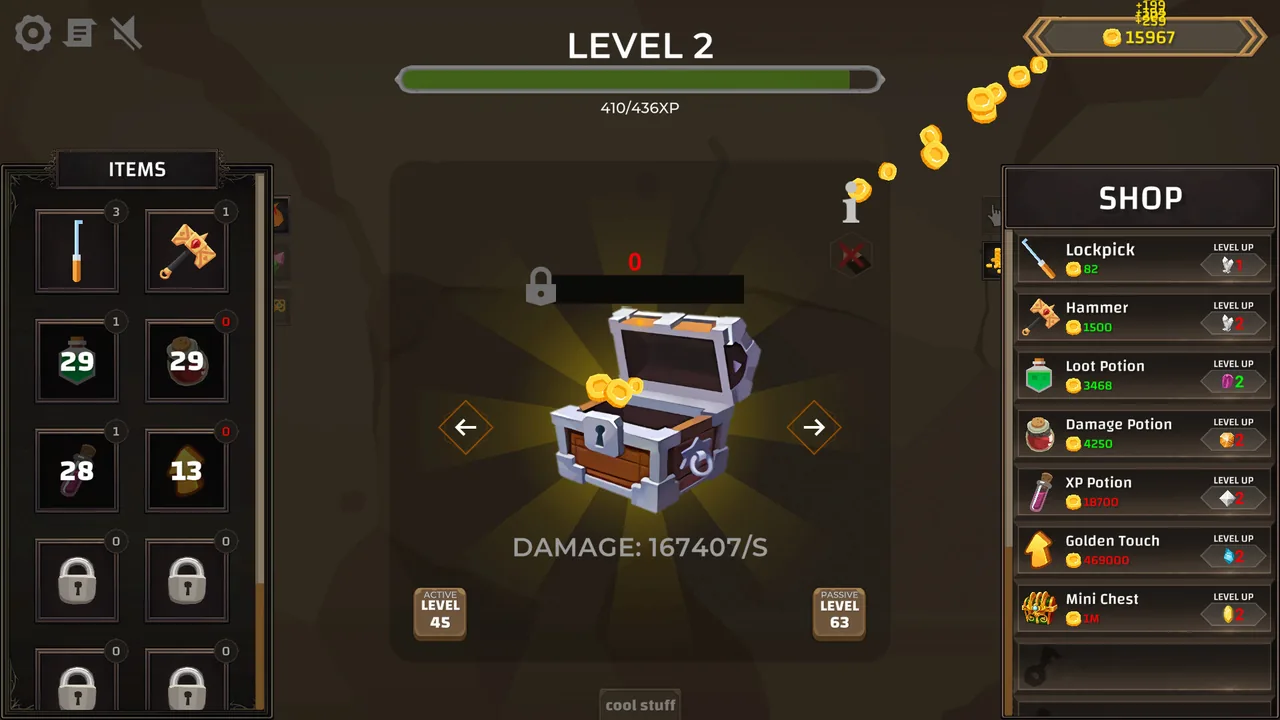
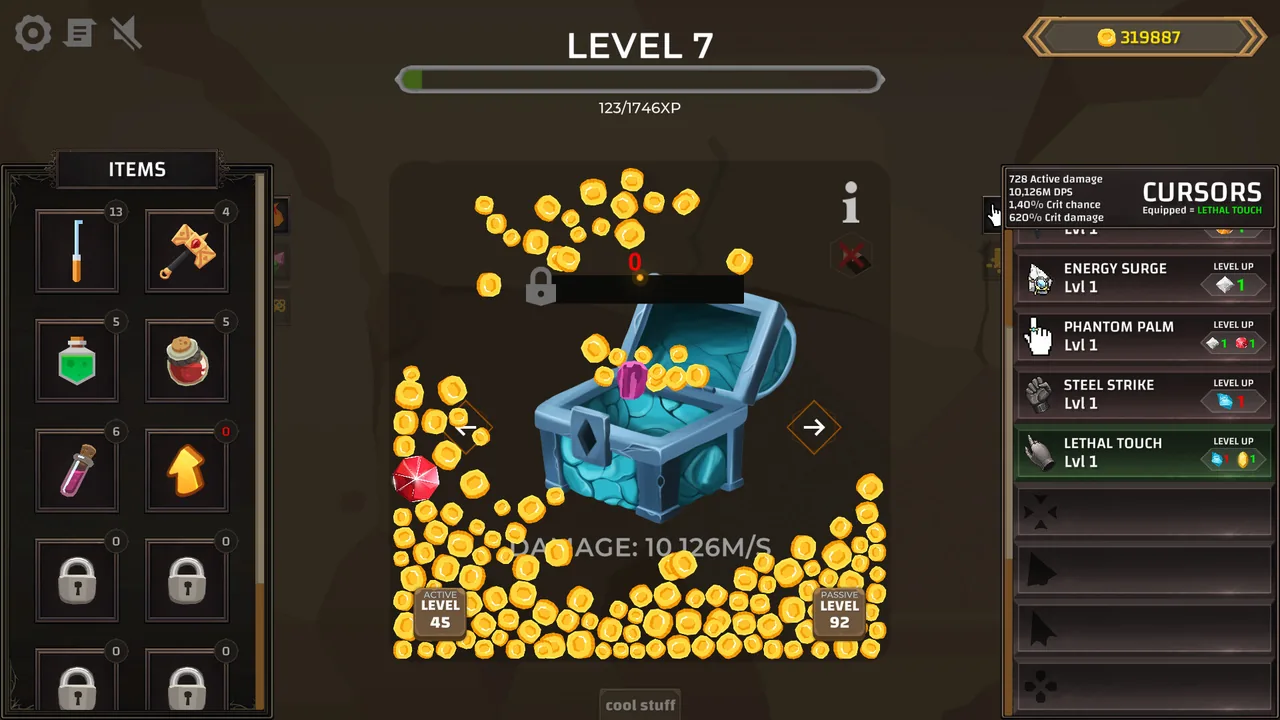
The screenshots make a good case for the presentation on their own: a clean low-poly chest animation with satisfying coin-spray feedback, a legible shop panel listing consumables like Lockpick, Hammer, Loot Potion and Golden Touch upgrades, and a skill tree UI that, while dense, communicates its five branches clearly at a glance. One reviewer specifically praises "fun music on a loop" alongside the visuals, and nothing in the corpus suggests the audio side is a problem worth dwelling on. The rough edges are the ones you'd expect from a one-person project — no auto-buy convenience options, and reviewers note recurring spelling and grammar mistakes turning up in end-game text — but neither undermines the core experience in the way the save bug does.
On value, this is close to an easy recommendation: NZ$5.99, no ads, no in-app purchases, no battle pass, and by the review corpus's own account, dozens to hundreds of hours of content for players who commit to it. More than one reviewer calls out the absence of monetisation tricks specifically as a selling point, which says something about how rare that's become in this genre.
Final verdict
Treasure Chest Clicker earns real credit for doing more with the clicker format than its generic name suggests: five skill-tree branches, a proper rarity-tiered treasure log, and an achievement curve that shows most buyers actually finishing it rather than bouncing off in the first hour. At NZ$5.99 with zero monetisation tricks, it's an honest, fairly priced example of a genre that's mostly moved to predatory mobile design. What keeps it from scoring higher is a save-loss bug that has cost players real progress consistently since the month it launched, with no fix and no built-in backup visible in three years of review history — a serious flaw for a game whose whole appeal is watching a number grow over a very long time. Buy it if you like the genre and are willing to back up your own save file. Skip it if losing hundreds of hours of numbers to a bug would actually bother you, because the reviews say that risk is real.
Pros and cons
Pros
- No microtransactions, ads or paywalls anywhere — the entire game is the one NZ$5.99 purchase, which multiple reviewers call out by name as a relief after mobile idle games
- Five separate skill-tree branches (Clicker, Lounger, Pirate, Hoarder, Adventurer) give meaningfully different upgrade paths rather than one flat stat ladder
- A rarity-tiered treasure collection log, down to items with a stated 0.0050% drop chance, gives long-term players something to chase beyond raw numbers
- Steam's global achievement data shows an unusually healthy completion curve for a budget idle game — the hardest achievement still sits at 31.9%, and the median across all 120 is 51%, with none under 10%
- Reviewers who 100%ed the game report genuinely large playtimes (300, 538, 620 hours) getting there, which is a lot of entertainment for the asking price
Cons
- A save-loss bug recurs across the game's entire release history — dated reports from August 2023, twice in February 2024, March 2024, October 2025 and February 2026 all describe hours or hundreds of hours of progress disappearing, often blamed on a power interruption during a Steam Cloud sync with no local backup to recover from
- Passive damage overtakes active clicking damage early, which several reviewers say makes the clicking itself — and a chunk of the early skill tree built around it — largely pointless
- The mid-to-late game is mostly the same loop scaling upward rather than introducing new mechanics, and more than one long-time player describes the back half as repetitive
- Visible solo-developer rough edges: no auto-buy convenience options, and reviewers note recurring spelling and grammar errors in end-game text
- A handful of achievements remain uncompleted even at maximum prestige for at least one long-time player, with no clear path to closing them out
Screenshots
-
Treasure Chest ClickerImage: Simon Eftestol via Steam -
Treasure Chest ClickerImage: Simon Eftestol via Steam -
Treasure Chest ClickerImage: Simon Eftestol via Steam -
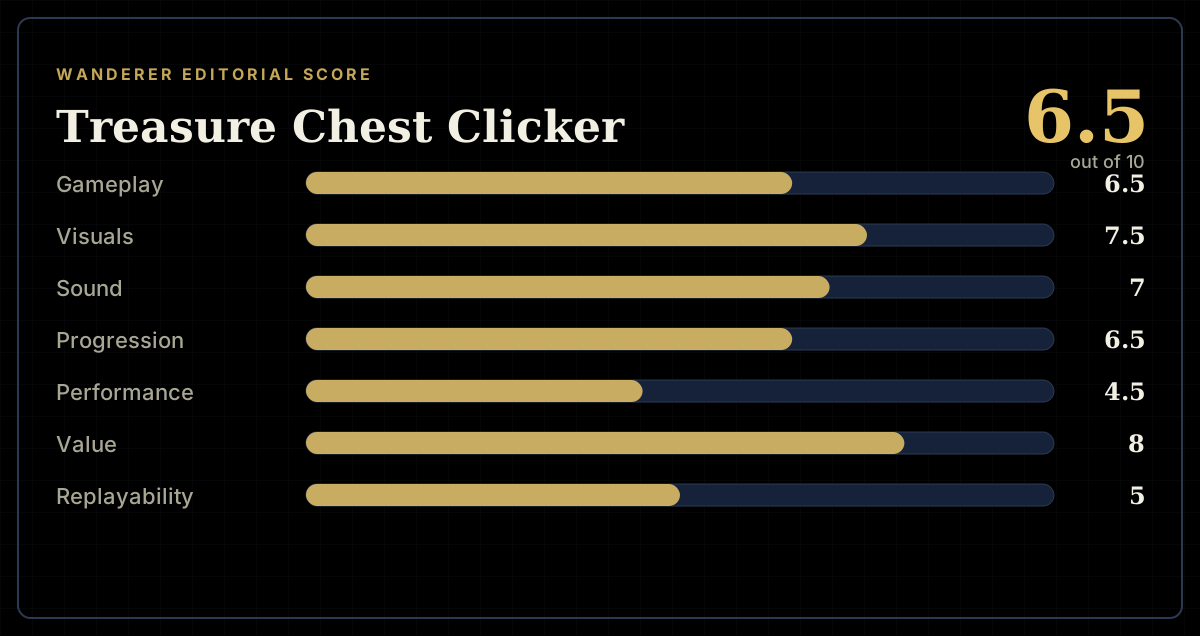
How the review scores each part of the gameWanderer Editorial -
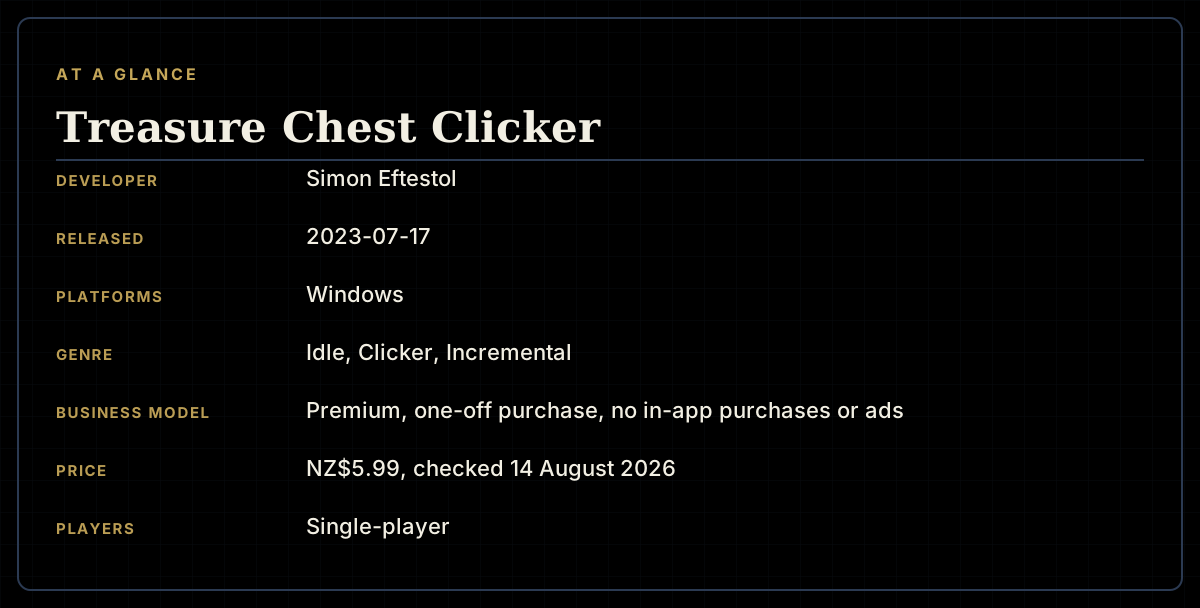
The game at a glanceWanderer Editorial -
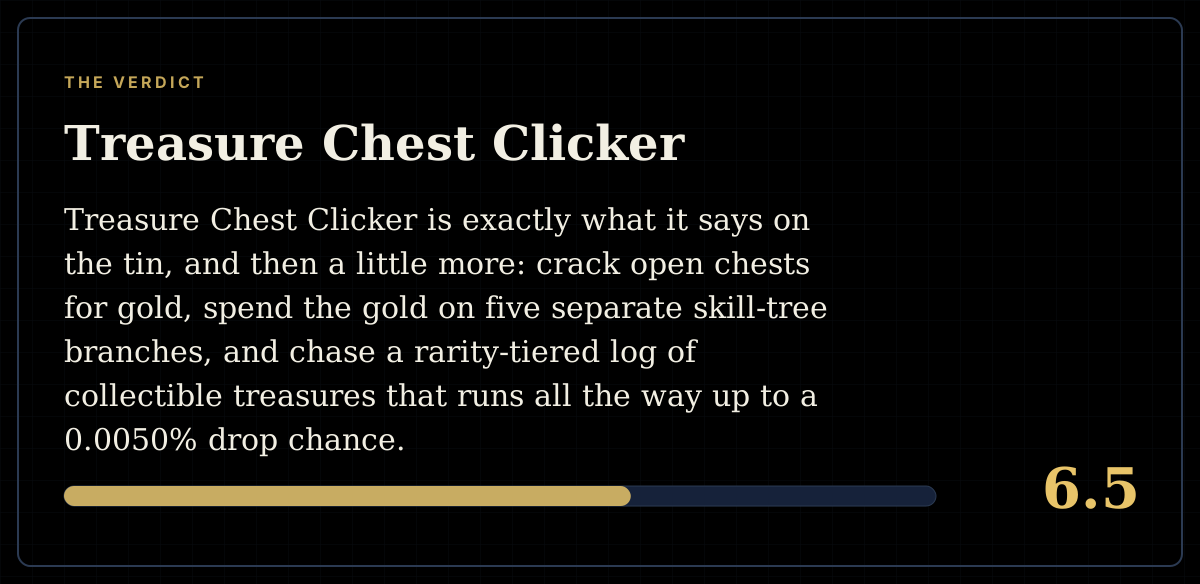
The short versionWanderer Editorial